8 Types Of Relationships You Might Find Yourself In Throughout Life

When it comes to finding the right relationship, most of us know that there's trial and error involved in finding the right fit. There's truth to the saying, "You don't know until you try." And while some of us have firm "absolutely nots" to what we won't tolerate, others of us rely on the learning curve that comes with kissing a few frogs before finding the love that loves us back the way we deserve to be loved. Luckily, these days we live in a world where thankfully the types of relationships we have are as varied and multilayered as we are.
On our site, we've covered things like attachment styles and love languages that can predicate how we navigate the relationships we maintain and acquire. So it should be of no surprise that just like there are different strokes for different folks, there are different types of relationships we can have in life too. Below are 8 different relationship types and what they entail.
The Closed Relationship Type
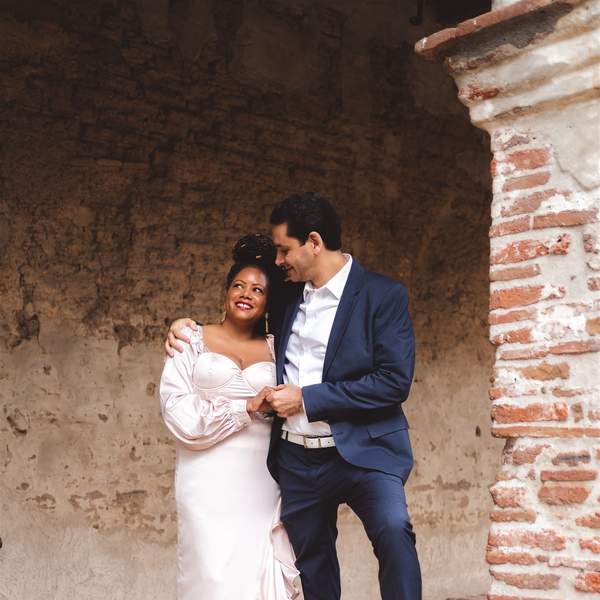
Most of us are most familiar with the closed relationship type, referred to more commonly as "monogamous". As its name suggests, the relationship is "closed", meaning the two people involved agree to love each other and commit to being with only one another exclusively. Partners involved indulge in one another and refrain from doing things in the relationship that threaten the sanctity of their relationship, whatever those relationship boundaries entail.
Given the distrust and infidelity that runs rampant in exclusive relationships, a lot of people against this traditional relationship type feel that it is unnatural, believing that eventually closed relationships leads to feeling suffocated, trapped, or stifled. And what do people do when they feel like they are in a cage? They rebel. Hence, cheating. Still, it's a style that is upheld for a reason and when done right, there's no doubt that there is beauty in longevity and exclusivity if that's the drum beat you wish to march to. And one that's boundaries you respect.
The Open Relationship Type
Relationships like polyamorous relationships or throuples are considered to be open relationships and are the opposite of the previously mentioned closed relationship. In open relationships, the people involved are non-exclusive and are usually sexually non-monogamous. People in open relationships often create their own rules for what the boundaries of their relationship type is so no one open relationship looks exactly the same.
For example, the people involved can decide to be swingers and invite new partners into the bedroom and only engage in sexual activity together. They could also indulge in individual relationships outside of each other, regarding one another as the primary partner, but keeping the door open (oh, puns) to other connections, be it emotional, physical or both. Those examples are just the tip of what an open relationship could look like as there can be different kinds of relationships that fall underneath the open relationship umbrella.
The Dominant-Submissive Relationship Type
Sure, our perception of what a dominant-submissive relationship type might have gotten a little muddled with the Fifty Shades of Grey franchise (cue the eyeroll), but in reality, it's a relationship type that is out here alive and well. And why wouldn't it be? Whips and chains are exciting. However, despite all of the emphasis on sex, a dom-sub relationship is more than the props we're used to seeing. This relationship revolves around one dominant (i.e. sadist) partner and one submissive partner (i.e. masochist). As with any relationship, this partnership comes with its own rules and roles and can be applied to multiple areas of life.
The dominant partner's role is to lead, protect, and act as a guide to the submissive. Conversely, the sub's role is to fulfill the desires of their master, whatever that may be. While it can extend to sex, but the relationship is more so centered on roles and respecting rules that are in place that in turn shows respect to your partner. To learn more about the different roles of BDSM relationships, Lelo has an article you should check out here.
The Codependent Relationship Type
Taking people-pleasing to the next level is people in the codependent relationship type. Signs of a codependent relationship include unhealthy clinginess, planning your life around pleasing the other person, relying on another person for your sense of self, and being a love addict. The relationships itself are characterized as being dysfunctional, emotionally destructive and/or one-sided.
Oftentimes, the giver in the relationship has an anxious attachment style and the taker in the codependent relationship enables the giver's addiction, immaturity, irresponsibility, and/or mental health issues. In all cases, the partners act in a host parasite relationship where the partners need to feel needed by each other.
The Interdependent Relationship Type
The interdependent relationship is perhaps the relationship type we all should aspire to cultivate no matter what the relationship style we are in. What is an interdependent relationship, you ask? Interdependent relationships consist of two fully realized individuals with their own goals, their own dreams, their own hobbies, and ambitions who come together to form a relationship that they pour into but it isn't the epicenter of their existence as beings. Instead, they act as each other's complement.
In these relationships, both partners thrive in a relationship that allows them to be themselves without sacrificing who they are or their identities. Whereas codependent relationships are too reliant on the partner and independent relationships are not reliant enough, interdependent relationships represent the perfect balance between both extremes as it relates to partnerships.
The Long-Distance Relationship Type
Long-distance relationship types are characterized by partners being separated by distance. The romantic relationship unfolds like most other relationship types but sometimes blossoms at full throttle due to the nature of the relationship revolving more around the emotional connection and intimacy outside of the physical.
The distance and the length of the relationship being an LDR vary from couple to couple, but there is typically a lack of in-person face-to-face time. Long-distance relationships tend to work best with individuals who are securely attached but there are a bevy of articles that focus on ways couples in long-distance relationships can make things work, including one from our site: "We Spoke To Three Couples About What It Takes To Make Long-Distance Relationships Work".
The Casual Relationship Type
Casual relationships are relationships that are physical (and sometimes emotional) but typically comes without the expectation of an exclusive or more formal relationship. It has all of the traits of a relationship but without the commitment, which is often the allure in these types of relationships. People are able to get their physical and emotional needs met without putting in the energy and the effort required of a traditional closed relationship.
A casual relationship can encompass casual dating, friends with benefits, hook-ups, one-night stands, f*ck buddies, situationships, etc. Usually, casual relationships are one-sided with one person wanting more from the situation than the other is willing to give, which causes a lot of issues with the viability of this relationship style. For that reason, they are often short-lived. If you have to ask, "Where are we going?" to the person in your life, 7 times out of 10, it's probably just casual boo.
The Toxic Relationship
Chiiiile, I don't even have to ask anyone to raise their hand for this one. Given the fact that in life and love, it's not abnormal to repeat behaviors we've seen from our elders, we tend to find ourselves in relationships that match dysfunction. Often, toxic relationships don't begin toxic but can become toxic as boundaries are repeatedly crossed and respect goes out the window. Dishonesty occurs, there is a lack of trust, an influx of jealousy, controlling behaviors, and resent among a host of other dysfunctional characteristics.
Toxicity is something that can lend itself to our relationships with family, with friends, and with our work life just as intensely as it can our romantic relationships. The relationships are plagued with unfathomable highs but also debilitating lows and the person riding that roller coaster can become comfortable with the chaos and not seek better for themselves. However, it is important to find and maintain healthy relationships in your life and not be afraid to leave situations when they are no longer serving you.
Featured image by Shutterstock
- What It Means To Feel Emotionally Safe In Relationships - xoNecole ... ›
- Gaslighting, Love Bombing & 5 Other Triggers To Call Out In Your ... ›
- Setting Clear Boundaries In Relationships - xoNecole: Women's ... ›
- How To Get Guys To See You As The Relationship Type - xoNecole ... ›
- According To Experts, We All Have A "Type" - xoNecole: Women's ... ›
- Advice For Anxious Attachment Styles - xoNecole: Women's Interest ... ›
- Considering An Open Relationship? What To Know - xoNecole: Women's Interest, Love, Wellness, Beauty ›
- Consensual Nonmonogamy Relationships, Terms, How - xoNecole: Lifestyle, Culture, Love, Wellness ›
Because We Are Still IT, Girl: It Girl 100 Returns
Last year, when our xoNecole team dropped our inaugural It Girl 100 honoree list, the world felt, ahem, a bit brighter.
It was March 2024, and we still had a Black woman as the Vice President of the United States. DEI rollbacks weren’t being tossed around like confetti. And more than 300,000 Black women were still gainfully employed in the workforce.
Though that was just nineteen months ago, things were different. Perhaps the world then felt more receptive to our light as Black women.
At the time, we launched It Girl 100 to spotlight the huge motion we were making as dope, GenZennial Black women leaving our mark on culture. The girls were on the rise, flourishing, drinking their water, minding their business, leading companies, and learning to do it all softly, in rest. We wanted to celebrate that momentum—because we love that for us.
So, we handpicked one hundred It Girls who embody that palpable It Factor moving through us as young Black women, the kind of motion lighting up the world both IRL and across the internet.
It Girl 100 became xoNecole’s most successful program, with the hashtag organically reaching more than forty million impressions on Instagram in just twenty-four hours. Yes, it caught on like wildfire because we celebrated some of the most brilliant and influential GenZennial women of color setting trends and shaping culture. But more than that, it resonated because the women we celebrated felt seen.
Many were already known in their industries for keeping this generation fly and lit, but rarely received recognition or flowers. It Girl 100 became a safe space to be uplifted, and for us as Black women to bask in what felt like an era of our brilliance, beauty, and boundless influence on full display.
And then, almost overnight, it was as if the rug was pulled from under us as Black women, as the It Girls of the world.
Our much-needed, much-deserved season of ease and soft living quickly metamorphosed into a time of self-preservation and survival. Our motion and economic progression seemed strategically slowed, our light under siege.
The air feels heavier now. The headlines colder. Our Black girl magic is being picked apart and politicized for simply existing.
With that climate shift, as we prepare to launch our second annual It Girl 100 honoree list, our team has had to dig deep on the purpose and intention behind this year’s list. Knowing the spirit of It Girl 100 is about motion, sauce, strides, and progression, how do we celebrate amid uncertainty and collective grief when the juice feels like it is being squeezed out of us?
As we wrestled with that question, we were reminded that this tension isn’t new. Black women have always had to find joy in the midst of struggle, to create light even in the darkest corners. We have carried the weight of scrutiny for generations, expected to be strong, to serve, to smile through the sting. But this moment feels different. It feels deeply personal.
We are living at the intersection of liberation and backlash. We are learning to take off our capes, to say no when we are tired, to embrace softness without apology.
And somehow, the world has found new ways to punish us for it.

In lifestyle, women like Kayla Nicole and Ayesha Curry have been ridiculed for daring to choose themselves. Tracee Ellis Ross was labeled bitter for speaking her truth about love. Meghan Markle, still, cannot breathe without critique.
In politics, Kamala Harris, Letitia James, and Jasmine Crockett are dragged through the mud for standing tall in rooms not built for them.
In sports, Angel Reese, Coco Gauff, and Taylor Townsend have been reminded that even excellence will not shield you from racism or judgment.

In business, visionaries like Diarrha N’Diaye-Mbaye and Melissa Butler are fighting to keep their dreams alive in an economy that too often forgets us first.
Even our icons, Beyoncé, Serena, and SZA, have faced criticism simply for evolving beyond the boxes society tried to keep them in.
From everyday women to cultural phenoms, the pattern is the same. Our light is being tested.

And yet, somehow, through it all, we are still showing up as that girl, and that deserves to be celebrated.
Because while the world debates our worth, we keep raising our value. And that proof is all around us.
This year alone, Naomi Osaka returned from motherhood and mental health challenges to reach the semifinals of the US Open. A’ja Wilson claimed another MVP, reminding us that beauty and dominance can coexist. Brandy and Monica are snatching our edges on tour. Kahlana Barfield Brown sold out her new line in the face of a retailer that had been canceled. And Melissa Butler’s company, The Lip Bar, is projecting a forty percent surge in sales.

We are no longer defining strength by how much pain we can endure. We are defining it by the unbreakable light we continue to radiate.
We are the women walking our daily steps and also continuing to run solid businesses. We are growing in love, taking solo trips, laughing until it hurts, raising babies and ideas, drinking our green juice, and praying our peace back into existence.
We are rediscovering the joy of rest and realizing that softness is not weakness, it is strategy.
And through it all, we continue to lift one another. Emma Grede is creating seats at the table. Valeisha Butterfield has started a fund for jobless Black women. Arian Simone is leading in media with fearless conviction. We are pouring into each other in ways the world rarely sees but always feels.

So yes, we are in the midst of societal warfare. Yes, we are being tested. Yes, we are facing economic strain, political targeting, and public scrutiny. But even war cannot dim a light that is divinely ours.
And we are still shining.
And we are still softening.
And we are still creating.
And we are still It.

That is the quiet magic of Black womanhood, our ability to hold both truth and triumph in the same breath, to say yes, and to life’s contradictions.
It is no coincidence that this year, as SheaMoisture embraces the message “Yes, And,” they stand beside us as partners in celebrating this class of It Girls. Because that phrase, those two simple words, capture the very essence of this moment.
Yes, we are tired. And we are still rising.
Yes, we are questioned. And we are the answer.
Yes, we are bruised. And we are still beautiful.

This year’s It Girl 100 is more than a list. It is a love letter to every Black woman who dares to live out loud in a world that would rather she whisper. This year’s class is living proof of “Yes, And,” women who are finding ways to thrive and to heal, to build and to rest, to lead and to love, all at once.
It is proof that our joy is not naive, our success not accidental. It is the reminder that our light has never needed permission.
So without further ado, we celebrate the It Girl 100 Class of 2025–2026.
We celebrate the millions of us who keep doing it with grace, grit, and glory.
Because despite it all, we still shine.
Because we are still her.
Because we are still IT, girl.
Meet all 100 women shaping culture in the It Girl 100 Class of 2025. View the complete list of honorees here.
Featured image by xoStaff
How Les Alfred & Kayla Greaves Built Their "It Girl" Brands With Intention
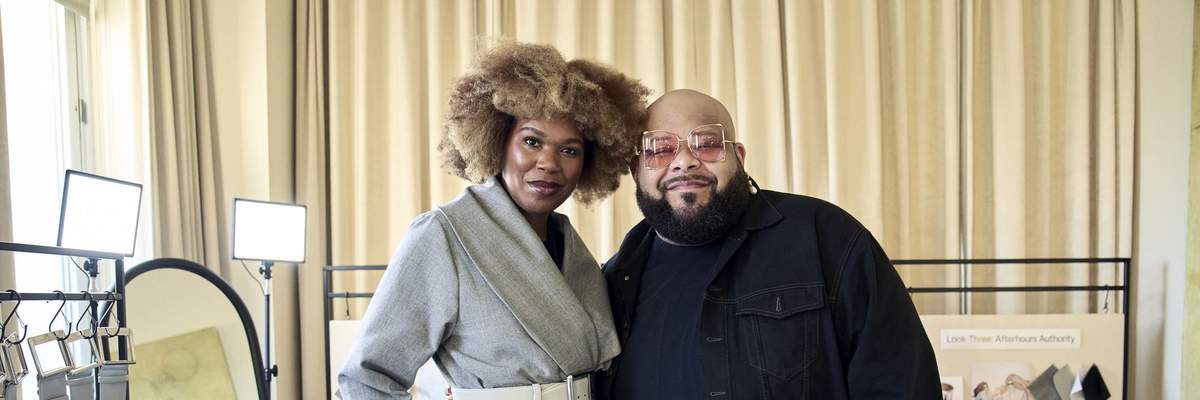
It’s not always easy being an “It Girl,” but Les Alfred, host of She’s So Lucky podcast, and Kayla Greaves, beauty expert, reporter and consultant, never promised it would be. Instead, the two creators are forging their own paths based on resilience. Les originally launched her podcast, formerly Balanced Black Girl, from her bedroom in Seattle after creating fitness content elsewhere online.
Last year, she left her corporate job to scale the Dear Media-hosted series, which she rebranded earlier this year. Meanwhile, Kayla has worked as a journalist and editor, including for InStyle as Executive Beauty Editor. In 2023, she left the company to focus on consulting, hosting and speaking engagements.
Despite launching media careers from different pathways, the two New York-based women have forged a friendship where they can discuss their ambitions and challenges.
Both women are part of xoNecole’s It Girl 100 Class of 2025, recognized in the Viral Voices category for the impact they’ve made through storytelling, creativity, and authenticity. Together, they represent what it means to build an "It Girl" brand with integrity and depth. In the spirit of SheaMoisture’s "Yes, And" ethos, Les and Kayla embody the freedom to be multi-layered as women evolving boldly into every version of themselves.
This conversation has been condensed and lightly edited for clarity
On Forging Their Own Paths
Les Alfred: Being a Jane of all trades is incredibly challenging. And one of the challenges I've faced is that the scope of what podcasters now need to do has increased so much. When I first interviewed you in 2019, I was still very new at it, but I remember being on a Skype call with you from my bedroom in Seattle. That was how I ran the show. And that was good enough. That is absolutely not good enough these days. The scope and the quality keeps increasing, but the resources that you have don't necessarily increase in order to remain competitive.
I get asked so many questions from people who want to get into podcasts and they want to get started. Most of the time, I'm just like, 'I don't have tips for you.' Because, one, I don't know what it's like to start in this current environment. Two, I know what it takes to contend and be consistent in this environment. The barrier of entry is a lot higher in terms of having something of quality than it was before.
On Balancing Ambition and Rest
Kayla Greaves: I've had to make a very clear effort to slow down and just not take on as much. Yes, you're running a business, but you're also living your life. I had one of those days yesterday. I just laid down and listened to white noise for hours because I just needed my brain to just be clear. I called a friend. I cried.
I'm starting over again today. The sun is out. It's a new day. And that's just sometimes what you have to do. You can't show up for your audience or for other people, if you can't show for yourself. I think that creativity comes from a place of living your life and having genuine experiences, and then sharing those experiences through your art.
"I had to give myself permission to let myself grow publicly in ways that I'd already done personally."

Courtesy
On Evolving Through Growth and Rebranding
Les: I didn't create Balanced Black Girl until 2018, but I started blogging and creating content and doing things under the Balanced brand in 2014. I was 24 years old at the time. Now, I'm 36. The things that were important to me, the perspective that I had and the stories I wanted to tell were entirely different. I think I had to give myself permission to let myself grow publicly in ways that I'd already done personally. The show isn't really about wellness anymore. And that shift started happening a couple of years ago.
When we started expanding into more lifestyle topics, more self-help topics [and] talking about entrepreneurship, the audience responded really well. That was when the show really started to grow and take off. And that was what got so much more engagement than the episodes back in 2020 when I was doing hour-long deep dives on gut health.
Rebranding the show was something I've been thinking about for a long time. When I was finally like, 'Oh, I need to do this,' honestly, was the 2024 presidential election. I was like, these people are about to be in here acting crazy. I do not feel safe with my business name being what it is. I don't want to be targeted for any BS. We saw what they did to the Fearless Fund.
"You have to balance your integrity with your income."

Courtesy
On Integrity Over Income
Kayla: I have many other interests aside from beauty. I'm growing and I'm changing as a person. I'm not the same person I was when I started at InStyle in 2019 before the pandemic rocked everybody's world. I don't think reviewing every single lipstick that comes out is exciting or interesting, because everybody does it now, and everybody feels like they're qualified to speak on things that they're not qualified to speak on. I'm currently in that pain point of growth.
I don't think I have always been in environments where I've been encouraged to branch out on my own ideas. I finished Ina Garten’s memoir maybe a month ago. She kept repeating this quote in her book. She said, ‘What goes in early, goes in deep.’ Now that I'm on my own and I don't have the resources of a traditional media company, which is what I have become accustomed to, sometimes it's difficult for me to be like, 'Okay, just go ahead with the thing.'
I think, Les, just the other day, you reposted somebody saying that they let go of a five-figure deal and then got double the next day because it just didn't feel aligned for them. Those are the things that happen. I have to find a balance of, 'Okay, how do I keep myself afloat?' And that may mean I may not be balling out of control just yet, but I'm okay for now. I can buy myself nice things every once in a while, but you have to balance your integrity with your income.
Les: There are just certain lines that I'm not willing to cross. Especially when I created more wellness content, one of those lines was I will not promote any sort of weight loss product. All of these GLP-1s all want to advertise on my podcast. I actually have nothing against those types of products, but I don't ever want someone to look at what I'm putting into the world and think that I'm saying that they need to feel a certain way about their bodies.
Even if the money is great, that's not for me to say, and that's not the type of message that I want to put out here. Or, I had another kind of brand deal come through that would have required me to divulge things about my personal life that I just don't really want my audience knowing about me, and bringing them along on journeys that I just find personal and I want to keep offline. I don’t want to be known for dragging my mess all over the internet for a buck.
I don't want to be known for being an influencer. I would love to be 1,000% in on my podcast, scale it, have it grow to be a media empire where I'm producing and putting out other bodies of work. For now, until that other side of the business really picks up and gets to the point where I want it to be, I kind of need to play the influencer game a little bit to live in this expensive city. But I'm gonna do it on my terms. It's a constant compromise that I'm coming to with myself.
"You can never make a big vision come to fruition if you're sitting and you're waiting for somebody else to tell you exactly what to do."

Courtesy
On Mutual Admiration and Friendship
Les: Something that I really admire about you in having known you for the past couple of years is you don't wait for a roadmap. You jump in, you roll up your sleeves, and you do it. You can never make a big vision come to fruition if you're sitting and you're waiting for somebody else to tell you exactly what to do.
Kayla: Well, first of all, I want to say thank you for saying that, because that means so much to me, and it's very affirming. That's exactly how I feel about you. I remember, even at your first live show, you're like, ‘Oh my god, I'm so stressed. I don't know what I'm doing.’ And, the shit sold out. And, you know, and now, like, you see the growth of the podcast. And you have nearly 61,000 subscribers on YouTube. I just checked recently.
I talk a lot about people that really just need to not say anything on the internet, because it's so frustrating as somebody who grew up as a traditional journalist. You want people to fact check and ask thoughtful questions and have good conversations. I've never said that about you. I've always loved your podcast. And I've sent a lot of your episodes to friends when they're going through specific things that you're talking about.
This season has been a little bit slower to me, so you've been a constant source of inspiration, and it's just been such a pleasure to see your podcast grow despite the challenges you've had. I know it's not easy, but you continue to grow and continue to push through, and I really admire that as somebody who sat and cried yesterday and listened to white noise.
And this is why I tell you all the time, you really do inspire me. I love you a lot.
Les: Oh my gosh, I love you a lot. I'm so glad that the podcast brought us together.
Tap into the full It Girl 100 Class of 2025 and meet all the women changing game this year and beyond. See the full list here.
Featured image courtesy