


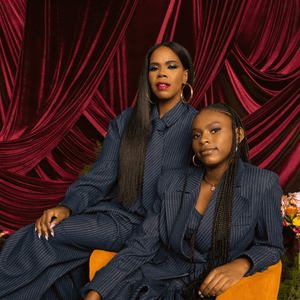

For as long as I can remember, I was never the little girl who dreamed of a wedding dress, a house with a white picket fence, or having babies.
And that’s not to say I don’t want those things, I do. As a daughter of immigrants, I was always motivated for excellence and highly career-driven. My father constantly instilled the importance of education and a high-earning career before starting a family. Simply because he had to repeat college in the United States as his international college degree was not recognized. And my father didn’t migrate to the U.S. for me not to succeed.
Nonetheless, I had always said after I graduated college and when my life was in order that I would adopt a child by the age of 30 if I wasn’t in a committed relationship and/or married.
Well, that was 17 years ago, and I will be forty-fine in December of this year. I am still single and currently in a season of navigating my emotions so I can have a healthy, loving, relationship with an ideal partner. I’m at the age where I am consciously considering what family looks like for me. This could look like me and a partner. Me, a partner, and a pet. A partner, me, and their kids. If you’re one of my lifelong friends and you’re reading this, you know damn well that I was never open to dating someone with children. But I am not getting any younger, and as my grandmother used to say, “Pick an' pick, until yuh pick shit.”
Given that I didn’t grow up in a healthy home environment or witness a healthy relationship and/or marriage between my parents, the idea of having my own children scares me.
And it’s more than likely that I can give birth to twins. I would like to consider myself the generational curse breaker in my family. Like, why would I subject an innocent child to these unhealthy family dynamics? Given today’s dating climate and the number of unhealed men is even more alarming, who am I having a baby with? One thing I do know – if there is a “he,” “he” is not passing down his unhealed trauma and baggage to my child. I won’t allow it.
With that said, I have recently come to the conclusion that I do not biologically want children of my own. I am open to being a bonus mom or adoption. I absolutely do love children, though. Especially toddlers. I always want to hold someone’s baby and love on someone’s child. I love being an aunt, godmother, older cousin, and role model to the kids in my family and my friend’s children. It would have to take a really special person, a man who is a whole (not just healed), to make me feel safe enough to even want to consider having a child with him.
Today’s dating and relationship scene is so exhausting. For a lot of women, it seems nearly impossible to meet someone to marry and start a family with. And there are so many women who truly desire to be a mother and want children to be a part of their lives. We live in a society that is moving away from tradition in many aspects. Relationships are being redefined, and so is how we choose to be parents.
Enter the concept of platonic co-parenting or conscious co-parenting.
It sounds like the pact you made with a good friend when you were kids. If neither one of y’all are married or have kids by a certain age, you would marry each other. But it’s a little more complex than that – platonic co-parenting is an alternative to being a single mother by choice, adoption, or choosing some random man’s sperm at a sperm bank.
xoNecole looks at what platonic co-parenting is and how it works and asks five single women their thoughts on platonic co-parenting. Let’s get into it.
What Is Platonic Co-Parenting?
I first got a whiff of this child-rearing with a friend thing on Instagram when political analyst and activist, Van Jones announced the birth of his second child with a friend via conscious co-parenting. Jones states, “After the COVID lockdown, I got clear that I wanted another kid. I discovered that my friend Noemi also wanted a baby. So we decided to join forces and become conscious co-parents.” He adds, “It’s a concept that I hope more people will explore and consider.”
According to thebump.com, platonic co-parenting is not a new concept, it has been around for years. Whether it is referred to as “platonic co-parenting,” “elective co-parenting,” “conscious co-parenting,” or “intentional co-parenting,” it simply means making a decision to start a family with someone and a joint commitment to raise a child without a romantic history, sexual involvement, or marriage.
Platonic co-parenting has been utilized in the LGBTQ+ community and is also becoming more common among single heterosexuals as there has been a major shift in how people define family and family structures. According to parents.com and data from Pew, more than 16 million non-married Americans are raising children with a live-in partner. The 2018 data from Pew also suggests that fewer people are having sex. Therefore, platonic parenting with a friend seems like a natural evolution to family building.
Logistics of Platonic Co-Parenting
What platonic co-parenting offers is an alternative model for family building. And I want to emphasize there is no right or wrong way to go about it. No two people’s circumstances are the same. But the common denominator is the strong desire for family, children, and raising a human together. Platonic co-parenting can take various forms and manifest differently depending on the people involved.
Finding a Parenting Partner:
When we think of finding a partner to co-parent with, it could look like two friends of the opposite sex deciding to have a child together. This entails joint parental responsibilities, sharing birthdays, and holidays, and living together or living separately. It could look like two friends of the same sex who already have children respectively, but they choose to live together as a temporary solution to financial strain. It can also be IVF (in vitro fertilization), artificial insemination, surrogacy, or adoption as well.
There isn’t a one-size-fits-all solution when it comes to starting a family with someone, whether it’s done through a traditional or non-traditional route. You can read how two friends of seven years in England went about becoming platonic co-parents here.
Issues:
As with any life-changing event and/or arrangement, issues will always arise. Honest, strategic, and transparent conversations are required. According to Weightmans, a law firm in England, issues to consider with platonic co-parenting are:
- Living arrangements and logistics of the child moving between two households;
- Finances and financial responsibility;
- Parenting styles, values, and discipline;
- Religious beliefs and how the child will be raised;
- Childcare options and educational choices, and how these will be funded; and
- Healthcare and medical decisions including what should happen in an emergency situation.
- Naming the child, including their surname;
- The day-to-day work of caring for the child, especially immediately after the child is born. Will both parents live together? If so, where and for how long? And how will responsibilities for night-times, cooking, cleaning, etc. be shared?;
- Feeding and how this may impact any arrangements, especially in the first few months of the child’s life;
- How special occasions such as birthdays, Christmas, Easter, etc. will be spent;
- Posting about the child on social media;
- What will happen if one parent enters into a romantic relationship, and how this will potentially change the arrangement, including the process of introducing the child to any new partner;
- How any potential conflicts will be resolved in the future and whether a family counselor or mediator will be consulted.
Parenting Plans:
It is without a doubt that platonic parenting requires legal counsel. A lawyer can assist with creating an agreeable parenting plan. Parenting plans can address legal considerations such as:
- Who will be recorded on the birth certificate as the child’s legal parents?
- Who will have parental responsibility for the child? And if it is not acquired automatically by one parent, how will parental responsibility be given to that parent?
- Should the parents enter into a parenting agreement recording the agreements that they have reached?
- If parents choose to live together for part or all of their child’s life, what are the legal considerations and implications of doing so? Especially if, for example, the house is owned by one parent. Do the parents need to enter into a cohabitation agreement as well as a parenting agreement?
- If a conflict arises, how would a court decide the arrangements for the child such as who they will live with and how they will spend time with each parent?
- If a conflict arises about specific issues such as religion, medical procedures, or schooling, how would the court approach these issues? See our article on specific issue orders.
- If one parent wishes to move away either in the U.S. or abroad in the future, how will a court approach such a move?
- It is important to note that one parent cannot move a child out of the country without either the consent of all other people with parental responsibility for the child or the approval of the court. Find out more about traveling abroad with children.
- Both parents’ legal obligation to provide for the child financially.
Benefits:
Weightmans also states platonic co-parenting can provide increased emotional stability for not only the child but co-parents as well. Given that the child and co-parents have access to a larger community of support and positive role models. It is also likely the child can experience positive communication between their parents and witness a healthy relationship due to the amicable arrangement. Parents can also benefit from shared financial and childcare responsibilities allowing for flexibility financially and personally.
Disadvantages:
There will always be disadvantages and/or conflict. It’s inevitable, and we are human. But it is how we navigate these disadvantages that make a difference. When it comes to platonic co-parenting, legal and financial complications definitely exist. Further difficulties arise when one parent chooses to move away or pursue a romantic relationship. The most evident disadvantage is the social stigma or misunderstanding in choosing a non-traditional family structure.
What Single Women Think About Platonic Co-Parenting
Now that you have an understanding of what platonic co-parenting is and how it works, let’s look at what five single, professional, young women think about this new family-building concept. Meet Alicia, 35, attorney; Brooke, 32, attorney; Ladini, 37, behavioral analyst; Jamila, 35, attorney; and Mimi, 35, licensed psychotherapist.
As a single woman given today’s dating patterns, scene, culture, and assuming you want children, is platonic co-parenting something you would consider? Why or why not?
“I would consider platonic co-parenting if I decided I was ready to have children. As a millennial, our lives are much more unconventional than previous generations. Parenting doesn’t have to be done one way. As a 35-year-old, I have developed many long-lasting platonic relationships. Raising a child with a platonic co-parent seems like a better option than being a single parent.” – Jamila
"Absolutely. It is my opinion that there are no guarantees in sharing caregiving responsibilities with any other individual, regardless of the nature of the relationship. I know people who co-parent adaptively after finding out they're pregnant post a one-night stand, and married couples who single parent due to having no to minimal support from their spouse.” – Mimi
“At first mention, it was an immediate no. But, as I did some research and applied more thought, absolutely. To me, it sounds like the perfect alternative. As we all know, relationships have their ups and downs, and raising children is no easy feat, so I feel that being able to choose from an objective place of true intentionality would be meaningful in its own way.” – Ladini
“It would be something to consider because, in the current times, I believe there are many social pressures for women to have children, but many of the women I know want to figure out the balance of having our dream careers and still parenting. Factors such as age, marriage, and careers are being juggled, and I think having alternative methods of parenting can allow for women to balance our needs and desires better without feeling like we had to give up parts of us.” - Brooke
“A few years ago, I made a pact with my male best friend; I told him, if I reached the age of 35, and we’re both single and childless, we should have a kid together. While I said it semi-jokingly, it was always something that played in the back of my mind. Fast forward to today, I’m 35, single, childless and he is married (laughs). My views have changed from when we first made the pact. When I create a child, I want my child to be created out of a romantic bond and relationship; I don’t want to settle on creating a family with a friend simply because time is ticking or the dating scene is just trash.” - Alicia
"When I create a child, I want my child to be created out of a romantic bond and relationship; I don't want to settle on creating a family with a friend simply because time is ticking or the dating scene is trash."

Drazen Zigic/Getty Images
Why do you think more women and/or men might consider platonic co-parenting as a feasible alternative to starting a family?
“Raising children is expensive. The cost of living is sky high, and the reality for a lot of people is that affording a child alone is not feasible. Having a reliable village to help raise the child is attractive.” – Jamila
“I think as societal pressures mount, people are attaching new meaning to the concept of family. With the emphasis on aging, I do believe that people (women) are made to feel like they are running out of time and as a result may be more inclined to make ‘pacts’ with trusted friends of the opposite sex.” – Ladini
“In the times in which we are seeing continued financial pressures and struggles, if we have established healthy relationships and have the same goals as parents, it can provide a healthy environment to raise children. We have seen statistics that steer people away from marriage and have children born in toxic relationships, and this could provide a remedy of having the new healthy home.” – Brooke
“People are fed up with the inventory when it comes to dating. When you reach your 30s, your life is a bit more stable, you have a solid foundation and you’re ready to build upon that foundation. However, after 20 first dates and no viable candidates for marriage or parenthood, you give up. I think more and more people are choosing the platonic co-parenting route because they desire family, they desire creating a legacy and if you can’t find that romantic partner, might as well be with someone you know, trust, and respect.” – Alicia
“This option offers an objective approach to fulfilling a desire that so many of us may feel we do not have control over. One may be financially and emotionally ready to take on expanding your family, but the time it takes to build trust with a significant other is overwhelming, let alone go into dating with that level of pressure is not appealing to anyone involved.” - Mimi
Given that some people don’t always grow up in a healthy environment whether it be single-family homes or a home with a mother and father, how do you think children of platonic co-parents might be affected?
“Maybe the same way children are affected in divorced families. I’m not sure.” - Jamila
“The only way that I feel that the children of platonic co-parents can be affected would be the absence of witnessing romantic, loving moments between their parents. Other than that, I think this situation can make for a very healthy upbringing.” – Ladini
“I think platonic co-parents would have to be comfortable with transparency and emotional intelligence because of the possible pressures from society as they view something different than the 'norm.' By building your own family, you also are given a second chance in a sense to create a safe environment for you and start a family to create healthy experiences of your own.” – Brooke
“If this is not an area that was discussed amongst the friends prior to the birth of a child, one can bring traumas and baggage from their past into the new situation. Everyone is raised differently, and if the co-parents do not discuss beforehand how they would like to collectively raise their child, it will cause issues that the child will have to be a witness to.” – Alicia
“I do not believe these children would be at any particular advantages or disadvantages as any other child developing in comparable macro social factors. Children accept their reality and this is the reason they are so vulnerable and at the same time resilient. Developing with two available parents is an undisputable privilege.” - Mimi
American society seems to be moving away from some traditions and/or societal norms, do you think women who truly desire to be a mother would be open to the idea of platonic co-parenting versus adoption or single mom by choice?
“Many women already choose to be single mothers because they want children. If they see it done successfully in other relationships, I could see them open to the idea.” – Jamila
“I do believe that women would be open to the idea. As the old adage goes, it takes a village. Although platonic love differs greatly from romantic love, one foundational component shared by both is having a strong bond and sense of loyalty. With that being said, choosing to have a family with someone who you have history with and a shared sense of values doesn’t sound like a bad idea.” – Ladini
“Yes, because when you have platonic healthy relationships, they can help cultivate that type of environment for the child and create a family dynamic so the mother doesn't have to do it alone without the traditional pressures we may hear when raising a child.” – Brooke
“Different strokes for different folks! I think more and more people are doing what works for them! Motherhood, parenthood is a beautiful thing, but it has to be with the right person, this is a lifelong bond you are creating. I think many women who desire motherhood are seeking out options that fit their lifestyles. It is a hard decision to make, but it is not one that should be taken lightly.” – Alicia
“Why not? With this option, you can have your own biological child with someone you truly care for and have a strong life-long relationship with. As humans, we are bound to evolve, and this is one of the many ways to find/seek fulfillment 'outside the box' sort of speak. As long as the two parties are consenting, what about it is so different?” – Mimi
"As humans, we are bound to evolve and this is one of the many ways to find/seek fulfillment 'outside the box' sort of speak. As long as the two parties are consenting, what about it is so different?”

Alessandro Biascioli/Getty Images
How I Feel About Conscious Co-Parenting
My thoughts? I definitely think platonic co-parenting seems like it would be a safer alternative on so many levels IF I truly desired to be a mother biologically. The elements of trust, consistency, commitment, understanding, emotional safety, transparency, shared values, etc. already exist with a lifelong friend based on an established history. Romantic relationships have their own challenges and adding a child makes it more complicated sometimes. Whereas if two friends intentionally decide to have a child together – it's almost like saying they can have the child and possibly not complicate parenting with the romantic aspect.
Given today’s dating scene and culture, it is more challenging these days for women to get to a secure place where these same elements exist romantically with the opposite sex. It’s a constant hit-or-miss type thing. Quite frankly it’s exhausting.
I, like many other women, desire a romantic relationship, to be in love and all the things. And some of these same women desperately want a child with a romantic partner. But if it’s not feasible for whatever reason – I can understand why women would choose platonic co-parenting or other non-traditional methods to start a family. Because these days women aren’t waiting on men anymore or wasting time waiting in general to live a fulfilled life. We create our own magic. We’re going to find a way to go after what we want and what our hearts desire. This includes motherhood and children.
As someone who is a legal professional and a business owner, I advocate for having an attorney for anything and everything. Situations always arise in navigating co-parenting. A neutral third party can assist with coming to reasonable agreements if the mother or father cannot. Similar to a relationship with a business partner and an operating agreement. It exists to navigate the nuisances, decision-making, and the challenges of owning a business together. Think of the business as a new baby or growing child.
As for children being affected by having platonic co-parents – I am not sure. I would hope that people who choose to be platonic co-parents have healed from their trauma and baggage before deciding to have a child together. I would hope they would both be emotionally available. I would hope they create a stable home as well as set the example for a loving environment for their child.
Based on the interviewee’s responses, there seems to be a strong consensus that platonic co-parenting just might be the new wave of family building. And I’m here for it. As an ever-changing society, we don’t have to agree with or accept platonic co-parenting. What we can do is respect individual choices. Let me reiterate there is no right or wrong way to define family or start a family. To be honest, look at how many people today are already engaged in some form of platonic co-parenting.
These people may be divorced or never married. They may have had a romantic relationship or not. A situationship or a friend-with-benefits type thing. Either way, a child was still born and those same two people decided to raise a child together. And the same legal issues, financial challenges, and parenting considerations still exist.
So, what’s the difference? If we as a society already accept those circumstances to be a societal norm, why not accept platonic co-parenting as an emerging norm for starting a family?
Let’s make things inbox official! Sign up for the xoNecole newsletter for love, wellness, career, and exclusive content delivered straight to your inbox.
Featured image by Ariel Skelley/Getty Images