


Black Women, You Deserve More: How Over-Giving Is Holding You Back In Love & Life

As a Black woman who has been conditioned to over-extend, overgive, and carry the weight of everyone else, I am going to hold your hand when I say this: Putting yourself first is no longer an option, it's the only option, sis.
In a world that demands our self-sacrifice, expects us to bend until we break, and labels us “strong” so we never dare complain or grow weary as we lift others ahead of ourselves, the journey to living authentically and prioritizing our own needs can feel radical. We’re taught to prove our worth through resilience and endurance, but at what cost? Too often, that cost is losing ourselves in roles that don’t truly honor who we are or what we truly need. And that is far too expensive of a cost.
I know this for a fact because a lot of my healing journey has involved unlearning what I learned about love as a child and unpacking the rhetoric around what Black women are expected to be for everyone, even if it's a danger to ourselves. I realized I was tired not because of life or the people around me but because of the things I was passively choosing for myself by not choosing myself.
Living more authentically has meant unlearning the belief that love is earned through over-giving and people-pleasing. It has meant learning how to advocate for myself even in discomfort in order to advocate for my wants and needs instead of settling for less. More than anything, it has also meant learning how to prioritize myself out of self-love and doing so as a daily practice.
Authenticity is not just a buzzword making its rounds on social media. It's a necessity and is arguably one of the most powerful things you can do for self.
That's why this conversation with Samantha Saunders, Licensed Professional Counselor & Authentic Relationship Expert, is so important. The host behind the Moving Beyond You podcast knows firsthand what it means to lose yourself in the pursuit of being enough for others. "When I was in my first marriage, I was so focused on being the ‘perfect wife’ and avoiding the stigma of divorce that I completely lost myself," she shares. "I thought if I just worked harder, sacrificed more, and ignored the red flags—like my husband’s repeated affairs—I could make it work. But all I did was make myself smaller and smaller until I didn’t recognize who I was anymore."
Through her own journey of self-reclamation, Saunders has learned that authenticity isn’t just about being honest with the world, it’s about being honest with yourself. In this interview, she opens up about her path to living an authentic life, her insights into breaking unhealthy relational loops, and how embracing abundance can help you reclaim your narrative and live a life that truly speaks to you.
If you’re ready to shift from over-giving to choosing yourself by living authentically, keep reading.
The Power of Authenticity in Self-Prioritization
For many women, particularly Black women, putting yourself first presents a unique challenge. Between societal expectations and personal obligations, self-prioritization can not only feel uncomfortable but also selfish, a word we've been conditioned to fear. From an early age, we're taught to swallow and shrink ourselves as we shape-shift into whatever the moment calls for. But what happens when those roles consume us to the point that we no longer recognize ourselves, or even disappear?
Like so many of us, Saunders had a similar story. After over 30 years of living according to what society told her she should be, she had a realization: In her pursuit of checking off the "right" boxes (i.e. being married, having kids, staying strong), she had lost herself.
"I didn’t know who I was outside of what other people needed or expected from me," she tells xoNecole. "So when you ask how living authentically plays a role in putting yourself first, the truth is—you can’t fully know yourself without checking in on what you truly want, not just what others say you need."
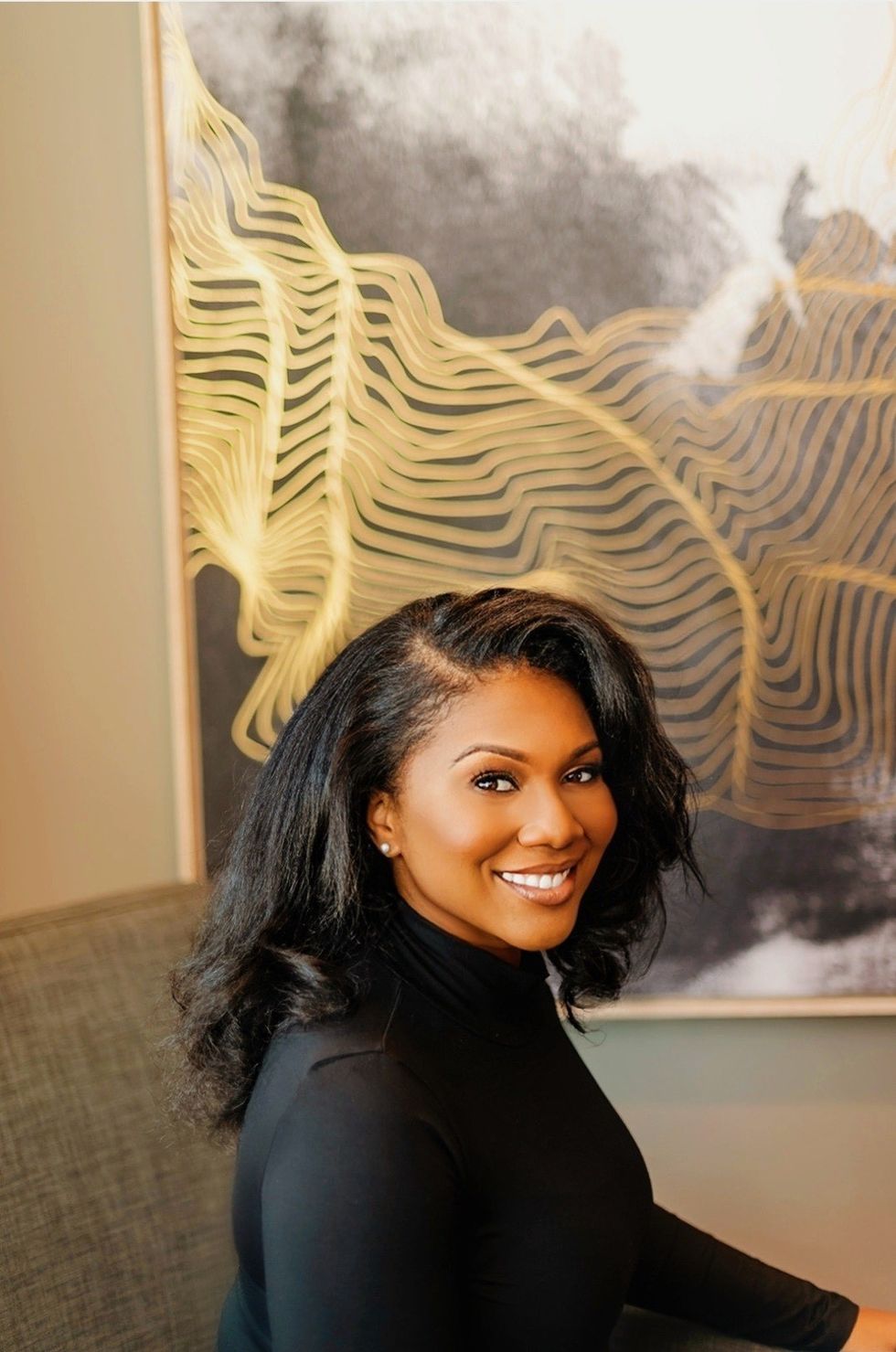
Samantha Saunders, LPC & Authentic Relationship Expert
Courtesy
Saunders ended up reflecting on a question that would prove to change the trajectory of her life: "If nobody had a say in how I lived my life, not my family, not society, not even my own fears, what would I do?"
For her, the answer was clear. It led her to walk away from a marriage that no longer aligned with her truth and to begin living for herself. While every woman’s answer will be different depending on her season of life, Saunders emphasizes that the core takeaway remains the same: Living authentically requires self-prioritization.
"When you’re not true to yourself, it’s easy to fall into patterns of over-giving, people-pleasing, and settling for less," she explains. "But when you honor who you are and what you truly want, you create space for healthy, reciprocal connections. Relationships should add to your life, not drain it. They thrive when two whole, authentic people show up for each other, and that can only happen when you make yourself a priority."
The truth is, that choosing yourself is an essential part of living authentically. Choosing yourself is not just about bold moves and major life shifts, it's a daily practice. It’s about learning to check in with your needs, set boundaries that honor your well-being, or refuse to shrink yourself for the comfort of others, you are choosing authenticity. You are choosing you.
Signs You’re Stuck in an Unhealthy Relational Loop
Old relational patterns might be the hardest thing to unlearn, even as you start to prioritize yourself more. Though they are often rooted in scarcity, those relational patterns feel familiar and because they are familiar, they become almost like second nature, meaning that without even realizing it, you become stuck in an unhealthy relational loop, a cycle of self-abandonment masquerading as duty, connection, and of course love.
According to Saunders, these loops can show up in ways we don't even question because we view them as normal because they are familiar to us. "Unhealthy relational loops can look like this: You argue, there’s yelling, silent treatment, or someone says something hurtful, and then eventually you 'move on.' Maybe there’s an apology, maybe not, but the behavior doesn’t actually change. You feel like you’re stuck on repeat, and deep down, you know nothing is improving," she explains.
Another major sign? Over-giving or over-functioning in relationships. "Maybe you’re constantly doing things for others at the expense of your own well-being because you’re afraid of disappointing them or losing the relationship. A lot of times in unhealthy relationships we are over-functioning for the other person, whether that’s emotionally or trying to get them to change in some capacity. You might also notice you’re always seeking approval, doubting your decisions, or second-guessing your worth," Saunders expounds.
Other signs of unhealthy relational loops can include:
- Over-explaining or justifying your needs
- Feeling emotionally responsible for others
- Staying in cycles simply because they are familiar
"You are not obligated to keep living in a pattern. You don’t have to keep attracting the same dynamics of giving and just because it’s familiar," Saunders reminds us. "Familiar does not mean safe. Familiar does not mean yours. It just means you have been conditioned to accept it."
"Familiar does not mean safe. Familiar does not mean yours. It just means you have been conditioned to accept it."
Saunders reiterates that familiar patterns are often ones that stem from survival mode, a learned response from our past experiences that we had to earn love or fight to be chosen. But she makes it clear that in case no one told you, "you are no longer that version of yourself who had to fight for scraps. You are becoming a grown healed woman who is allowed to choose abundance, especially in your relationships."
But how do you break a cycle that already feels so ingrained in how you move through the world? Saunders offers a framework for recognizing and releasing these patterns:
How to Heal Unhealthy Relational Patterns: 5 Tips
1. Slow down and see the pattern:
"The moment you feel that familiar pull [of] over-explaining, fixing, shrinking... pause. What is your body telling you? What's the urge? And whose voice is in your head when you feel like you have to do it? Awareness is your first step out."
2. Separate reality from fear.
"A scarcity response is fear dressed up as wisdom. It whispers, 'If I don’t do this, I’ll lose them,' or 'If I say no, they’ll leave.' But is that true, or is it just a version of you that still believes she has to work for love?"
3. Interrupt the cycle with something new.
"When you catch yourself falling into an old pattern, ask yourself: 'What would a healed, abundant version of me do?' Maybe that means not texting first. Maybe that means allowing yourself to receive instead of proving your worth. Maybe that means choosing rest over performing. The shift starts with one different choice."
4. Regulate your nervous system.
"These patterns aren’t just in your mind, they live in your body. That anxious pull to do something? That’s your nervous system running old programming. Breathe. Move. Meditate. Teach your body that you are safe even when you don’t over-function."
5. Rewire your beliefs about love, connection, and worth.
"You have to start believing that you are inherently worthy of love and support not because of what you do, but because of who you are. Real love does not require your exhaustion."
From Scarcity to Abundance: How to Stop Over-Giving and Start Thriving
If learning how to break free from unhealthy relational loops teaches us anything, it’s that we are not obligated to stay in spaces that drain us just because they’re familiar. We don’t have to keep choosing relationships, habits, or beliefs that operate from a place of fear, over-giving, or self-sacrifice. But even when we recognize these cycles, it’s not always easy to stop identifying with them. Why? Because of scarcity.
Scarcity conditions us to believe that letting go of what is familiar means that we are losing. Scarcity makes us believe that if not this, what else is there? What if there is not another opportunity after this, another relationship, another chance? What if there isn't more?
According to Saunders, it's this mindset that keeps us from choosing abundance, from leading a life of authenticity, and ultimately from truly choosing ourselves.
"Scarcity is a mindset we inherit from experiences where we felt like there wasn’t ‘enough.’ Enough love, time, opportunities, or support. It keeps us stuck in fear, thinking we have to cling to what we have because something better might not come along. But the truth is, there are billions of opportunities, people, and chances in this world. Your only limit is what you allow yourself to believe."
So how do you actually make this shift? Saunders offers these key steps:
How to Shift from Scarcity to Abundance: 6 Tips
1. Reframe your beliefs.
"To shift into abundance, start by reframing your beliefs. Instead of thinking, 'This is my only chance,' remind yourself, 'There will always be more.' Whether it’s love, success, or community, abundance exists when you stop operating from fear. 'I have to earn love' or 'Opportunities are limited' must be replaced with 'I am already worthy' and 'What’s meant for me won’t require self-sacrifice.'"
2. Set boundaries that honor your worth.
"Scarcity makes us overextend ourselves because we think saying no means we’re losing something. But boundaries create space for what you truly deserve. Ask yourself, 'Does this add to my life, or does it drain me?' Then make decisions accordingly."
3. Let go of over-giving and practice receiving.
"Practicing receiving without guilt is key, allowing love, help, and rest without immediately feeling the need to reciprocate reinforces that you are deserving just because."
"To shift into abundance, start by reframing your beliefs. Instead of thinking, 'This is my only chance,' remind yourself, 'There will always be more.' Whether it’s love, success, or community, abundance exists when you stop operating from fear."
4. Stop settling and raise your standards.
"Setting and maintaining bare minimum standards in relationships, work, and personal care ensures that you no longer settle for less than what aligns with your worth. The real shift happens when you stop moving from desperation and start moving from trust, knowing that chasing or over-giving won’t bring you what’s truly meant for you."
5. Embrace the power of no.
"Embracing the power of saying no without guilt or fear creates space for what actually nourishes and supports you. When you fully believe in your own worth, you stop proving yourself and start choosing what aligns with the life you truly want.
6. Ground yourself in gratitude.
"Focus on gratitude. When you recognize what you already have, it reinforces the belief that more is possible. Gratitude helps you lean into abundance and lets you move through life with confidence instead of fear."
How to Start Putting Yourself First Today
So, how do you start putting yourself first? Well, it starts with small, intentional choices that reinforce your worth and shift you out of over-giving and self-neglect. In terms of practical tips, Saunders emphasizes prioritizing yourself starts with the little things, like recognizing where your energy is going and reclaiming it.
"Take a look at your schedule, your to-do list, or even your text messages. Identify one thing you’re saying yes to out of guilt, obligation, or fear of disappointing someone, and say no instead," she advises. Whether it’s declining a last-minute request, rescheduling something that doesn’t fit your energy, or stepping away from a draining conversation, setting these small boundaries is a powerful way to take back your time.
Just as important as your actions are the thoughts that shape them. "If you catch yourself thinking, ‘I have to overwork to be successful’ or ‘If I don’t do everything, I’ll lose people,’ pause and reframe it," she encourages. Instead, try replacing those thoughts with, 'Success flows when I take care of myself first' or 'I am worthy of love and support without over-functioning.' This simple mindset shift can completely change how you move through life.
And when it comes to boundaries, one of the most freeing things you can do is stop explaining yourself. "You don’t need to justify prioritizing yourself. A simple ‘I’m not available’ is enough," Saunders reminds us. "Watch how much lighter you feel when you stop giving people permission to validate your choices." Letting go of the need for permission or validation allows you to stand firmly in your decisions without guilt.
4 Ways to Put Yourself First Without Feeling Guilty
For Black women, self-prioritization is more than self-care, it’s self-preservation. This radical act of choosing ourselves is about reclaiming our time, our energy, and our wholeness. But just because we are learning that pouring endlessly into others leads to our own unraveling doesn’t mean there isn’t room to prioritize the people we love. It simply means we can no longer afford to do so at the cost of losing ourselves in the process.
"Balancing self-prioritization while nurturing healthy relationships starts with the understanding that putting yourself first doesn’t mean neglecting others—it means making sure you’re showing up fully, not resentfully," says Saunders. "This will include setting boundaries, communicating clearly, and ensuring that your relationships are built on mutual respect, not self-sacrifice."
The truth is, that healthy relationships don’t require self-abandonment. They don’t thrive on exhaustion or performance. They require both individuals to show up fully and authentically. And prioritizing yourself does not mean neglecting others. It means making sure you are included in the love and care you so freely give.
It means no longer depleting yourself in relationships just to be seen as worthy. "Many people, especially Black women, have been conditioned to believe that prioritizing themselves means neglecting others, but in reality, when you care for yourself first, you show up in relationships from a place of fullness, not depletion."
So how do you balance both? How do you nurture your relationships while making sure you don’t disappear in the process? Saunders shares the following key steps:
1. Get Clear on Your Non-Negotiables
"What do you need to feel like you? Whether it’s alone time, a morning routine, therapy, or simply not answering calls after a certain time, those things matter. When you make space for them, you show up in relationships from a place of wholeness, not depletion."
2. Set Boundaries & Communicate Them Early
"Healthy relationships thrive on clear expectations. If you need a night to yourself, say it. If a conversation is draining you, step away. Boundaries aren’t walls; they’re guidelines for how you can love and be loved without losing yourself in the process."
3. Check in With Yourself Regularly
"We check in on others all the time—How are you? But how often do you ask yourself that? Take a moment each week to pause and ask: Am I honoring my needs, or am I slipping into over-giving? Your well-being shouldn’t be an afterthought."
4. Release the Guilt
"You don’t have to prove your love by over-sacrificing. The people who genuinely care about you will respect your need for balance. Love should feel mutual, reciprocal, and energizing not something that drains the life out of you.
"At the end of the day, the healthier you are mentally, emotionally, [and] physically the healthier your relationships will be. You don’t have to choose between taking care of yourself and being there for others. You can do both. The key is making sure you don’t disappear in the process.
"So ask yourself: 'Am I showing up from a place of love, or from a place of obligation?' The answer will tell you everything you need to know," Saunders concludes.
For more of Saunders, cop her 7 Days to Reclaim Your Peace and Start Healing journal here.
Let’s make things inbox official! Sign up for the xoNecole newsletter for love, wellness, career, and exclusive content delivered straight to your inbox.
Featured image courtesy

The Real Reason You Overthink And Crave Reassurance In Love
Over 40 million Americans have an anxiety disorder. However, what if I told you that everyone on the planet experiences situational anxiety - feelings of anxiousness when exposed to certain situations - and this isn't a diagnosis but rather a part of everyday life?
Given the prevalence of anxiety, it's quite possible that symptoms of anxiety will arise not just during the dating phase but even in the relationship phase, and it’s nothing to be ashamed of because it’s simply an effect of being human. Although it's normal to feel anxious, it's important to remember that leaving anxiety untreated can have detrimental side effects that impact our daily lives.
Relationship Anxiety: Signs And How To Overcome It
Anxiety is a common issue many people face, which can significantly impact romantic relationships. Here are several ways that anxiety can show up in romantic relationships and what you can do about them:
Relationship Anxiety Signs #1: Overthinking
The anxious brain can feel difficult to manage. People with anxiety tend to overthink situations, causing them to become anxious and worried about things that may not be a big deal. This can lead to arguments and misunderstandings in a relationship, as the anxious partner may worry about things that the other partner does not find concerning. Challenging irrational thoughts and having conversations about those that feel rational is important. Often, the quick fix to feeling anxious in a relationship is communication.
Relationship Anxiety Signs #2: Need for Reassurance
Individuals with anxiety may need constant reassurance from their partner, which can be draining for the other partner. It is important for the anxious partner to work on building their own self-confidence and trust in their partner.
Relationship Anxiety Signs #3: Fear of Abandonment
Anxious attachment, much? People with anxiety may have a fear of abandonment, causing them to become clingy or too dependent on their partner. This can be difficult for the other partner, who may feel smothered or unable to have their own space. It is important for the anxious partner to learn how to manage their fear of abandonment and trust in their partner's commitment to the relationship.
Going to therapy is often the first step to healing your abandonment wound because it’s much deeper than your partner’s actions, and if you don’t get to the root of the problem, you will continue to watch the problem grow.
Relationship Anxiety Signs #4: Avoidance
Individuals with anxiety may avoid situations or conversations that make them feel anxious or uncomfortable, leading to a lack of communication and intimacy in the relationship. If you want to build a safe and secure relationship, you have to be an active participant in your relationship. Do things like couple experiences or card games to enhance emotional intimacy and build a safe relationship you don’t want to run away from.
Relationship Anxiety Signs #5: Control
Anxiety can lead to a need for control, manifesting in a relationship as controlling behavior. This behavior can come from jealousy and other issues, and it can become destructive and damaging to both partners. It is important for the anxious partner to manage their anxiety and develop healthier coping mechanisms. Remember, being in a relationship does not mean you own your partner. Control is a personal issue that your partner cannot fix for you.
Trying to rob them of their autonomy will cause friction and lead to relationship dissatisfaction based on your inability to be a secure partner. Get the help you need by working through your fear of letting go and discerning where your controlling behavior stems from.
Relationship Anxiety Signs #6: Perfectionism
People with anxiety may have a tendency towards perfectionism, leading to unrealistic expectations and pressure in the relationship. It is important for the anxious partner to learn how to manage their anxiety and develop a more realistic and compassionate view of themselves and their partner.
Anxiety can have a significant impact on romantic relationships. It is important for both partners to work together to manage anxiety, develop healthy coping mechanisms, communicate effectively, and trust each other. However, it is also important to do the inner work, as anxiety can be an internal issue that your partner cannot fix for you.
If you want to build a healthy relationship, you must contribute to it by engaging in healthy behaviors.
Let’s make things inbox official! Sign up for the xoNecole newsletter for love, wellness, career, and exclusive content delivered straight to your inbox.
Featured image by Shutterstock
Originally published on July 14, 2023
- 7 Tips For Anxious Attachment Styles That'll Help You Love More Securely ›
- What Your Attachment Style Says About Your Love Life ›
- What Exactly Is 'Relational Anxious Attachment Style'? ›
- True Life: Dating The Wrong Men Triggered My Anxiety & Depression ›
24 hours in a day. If there is one thing that we all have, no matter what, it’s 24 hours. And yet, if someone were to ask you to account for every moment of that time, would you feel good about your answers? Meaning — do you think that, for the most part, on a consistent basis, you make the best use of your time? Because if there is one reality that we all can’t avoid, it’s the fact that just like we get 24-hour days, once they are gone…they are gone forever.
And that’s why it’s so important to have some sort of time management regimen in your life — and that is exactly what we are going to dive into today, because, although some people like to deflect and act like there is no such thing as wasting time, that is absolutely not true.
I’ve shared before that waste means “to consume, spend, or employ uselessly or without adequate return,” and if you are doing things that don’t really give you an ROI on the minutes and hours that you will never see again, to a large extent, you are definitely wasting your time. One way to avoid doing that is to manage your time wisely, and one way to do that is to incorporate a quote by author Stephen Covey: “The key is not to prioritize what's on your schedule, but to schedule your priorities.” That’ll preach. A few sermons.
So, how can you know, without question, that you could stand to do some fine-tuning when it comes to time management? Well, for starters, if the following eight things apply to you on some level, you definitely could use some work on improving your time management skills. ASAP too.
1. You Spend Too Much Time on Social Media
GiphyReportedly, 10-15 percent of marriages are sexless. To be a part of category, it means that you have sex with your spouse no more than 10-12 times a year. What this basically boils down to is if you only engage in copulation once a month, you technically fall into this demographic (by the way, you’re considered to have a healthy marital sex life if you engage in coitus no less than once a week).
Where am I going with all of this? Well, whenever I have clients who are sexless and one or both of them tell me that they don’t have time for intimacy, one of the first things that I ask is how much time they spend on social media — and boy, you should see their faces. LOL.
There really is no telling how many times I’ve shared on this platform that most people spend somewhere around 2.5 hours, daily, on social media AND that most people are fine with intercourse lasting between 7-13 minutes. So nah, it doesn’t fly that if you’re not gettin’ it in with your partner, it’s because you’ve run out of time. A quickie alone gives you PLENTY of it.
It won’t feel that way, though, if you’re on social media for — shoot, the length of time of a movie (and then one sitcom episode). And that’s what you’ve got to watch about your time, in general, because if you are online a whopping 150 minutes each and every day — think about all of the other things that you could be getting done: exercising, meal prepping, goal-setting, catching up with family members and friends…so much, chile.
Social media as a form of entertainment or escapism is cool. Most experts say that beyond 30 minutes a day is leaning into it being somewhat counterproductive, though (unless you are getting actual work done on it). So yeah, if you want to become a master at time management, using self-discipline while being on your social media accounts is a great way to start.
Social media time management hack: Turn on a 30-minute sitcom and scroll as you watch it. Once it’s over — BING! You know that you’ve been on IG, TikTok or Facebook for 30 minutes straight.
2. You Are (Almost) Always Late
GiphyBack in my 20s, it was nothing for me to be late — if I showed up to something (that I said I was coming to) at all. And boy, was I being selfish, entitled and disrespectful of other people’s time. Yeah, you don’t really realize until you’re on the receiving end of someone’s tardiness (especially perpetual tardiness) just how irresponsible it can be to not show up at the time when you said that you would. Because really, if it — whatever “it” is — was gonna be, whenever, why was a time set in the first place?
Not to mention the fact that being late tends to have a ripple effect because, unless you and someone else were going to be together for an entire day, they typically have other things to do after leaving you — and your lateness could affect their already planned schedule.
Effective time management means that you plan things when you know that you can do them, you give yourself enough time to arrive on time — and if, for some reason, you’re going to be late, you respect the person enough to let them know.
Besides, people who keep schedules tend to be less stressed — and because they value other people’s time enough to not waste it, their relationships tend to be more easy-going too. That’s because respecting time cultivates trust; it makes you appear reliable which is always a good thing.
How to be on time hack: Add time to your time. What I mean by that is, if you told someone that you would meet up with them at 6:30 and you are 20 minutes away, add 20 minutes to that time. It helps when it comes to unexpected traffic and prevents you from rushing.
3. You Don’t Have Daily Goals
GiphyIdle hands are the devil’s workshop. King Solomon was once inspired to say that. Hmph. While we’re here, he also said that idle lips are his mouthpiece (just sayin’ — Proverbs 16:27). Anyway, as far as the hands thing, when you don’t have goals, it can be really easy to waste time — maybe because you’re bored, maybe because you’re antsy, maybe because, whether it’s consciously or subconsciously, you are looking for ways to use up your time. Problem is, when your time isn’t being utilized wisely, you can end up killing time — time that you will never get back.
It can’t be said enough that we all get the same 24 hours in a day and within each day, many productivity experts say that it’s important to have somewhere between 3-5 daily goals. It’s a good way to use your time wisely, to feel inspired and motivated and to make progress in various areas of your life.
How to set daily goals hack: Before turning in each night, pull out a journal or your phone and jot down three short-term goals that can be done the following day and two longer-term ones that you can start on. Make sure one long-term goal can be completed by the end of the week.
4. You Overestimate Your Multitasking Capabilities
GiphyMozart once said, “The shorter way to do many things is to only do one thing at a time." That said, I am always tickled whenever a female client (it is ALWAYS a female client — LOL) brags to me about how good she is at doing a million things at once. Listen, just because you can do that, it doesn’t mean that you are doing each of the things well. Science says so. And while some experts say that two is the limit and others say four, when it comes to checking things off of your to-do list, try to avoid doing several things at one time.
For one thing, it reduces the chance that you will make a mistake or overlook something. Also, it can prevent you from feeling anxious or frazzled. Yeah, even if you think that you are getting a lot done by multitasking, it can create unnecessary pressure and stress into your life and who needs that? It can also up your chances of doing things over — and that definitely can be a waste of your time.
How to multitask less hack: Meditate before starting your day. This means not looking at your phone, especially. Why? Because when you see all of the texts and notifications that are in it, that is typically what tempts you to attempt multiple things at once. Instead, ease into your morning quietly and calmly. Then prioritize what needs to be done and only do two things at a time.
Knowing that you were thorough is so much more satisfying than feeling like you did five things at once at an average level.
5. You Overwhelm Yourself
GiphyKnow what else can come from super multitasking — you find yourself feeling so overwhelmed that you become mentally and physically stagnant. In fact, many mental health experts say that it is very common to find yourself procrastinating whenever you are overwhelmed. Why? Well, when you sit and think about doing things that you may not want to do, that can overwhelm you.
At the same time, if you keep putting off what you need to do (good or “bad”), for days on end, until stuff piles up, the very thought of getting it all taken care of can tempt you to procrastinate — which only leads to a bigger pile of stuff to get overwhelmed with.
As a result, rather than what needs to be done, you intentionally seek out distractions that don’t really benefit you in the long run (more times than not).
How to stop overwhelming yourself hack: Write down what needs to be done in the order of their importance. Then go for a walk to clear your mind and commit to doing a couple of the things upon your return. Do them and then take another quick break before doing a couple more. The breaks will keep you from feeling stressed out from the weight of it all. Think of it like tearing down a mountain — a stone at a time.
6. You Don’t Have a Sleep Schedule
GiphyYou NEED sleep. Sleep IS NOT a luxury. And for goodness’ sake, stop saying that you’ll sleep when you’re dead? You’ll be dead when you’re dead. All of this said, I doubt that health experts will ever state that you won’t need between 6-8 hours of sleep every night. Sleep boosts immunity, so that you don’t “lose time” getting over being sick. Sleep gives you energy, so that you can actually get things done. Sleep helps with your cognitive function, so that your memory, concentration and productivity are intact, so that you can do things well.
A lot of people waste time because they aren’t performing well and it’s all because they aren’t getting the quality rest that they should. If you are one of these individuals, you should really consider implementing a sleep schedule. At the end of the day, all it means is you are prioritizing sleep — because you absolutely should.
How to start a sleep schedule hack: A part of what comes with having a sleep schedule is incorporating a bedtime routine. Check out “These Sleep Hacks Will Make Getting A Good Night’s Rest So Much Easier” for tips on how to make that easier for you.
7. Pleasure Isn’t Prioritized
GiphyRecently, a friend of mine wrote to me to say that their boyfriend (of quite some time) decided to, pretty much out of nowhere, break up with her a week before her birthday. When I asked her what her availability was so that I could treat her to lunch or dinner, she shared with me that most nights, she is working until 10:30pm. What in the world, chile?
If you don’t have a good and consistent work/life balance, you also low-key suck at time management because you absolutely were not put on this earth to do nothing but work all day and night long. SMDH. Pleasure is about enjoyment and some of your time is absolutely to be filled with that. If you don’t carve out leisure time to do things that make you happy — you 1000 percent suck at time management.
How to prioritize what pleases you (more often) hack: One hour a day during the week. No less than three hours, at least one day, on the weekends. Devote that time to nothing but what you enjoy doing. It keeps the stress levels down and also makes it easier to do the tasks that are less fun that need to be done.
8. You Don’t “Tithe” Your Time
GiphyAlthough tithe is a word that most of us don’t hear unless it’s in reference to church (Malachi 3), the word actually means “a tenth part or any indefinitely small part of anything” — and yes, when it comes to your time, it’s really important to tithe it out when it comes to things like your health regimen, self-care and decompression.
So, that said, be honest — do you tithe your time in the sense of making sure that within your 24-hour day, time is set aside for certain things? Now, to be fair, 10 percent of 24 hours is 2.4 hours, right? So, while some of these things might need to be combined — doing some yoga while binge-watching a show would qualify as “tithe timing.” So would taking a bubble bath and listening to your favorite podcast.
How to tithe your time hack: No matter what is going on, make sure that 2.4 hours, DAILY, is set aside for a bit of “you” time — you in the sense of doing what reminds you to prioritize yourself.
BONUS: You Remain in Cyclic Nonsense
I can’t believe that it’s basically been a year since I released my third book (what is time?). In it, there is a chapter entitled, “The Nice Guy Narcissist” and although the man’s name (and certain details that would make it clear to some folks who I am talking about) isn’t present, my circle knows who I am referring to.
Anyway, one of my friends loathes him so much that she doesn’t deal with him on any level — even has him blocked on social media. Meanwhile, a guy who has been basically wasting her time since she was a teenager (who she allows to put her through all sorts of mental and emotional roller coaster rides and she’s middle-aged at this point), they play the block/unblock game on a monthly basis.
That same energy she has for who hurt me? She needs to give her own self a triple portion for the clown in her life. In fact, I’ve said to her that I think she is actually projecting on “my guy” because she doesn’t have the courage to do the same with her own (ouch and amen).
And that is why the video above this point is so fitting. Yeah, I’m pretty sure that you’ve seen a hamster in a hamster wheel before. Hmph. All that running and not getting any damn wear. Cyclic patterns are just like that — and if you are in a cyclic situation, how can you NOT be wasting your time? What can going around and around and getting nowhere be a way of using your time wisely. You wanna master time management? Leave the people, places, things and ideas that are counterproductive AF TOTALLY alone. FOR GOOD.
A way to get off of your own hamster wheel hack: The thing that is your “wheel,” think about the ways that it takes you backwards and keeps you stuck. Then get REALLY HONEST about what needs to be done to move you forward. THEN DO THAT THING.
____
Author Micheal Altshuler once said, “The bad news is time flies. The good news is you're the pilot” — and as I wrap this up, when it comes to time management, truer words have not been spoken.
The beautiful thing about time management is you have the ability to manage your own.
Hopefully now you know how to do that a bit better.
So that you can get the absolute most out of your time.
Amen? YES.
Let’s make things inbox official! Sign up for the xoNecole newsletter for love, wellness, career, and exclusive content delivered straight to your inbox.
Featured image by LightField Studios/Shutterstock