

Black Women, You Deserve More: How Over-Giving Is Holding You Back In Love & Life

As a Black woman who has been conditioned to over-extend, overgive, and carry the weight of everyone else, I am going to hold your hand when I say this: Putting yourself first is no longer an option, it's the only option, sis.
In a world that demands our self-sacrifice, expects us to bend until we break, and labels us “strong” so we never dare complain or grow weary as we lift others ahead of ourselves, the journey to living authentically and prioritizing our own needs can feel radical. We’re taught to prove our worth through resilience and endurance, but at what cost? Too often, that cost is losing ourselves in roles that don’t truly honor who we are or what we truly need. And that is far too expensive of a cost.
I know this for a fact because a lot of my healing journey has involved unlearning what I learned about love as a child and unpacking the rhetoric around what Black women are expected to be for everyone, even if it's a danger to ourselves. I realized I was tired not because of life or the people around me but because of the things I was passively choosing for myself by not choosing myself.
Living more authentically has meant unlearning the belief that love is earned through over-giving and people-pleasing. It has meant learning how to advocate for myself even in discomfort in order to advocate for my wants and needs instead of settling for less. More than anything, it has also meant learning how to prioritize myself out of self-love and doing so as a daily practice.
Authenticity is not just a buzzword making its rounds on social media. It's a necessity and is arguably one of the most powerful things you can do for self.
That's why this conversation with Samantha Saunders, Licensed Professional Counselor & Authentic Relationship Expert, is so important. The host behind the Moving Beyond You podcast knows firsthand what it means to lose yourself in the pursuit of being enough for others. "When I was in my first marriage, I was so focused on being the ‘perfect wife’ and avoiding the stigma of divorce that I completely lost myself," she shares. "I thought if I just worked harder, sacrificed more, and ignored the red flags—like my husband’s repeated affairs—I could make it work. But all I did was make myself smaller and smaller until I didn’t recognize who I was anymore."
Through her own journey of self-reclamation, Saunders has learned that authenticity isn’t just about being honest with the world, it’s about being honest with yourself. In this interview, she opens up about her path to living an authentic life, her insights into breaking unhealthy relational loops, and how embracing abundance can help you reclaim your narrative and live a life that truly speaks to you.
If you’re ready to shift from over-giving to choosing yourself by living authentically, keep reading.
The Power of Authenticity in Self-Prioritization
For many women, particularly Black women, putting yourself first presents a unique challenge. Between societal expectations and personal obligations, self-prioritization can not only feel uncomfortable but also selfish, a word we've been conditioned to fear. From an early age, we're taught to swallow and shrink ourselves as we shape-shift into whatever the moment calls for. But what happens when those roles consume us to the point that we no longer recognize ourselves, or even disappear?
Like so many of us, Saunders had a similar story. After over 30 years of living according to what society told her she should be, she had a realization: In her pursuit of checking off the "right" boxes (i.e. being married, having kids, staying strong), she had lost herself.
"I didn’t know who I was outside of what other people needed or expected from me," she tells xoNecole. "So when you ask how living authentically plays a role in putting yourself first, the truth is—you can’t fully know yourself without checking in on what you truly want, not just what others say you need."
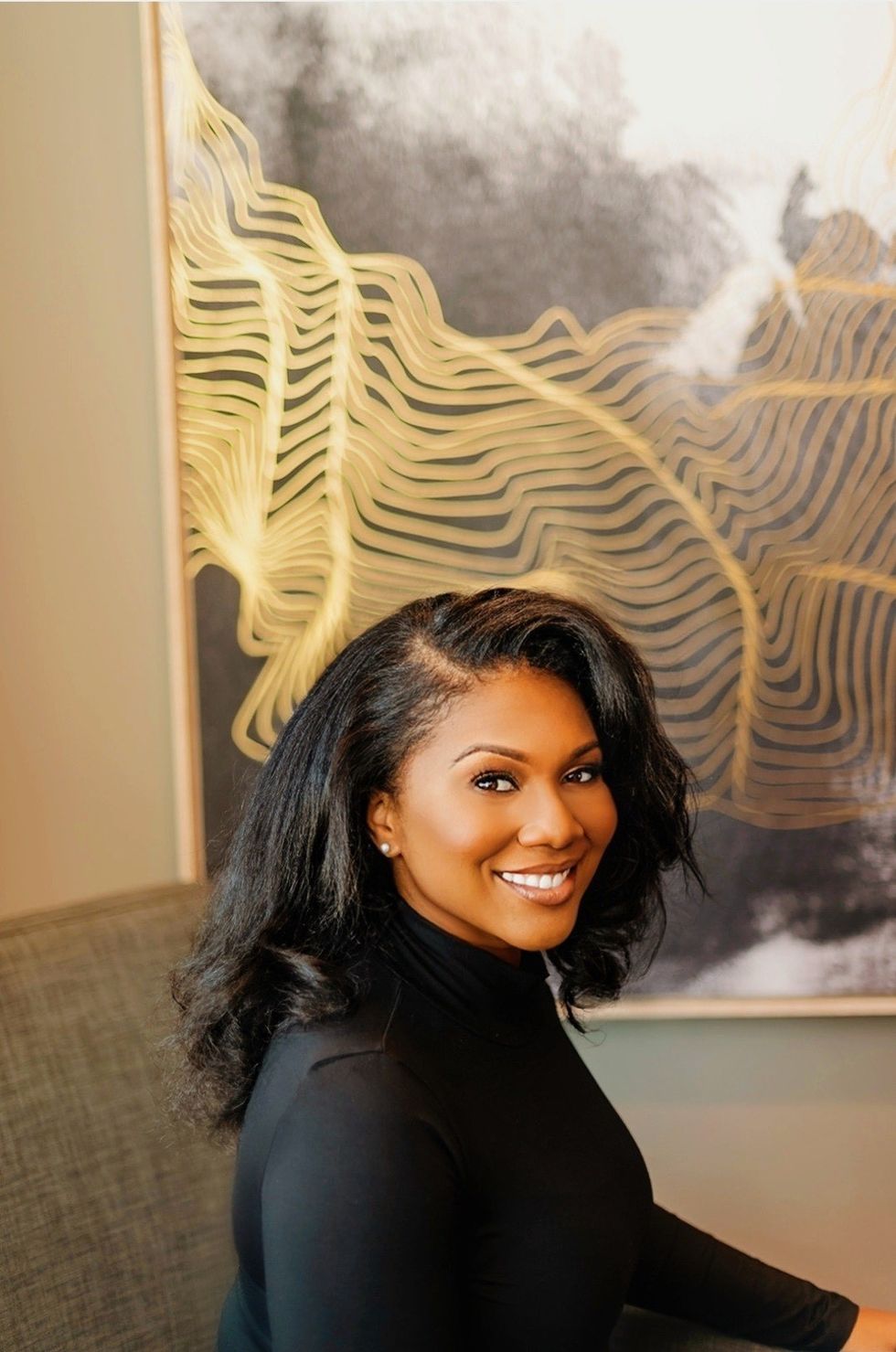
Samantha Saunders, LPC & Authentic Relationship Expert
Courtesy
Saunders ended up reflecting on a question that would prove to change the trajectory of her life: "If nobody had a say in how I lived my life, not my family, not society, not even my own fears, what would I do?"
For her, the answer was clear. It led her to walk away from a marriage that no longer aligned with her truth and to begin living for herself. While every woman’s answer will be different depending on her season of life, Saunders emphasizes that the core takeaway remains the same: Living authentically requires self-prioritization.
"When you’re not true to yourself, it’s easy to fall into patterns of over-giving, people-pleasing, and settling for less," she explains. "But when you honor who you are and what you truly want, you create space for healthy, reciprocal connections. Relationships should add to your life, not drain it. They thrive when two whole, authentic people show up for each other, and that can only happen when you make yourself a priority."
The truth is, that choosing yourself is an essential part of living authentically. Choosing yourself is not just about bold moves and major life shifts, it's a daily practice. It’s about learning to check in with your needs, set boundaries that honor your well-being, or refuse to shrink yourself for the comfort of others, you are choosing authenticity. You are choosing you.
Signs You’re Stuck in an Unhealthy Relational Loop
Old relational patterns might be the hardest thing to unlearn, even as you start to prioritize yourself more. Though they are often rooted in scarcity, those relational patterns feel familiar and because they are familiar, they become almost like second nature, meaning that without even realizing it, you become stuck in an unhealthy relational loop, a cycle of self-abandonment masquerading as duty, connection, and of course love.
According to Saunders, these loops can show up in ways we don't even question because we view them as normal because they are familiar to us. "Unhealthy relational loops can look like this: You argue, there’s yelling, silent treatment, or someone says something hurtful, and then eventually you 'move on.' Maybe there’s an apology, maybe not, but the behavior doesn’t actually change. You feel like you’re stuck on repeat, and deep down, you know nothing is improving," she explains.
Another major sign? Over-giving or over-functioning in relationships. "Maybe you’re constantly doing things for others at the expense of your own well-being because you’re afraid of disappointing them or losing the relationship. A lot of times in unhealthy relationships we are over-functioning for the other person, whether that’s emotionally or trying to get them to change in some capacity. You might also notice you’re always seeking approval, doubting your decisions, or second-guessing your worth," Saunders expounds.
Other signs of unhealthy relational loops can include:
- Over-explaining or justifying your needs
- Feeling emotionally responsible for others
- Staying in cycles simply because they are familiar
"You are not obligated to keep living in a pattern. You don’t have to keep attracting the same dynamics of giving and just because it’s familiar," Saunders reminds us. "Familiar does not mean safe. Familiar does not mean yours. It just means you have been conditioned to accept it."
"Familiar does not mean safe. Familiar does not mean yours. It just means you have been conditioned to accept it."
Saunders reiterates that familiar patterns are often ones that stem from survival mode, a learned response from our past experiences that we had to earn love or fight to be chosen. But she makes it clear that in case no one told you, "you are no longer that version of yourself who had to fight for scraps. You are becoming a grown healed woman who is allowed to choose abundance, especially in your relationships."
But how do you break a cycle that already feels so ingrained in how you move through the world? Saunders offers a framework for recognizing and releasing these patterns:
How to Heal Unhealthy Relational Patterns: 5 Tips
1. Slow down and see the pattern:
"The moment you feel that familiar pull [of] over-explaining, fixing, shrinking... pause. What is your body telling you? What's the urge? And whose voice is in your head when you feel like you have to do it? Awareness is your first step out."
2. Separate reality from fear.
"A scarcity response is fear dressed up as wisdom. It whispers, 'If I don’t do this, I’ll lose them,' or 'If I say no, they’ll leave.' But is that true, or is it just a version of you that still believes she has to work for love?"
3. Interrupt the cycle with something new.
"When you catch yourself falling into an old pattern, ask yourself: 'What would a healed, abundant version of me do?' Maybe that means not texting first. Maybe that means allowing yourself to receive instead of proving your worth. Maybe that means choosing rest over performing. The shift starts with one different choice."
4. Regulate your nervous system.
"These patterns aren’t just in your mind, they live in your body. That anxious pull to do something? That’s your nervous system running old programming. Breathe. Move. Meditate. Teach your body that you are safe even when you don’t over-function."
5. Rewire your beliefs about love, connection, and worth.
"You have to start believing that you are inherently worthy of love and support not because of what you do, but because of who you are. Real love does not require your exhaustion."
From Scarcity to Abundance: How to Stop Over-Giving and Start Thriving
If learning how to break free from unhealthy relational loops teaches us anything, it’s that we are not obligated to stay in spaces that drain us just because they’re familiar. We don’t have to keep choosing relationships, habits, or beliefs that operate from a place of fear, over-giving, or self-sacrifice. But even when we recognize these cycles, it’s not always easy to stop identifying with them. Why? Because of scarcity.
Scarcity conditions us to believe that letting go of what is familiar means that we are losing. Scarcity makes us believe that if not this, what else is there? What if there is not another opportunity after this, another relationship, another chance? What if there isn't more?
According to Saunders, it's this mindset that keeps us from choosing abundance, from leading a life of authenticity, and ultimately from truly choosing ourselves.
"Scarcity is a mindset we inherit from experiences where we felt like there wasn’t ‘enough.’ Enough love, time, opportunities, or support. It keeps us stuck in fear, thinking we have to cling to what we have because something better might not come along. But the truth is, there are billions of opportunities, people, and chances in this world. Your only limit is what you allow yourself to believe."
So how do you actually make this shift? Saunders offers these key steps:
How to Shift from Scarcity to Abundance: 6 Tips
1. Reframe your beliefs.
"To shift into abundance, start by reframing your beliefs. Instead of thinking, 'This is my only chance,' remind yourself, 'There will always be more.' Whether it’s love, success, or community, abundance exists when you stop operating from fear. 'I have to earn love' or 'Opportunities are limited' must be replaced with 'I am already worthy' and 'What’s meant for me won’t require self-sacrifice.'"
2. Set boundaries that honor your worth.
"Scarcity makes us overextend ourselves because we think saying no means we’re losing something. But boundaries create space for what you truly deserve. Ask yourself, 'Does this add to my life, or does it drain me?' Then make decisions accordingly."
3. Let go of over-giving and practice receiving.
"Practicing receiving without guilt is key, allowing love, help, and rest without immediately feeling the need to reciprocate reinforces that you are deserving just because."
"To shift into abundance, start by reframing your beliefs. Instead of thinking, 'This is my only chance,' remind yourself, 'There will always be more.' Whether it’s love, success, or community, abundance exists when you stop operating from fear."
4. Stop settling and raise your standards.
"Setting and maintaining bare minimum standards in relationships, work, and personal care ensures that you no longer settle for less than what aligns with your worth. The real shift happens when you stop moving from desperation and start moving from trust, knowing that chasing or over-giving won’t bring you what’s truly meant for you."
5. Embrace the power of no.
"Embracing the power of saying no without guilt or fear creates space for what actually nourishes and supports you. When you fully believe in your own worth, you stop proving yourself and start choosing what aligns with the life you truly want.
6. Ground yourself in gratitude.
"Focus on gratitude. When you recognize what you already have, it reinforces the belief that more is possible. Gratitude helps you lean into abundance and lets you move through life with confidence instead of fear."
How to Start Putting Yourself First Today
So, how do you start putting yourself first? Well, it starts with small, intentional choices that reinforce your worth and shift you out of over-giving and self-neglect. In terms of practical tips, Saunders emphasizes prioritizing yourself starts with the little things, like recognizing where your energy is going and reclaiming it.
"Take a look at your schedule, your to-do list, or even your text messages. Identify one thing you’re saying yes to out of guilt, obligation, or fear of disappointing someone, and say no instead," she advises. Whether it’s declining a last-minute request, rescheduling something that doesn’t fit your energy, or stepping away from a draining conversation, setting these small boundaries is a powerful way to take back your time.
Just as important as your actions are the thoughts that shape them. "If you catch yourself thinking, ‘I have to overwork to be successful’ or ‘If I don’t do everything, I’ll lose people,’ pause and reframe it," she encourages. Instead, try replacing those thoughts with, 'Success flows when I take care of myself first' or 'I am worthy of love and support without over-functioning.' This simple mindset shift can completely change how you move through life.
And when it comes to boundaries, one of the most freeing things you can do is stop explaining yourself. "You don’t need to justify prioritizing yourself. A simple ‘I’m not available’ is enough," Saunders reminds us. "Watch how much lighter you feel when you stop giving people permission to validate your choices." Letting go of the need for permission or validation allows you to stand firmly in your decisions without guilt.
4 Ways to Put Yourself First Without Feeling Guilty
For Black women, self-prioritization is more than self-care, it’s self-preservation. This radical act of choosing ourselves is about reclaiming our time, our energy, and our wholeness. But just because we are learning that pouring endlessly into others leads to our own unraveling doesn’t mean there isn’t room to prioritize the people we love. It simply means we can no longer afford to do so at the cost of losing ourselves in the process.
"Balancing self-prioritization while nurturing healthy relationships starts with the understanding that putting yourself first doesn’t mean neglecting others—it means making sure you’re showing up fully, not resentfully," says Saunders. "This will include setting boundaries, communicating clearly, and ensuring that your relationships are built on mutual respect, not self-sacrifice."
The truth is, that healthy relationships don’t require self-abandonment. They don’t thrive on exhaustion or performance. They require both individuals to show up fully and authentically. And prioritizing yourself does not mean neglecting others. It means making sure you are included in the love and care you so freely give.
It means no longer depleting yourself in relationships just to be seen as worthy. "Many people, especially Black women, have been conditioned to believe that prioritizing themselves means neglecting others, but in reality, when you care for yourself first, you show up in relationships from a place of fullness, not depletion."
So how do you balance both? How do you nurture your relationships while making sure you don’t disappear in the process? Saunders shares the following key steps:
1. Get Clear on Your Non-Negotiables
"What do you need to feel like you? Whether it’s alone time, a morning routine, therapy, or simply not answering calls after a certain time, those things matter. When you make space for them, you show up in relationships from a place of wholeness, not depletion."
2. Set Boundaries & Communicate Them Early
"Healthy relationships thrive on clear expectations. If you need a night to yourself, say it. If a conversation is draining you, step away. Boundaries aren’t walls; they’re guidelines for how you can love and be loved without losing yourself in the process."
3. Check in With Yourself Regularly
"We check in on others all the time—How are you? But how often do you ask yourself that? Take a moment each week to pause and ask: Am I honoring my needs, or am I slipping into over-giving? Your well-being shouldn’t be an afterthought."
4. Release the Guilt
"You don’t have to prove your love by over-sacrificing. The people who genuinely care about you will respect your need for balance. Love should feel mutual, reciprocal, and energizing not something that drains the life out of you.
"At the end of the day, the healthier you are mentally, emotionally, [and] physically the healthier your relationships will be. You don’t have to choose between taking care of yourself and being there for others. You can do both. The key is making sure you don’t disappear in the process.
"So ask yourself: 'Am I showing up from a place of love, or from a place of obligation?' The answer will tell you everything you need to know," Saunders concludes.
For more of Saunders, cop her 7 Days to Reclaim Your Peace and Start Healing journal here.
Let’s make things inbox official! Sign up for the xoNecole newsletter for love, wellness, career, and exclusive content delivered straight to your inbox.
Featured image courtesy

Exclusive: Viral It Girl Kayla Nicole Is Reclaiming The Mic—And The Narrative
It’s nice to have a podcast when you’re constantly trending online. One week after setting timelines ablaze on Halloween, Kayla Nicole released an episode of her Dear Media pop culture podcast, The Pre-Game, where she took listeners behind the scenes of her viral costume.
The 34-year-old had been torn between dressing up as Beyoncé or Toni Braxton, she says in the episode. She couldn’t decide which version of Bey she’d be, though. Two days before the holiday, she locked in her choice, filming a short recreation of Braxton’s “He Wasn’t Man Enough for Me” music video that has since garnered nearly 6.5M views on TikTok.
Kayla Nicole says she wore a dress that was once worn by Braxton herself for the Halloween costume. “It’s not a secret Toni is more on the petite side. I’m obsessed with all 5’2” of her,” she tells xoNecole via email. “But I’m 5’10'' and not missing any meals, honey, so to my surprise, when I got the dress and it actually fit, I knew it was destiny.”
The episode was the perfect way for the multihyphenate to take control of her own narrative. By addressing the viral moment on her own platform, she was able to stir the conversation and keep the focus on her adoration for Braxton, an artist she says she grew up listening to and who still makes her most-played playlist every year. Elsewhere, she likely would’ve received questions about whether or not the costume was a subliminal aimed at her ex-boyfriend and his pop star fiancée. “I think that people will try to project their own narratives, right?” she said, hinting at this in the episode. “But, for me personally – I think it’s very important to say this in this moment – I’m not in the business of tearing other women down. I’m in the business of celebrating them.”
Kayla Nicole is among xoNecole’s It Girl 100 Class of 2025, powered by SheaMoisture, recognized in the Viral Voices category for her work in media and the trends she sets on our timelines, all while prioritizing her own mental and physical health. As she puts it: “Yes, I’m curating conversations on my podcast The Pre-Game, and cultivating community with my wellness brand Tribe Therepē.”
Despite being the frequent topic of conversation online, Kayla Nicole says she’s learning to take advantage of her growing social media platform without becoming consumed by it. “I refuse to let the internet consume me. It’s supposed to be a resource and tool for connection, so if it becomes anything beyond that I will log out,” she says.
On The Pre-Game, which launched earlier this year, she has positioned herself as listeners “homegirl.” “There’s definitely a delicate dance between being genuine and oversharing, and I’ve had to learn that the hard way. Now I share from a place of reflection, not reaction,” she says. “If it can help someone feel seen or less alone, I’ll talk about it within reason. But I’ve certainly learned to protect parts of my life that I cherish most. I share what serves connection but doesn’t cost me peace.
"I refuse to let the internet consume me. It’s supposed to be a resource and tool for connection, so if it becomes anything beyond that I will log out."

Credit: Malcolm Roberson
Throughout each episode, she sips a cocktail and addresses trending topics (even when they involve herself). It’s a platform the Pepperdine University alumnus has been preparing to have since she graduated with a degree in broadcast journalism, with a concentration in political science.
“I just knew I was going to end up on a local news network at the head anchor table, breaking high speed chases, and tossing it to the weather girl,” she says. Instead, she ended up working as an assistant at TMZ before covering sports as a freelance reporter. (She’s said she didn’t work for ESPN, despite previous reports saying otherwise.) The Pre-Game combines her love for pop culture and sports in a way that once felt inaccessible to her in traditional media.
She’s not just a podcaster, though. When she’s not behind the mic, taking acting classes or making her New York Fashion Week debut, Kayla Nicole is also busy elevating her wellness brand Tribe Therepē, where she shares her workouts and the workout equipment that helps her look chic while staying fit. She says the brand will add apparel to its line up in early 2026.
“Tribe Therepē has evolved into exactly what I have always envisioned. A community of women who care about being fit not just for the aesthetic, but for their mental and emotional well-being too. It’s grounded. It’s feminine. It’s strong,” she says. “And honestly, it's a reflection of where I am in my life right now. I feel so damn good - mentally, emotionally, and physically. And I am grateful to be in a space where I can pour that love and light back into the community that continues to pour into me.”
Tap into the full It Girl 100 Class of 2025 and meet all the women changing game this year and beyond. See the full list here.
Featured image by Malcolm Roberson
More Than Gratitude: 7 Signs You're Struggling With Contentment In Your Life
If Thanksgiving happens to be your favorite holiday — or you just happen to be a longstanding participant of it — then there is one tradition that you are probably familiar with. Usually, before everyone eats, each individual expresses at least one thing that they are grateful for. I actually think that is one of the best things about the holiday because it reminds people to slow down and really reflect on how to be in the moment and think about the blessings that they have. And that, my friend, is what gets folks into the mindset of knowing how to be…content — even if it’s just for a brief moment.
Contentment. By definition, it’s the state of not only being “satisfied with what one is or has” but also “not wanting more or anything else.” And you know what? Although it might not be a popular aspiration of many, it is a sign of spiritual maturity on certain levels. After all, it is the Apostle Paul who once said, “Not that I speak in regard to need, for I have learned in whatever state I am, to be content…” (Philippians 4:19 — NKJV).
Being content is about not complaining. Being content is about learning to be comfortable in your present circumstances. Being content is about choosing to find joy and fulfillment, on some level, and in some way, on a daily basis.
Personally, I dig all of this so much because when you have mastered true inner contentment, it creates stability, self-awareness, and a type of resilience that makes you…shoot, powerful beyond measure, if you ask me. Because when someone knows how to “find the good” and “make peace,” regardless of what is going on around them, they truly are unstoppable. Yeah, on so many levels, contentment is the ultimate life hack. It’s something that each and every one of us should aspire to become: completely and genuinely content.
Thanksgiving is basically moments away at this point. In preparation for that time of self-reflection, pour yourself a glass of wine, turn on some soft music, sit on your coach, and then ask yourself, “Am I content?” If you’re not sure (or you need the definition unpacked for you just a bit more), here are seven signs that you may not be…and yet, there is no time like the present to do something about it.
1. You’re Super Impatient
GiphyHonestly, putting another Scripture right here could be all that is needed in order to bring this point to a swift and abrupt end. Which one? I Corinthians 13, the Love Chapter, starts off with “Love is patient” (I Corinthians 13:4). Yeah, if you want to know if you love yourself and love yourself well, how patient are you…including with yourself? Throughout the years, I have shared one of my favorite definitions of "patient" in several different articles: “bearing provocation, annoyance, misfortune, delay, hardship, pain, etc., with fortitude and calm and without complaint, anger, or the like.” For me, it’s a blaring reminder that mastering patience isn’t just about waiting (more on that in a sec); it’s about waiting with grace.
Content people can do this because, on some level, they know how to apply the John Piper quote, "God is always doing 10,000 things in your life, and you may be aware of three of them." Another way of looking at this is people who can wait well — without complaining or getting annoyed by delays or challenges in the meantime — get that in order for things to truly come together, there are lots of moving parts…some that they don’t even know about. And so, if they want the best outcome, yes, waiting well is oftentimes not just involved; it is required.
Impatient people don’t get any of this. That’s why they are so stressed out all of the time.
2. You’re Worried About Things You Can’t Control
GiphyThis. Past. Election. Chile. And then the cabinet that that man is putting together as we speak? I don’t even want to get my blood pressure up, expounding on it. Let me just pivot by adding one more Scripture — because it is beyond fitting: “Therefore do not worry about tomorrow, for tomorrow will worry about its own things. Sufficient for the day is its own trouble.” (Matthew 6:34 — NKJV)
Although worrying is something that pretty much everyone does at one point or another, one of my favorite quotes on it is by an American humorist by the name of Erma Bombeck: “Worry is like a rocking chair: it gives you something to do but never gets you anywhere.” And really, when you stop to really think about worrying, isn’t that the truth? For one thing, all worrying does, by definition, is cause you to torment yourself by focusing on things that aren’t even going to happen (somewhere between 85-90 percent of the time, in fact; there is actually a science on that) or trying to control things that are beyond your control.
If being a worry wart is your internal struggle, my advice would be to look at life this way: If you’re worried that you’re about to get written up for getting to work late again, leave your house earlier — you can control that. On the other hand, if you’re worried that you’re going to get laid off before the holiday season ends, so long as you’ve been doing your best (which is also something that you can control), please put your energy elsewhere because that is something that you can’t control.
And I promise that when you choose to be calm and confident over worrying yourself to death, that can help you to manage what you can’t control so much easier. Oh, and your health will thank you, too, because worry is attached to things like insomnia, muscle tension, headaches, overeating, and drinking too much. All this over things that probably won’t happen in the first place? Yeah, sis…(choose to) relax.
And by choosing to chill out, there is some contentment that follows because you will see the good as much as, if not more than, the potential bad. Trust me.
3. The Past and/or Future Consume You
GiphyOn the heels of the Scripture that I just provided for the previous point, it also applies to this one. You know, back when I was doing some intentional research on forgiveness, I always appreciated the insight of author Gary Zukav: “Forgiveness is accepting that the past cannot change.” While this doesn’t mean that you shouldn’t hold people accountable for what they have done, it does help you to be compassionate with those who are truly sorry (check out “Heads Up: It's NOT An Apology If An Amend Isn't Made”) because, no matter what has transpired between you and them, one thing they can’t do is go back into a time machine and change it.
And you know what? When it comes to the mistakes — or, let’s be real, sometimes they are conscious poor decisions — you have made, you can’t either. So, why let their misdeeds or your own consume you to the point of internally destroying you?
Then there’s the future. What if you get robbed? What if your mom gets cancer? What if your husband files for divorce? Girl, if you are caught up in the future that hasn’t even happened yet, you are definitely gonna drive yourself up the wall! And this is why so many mental health experts and platforms are all about encouraging individuals to live in the moment. You can do this by meditating, taking breaks from social media (and the news), journaling, doing things that you enjoy (instead of waiting to put them off), and resting.
Listen, one of the best things about choosing to only focus on the here and now is you can find little things about it to be content with — and that helps you to be/become more content overall.
4. You Always Think About Wanting More
GiphyAlthough it certainly wasn’t my plan for this piece to be so Scripture-heavy, I’ve got to flow with what immediately comes to mind and, for this point, the verse, “So are the ways of everyone who is greedy for gain; It takes away the life of its owners” (Proverbs 1:19 — NKJV) is it. And just what does it mean to be greedy? A greedy individual isn’t just low-key obsessed with getting and having more — please catch it — they are also quite EAGER.
Eager folks also tend to be impatient. Eager folks are perceived by others as being very intense (and not in a good way). More times than not, eager folks haven’t really mastered how to take a moment to appreciate what they do have because all they care about is what’s next. And when you’re in a state of that kind of, well, anxiety…how could it not affect your quality of life? I mean, really.
And what if you read all of that and said, “I’m not greedy; I’m just ambitious” — listen, there is nothing wrong with having goals and wanting to obtain them. However, an ambitious individual knows how to find balance. If they get a promotion, they will schedule a vacation to celebrate it. If they just got a new car, they are not in a rush to get a new house until they can financially afford it. If they were just proposed to with a really nice ring, they aren’t hounding their new fiancé about setting a date within the next two weeks.
People who always want more, without taking the time to enjoy what they already have, are never going to be content. Why? Because there is always something else that you can want…even if you don’t need it or it really isn’t the time for it. Meanwhile, content people get that it’s a good thing to not go after everything all of the time; that it’s far wiser to embrace what is already before them — because some folks don’t even have…that.
5. You Compare Yourself to Others
GiphySomething that I actually get asked fairly often is, do I feel “some type of way” that I do so much work in the realm of marriage when I’ve never been married myself. The short answer is “absolutely not” because I know that I could’ve been married, a few times over, at this point; however, I am just as intentional about not wanting to be divorced as I am about being in a healthy marriage, not just “a marriage.”
I’m grateful to be in that head and heart space too; otherwise, I would be out here comparing myself to other people — and there is nothing good, healthy, wise, profitable, or beneficial about doing that. In fact, science isn’t a fan of playing the “keeping up with the Joneses” game, either.
According to science, that can ultimately do things like lower your self-esteem, cause you to only see the bad/negative things in your world (in comparison to other people), and it can jack up your perception of what’s really going on with other people. For instance, if you’re 33 and comparing yourself to your friends who are already married and parents, you might want to talk to them about what their day-to-day, beyond their IG posts, is like.
Because while prayerfully, their life is filled with many blessings, if they are being totally honest with you, they will also share that you’ve got some “pros” to your life too (honey, there are some real benefits to being single; check out “If You're Not In Love With Being Single, Ask Yourself These 6 Questions.,” “10 Bona Fide Benefits Of Being Single,” and “10 Words That'll Make You Totally Rethink The Word 'Single'”). Content people get that every season does — because it’s true.
6. You Don’t Verbalize Gratitude Often
GiphyThere is someone in my world who I actually try to avoid as much as possible. It’s not that she’s not smart, and honestly, she’s one of the funniest individuals that I’ve ever known (and I’ve known her for most of my adult life). It’s just that…she is always wanting something, and I find that to make her a very draining individual. Lawd, even as I am typing all of this out, I’m trying to recall a time when I’ve heard her say, “thank you” for something (no joke), let alone express any form of genuine gratitude. She’s just got such a sense of entitlement that whatever she does receive, she thinks she’s owed and what she doesn’t have, she believes that something is wrong if it hasn’t arrived yet. Geeze, what a horrible type of existence.
You don’t have to take my word for it either because there is plenty of data out here to support that people who don’t take the time to be grateful for what they have ended up being unhappy, more stressed out, in more physical pain (yes, literally) and definitely more negative than everyone else — which would explain why people don’t like hanging out with them as much.
So, since this is the time when gratitude is the theme of the season, think about what you are grateful for when it comes to what you’ve accomplished this year, then write it down and post it up somewhere. Then, as far as the individuals, for whom you are grateful for — send them a handwritten note, get them a gift card to their favorite coffee shop, or even just call to tell them.
One of the most beautiful things about being in a state of contentment is it reminds you of a lot of what you already have. It really is enough…for now…in this very moment.
7. Being (and Living) Satisfied Is a Foreign Concept to You
Giphy“Tubi movies” really is a complete sentence. LOL. And yes, sometimes, when I’m taking a writing break, I will check out some of the most…I-wouldn’t-normally ones, just to lend my support. In walks Never Satisfied with its own self-explanatory meaning. Y’all, it really is oh so true that there are folks out here dealing with some unpredictable and sometimes even truly dire consequences — and it’s all because they didn’t know how to sit down somewhere and learn how to be satisfied with the people, places, things, and ideas that they already have.
That said, I am indeed a quotes gal, and one of my favorites on the topic of satisfaction is by actor Christopher Reeve: “Success is finding satisfaction in giving a little more than you take,” and although I don’t do what I’m about to do often (because I try to take Matthew 6:1-4 very literally and seriously), I’m going to illustrate what he said about satisfaction by sharing a recent situation.
This past week, a nurse practitioner (I prefer those to doctors) diagnosed me with wrist tendonitis for the first time in my life. If you knew how many keystrokes that I do a day, you’d probably be shocked that it took this long. Anyway, as I was waiting in line to get a prescription, a young Black man was basically freaking out because his insurance was refusing to cover his own meds. According to what he was telling the pharmacist, he always only pays $5; however, this time, they were charging $62, he simply didn’t have it, and the insurance company was not picking up.
As I watched him shaking and sweating while saying that he really needed it today and fretting while talking to his mom on the phone, I offered to cover it — and after going back and forth with him for about three minutes, I did. In my mind, although I didn’t plan on spending about $85 (total) that day, the little inconvenience that it was costing me was nothing in comparison to how much it was going to benefit him — I could tell from how he and his mother reacted (even the pharmacist mouthed “thank you so much”), and that is what made it money well spent.
To help someone who had no way of helping themselves in the moment? That brought me a lot of satisfaction because it’s nice to lighten someone’s load while leaving it to karma to handle it. ALL OF IT.
And that’s why I thought it was best to wrap all of this up with a reminder that being satisfied is being content. And when you can be so satisfied with your life that you want to help others? That is a level of contentment that is truly unmatched because you start looking for ways to bless others simply so that they can feel just as content as you do.
____
Our culture? It really is never satisfied, which explains why a lot of people are so miserable. SMDH. You don’t have to be like the masses, though. This Thanksgiving, please purpose in your mind (and heart) to be(come) more content. It will make you a rare gem that benefits everyone and everything around you.
Including yourself, sis. No doubt about it.
Let’s make things inbox official! Sign up for the xoNecole newsletter for love, wellness, career, and exclusive content delivered straight to your inbox.
Featured image by Shutterstock
Originally published on November 28, 2024