'Dear Black Girls': How A'ja Wilson Is Helping Black Girls Heal & Bloom With Confidence

In recent years, books written by Black women, such as Viola Davis, Michelle Obama, and Taraji P. Henson, have adorned our shelves and shown the great trials and tribulations one has had to endure to become the woman we see today. Though their narratives show great accomplishments, they explain in detail the price that had to be paid to achieve their monumental success. Often, this price came at the cost of having to endure unspeakable tragedy. The world was being carried on their shoulders and backs, and they had to learn to balance the weight of it all. Despite the odds, they managed to grow and become exceptionally talented women with limited support or, most of the time, alone.
However, in A'ja Wilson's recently published book, Dear Black Girls, this narrative is changing for the better. The memoir shows that WNBA superstar, and growing legend, A'ja Wilson isn't just a force to reckon with on the court, racking up championships, MVP awards, Olympic gold, and season-record-breaking accomplishments. Her impact transcends the game, reaching into the hearts of young Black women and girls, who like me might have once felt a pang of otherness for embracing their inner tomboy.
Wilson's recently published book offered a powerful remedy, a story that mirrored my own experiences and gently soothed the wounds of not always fitting in. This collection of honest stories is not just about Wilson's journey, it's also a book that holds the potential to heal and inspire countless other Black girls who deserve to see themselves reflected in the pages of a champion.
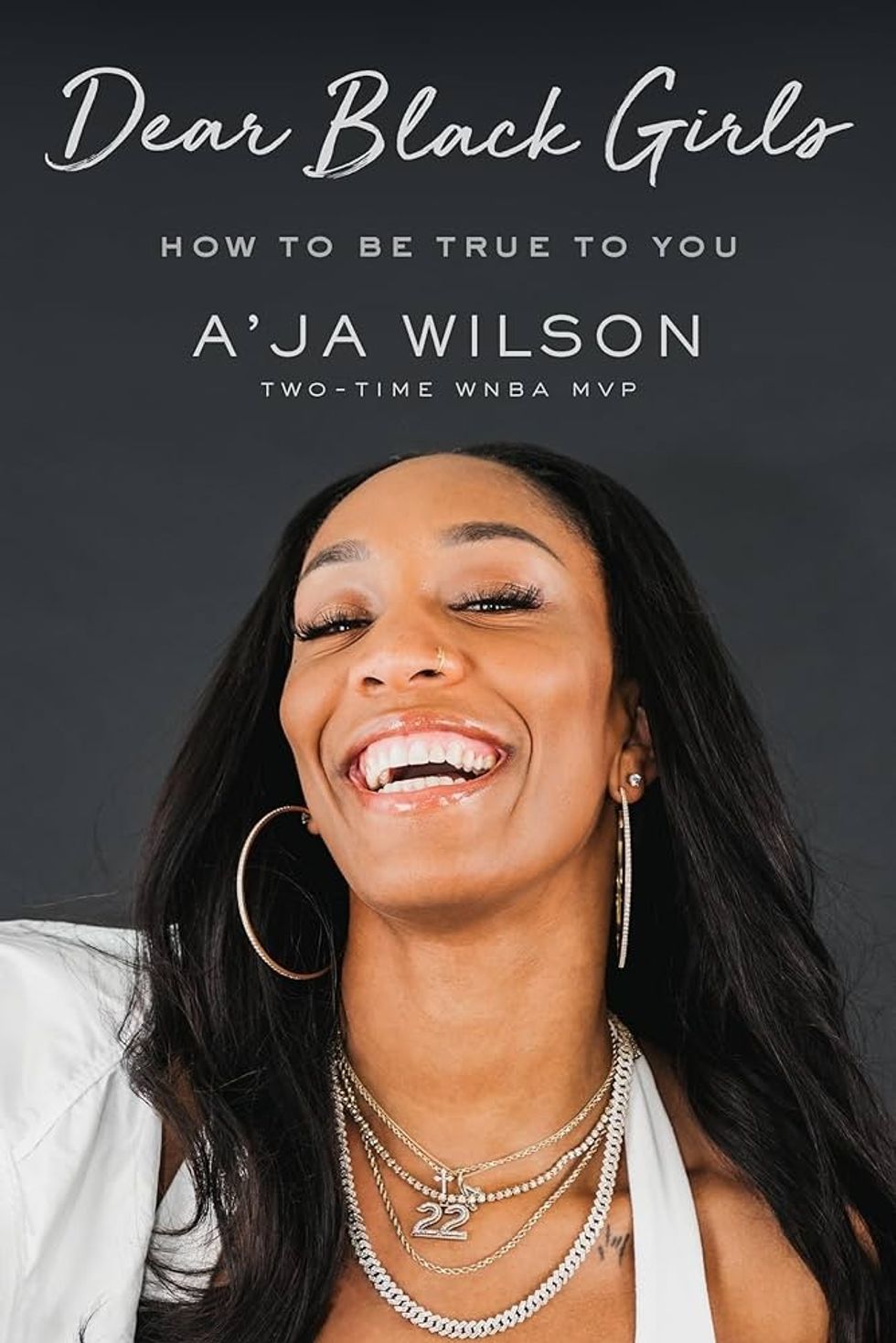
Although Wilson discusses the tribulations she had to overcome, she didn't have to do them alone and often had more than one support system installed to ensure her success. This book ultimately shows the beauty that grows when Black girls are raised with nourishment, intentionality, and understanding rather than the unrelenting grief and sadness that many believe are necessary to raise Black girls.
In Dear Black Girls: How to Be True to You, the two-time MVP shows us that love, rather than unending tragedy, can be the source of success for all Black girls--past, present, and future. Wilson also shows us how love can occasionally come from an unexpected source--a stranger who only has compassion, empathy, and understanding to offer.
Living While Black
There comes a point in time, in every Black girl's life, where they learn that they are not just a girl, but a Black girl. For me, it was on the playground of my elementary school, where a white girl--who I thought was my friend--called me the n-word when I refused to join her in a fight against a mutual friend. For A'ja Wilson, it was when her "friend" refused to invite her to her house for a sleepover, unless she slept outside. When asked why she had to be the only one to sleep outside, she was quickly informed it had been due to her race. Though her parents discussed it with her and explained why she and the young lady could no longer be friends, A'ja Wilson offers a relatable lens to express the grief of realizing one's otherness.
The year she discovered her Blackness meant a difference, Wilson felt alone and began isolating herself. It wasn't until she met a woman who worked in the cafeteria that she understood the importance of being seen by someone who looked like her. In Dear Black Girls, Wilson teaches the importance of representation and finding someone who "looks like you" and actively cares and checks in with you. Though the young readers of this book will most likely never meet Wilson, she provides her novel as a stand-in role model who actively sees how alone some Black girls feel in the world and tells them lovely: "I see you, I got you."
Finding Oneself
There is a certain power in discovering one's "why." In Dear Black Girls, Wilson explains that in order to find oneself or one's reasons for doing things, it might be important to look to your elders. The ones that could make you believe in yourself. For Wilson, it was her grandmother. Her grandmother was her place of solace and the person she felt closest to. Before she picked up the game of basketball, A'ja's grandmother believed she was special and would achieve so many things in life.
Through this belief, she nurtured Wilson and taught her to believe in the good that everyone had to possess. She taught Wilson that Black women could be heroes, and knew how to "walk the walk" and "talk the talk." She taught Wilson, and in turn, Wilson has taught Black girls, that finding oneself can be done at the hands of the ones that we love. And that if one's love is strong enough, we can "freeze it, and preserve that safe space forever."
It's Okay to Be Different
In school, Wilson was considered a "slow learner." Diagnosed with dyslexia at the late age of 16, she believed she had not been as "smart" as the other kids. Wilson would freeze up in class, and despite loving to write narratives and the school itself, she found she did not catch on with her peers as quickly as she liked. She spent hours on end stressing about being different, so much so, that at times the thought of her otherness became debilitating and all-consuming. With her family and in her solitude, she understood who she was. However, among her friends and in class, she found that she didn't know who she was, nor who they wanted her to be.
From this, she taught Black girls that being a teen is stressful enough, so being oneself should be easily embraced. Though, she admits to not knowing the right thing to say, do, or act, and therefore is unable to give us "cheat codes," the best thing a young Black girl can do, is just be.
Find Your Gardener
I often say that Black women have learned to grow without nourishment. So, in reading Dear Black Girl, it was a refreshing change of pace to read that Wilson had been adorned with love, guidance, honesty, and protection by strong support systems in her life. One of those support systems was Wilson's father. Her father taught her many things in life, but one that was most essential was the importance of perseverance and overcoming mediocrity. See, despite being the best in her career, Wilson and basketball did not mesh well from the start. Instead, she had been known to try many things and was lackluster at best.
Nevertheless, when Wilson was told that she did not play well by her father--after asking why she wasn't getting any playing time--she finally learned to overcome her challenges.
Not because she suddenly practiced more, or believed she could do anything with time. She became better because her father gave her the option to walk away from the sport. He allowed her to be scared, to be unsure of what she wanted in life, and freed her of the stress of absolutes. Through encouragement, he became her gardener--always trying to bring out the best in her through "easy" and "tough" love. In Dear Black Girls, Wilson encourages Black girls to find their "gardeners," the people in their lives who bring out the best in them, drive them crazy and are never afraid to tell them how it is. The person that pulls out all of the weeds and negativity, and leaves enough space for you to receive sunlight and bloom.
Gaining a Nonsense Detector
While finding a gardener, Wilson also encourages Black girls to find or gain a "nonsense detector." A nonsense detector is just as it sounds, someone who can detect the nonsense that the world is attempting to bring to them and help them identify what it truly is. They are the person who is willing to approach a spade and call it by its name. In Wilson's life, this was her mother. A'ja's mom encouraged her to think logically about her education and its relationship to her basketball career.
She was the person Wilson called when she learned to drive in a new state or deal with the stress of her newfound career. Through her mother's encouragement, she learned not to chase after boys or some concept of a new sense of self, instead, she learned to make decisions with her best interest in mind. In doing so, she chose family, which meant more time with her grandmother, which she would not have had if she hadn't learned to listen to something that encourages no-nonsense.
Grief Has No Timeline, Knows No Bounds
In 2017, during her junior year of college, A'ja Wilson was known as one of the best players in the NCAA. After two seasons of coming up short of winning a national title, she had finally accomplished her goal of winning with Dawn Staley's South Caroline Gamecocks. However, the win was bittersweet, because the champ had been grieving the loss of her grandmother, one of her biggest support systems.
During this time, Wilson discovered that grief could not be neatly packed away in a box, waiting to be unraveled when she had prepared to deal with it. She noted that it was an unending rollercoaster where lows felt all-consuming and endless.
In Dear Black Girls, Wilson discusses the importance of experiencing grief at its pace, and on your own timeline. She explains to young Black girls that the feeling of despair and paralysis is normal and that instead of trying to climb out of the sadness, sometimes it is beneficial to wade through it, with the people you care about. Not only this, she encourages Black girls to embrace support that may be considered unexpected, through a beautiful anecdote involving Dawn Staley.
The champ mentioned the coach drove down to her house, upon hearing about the death of her grandmother, and sat in silence with the athlete as she cried. She informed her that she could take all of the time that she needed and that the "team would be waiting for her when she was ready to return."
You Don't Know What You Don't Know
The issue that many people hold today is they expect to be perfect. Though we know perfection is merely a concept, and the only thing perfect about perfection is the word itself, many dwell on being perfect and having the foresight to ensure it is so. When perfection is inevitably unattainable, we punish ourselves for not knowing better or being fallible. Nevertheless, dwelling on things, especially in relation to being perfect, is nothing more than wasted energy.
In Dear Black Girls, Wilson--through a humorous anecdote of her WNBA drafting day--points out that everyone makes mistakes and that many should not be ashamed for not knowing what they hadn't known before. Instead, beauty lies in learning and giving oneself credit for the knowledge that you now have for navigating future situations. Instead of beating yourself up, Wilson tells young Black girls there is no point in beating themselves up and to allow grace in moments of uncertainty and error.
Protect and Nurture Your Mental Health
The idea of seeking therapy is often a hurdle for Black women. With societal expectations and generational aversions, the concept of the "strong Black woman" often overpowers the necessary, and sometimes dire assistance Black women should seek. In Dear Black Girls, A'ja Wilson points out that most Black women are the first, or one of few, in their families to accomplish significant achievements, such as going to college, getting a corporate job, or making a high-figured salary.
This results in pressure that cannot be seen as relatable by family members, and often results in anxiety disorders, growing, unrelenting pressure, and crippling stress. To solve this, Wilson encourages Black girls to seek help outside of themselves and their friends, to ensure they are not taking on the weight of the world, simply because it was placed on their shoulders. Black women need someone to talk to, especially when it has been ingrained since birth that we should nurture and care for everyone but ourselves. By seeking a therapist, this narrative can change, and the idea of being a "strong Black woman" can come from the idea of learning to be vulnerable and asking for help.
Be Your Own Hero
It is heroic to take control of your own life. Being your own hero gives you confidence and reassurance to face obstacles directly, to follow your passion, and to define success how you see fit. It can be powerful and gratifying to become the best version of yourself and to allow yourself to be. In Dear Black Girls, Wilson teaches Black girls their final lesson, "If you can see them [your heroes], then you can be them." Many Black girls do not seek certain positions in life because they have never seen people who look like them in certain positions.
Nevertheless, Wilson explains the importance of having and seeking out representation, either in life or in media. Then, she encourages young girls to pursue that life they dream of, because anything is attainable with hard effort and--most importantly--love.
Check out A'ja Wilson and the 2024 Paris Women's Basketball Olympic team from July 26 through August 11.
xoNecole's I Read It So You Don't Have To is a recurring series of self-discovery that breaks down self-help books into a toolkit of takeaways and tips that are meant to assist you in finding the best life you can live. Take what works for you, and leave everything else where it is.
Let’s make things inbox official! Sign up for the xoNecole newsletter for love, wellness, career, and exclusive content delivered straight to your inbox.
Featured image courtesy
Because We Are Still IT, Girl: It Girl 100 Returns
Last year, when our xoNecole team dropped our inaugural It Girl 100 honoree list, the world felt, ahem, a bit brighter.
It was March 2024, and we still had a Black woman as the Vice President of the United States. DEI rollbacks weren’t being tossed around like confetti. And more than 300,000 Black women were still gainfully employed in the workforce.
Though that was just nineteen months ago, things were different. Perhaps the world then felt more receptive to our light as Black women.
At the time, we launched It Girl 100 to spotlight the huge motion we were making as dope, GenZennial Black women leaving our mark on culture. The girls were on the rise, flourishing, drinking their water, minding their business, leading companies, and learning to do it all softly, in rest. We wanted to celebrate that momentum—because we love that for us.
So, we handpicked one hundred It Girls who embody that palpable It Factor moving through us as young Black women, the kind of motion lighting up the world both IRL and across the internet.
It Girl 100 became xoNecole’s most successful program, with the hashtag organically reaching more than forty million impressions on Instagram in just twenty-four hours. Yes, it caught on like wildfire because we celebrated some of the most brilliant and influential GenZennial women of color setting trends and shaping culture. But more than that, it resonated because the women we celebrated felt seen.
Many were already known in their industries for keeping this generation fly and lit, but rarely received recognition or flowers. It Girl 100 became a safe space to be uplifted, and for us as Black women to bask in what felt like an era of our brilliance, beauty, and boundless influence on full display.
And then, almost overnight, it was as if the rug was pulled from under us as Black women, as the It Girls of the world.
Our much-needed, much-deserved season of ease and soft living quickly metamorphosed into a time of self-preservation and survival. Our motion and economic progression seemed strategically slowed, our light under siege.
The air feels heavier now. The headlines colder. Our Black girl magic is being picked apart and politicized for simply existing.
With that climate shift, as we prepare to launch our second annual It Girl 100 honoree list, our team has had to dig deep on the purpose and intention behind this year’s list. Knowing the spirit of It Girl 100 is about motion, sauce, strides, and progression, how do we celebrate amid uncertainty and collective grief when the juice feels like it is being squeezed out of us?
As we wrestled with that question, we were reminded that this tension isn’t new. Black women have always had to find joy in the midst of struggle, to create light even in the darkest corners. We have carried the weight of scrutiny for generations, expected to be strong, to serve, to smile through the sting. But this moment feels different. It feels deeply personal.
We are living at the intersection of liberation and backlash. We are learning to take off our capes, to say no when we are tired, to embrace softness without apology.
And somehow, the world has found new ways to punish us for it.

In lifestyle, women like Kayla Nicole and Ayesha Curry have been ridiculed for daring to choose themselves. Tracee Ellis Ross was labeled bitter for speaking her truth about love. Meghan Markle, still, cannot breathe without critique.
In politics, Kamala Harris, Letitia James, and Jasmine Crockett are dragged through the mud for standing tall in rooms not built for them.
In sports, Angel Reese, Coco Gauff, and Taylor Townsend have been reminded that even excellence will not shield you from racism or judgment.

In business, visionaries like Diarrha N’Diaye-Mbaye and Melissa Butler are fighting to keep their dreams alive in an economy that too often forgets us first.
Even our icons, Beyoncé, Serena, and SZA, have faced criticism simply for evolving beyond the boxes society tried to keep them in.
From everyday women to cultural phenoms, the pattern is the same. Our light is being tested.

And yet, somehow, through it all, we are still showing up as that girl, and that deserves to be celebrated.
Because while the world debates our worth, we keep raising our value. And that proof is all around us.
This year alone, Naomi Osaka returned from motherhood and mental health challenges to reach the semifinals of the US Open. A’ja Wilson claimed another MVP, reminding us that beauty and dominance can coexist. Brandy and Monica are snatching our edges on tour. Kahlana Barfield Brown sold out her new line in the face of a retailer that had been canceled. And Melissa Butler’s company, The Lip Bar, is projecting a forty percent surge in sales.

We are no longer defining strength by how much pain we can endure. We are defining it by the unbreakable light we continue to radiate.
We are the women walking our daily steps and also continuing to run solid businesses. We are growing in love, taking solo trips, laughing until it hurts, raising babies and ideas, drinking our green juice, and praying our peace back into existence.
We are rediscovering the joy of rest and realizing that softness is not weakness, it is strategy.
And through it all, we continue to lift one another. Emma Grede is creating seats at the table. Valeisha Butterfield has started a fund for jobless Black women. Arian Simone is leading in media with fearless conviction. We are pouring into each other in ways the world rarely sees but always feels.

So yes, we are in the midst of societal warfare. Yes, we are being tested. Yes, we are facing economic strain, political targeting, and public scrutiny. But even war cannot dim a light that is divinely ours.
And we are still shining.
And we are still softening.
And we are still creating.
And we are still It.

That is the quiet magic of Black womanhood, our ability to hold both truth and triumph in the same breath, to say yes, and to life’s contradictions.
It is no coincidence that this year, as SheaMoisture embraces the message “Yes, And,” they stand beside us as partners in celebrating this class of It Girls. Because that phrase, those two simple words, capture the very essence of this moment.
Yes, we are tired. And we are still rising.
Yes, we are questioned. And we are the answer.
Yes, we are bruised. And we are still beautiful.

This year’s It Girl 100 is more than a list. It is a love letter to every Black woman who dares to live out loud in a world that would rather she whisper. This year’s class is living proof of “Yes, And,” women who are finding ways to thrive and to heal, to build and to rest, to lead and to love, all at once.
It is proof that our joy is not naive, our success not accidental. It is the reminder that our light has never needed permission.
So without further ado, we celebrate the It Girl 100 Class of 2025–2026.
We celebrate the millions of us who keep doing it with grace, grit, and glory.
Because despite it all, we still shine.
Because we are still her.
Because we are still IT, girl.
Meet all 100 women shaping culture in the It Girl 100 Class of 2025. View the complete list of honorees here.
Featured image by xoStaff
It Girl 100 Class Of 2025: Meet The Viral Voices You Need To Know
When she speaks, timelines listen. She's a woman whose words trend, whose videos resonate, and whose reach has no limits. She's on the pulse and never chases virality; she simply becomes it—sparking dialogue that lingers long after the scroll. She shapes the culture, turning moments into movements.
The Viral Voices of xoNecole's 2025 It Girl 100 are taste-makers of the timeline—from leaders in the beauty space to podcasters and digital creators. What they all share is their uncanny ability to blend authenticity with transparency, shifting the paradigm every time they drop their truths. These It Girls don't post for the likes or the views; they post with purpose.
This year's It Girl 100 is a mosaic of brilliance, spotlighting entrepreneurs, cultural disruptors, beauty visionaries, and boundary-pushing creatives who embody the spirit of "Yes, And." This digital celebration honors the women who embrace every facet of themselves, proving you can chase the bag and still honor your desire to live life softly.
Here's the roll call for xoNecole's It Girl 100 Class of 2025: Viral Voices.

Content Creator Eni Popoola
Courtesy
Eni Popoola
Her Handle: @enipopoola
Her Title: Content Creator
Who's That It Girl: Eni Popoola is the visionary creative behind beautifully cinematic content that fuses fashion and feeling. We love her for proving that elegance and emotion can exist in every frame.
Her "Yes, And" Statement: "Yes, I'm not afraid to pivot and the best is still yet to come."

Content Creator Jessie Woo
Courtesy
Jessie Woo
Her Handle: @thejessiewoo
Her Title: Content Creator
Who's That It Girl: Jessie Woo is joy personified, a multi-talented entertainer and fearless truth-teller. We celebrate her for using humor, music, and faith to create content that heals through laughter.
Her "Yes, And" Statement: "Yes. I’m a force — and that’s why I create my own lanes instead of waiting for one to open."

Media Personality, Founder and Host Kayla Nicole
Credit: Malcolm Roberson
Kayla Nicole
Her Handle: @kaylanicole
Her Title: Media Personality; Founder, Tribe Therepē; Host, Welcome to the Pre-Game
Who's That It Girl: Kayla Nicole merges style, storytelling, and self-awareness like no other. We celebrate her for being the friend in our feeds who reminds us to show up fully, flaws, fire, and all.
Her "Yes, And" Statement: "Yes, I’m curating conversations on my podcast The Pre-Game, and cultivating community with my wellness brand Tribe Therepē."

Creator and Entrepreneur Simi Muhumuza
Courtesy
Simi Muhumuza
Her Handle: @simimoonlight
Her Title: Creator and Entrepreneur
Who's That It Girl: Simi is a writer, and creative based in Brooklyn, NY. She focuses on style, lifestyle and wellness.
Her "Yes, And" Statement: "Yes, and I’m reaching even higher."

Creator Kiera Please
Courtesy
Kiera Please
Her Handle: @kieraplease
Her Title: Creator
Who's That It Girl: Kiera Please is a creator, voice actress, and artist whose creativity knows no bounds. With her unique mix of style, cosplay, and storytelling, she’s built a global fan base that celebrates self-expression.
Her "Yes, And" Statement: "Yes, I’m just weird girl and I’ll just keep getting weirder."

Content Creator Zaynah Bear
Courtesy
Zaynah Bear
Her Handle: @madame_zay
Her Title: Content Creator
Who's That It Girl: Zaynah Bear is a social media content creator known for her cartoon-style comedic storytelling that blends humor with everyday relatability. Her unique approach to creating content builds strong audience connections and keeps her community coming back for more laughs.
Her "Yes, And" Statement: "Yes, I'm boldly Black and beautifully quirky, owning every shade of my uniqueness."

Social Media Consultant and Creative Candace Marie
Courtesy
Candace Marie
Her Handle: @marie_mag_
Her Title: Social Media Consultant and Creative
Who's That It Girl: Candace Marie is a luxury social-media strategist and founder of Black In Corporate. A former Parsons professor, she’s worked with fashion powerhouses like PRADA and Victoria Beckham, helping shape a more inclusive industry.
Her "Yes, And" Statement: "Yes, I’m grounded in strategy & storytelling—and I’m creating pathways for the future of influence."

Model and Content Creator Quenlin Blackwell
Shutterstock
Quenlin Blackwell
Her Handle: @quenblackwell
Her Title: Model and Content Creator
Who's That It Girl: Quenlin Blackwell is digital dynamite, witty, unfiltered, and wildly creative. We celebrate her for turning chaos into comedy and self-expression into art that connects millions.

Content Creator and TV Host Kamie Crawford
Courtesy
Kamie Crawford
Her Handle: @kamiecrawford
Her Title: Content Creator and TV Host
Who's That It Girl: Kamie Crawford’s presence is as commanding as her compassion. We love her for being a media personality who advocates for confidence, self-worth, and love rooted in realness.
Her "Yes, And" Statement: "Yes, I'm that girl and I’ve had to heal parts of me to become her."

Author and Podcaster Sesali Bowen
Courtesy
Sesali Bowen
Her Handle: @badfatblackgirl
Her Title: Author and Podcaster
Who's That It Girl: Sesali was born and raised on the Southside of Chicago and coined trap feminism. During her time as an entertainment writer for Refinery29 she was one of the architects of Unbothered, their sub brand for Black women. As a brand strategist and copywriter she’s worked with Netflix, Onyx Collective, and more.
Her "Yes, And" Statement: "Yes, I said it and I’m standing on it."

Co-Host of 'Pour Minds' Podcast Drea Nicole
Courtesy
Drea Nicole
Her Handle: @dreanicoleee
Her Title: Co-Host of Pour Minds Podcast
Who's That It Girl: As one-half of the hit podcast Pour Minds, Drea Nicole brings real talk with humor and heart. We celebrate her for creating spaces where women can laugh, learn, and live out loud.

Co-Host of 'Pour Minds' Podcast Lex P
Courtesy
Lex P
Her Handle: @lex_p_
Her Title: Co-Host of Pour Minds Podcast
Who's That It Girl: Lex P’s voice is bold, funny, and deeply authentic. We love her for turning the mic into a movement through Pour Minds, proving that humor and healing can thrive side by side.

Content Creator Jeannette Reyes
Courtesy
Jeannette Reyes
Her Handle: @msnewslady
Her Title: Content Creator
Who's That It Girl: Jeannette Reyes, known online as @msnewslady, went from the newsroom to building her own media brand. She’s a creator, speaker, and author using her platform to help women show up confidently on and off camera.
Her "Yes, And" Statement: "Yes, I take up space and I make room for others."

Founder of Mary Louise Cosmetics Akilah Releford
Courtesy
Akilah Releford
Her Handle: @akilahreleford
Her Title: Founder of Mary Louise Cosmetics
Who's That It Girl: Founder of Mary Louise Cosmetics, Akilah merges skincare and sisterhood with intention. We celebrate her for turning DIY passion into a thriving brand rooted in empowerment and care.

Award-Winning Journalist and Beauty Expert Kayla Greaves
Courtesy
Kayla Greaves
Her Handle: @kaylaagreaves
Her Title: Award-Winning Journalist and Beauty Expert
Who's That It Girl: Kayla Greaves is a journalist and on-camera expert who’s spent more than a decade telling stories that matter. From interviewing icons like Naomi Campbell to consulting for major brands, she continues to redefine beauty and culture.
Her "Yes, And" Statement: "Yes, I'm bold and I make no qualms about it."

Digital Creator Lauren W.
Courtesy
Lauren W.
Her Handle: @laurenthelolife
Her Title: Digital Creator, Lifestyle and Beauty
Who's That It Girl: Lauren W. brings a breath of honesty to lifestyle content. We celebrate her for creating digital spaces that feel like safe havens for self-discovery, growth, and grace.
Her "Yes, And" Statement: "Yes, and I'll do it solo!"

Host of 'She's So Lucky' Podcast Les Alfred
Les Alfred
Her Handle: @lesalfred
Her Title: Host of She's So Lucky podcast
Who's That It Girl: Les Alfred is a media entrepreneur and cultural storyteller shaping the future of women-centered narratives. As the creator and host of She’s So Lucky (formerly Balanced Black Girl), an NAACP Image Award-nominated podcast, she has built a thriving media ecosystem that explores wellness and self-discovery through the lens of trail-blazing women.
Her "Yes, And" Statement: "Yes, I'm strong and I lead with softness."

Influencer, Rapper and Actress Aliyah's Interlude
Shutterstock
Aliyah's Interlude
Her Handle: @aliyahsinterlude
Her Title: Influencer, Rapper and Actress
Who's That It Girl: Aliyah's Interlude brings softness and soul to the internet’s boldest spaces. We honor her for creating artful, introspective content that reminds us to slow down, reflect, and dream louder.

Beauty and Fashion Digital Creator Clarke Peoples
Shutterstock
Clarke Peoples
Her Handle: @clarkepeoples
Her Title: Beauty and Fashion Digital Creator
Who's That It Girl: Clarke Peoples creates content that feels like a warm conversation. We love her for her authenticity and for showing that influence grounded in truth never goes out of style.

Model and Content Creator Kamrin White
Courtesy
Kamrin White
Her Handle: @kamrinwhite
Her Title: Model and Content Creator
Who's That It Girl: We celebrate Kamrin White for transforming her lifestyle lens into something real and radiant. A proud Afro-Latina creator and entrepreneur, she weaves wellness, fashion, and authenticity into her content, inviting her audience to live boldly and vulnerably in their own stories.

Lifestyle and Beauty Creator Jayla Brenae
Courtesy
Jayla Brenae
Her Handle: @jaylabrenae
Her Title: Lifestyle and Beauty Creator
Who's That It Girl: Jayla Brenae inspires through her transparency and storytelling. We honor her for blending wellness, confidence, and community into content that uplifts and empowers women of all walks.

Journalist and Content Creator Casey Winbush
Shutterstock
Casey Winbush
Her Handle: @caseywinbush
Her Title: Journalist and Content Creator
Who's That It Girl: With humor and heart, Casey Winbush is the voice of digital relatability. We celebrate her for blending vulnerability with wit, turning everyday stories into shared laughter and healing.

Model and Owner of PLEASEPEARLME Kendra Austin
Shutterstock
Kendra Austin
Her Handle: @kendramorous
Her Title: Model and Owner of PLEASEPEARLME
Who's That It Girl: Kendra Austin is poetry in motion, writer, model, and muse. We honor her for redefining softness as strength and for giving women permission to rest, feel, and reclaim joy.

Multidisciplinary Visual Artist and Creative Entrepreneur Shema Love
Courtesy
Shema Love
Her Handle: @shemalove
Her Title: Multidisciplinary Visual Artist and Creative Entrepreneur
Who's That It Girl: Shema Love is a Brooklyn-based artist and designer turning art into healing. Her bold visuals and apparel celebrate Black joy, creativity, and self-expression, featured by Vogue, Nike, Netflix, and the WNBA.
Her "Yes, And" Statement: "Yes, I save lives and art saved me."

Content Creator Kristine Thompson
Courtesy
Kristine Thompson
Her Handle: @mskristine
Her Title: Content Creator
Who's That It Girl: Kristine Thompson is a fashion and lifestyle creator passionate about redefining style standards for plus-size women. Through her platforms, she shares inspiring fashion, beauty, and travel content that empowers her community to feel confident at any size.
Her "Yes, And" Statement: "Yes, I celebrate style and I challenge the idea that beauty comes in one size."

Beauty, Lifestyle and Fashion Creator Crystal Nicole
Courtesy
Crystal Nicole
Her Handle: @iamcrystalnicolee
Her Title: Beauty, Lifestyle and Fashion Creator
Who's That It Girl: Crystal Nicole’s storytelling moves between vulnerability and victory. We honor her for her ability to inspire others to be unapologetically themselves despite the pressures of social media and for crafting narratives that empower women to rewrite their own anthems.
Tap into the full It Girl 100 Class of 2025 and meet all the women changing game this year and beyond. See the full list here.
Featured image by xoStaff