Struggling With Vaginal Hyperpigmentation? There Are All-Natural Remedies For That.

Recently, while getting my monthly waxing down below, my waxer was commenting on how healthy my vagina — well, technically it’s my vulva — looks for my age. Lawd, where has the time gone when I’m finally at the point and place where “for my age” is following more and more comments? LOL. Anyway, when I asked her to expound, she went on to say that as women get older, it’s not uncommon to notice more sagging (check out “Vaginas Age Just Like Everything Else. You Can Slow It Down, Though.” and “Keep Your Vagina Like A (Literal) Fountain Of Youth”) and some discoloration as well.
As I was on my back, legs open and looking up at the ceiling, waiting for her to finish, I first thanked her for the compliment. Then I let her know that, indirectly, she was gonna help me with my next writing check from this platform — because what she said about vaginal discoloration was going to inspire me to do some additional research. And I did.
That said, whether you glance at your vagina on a daily basis, you only do it while you’re in the process of doing a vaginal self-exam (which is always wise), or you’re someone who doesn’t give how your va-jay-jay looks much thought unless you’ve scheduled a professional maintenance appointment or you’re “prepping” for a really hot night (check out “12 Men Told Me What They Love So Much About Vaginas”) — although this is a topic that you may not have considered before, I think you might find a few of these tips to be quite beneficial. That is, if you want to keep your vagina — well, vulva — looking radiant and youthful for as long as you possibly can, anyway.
Check it out.
Vaginal Hyperpigmentation. What’s the Cause?

Getty Images
Hyperpigmentation. When it comes to your vulva (the outer part of your vagina), whether you couldn’t care less about it or having some low-key irks you to no end, the first thing that you should know is that it’s pretty normal. Although it somewhat varies from person to person, it is important to always keep in mind that there are certain factors that can play a role in just how dark parts of your skin — again, in this case, your vulva — can get.
Factors like what? Well, for starters, your skin contains cells that are known as melanocytes; they are somewhat sensitive to your body’s natural hormones.
So, as your hormones shift (like during puberty, pregnancy, and the later stages of perimenopause), that can cause your skin to get darker when it comes to your vulva, nipples, and even your anus. Something else that can cause hyperpigmentation is constant friction (which is just one more reason to keep wearing super tight pants down to a minimum).
This is because friction can cause bodily inflammation (I just read that rosemary is the best herb for treating inflammation, by the way), and that can lead to discoloration. It should also go on record that sometimes skin experiences hyperpigmentation wherever “folds” in the skin happen (like your underarms or if your vaginal lips are “meaty”). Oh, and if you shave and get ingrown hairs or pimples, that can be a part of the culprit as well.
Are these the only things that can make vaginal hyperpigmentation happen? No. In fact, if your skin down there is super itchy or irritated (and you know that it’s not due to something like BV or a yeast infection), you should get your doctor to check it out. It could be because of an underlying condition like (possibly) diabetes, an STI/STD, or even PCOS (polycystic ovary syndrome).
However, the other causes that I mentioned tend to be the ones that are the most common. And for those, I have 10 all-natural things that you can do at home to 1) help to prevent vaginal hyperpigmentation from transpiring and/or 2) help to even out your vulva’s skin tone if some discoloration has already taken place.
10 All-Natural Things You Can Do At Home To Prevent Vaginal Hyperpigmentation
1. Make Sure Your Panties Are “Breathable”
Getty Images
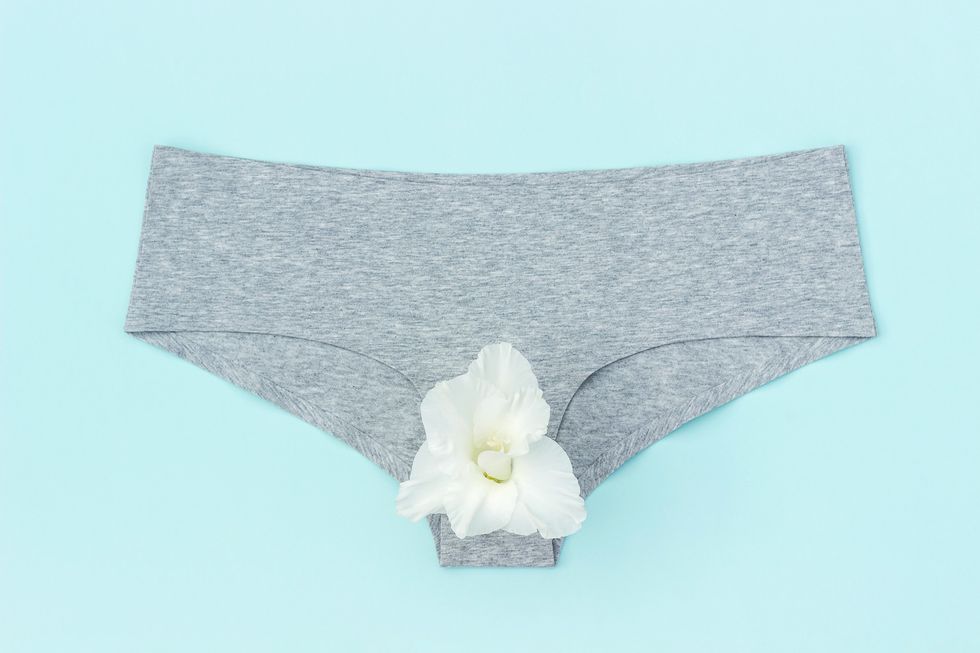
Okay, so for those of you who don’t wear any drawers (check out “10 Women Told Me Why They Stopped Wearing Panties (And They Don't Regret It)”), this first tip won’t apply. For the rest of us, though, just like tight jeans (for instance) can cause friction in your vaginal region, so can panties that won’t let your vagina breathe (whether it’s due to sizing or fabrics like spandex or nylon).
The method to the madness here is air carries oxygen and oxygen helps to give your skin the nutrients that it needs to remain healthy. Plus, looser underwear that’s made out of a breathable fabric also prevents chafing that could cause discoloration too. Now that you know this, if you’re not sure if you’re currently wearing the type of undies that are best for your vagina and vulva, I’ve got you covered (no pun intended). Check out “These Are The Kinds Of Panties Your Vagina Actually Prefers”.
2. Exfoliate Your Pubic Mound
Getty Images
You know how I mentioned my waxer in the intro? Sometimes, she has some pretty wild stories about what happens when she gives someone a Brazilian wax for the first time (yeah, y’all can keep that). Since she said that it can take a good 4-6 months for 1) it not to hurt as much as it initially does and 2) for a person’s skin to fully recover, something that she recommends doing (2-3 days following your hair removal appointment) is exfoliating your pubic mound (the fatty area that covers your pelvic region).
Exfoliation helps to remove dead skin cells and turn over new skin, which can ultimately help to even out discoloration on your pubic mound (if you happen to have any).
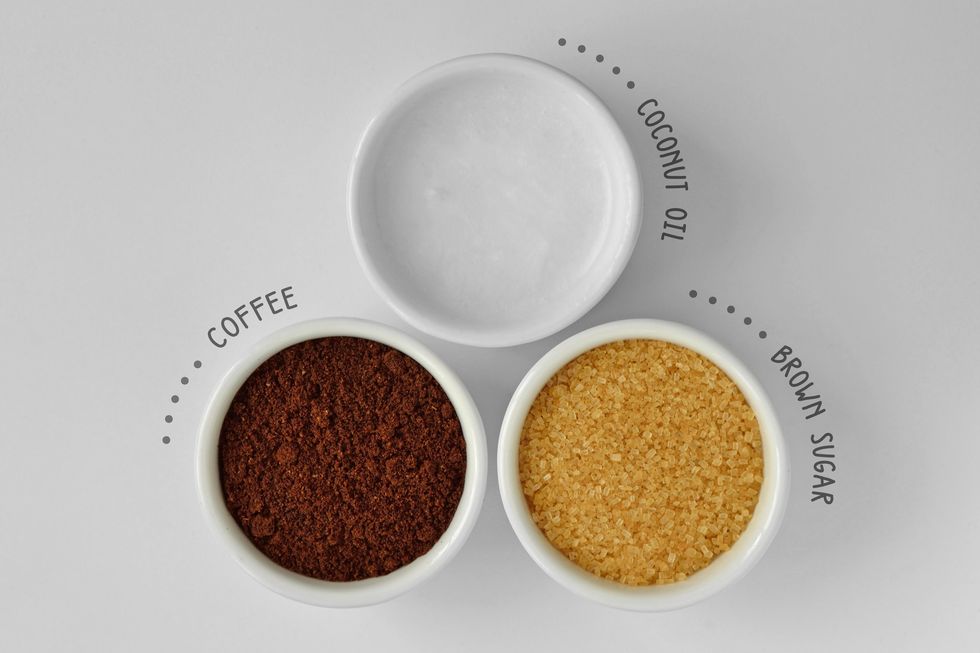
Since that part of your body is more sensitive than others, my two cents would be to DIY an exfoliant out of some brown sugar (recipe here) or coffee grinds (recipe here). Natural ingredients reduce the chance of (further) irritating your skin.
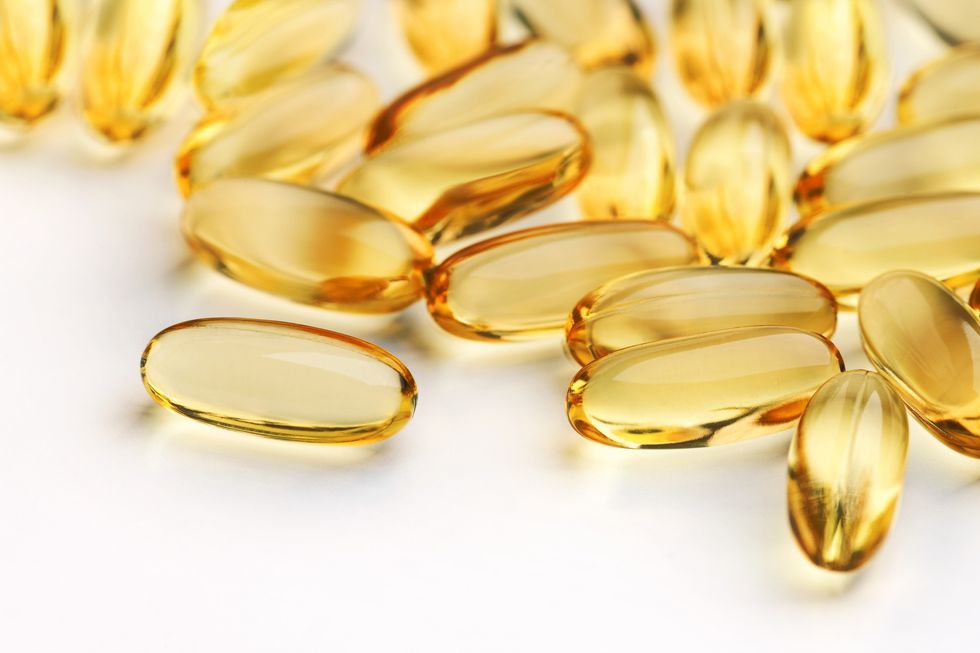
3. Massage Your Vulva with Some Vitamin E Oil
Getty Images
If you want your skin to look fresh and radiant on any part of your body, you’ve absolutely got to invest in some vitamin E oil. The properties in it help to deeply moisturize your skin, relieve any itching that may be associated with mild infections, allergic reactions to fabrics, or basic-level irritation; help to treat and heal eczema and psoriasis; minimize the appearance of scars over time, and it also can slow down your skin’s aging process — including when it comes to your vulva.
Also, since both vitamin E and ginseng have been proven to boost sexual performance in women (which ultimately leads to more natural lubrication), you can’t miss by applying some of this to your vulva just as soon as you possibly can.
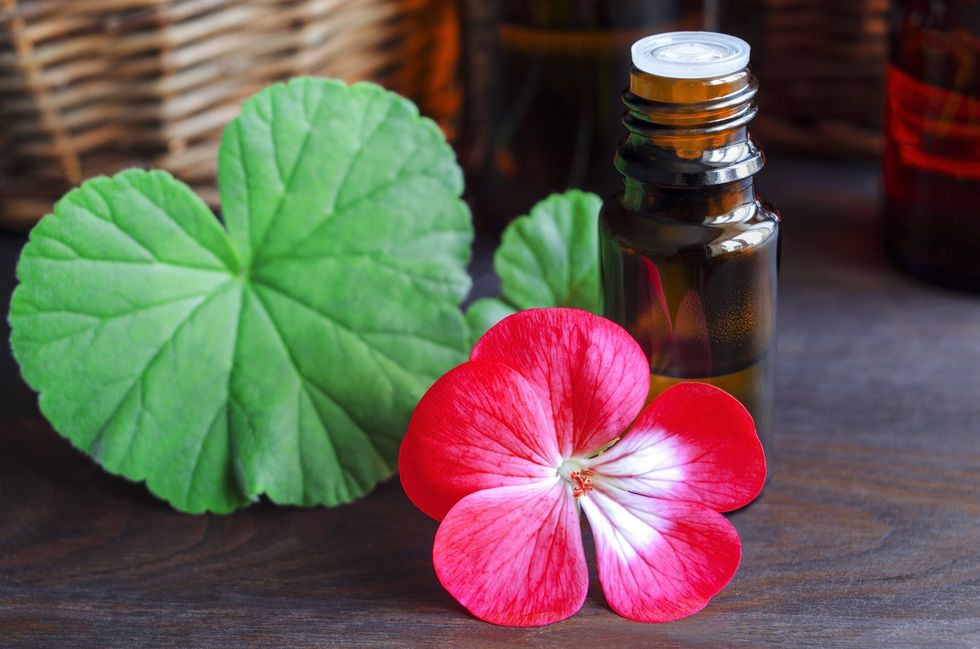
4. Apply Geranium Essential Oil
Getty Images
As I learn more about the purpose and power of essential oils, I wish I had started studying more than the “common” ones much sooner than I did. Take geranium oil, for example. Did you know that it has the ability to soothe sore muscles, speed up the healing process of certain respiratory infections, reduce anxiety and depression-related symptoms, fight candida, and even decrease nerve pain that comes from things like shingles (pretty impressive, right?)
However, the reason why geranium oil is listed here is because it’s also awesome (and non-irritating) when it comes to skincare. What makes it so divine? It reduces wrinkles, contains antibacterial and soothing anti-inflammatory properties, and naturally deodorizes, too.
Also, since this oil also provides a hormone-balancing effect for women who are perimenopausal and menopausal, when it comes to adding to your own essential oil collection, how could you not want some geranium oil now?
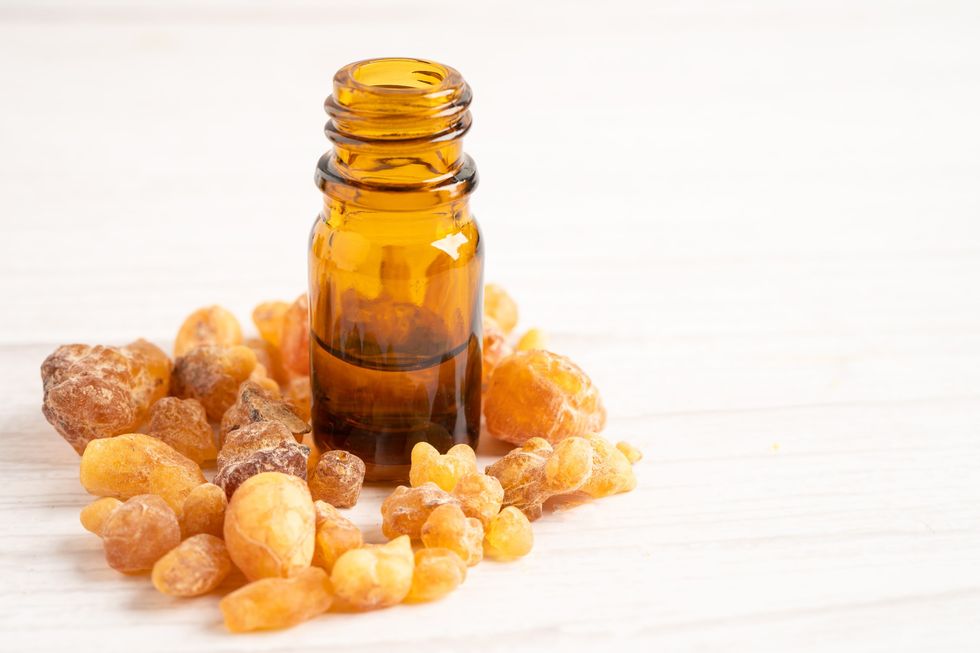
5. Or Frankincense Essential Oil
Getty Images
Personally, if frankincense oil had no real benefits, I’d still use it because I like how it smells. Kind of like woody-meets-musky-meets-sweet-meets feminine. The fact that it’s got some solid antioxidant, anti-inflammatory, and anti-aging properties in it makes it that much better. For instance, since it’s a stress-reducer, that’s always good to know if you’re doing your best to find holistic ways to keep your hormones as balanced as possible (because stress can put your hormones into influx). Some other notable things about this oil (as far as your vulva goes) are it fights off bacteria, helps to slow down aging signs, and actually balances hormones (and helps to improve fertility), too.
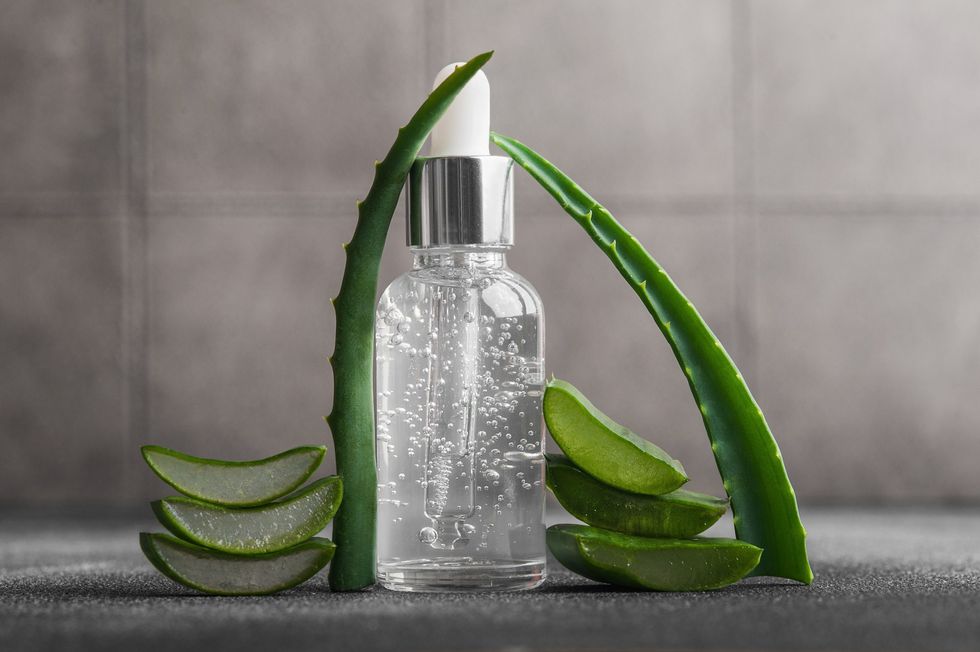
6. Soothe and Heal with Pure Aloe Vera Gel
Getty Images
So, what if you recently took a look at your vulva and noticed that there is some discoloration due to things like nicking yourself while shaving or your skin getting over a couple of back-to-back yeast infections? One thing that you might want to try is applying some (and this is key) 100 percent pure aloe vera gel to the darker spots. For one thing, its high water content will help moisturize your skin.
Next, its anti-inflammatory, antibacterial, antiviral, and antiseptic will do wonders when it comes to helping to heal your skin. Another perk of the gel is it’s actually a natural source of salicylic acid, which means that it can help prevent future breakouts (if you happen to get pimples and acne scars down there). Plus, it also fades discoloration (over time) and slows down the aging process of your skin.
7. Take Vitamin C and D Supplements
Getty Images
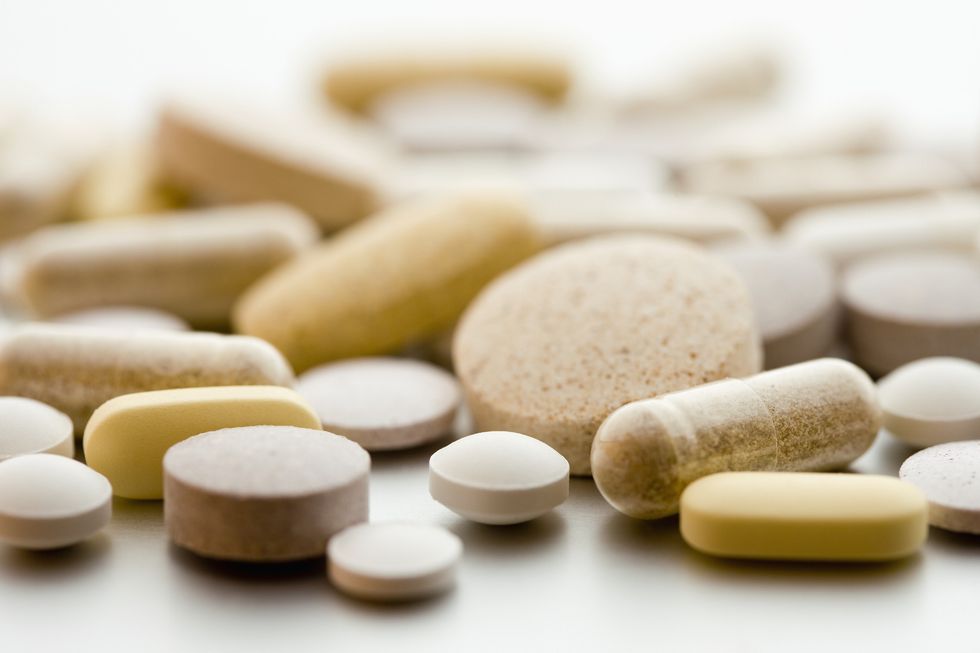
Did you know that almost every American in this country is not getting all of the nutrients that they need from their diet alone? Yeah, don’t get me started on what people’s health would look like if the United States actually covered healthcare costs (eye roll). ANYWAY, I’m just saying this to say that if you don’t already take a multivitamin, now is as good a time as ever to start. Or, if you’d prefer to take certain supplements that are specific to this article, vitamins C and D are your better bet.
Vitamin C is bomb because it’s great for skin health overall; it boosts collagen levels, helps to prevent infections, and speeds up the process of wound healing. Vitamin D is great because it helps to maintain your vagina’s pH levels, reduces the chances of vaginal infections, and if you happen to be on the other side of menopause, it can help with your libido and make arousal easier — and since vitamin D deficiency is so common among us (Black women) that is certainly something to especially keep in mind.
8. Use Lubrication During Sex
Getty Images
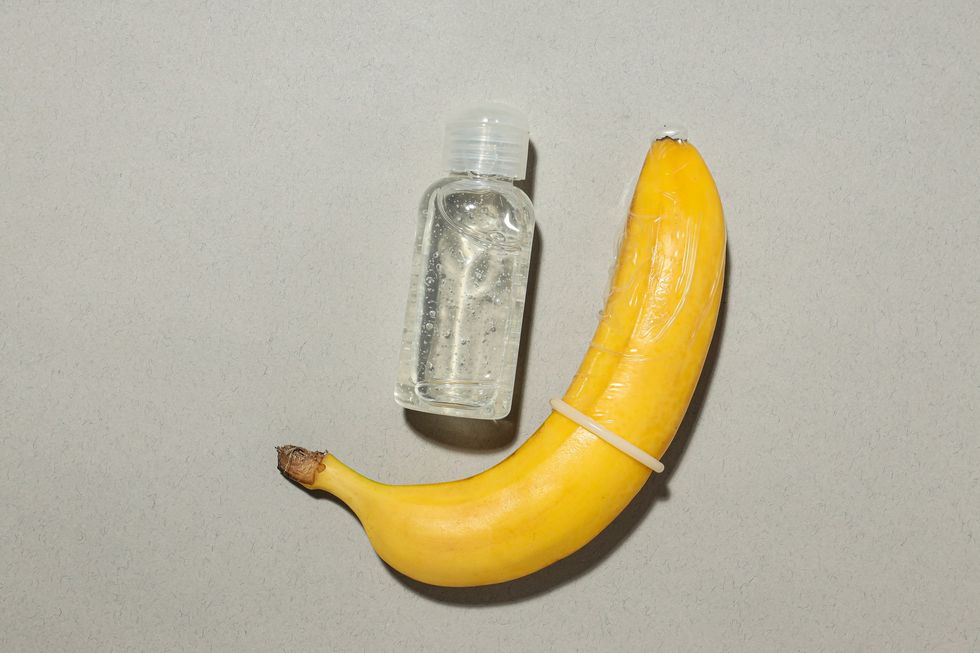
The main reasons why your body naturally lubricates your vagina during sexual activity are so that 1) penetration will not be painful and 2) there won’t be a ton of unnecessary friction during sexual acts. Yep, and there goes that word again: friction. Whether you struggle with getting as wet as you’d like due to hormonal reasons (or foreplay challenges; check out “What If The Sex Is Good...But The Foreplay Isn't?”) or you’re simply someone who takes the saying “the wetter, the better” quite literally (check out “The Wetter, The Better: 10 Creative Ways To Use Lubricant”), just remember that when it comes to preventing vaginal hyperpigmentation, all forms of lubricant will always be your friend.
9. Try Some Rose Bush Butter
Getty Images
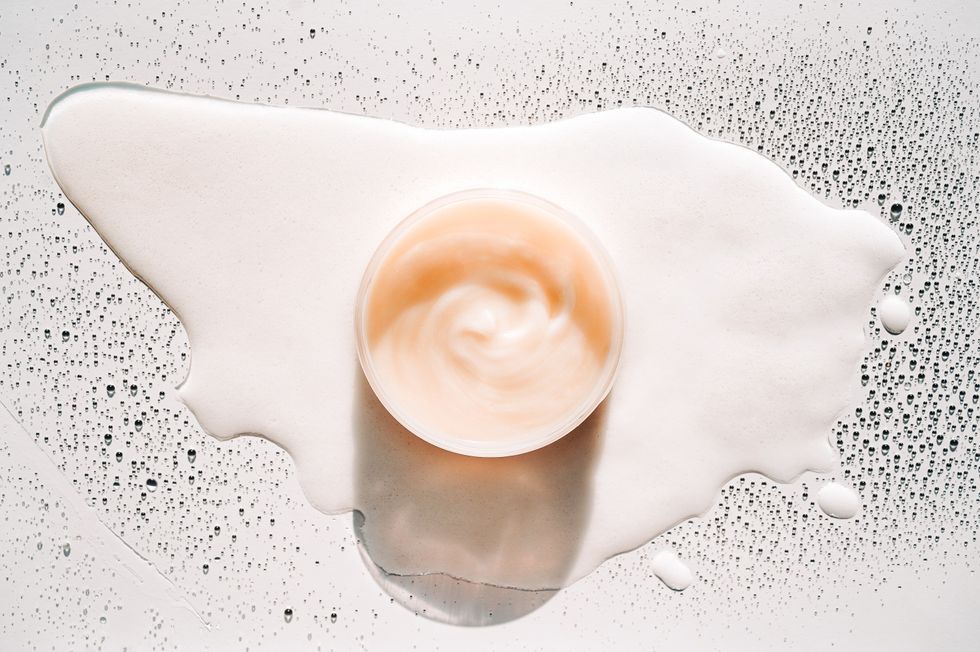
It really is amazing, the random things that you can find out on the World Wide Web. Take a product called Rose Bush, P-ssy Butter. I first stumbled upon it while reading an article about it on Well + Good’s website. The reason why it sings the butter’s praises is that it can do so many things for your vaginal region, from moisturizing and preventing chafing to making it smell great and serving as an all-natural lubrication (if you’re someone who DOESN’T use condoms).
Word on the street is that it can even help to keep your vagina’s pH where it’s supposed to be (which is always a bonus!). So, if you’re looking for something that can help, and heal your vulva, why not give some rose bush butter a shot? You can cop yourself some of it here.
10. Sleep Naked
Getty Images
Last one. Your vagina and vulva don’t want to experience friction, especially not 24 hours a day. That’s why it’s important to at least give them both a break during your sleeping hours. That will give them time to get more oxygen, regulate their temperature, prevent excess moisture from creating the perfect breeding ground for a yeast infection, and it will help to keep your hormones balanced, too. At the end of the day, sleeping naked is one of the best ways to be proactive when it comes to avoiding vaginal hyperpigmentation. No doubt about it, sis. So make sure to do it….tonight.
____
Welp. There you have it: 10 all-natural ways to keep your vulva looking as good as (hopefully) it feels. Test some of the remedies out. Let me know how it goes. Especially that rose butter, aight? #wink
Let’s make things inbox official! Sign up for the xoNecole newsletter for daily love, wellness, career, and exclusive content delivered straight to your inbox.
Featured image by TAGSTOCK1/Getty Images

Because We Are Still IT, Girl: It Girl 100 Returns
Last year, when our xoNecole team dropped our inaugural It Girl 100 honoree list, the world felt, ahem, a bit brighter.
It was March 2024, and we still had a Black woman as the Vice President of the United States. DEI rollbacks weren’t being tossed around like confetti. And more than 300,000 Black women were still gainfully employed in the workforce.
Though that was just nineteen months ago, things were different. Perhaps the world then felt more receptive to our light as Black women.
At the time, we launched It Girl 100 to spotlight the huge motion we were making as dope, GenZennial Black women leaving our mark on culture. The girls were on the rise, flourishing, drinking their water, minding their business, leading companies, and learning to do it all softly, in rest. We wanted to celebrate that momentum—because we love that for us.
So, we handpicked one hundred It Girls who embody that palpable It Factor moving through us as young Black women, the kind of motion lighting up the world both IRL and across the internet.
It Girl 100 became xoNecole’s most successful program, with the hashtag organically reaching more than forty million impressions on Instagram in just twenty-four hours. Yes, it caught on like wildfire because we celebrated some of the most brilliant and influential GenZennial women of color setting trends and shaping culture. But more than that, it resonated because the women we celebrated felt seen.
Many were already known in their industries for keeping this generation fly and lit, but rarely received recognition or flowers. It Girl 100 became a safe space to be uplifted, and for us as Black women to bask in what felt like an era of our brilliance, beauty, and boundless influence on full display.
And then, almost overnight, it was as if the rug was pulled from under us as Black women, as the It Girls of the world.
Our much-needed, much-deserved season of ease and soft living quickly metamorphosed into a time of self-preservation and survival. Our motion and economic progression seemed strategically slowed, our light under siege.
The air feels heavier now. The headlines colder. Our Black girl magic is being picked apart and politicized for simply existing.
With that climate shift, as we prepare to launch our second annual It Girl 100 honoree list, our team has had to dig deep on the purpose and intention behind this year’s list. Knowing the spirit of It Girl 100 is about motion, sauce, strides, and progression, how do we celebrate amid uncertainty and collective grief when the juice feels like it is being squeezed out of us?
As we wrestled with that question, we were reminded that this tension isn’t new. Black women have always had to find joy in the midst of struggle, to create light even in the darkest corners. We have carried the weight of scrutiny for generations, expected to be strong, to serve, to smile through the sting. But this moment feels different. It feels deeply personal.
We are living at the intersection of liberation and backlash. We are learning to take off our capes, to say no when we are tired, to embrace softness without apology.
And somehow, the world has found new ways to punish us for it.

In lifestyle, women like Kayla Nicole and Ayesha Curry have been ridiculed for daring to choose themselves. Tracee Ellis Ross was labeled bitter for speaking her truth about love. Meghan Markle, still, cannot breathe without critique.
In politics, Kamala Harris, Letitia James, and Jasmine Crockett are dragged through the mud for standing tall in rooms not built for them.
In sports, Angel Reese, Coco Gauff, and Taylor Townsend have been reminded that even excellence will not shield you from racism or judgment.

In business, visionaries like Diarrha N’Diaye-Mbaye and Melissa Butler are fighting to keep their dreams alive in an economy that too often forgets us first.
Even our icons, Beyoncé, Serena, and SZA, have faced criticism simply for evolving beyond the boxes society tried to keep them in.
From everyday women to cultural phenoms, the pattern is the same. Our light is being tested.

And yet, somehow, through it all, we are still showing up as that girl, and that deserves to be celebrated.
Because while the world debates our worth, we keep raising our value. And that proof is all around us.
This year alone, Naomi Osaka returned from motherhood and mental health challenges to reach the semifinals of the US Open. A’ja Wilson claimed another MVP, reminding us that beauty and dominance can coexist. Brandy and Monica are snatching our edges on tour. Kahlana Barfield Brown sold out her new line in the face of a retailer that had been canceled. And Melissa Butler’s company, The Lip Bar, is projecting a forty percent surge in sales.

We are no longer defining strength by how much pain we can endure. We are defining it by the unbreakable light we continue to radiate.
We are the women walking our daily steps and also continuing to run solid businesses. We are growing in love, taking solo trips, laughing until it hurts, raising babies and ideas, drinking our green juice, and praying our peace back into existence.
We are rediscovering the joy of rest and realizing that softness is not weakness, it is strategy.
And through it all, we continue to lift one another. Emma Grede is creating seats at the table. Valeisha Butterfield has started a fund for jobless Black women. Arian Simone is leading in media with fearless conviction. We are pouring into each other in ways the world rarely sees but always feels.

So yes, we are in the midst of societal warfare. Yes, we are being tested. Yes, we are facing economic strain, political targeting, and public scrutiny. But even war cannot dim a light that is divinely ours.
And we are still shining.
And we are still softening.
And we are still creating.
And we are still It.

That is the quiet magic of Black womanhood, our ability to hold both truth and triumph in the same breath, to say yes, and to life’s contradictions.
It is no coincidence that this year, as SheaMoisture embraces the message “Yes, And,” they stand beside us as partners in celebrating this class of It Girls. Because that phrase, those two simple words, capture the very essence of this moment.
Yes, we are tired. And we are still rising.
Yes, we are questioned. And we are the answer.
Yes, we are bruised. And we are still beautiful.

This year’s It Girl 100 is more than a list. It is a love letter to every Black woman who dares to live out loud in a world that would rather she whisper. This year’s class is living proof of “Yes, And,” women who are finding ways to thrive and to heal, to build and to rest, to lead and to love, all at once.
It is proof that our joy is not naive, our success not accidental. It is the reminder that our light has never needed permission.
So without further ado, we celebrate the It Girl 100 Class of 2025–2026.
We celebrate the millions of us who keep doing it with grace, grit, and glory.
Because despite it all, we still shine.
Because we are still her.
Because we are still IT, girl.
Meet all 100 women shaping culture in the It Girl 100 Class of 2025. View the complete list of honorees here.
Featured image by xoStaff
Sweet Dreams: 10 Things Science Reveals About Dreams That Might Make You Rethink Sleep
I do so much random online research that I can’t even really tell you how I ended up reading about dreaming — but boy, did it pique my curiosity enough to want to write about it. For instance, did you know that your dreams tend to be longer during the morning time, that you can remember your dreams better on the weekends, and that, contrary to popular belief, not everyone dreams in color? Reportedly, somewhere around 12 percent of humans actually dream in black and white.
Since we all spend roughly one-third of our lives sleeping, and a good portion of that is while we are in a dream state, let’s take a moment to explore some fascinating (and proven) facts about the topic of dreaming.
It just might cause you to think more (or differently) about how you rest and when you rest — so that the quality of your dreams can become better than ever.
1. Men and Women Dream Pretty Differently
GiphyA quote that I like and use often is, “If two people were exactly alike, one of them would be unnecessary.” (Larry Dixon) And yes, men and women are created differently in order to balance one another — and I will forever die on that hill. Which is why it doesn’t surprise me in the least that, even when it comes to dreaming, males and females are not exactly the same.
Although research does indicate that dreaming, in part, is about how we process memories while we sleep regardless of our gender, men’s dreams tend to be more about action while women’s dreams are more about conversation. Not only that but women’s dreams are typically longer; men dream about other men more than women do (interesting), and women dream more from their own perspective while men daydream more with the topic usually being about sex.
2. Lucid Dreaming Is a Method to “Control” Your Dreams
GiphyIf it feels like you are aware of the fact that you are dreaming as you are doing so, pardon the pun, but it’s not all in your head. What this is called is lucid dreaming and, the fascinating thing about it is, to a certain extent, you can actually control these types of dreams whenever you have them. If the mere thought of this fascinates you and you want to try and “rig up” some of your dreams (LOL) — some sleep experts say that doing things like keeping a dream diary and a sleep schedule can help to make this happen. Anyway, you can read more about lucid dreaming here.
3. Dreams Typically Have a Short Shelf Life
GiphyAlthough it’s been reported that people tend to spend somewhere around two hours of their night dreaming, the thing to keep in mind is most individuals have multiple dreams during that period of time — and for this reason, oftentimes dreams last for no longer than 5-10 minutes tops (although some have the ability to last considerably longer. You can read more about that here and here).
4. Dreams Happen When You Are in REM Sleep (You’re “Paralyzed” Then Too)
GiphyWhen it comes to sleeping, it actually happens in four different stages. While you can read more about those here, as far as your dream state is concerned, most of that tends to happen during your rapid eye movement cycle which is better known as REM. It is when you are in your final stage of sleep which is why your dreams typically are the most intense during that time.
Know what else is wild about dreaming during REM? Although you don’t realize it, your body is actually paralyzed. And although, initially, that might sound low-key terrifying, it’s actually a blessing in disguise because your brain is telling your muscles to stop working (temporarily) and that is what ultimately keeps you from acting out whatever you are dreaming about. The more you know.
5. Certain Sex Dreams Have NOTHING to Do with Sex At All
GiphySex-themed dreams are very normal and quite common. Thing is, although the dreams may be about sex, oftentimes what they are interpreting is something entirely different. For instance, a BDSM dream is oftentimes about having a controlling parent, while a sex dream that involves a lot of dirty talk could represent someone who wants to free themselves from how others perceive them, and recurring sex dreams about your ex typically means that there are some unresolved issues that you may have with them.
Oh, and while we’re on this topic, dreams about cheating usually means that you are feeling some sort of jealousy in your relationship while sex with a boss usually means that you want to move up in your job or be appreciated more often — not that you want them in a sensual type of way.
6. You Can’t Read or Tell Time in Your Dreams
GiphyHere’s something that you’ve probably never thought about before — when you think back on the dreams that you can remember (more on that in a bit), how many of them do you recall reading or even telling time in? If you said “a few,” science would probably give you the side-eye because, according to their research, reading (and telling time) is virtually impossible to do whenever you are in your dream state.
The reason why is because, while you are dreaming, the logical and intellectual part of your brain pretty much shuts down. If that bothers you, the easiest way to try to read (or tell time) would be to train your mind to do some of the lucid dreaming that we already talked about.
7. Your Recurring Dreams Typically Mean You Need to Address Something
GiphyOut of all of the things that I’ve mentioned about dreams, this is probably the most obvious revelation — if you are having a recurring dream, it tends to mean that either you have some unresolved issues in your life or there is a need that needs to be met that hasn’t been yet. While doing a bit of research on this one specifically, I thought it was interesting that many mental health experts say that some of the most common recurring dreams involve flying, falling, encountering a dead individual, your teeth falling out or being nude.
And what are some ways to “end” recurring dreams? See a therapist. State what your needs actually are (to the person who is not meeting them). Lower your stress levels. Get more consistent rest. Speak with your doctor about altering your medications (if you happen to be on some). To that last point, a not-so-fun fact: melatonin usage is sometimes attached to nightmares. Goodness.
8. Foods You Consume Can Influence Your Dream State
GiphyThere are several reasons why you shouldn’t eat immediately before turning in at night; one reason is because it has the ability to mess with your body’s natural circadian rhythm which is your system’s 24-hour clock. This is relevant when it comes to sleep because your circadian rhythm helps to control things like your sleeping pattern.
Another thing to take note of is to not only push the plate back 2-3 hours before going to bed but to watch what you do choose to consume as well. That’s because, believe it or not, certain foods do have an impact on your dream life. Like did you know that dairy can cause digestive issues that can lead to microaggressions that can give you very strange dreams?
Or were you aware that sugary foods can trigger your nervous system and make your dreams more vivid and intense? Interestingly enough, dairy, sweets and also spicy foods can also increase your chances of having a nightmare. Hey, don’t shoot the messenger, chile.
9. Is It True That Some People Don’t Dream at All?
GiphyI don’t know about y’all, but when I was growing up, I used to hear that if you don’t dream, you’re crazy. The actual fact is that, although most people absolutely do dream, the reason why they don’t remember them (or they dream less than other people) is because they don’t fall into REM sleep as much or often as they should.
And what are some of the main reasons for why this would happen? Sleep disorders, depression and medications that treat anxiety are all things that top the list. So, if not dreaming is something that bothers you, speak with your doctor and consider seeing a sleep specialist. An underlying issue could be the cause.
10. Not Only Scary Movies Lead to Nightmares
GiphyWhile reading a Harvard-based article entitled, “Nightmares and the Brain,” I thought it was interesting that it separated nightmares from night terrors (nightmares can be remembered; night terrors cannot although people do wake up screaming or frightened), that night terrors mostly happen to children and “Night terrors are not technically dreams but are instead sudden fearful reactions that occur during transitions from one sleep phase to another.”
Okay, but clearly people have actual nightmares (1 in 20 people say that they do at least once a week); however, guess what the source of a lot of them are? While sometimes it’s a horror film, oftentimes it’s stress, anxiety or simply sleep deprivation. Honestly, I might have a nightmare a couple of times a year, tops (and I remember my dreams on a daily basis). So, if that’s a sign that I’m managing stress well — happy to hear it!
____
Welp, there you have it: 10 facts about dreams. Now that you know them, does it make you want to approach sleeping — and dreaming — in a different way? If so, hop in the comments and tell us why. Because, clearly, dreaming is more than just a notion. Amazing.
Sweet dreams to all, y’all.
Let’s make things inbox official! Sign up for the xoNecole newsletter for love, wellness, career, and exclusive content delivered straight to your inbox.
Featured image by PeopleImages/Shutterstock