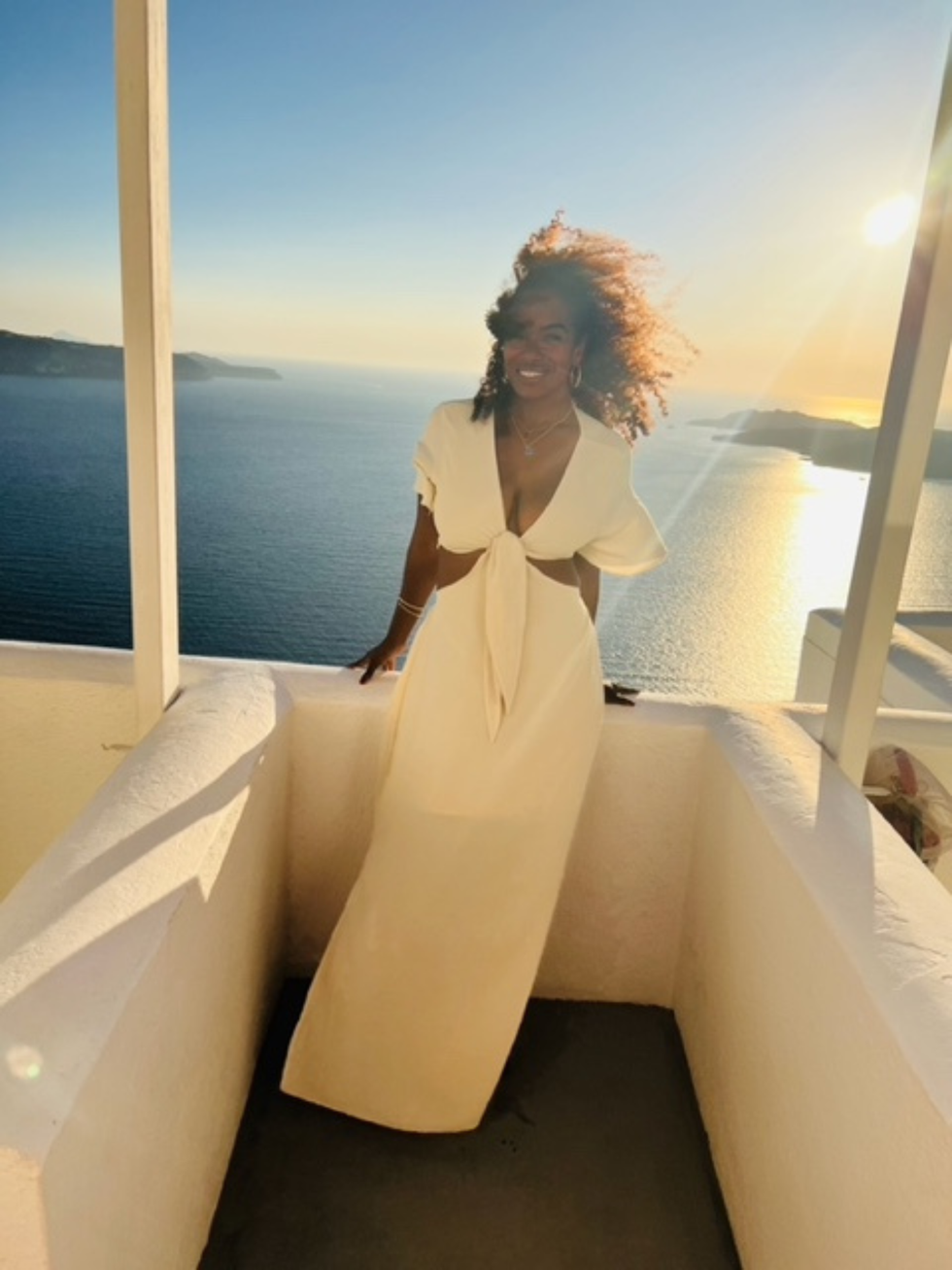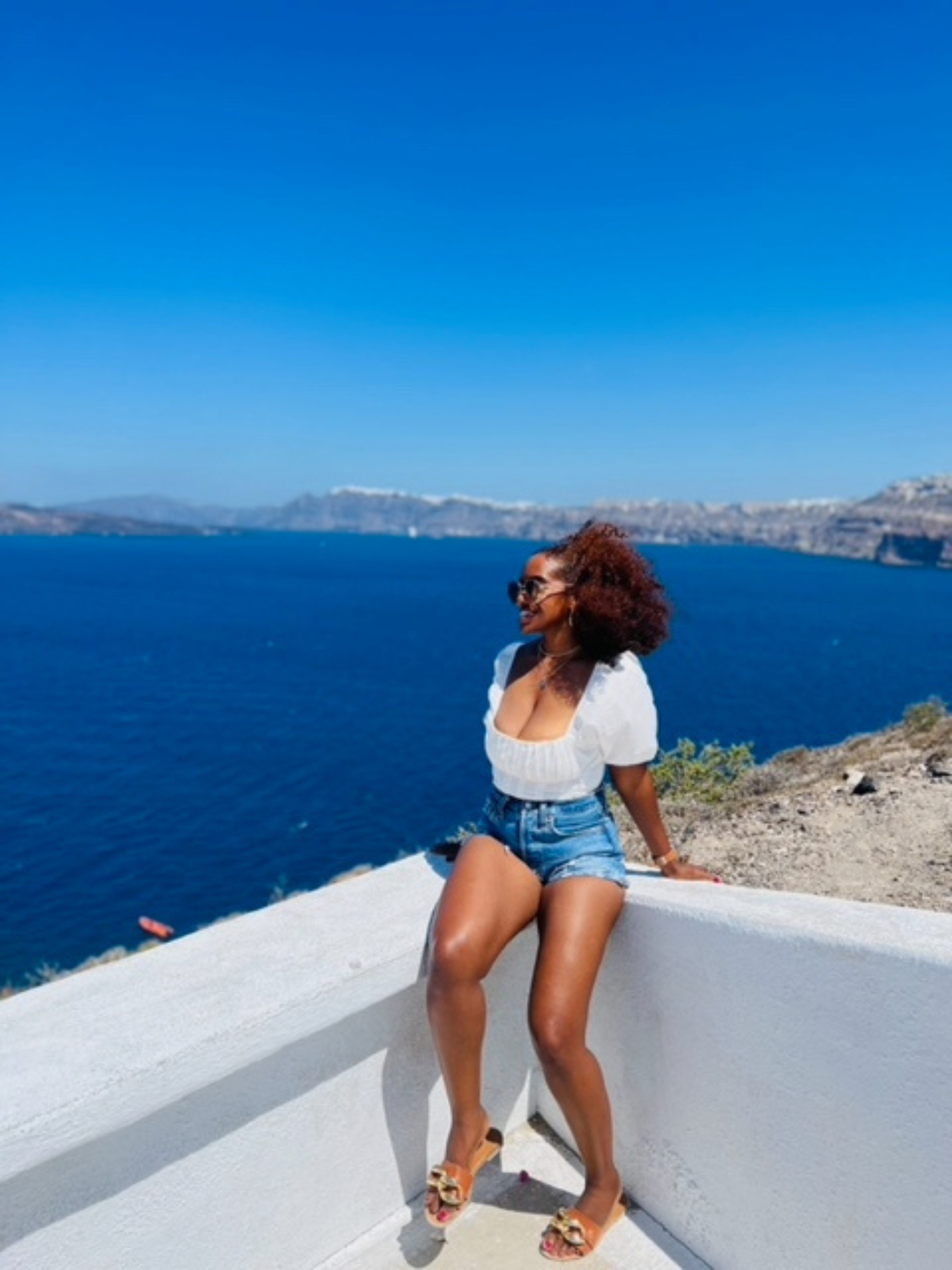

As I approach 40, I have come to a point in my life where I am only interested in healthy and reciprocal connections. The connections that are in alignment. Connections that are filled with beauty, authenticity, joy, laughter, intention, transparency, and purpose. The kind of connections that bring you unforgettable moments and memories for this lifetime." This applies to family, friendships, colleagues, and/or romantic partners.
As compassionate, loving, and understanding as I can be, I just don’t have the energy or capacity in my life for anyone who cannot match the light I give. It’s frustrating, exhausting, and disappointing to deal with someone who cannot meet me where I am. I have to pause and consider if constantly being the one to hold space for people like this has an impact on my mental and emotional health. Yes, it does.
I have never been someone who is interested in transactional friendships, nor do I entertain them. The Sagittarius in me can really give a fuck. But at the same time and as contradicting as this is going to sound, I do understand that everyday life very much can get in the way of friendships. What can I say? It’s the empath and healer in me, too.
I think true friendships survive and thrive on people’s levels of emotional intelligence (EI), empathy, emotional maturity, shared boundaries, and mutual desire for growth.
With that said it's also emotionally difficult to be the friend who is completely invested in her growth, peace, and sense of self-worth or the friend who is dedicated to becoming the best version of herself regardless of the associated cost.
My willingness to grow and to be a whole person is not just for myself, but for the people in my life who equally show up and fill my cup. It’s for my future self, future life partner, and the life that is waiting for me. Let me just say it is painful to be the friend who has to watch people you love cycle through unhealthy behaviors or patterns because of their lack of self-awareness—behaviors that possibly may or may not harm you yet make you cringe.
Your love for them is loud, transparent, unconditional, honest, and genuine. You secretly hope that they push through their season because you wholeheartedly want the best for them. And I guess as I get older and the more self-aware I become, I know I am not alone in feeling this way. As my therapist has told me, “The choices and decisions that feel safe to you may be different to someone else based on what feels safe for them.” And ultimately, I have to accept it, as frustrating as it can be.
MoMo Productions/Getty Images
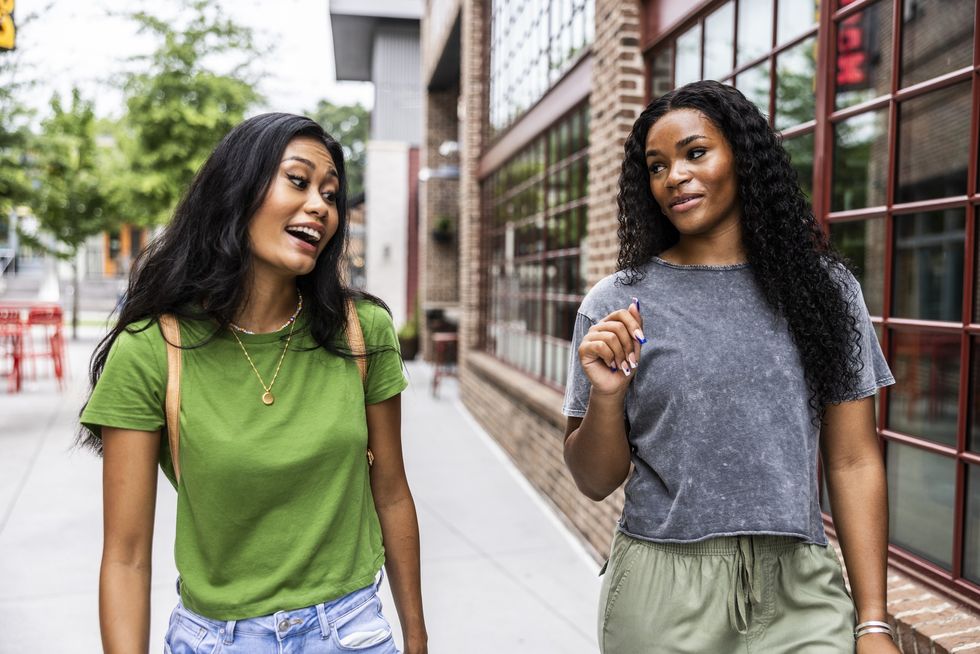
But what happens when it's your bestie or a close friend who is emotionally unavailable? Regardless of circumstances, friendships are one of the most important human connections in our lives. We, as humans, desire to belong, to be seen and heard. We desire community and understanding. But what if your friend just simply can’t due to their mental and emotional capacity? At what point does the friendship become harmful and you are forced to make the decision to let go temporarily and/or indefinitely?
We often talk about emotional availability only in romantic relationships. We specifically explore this notion when it comes to men as potential romantic partners. But what we learned earlier this year in my article about my own emotional intimacy, is that women often struggle with emotional availability, too.
This is especially true when you have an insecure attachment style. An insecure attachment style can be described as anxious or avoidant. It’s our responsibility to become self-aware enough to meet our own emotional needs and regulate our own emotions first and foremost. With mental health and self-care at the center of our lives and social media feeds, we are all not okay. Life is life-ing. We are all going through it somehow or in some way.
Let’s explore how to recognize and navigate emotional unavailability in friendships because I am sure we all have that one friend that we don’t know how to repair with or move on from:
What Is Emotional Unavailability In Friendships?
We often misuse the term "emotionally unavailable" or mistake it for other behaviors related to mental health or emotions. If you are confused about what it means to be emotionally unavailable in terms of platonic connections, it is defined as the inability to sustain emotional connections and/or bonds, according to Healthline.
With seven years of therapy (and counting), I have come to understand that emotional unavailability can be situational or a defense mechanism. In my opinion, emotional unavailability can also involve someone who is in survival mode for too long. This can be someone who is experiencing an unexpected or difficult life transition. It also can show up as a trauma response. However, I feel as though the majority of the time, people’s level of emotional availability is simply due to a lack of self-awareness.
How Emotional Unavailability Show Up In Friendships
According to HerCampus.com, someone who is emotionally unavailable self-sabotages by having walls so deep they don’t allow themselves to get close to other people. People like this shy away from intimate relationships or conversations, too. They struggle to be vulnerable with others and have a legitimate fear of intimacy. An article by Uncover Counseling states that friendships also suffer when one or more parties are emotionally detached.
This means an emotionally unavailable person is often perceived as distant, unresponsive, or uninterested in maintaining a close relationship.
This may not be the intention of friends who exhibit this type of behavior, but let me reiterate that a level of self-awareness is required to undo the behavior. Over time, the bond between an emotionally available friend and a friend who is emotionally unavailable weakens. The friendship grows apart and results in what we know today as a friendship break up.
Coping With An Emotionally Unavailable Friend
It took me a long time to realize that what a friend chooses to say or do to me is never really about me. I used to internalize that I did something wrong or I was the blame for their emotional distance, but as an anxious attachment girlie, I learned that people were projecting their insecurities and unhealed wounds onto me.
More importantly, this is not for me to carry. An affirmation I say daily is, “What is mine is mine. What is theirs is theirs. I release what is not mine." It is just a simple reminder to myself that whatever that person is going through mentally or emotionally it is not my responsibility to fix.
So, how do you accept and deal with an emotionally unavailable friend? My response is with lots of grace, space, and clear boundaries. It's easy to say most people who lack self-awareness and the ability to hold space for others emotionally are toxic, but toxic is a word many of us overuse to describe anyone with unfavorable behavior. A HerCampus article advises acknowledging that friends who struggle with emotional availability can’t control it. It’s a defense mechanism related to mental health issues.
What we can do is be patient with our friends who struggle with expressing themselves emotionally. (Exhibit A: Me. And your girl has worked to correct her emotional detachment all year and is now emotionally stronger.)
Don’t stay too long in a friendship that does not equally fill your cup. Make sure your friend knows that you are a safe person or space for him or her to come to. This is done by ensuring that you are able to show up emotionally in conversations with your friends.
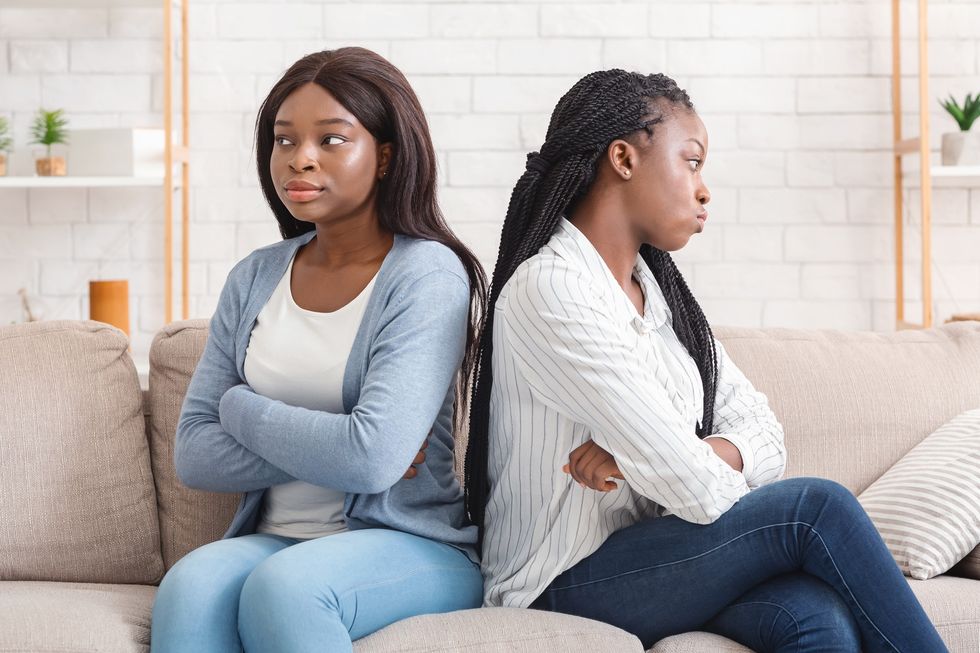
Prostock-Studio/Getty Images
Aisha Beau wrote, via The Shine App, that we must first acknowledge the emotionally unavailable friend’s behavior has to do with something outside the relationship. Once we have recognized said friend is unavailable, it’s our responsibility to decide how to engage. Please keep in mind not all circumstances are the same. Clinical psychologist Dr. Melissa Robinson-Brown told the mental health platform that coping with an emotionally unavailable person entails the following:
- Self-Check: Evaluate if you're also emotionally unavailable and if you're ready to be emotionally vulnerable.
- Have The Conversation: Address the other person’s ability to share emotions and hold emotional space for you.
- Create Space For Change: Give your friend the opportunity to show up differently without expecting perfection.
- Re-evaluate: If you’ve checked in with yourself and had a conversation with said friend - determine if that person’s action or inaction towards your need for closeness is worth your energy.
Signs That A Friend’s Emotional Unavailability Is Harmful
The signs of someone being emotionally unavailable are consistent and easily noticeable in any relationship. A major sign is inconsistency — and cold behavior. Defensiveness, insecurity, avoidance, or commitment to friendship. HerCampus further describes a person such as this, as someone who is unable to give their full attention and is neglectful to the friendship most of the time. They are uncomfortable talking about feelings about themselves or about their friendships as well.
I do not do well with inconsistency at all. Again, as an anxious-attachment-style girlie, inconsistency does not make me feel good. It does not make me safe, either. But I have also come to believe and understand it is solely my responsibility to self-regulate my thoughts and emotions when it comes to that particular friend. As much as I give my friends grace and space – I also have a bad habit of being excessively accommodating to people who exhibit emotionally unavailable behavior, too.
I subconsciously hoped that by being overly understanding and supportive, the person would stay in my life, knowing damn well whether that person stays or goes is not in my control. However, this is where strong boundaries come into play. And let me tell you, I am learning this right now with a certain friend. I do not want to have to question my place in someone's life.
It's painful to feel forced to intentionally create a physical and emotional distance that you never wanted to create, to begin with. The push and pull feels like a game, and I am not here for it. But the uncertainty? The absence of clarity? The anxiety? That feels far worse.
What I have to accept is that the current dynamics are unhealthy and not conducive to what I want and need in the type of friendships I would like to have in my 40s. I intuitively know if I don’t do what is right in my heart – whatever the future holds for our friendship will be completely destructive. Sometimes, temporary disengagement is necessary to cultivate a healthier dynamic. Like I said, healthy connections only.
When To Walk Away From The Friendship
To walk away from any connection is difficult and very much a last resort. You have to evaluate what is important to you in a friendship, and those values must also hold true for the other person. When it comes to letting go of someone you valued as a friend, you have to decide what is best for you based on where you are now and where you are going.
Remember, it is not your job to fix your friend, nor are you their therapist, but it is your responsibility to identify and understand the purpose and type of friendship you have with that person.
There are levels to friendship. Ask yourself questions like, “Is this person just my running partner?” “Do we just have a good time together?” “Is she or he just someone I can laugh with and nothing more?” You have to decide what is best for you and your life. As with anything in life, you are required to protect your peace and energy at all costs.
My goal for 2024 was to emotionally reattach to myself, and I can happily say I am. I am not 100 percent there, but I feel the difference. What I have learned this year, when it comes to my own emotional unavailability and others, is that you have to want yourself first and foremost (and fortunately for me, I wholeheartedly do). Don’t be scared to communicate how a friend’s behavior affects you.
Don’t be scared to lose that friend if he or she is not aligned with where you are in your life. Sometimes, you have to let go for better to come in.
This can look like giving that friend an honest chance to reconcile with themselves first before he or she comes back to you. It can also look like making space for better friendships to come in, too.
If you know anything about me by now or my writing thus far – I will always choose myself first. It's non-negotiable. I love myself way too much now to repeat my past, patterns, and/or mistakes.
Be the friend who knows how to show up, but knows how to say, “In this moment we’re unaligned.” Be the friend that knows you absolutely deserve more in friendship. The friend who knows the light you give to others is an undeniable gift.
Be the good friend that got away.
Let’s make things inbox official! Sign up for the xoNecole newsletter for love, wellness, career, and exclusive content delivered straight to your inbox.
Featured image by Prostock-Studio/Getty Images
- How To Still Be A Good Friend...When You're Totally Tapped Out ›
- This Is How A Friend Can Gaslight You — And Make It Feel Like It's Your Fault ›
- I'm Emotionally Unavailable & Here's How I'm Dating While Learning To Feel My Feelings Again ›
- My Female Friendships Were The Most Heartbreaking & Loving Relationships Of My Twenties ›
Because We Are Still IT, Girl: It Girl 100 Returns
Last year, when our xoNecole team dropped our inaugural It Girl 100 honoree list, the world felt, ahem, a bit brighter.
It was March 2024, and we still had a Black woman as the Vice President of the United States. DEI rollbacks weren’t being tossed around like confetti. And more than 300,000 Black women were still gainfully employed in the workforce.
Though that was just nineteen months ago, things were different. Perhaps the world then felt more receptive to our light as Black women.
At the time, we launched It Girl 100 to spotlight the huge motion we were making as dope, GenZennial Black women leaving our mark on culture. The girls were on the rise, flourishing, drinking their water, minding their business, leading companies, and learning to do it all softly, in rest. We wanted to celebrate that momentum—because we love that for us.
So, we handpicked one hundred It Girls who embody that palpable It Factor moving through us as young Black women, the kind of motion lighting up the world both IRL and across the internet.
It Girl 100 became xoNecole’s most successful program, with the hashtag organically reaching more than forty million impressions on Instagram in just twenty-four hours. Yes, it caught on like wildfire because we celebrated some of the most brilliant and influential GenZennial women of color setting trends and shaping culture. But more than that, it resonated because the women we celebrated felt seen.
Many were already known in their industries for keeping this generation fly and lit, but rarely received recognition or flowers. It Girl 100 became a safe space to be uplifted, and for us as Black women to bask in what felt like an era of our brilliance, beauty, and boundless influence on full display.
And then, almost overnight, it was as if the rug was pulled from under us as Black women, as the It Girls of the world.
Our much-needed, much-deserved season of ease and soft living quickly metamorphosed into a time of self-preservation and survival. Our motion and economic progression seemed strategically slowed, our light under siege.
The air feels heavier now. The headlines colder. Our Black girl magic is being picked apart and politicized for simply existing.
With that climate shift, as we prepare to launch our second annual It Girl 100 honoree list, our team has had to dig deep on the purpose and intention behind this year’s list. Knowing the spirit of It Girl 100 is about motion, sauce, strides, and progression, how do we celebrate amid uncertainty and collective grief when the juice feels like it is being squeezed out of us?
As we wrestled with that question, we were reminded that this tension isn’t new. Black women have always had to find joy in the midst of struggle, to create light even in the darkest corners. We have carried the weight of scrutiny for generations, expected to be strong, to serve, to smile through the sting. But this moment feels different. It feels deeply personal.
We are living at the intersection of liberation and backlash. We are learning to take off our capes, to say no when we are tired, to embrace softness without apology.
And somehow, the world has found new ways to punish us for it.

In lifestyle, women like Kayla Nicole and Ayesha Curry have been ridiculed for daring to choose themselves. Tracee Ellis Ross was labeled bitter for speaking her truth about love. Meghan Markle, still, cannot breathe without critique.
In politics, Kamala Harris, Letitia James, and Jasmine Crockett are dragged through the mud for standing tall in rooms not built for them.
In sports, Angel Reese, Coco Gauff, and Taylor Townsend have been reminded that even excellence will not shield you from racism or judgment.

In business, visionaries like Diarrha N’Diaye-Mbaye and Melissa Butler are fighting to keep their dreams alive in an economy that too often forgets us first.
Even our icons, Beyoncé, Serena, and SZA, have faced criticism simply for evolving beyond the boxes society tried to keep them in.
From everyday women to cultural phenoms, the pattern is the same. Our light is being tested.

And yet, somehow, through it all, we are still showing up as that girl, and that deserves to be celebrated.
Because while the world debates our worth, we keep raising our value. And that proof is all around us.
This year alone, Naomi Osaka returned from motherhood and mental health challenges to reach the semifinals of the US Open. A’ja Wilson claimed another MVP, reminding us that beauty and dominance can coexist. Brandy and Monica are snatching our edges on tour. Kahlana Barfield Brown sold out her new line in the face of a retailer that had been canceled. And Melissa Butler’s company, The Lip Bar, is projecting a forty percent surge in sales.

We are no longer defining strength by how much pain we can endure. We are defining it by the unbreakable light we continue to radiate.
We are the women walking our daily steps and also continuing to run solid businesses. We are growing in love, taking solo trips, laughing until it hurts, raising babies and ideas, drinking our green juice, and praying our peace back into existence.
We are rediscovering the joy of rest and realizing that softness is not weakness, it is strategy.
And through it all, we continue to lift one another. Emma Grede is creating seats at the table. Valeisha Butterfield has started a fund for jobless Black women. Arian Simone is leading in media with fearless conviction. We are pouring into each other in ways the world rarely sees but always feels.

So yes, we are in the midst of societal warfare. Yes, we are being tested. Yes, we are facing economic strain, political targeting, and public scrutiny. But even war cannot dim a light that is divinely ours.
And we are still shining.
And we are still softening.
And we are still creating.
And we are still It.

That is the quiet magic of Black womanhood, our ability to hold both truth and triumph in the same breath, to say yes, and to life’s contradictions.
It is no coincidence that this year, as SheaMoisture embraces the message “Yes, And,” they stand beside us as partners in celebrating this class of It Girls. Because that phrase, those two simple words, capture the very essence of this moment.
Yes, we are tired. And we are still rising.
Yes, we are questioned. And we are the answer.
Yes, we are bruised. And we are still beautiful.

This year’s It Girl 100 is more than a list. It is a love letter to every Black woman who dares to live out loud in a world that would rather she whisper. This year’s class is living proof of “Yes, And,” women who are finding ways to thrive and to heal, to build and to rest, to lead and to love, all at once.
It is proof that our joy is not naive, our success not accidental. It is the reminder that our light has never needed permission.
So without further ado, we celebrate the It Girl 100 Class of 2025–2026.
We celebrate the millions of us who keep doing it with grace, grit, and glory.
Because despite it all, we still shine.
Because we are still her.
Because we are still IT, girl.
Meet all 100 women shaping culture in the It Girl 100 Class of 2025. View the complete list of honorees here.
Featured image by xoStaff
How Les Alfred & Kayla Greaves Built Their "It Girl" Brands With Intention
It’s not always easy being an “It Girl,” but Les Alfred, host of She’s So Lucky podcast, and Kayla Greaves, beauty expert, reporter and consultant, never promised it would be. Instead, the two creators are forging their own paths based on resilience. Les originally launched her podcast, formerly Balanced Black Girl, from her bedroom in Seattle after creating fitness content elsewhere online.
Last year, she left her corporate job to scale the Dear Media-hosted series, which she rebranded earlier this year. Meanwhile, Kayla has worked as a journalist and editor, including for InStyle as Executive Beauty Editor. In 2023, she left the company to focus on consulting, hosting and speaking engagements.
Despite launching media careers from different pathways, the two New York-based women have forged a friendship where they can discuss their ambitions and challenges.
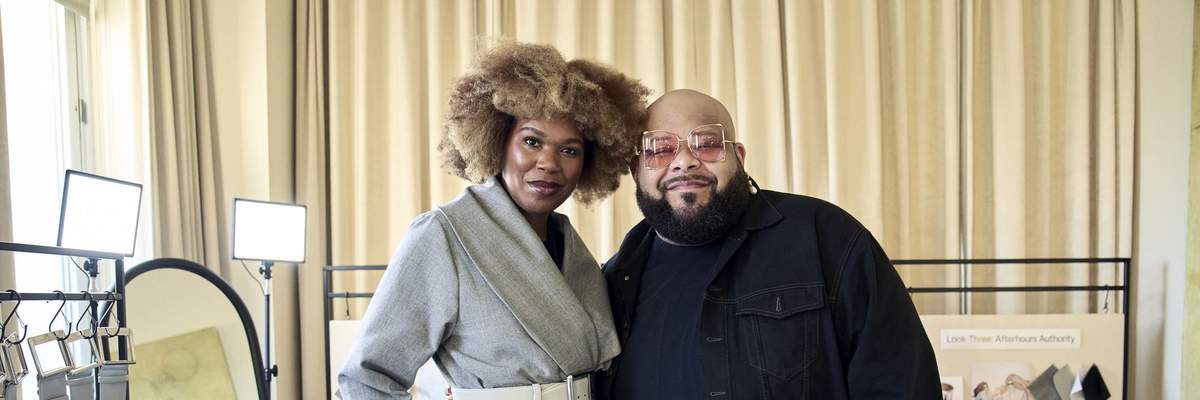
Both women are part of xoNecole’s It Girl 100 Class of 2025, recognized in the Viral Voices category for the impact they’ve made through storytelling, creativity, and authenticity. Together, they represent what it means to build an "It Girl" brand with integrity and depth. In the spirit of SheaMoisture’s "Yes, And" ethos, Les and Kayla embody the freedom to be multi-layered as women evolving boldly into every version of themselves.
This conversation has been condensed and lightly edited for clarity
On Forging Their Own Paths
Les Alfred: Being a Jane of all trades is incredibly challenging. And one of the challenges I've faced is that the scope of what podcasters now need to do has increased so much. When I first interviewed you in 2019, I was still very new at it, but I remember being on a Skype call with you from my bedroom in Seattle. That was how I ran the show. And that was good enough. That is absolutely not good enough these days. The scope and the quality keeps increasing, but the resources that you have don't necessarily increase in order to remain competitive.
I get asked so many questions from people who want to get into podcasts and they want to get started. Most of the time, I'm just like, 'I don't have tips for you.' Because, one, I don't know what it's like to start in this current environment. Two, I know what it takes to contend and be consistent in this environment. The barrier of entry is a lot higher in terms of having something of quality than it was before.
On Balancing Ambition and Rest
Kayla Greaves: I've had to make a very clear effort to slow down and just not take on as much. Yes, you're running a business, but you're also living your life. I had one of those days yesterday. I just laid down and listened to white noise for hours because I just needed my brain to just be clear. I called a friend. I cried.
I'm starting over again today. The sun is out. It's a new day. And that's just sometimes what you have to do. You can't show up for your audience or for other people, if you can't show for yourself. I think that creativity comes from a place of living your life and having genuine experiences, and then sharing those experiences through your art.
"I had to give myself permission to let myself grow publicly in ways that I'd already done personally."

Courtesy
On Evolving Through Growth and Rebranding
Les: I didn't create Balanced Black Girl until 2018, but I started blogging and creating content and doing things under the Balanced brand in 2014. I was 24 years old at the time. Now, I'm 36. The things that were important to me, the perspective that I had and the stories I wanted to tell were entirely different. I think I had to give myself permission to let myself grow publicly in ways that I'd already done personally. The show isn't really about wellness anymore. And that shift started happening a couple of years ago.
When we started expanding into more lifestyle topics, more self-help topics [and] talking about entrepreneurship, the audience responded really well. That was when the show really started to grow and take off. And that was what got so much more engagement than the episodes back in 2020 when I was doing hour-long deep dives on gut health.
Rebranding the show was something I've been thinking about for a long time. When I was finally like, 'Oh, I need to do this,' honestly, was the 2024 presidential election. I was like, these people are about to be in here acting crazy. I do not feel safe with my business name being what it is. I don't want to be targeted for any BS. We saw what they did to the Fearless Fund.
"You have to balance your integrity with your income."

Courtesy
On Integrity Over Income
Kayla: I have many other interests aside from beauty. I'm growing and I'm changing as a person. I'm not the same person I was when I started at InStyle in 2019 before the pandemic rocked everybody's world. I don't think reviewing every single lipstick that comes out is exciting or interesting, because everybody does it now, and everybody feels like they're qualified to speak on things that they're not qualified to speak on. I'm currently in that pain point of growth.
I don't think I have always been in environments where I've been encouraged to branch out on my own ideas. I finished Ina Garten’s memoir maybe a month ago. She kept repeating this quote in her book. She said, ‘What goes in early, goes in deep.’ Now that I'm on my own and I don't have the resources of a traditional media company, which is what I have become accustomed to, sometimes it's difficult for me to be like, 'Okay, just go ahead with the thing.'
I think, Les, just the other day, you reposted somebody saying that they let go of a five-figure deal and then got double the next day because it just didn't feel aligned for them. Those are the things that happen. I have to find a balance of, 'Okay, how do I keep myself afloat?' And that may mean I may not be balling out of control just yet, but I'm okay for now. I can buy myself nice things every once in a while, but you have to balance your integrity with your income.
Les: There are just certain lines that I'm not willing to cross. Especially when I created more wellness content, one of those lines was I will not promote any sort of weight loss product. All of these GLP-1s all want to advertise on my podcast. I actually have nothing against those types of products, but I don't ever want someone to look at what I'm putting into the world and think that I'm saying that they need to feel a certain way about their bodies.
Even if the money is great, that's not for me to say, and that's not the type of message that I want to put out here. Or, I had another kind of brand deal come through that would have required me to divulge things about my personal life that I just don't really want my audience knowing about me, and bringing them along on journeys that I just find personal and I want to keep offline. I don’t want to be known for dragging my mess all over the internet for a buck.
I don't want to be known for being an influencer. I would love to be 1,000% in on my podcast, scale it, have it grow to be a media empire where I'm producing and putting out other bodies of work. For now, until that other side of the business really picks up and gets to the point where I want it to be, I kind of need to play the influencer game a little bit to live in this expensive city. But I'm gonna do it on my terms. It's a constant compromise that I'm coming to with myself.
"You can never make a big vision come to fruition if you're sitting and you're waiting for somebody else to tell you exactly what to do."

Courtesy
On Mutual Admiration and Friendship
Les: Something that I really admire about you in having known you for the past couple of years is you don't wait for a roadmap. You jump in, you roll up your sleeves, and you do it. You can never make a big vision come to fruition if you're sitting and you're waiting for somebody else to tell you exactly what to do.
Kayla: Well, first of all, I want to say thank you for saying that, because that means so much to me, and it's very affirming. That's exactly how I feel about you. I remember, even at your first live show, you're like, ‘Oh my god, I'm so stressed. I don't know what I'm doing.’ And, the shit sold out. And, you know, and now, like, you see the growth of the podcast. And you have nearly 61,000 subscribers on YouTube. I just checked recently.
I talk a lot about people that really just need to not say anything on the internet, because it's so frustrating as somebody who grew up as a traditional journalist. You want people to fact check and ask thoughtful questions and have good conversations. I've never said that about you. I've always loved your podcast. And I've sent a lot of your episodes to friends when they're going through specific things that you're talking about.
This season has been a little bit slower to me, so you've been a constant source of inspiration, and it's just been such a pleasure to see your podcast grow despite the challenges you've had. I know it's not easy, but you continue to grow and continue to push through, and I really admire that as somebody who sat and cried yesterday and listened to white noise.
And this is why I tell you all the time, you really do inspire me. I love you a lot.
Les: Oh my gosh, I love you a lot. I'm so glad that the podcast brought us together.
Tap into the full It Girl 100 Class of 2025 and meet all the women changing game this year and beyond. See the full list here.
Featured image courtesy