From Misdiagnosis To Multiple Surgeries: The Hidden Reality Of Fibroids Among Black Women

If someone had told me I’d be working toward my third fibroid surgery in less than six years, I would have had a hard time believing them. First, because obviously, no one wants to ever hear the word "surgery" (unless it’s cosmetic surgery you’re opting for). But the more significant reason is I’d never heard any of the women in my life talk about fibroids, so the idea of having all of the complex issues because of them, on top of surgeries, was truly a foreign concept.
After my doctor told me I’d need a second surgery in March of 2023—a hysteroscopic myomectomy—after bleeding every day for over six months, I was over it. Not just over the symptoms. But I was done feeling siloed on an island dealing with the pain, feeling tired all the time, and the heaviness of what felt like endless trips to the doctor for ultrasounds, blood transfusions, blood count checks, MRIs, etc.
I would try to explain what I was feeling, and my pain was written off because I guess period pain is just supposed to be normal. I’m here to tell you it is not. And because we’ve been conditioned to just deal, that’s the way things should stay. Yeah, no.
What is a hysteroscopic myomectomy? Hysteroscopic myomectomy is the most minimally invasive procedure to treat fibroids. A surgeon removes fibroids by inserting a hysteroscope into the uterine cavity through the vagina and cervix.
So, I wrote and directed an animated short film to bring educational and entertainment value to helping the world learn about fibroids. With $25,000 of my own money, I went forth and made the film titled Super High: A Period Piece. Now, it’s making its rounds on the festival circuit, even gaining entry into two Oscar-qualifying festivals: the Chicago International Film Festival and the New Orleans Film Festival. We even won Best Narrative Short at the Morehouse Human Rights Film Festival in Atlanta.
As I was venturing onto the festival circuit, my editor asked me to write a piece highlighting the experiences of Black women with fibroids. Initially, I planned to highlight up to 15 stories. However, as I started working on this story, I thought hearing the experiences more in-depth would be equally impactful. So, we chatted with four women about their fibroid journeys.
The one thing we all had in common, which made me sad but also made me feel seen, was that none of us knew much about them beforehand. However, our willingness to openly share our stories will hopefully change that for many women now and beyond.
Keep reading for four women’s stories about their journey with fibroids.
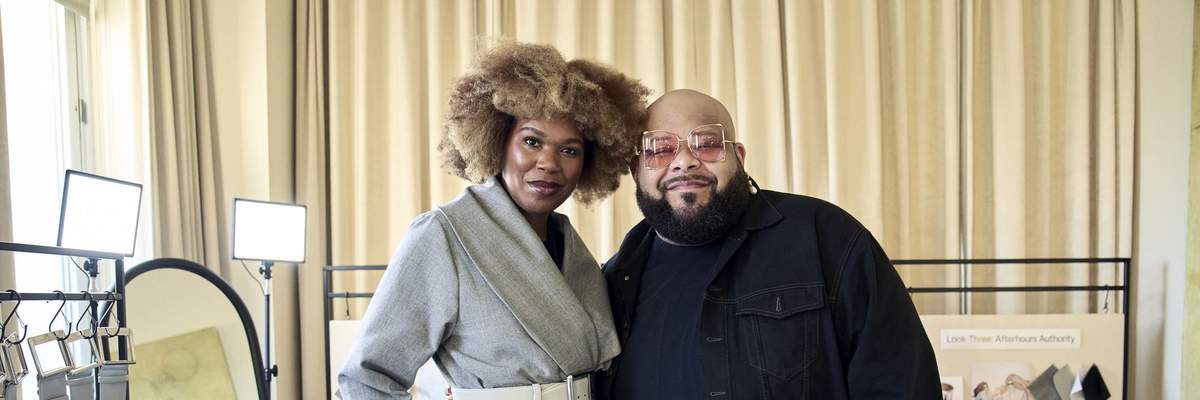
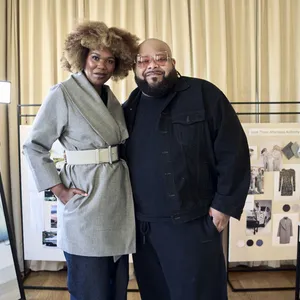
Rosco Spears, artist and creative director
Before your journey with fibroids, did you know much about them?
Before my journey with fibroids, I didn't know much about them. I'd never heard of fibroids until women around me started getting diagnosed. I was dealing with heavy, painful periods long before I was privy to any of these diagnoses.
Shortly before I was officially diagnosed with having fibroids (2012), I learned that my sister and other women in my family also had fibroids. As I've grown older, I've learned that my three sisters, many cousins, aunts, etc, have also had fibroids. It's simply an issue that was never discussed.
How did you find out you had fibroids?
I found out that I had fibroids while living in NYC. I was fed up with the pain and discomfort from my period, so I shopped around until I got an answer that I thought made sense. I met a wonderful woman doctor who finally diagnosed me, and she offered me several options for easing the discomfort. During this time, I would often bleed between periods.
In 2013, one of my "in-between" moments was more than the spotting that I was used to, so I took myself to the emergency [room]. I learned that my hemoglobin [levels] were at seven, and the doctors wouldn't let me leave the hospital without getting a blood transfusion. They also highly recommended that I get surgery to remove the fibroids. Once I officially got the diagnosis, it was scary, but it also felt amazing to know that I could begin planning a path forward.
What are hemoglobin levels? To ensure adequate tissue oxygenation—a very important complex dance between the lungs, blood, and cardiovascular system—a sufficient hemoglobin level has to be maintained. The normal Hb level for women is 12 to 16 g/dl. Low hemoglobin levels mean your body isn’t getting enough oxygen, which is why you feel very tired and weak.
If you're comfortable, we'd love to hear about your treatment. Did things go as planned? Were you nervous about what your doctor suggested?
I've had two abdominal myomectomies, one in 2013 (16 fibroids were removed) and another in 2020 (51 fibroids were removed). I was nervous about the idea of being cut open during the myomectomy, but I didn't think that the outcome could be any worse than the pain that I was already dealing with. Both surgeries went just as planned (aside from the 2nd surgery being rescheduled due to COVID-19), and my recovery from both was amazing.
In 2013, I was a bit unhinged. I went location scouting for a photo shoot for The Lip Bar three days after I got home from the hospital. My family was very upset, but I honestly felt fine. I had some abdominal pain, but within two weeks, I was back in the studio on my feet all day. After my second surgery, the plan was to try and have a child shortly after recovery. I took my time with healing and did things according to the book.
What is a myomectomy? A myomectomy is surgery to remove uterine fibroids. There are several types of myomectomies, but the procedure you and your doctor decide is right for you will depend on factors like location, number, and size of your fibroids.
How did you feel post-treatment? How has getting treatment changed your quality of life?
I felt/feel amazing post-treatment! For about 2-3 years after both surgeries, my periods were much lighter, and the pain was light [and] much more bearable than it was with the fibroids. My quality of life is much different post-surgery.
There have been years [when] I simply did not have any energy while I was on my period. The most I could do was get up to go to the bathroom and get right back in bed. Or I'd have to carry a change of clothes with me when traveling to work because I couldn't afford to take off during my period, but I knew that at some point, I would bleed through everything. So, in that regard, life is beautiful. I'm no longer passing out, nor do I feel the need to bring an extra set of pants along on the ride.
While my quality of life has improved tremendously, I often joke and say that I have PTSD from having bad periods. What I mean is that I still check my pants often when I'm on my period. And I still get anxiety if I'm in public and I'm on day two or three of my period because who knows if it is just a little blood that I feel coming down or it's a huge clot that's going to ruin my pants. And I still know better than to try and wash my hair on my heavy days because there isn't enough energy to do both.
For someone just starting their fibroid journey, what are two pieces of advice you'd give them?
You got this, sis! It's a difficult journey, but please seek advice from other women on the journey. If one doctor is not giving you sufficient information, find a new doctor. Make sure you're exploring all of the options for fibroid removal/shrinking treatments [because] it is not one size fits all. And take your iron supplements, boo.
How important do you think it is for us to share our fibroid stories with each other and talk about this openly?
Oh God, if I could pay women to share their fibroid stories, I would. It's imperative that we talk with one another about our experiences in health. I shared my fibroid story years ago because I was so lost when I was on my journey. One of my sisters had the surgery before I did, but other than her, I didn't have anyone to talk to about fibroids.
I felt very alone, isolated, and somewhat embarrassed because it felt like this wasn't happening to anyone else around me. It makes a world of difference when you can talk with someone about an issue they are also facing. We will learn a lot more by discussing shared experiences—much of which you cannot learn from talking to your doctor or Google.
La-Anna Douglas, women’s advocate and motivational speaker
Before your journey with fibroids, did you know much about them?
Being someone who started my period at the age of 10, I was in the dark when it pertained to fibroids and other reproductive health issues. I had never heard of fibroids, and I didn’t know that the pain I was experiencing, along with fertility delays, was because of the fibroids sitting in between my two uteruses. The pelvic pain, excruciating periods, fatigue, and protruding belly to someone else would have been a dead giveaway. But I had no idea what was going on with my body. I also did not know of anyone in my family dealing with fibroids.
How did you find out you had fibroids?
I was diagnosed with fibroids by a reproductive endocrinologist [and] was finally properly diagnosed after suffering for 16 years. I finally found a doctor willing to listen to my concerns and, most of all, believed that I wasn’t making it up. She scheduled me for a thorough examination, and I was soon scheduled for laparoscopic surgery. I was diagnosed with three fibroids, endometriosis, and a uterus didelphys (two uteruses and two cervixes).
Uterus didelphys is a rare congenital condition where you're born with two uteruses. It's commonly called a double uterus.
Again, I was misdiagnosed for years, and my pain was minimized. I was labeled as the girl with bad periods. I would have cramps for 3-4 days on my left side of my belly and then cramps for 3-4 days on my right. In actuality, I was having two periods from two different uteruses with three fibroids pressing on my wombs with endometriosis wrapped around my fallopian tubes and my uterus. When I heard all of the different diagnoses, I was angry, overwhelmed, scared, and confused. But the worst thing is that I was unprepared mentally and emotionally for the diagnosis and the journey ahead.
"I was misdiagnosed for years, and my pain was minimized. I was labeled as the girl with bad periods. In actuality, I was having two periods from two different uteruses with three fibroids pressing on my wombs with endometriosis wrapped around my fallopian tubes and my uterus."
If you're comfortable, we'd love to hear about your treatment. Did things go as planned? Were you nervous about what your doctor suggested?
I was told not to worry about removing the fibroids surgically after being diagnosed in my 20s back in 2008. But in 2020, during the pandemic, my pain started to escalate again. So, I was scheduled for an ultrasound, an MRI, and then a double-balloon procedure. I was told that my fibroids had grown and they were contributing to the secondary infertility I was experiencing. My doctor gave me two options. Would I rather have a hysterectomy?
I had already gone through 30 years of horrible periods, eight years of infertility [and] finally having a miracle baby in 2013 by God’s grace, and I had already gone through multiple procedures. Or I could do the robotic laparoscopic myomectomy, where they would remove the fibroids and open my two cervixes by also doing a hysteroscopy. At first, [I] wanted to do a hysterectomy, but [after] talking to my family and praying about it, I decided on having the robotic laparoscopic myomectomy. I was a little nervous but knew I was in good hands.
What is a laparoscopic myomectomy? A laparoscopic myomectomy is a minimally invasive procedure to remove uterine fibroids. A surgeon makes four tiny incisions in your abdomen and then uses a laparoscope, which is a special instrument that contains a light and video camera, to operate through the incisions.
How did you feel post-treatment? How has getting treatment changed your quality of life?
Post-treatment, I felt relieved and grateful. The healing journey was okay. I had a lot of support from my family, especially my husband. After the healing, [I am] loving on my body because the many scars on my belly are my beauty marks. I started to get more confident in who I was. The doctor who did the robotic laparoscopic myomectomy believed that I would get pregnant again.
Well, six months after the surgery, I became pregnant with our second miracle baby girl after eight years of secondary infertility at the age of 40. And to think, [had] I decided on the hysterectomy, she would not be here. Our surprise baby has brought so much happiness to our family.
For someone just starting their fibroid journey, what are two pieces of advice you'd give them?
For anyone just beginning their fibroid journey, my advice would be to advocate for yourself no matter what the diagnosis may be. Your voice matters, and you control your narrative. If the doctor is not listening to you or your concerns, you have every right to seek a second, third, fourth, or as many opinions as you wish until you are heard and properly cared for. KNOW YOUR WORTH!
[And,] to always love on yourself through the journey with fibroids and anything else you may be going through. YOU ARE ENOUGH. The physical scars and the invisible scars are your beauty marks. And share with others how you are feeling and what you are going through. Please do not suffer in silence!
How important do you think it is for us to share our fibroid stories with each other and talk about this openly?
It is so important that we share our journey with fibroids because there is power in supportive stories. We all must realize that we are not alone. There are so many of us who have similar situations going on or may be feeling the same feelings you may be feeling.
Sharing your story also helps to heal those hurts that happen on the road to diagnosis. Healing taps into the strength that has been lying dormant inside of us, and when that strength is ignited, there is nothing that can stop you from advocating for yourself and others who begin to share their stories with you.
Dawn Heels, award-winning fibroid advocate and campaigner
Before your journey with fibroids, did you know much about them?
I knew absolutely nothing about fibroids apart from the fact that my mum had one (she found out when she was pregnant with me), but even with this information, she didn't know anything about them.
How did you find out you had fibroids?
I had always suffered [from] extremely heavy, painful periods. I thought [this] was normal, [so] I didn't link it to the fact that something could be wrong with me. I first discovered I had fibroids after experiencing constant pain in the left-hand side of my abdomen in 2016. During an ultrasound scan, I was told I had 2 x 4 cm fibroids by the sonographer.
Two types of ultrasound scan can be used to help diagnose fibroids: an abdominal ultrasound scan – where the ultrasound probe is moved over the outside of your tummy (abdomen) a transvaginal ultrasound scan – where a small ultrasound probe is inserted into your vagina.
I hadn’t a clue what they were, and when I went back to see my doctor, he told me that I had nothing to worry about because fibroids were common, normal, and I should deal with any pain with a hot water bottle and ibuprofen. And because he told me I had nothing to worry about, at that moment, I didn’t worry.
If you're comfortable, we'd love to hear about your treatment. Did things go as planned? Were you nervous about what your doctor suggested?
Over the next six years, my pain and suffering got worse. I displayed horrendous fibroid symptoms: bum cheek pain, leg pain, painful, heavy, clotty periods, lower back pain, extreme pain, abdominal/pelvic pain, early pregnancy symptoms, tiredness, ‘preggo belly,’ painful sex, long periods and was infertile. I finally saw a consultant who changed my life, as he was the first person to listen to me and put a plan in place.
"He transvaginally scanned me and told me I actually had at least six fibroids, the biggest being the size of a grapefruit, and with that, I would have to have an open myomectomy."
He transvaginally scanned me and told me I actually had at least six fibroids, the biggest being the size of a grapefruit, and with that, I would have to have an open myomectomy. I cried so many tears because I thought if I was to ever have an operation that resembled the C-section, I would be giving birth to a baby, not tumors! The operation was a success, and he removed 16 fibroids and left 2 in to give me a chance at conceiving. I lost a lot of blood and had an emergency blood transfusion one week later.
After eight weeks of healing, I started to feel much better.
How did you feel post-treatment? How has getting treatment changed your quality of life?
The open myomectomy gave me my life back—a good quality of life. I wasn’t in pain anymore. My periods were shorter and significantly lighter, and best of all, I fell pregnant six months after surgery!
What is an open myomectomy? An abdominal, or open, myomectomy removes fibroids through an incision in the abdomen, typically on the bikini line. The recovery time generally lasts up to six weeks.
For someone just starting their fibroid journey, what are two pieces of advice you'd give them?
Educate yourself on the condition so you can guide the conversation and ask relevant questions when going into your consultations. Advocate for yourself, too! Too many of us will just agree to all sorts of nonsense just because the medical professional says so! You are the expert over your own body, so speak up!
How important do you think it is for us to share our fibroid stories with each other and talk about this openly?
I became an ‘accidental’ advocate because I shared my story. My inbox was inundated with messages from other ladies who had suffered or were currently suffering. That’s how powerful a share is.
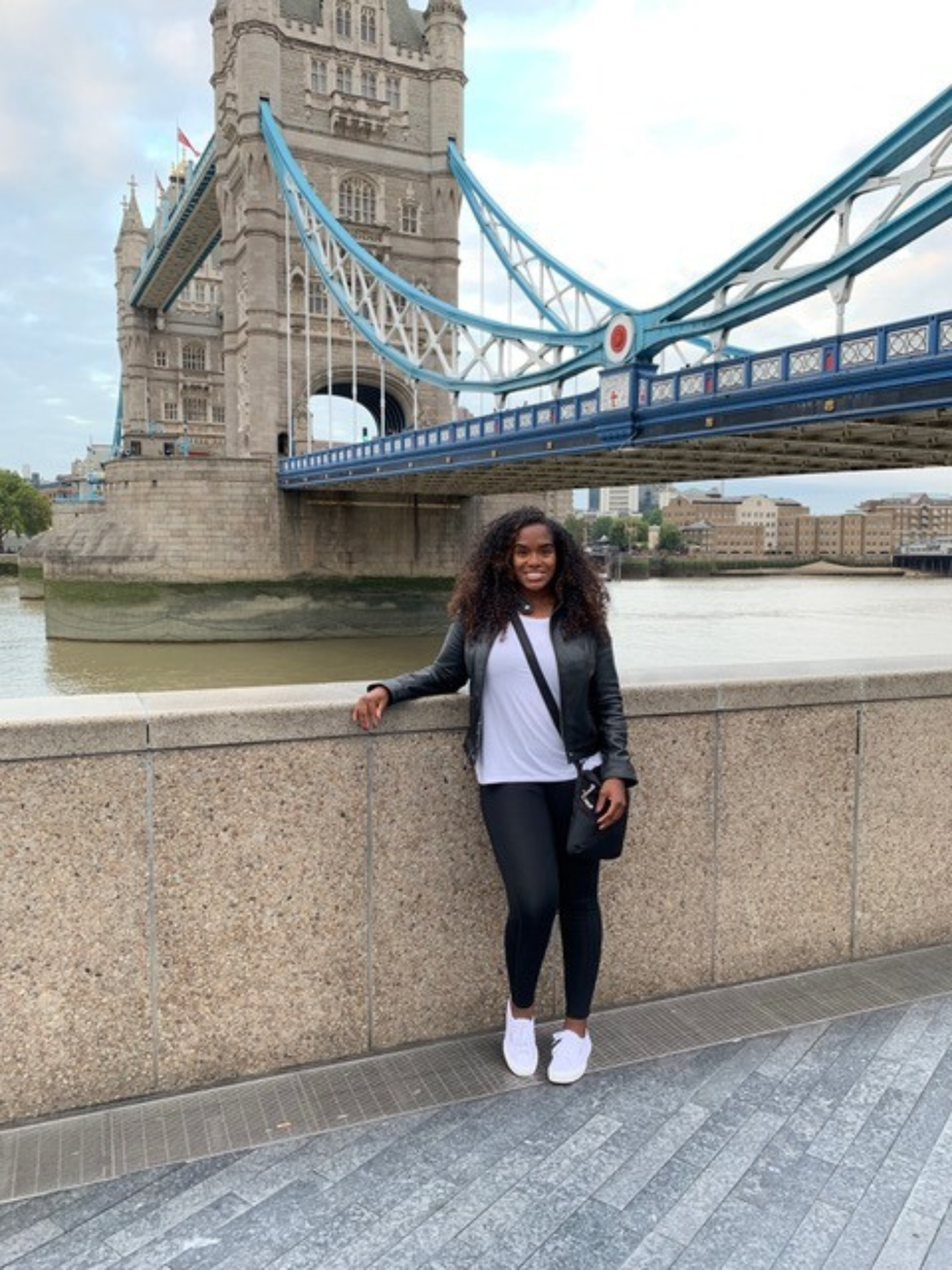
Camille Austin, model and content creator
Before your journey with fibroids, did you know much about them? For example, did you know what symptoms to look out for?
I did not know much, if not anything at all. So, I did not know what symptoms to look out for.
Did you know if anyone in your family had ever dealt with them?
Yes, my mother, but she was already going through menopause, so our symptoms did not seem comparable.
How did you find out you had fibroids?
[I went] to my primary care physician, who is also a WOC. She performed a pelvic exam, and when I told her about all of my symptoms, she thought it was fibroids. It took a while and [was] frankly [an] annoying process to finally get to an MRI where they found three fibroids, one the size of 15cm.
And how did you feel once you got the official diagnosis?
I felt relieved and scared—scared about what this meant about my fertility. [But,] relieved that I had answers and I was going to get better.
If you're comfortable, we'd love to hear about your treatment. Did things go as planned? Were you nervous about what your doctor suggested?
I had to have surgery due to the size [of my fibroid.] I had an open and laparoscopic procedure done and was on the table for eight hours. I did not initially trust my surgeon as she wanted to jump straight into a hysterectomy. Common practice says that the only way to stop them from ever coming back is through a hysterectomy, which I find to be a bit extreme. To me, it sounds like it's just under-researched, and not enough efforts are being made because this largely impacts WOC, but I digress.
"My surgeon thought because I'm so young, healthy, and strong, she did not put me on a hospital list, which gives another doctor the ability to treat me overnight should something happen. Well, something happened."
My surgeon thought because I'm so young, healthy, and strong, she did not put me on a hospital list, which gives another doctor the ability to treat me overnight should something happen. Well, something happened. I found out I'm allergic to Dilaudid (a common pain med). I broke out and had a third-degree chemical burn around my stomach from the adhesive, and my skin completely broke out. There was not a doctor available to give me even so much as a Benadryl to ease the discomfort. Nurses can't prescribe meds.
It wasn't until I threatened to leave the hospital—I got up and packed my bags—that I received a pink Benadryl pill after waiting for about 6 hours. About a week after I got home, I broke into a fever and was septic. I was rushed back to the hospital and had to spend an additional four days. In short, the healing process did not go according to plan.
After your difficult hospital experience and healing journey, how did you feel post-treatment? How has getting treatment changed your quality of life?
After treatment, I felt so much better after everything was said and done. I would still get the surgery if I had to do it again. When I eventually healed, my periods were shorter. I could fit my clothes again, and I just had more energy to do things since I was not as anemic.
For someone just starting their fibroid journey, what are two pieces of advice you'd give them?
[First,] push for that MRI sooner than later. If you catch them when they are small, you can look into non-invasive ways to get rid of them.
Make sure your doctor has a hospital list, and ask who will be in charge of taking care of you when your doctor is not around.
What does an MRI mean for fibroids? An MRI uses a magnetic field and radio waves to create computerized, 3D images of the uterus. These images can help your doctor decide which treatment is best for you and rule out other issues like adenomyosis and endometriosis.
How important do you think it is for us to share our fibroid stories with each other and talk about this openly?
I think it's important because we can all learn from each other, and this is not just becoming a "woman over 30" problem. According to my doctors, I was far too young, and due to my age, this was something that went unnoticed. Frankly, it should not have been a far stretch because I have fibroids in my breast tissue as well, but somehow, no correlation has been made.
So we have to press the issue, so hopefully, we can look into why this is happening to so many women and not allow a hysterectomy to be the first response.
Let’s make things inbox official! Sign up for the xoNecole newsletter for love, wellness, career, and exclusive content delivered straight to your inbox.
Featured image by Shutterstock
Originally published on October, 2, 2024

This Is How To Keep 'Holiday Season Stress' From Infecting Your Relationship
Hmph. Maybe it’s just me, but it seems like there is something really weird happening in the fall season air (because winter doesn’t officially begin until December 21) that cuddle season is in full swing while break-up season is as well. In fact, did you know that break-ups are so popular during the holiday season that December 11 is deemed Break-Up Day?
The reasons why relationships shift around this time vary; however, I did both roll my eyes and chuckle when I read that a very popular one is because it’s an easy way to get out of getting one’s significant other a Christmas present. SMDH.
Anyway, I personally think that the less shallow folks out here may contemplate calling things “quits” or they at least distance themselves a bit from their partner (and what I’m referring to is serious relationships) due to all of the stress and strain that oftentimes comes with the holidays whether it be financial, familial, due to their tight schedules or something else.
Listen, I would hate for you and your man to miss the fun and happiness of experiencing this time of year, all because you are so overwhelmed or irritated that you can’t really enjoy it. That’s why I have a few practical tips for how to avoid allowing the typical holiday season stress from INFECTING your relationship.
Manage Your Expectations
GiphyUnmanaged expectations. If there is a main reason why the holiday season tends to be so stress-filled for so many people, I’d bet good money that this is the cause. And when you’re in a long-term relationship, expectations can manifest themselves in all sorts of cryptic and/or unexpected ways. You might have relatives who assume that you are going to be with them for Thanksgiving or Christmas when you have other plans in mind. You might be thinking that you are going to spend one amount for presents while your man is thinking something totally different. When it comes to scheduling, your signals may be crossed.
And you know what? To all of these scenarios, this is where clear and consistent communication come in. Don’t assume anything. Don’t dictate anything either. From now until New Year’s, mutually decide to check in once a week, just to make sure that you are both on the same page as it relates to the holidays and what you both are thinking will come along with it. The less blindsided you both feel, the less stressed out you will be. Trust me on this.
Set (and Keep) a Budget
GiphyOkay, so I read that last year, 36 percent of Americans incurred some type of holiday-related debt. Hmph. Last year, there was still some sense of normalcy in this country, chile, so I can only imagine what finances are gonna look like over the next several weeks. That said, since I don’t know a lot of people who don’t find being broke stressful, make sure that you and your bae set a budget and then stick to it this year — no ifs, ands or buts.
Because really, y’all — it doesn’t make sense to deplete savings and/or max out credit cards for a few days of giggles only to be damn near losing your mind because you don’t know how to make ends meet come Dr. Martin Luther King, Jr. Day.
And by the way, this tip doesn’t just speak to things like food and gifts; I also mean travel. If it doesn’t make a ton of sense (or cents) to be all over the place this year — DON’T BE.
Keep Matthew 5:37 at the Forefront
GiphyIf off the top of your head, you don’t know what Matthew 5:37 says, no worries, here ya go: “But let your ‘Yes’ be ‘Yes,’ and your ‘No,’ ‘No.’ For whatever is more than these is from the evil one.” That verse right there? Oh, it’s a boundaries lifesaver! I say that because do you see “maybe” or “I’ll think about it” in there? Nope. LOL. It says that you should tell people “yes” or “no” and leave it at that — and that complements Anne Lamott’s quote, “’No’ is a complete sentence” impeccably well. Yeah, you’ve got to remember that anything beyond a yes or no to a request is privileged information; you don’t owe anyone details or an explanation.
Besides, if you are really honest with yourself, when someone asks you something and you give a “Umm, let me think about it” kind of reply, more times than not, you already know what your answer is going to be — so why not let you both off of the hook? Give your response. Commit to that. And let everyone (including yourself) get on with their lives and schedules.
I promise you that when it comes to those holiday parties, you are pissing more folks off by not RSVP’ing or doing so and not showing up than just saying, “Thank you but not this year” off the rip.
Remember That Your Personal Space Is Privilege Not a Right
GiphyA friend of mine recently bought a new house and invited me over to come see it. He’s a single man with no children, so as I was taking in all of the space that he had, especially as I walked through his finished basement, I joked about relatives coming to live with him. “Hell no” and “absolutely not” were pretty much his immediate responses as he went on to say that some folks even had the nerve to be offended when he told them that he had no intentions on taking DNA in.
Ain’t it wild how people think that your stuff is their right? And yes, that brings me to my next point. Your home is your sanctuary space. If you want to host folks this year — cool. If not, ALSO COOL. Please don’t let folks (family included) guilt you into how they want you to act or even into what they would do if the shoe was on the other foot. You are not them — and as one of my favorite quotes states, “If two people were exactly alike, one of them would be unnecessary.” (A man by the name Larry Dixon said that.)
Hell, my friends? They know that I am good for sending them random things that they need or even want all throughout the year. Coming over to hang out at my pace, though. Uh-uh. Chalk it up to being a card-carrying member of the ambivert club yet I like keeping my living space personal — and I sleep like a baby, each and every night, for feeling that way.
Always remember that your space, your time, your resources, your energy and shoot, yourself period (including your relationship), are all things that are your own. You get to choose how, when and why you want to share them. The holiday season is certainly no exception.
Cultivate Some “You Two Only” Traditions
GiphyIt’s not uncommon for some couples to hit me up after the holiday season to “detox.” Sometimes it’s due to the financial drama (and sometimes trauma) that they experienced. Sometimes it’s because they allowed their relatives (especially in-laws) to get more into their personal business than they should’ve. More than anything, though, it tends to be because they didn’t get enough quality time together and so ended up feeling “disconnected.”
Please don’t let that happen. Listen, I’m not even a holidays kind of woman and yet, I will absolutely sit myself down with some hot chocolate and chocolate chip cookies to enjoy a Hallmark holiday film or two. Aside from the fact that most of them are lighthearted and sweet, I also like that they usually focus on couples loving on each other amidst all of the holiday beauty and ambiance — which is something that all couples should set aside some time to do.
Maybe it’s a vacation. Maybe it’s a staycation. Or maybe it’s my personal favorite, A SEXCATION. Whether it’s for a few days, the weekend or even overnight — don’t you let the holidays go by without setting aside time for you and your man to celebrate one another. Don’t you dare (check out “Are You Ready To Have Some Very Merry 'Christmas Sex'?”).
GET. SOME. REST.
GiphyI once read that 8 out of 10 people get stressed out over the holidays and 3 out of 10 lose sleep during to it — and when you’re stress-filled and sleep-deprived, that can absolutely lead to hypersensitivity, making mountains out of molehills and even not being in the mood for sex.
Your relationship can’t afford to go through any of this, so definitely make sure to prioritize rest. I don’t care how unrealistic it might seem during this time, sleep should never be seen as a luxury; it will always and forever be a great necessity.
That said, try to get no less than six hours of shut-eye in (check out “6 Fascinating Ways Sex And Sleep Definitely Go Hand In Hand”) and even ask your bae to take a nap with you sometimes (check out “Wanna Have Some Next-Level Sex? Take A Nap, Sis.”). Not only will sleep help to restore your mind, body and spirit but, when it’s with your partner, it’s an act of intimacy that can make you both feel super connected, even in the midst of what might feel like chaos.
___
Holiday season stress is real. Still, never give it the permission or power to throw your relationship off. Put you and your man first and let the holidays be what they are gonna be, chile.
Let’s make things inbox official! Sign up for the xoNecole newsletter for love, wellness, career, and exclusive content delivered straight to your inbox.
Featured image by Shutterstock
“Late” is an interesting word. I say that because, based on the situation, being late can actually be subjective.
For instance, if you agree to show up somewhere at 11:30 a.m. and you pop in at 11:45 a.m., you are absolutely late. No wiggle room there. Yet when it comes to something like an apology? I mean, when you factor in a definition for late like “occurring, coming, or being after the usual or proper time” — how do you determine when the proper time should be? Is it supposed to be when you want to hear it, or when someone is ready to offer it and actually means the words behind it?
And that is why I decided to put emphasis on the word “late” for today’s topic. Because if you and someone break up and they approach you, well after the fact, with an “I’m sorry,” if you struggle with whether or not to accept it due to the timing of it all, you should definitely ponder that a bit.
And as you’re doing so, it might help to read a bit deeper into what an apology should look and live like, even from an ex, regardless of when it shows up.
Your “late.” Or his right on time.
Three Things That a True Apology Consists Of
GiphyIt’s kind of wild that when you work as a therapist/counselor/coach, a lot of people never really see you as human — and this can include your close relationships. What I mean by that is, it’s almost like they expect you to be free on-call therapy to the point where they “forget” to actually check on you sometimes.
Such is the case with one of my longest-running friendships. Even during the weeks between losing my mother and losing $4K (SMDH), she would just keep calling me to vent about her marriage. I finally got so fed up that I brought it to her attention that for the past couple of years, that is exactly what our friendship has been like: her venting, me listening without her being very invested in my life at all. In response, she texted me an apology — and boy, was it beautiful.
I’m not going to share the details of what she said; however, I am going to tell you three things that it consisted of because it’s what I believe ALL APOLOGIES should entail.
1. She took full ownership for what she believed that she did. I framed this point in this way because, something that everyone needs to forever keep in mind is the fact that two people start and, to a large extent, end relationships — and what I mean by that is, it’s never like one person was perfect and the other was the villain. That said, though, when someone is making an apology to another individual, they are going to own their part and articulate what that part is. It’s not gonna be a simple “My bad.”
It’s going to be “I am really sorry that I wasn’t there for you when you needed me” or “I apologize for taking you for granted” — something that sounds like they get the “offense” that transpired. By doing this, they recognize their missteps — and that is what puts people on the road to not repeating them.
2. She did not deflect or gaslight me. You know what one of the worst apologies are: It’s when someone says they are sorry and then follows it up with, “But you do it too” or “If you hadn’t done ‘A’, I wouldn’t have done ‘B.'” Justifying your actions is a surefire way to make someone believe that you don’t really think that you did something wrong (or that bad) in the first place. And really, how can they trust you (again) if that is how you feel? Oh, and don’t get me on gaslighting.
Ugh, ain’t nothing like someone claiming that they want to set things right with you, only to act like they don’t really get where you are coming from with the issues y’all were having in the first place. A good gaslight line in an apology: “If that is what you think happened, I apologize.” Yeah, you can keep that, jack. Never accept this kind of apology — because it isn’t one.
3. She addressed why she needed to make the apology in the first place. Wanna know one of the main reasons why I don’t trust people who don’t believe in having regrets (check out “Why Regret Might Not Always Be A Bad Thing”)? Did you know that apology means “a written or spoken expression of one's regret, remorse, or sorrow for having insulted, failed, injured, or wronged another.” How, as a human, do you think that you are out here not making any mistakes or poor decisions that you sometimes need to APOLOGIZE for? That is just…insane.
And one of the reasons why apologies are important is because if you feel bad about “failing” someone, it’s usually because you value them enough to want to keep them around. And yes, in my friend’s apology, she also explained why she didn’t want me to feel hurt in the way that she had hurt my feelings and what she would do to prevent that from happening in the first place.
So y’all, with all of this out of the way, before getting deeper into this topic? If an ex is hitting you up to apologize to you for something, please make sure that he hits all three marks of a true apology.
Now let’s keep going.
A Genuine Apology Should Also Include an Amends
GiphyA few years ago, I wrote an article for the platform entitled, “Heads Up: It's NOT An Apology If An Amends Isn't Made.” You know how I mentioned a second ago that a solid apology has no gaslighting in it? Hmph. Ain’t it wild how someone can do something that hurts or harms you and yet, they want you to just “hurry up and get over it”? GASLIGHTING.
Someone in my family, after unpacking years of abuse that I experienced at their hand, they had the nerve to say, “I’m not going to keep apologizing to you for this.” Hmm…Okay. So, how about you let me give you a consistent three months’ worth of the years of mistreatment that I experienced from you and then flippantly throw an apology your way. Let’s see how you feel about it. How much you believe that I am being genuine and sincere.
Listen — and please hear me GOOD on this: when someone really gets the magnitude of the pain or discomfort and inconvenience that they caused, they aren’t going to be fine with just saying that they are sorry for it; they are going to ask you what they can do to set things right.
It’s actually a part of the reason why I named the four children who I aborted (check out “Why I Named The Children I Aborted”) because I do have some real remorse for those decisions. Each of their names have an intentional meaning and I strive to leave out their purpose, through those names, on a daily basis. It’s a small way of making amends.
You know, back when my first book came out, my first love reached out, via email, to send me an apology. The apology hit most of the points that I mentioned earlier. Looking back, there wasn’t an offer to make an amends, though, and trust me, there was A LOT to make up for.
At the end of the day, amends means “reparation or compensation for a loss, damage, or injury of any kind; recompense” and while none of us should use bitterness, resentment or emotional stagnation as the “bar” for which we should expect amends to be made, if you’re trying to figure out just how sincere an ex is with their apology, if they want to do something to make things better, that’s a good sign.
There is a caveat, though.
Discern the Motives. Always.
GiphyEarlier this summer, I wrote an article for the platform entitled, “What's Your Motive For Sex? (It Reveals A Lot. Trust Me.)” Then, a few weeks ago, I wrote another article entitled, “As Cuffing Season Steadily Approaches, What The Heck Is 'Winter Coating'?” and boy, when I tell you that both of these complement this point really well? Goodness.
If you’ve never heard of the dating trend known as winter coating before, it’s basically when an ex creeps back up around cuffing season — and if you know what cuffing season is all about, you can absolutely connect the very probable motives behind those dots.
Now can there be exceptions? There are ALWAYS exceptions. Still, if you haven’t heard from your ex in years and here he comes a couple of weeks before Christmas, unless the two of you got together or broke up around the holidays, stay on potential “winter coating alert,” because it might not be about “building bridges” so much as getting into your bedroom.
That said, if it’s been a minute (six months or more) since you’ve heard from an ex and he suddenly reaches out to apologize, absolutely take out a moment to discern the motive — and shoot, feel fine with even asking what is causing him to make the move…now. If it’s in the spirit of the holidays and wanting to go into a new year with a clean slate, got it. If it’s because he’s been in therapy and realizes that he didn’t end certain things in his past very well, understood. If it’s because he didn’t like how the two of you broke up and he wants to try and make peace, that’s fair.
On the other hand, if you sense that he wants to rekindle something (check out “Nelly And Ashanti Are Giving It Another Shot? Here's What You Should Know About 'Ex Reconciliation'” and “I'm Thrilled That Ryan Destiny & Keith Powers Are Back Together. 5 Things Before Reuniting With Your Ex, Tho.” and “What Happens When 'The One Who Got Away'...Comes Back?”) — although that’s kind of another article for another time, do check that motive.
When someone apologizes, you should really be the only focus for them; not what they can get out of it on the back end. Listen, even if he hopes to get back with you (or back in bed with you), that shouldn’t be something that is discussed during the apology. If it is said or even implied, something about HIS MOTIVE is disingenuous. And if that is indeed the case, to a valid extent, so is he.
We All Should Give the Grace and Mercy That We Desire
GiphySooner than later, I’m going to write an article about forgiveness (beyond what I already have here). For now I’ll just say that if you are someone who thinks that other people don’t deserve forgiveness? That is either your pain or your ego talking and, either way, you can’t trust “their” judgment.
All of us mess up sometimes and if you are a karma (or you reap what you sow) believer, then you absolutely should want to extend others grace and mercy so that you can receive it in your own time of need (and you are absolutely delusional if you think a time won’t come, sooner than you probably think, that you will need it).
Besides, do you know all of the self-inflicted drama and trauma that comes from NOT forgiving others: higher blood pressure, insomnia, stress, anxiety, the higher risk of a heart attack, a weakened immunity, a greater risk for depression and anxiety — whatever he did, is it really worth all of this? Yeah, while a lot of people think that weaponizing forgiveness is empowering, really all it’s doing is putting themselves in harm’s way. Physically. Emotionally. SPIRITUALLY: “For if you forgive men their trespasses, your heavenly Father will also forgive you. But if you do not forgive men their trespasses, neither will your Father forgive your trespasses." (Matthew 6:14-15 — NKJV)
By the way, no one is saying that forgiving that man means that you have to allow him back into your life. After all, access is a privilege. Yet if he comes to you and acknowledges that he feels sorry for some things, for the sake of your own sanity, why not let him express it? Don’t wanna meet up or talk on the phone? Understood. Email and/or text are there for the taking. Don’t want to go back and forth? Who said that it needs to be a discussion or a debate?
All I know is, the more time you spend on this planet, the more you want to put out the energy that you want to come back. Forgiving others tends to make life easier. Not forgiving? Oh, the way that it boomerangs, sometimes in ways you never saw coming, chile. Dodge that kind of experience (and typically hard life lesson) if you can.
Yes, Better Late than Never
GiphyToo late to apologize. Yeah, I don’t really know if there is such a thing (because forgiving and reconciling are not one in the same and some of y’all will catch that later). I’ll wrap this up with a story to prove my point.
Once upon a time, I knew a woman who was in a serious relationship and yet, whenever her boyfriend would bring up the possibility of marriage, she would stall him out. When I finally asked her what her deal was, she explained that she still harbored so much pain from the man before him that she didn’t fully trust that he was the real deal. About five months later, here came her ex with a thorough explanation for why he made some of the decisions that he did while they were together. Now that she had the full story, she was able to heal. She got married to her boyfriend that following year.
You see where I am going with this? Although your ex’s apology might be “late” as far as y’all’s relationship timeline, the timing may be BRILLIANT when it comes to true when and why you actually need it. Yeah, a Scripture that I adore is “Timing is the Father’s business” (Acts 1:7 — Message) and sometimes those apologies, in the grand scheme of things, are more on time than you could ever imagine; they’re when God deems you need them not when you want to have them.
____
It is Oprah Winfrey who once said, “True forgiveness is when you can say, "Thank you for that experience” and sis, if you remove the bitterness and anger and look deeper, there were valuable lessons, even in and from the most challenging relationships. And that is worth appreciating through forgiveness and, if need be, full and complete release.
Bottom line, should you accept an ex’s late apology? Absolutely.
What better way to illuminate your present on a whole ‘nother level.
Just as forgiveness always does.
TRUST ME.
Let’s make things inbox official! Sign up for the xoNecole newsletter for love, wellness, career, and exclusive content delivered straight to your inbox.
Featured image by Shutterstock