

When we think about history, oftentimes it brings to mind olden times, ancestral boss moves, or back-in-the-day memories. And that's all good. I mean, you really can't know where you're going until you know where you've been. As Women's History Month continues, it's also good to remember the new-school pioneers who are making an impact today, while still paying homage to those who laid the groundwork for them to even do so.
Here are 10 black women making history—along with the 10 queens who paved the way:
Then: Maya Angelou
 Giphy
Giphy Auntie Maya Angelou is a fav among any literature lover, and if you don't have at least one of her best-selling books in your collection, can you truly call yourself an avid reader? Nah, sis. Angelou wrote more than 35 books and hundreds of poems in five decades, expanding the stories of the Black female experience around the world. She was a multi-hyphenate phenom, serving as a professor of American studies at Wakeforest Univesity, a TV and film producer, a playwright, an actress, and a singer. She's recited her works at former U.S. president Bill Clinton's inauguration, for the United Nation's 50th anniversary, and in honor of former South African president Nelson Mandela. (That elegy was commissioned by the U.S. State Department. Talk about a big deal!) In 2011, Obama honored her with the Presidential Medal of Freedom.
Now: Amanda Gorman
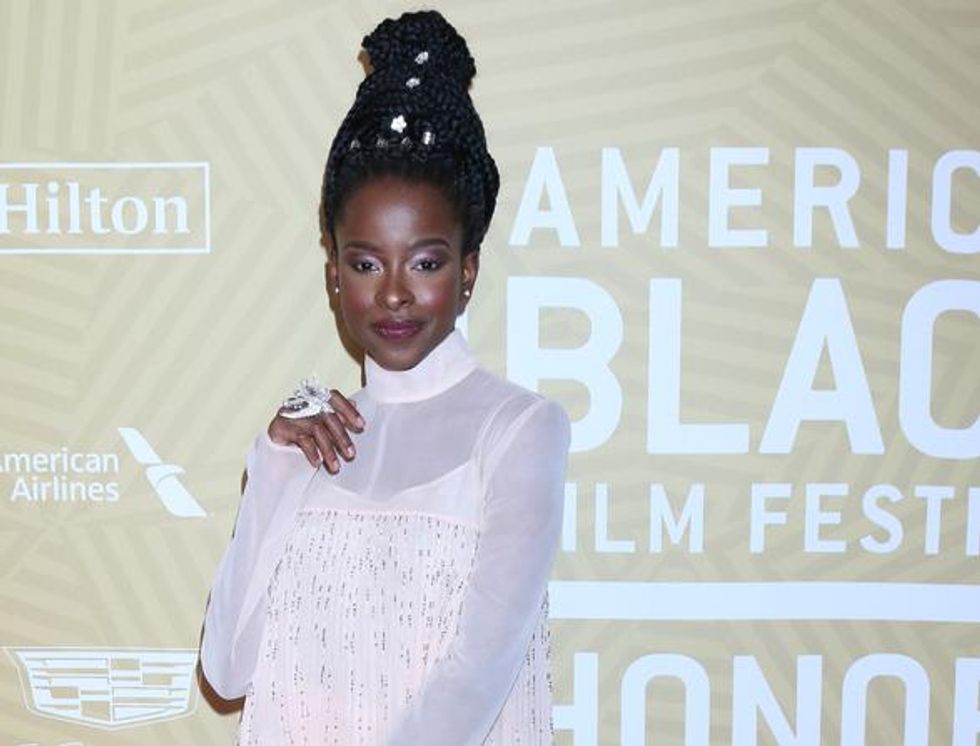
Kathy Hutchins / Shutterstock
Amanda Gorman wowed us all when she recited her poetry at the 2021 inauguration of President Joe Biden and Vice President Kamala Harris, making history as the youngest poet ever to get such an honor. She's also serving as our nation's first Youth Poet Laureate, so she's the official poet of the U.S. She's performed for the likes of other political and entertainment who's who including Hillary Clinton, Lin-Manuel Miranda (creator of "Hamilton"), Al Gore, and Malala Yousafzai (Nobel Prize laurete and activist). She's had poems commissioned by "CBS in the Morning" and has been in front of audiences at prestigious venues including the Library of Congress and Lincoln Center.
Then: Mae Jemison
It's no secret that Black women have contributed significantly in the area of science. (Hidden Figures, anyone?) Mae Jemison, an engineer, physician, and NASA astronaut, set her mark in history when she became the first Black woman to be admitted into NASA's astronaut training program and later explore space in 1992. (Yep, it took that long.) She served as a science mission specialist, conducting groundbreaking crew-related experiments. She's also been a member of the American Medical Association, the American Chemical Society, and the American Association for the Advancement of Science.
Now: Jeanette Epps
Jeanette Epps holds a doctorate degree in aerospace engineering and worked in technical intelligence for the CIA before becoming the first Black woman to join an International Space Station (ISS) crew for a long-term mission last year. This woman is bad, OK! She'll start a six-month trek into space this year, her first ever, giving all of us---especially those of us who are science and solar system geeks---major life and inspiring women and girls around the world to continue to dream beyond Earth's limits.
Then: Ella Fitzgerald
Giphy
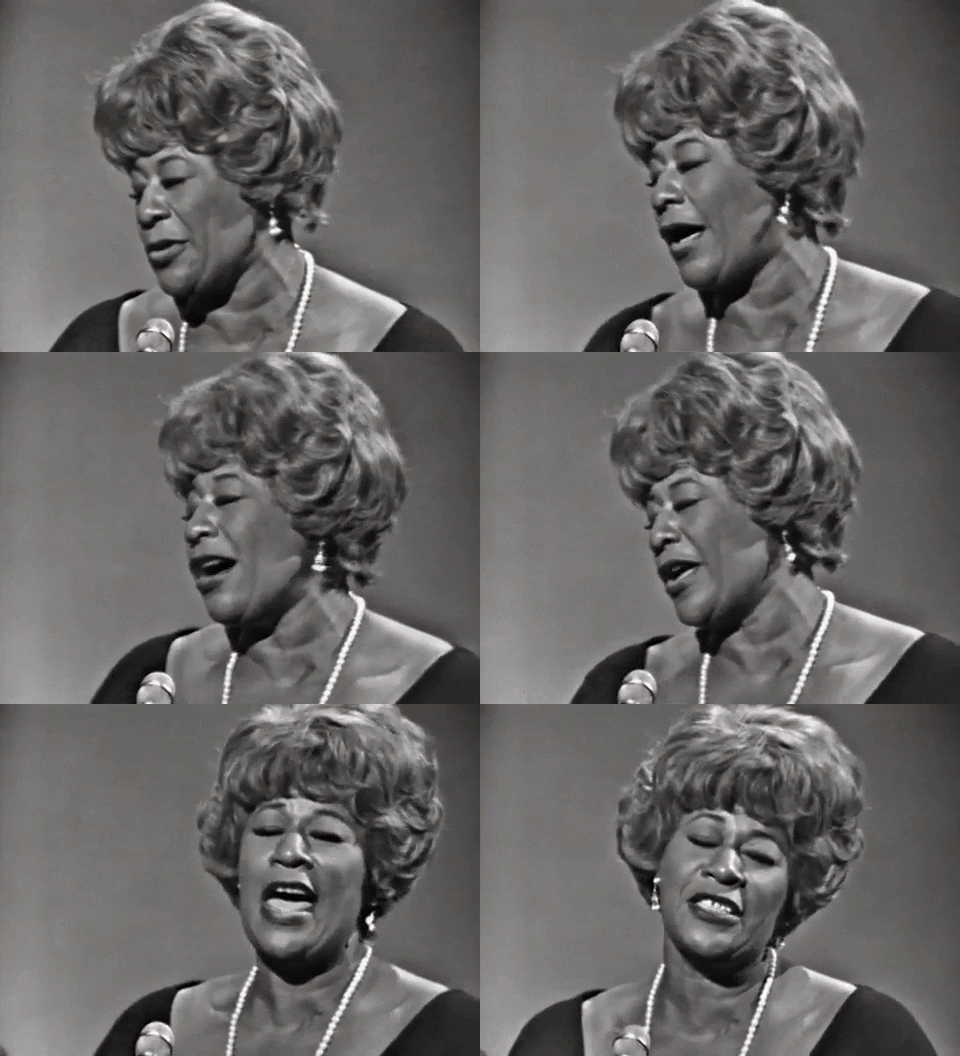
The first Grammy Awards took place in 1958. (Wow, can you believe that?) Ella Fitzgerald, a native of Newport News, Va., was the jazz singer of the time, touring with the likes of Dizzy Gillespie (the original "Ambassador of Jazz" and the king of bebop). She was famous for popularizing the music and taking it pop, selling out theaters and concert centers, appearing in TV commercials for major brands, and slaying stages as a plus-sized singer way before Lizzo, Jill Scott, or Jennifer Holliday hit the scene. She sold more than 30 million records in her lifetime. Fitzgerald also made history as the first female to win multiple Grammy awards and would take home more than a dozen by the end of her career.
Now: Beyonce
 Giphy
Giphy Beyonce was all over headlines when she took home her 28th Grammy on March 14, breaking the record for the most awards of the kind won by a woman and any singer—male or female. But this isn't the first time she's blown the whole industry out of the water. In 2016, her visual album Lemonade debuted at No. 1 on the Billboard charts after just one week, marking the sixth time her solo works had done so. Queen Bey also held the record for highest-selling album on iTunes and been the highest-paid Black artist of all time.
Then: Lisa Leslie
In college, this basketball star led the University of Southern California in a record four consecutive NCAA tournament appearances. By the time she ended her career in WNBA, Lisa Leslie led the Los Angeles Sparks to two Finals, been named an MVP, and become an eight-time first team All-WNBA player, four-time second team All-WNBA, seven-time WNBA All-Star, and two-time WNBA Defensive Player of the Year. She's also won four Olympic Gold medals. Whew, chile! Who said women can't ball? She continues to rally women around sports with her more than 260,000 followers on IG, and she's served as a leading coach for the Big3, a pro 3-on-3 league of basketball legends founded by Ice Cube.
Now: Allisha Gray
As a college student, Allisha Gray played ball for the North Carolina Tarheels and the South Carolina Gamecocks, and during that time, she excelled, becoming 2nd on the team in double-figures scoring games, a key player in the NCAA Final Four All-Tournament, and a leader in the Gamecocks' NCAA championship win. She left college to join the draft and was selected by the Dallas Wings in 2017. She was also selected as Rookie of the Year, ranked first among rookies in points scored per game, and took home Nickelodeon's Kid's Choice Sports Award for Favorite Newcomer in 2018. Today, the 26-year-old is among the younger players making lists of top promising 2021 WNBA players. Her usage rate and efficiency on the court make her one amazing player to look out for in the coming seasons.
Then: Shirley Chisholm
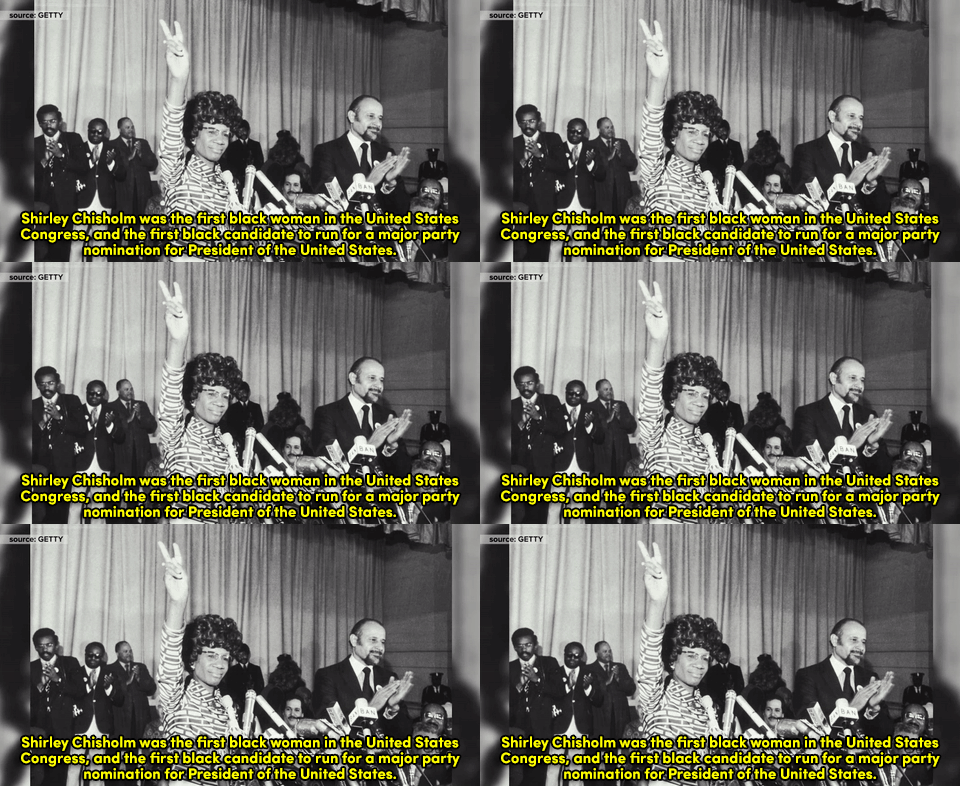
"Unbought and unbossed" was the mantra Shirley Chisholm made famous, and her run for the U.S. presidency in 1972 made her the first woman and African-American to seek the nomination from a major political party. Before that, she was a pioneer in her role as the first African-American woman in Congress in 1968 (again, it took that long?) and held that seat for 14 years, introducing more than 50 pieces of legislation and advocating for racial and gender equality. Though she did not win the nomination for the Democratic Party's presidential candidate in '72, her journey opened doors for taking the possibility of a woman on a major ticket seriously. She'd later teach at Mount Holyoke College, co-found the National Political Congress of Black Women, and be offered the role of U.S. Ambassador to Jamaica.
Now: Vice President Kamala Harris
Sheila Fitzgerald / Shutterstock
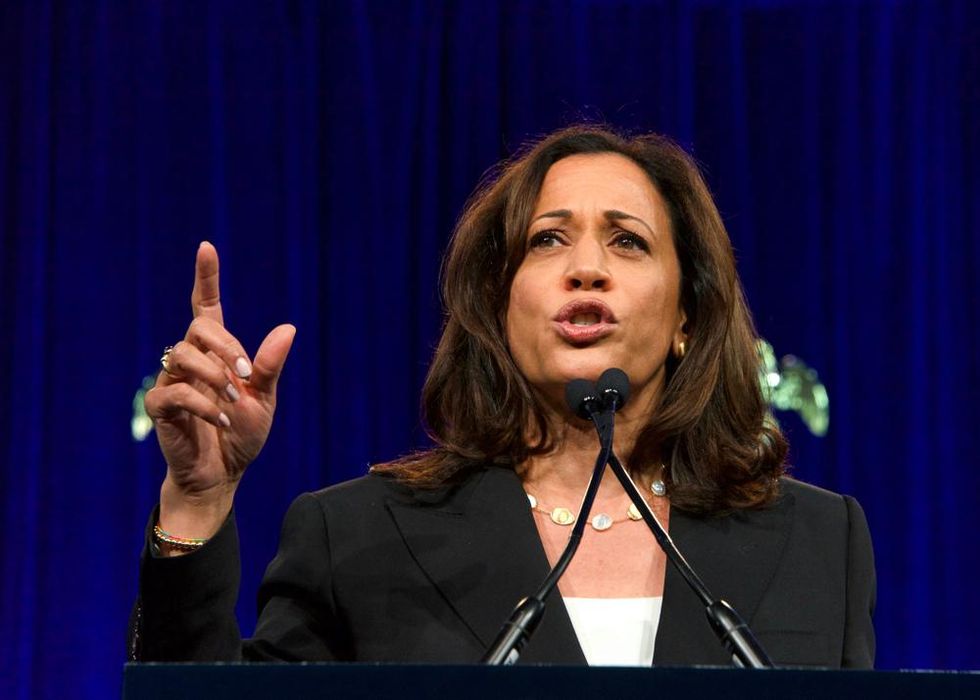
Last year, Kamala Harris made history as the first woman of color to become vice president of the United States. She previously served as San Francisco's district attorney--another first in the realm of gender and race--- and then became California's attorney general, before advancing on to become a U.S. senator.
Today, she has been part of the leadership team to swiftly execute impactful efforts including the finalization and execution of the American Rescue Plan that includes additional stimulus funds, expansion of a national COVID-19 vaccination process, extension of housing and unemployment relief and benefits, and the increase in resources for small businesses, particularly minority-owned. So far, so good, sis!
Then: Judith Jamison
Her powerful solos in some of Alvin Ailey's greatest works have etched her a space among the most prolific dancers of all time---Black or otherwise. Judith Jamison joined the troupe in 1965 and became an international star, dancing in and creating unforgettable shows all over the world in the 1970s and '80s. She's also starred in the hit Broadway musical Sophisticated Ladies, and launched her own successful dance company, The Jamison Project. She would later take leadership of the American Dance Theater in 1989 as artistic director, bringing the company to new heights including a 50-city global tour for its 50th anniversary and two historic performances in South Africa. She's a top choice among everyday dance lovers and the art patron elite. Black Girls Rock! paid tribute to her in 2018, the Obama administration honored her through the White House Dance Series in 2010, and her autobiography was even edited by former U.S. first lady, Jacqueline "Jackie O" Kennedy Onassis.
Now: Amanda Morgan
Amanda Morgan holds her own as the only Black female dancer with the Pacific Northwest Ballet (PNB) corps, one of the largest, most prestigious ballet companies in the U.S. She's held leading roles in some of their most popular performances, and has toured across the globe. She's also founder of The Seattle Project, an interdisciplinary artists' collective that provides a space for community-accessible work, in 2019. When the Black Lives Matter movement kicked off after the death of George Floyd, she used her platform to speak out against racism and advocate for inclusivity—particularly in the ballet world—and has rallied to fight police brutality. She continues activism and community work serving as a mentor for a program that connects PNB School students with seasoned dancers and a leading voice for podcasts and articles on social justice.
Then: Lisa Price
Lisa Price's another OG in the game, but this time it's all about boss moves in haircare. She started Carol's Daughter out of her Brooklyn, N.Y. home in the early '90s—well before the beauty supply shelves were saturated with natural haircare products—and got the likes of Mary J. Blige, Jay-Z, and Jada Pinkett Smith to endorse her line of shampoos, conditioners, and creams. She even reaped the benefits of the "Oprah Effect" when she made an appearance on Winfrey's show and saw the demand for her products instantly skyrocket. Before you knew it, they'd take over the shelves of big-box stores like Walmart and Target and major kiosks at malls around the world. In 2014, when her company was said to be worth more than $25 million, global powerhouse L'Oreal acquired it for an undisclosed—but we're sure quite enormous and well-worth-it—amount.
Now: Courtney Adeleye
Courtney Adeleye is another self-made multi-millionaire who built her hair and bodycare empire, The Mane Choice, from the ground up. In 2013, the medically trained entrepreneur used her knowledge as a registered nurse to create a line of products that cater to all sorts of issues, from hair growth to scalp dryness. She made the first products from her kitchen, built up demand, and expanded her brand presence to attract more than 350,000 followers on IG, launched in Target, Walmart, and Sally Beauty, and made millions of dollars in sales.
She's been a true rider in supporting female entrepreneurs and advocating for small businesses, so it's no surprise that her next big transition, an acquisition by MAV Beauty Brands that puts ownership of the company in corporate hands, comes at the heels of a partnership that opens funding doors for other women to the tune of $30 million.
Then: Whoopi Goldberg
 Giphy
Giphy Her career in Hollywood spans across decades and genres, and there's no doubt that she's a legend in the game who continues to keep the bar high. She was first introduced to the world as a stand-up comic, and in 1983, she starred in a one-woman Broadway production called The Spook Show and won a Grammy for the recording of that performance, renamed Whoopi Goldberg: Direct from Broadway, in 1985. Her landmark role as Celie in The Color Purple would win her an Oscar nomination in 1986, and another as Oda Mae Brown in Ghost would land her a win. She later hosted the highly-rated awards show, becoming only the second actual winner to do so and the first solo Black woman to get the spot. She's also one of few entertainers---and among only two who are Black—to have won all four of the major entertainment honors: a Tony, Oscar, Emmy and Grammy.
Now: Tiffany Haddish
Tinseltown / Shutterstock.com
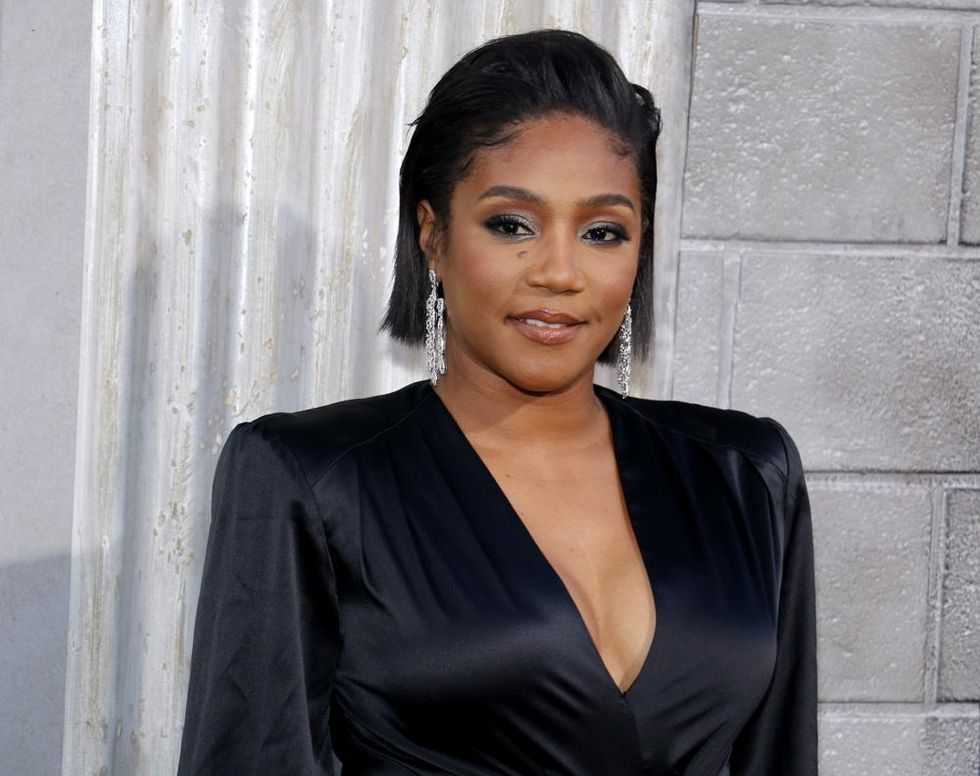
This "She Ready" comedian has gone from playing local Los Angeles spots to starring in hit TV shows and films including Real Husbands of Hollywood, Girls Trip, The Carmichael Show, Like a Boss, and The Last O.G. Tiffany Haddish has been a spokesperson for brands including Groupon, made Time's cover as one of its "100 Most Influential People in the World" in 2018, and made history the year before by becoming the first African-American female stand-up comedian to host an episode of Saturday Night Live. (She earned an Emmy Award for that gig as well.) Recently, she made history again as only the second black woman to win a Grammy for Best Comedy Album, for Black Mitzvah. We all ready, Tiff!
Then: Dolores Shockley, Ph.D.
Dr. Dolores Shockley became the first Black woman to earn a doctorate from the School of Pharmacy and Pharmaceutical Sciences at Purdue University in 1955, also making her the first in the nation. After earning her Ph.D., she was awarded the Fulbright Fellowship and worked in Denmark at the Pharmacology Institute in Copenhagen from 1955 to 1957. Her key research focused on studying the effects of chemical pollutants on the brain and recognizing pharmacological agents that interact with addictive drugs such as cocaine as to find solutions for recovery. In the '60s, she'd become a professor at Meharry Medical College, a top historically Black medical school that has graduated some of the most successful doctors in the U.S. She later advanced to chair of pharmacology at Meharry, becoming the first Black woman to hold the post, and she would remain at the university for more than 25 years.
Now: Kizzmekia Corbett, Ph.D.
Dr. Kizzmekia Corbett is one of the leading scientists from the National Institutes of Health who has been behind the search for the COVID-19 vaccine. She's been on the frontlines and has been lauded by the top U.S. immunologist leading national pandemic response efforts, Dr. Anthony Fauci, as a key member of the team making history. They've been working with Moderna, the pharmaceutical company that developed one of the two mRNA vaccines that is reportedly more than 90 percent effective. It's already received emergency use authorization from the FDA. Corbett is also spending her time volunteering to raise awareness and dispel myths about the vaccine. Sis has more than a decade of expertise studying dengue, respiratory syncytial virus, influenza, and coronaviruses, and we're more than here for it!
Then: Effie Lee Morris
Effie Lee Morris was a children's librarian, activist, and pioneer in advocating for library services for minorities and the visually-impaired. After beginning her career as a public librarian at the Cleveland Public Library in 1946, she worked for the Philadelphia Public Library before moving to New York for a position at the American Library Association. She also worked for the New York Library for the Blind and served as the first female chairperson of the Library of Congress. Her career would span from multiple posts in San Francisco, and while there, she established a research collection of out-of-print children's books that showcase the diverse depictions of ethnic and culturally diverse groups throughout time. By 1971, she'd became the first African-American president of the Public Library Association. In 1978, she became an editor of children's books, and she was honored in 2009 by House Speaker Nancy Pelosi, who called her "a visionary" in literacy and education advocacy.
Now: Marley Dias
Marley Dias sparked a viral book donation campaign hashtag 1000BlackGirlBooks back in 2015, and she was only 11, reaching her goal and then some. (More than 12,000 books have been collected to date.) Dias wanted to make books with Black girls as the main characters more readily available to her peers, after becoming frustrated with the options in her own reading journey. She decided to create the change she wanted to see. Her efforts landed her on the Forbes "30 Under 30" list and a Smithsonian Magazine American Ingenuity Award. She'd later pen a book of her own called, Marley Dias Gets It Done: And So Can You!, and continues to advocate not only for youth literacy, but for representation that gives all African-American youth and teens a chance to see themselves in stories that change the world.
Are you a member of our insiders squad? Join us in the xoTribe Members Community today!
Featured image by Giphy