

Halle Bailey Recently Spoke About Her Postpartum Depression — And I’m So Glad She Did

If you’re one to track celebrity news — which, let’s be real, is oftentimes nothing more than gossip — you’ve probably noticed that actor and singer Halle Bailey’s name has been coming up quite a bit as of late. Last week, she announced a mini solo residency (her first) that sold out in a matter of minutes, and since she and artist DDG (the father of her firstborn son, Halo) have broken up, it’s like folks are publishing minute-by-minute updates on what co-parenting is like for the both of them (and between them).
However, what caught and held my attention was her sharing the fact that she has been going through postpartum depression in the midst of…it all.
As Halle went on to explain her extreme anxiety when it came to being apart from her baby for more than 30 minutes, looking in the mirror and not really recognizing herself, and feeling triggered (in ways she probably wouldn’t be otherwise) — as a doula (which is basically a birthing assistant) who has had a front seat to clients who’ve battled with postpartum depression as well (and also as someone who knows that somewhere around 1 in 8 women deal with it on some level), I thought that now would be as good of a time as any to address some things about postpartum depression head on.
One, so that it can be taken more seriously than it oftentimes is. Two, so that you can know what to potentially look out for if you’re pregnant or someone you care about is. And, last but not least, if you have recently been diagnosed with postpartum depression, you can know that there is absolutely nothing to feel ashamed about — and that you are certainly not alone.
Postpartum Depression. Revisited.

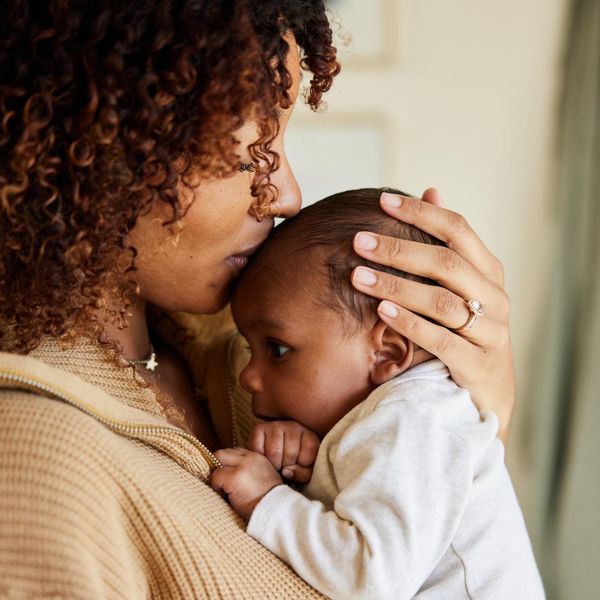
Getty Images
First up, I’m not even gonna begin to act like I can cover something as…vast as postpartum depression in one article. However, I am going to try to provide a bit of fact-based intel, just so you can separate myths, rumors, and the attitude of dismissiveness from what this type of depression is actually all about.
Postpartum depression (which is sometimes also referred to as perinatal depression and is also known as PPD) is the type of depression that occurs either during a woman’s pregnancy or shortly after she gives birth. Although the Greek philosopher and physician Hippocrates spotted emotional challenges that new moms would experience all the way back in his day (which was a LONG time ago), it actually wasn’t until — check it — 1994 (just 30 years ago — SMDH) that the Diagnostic and Statistical Manual of Mental Disorders formally listed postpartum depression “medically defined concept.”
Since then, even more studies have been trying to get to the root of postpartum depression. For instance, a UCLA team came to the conclusion about a decade ago that pregnancy alters the brain on many different levels. It does this by (for example) causing neurosteroid chemicals to skyrocket during pregnancy and then plummet after giving birth, which can cause the brain to go through extremes in order to resume some sort of balance.
In 2019, in response to this, the FDA approved Zulresso (brexanolone). New moms 15 and over can take it, although it absolutely must be under the supervision of a medical professional due to some of its potential side effects.
It also should go on record that there are three different types of postpartum depression — there’s the “baby blues” that easily at least half (some reports say as much as 75 percent) of new moms go through which is pretty (self-) manageable; there’s postpartum depression that comes with more severe symptoms (more on that in a sec), and then there’s postpartum psychosis which is the most extreme kind of PPD. Around 1 in 1,000 women are diagnosed with it, and it can include paranoia, hallucinations, and mania.
Okay, so how can you know if what you are experiencing is “baby blues” or something more serious? That is an excellent question.
5 Early Signs of Postpartum Depression
Getty Images
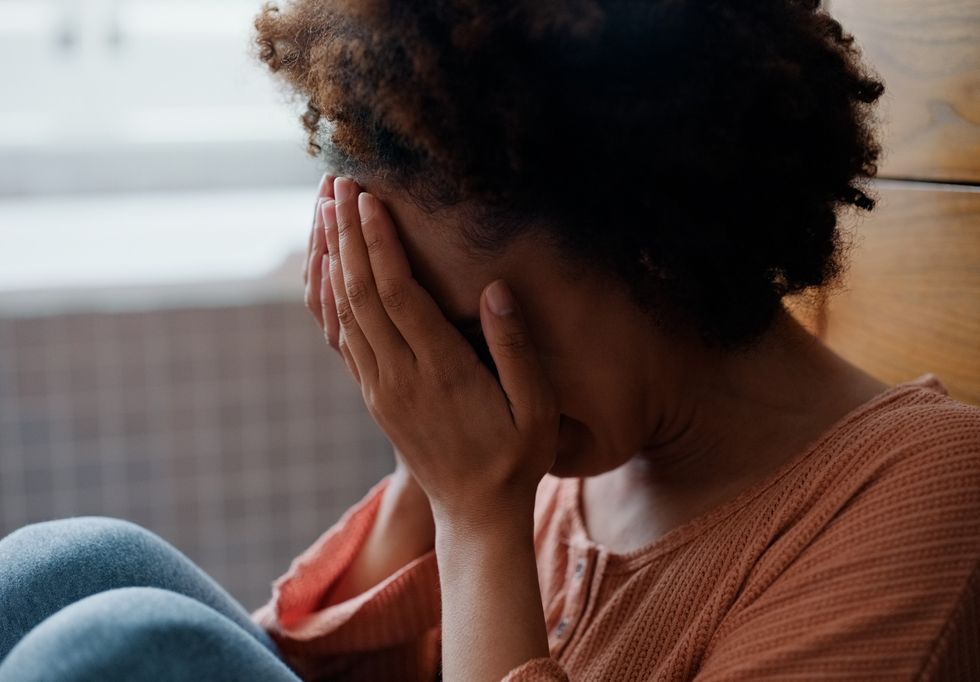
Although some of my clients are individuals who I didn’t know prior to their pregnancy, some people have been friends. One friend, in particular, I had known for about 20 years at the time that I helped her give birth to her first child ,and so I knew her personality very well. That’s why, when I noticed some of the signs that I’m about to share, I alerted her midwife ASAP.
Initially, her midwife said that we should wait a couple of weeks to see if it really was postpartum depression, yet my friend was moving so out of character that I wouldn’t let up. Later on, her midwife told me that she was glad that I didn’t wait because my friend ended up going through a pretty serious bout of postpartum depression for a few months.
1. Early signs of PPD: Your emotions don't "level out" within the first couple of weeks.
Listen, if premenstrual syndrome (PMS) is real (and it is), in part due to all of the hormonal changes that we go through (perimenopause comes to mind, too), I bet you can just imagine all that is going on, hormonally, after giving birth. And while the first couple of weeks can seem a bit all over the place, if you’re not starting to feel like your old self within a couple of weeks or so, don’t merely shrug that off; it could be a postpartum depression warning sign.
2. Early signs of PPD: Your anxiety is through the roof.
Something that really let me know that something was up with my friend is she was obsessed with feeding her child (a part of the issue was mastitis, which is an infection within a woman’s breast tissue). It was so much to the point that she wouldn’t sleep, and when I would be insistent upon it, she would put a bottle up on a pregnancy pillow and prop her baby up next to it (keep in mind that this was a newborn). She was super anxious and irritable, which can be another warning sign of entering into postpartum depression.
3. Early signs of PPD: Your day-to-day patterns are drastically shifting.
Your baby is going to create a new normal for your life; that is guaranteed. However, if you’re noticing that you are totally deviating from everything that you typically do as far as your daily routine goes, while this could be the case for the first few weeks, pay close attention to if it remains that way for longer periods of time. This can be tied to short-term memory loss or feeling very disoriented — another telling sign.
4. Early signs of PPD: You are beyond exhausted.
I once read that new parents tend to lose somewhere around three hours of sleep each and every night during the first year of their child’s life (chile) — and yes, that is going to lead to feeling tired, drained…weary even. Oh, but the exhaustion that I’m speaking of here is when you are well past feeling like you are running on fumes.
Depression exhaustion is when your brain is foggy, your focus is off, and you start leaning into feeling like you’re just existing instead of living because that’s just how worn out you are — and when you can’t seem to find relief, no matter how hard you try, that’s when it could teeter into depression if you’re not careful.
5. Early signs of PPD: You're either overly concerned with or totally detached from your child.
If you can’t think about anything but your baby or you don’t really feel much of an attachment at all, both of these can be signs of postpartum depression setting in as well. While science is still trying to figure out if shifts in oxytocin play a role, it is clear that changes in estrogen, progesterone, and within your thyroid can lead to either outcome — and both aren’t what’s ideal when you have a baby.
5 Signs of Full-Blown Postpartum Depression
Getty Images
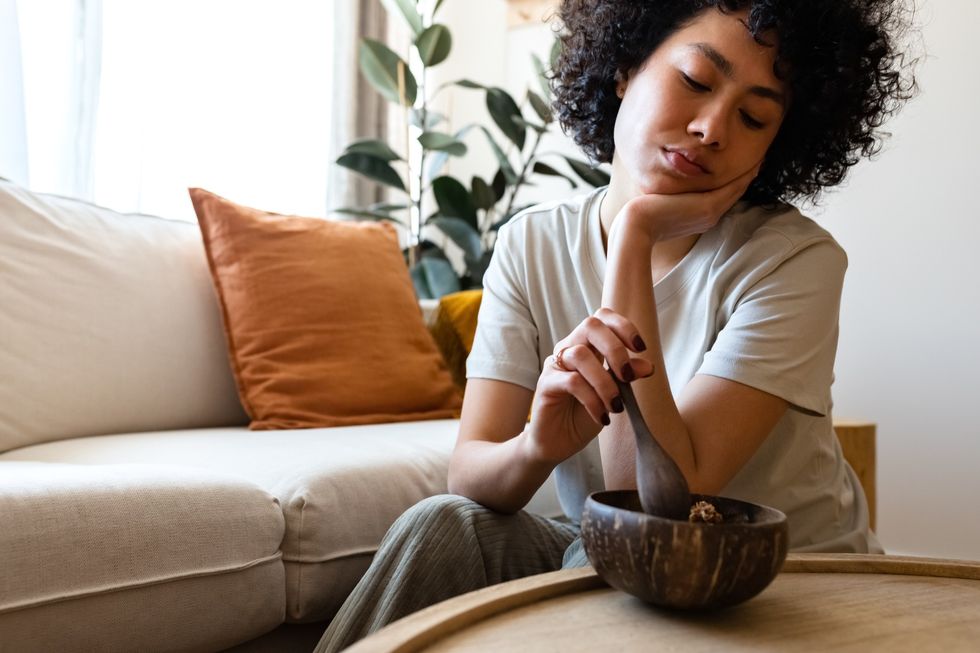
To be honest, everything that I just said can be a warning sign or a clear indication that you are in postpartum depression. The reason why I separated them from the ones that we are about to discuss is that if you only have one of what I just said, it may not be depression; however, if you’ve got three or more of them going on, definitely contact your doctor or midwife, just as soon as you possibly can — especially if they are compounded by these too.
1. Signs of PPD: Loss of appetite
When you’re depressed, it can sometimes cause you to not want to do basic things like showering or eating. A part of this may be due to something known as anhedonia, which is basically the ability to enjoy pleasurable things like food. Thing is, though, in order for you to get your strength back and for your baby to receive the nutrients that they need (if you are breastfeeding), you’ve got to eat. Besides, not eating can lower your blood sugar levels and that can impact your moods.
2. Signs of PPD: Insomnia
It probably doesn’t surprise you that, reportedly, 75 percent of people who are depressed struggle with getting a good night’s rest. The hamster wheel that it can put you on is wild, too, because you initially may struggle with sleeping because you are anxious or worrying a lot, which can have your emotions so all over the place to the point that you need sleep to regulate them…which you can’t seem to get because, again, you’re worrying so much.
There’s no way around the fact that a lack of sleep and depression are linked, so if you’re going days without at least getting some naps in, that could be a sign that postpartum depression has set in. (By the way, lemon balm is something that you might want to try if you can’t seem to sleep and you’re looking for an all-natural way to deal with it.)
3. Signs of PPD: Non-stop crying
If you ever get around to reading TIME’s “The Science of Crying,” you’ll get that nothing about crying is black and white. And honestly, if you’re crying from time to time after having a baby, that is completely understandable — encouraged even because it can help to reduce stress and pain; in fact, it’s pretty damn therapeutic.
What you shouldn’t overlook is if you’re experiencing crying spells to the point where it feels like you can’t stop. That can be an indication of depression because what you are expressing is feelings of hopelessness on some level.
4. Signs of PPD: Suicidal ideations
At the top of this year, Healthline published, “People with Perinatal or Postpartum Depression Face Higher Suicide Risk.” Hormones play a role in this. So does suppressing emotions if you feel some sort of guilt or shame for even having those thoughts during such a special time in your life. Then, if you add to the fact that reportedly only 15 percent of women seek professional mental health support for postpartum depression — sometimes it all can become so overwhelming that ending one’s life seems like the only way out. IT’S NOT.
If you’re thinking about suicide, even just a little bit, please speak up. Again, there’s nothing to be ashamed of; you simply need some expert assistance to get you through it.
5. Signs of PPD: Thoughts of hurting your child.
If it gets to the point where you are considering harming your child, that leans into the psychosis level of postpartum. Still, if a woman is going through all of the signs that I just mentioned, simultaneously, imagine how defeated she must feel. Anyway, although this isn’t the most common sign, it is the one that needs immediate professional help.
What Should You Do If You’re Going Through Postpartum Depression

Getty Images
So, after reading all of this, you definitely sense that you or someone you know has some postpartum depression going on. What should you do? The first thing is what I’ve already mentioned, which is to make an appointment to see your doctor or midwife. Please don’t try, and “Google your way” into a remedy or solution because a medical professional may need to do lab work and mental health screenings to get to the root of what could be causing it. Next, if you are officially diagnosed, get a solid support system around you.
Remember (and it really can’t be said enough), postpartum depression is NOTHING to be embarrassed about or ashamed of. You had a baby, which is a supernatural feat; it may take some time to recover from all that came with doing that — and that is okay. Next, you might want to consider getting a postpartum therapist — and yes, there is such a thing. They can help you to better articulate your feelings and needs, offer proven tips to get you through this particular season, and help you to find therapy treatments that will be most effective for you personally.
All-Natural Remedies for Postpartum Depression
Getty Images
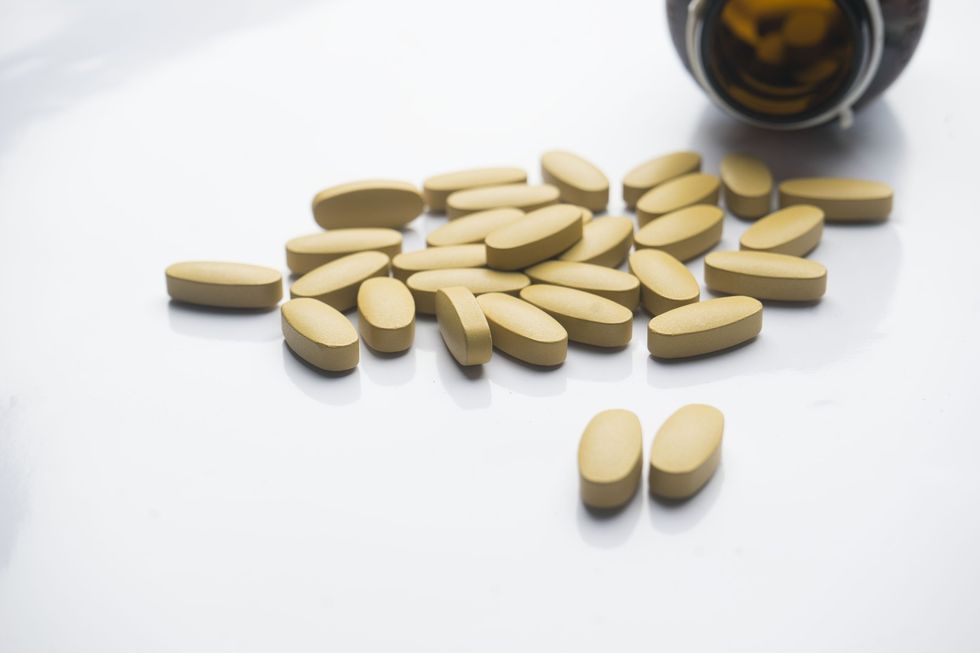
Please hear me loud and clear when I say that natural remedies for postpartum depression need to be accompanied by a physician’s (or midwife’s) knowledge and care.
The reason why I can’t stress that enough is, again, postpartum depression is nothing to be flippant with or about, and simply thinking that you can take a supplement and call it a day is irresponsible at best. At the same time, though, there are things that can complement whatever your doctor or midwife suggests as you’re on the road to healing from it.
1. Postpartum depression remedies: Get some omega-3s into your system.
Omega-3 fatty acids help to keep your cell membranes in peak condition, and yes, they have been proven to help reduce some of the symptoms that are associated with (postpartum) depression. In fact, some doctors recommend consuming these types of fatty acids throughout your pregnancy in order to reduce the chances of being diagnosed with postpartum depression. There are supplements that are available, and foods like flaxseeds, chia seeds, walnuts, meat from grass-fed animals, and salmon are filled with this particular nutrient, too.
2. Postpartum depression remedies: Consider some postpartum yoga.
Remember how Halle Bailey basically said that she felt disconnected from her body? Something that can help you to “reconnect” is postpartum yoga. Since it’s a form of exercise that decreases stress and anxiety, it’s low-impact, and it can help you to feel better about your body again — all of this works together to get you through postpartum depression.
3. Postpartum depression remedies: Fast from sugar, caffeine, and alcohol.
Sugar, caffeine, and alcohol are all stimulants — the kind that can make you feel energized and then cause you to crash a few hours later. When you have postpartum depression, you’re already on an emotional roller coaster ride, so you need to consume these things in extreme moderation.
Sugar? Studies say that it can actually make depression-related symptoms worse. Caffeine is a bit of a mixed bag; however, if it made you anxious before getting pregnant, you definitely should speak with your doctor before consuming it after pregnancy. Alcohol? It also increases your depression symptoms; plus, it’s potentially addictive.
4. Postpartum depression remedies: Get yourself an accountability partner.
Suffering in silence. A lot of new moms do it, which is why I was so glad that Halle spoke up about what she has currently been going through. When I say that you need an accountability partner (preferably a non-relative if you've got bossy or controlling ones who want to tell you "how things are done"), what I mean is you need someone who will help you to stick to your plans/goals for healing from postpartum depression, while supporting and encouraging you on your low days; you also need someone who will be great at helping you to feel good about yourself again.
Postpartum depression isn’t really something that you can get through (well) alone. Please don’t try to.
5. Postpartum depression remedies: Ramp up the self-care.
LISTEN, if there is ever a time when you shouldn’t feel the least bit guilty about getting (extra) massages, facials, or whatever else makes you feel pampered and beautiful — right after having a baby would be it. In fact, if you are currently pregnant, I recommend that you create a “pamper me budget” for your postnatal care. Why? Well, sometimes, one of the hardest things about adjusting to the new normal of a baby is trying to find the balance between prioritizing them vs. yourself.
When it comes to this final point, you’ve got to always remember that the healthier you are — mind, body, and spirit — the better off your baby will be, and that means that you’ve got to take premium care of your mental health…and yes, self-care via pampering plays a big role in that (check out “5 Reasons You Should Unapologetically Pamper Yourself”).
Why You Should Consider Hiring a Postpartum Doula
Getty Images
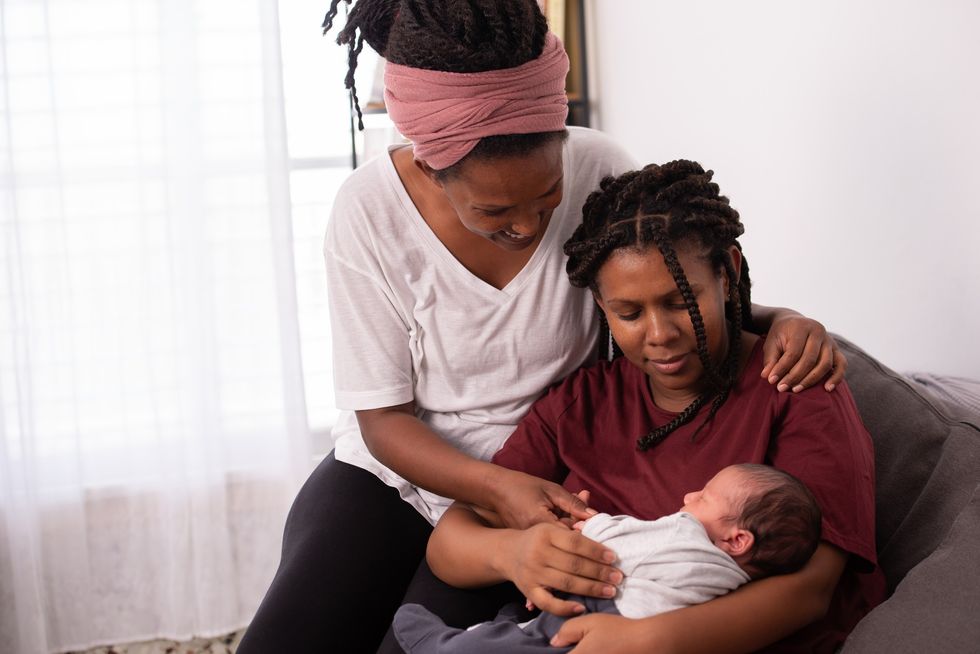
The way that my particular doula services work is I come into the pregnant mom’s life during the beginning of her third trimester and then stick around for a month following her giving birth to her child. That way, I can monitor any potential signs of postpartum depression, give her partner a break (yes, fathers have needs that shouldn’t be ignored during that time, too), and I can help around the house if the mom is too tired or physically not up to doing things like washing dishes or even changing her baby sometimes.
Although I do this naturally, the technical term for this type of doula is a postpartum doula. And even though we're all given information on how to provide postpartum care during “doula school,” a postpartum doula’s training is focused especially on how to support moms and babies after mom gives birth.
This can include doing all of the things that I already mentioned, as well as offering breastfeeding assistance (because it can sometimes take a minute to figure it out, trust me), running errands, preparing meals, helping out with other members of the family (like the other children) — some postpartum doulas will even spend the night a few nights a week so that the mom can get some quality rest.
Indeed, one of my favorite things about a postpartum doula is that while a baby nurse mostly only focuses on the newborn’s needs, a postpartum doula helps the entire family. Yeah, they are pretty bomb and can be a real godsend on a billion different levels. For information on how to find a doula or postpartum doula, click here. For information on how to become a DONA-certified doula, click here.
____
This one was lengthy (even for me — LOL), yet I hope you can see why it needed to be.
Halle, thanks again for bringing this issue to light. I salute you.
Having a baby is miraculous. New moms deserve all of the support that they need once they do it.
Let’s make things inbox official! Sign up for the xoNecole newsletter for love, wellness, career, and exclusive content delivered straight to your inbox.
Featured image by

Exclusive: Viral It Girl Kayla Nicole Is Reclaiming The Mic—And The Narrative
It’s nice to have a podcast when you’re constantly trending online. One week after setting timelines ablaze on Halloween, Kayla Nicole released an episode of her Dear Media pop culture podcast, The Pre-Game, where she took listeners behind the scenes of her viral costume.
The 34-year-old had been torn between dressing up as Beyoncé or Toni Braxton, she says in the episode. She couldn’t decide which version of Bey she’d be, though. Two days before the holiday, she locked in her choice, filming a short recreation of Braxton’s “He Wasn’t Man Enough for Me” music video that has since garnered nearly 6.5M views on TikTok.
Kayla Nicole says she wore a dress that was once worn by Braxton herself for the Halloween costume. “It’s not a secret Toni is more on the petite side. I’m obsessed with all 5’2” of her,” she tells xoNecole via email. “But I’m 5’10'' and not missing any meals, honey, so to my surprise, when I got the dress and it actually fit, I knew it was destiny.”
The episode was the perfect way for the multihyphenate to take control of her own narrative. By addressing the viral moment on her own platform, she was able to stir the conversation and keep the focus on her adoration for Braxton, an artist she says she grew up listening to and who still makes her most-played playlist every year. Elsewhere, she likely would’ve received questions about whether or not the costume was a subliminal aimed at her ex-boyfriend and his pop star fiancée. “I think that people will try to project their own narratives, right?” she said, hinting at this in the episode. “But, for me personally – I think it’s very important to say this in this moment – I’m not in the business of tearing other women down. I’m in the business of celebrating them.”
Kayla Nicole is among xoNecole’s It Girl 100 Class of 2025, powered by SheaMoisture, recognized in the Viral Voices category for her work in media and the trends she sets on our timelines, all while prioritizing her own mental and physical health. As she puts it: “Yes, I’m curating conversations on my podcast The Pre-Game, and cultivating community with my wellness brand Tribe Therepē.”
Despite being the frequent topic of conversation online, Kayla Nicole says she’s learning to take advantage of her growing social media platform without becoming consumed by it. “I refuse to let the internet consume me. It’s supposed to be a resource and tool for connection, so if it becomes anything beyond that I will log out,” she says.
On The Pre-Game, which launched earlier this year, she has positioned herself as listeners “homegirl.” “There’s definitely a delicate dance between being genuine and oversharing, and I’ve had to learn that the hard way. Now I share from a place of reflection, not reaction,” she says. “If it can help someone feel seen or less alone, I’ll talk about it within reason. But I’ve certainly learned to protect parts of my life that I cherish most. I share what serves connection but doesn’t cost me peace.
"I refuse to let the internet consume me. It’s supposed to be a resource and tool for connection, so if it becomes anything beyond that I will log out."

Credit: Malcolm Roberson
Throughout each episode, she sips a cocktail and addresses trending topics (even when they involve herself). It’s a platform the Pepperdine University alumnus has been preparing to have since she graduated with a degree in broadcast journalism, with a concentration in political science.
“I just knew I was going to end up on a local news network at the head anchor table, breaking high speed chases, and tossing it to the weather girl,” she says. Instead, she ended up working as an assistant at TMZ before covering sports as a freelance reporter. (She’s said she didn’t work for ESPN, despite previous reports saying otherwise.) The Pre-Game combines her love for pop culture and sports in a way that once felt inaccessible to her in traditional media.
She’s not just a podcaster, though. When she’s not behind the mic, taking acting classes or making her New York Fashion Week debut, Kayla Nicole is also busy elevating her wellness brand Tribe Therepē, where she shares her workouts and the workout equipment that helps her look chic while staying fit. She says the brand will add apparel to its line up in early 2026.
“Tribe Therepē has evolved into exactly what I have always envisioned. A community of women who care about being fit not just for the aesthetic, but for their mental and emotional well-being too. It’s grounded. It’s feminine. It’s strong,” she says. “And honestly, it's a reflection of where I am in my life right now. I feel so damn good - mentally, emotionally, and physically. And I am grateful to be in a space where I can pour that love and light back into the community that continues to pour into me.”
Tap into the full It Girl 100 Class of 2025 and meet all the women changing game this year and beyond. See the full list here.
Featured image by Malcolm Roberson
More Than Gratitude: 7 Signs You're Struggling With Contentment In Your Life
If Thanksgiving happens to be your favorite holiday — or you just happen to be a longstanding participant of it — then there is one tradition that you are probably familiar with. Usually, before everyone eats, each individual expresses at least one thing that they are grateful for. I actually think that is one of the best things about the holiday because it reminds people to slow down and really reflect on how to be in the moment and think about the blessings that they have. And that, my friend, is what gets folks into the mindset of knowing how to be…content — even if it’s just for a brief moment.
Contentment. By definition, it’s the state of not only being “satisfied with what one is or has” but also “not wanting more or anything else.” And you know what? Although it might not be a popular aspiration of many, it is a sign of spiritual maturity on certain levels. After all, it is the Apostle Paul who once said, “Not that I speak in regard to need, for I have learned in whatever state I am, to be content…” (Philippians 4:19 — NKJV).
Being content is about not complaining. Being content is about learning to be comfortable in your present circumstances. Being content is about choosing to find joy and fulfillment, on some level, and in some way, on a daily basis.
Personally, I dig all of this so much because when you have mastered true inner contentment, it creates stability, self-awareness, and a type of resilience that makes you…shoot, powerful beyond measure, if you ask me. Because when someone knows how to “find the good” and “make peace,” regardless of what is going on around them, they truly are unstoppable. Yeah, on so many levels, contentment is the ultimate life hack. It’s something that each and every one of us should aspire to become: completely and genuinely content.
Thanksgiving is basically moments away at this point. In preparation for that time of self-reflection, pour yourself a glass of wine, turn on some soft music, sit on your coach, and then ask yourself, “Am I content?” If you’re not sure (or you need the definition unpacked for you just a bit more), here are seven signs that you may not be…and yet, there is no time like the present to do something about it.
1. You’re Super Impatient
GiphyHonestly, putting another Scripture right here could be all that is needed in order to bring this point to a swift and abrupt end. Which one? I Corinthians 13, the Love Chapter, starts off with “Love is patient” (I Corinthians 13:4). Yeah, if you want to know if you love yourself and love yourself well, how patient are you…including with yourself? Throughout the years, I have shared one of my favorite definitions of "patient" in several different articles: “bearing provocation, annoyance, misfortune, delay, hardship, pain, etc., with fortitude and calm and without complaint, anger, or the like.” For me, it’s a blaring reminder that mastering patience isn’t just about waiting (more on that in a sec); it’s about waiting with grace.
Content people can do this because, on some level, they know how to apply the John Piper quote, "God is always doing 10,000 things in your life, and you may be aware of three of them." Another way of looking at this is people who can wait well — without complaining or getting annoyed by delays or challenges in the meantime — get that in order for things to truly come together, there are lots of moving parts…some that they don’t even know about. And so, if they want the best outcome, yes, waiting well is oftentimes not just involved; it is required.
Impatient people don’t get any of this. That’s why they are so stressed out all of the time.
2. You’re Worried About Things You Can’t Control
GiphyThis. Past. Election. Chile. And then the cabinet that that man is putting together as we speak? I don’t even want to get my blood pressure up, expounding on it. Let me just pivot by adding one more Scripture — because it is beyond fitting: “Therefore do not worry about tomorrow, for tomorrow will worry about its own things. Sufficient for the day is its own trouble.” (Matthew 6:34 — NKJV)
Although worrying is something that pretty much everyone does at one point or another, one of my favorite quotes on it is by an American humorist by the name of Erma Bombeck: “Worry is like a rocking chair: it gives you something to do but never gets you anywhere.” And really, when you stop to really think about worrying, isn’t that the truth? For one thing, all worrying does, by definition, is cause you to torment yourself by focusing on things that aren’t even going to happen (somewhere between 85-90 percent of the time, in fact; there is actually a science on that) or trying to control things that are beyond your control.
If being a worry wart is your internal struggle, my advice would be to look at life this way: If you’re worried that you’re about to get written up for getting to work late again, leave your house earlier — you can control that. On the other hand, if you’re worried that you’re going to get laid off before the holiday season ends, so long as you’ve been doing your best (which is also something that you can control), please put your energy elsewhere because that is something that you can’t control.
And I promise that when you choose to be calm and confident over worrying yourself to death, that can help you to manage what you can’t control so much easier. Oh, and your health will thank you, too, because worry is attached to things like insomnia, muscle tension, headaches, overeating, and drinking too much. All this over things that probably won’t happen in the first place? Yeah, sis…(choose to) relax.
And by choosing to chill out, there is some contentment that follows because you will see the good as much as, if not more than, the potential bad. Trust me.
3. The Past and/or Future Consume You
GiphyOn the heels of the Scripture that I just provided for the previous point, it also applies to this one. You know, back when I was doing some intentional research on forgiveness, I always appreciated the insight of author Gary Zukav: “Forgiveness is accepting that the past cannot change.” While this doesn’t mean that you shouldn’t hold people accountable for what they have done, it does help you to be compassionate with those who are truly sorry (check out “Heads Up: It's NOT An Apology If An Amend Isn't Made”) because, no matter what has transpired between you and them, one thing they can’t do is go back into a time machine and change it.
And you know what? When it comes to the mistakes — or, let’s be real, sometimes they are conscious poor decisions — you have made, you can’t either. So, why let their misdeeds or your own consume you to the point of internally destroying you?
Then there’s the future. What if you get robbed? What if your mom gets cancer? What if your husband files for divorce? Girl, if you are caught up in the future that hasn’t even happened yet, you are definitely gonna drive yourself up the wall! And this is why so many mental health experts and platforms are all about encouraging individuals to live in the moment. You can do this by meditating, taking breaks from social media (and the news), journaling, doing things that you enjoy (instead of waiting to put them off), and resting.
Listen, one of the best things about choosing to only focus on the here and now is you can find little things about it to be content with — and that helps you to be/become more content overall.
4. You Always Think About Wanting More
GiphyAlthough it certainly wasn’t my plan for this piece to be so Scripture-heavy, I’ve got to flow with what immediately comes to mind and, for this point, the verse, “So are the ways of everyone who is greedy for gain; It takes away the life of its owners” (Proverbs 1:19 — NKJV) is it. And just what does it mean to be greedy? A greedy individual isn’t just low-key obsessed with getting and having more — please catch it — they are also quite EAGER.
Eager folks also tend to be impatient. Eager folks are perceived by others as being very intense (and not in a good way). More times than not, eager folks haven’t really mastered how to take a moment to appreciate what they do have because all they care about is what’s next. And when you’re in a state of that kind of, well, anxiety…how could it not affect your quality of life? I mean, really.
And what if you read all of that and said, “I’m not greedy; I’m just ambitious” — listen, there is nothing wrong with having goals and wanting to obtain them. However, an ambitious individual knows how to find balance. If they get a promotion, they will schedule a vacation to celebrate it. If they just got a new car, they are not in a rush to get a new house until they can financially afford it. If they were just proposed to with a really nice ring, they aren’t hounding their new fiancé about setting a date within the next two weeks.
People who always want more, without taking the time to enjoy what they already have, are never going to be content. Why? Because there is always something else that you can want…even if you don’t need it or it really isn’t the time for it. Meanwhile, content people get that it’s a good thing to not go after everything all of the time; that it’s far wiser to embrace what is already before them — because some folks don’t even have…that.
5. You Compare Yourself to Others
GiphySomething that I actually get asked fairly often is, do I feel “some type of way” that I do so much work in the realm of marriage when I’ve never been married myself. The short answer is “absolutely not” because I know that I could’ve been married, a few times over, at this point; however, I am just as intentional about not wanting to be divorced as I am about being in a healthy marriage, not just “a marriage.”
I’m grateful to be in that head and heart space too; otherwise, I would be out here comparing myself to other people — and there is nothing good, healthy, wise, profitable, or beneficial about doing that. In fact, science isn’t a fan of playing the “keeping up with the Joneses” game, either.
According to science, that can ultimately do things like lower your self-esteem, cause you to only see the bad/negative things in your world (in comparison to other people), and it can jack up your perception of what’s really going on with other people. For instance, if you’re 33 and comparing yourself to your friends who are already married and parents, you might want to talk to them about what their day-to-day, beyond their IG posts, is like.
Because while prayerfully, their life is filled with many blessings, if they are being totally honest with you, they will also share that you’ve got some “pros” to your life too (honey, there are some real benefits to being single; check out “If You're Not In Love With Being Single, Ask Yourself These 6 Questions.,” “10 Bona Fide Benefits Of Being Single,” and “10 Words That'll Make You Totally Rethink The Word 'Single'”). Content people get that every season does — because it’s true.
6. You Don’t Verbalize Gratitude Often
GiphyThere is someone in my world who I actually try to avoid as much as possible. It’s not that she’s not smart, and honestly, she’s one of the funniest individuals that I’ve ever known (and I’ve known her for most of my adult life). It’s just that…she is always wanting something, and I find that to make her a very draining individual. Lawd, even as I am typing all of this out, I’m trying to recall a time when I’ve heard her say, “thank you” for something (no joke), let alone express any form of genuine gratitude. She’s just got such a sense of entitlement that whatever she does receive, she thinks she’s owed and what she doesn’t have, she believes that something is wrong if it hasn’t arrived yet. Geeze, what a horrible type of existence.
You don’t have to take my word for it either because there is plenty of data out here to support that people who don’t take the time to be grateful for what they have ended up being unhappy, more stressed out, in more physical pain (yes, literally) and definitely more negative than everyone else — which would explain why people don’t like hanging out with them as much.
So, since this is the time when gratitude is the theme of the season, think about what you are grateful for when it comes to what you’ve accomplished this year, then write it down and post it up somewhere. Then, as far as the individuals, for whom you are grateful for — send them a handwritten note, get them a gift card to their favorite coffee shop, or even just call to tell them.
One of the most beautiful things about being in a state of contentment is it reminds you of a lot of what you already have. It really is enough…for now…in this very moment.
7. Being (and Living) Satisfied Is a Foreign Concept to You
Giphy“Tubi movies” really is a complete sentence. LOL. And yes, sometimes, when I’m taking a writing break, I will check out some of the most…I-wouldn’t-normally ones, just to lend my support. In walks Never Satisfied with its own self-explanatory meaning. Y’all, it really is oh so true that there are folks out here dealing with some unpredictable and sometimes even truly dire consequences — and it’s all because they didn’t know how to sit down somewhere and learn how to be satisfied with the people, places, things, and ideas that they already have.
That said, I am indeed a quotes gal, and one of my favorites on the topic of satisfaction is by actor Christopher Reeve: “Success is finding satisfaction in giving a little more than you take,” and although I don’t do what I’m about to do often (because I try to take Matthew 6:1-4 very literally and seriously), I’m going to illustrate what he said about satisfaction by sharing a recent situation.
This past week, a nurse practitioner (I prefer those to doctors) diagnosed me with wrist tendonitis for the first time in my life. If you knew how many keystrokes that I do a day, you’d probably be shocked that it took this long. Anyway, as I was waiting in line to get a prescription, a young Black man was basically freaking out because his insurance was refusing to cover his own meds. According to what he was telling the pharmacist, he always only pays $5; however, this time, they were charging $62, he simply didn’t have it, and the insurance company was not picking up.
As I watched him shaking and sweating while saying that he really needed it today and fretting while talking to his mom on the phone, I offered to cover it — and after going back and forth with him for about three minutes, I did. In my mind, although I didn’t plan on spending about $85 (total) that day, the little inconvenience that it was costing me was nothing in comparison to how much it was going to benefit him — I could tell from how he and his mother reacted (even the pharmacist mouthed “thank you so much”), and that is what made it money well spent.
To help someone who had no way of helping themselves in the moment? That brought me a lot of satisfaction because it’s nice to lighten someone’s load while leaving it to karma to handle it. ALL OF IT.
And that’s why I thought it was best to wrap all of this up with a reminder that being satisfied is being content. And when you can be so satisfied with your life that you want to help others? That is a level of contentment that is truly unmatched because you start looking for ways to bless others simply so that they can feel just as content as you do.
____
Our culture? It really is never satisfied, which explains why a lot of people are so miserable. SMDH. You don’t have to be like the masses, though. This Thanksgiving, please purpose in your mind (and heart) to be(come) more content. It will make you a rare gem that benefits everyone and everything around you.
Including yourself, sis. No doubt about it.
Let’s make things inbox official! Sign up for the xoNecole newsletter for love, wellness, career, and exclusive content delivered straight to your inbox.
Featured image by Shutterstock
Originally published on November 28, 2024