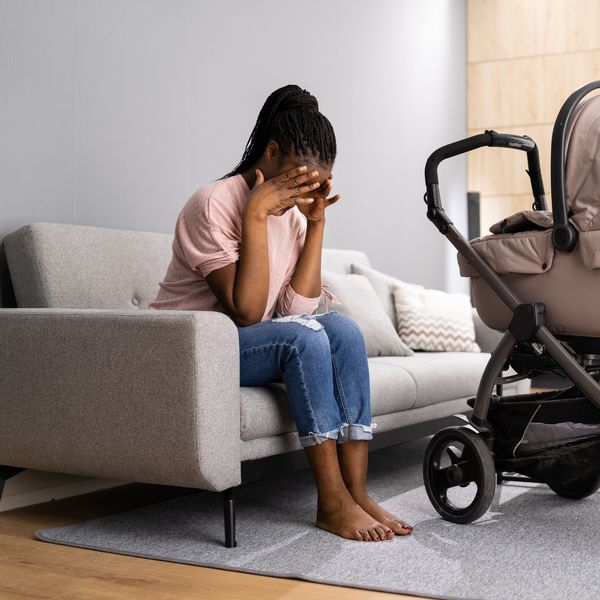

Toxic masculinity has been masquerading as traditional masculinity for centuries. Toxic masculinity bans men from a healthy relationship with themselves, where they are allowed to be vulnerable, sensitive, empathic – basically every emotion society often labels as feminine. And it stunts their mental and emotional growth that perpetuates false ideologies of manhood that hold them back from having a better understanding of themselves and showing up for their loved ones.
The stress toxic masculinity puts on men
GiphyMen are continuously given the objective that they must be independent, self-reliant, physically tough, etc. Society often tells men this false narrative as the only way to make them successful in terms of business, maneuvering in society, and finding a partner. They are taught that they simply can't afford to be vulnerable because it'll be ridiculed.
The American Psychological Association's Guidelines for Psychological Practice with Boys and Men mentions that raising boys into "traditional" masculinity is harmful to their health and wellness. Licensed professional counselor Eric Patterson at mental health startup Choosing Therapy notes that "toxic masculinity is an ever-present issue." I asked him some questions regarding the mental and emotional distress toxic masculinity puts on men. His response brought forth insight and clarity.
Patterson stated, "Unfortunately, toxic masculinity puts very little stress on the men who are actively perpetuating notions of superiority. They tend to be oblivious to the impact their views and behaviors have on others. The men that hope to be more enlightened may struggle with their place and their role. They want to support equality without denouncing their entirety of their sex, which can prove challenging at times."
Sadly, toxic masculinity is like a domino effect; it affects all of us. So if we don't call out toxic traits, we are enabling them to continue. It begins and ends with accountability – you can't do better until you know better.
Everyday examples of toxic masculinity
GiphyToxic masculinity is often poured into men from their childhood days. Their parents telling him he shouldn't cry because he's a boy and 'real men' don't do that. Men are often taught that masculinity is supposed to be hypermasculinity, being aggressive, suppressing their emotions, and always feeling the need to be a dominant figure. They are often excused for being promiscuous compared to women – who would be easily labeled a hoe. Either party shouldn't be applauded for this; it's not a fruitful sport, but if people feel that's the life they want to live, keep your comments to yourself or make sure you judge them the same way, instead of it being one-sided.
I asked some men about their most toxic trait and how they are actively unlearning those perspectives – their answers were quite insightful.
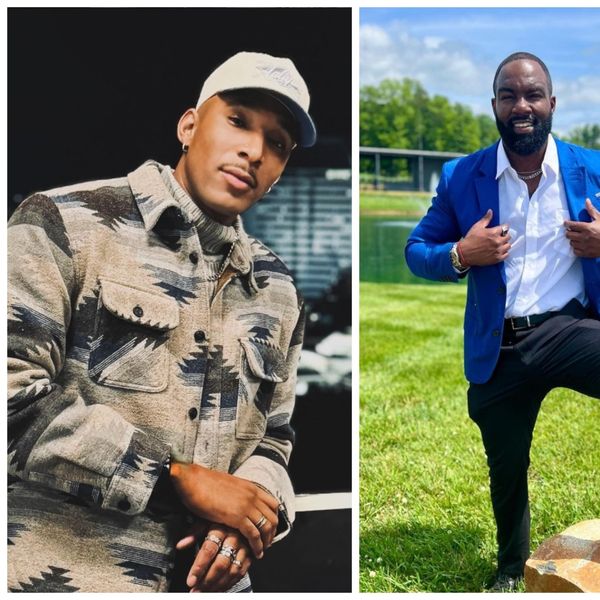
"I would say my most toxic trait is that sometimes I think so highly of myself that I'm mostly unwilling to take advice from others because I'm under the impression there is no way they could understand what I feel I have more knowledge on," said Johnny Welch, program coordinator in Philadelphia, PA. "I simply think I know best, even in cases when I know nothing. This trait has left me numerous times feeling the burn when I could have simply not touched the stove. I'm well aware of the issue and try to make steps to correct it."
A good start at overcoming toxic masculinity is acknowledging your issues and then building stepping stones to combat them. The goal isn't perfection; it's about progression. Talk about this with your male friends and ask them to hold you accountable or ask them if they can suggest ways for you to change your old habits. Get used to not always leaning on women for vulnerable conversations; she can't be your therapist and partner; that's too much stress for anyone.
Normalize talking about your emotions with other men.
Another man echoed a similar sentiment regarding communication, "I would say my most toxic trait is being inconsistent when it comes to communicating," said Carrell Calhoun, operations manager in Bethlehem, PA. "Sometimes I have this, I-don't-feel-like-talking type of attitude when I feel like something isn't a major issue, and how I work on that is to just allow my partner to express themselves."
Frequent communication is essential in every relationship, whether it's platonic or romantic. Just because you're with someone, it doesn't mean you are able to read that person's mind all of a sudden. Let's normalize leaning on each other in times of need instead of perceiving it as a way to emasculate men.
How do women and society play a role in toxic masculinity?
GiphyBelieve it or not, ladies, some of y'all play a part in enabling toxic masculinity. Telling a man he's soft or shouldn't be emotional is problematic. I asked some men what they would tell women that said 'you're not a man' if you show vulnerability in any way, crying or expressing how they felt. They had some interesting tea to spill.
"Emotional intelligence matters, empathy matters. Men that are viewed as crazy, non-communicative, toxic, or nonchalant have probably become that way due to a woman or man telling them that same sentiment as they grew up," said Cedric Calder, CEO of Artisan Echelon in New Jersey. The same men that are told they "ain't shit" have become like that for a reason, and while everyone should be accountable for their own actions and grow/learn from their experiences – not everyone has the mindset to get through it [and] receive assistance in doing so. Human beings are social creatures, and being social creates some sort of stress, whether good or bad, and these feelings need to be released one way or the other."
Amen, on the necessity for emotional intelligence! Toxic masculinity robs men to tap into their emotional intelligence. This is a collective Black issue we have because I was also taught to repress my emotions because it made me look weak, but as I got older, I learned how important it was to thoroughly understand my emotions so I can show up better for myself and others.
How to combat toxic masculinity
GiphyCombatting toxic masculinity is NOT a woman's job. I've heard the saying that 'it's a woman's job to make a man a better/evolved man' countless times – and that's too much of a burden. As Marlon Dundas, digital investment professional in Queens, NY, stated, "I believe a relationship is a mutual agreement to learn from each other. If you trust and value the person you're with, then you will be made a better person. It doesn't matter if you're a man or a woman."
So yes, back to the daily televised show, it's a partnership. Both partners can help each other, not completely burden each other in specific areas, and expect things to mend themselves over time because they won't – they'll just get worse if you don't address them. As licensed professional counselor Eric Patterson mentions:
"Women can support this shift in men by pointing out undesirable aspects of toxic masculinity and times when it presents. By addressing the situation with love and support rather than anger and judgment, there is a better chance for success. Women must remember that the man must want to change, and even if he does, he could be working against decades or generations of problematic behaviors. It will not change overnight."
Ladies, I know bending backwards comes easily to us sometimes, and that's something we have to work on collectively. But you can't change a man that is not ready to change himself for himself first, and then you can benefit from it. Change only sticks when we do it for ourselves versus for others. You can only guide him and cheer him on along the journey, but you can't make the changes he needs to make within himself.
Men don't have to be hypermasculine to be considered man enough; show how you feel, reveal the real you from under the mask. Toxic masculinity can't thrive if you choose to work through your issues, so you can be an evolved man for yourself and your loved ones.
Are you a member of our insiders squad? Join us in the xoTribe Members Community today!
Featured image by Shutterstock
- What A Toxic Relationship Can Reveal To You About Yourself - xoNecole: Women's Interest, Love, Wellness, Beauty ›
- How To Become More Vulnerable - xoNecole: Women's Interest, Love, Wellness, Beauty ›
- What Exactly Is Toxic Masculinity? - xoNecole: Women's Interest, Love, Wellness, Beauty ›
Because We Are Still IT, Girl: It Girl 100 Returns
Last year, when our xoNecole team dropped our inaugural It Girl 100 honoree list, the world felt, ahem, a bit brighter.
It was March 2024, and we still had a Black woman as the Vice President of the United States. DEI rollbacks weren’t being tossed around like confetti. And more than 300,000 Black women were still gainfully employed in the workforce.
Though that was just nineteen months ago, things were different. Perhaps the world then felt more receptive to our light as Black women.
At the time, we launched It Girl 100 to spotlight the huge motion we were making as dope, GenZennial Black women leaving our mark on culture. The girls were on the rise, flourishing, drinking their water, minding their business, leading companies, and learning to do it all softly, in rest. We wanted to celebrate that momentum—because we love that for us.
So, we handpicked one hundred It Girls who embody that palpable It Factor moving through us as young Black women, the kind of motion lighting up the world both IRL and across the internet.
It Girl 100 became xoNecole’s most successful program, with the hashtag organically reaching more than forty million impressions on Instagram in just twenty-four hours. Yes, it caught on like wildfire because we celebrated some of the most brilliant and influential GenZennial women of color setting trends and shaping culture. But more than that, it resonated because the women we celebrated felt seen.
Many were already known in their industries for keeping this generation fly and lit, but rarely received recognition or flowers. It Girl 100 became a safe space to be uplifted, and for us as Black women to bask in what felt like an era of our brilliance, beauty, and boundless influence on full display.
And then, almost overnight, it was as if the rug was pulled from under us as Black women, as the It Girls of the world.
Our much-needed, much-deserved season of ease and soft living quickly metamorphosed into a time of self-preservation and survival. Our motion and economic progression seemed strategically slowed, our light under siege.
The air feels heavier now. The headlines colder. Our Black girl magic is being picked apart and politicized for simply existing.
With that climate shift, as we prepare to launch our second annual It Girl 100 honoree list, our team has had to dig deep on the purpose and intention behind this year’s list. Knowing the spirit of It Girl 100 is about motion, sauce, strides, and progression, how do we celebrate amid uncertainty and collective grief when the juice feels like it is being squeezed out of us?
As we wrestled with that question, we were reminded that this tension isn’t new. Black women have always had to find joy in the midst of struggle, to create light even in the darkest corners. We have carried the weight of scrutiny for generations, expected to be strong, to serve, to smile through the sting. But this moment feels different. It feels deeply personal.
We are living at the intersection of liberation and backlash. We are learning to take off our capes, to say no when we are tired, to embrace softness without apology.
And somehow, the world has found new ways to punish us for it.

In lifestyle, women like Kayla Nicole and Ayesha Curry have been ridiculed for daring to choose themselves. Tracee Ellis Ross was labeled bitter for speaking her truth about love. Meghan Markle, still, cannot breathe without critique.
In politics, Kamala Harris, Letitia James, and Jasmine Crockett are dragged through the mud for standing tall in rooms not built for them.
In sports, Angel Reese, Coco Gauff, and Taylor Townsend have been reminded that even excellence will not shield you from racism or judgment.

In business, visionaries like Diarrha N’Diaye-Mbaye and Melissa Butler are fighting to keep their dreams alive in an economy that too often forgets us first.
Even our icons, Beyoncé, Serena, and SZA, have faced criticism simply for evolving beyond the boxes society tried to keep them in.
From everyday women to cultural phenoms, the pattern is the same. Our light is being tested.

And yet, somehow, through it all, we are still showing up as that girl, and that deserves to be celebrated.
Because while the world debates our worth, we keep raising our value. And that proof is all around us.
This year alone, Naomi Osaka returned from motherhood and mental health challenges to reach the semifinals of the US Open. A’ja Wilson claimed another MVP, reminding us that beauty and dominance can coexist. Brandy and Monica are snatching our edges on tour. Kahlana Barfield Brown sold out her new line in the face of a retailer that had been canceled. And Melissa Butler’s company, The Lip Bar, is projecting a forty percent surge in sales.

We are no longer defining strength by how much pain we can endure. We are defining it by the unbreakable light we continue to radiate.
We are the women walking our daily steps and also continuing to run solid businesses. We are growing in love, taking solo trips, laughing until it hurts, raising babies and ideas, drinking our green juice, and praying our peace back into existence.
We are rediscovering the joy of rest and realizing that softness is not weakness, it is strategy.
And through it all, we continue to lift one another. Emma Grede is creating seats at the table. Valeisha Butterfield has started a fund for jobless Black women. Arian Simone is leading in media with fearless conviction. We are pouring into each other in ways the world rarely sees but always feels.

So yes, we are in the midst of societal warfare. Yes, we are being tested. Yes, we are facing economic strain, political targeting, and public scrutiny. But even war cannot dim a light that is divinely ours.
And we are still shining.
And we are still softening.
And we are still creating.
And we are still It.

That is the quiet magic of Black womanhood, our ability to hold both truth and triumph in the same breath, to say yes, and to life’s contradictions.
It is no coincidence that this year, as SheaMoisture embraces the message “Yes, And,” they stand beside us as partners in celebrating this class of It Girls. Because that phrase, those two simple words, capture the very essence of this moment.
Yes, we are tired. And we are still rising.
Yes, we are questioned. And we are the answer.
Yes, we are bruised. And we are still beautiful.

This year’s It Girl 100 is more than a list. It is a love letter to every Black woman who dares to live out loud in a world that would rather she whisper. This year’s class is living proof of “Yes, And,” women who are finding ways to thrive and to heal, to build and to rest, to lead and to love, all at once.
It is proof that our joy is not naive, our success not accidental. It is the reminder that our light has never needed permission.
So without further ado, we celebrate the It Girl 100 Class of 2025–2026.
We celebrate the millions of us who keep doing it with grace, grit, and glory.
Because despite it all, we still shine.
Because we are still her.
Because we are still IT, girl.
Meet all 100 women shaping culture in the It Girl 100 Class of 2025. View the complete list of honorees here.
Featured image by xoStaff
Because We Are Still IT, Girl: It Girl 100 Returns
Last year, when our xoNecole team dropped our inaugural It Girl 100 honoree list, the world felt, ahem, a bit brighter.
It was March 2024, and we still had a Black woman as the Vice President of the United States. DEI rollbacks weren’t being tossed around like confetti. And more than 300,000 Black women were still gainfully employed in the workforce.
Though that was just nineteen months ago, things were different. Perhaps the world then felt more receptive to our light as Black women.
At the time, we launched It Girl 100 to spotlight the huge motion we were making as dope, GenZennial Black women leaving our mark on culture. The girls were on the rise, flourishing, drinking their water, minding their business, leading companies, and learning to do it all softly, in rest. We wanted to celebrate that momentum—because we love that for us.
So, we handpicked one hundred It Girls who embody that palpable It Factor moving through us as young Black women, the kind of motion lighting up the world both IRL and across the internet.
It Girl 100 became xoNecole’s most successful program, with the hashtag organically reaching more than forty million impressions on Instagram in just twenty-four hours. Yes, it caught on like wildfire because we celebrated some of the most brilliant and influential GenZennial women of color setting trends and shaping culture. But more than that, it resonated because the women we celebrated felt seen.
Many were already known in their industries for keeping this generation fly and lit, but rarely received recognition or flowers. It Girl 100 became a safe space to be uplifted, and for us as Black women to bask in what felt like an era of our brilliance, beauty, and boundless influence on full display.
And then, almost overnight, it was as if the rug was pulled from under us as Black women, as the It Girls of the world.
Our much-needed, much-deserved season of ease and soft living quickly metamorphosed into a time of self-preservation and survival. Our motion and economic progression seemed strategically slowed, our light under siege.
The air feels heavier now. The headlines colder. Our Black girl magic is being picked apart and politicized for simply existing.
With that climate shift, as we prepare to launch our second annual It Girl 100 honoree list, our team has had to dig deep on the purpose and intention behind this year’s list. Knowing the spirit of It Girl 100 is about motion, sauce, strides, and progression, how do we celebrate amid uncertainty and collective grief when the juice feels like it is being squeezed out of us?
As we wrestled with that question, we were reminded that this tension isn’t new. Black women have always had to find joy in the midst of struggle, to create light even in the darkest corners. We have carried the weight of scrutiny for generations, expected to be strong, to serve, to smile through the sting. But this moment feels different. It feels deeply personal.
We are living at the intersection of liberation and backlash. We are learning to take off our capes, to say no when we are tired, to embrace softness without apology.
And somehow, the world has found new ways to punish us for it.

In lifestyle, women like Kayla Nicole and Ayesha Curry have been ridiculed for daring to choose themselves. Tracee Ellis Ross was labeled bitter for speaking her truth about love. Meghan Markle, still, cannot breathe without critique.
In politics, Kamala Harris, Letitia James, and Jasmine Crockett are dragged through the mud for standing tall in rooms not built for them.
In sports, Angel Reese, Coco Gauff, and Taylor Townsend have been reminded that even excellence will not shield you from racism or judgment.

In business, visionaries like Diarrha N’Diaye-Mbaye and Melissa Butler are fighting to keep their dreams alive in an economy that too often forgets us first.
Even our icons, Beyoncé, Serena, and SZA, have faced criticism simply for evolving beyond the boxes society tried to keep them in.
From everyday women to cultural phenoms, the pattern is the same. Our light is being tested.

And yet, somehow, through it all, we are still showing up as that girl, and that deserves to be celebrated.
Because while the world debates our worth, we keep raising our value. And that proof is all around us.
This year alone, Naomi Osaka returned from motherhood and mental health challenges to reach the semifinals of the US Open. A’ja Wilson claimed another MVP, reminding us that beauty and dominance can coexist. Brandy and Monica are snatching our edges on tour. Kahlana Barfield Brown sold out her new line in the face of a retailer that had been canceled. And Melissa Butler’s company, The Lip Bar, is projecting a forty percent surge in sales.

We are no longer defining strength by how much pain we can endure. We are defining it by the unbreakable light we continue to radiate.
We are the women walking our daily steps and also continuing to run solid businesses. We are growing in love, taking solo trips, laughing until it hurts, raising babies and ideas, drinking our green juice, and praying our peace back into existence.
We are rediscovering the joy of rest and realizing that softness is not weakness, it is strategy.
And through it all, we continue to lift one another. Emma Grede is creating seats at the table. Valeisha Butterfield has started a fund for jobless Black women. Arian Simone is leading in media with fearless conviction. We are pouring into each other in ways the world rarely sees but always feels.

So yes, we are in the midst of societal warfare. Yes, we are being tested. Yes, we are facing economic strain, political targeting, and public scrutiny. But even war cannot dim a light that is divinely ours.
And we are still shining.
And we are still softening.
And we are still creating.
And we are still It.

That is the quiet magic of Black womanhood, our ability to hold both truth and triumph in the same breath, to say yes, and to life’s contradictions.
It is no coincidence that this year, as SheaMoisture embraces the message “Yes, And,” they stand beside us as partners in celebrating this class of It Girls. Because that phrase, those two simple words, capture the very essence of this moment.
Yes, we are tired. And we are still rising.
Yes, we are questioned. And we are the answer.
Yes, we are bruised. And we are still beautiful.

This year’s It Girl 100 is more than a list. It is a love letter to every Black woman who dares to live out loud in a world that would rather she whisper. This year’s class is living proof of “Yes, And,” women who are finding ways to thrive and to heal, to build and to rest, to lead and to love, all at once.
It is proof that our joy is not naive, our success not accidental. It is the reminder that our light has never needed permission.
So without further ado, we celebrate the It Girl 100 Class of 2025–2026.
We celebrate the millions of us who keep doing it with grace, grit, and glory.
Because despite it all, we still shine.
Because we are still her.
Because we are still IT, girl.
Meet all 100 women shaping culture in the It Girl 100 Class of 2025. View the complete list of honorees here.
Featured image by xoStaff