
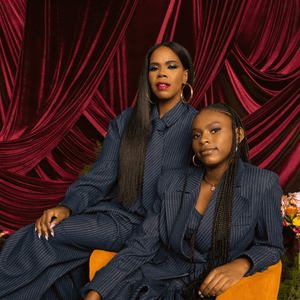

It's not unusual for a bisexual woman to be unidentifiable at first glance. And why should we be? There's no uniform for nonconformity. Sexual orientation shouldn't warrant a certain look or dress, or some occult tattoo. It is a state of being and taking unapologetic ownership in who you are and what you desire. It might come as a surprise to learn that despite how much I own and love my bisexuality, I've had to stop talking to my friends about being interested in and attracted to women almost entirely.
Unfortunately for me, and many others, being open and honest about who you are and who you desire doesn't eliminate the long-standing cognitive dissonance that straight men experience when you try to inform them of this.
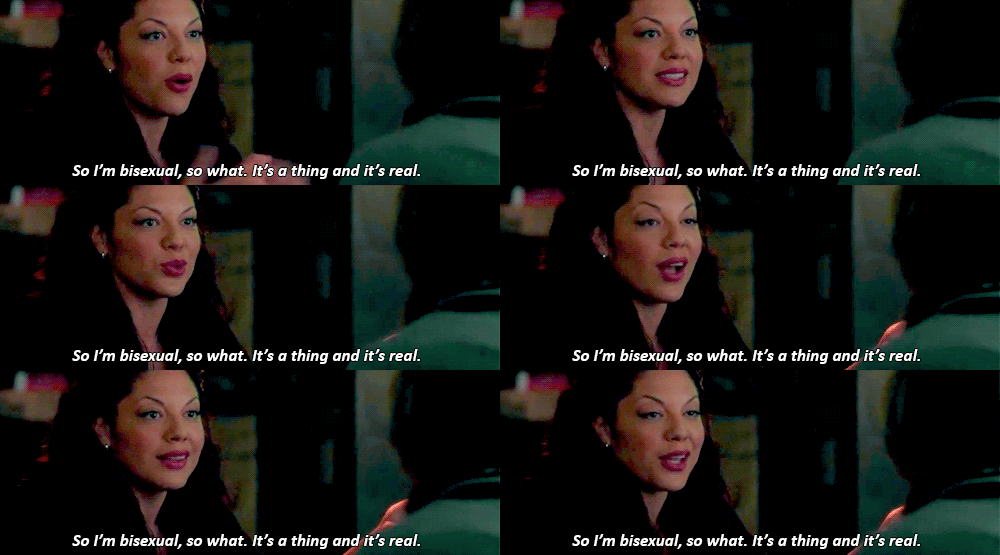
Just last week a guy friend of mine—and I'm using the term "friend" very loosely— texted me and asked me if I'm bi. Out of the blue, I might add. I quickly prepared for the f*ckery that was about to ensue and started to consider that a learning opportunity for my “friend."
His response:
"I didn't know you consider yourself that. I got somebody we can have fun with."
My first reaction wasn't visceral, although my temper was reaching a fever pitch.
I remained cool and politely began to educate him on all the ways that women do just fine enjoying sex in the absence of men. And then, I respectfully declined his offer and sent him on his way with a “now go f*ck yourself, have a nice day" text.
What's even more surprising is my exchanges with straight women aren't much better.
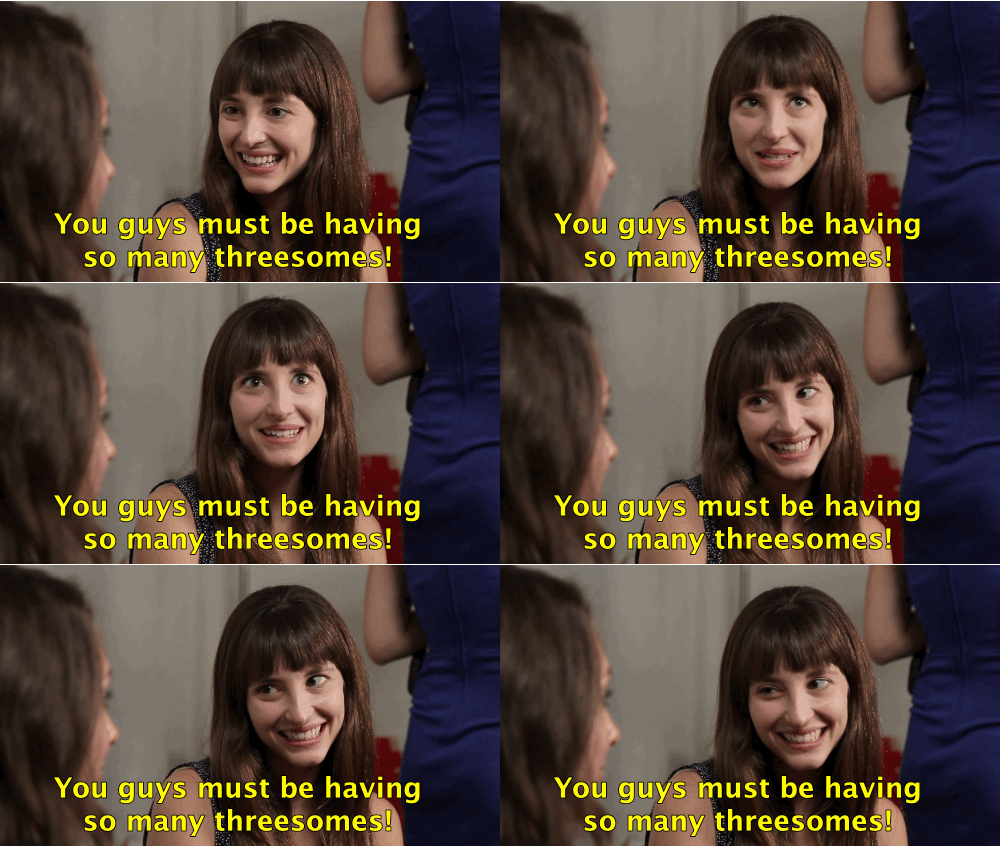
They assume that I must've had a threesome before, or I'm at least interested in having one. They want to know how many girls I've been with. They may start scouring the room to identify which girl looks like my type or feel compelled to ask about my religious beliefs. Or worse, they misinterpret me owning my sexuality as an invitation for them to “explore" their own sexuality using my body.
That's no different than a man objectifying a woman.
Lucky for them, I'm always available to help women identify when they're operating from a heterosexist disposition. In fact, I once had a three-year on-again, off-again situationship with a woman.
This woman just so happened to also have an on-again, off-again boyfriend the entire time. She knew my family and friends. We'd go on trips, spend birthdays and holidays together. But after coming to the realization that she herself didn't consider herself bisexual, and that she associated bisexuality as something to be ashamed of, the secrecy of it all began to smother me.

During that same three-year time span, I dated men. One of them, after learning I was bisexual, began thinking I would cheat on him with my then off-again girlfriend. I later determined it had nothing to do with me but that my sexuality in and of itself was an attack on his male ego. And the other decided that my being bisexual meant he was free to date and sleep with whomever. He tried to use my sexuality against me to argue this to his advantage.
The overarching theme in all of this?
Women should be allowed to own their sexuality without being deemed sexual deviants. It perpetuates the idea that there's a “norm" to deviate from. I'm not knocking open relationships or promiscuity. In fact, women should feel empowered in expressing their sexuality. But monogamy and bisexuality are not mutually exclusive, in the same way that women's agency cannot be trivialized to the heterosexual women's refusal to be objectified by men.
The brain has a natural tendency to categorize people and things to make easier to understand, sure. But leaning on someone's sexual orientation to determine his or her sexual behavior is a reach.
The notion that bisexual women are having twice the fun: false.
I can't speak for all bisexual women but I can say my sex life far less exciting than the common misperception suggests.
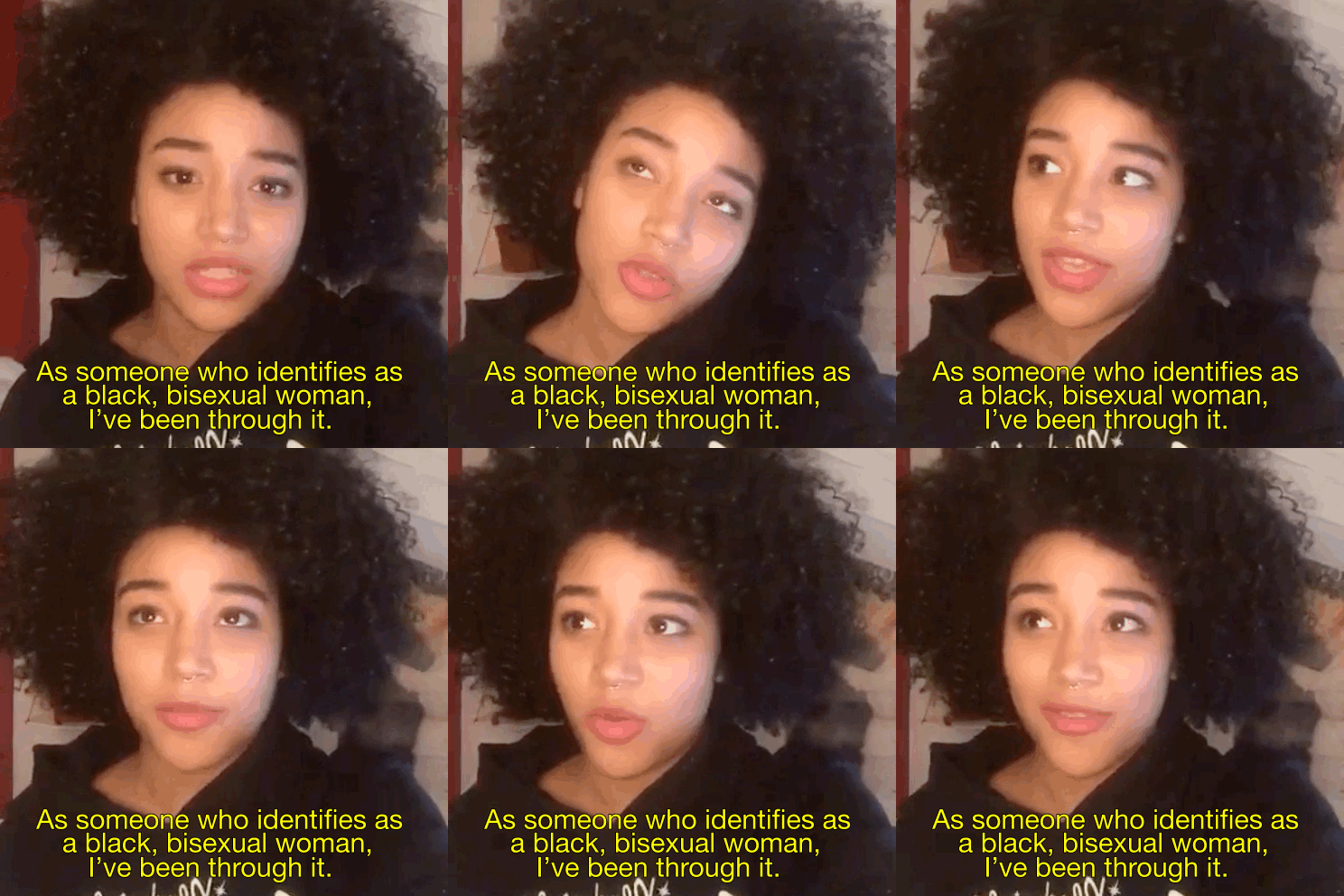
Bisexuality is self-defining in the same way that any other woman chooses to express her sexuality. Imagine if we labeled every woman who has had sex before marriage as a hoe. We don't. Instead, we champion women who are single mothers, encourage women who speak out to dismantle rape culture, we commend women for their fearlessness in making all body types sexy and recognize them as being worthy of having love, too, regardless of whether they're promiscuous or not.
As we should.
That should apply to bi women as well. We should protect one another against prejudices rooted in the heteronormative and misogynistic ways of thinking that objectify women or reduce them to their sexuality.
So much of understanding others is about challenging preconceived notions with conversation.
If nothing else, take from this that being open to connecting and expressing a genuine interest in someone of the same sex is a far cry from being casual and unselective in a person's approach to sex and relationships.
It would be truer to say, then, that anyone has the potential to be promiscuous regardless of who they're attracted to.
Featured image by Getty Images
- Why This Woman Chooses To Embrace Polyamory In Her Marriage ... ›
- 'Harlem' Black Male Bisexuality, Evolution On-Screen ›
- Bisexual meaning | 11 common misconceptions about bisexuals that ... ›
- 7 Misconceptions About Bisexuality We Need To Get Over ›
- Bisexuality: the definition and misconceptions | British GQ ›
- 16 Misconceptions About Being Bisexual | Teen Vogue ›
- Are Bisexuals Really Less Monogamous Than Everyone Else ... ›
- The Myth Of Bisexuality, the Shame of Promiscuity, and Other ... ›
- Bisexual Women, Non-Monogamy and Differentialist Anti ... ›