



I'll be honest. When it comes to a lot of the content that I write, on some level, I am able to personally relate to the topic. People-pleasing, though? Eh. Not so much. If anything, I'm a recovered-codependent-anti-people pleaser which comes with its own pros and cons, believe you me. At the same time, I do have a close friend who is a self-professed people-pleaser. We talk about it fairly often. "It" being how, on the surface, being a people-pleaser seems like a selfless way to live your life. But man, when a people-pleaser shows clear signs of being super needy, a doormat or the kind of individual who constantly has their kindness mistaken for weakness, that can be a really hard—and counterproductive—way to live your life.
Take my friend's marriage, for example. She's a people-pleaser while her husband is semi-controlling. Yeah, I know that semi-controlling is almost as contradictory as being "a little pregnant"; the reason why I phrased it that way is because he's not so much abusive as he just…he doesn't really get how to be in a partnership. He likes to run the show and, since she's a people-pleaser, sometimes he has to be reminded that his wife is not his child. It's taken years of therapy for them to strike up a balance between both "vices".
It's actually because of what she sometimes has to go through that I was inspired to pen this piece. Because again, although people-pleasing may seem altruistic on the surface, at the end of the day, all it really ends up doing is depleting you of time, energy and, to a certain degree, your very best self.
How can you know for sure that you are a people-pleaser? See if you can personally relate to the following seven signs. If so, that is definitely your starting point onto the way towards healing and recovery.
You Take Responsibility for Other People’s Stuff
She talks crazy to you and you apologize to her for it. He breaks another date and somehow you find a way to make it be your fault. Your boss doesn't finish their part of a project (for the fifth time, mind you), so you stay late to complete it and still let them take the credit. These are just a few examples of what it means to take responsibility for other people's stuff. To a people-pleaser, it's usually done to either keep the peace or so that the person who should be held accountable will appreciate or like them more. But usually, all it does is put the pleaser in the position of being taken advantage of or being treated like a doormat. Because, as the old adage goes, "People do as much as you allow them to."
How to Stop This Habit: A responsible human being is accountable for their own actions. You know what else they are? They are someone who makes sure to hold others accountable for their actions as well. If someone gets out of pocket in how they communicate with you, tell them. If ole' boy has already broken off a couple of dates, let him know that you're good with taking a pass on the next one. Your boss? Hold a meeting with them to go back over your job description. If they blow you off, as I always say, just about every boss has a boss. Report 'em. It's one thing to grant someone a little mercy and grace when they mess up, but that doesn't mean that there shouldn't also be consequences for their actions; especially when the actions are repetitive. Real talk, some people do not learn any other way.
You Freak Out When Others Are Upset with You

I don't know anyone who really likes to have someone upset with them. Well, gaslighters and folks that like to kick up drama do; hopefully, you are self-aware enough to keep a lot of them out of your personal space. Anyway, another sign of being a people-pleaser is you get really upset when someone else is upset with you. This tends to happen if you tell them "no" and they get mad. Now you're all shook up. Or you tell them something about themselves that they don't want to hear, they pull back a little and now you're imagining worst-case scenarios about y'all's relationship. Or—and these folks are the worst—someone is passive-aggressive or suddenly giving you the silent treatment and you can't sleep or are a total wreck over it.
This is kind of a weird sign of being a people-pleaser because, low-key, it's got some controlling tendencies attached to it. When you get upset because someone is upset with you, it's kind of like saying that you are mad or hurt because they expressed how they felt about something. It's like you are taking in their energy just because you don't want them to have a particular emotion in the first place. But remember, they have a right to feel, however it is that they do. Let them. Oh, and try not to make their emotions a bigger issue than it is. If they are upset, give them the space to process. Don't look at it as being any deeper than that…unless or until they tell you otherwise.
How to Stop This Habit: Own what's yours. Let them own what's theirs. What I mean by that is it takes a lot of maturity and emotional intelligence to know that no one really and truly has the power to make anyone feel a certain type of way. So, if someone in your life is upset because of something that you said or did, yes, be caring enough to address it and hear them out. But always remember that you don't have to get all in shambles about it. More times than not, all that tends to do is make matters worse in the long run.
You’re Constantly Apologizing (Even When It’s Not Your Fault)
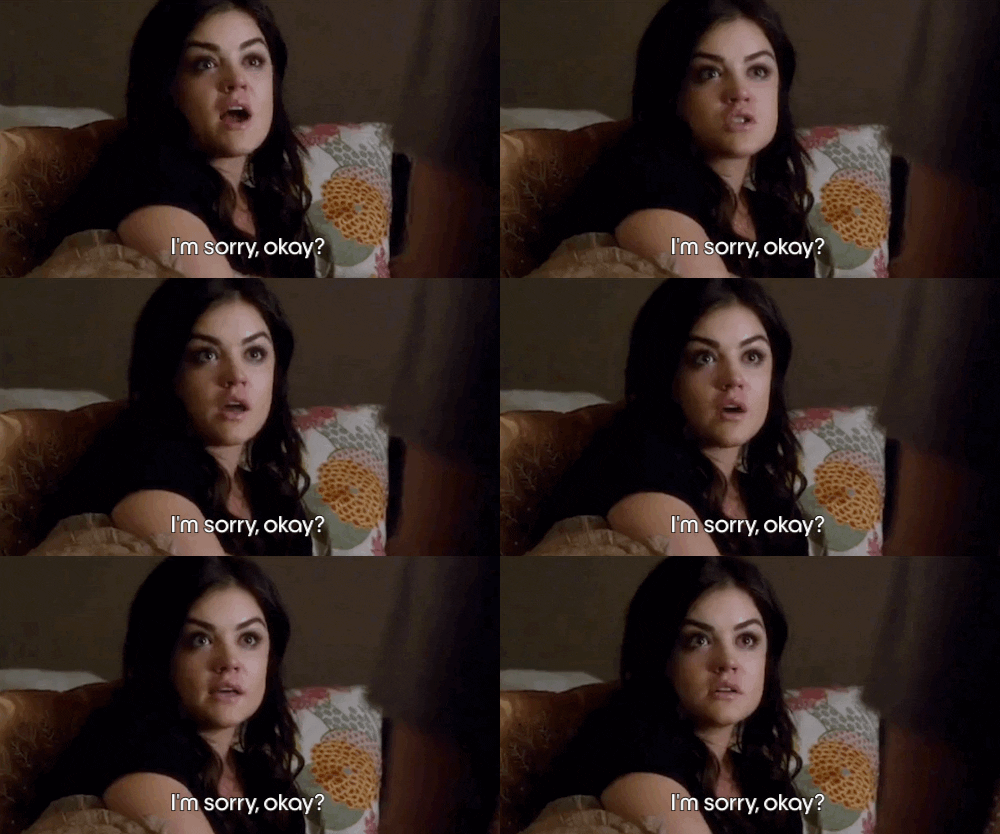
Off top, I think the reason why a lot of people apologize for things that aren't their fault is it probably is connected to something in their childhood. Children are so innocent and resilient in the way that they love that a people-pleaser who was around a lot of abuse or turmoil, they might've said "I'm sorry" in hopes that it would immediately make things better. Another scenario could be something that one of my friends (who is a self-professed people-pleaser) once told me. She said that she apologizes a lot because she feels like when someone is disappointed, somehow, even if it's just a little bit, it has to do with her.
While it's admirable to be humble enough to apologize when you do need to take ownership for your actions, the problem with apologizing for things that aren't your fault is you take on responsibilities and burdens that you shouldn't own; even if it's just in your own mind. Before long, that can really start to take an emotional toll on you. Or it can do what the title of an article says that it can—"Stop saying 'I'm sorry.' Research says it makes others think less of you—here's what successful people do instead".
How to Stop This Habit: When it comes to breaking this particular habit, first, stop saying "I'm sorry." Even when something is your fault, you should stop doing that. You are not "sorry"; you apologize. And if you're trying to break the habit of apologizing when it's not your fault, before you allow those words to come out of your mouth, stop and think about if whatever it is that transpired really is connected to something you did do or should have done. If it doesn't, don't apologize. None of us is perfect. You'll have plenty of opportunities to take ownership for things that you did do wrong (or could've done better). Don't unnecessarily stress yourself out by also piling on words and actions that, at the end of the day, have absolutely nothing to do with you.
You’re Non-Confrontational. To Your Detriment.

Being non-confrontational is soooo not a part of my personality wheelhouse. I'm the kind of person who is more in the lane of "The sooner we get this thing addressed, the sooner we can move on to what's next." Next. But I know some people who are the opposite of me. When something or one bothers them, they will bite their tongue or suppress their feelings. In their mind, they think that it's "keeping the peace". But if it's at the cost of them being happy, toxic patterns never changing or even their health being at risk, how peaceful is it?
How to Stop This Habit: If you know that this is your biggest trait when it comes to being a people-pleaser, my first recommendation would be to read articles like "How Being Non-Confrontational Has Held Me Back in Life", "The Hidden Cost of Being Non-Confrontational" and "6 Ways To Conquer The Fear Of Confrontation", just so you can see how much it is actually costing you.
Now, I'll be the first to say that being confrontational should not mean that you should go on the attack, say everything that's on your mind or that you should be rude or mean. As India.Arie once said, as you're mastering the art of confrontation, you will have moments when you'll need to learn how to come "Back to the Middle" between saying nothing and being "on 10" all of the time. But the more that you learn the value in your voice, the more you'll be able to find ways to please yourself as much as you're trying to please others too. There will be a balance and balance is always good.
You’re Scared to Set Boundaries
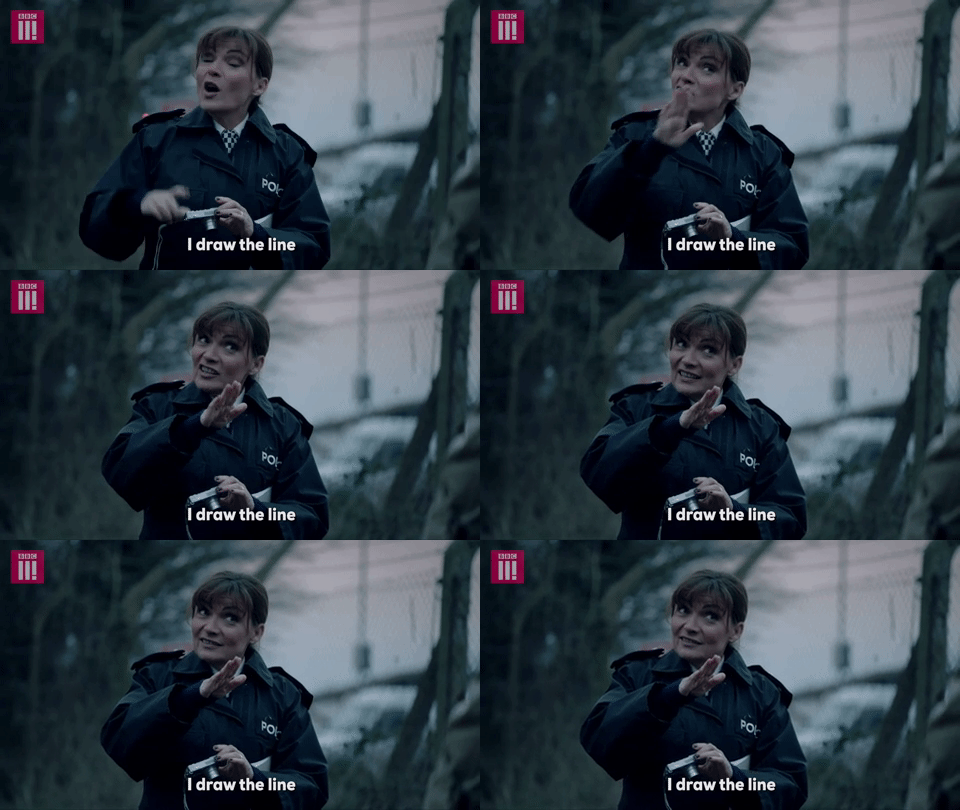
A violation of boundaries. Chile, I just recently had this happen to me. Anyone who knows me knows that if there is something that is an ultimate pet peeve, it's showing up at my place unannounced. I don't think it's cute or sweet or anything of the sort. Well recently, someone who I explicitly told not to did. Not only did they come but they tried to regulate what I said in response to them doing so. They had already pushed it way too far by showing up at all, but when they tried to dictate my reaction, my immediate response was, "It's time to get out." I don't feel the least bit bad or guilty about it either because my home is my place of peace. Not only were they not invited to my home, they brought any and everything but that into it. Plus, they straight up violated a boundary which is the epitome of disregard and disrespect.
If you're a people-pleaser, you probably read that and was like, "I could never put a person out of my house." Instead, you probably would've kept letting the drama ensue. That's because people-pleasers don't really get the concept of boundaries; especially when it comes to setting some. But trust me, boundaries, even if they are uncomfortable at first, are one way for you to develop a backbone while setting limits for yourself so that you know how to make the most of your time, effort and even emotions.
How to Stop This Habit: I plug this book often because that's how bomb it is. Boundaries is something that I think every person should have in their personal library. It's a read that serves as a great reminder that boundaries are healthy, necessary and beneficial to every human being. It's all about setting limits and then enforcing them to people who try and push past them. In learning how to set my own boundaries and respect the boundaries of others, I have learned, firsthand, that boundaries are a form of respect. I've also learned that once boundaries are clearly made and they are ignored, that is a form of disrespect. A lot of people-pleasers are very unhappy deep down inside because their lack of limits (boundaries) result in them being disrespected time and time again. There ain't nothin' helpful or beneficial about that.
You Tolerate Abuse. Any Form of Abuse.
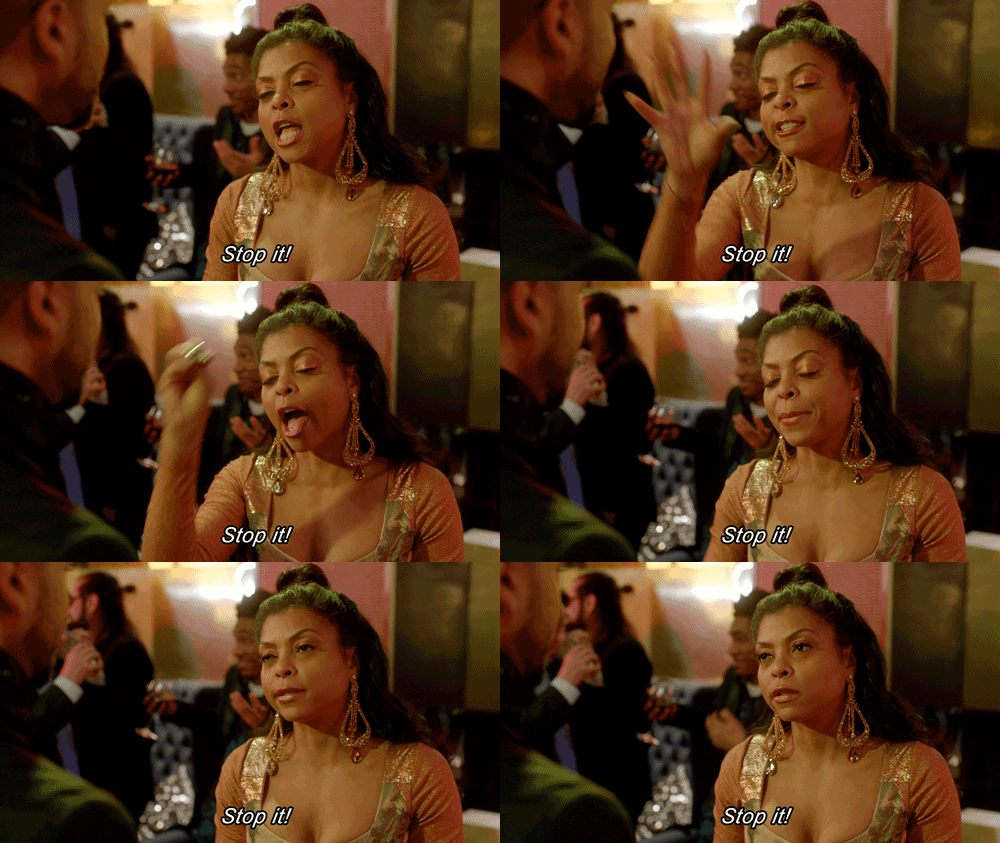
When it comes to abuse, there are other kinds besides the physical. You can be emotionally, mentally, financially, sexually (this includes if you're in a relationship with someone and they force you to do something that you don't want to do) and even spiritually abused. Another form of abuse is abandonment or neglect. Unfortunately, when it comes to abuse, people-pleasers are oftentimes the victim of it.
There are a few reasons why. One is because a lot of people-pleasers are compassionate individuals; they are more concerned with helping the person through their abusive traits than protecting themselves. Another reason is that they are horrible when it comes to boundaries. Oftentimes this is because they weren't properly taught them while they were growing up. Another reason is because they believe that if they love someone enough, give to someone enough, and tolerate their poor behavior long enough, the person will change. Actually, the reality is, that abusers can only change when they want to. And, it's best for them to do it when they are working on things with a therapist, not via a relationship.
The really sad thing about a people-pleaser is folks who can see what is transpiring aren't always able to pull a people-pleaser out of the mire. That's because, if they're not careful, something else that people-pleasers have a tendency to become are mini-saviors. They want to "save" their abuser rather than release them so that they can learn how to stand on their own two feet.
How to Stop This Habit: One of the best things for this kind of people-pleaser to do is to get into their own therapy. There's a pretty good chance that the reason why they tolerate abuse is either because they don't think they deserve better or they were in a toxic situation while growing up; the kind that made them think that they were supposed to "grin and bear" through abuse with their own relatives. The reality is when a people-pleaser is involved with an abuser, it takes a lot of work to break the habit. Almost as much as the abuser needs, to be honest with you.
You’re a Chameleon
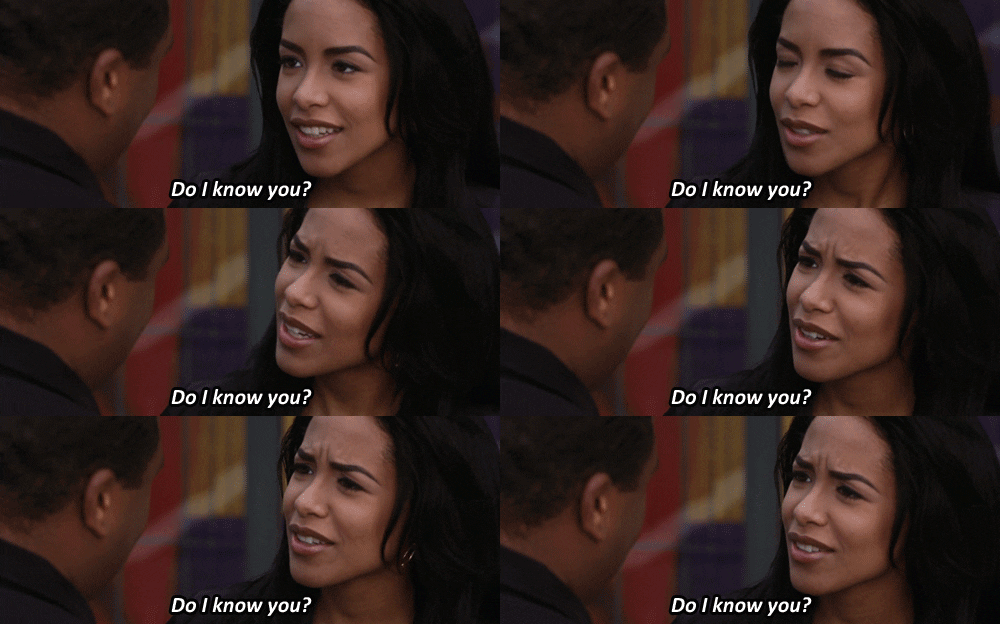
Chameleons are fascinating; at least they are to me. Although they tend to think that they are flexible and adaptable to their surroundings, what they really come across as being, more times than not, is disingenuous. Oh, and inconsistent. While they are with their church-going crowd, they are one way. When they are with their friends, they are another way. When they are alone, they are someone else. It's almost like they have multiple personalities. Like I said, they're fascinating individuals. (If you want to dive deeper into what a chameleon is like, check out "The Social Chameleon Personality: Traits, Pros, Cons, And More".)
Some people? They're chameleons because for them, it's a form of hustling. They change themselves into whomever they need to be in order to get whatever it is that they want from someone else. Then there are those who are that way because they want to please whoever they are around at the time. They want to be accepted and liked so much that if they've got to "switch up" in order to get along, they'll do that.
Hmph. The problem with being this kind of people-pleaser is if you're out here always accommodating others, when do you possibly get around to figuring out who is at the core of your being so that you can know what you like, need and want in order to live your own best life?
How to Stop This Habit: This one is pretty simple. Be yourself. Everywhere you go. Take out a month and be intentional about being the same person in every circle that you're in. I won't lie to you, if you've never done that before, you might go through a bit of an identity crisis. Work through it by spending more time alone, taking personality tests and even asking some of the nearest and dearest to your heart just how they perceive you—the good, bad and indifferent.
The more time you spend getting to know you at your core, the more you'll be able to silence the chameleon, feel confident that people like you for your real self and you won't have to go through all of the internal upheavals that come with always changing who you are in order to please others. Whew, chile. Talk about freedom!
Want more stories like this? Sign up for our newsletter here and check out the related reads below:
The Art Of Saying "No" To Things You Don't Want To Do
6 Signs You Are WAY Too Self-Critical
Self-Truths That Will Stop You From Settling For Less
Allow These Things To Happen Before Calling Someone "Friend"
Feature image by Giphy
- On Being A Recovering People-Pleaser... - xoNecole ›
- Zendaya On Learning To Stop People-Pleasing & Start Trusting Her ... ›
- Being A People-Pleaser Taught Me The Power Of The Word "No ... ›
- Alicia Keys Self-Worth 'Red Table Talk' Episode - xoNecole ›
- How to Stop Being a People Pleaser - YouTube ›
- 6 Ways to Stop Being a People Pleaser at Work - The Muse ›
- 6 Steps to Stop People Pleasing and Start Doing You | Science of ... ›
- How to stop being a people pleaser ›
- 5 Tips to Help You Stop Being a People Pleaser ›
- How to Stop Being a People Pleaser ›
- 5 Practices That Helped Me Stop Being a People-Pleaser - Tiny ... ›
- How I Learned to Stop Being a People-Pleaser | Psychology Today ›
- 21 Tips to Stop Being a People-Pleaser ›