How To Be ‘90s Fine: The Ultimate Guide To The Black Girl Look That Defined An Era

Black women were front and center of beauty and fashion trends throughout the '90s, unequivocally setting standards that would have lasting impressions for generations to come. From artists to supermodels and actresses, Black women were introduced to the world through high fashion, culture, and entertainment for their boundless talent, striking beauty, creativity, and unique style that would trickle down, inspiring the rest of the world.
Their influence is documented throughout Black cinema, red carpets, music videos, and magazine covers as Black women began to break barriers and set the tone for the '90s bombshell. Iconic Black women of that era displayed undeniable femininity, confidence, and sex appeal through a variety of natural elements such as soft glam, sexy silhouettes, and God-given beauty.
As we coast through the final months of 2024, the ’90s revival shows no sign of slowing down. 21st-century social media platforms such as Instagram, TikTok, and Pinterest have made it easier than ever to replicate elements of our favorite ’90s bombshells. Reliving the stylistic contributions of Black women during the era of dramatic eyes, neutral lips, and voluminous, bouncy blowouts has been instrumental in the latest "clean girl aesthetic" trend.
Along with hair and makeup influences, ’90s style icons have also made their way back to high fashion runways with the resurgence of supermodels such as Naomi Campbell and Tyra Banks, while designer brands such as Gap and Calvin Klein have featured nostalgic campaign references. Follow along as we break down elements of the quintessential ’90s bombshell and how to implement the timeless elements into your everyday looks.
The Elements of Being '90s Fine: Makeup
‘90s supermodel glam will never go out of style.
From Naomi's statement lip to Iman’s fresh, flawless skin and Tyra Banks’ striking statement eye, decades later, ‘90s glam continues to make its way onto mood boards and TikTok feeds as inspiration. The allure of less is more finally made its way through the mainstream after the heavy blush and neon color craze of the ‘80s.
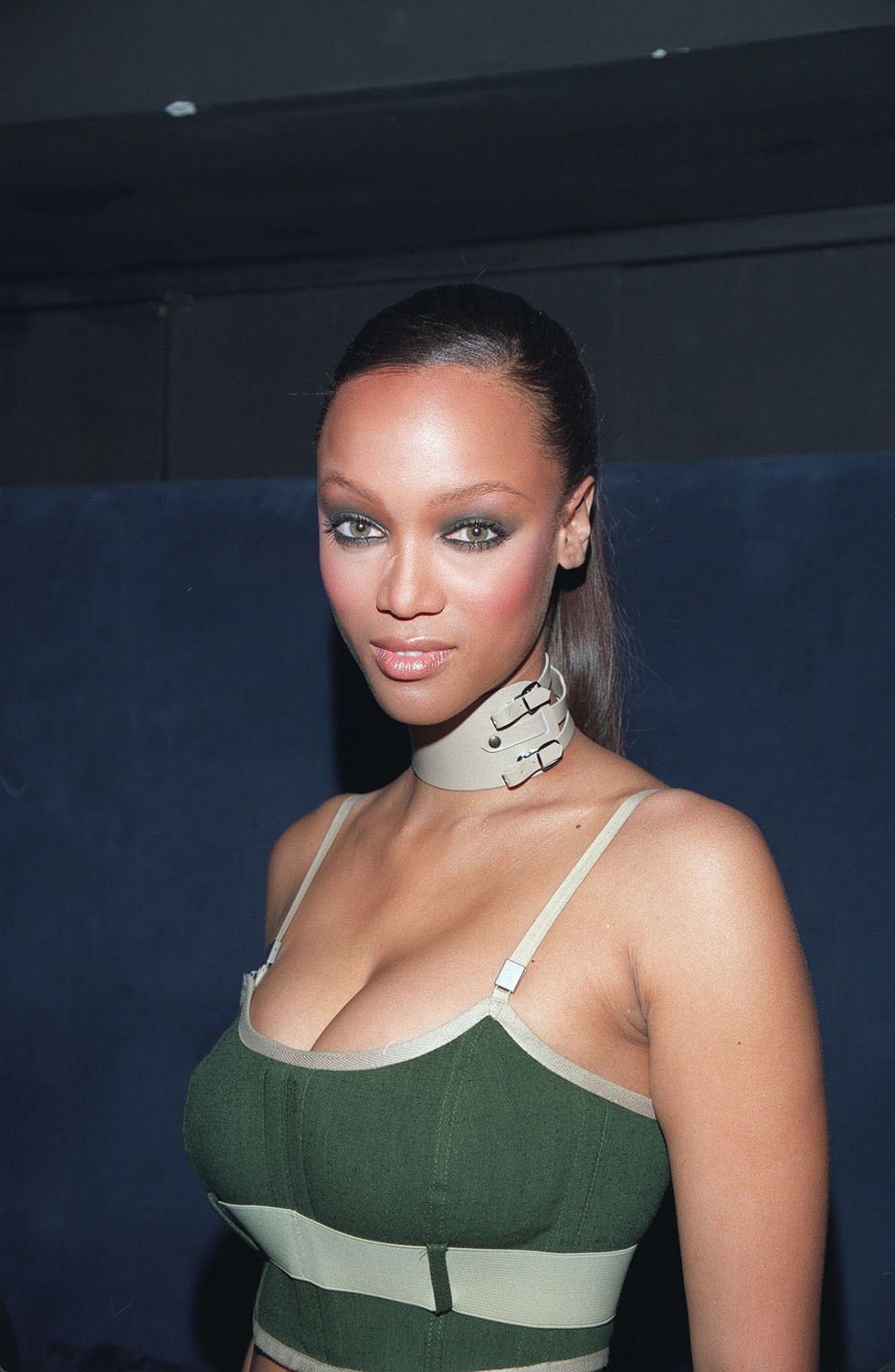
Tyra Banks in 1999
Steve Azzara/Corbis via Getty Images
Makeup evolved into fresh, lightweight skin, with more subtle but impactful lined lips, thin brows, frosted colors, and a wearable playfulness that makeup prior to this time didn’t have,” celebrity makeup artist Taylour Chanel told Vogue of the era. Black makeup artists such as Sam Fine and Pat McGrath were the artists leading the memorable makeup trends that graced countless designer runways, campaigns, and makeup covers.
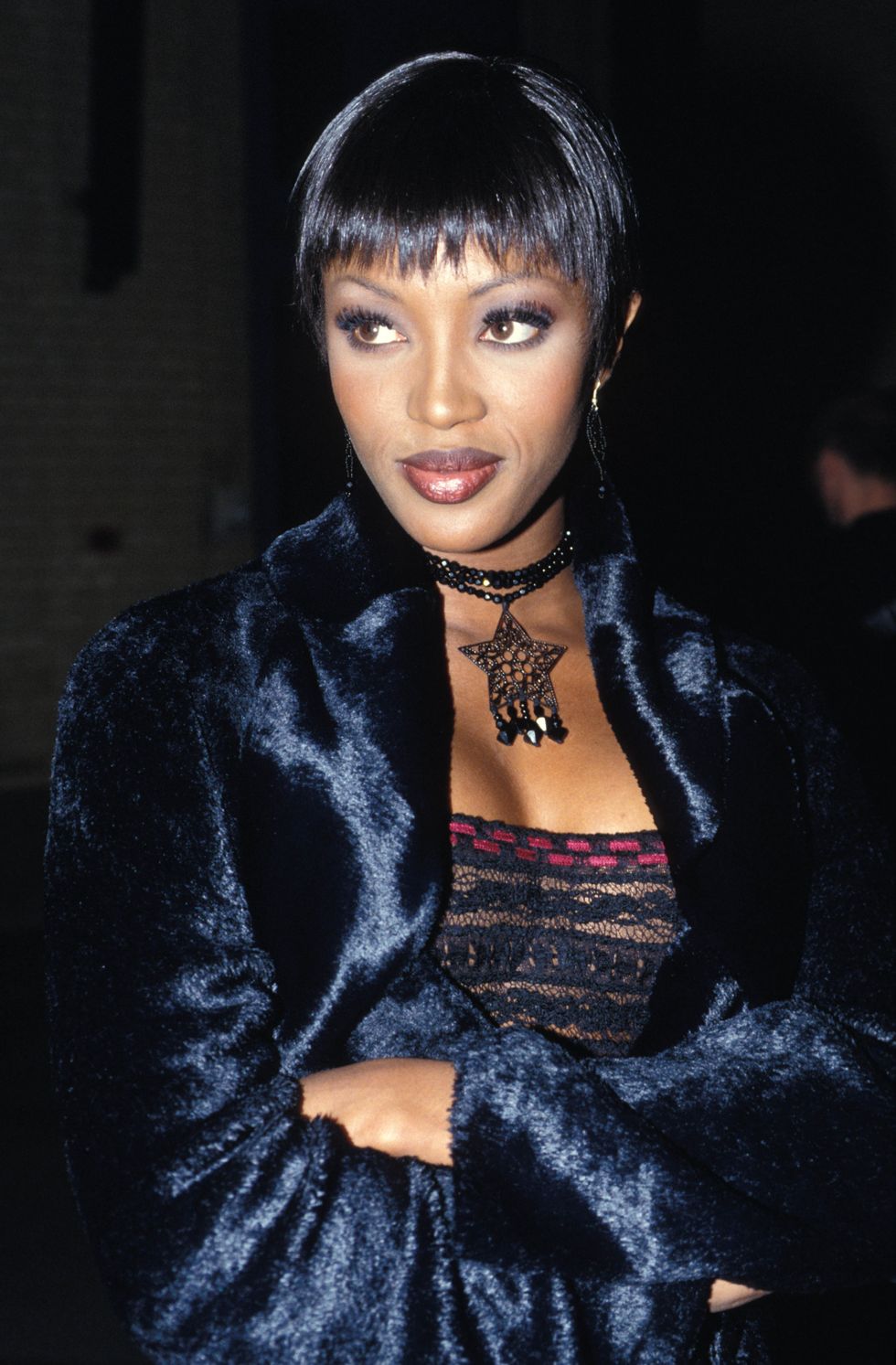
British top model Naomi Campbell in the '90s.
Mick Hutson/Redferns
Balancing bold and natural, there was an emphasis on defining features such as sculpted cheeks, and neutral lined lips, along with enhancing eye shapes while adding a touch of drama with shimmery frosted eyeshadows and dark-hued or neutral lips.
The Elements of Being '90s Fine: Hair
Throughout the ‘90s there were a variety of hairstyles that dominated the decade, but much like fashion, hair trends eventually ease their way back into mainstream culture. Many are on the rise yet again because they're fun, chic, low maintenance, and some are even staples for protecting your natural hair.
‘90s R&B divas such as Brandy’s signature micro braids, Sade’s sleek ponytail, and Lauryn Hill embracing her beautiful locs are examples of timeless beauty that have endured throughout the years.
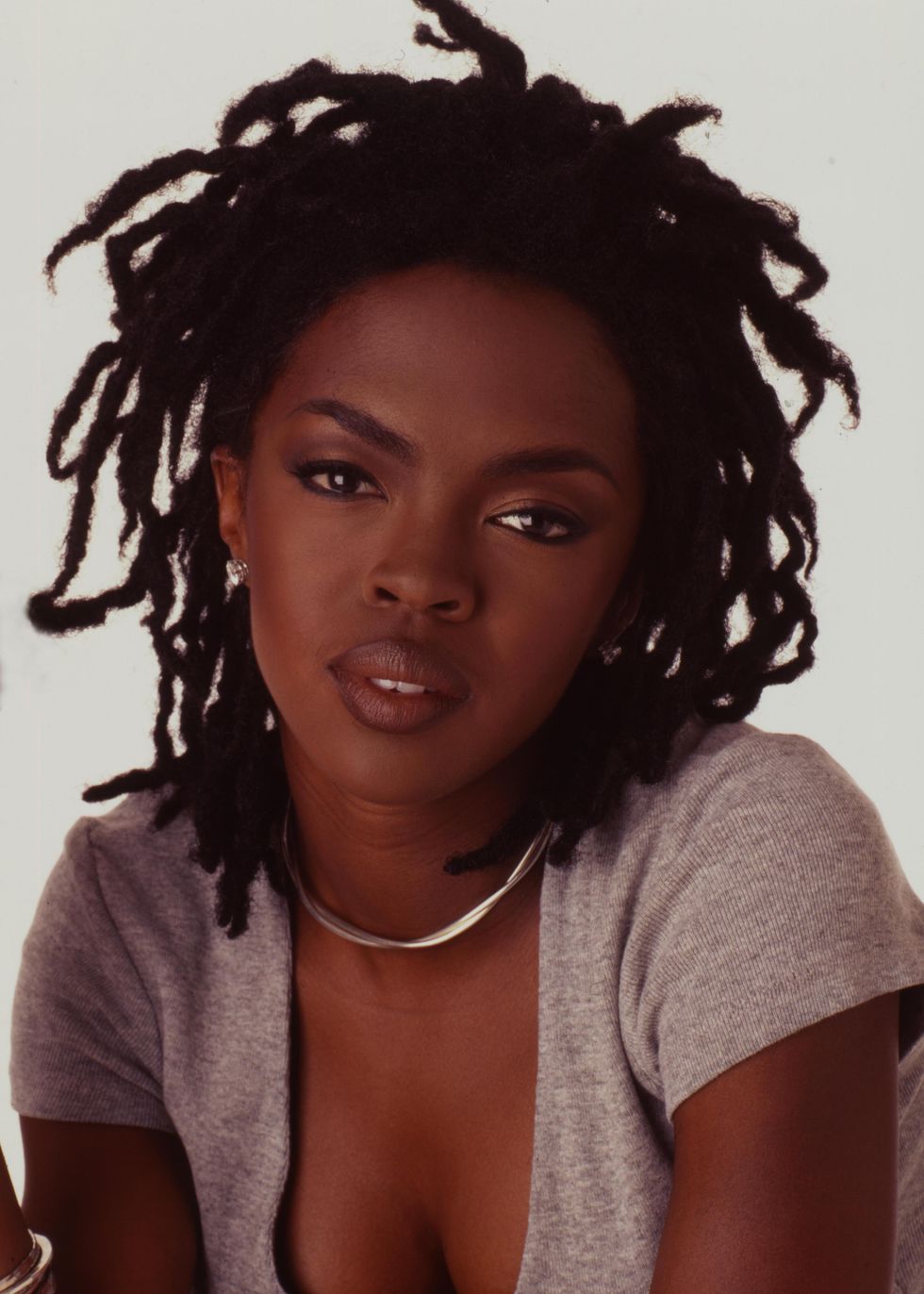
Portrait of R&B singer Lauryn Hill in 1998.
Anthony Barboza/Getty Images
While there were many beautiful hairstyles in the ‘90s, the iconic pixie cut was a stand-out signature style that was equal parts tough and sexy. Famously worn by Nia Long, Halle Berry, and Toni Braxton, these women made short hair the thing to have in the ‘90s.
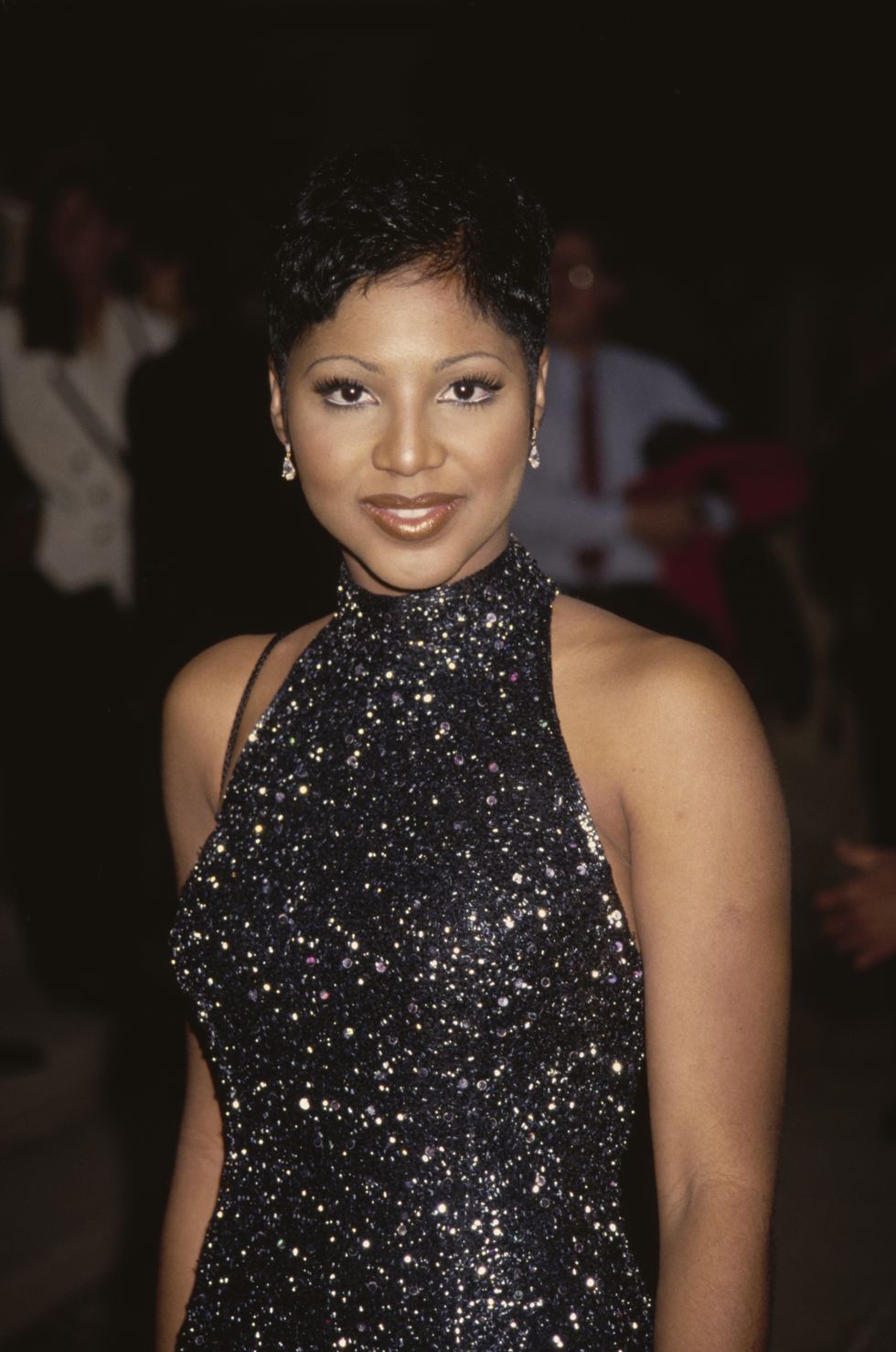
Toni Braxton in 1994
Vinnie Zuffante/Getty Images
As of late, blowouts with voluminous curls complimented with a dramatic side part have been one of the most influential hairstyles making their way back to our For You Pages. Songstress Aaliyah, along with iconic Black actresses such as Angela Bassett, Lynn Whitfield, Robin Givens, and Tisha Campbell, have been famous for the body and fullness of their hair.
The Elements of Being '90s Fine: Nails
Before nail art became adopted into mainstream culture, Black women pioneered the long nail trend, which continues in the modern day. Long abstract nails were seen on Olympic gold medalist Flo Jo in the ‘80s and soon adopted by hip-hop legends such as Lil Kim and Foxy Brown and R&B divas Mary J. Blige and SWV's lead vocalist Coko as they paved the way for decorated square-shaped curved nails in bold, colorful shades, adding jewels and gems for extra flair.
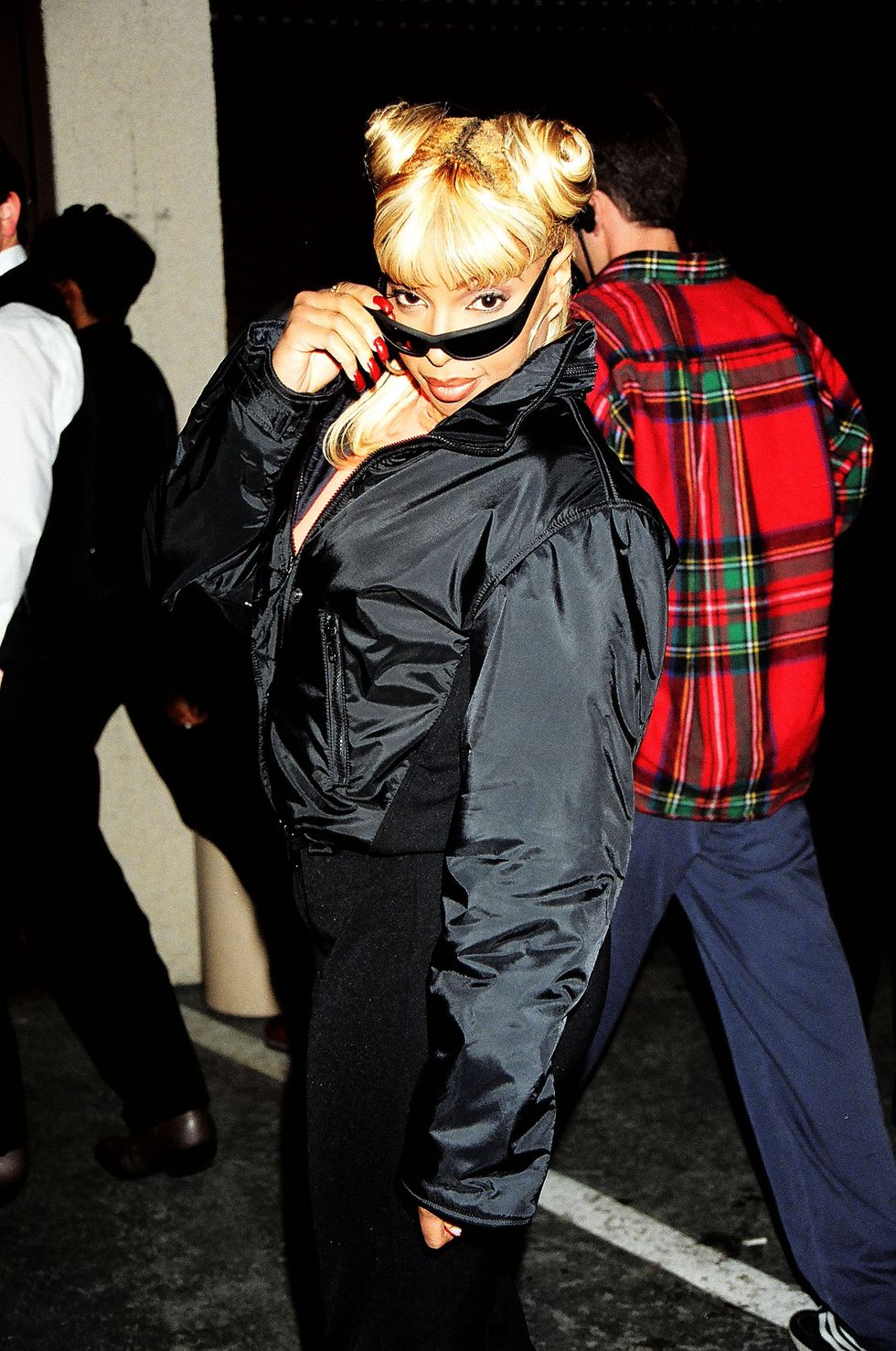
Mary J. Blige backstage at the Fox Billboard Awards in 1994.
Jeff Kravitz/FilmMagic, Inc
Today, you don’t even need a salon to achieve this look. With the ease of press-on nails and the invention of Gel-X, this ‘90s nail trend can be achieved through a variety of methods.
While abstract art was thriving in ‘90s culture, there was also the conservative It girl who preferred sheer nude polishes with a subtle shine finish, Ferrari red monotone sets, and the classic French manicure tips.
The Elements of Being '90s Fine: The Fashion
Black media and entertainment television played a vital role in showcasing the diverse fashion trends of the ’90s, bringing unique styles into the mainstream and setting the tone for cultural expression. Iconic Black films and television shows introduced us to characters whose style we still admire, capturing the essence of the era through vibrant and memorable fashion moments. Music artists were equally influential, creating some of the decade’s most iconic style statements.
Together, these cinematic and musical representations of ’90s culture cemented a lasting legacy in fashion, embodying creativity, identity, and self-expression that remains relevant today.
In 2024, '90s fashion trends are re-emerging with a focus on classic silhouettes and minimalist aesthetics, offering a breath of fresh air to modern wardrobes. Inspired by iconic entertainers like Janet Jackson, whose edgy style influenced streetwear, and Halle Berry, whose elegance and poise redefined red carpets, the aesthetic remained effortlessly sexy for both day and night.
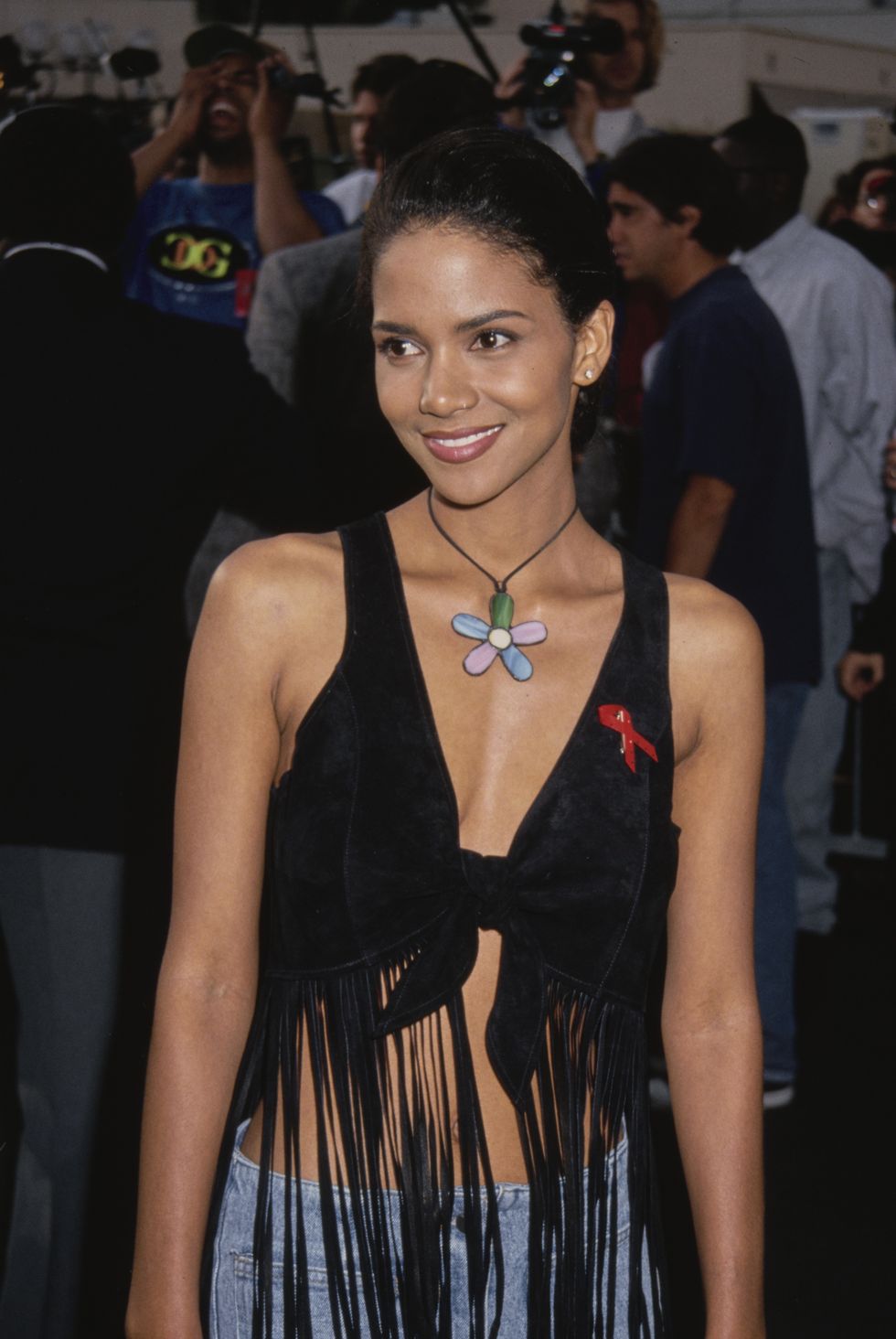
Halle Berry attending the MTV Movie Awards in 1993.
Vinnie Zuffante/Getty Images
Key pieces like low-rise jeans, crop tops, chokers, and slip dresses define laid-back yet stylish looks reminiscent of Aaliyah's iconic tomboy-chic vibe and Naomi Campbell's runway glamour. Tailored suits, sheer tights, and playful skirts also took center stage, capturing the chic, feminine flair of '90s fashion with a conservative yet bold aesthetic.
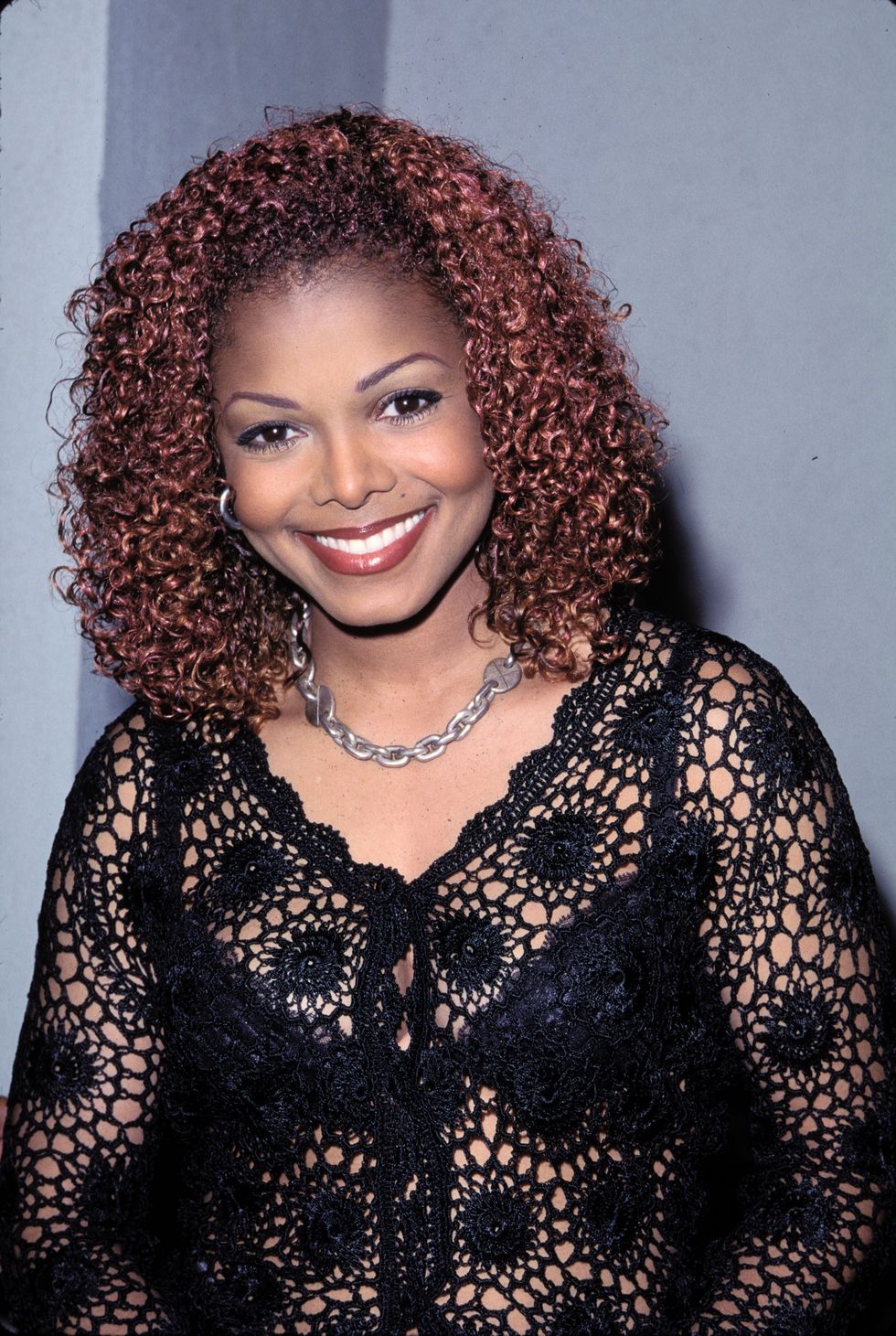
Janet Jackson at the album release party for 'The Velvet Rope' in 1997.
SGranitz/WireImage
While the unforgettable sitcoms, movies, and red-carpet moments of the decade continue to influence today’s high-fashion aesthetics, this revival captures the era’s signature ease and allure, reimagined for a new generation.
Let’s make things inbox official! Sign up for the xoNecole newsletter for love, wellness, career, and exclusive content delivered straight to your inbox.
Featured image by Harry Langdon/Getty Images
Because We Are Still IT, Girl: It Girl 100 Returns
Last year, when our xoNecole team dropped our inaugural It Girl 100 honoree list, the world felt, ahem, a bit brighter.
It was March 2024, and we still had a Black woman as the Vice President of the United States. DEI rollbacks weren’t being tossed around like confetti. And more than 300,000 Black women were still gainfully employed in the workforce.
Though that was just nineteen months ago, things were different. Perhaps the world then felt more receptive to our light as Black women.
At the time, we launched It Girl 100 to spotlight the huge motion we were making as dope, GenZennial Black women leaving our mark on culture. The girls were on the rise, flourishing, drinking their water, minding their business, leading companies, and learning to do it all softly, in rest. We wanted to celebrate that momentum—because we love that for us.
So, we handpicked one hundred It Girls who embody that palpable It Factor moving through us as young Black women, the kind of motion lighting up the world both IRL and across the internet.
It Girl 100 became xoNecole’s most successful program, with the hashtag organically reaching more than forty million impressions on Instagram in just twenty-four hours. Yes, it caught on like wildfire because we celebrated some of the most brilliant and influential GenZennial women of color setting trends and shaping culture. But more than that, it resonated because the women we celebrated felt seen.
Many were already known in their industries for keeping this generation fly and lit, but rarely received recognition or flowers. It Girl 100 became a safe space to be uplifted, and for us as Black women to bask in what felt like an era of our brilliance, beauty, and boundless influence on full display.
And then, almost overnight, it was as if the rug was pulled from under us as Black women, as the It Girls of the world.
Our much-needed, much-deserved season of ease and soft living quickly metamorphosed into a time of self-preservation and survival. Our motion and economic progression seemed strategically slowed, our light under siege.
The air feels heavier now. The headlines colder. Our Black girl magic is being picked apart and politicized for simply existing.
With that climate shift, as we prepare to launch our second annual It Girl 100 honoree list, our team has had to dig deep on the purpose and intention behind this year’s list. Knowing the spirit of It Girl 100 is about motion, sauce, strides, and progression, how do we celebrate amid uncertainty and collective grief when the juice feels like it is being squeezed out of us?
As we wrestled with that question, we were reminded that this tension isn’t new. Black women have always had to find joy in the midst of struggle, to create light even in the darkest corners. We have carried the weight of scrutiny for generations, expected to be strong, to serve, to smile through the sting. But this moment feels different. It feels deeply personal.
We are living at the intersection of liberation and backlash. We are learning to take off our capes, to say no when we are tired, to embrace softness without apology.
And somehow, the world has found new ways to punish us for it.

In lifestyle, women like Kayla Nicole and Ayesha Curry have been ridiculed for daring to choose themselves. Tracee Ellis Ross was labeled bitter for speaking her truth about love. Meghan Markle, still, cannot breathe without critique.
In politics, Kamala Harris, Letitia James, and Jasmine Crockett are dragged through the mud for standing tall in rooms not built for them.
In sports, Angel Reese, Coco Gauff, and Taylor Townsend have been reminded that even excellence will not shield you from racism or judgment.

In business, visionaries like Diarrha N’Diaye-Mbaye and Melissa Butler are fighting to keep their dreams alive in an economy that too often forgets us first.
Even our icons, Beyoncé, Serena, and SZA, have faced criticism simply for evolving beyond the boxes society tried to keep them in.
From everyday women to cultural phenoms, the pattern is the same. Our light is being tested.

And yet, somehow, through it all, we are still showing up as that girl, and that deserves to be celebrated.
Because while the world debates our worth, we keep raising our value. And that proof is all around us.
This year alone, Naomi Osaka returned from motherhood and mental health challenges to reach the semifinals of the US Open. A’ja Wilson claimed another MVP, reminding us that beauty and dominance can coexist. Brandy and Monica are snatching our edges on tour. Kahlana Barfield Brown sold out her new line in the face of a retailer that had been canceled. And Melissa Butler’s company, The Lip Bar, is projecting a forty percent surge in sales.

We are no longer defining strength by how much pain we can endure. We are defining it by the unbreakable light we continue to radiate.
We are the women walking our daily steps and also continuing to run solid businesses. We are growing in love, taking solo trips, laughing until it hurts, raising babies and ideas, drinking our green juice, and praying our peace back into existence.
We are rediscovering the joy of rest and realizing that softness is not weakness, it is strategy.
And through it all, we continue to lift one another. Emma Grede is creating seats at the table. Valeisha Butterfield has started a fund for jobless Black women. Arian Simone is leading in media with fearless conviction. We are pouring into each other in ways the world rarely sees but always feels.

So yes, we are in the midst of societal warfare. Yes, we are being tested. Yes, we are facing economic strain, political targeting, and public scrutiny. But even war cannot dim a light that is divinely ours.
And we are still shining.
And we are still softening.
And we are still creating.
And we are still It.

That is the quiet magic of Black womanhood, our ability to hold both truth and triumph in the same breath, to say yes, and to life’s contradictions.
It is no coincidence that this year, as SheaMoisture embraces the message “Yes, And,” they stand beside us as partners in celebrating this class of It Girls. Because that phrase, those two simple words, capture the very essence of this moment.
Yes, we are tired. And we are still rising.
Yes, we are questioned. And we are the answer.
Yes, we are bruised. And we are still beautiful.

This year’s It Girl 100 is more than a list. It is a love letter to every Black woman who dares to live out loud in a world that would rather she whisper. This year’s class is living proof of “Yes, And,” women who are finding ways to thrive and to heal, to build and to rest, to lead and to love, all at once.
It is proof that our joy is not naive, our success not accidental. It is the reminder that our light has never needed permission.
So without further ado, we celebrate the It Girl 100 Class of 2025–2026.
We celebrate the millions of us who keep doing it with grace, grit, and glory.
Because despite it all, we still shine.
Because we are still her.
Because we are still IT, girl.
Meet all 100 women shaping culture in the It Girl 100 Class of 2025. View the complete list of honorees here.
Featured image by xoStaff
Because We Are Still IT, Girl: It Girl 100 Returns
Last year, when our xoNecole team dropped our inaugural It Girl 100 honoree list, the world felt, ahem, a bit brighter.
It was March 2024, and we still had a Black woman as the Vice President of the United States. DEI rollbacks weren’t being tossed around like confetti. And more than 300,000 Black women were still gainfully employed in the workforce.
Though that was just nineteen months ago, things were different. Perhaps the world then felt more receptive to our light as Black women.
At the time, we launched It Girl 100 to spotlight the huge motion we were making as dope, GenZennial Black women leaving our mark on culture. The girls were on the rise, flourishing, drinking their water, minding their business, leading companies, and learning to do it all softly, in rest. We wanted to celebrate that momentum—because we love that for us.
So, we handpicked one hundred It Girls who embody that palpable It Factor moving through us as young Black women, the kind of motion lighting up the world both IRL and across the internet.
It Girl 100 became xoNecole’s most successful program, with the hashtag organically reaching more than forty million impressions on Instagram in just twenty-four hours. Yes, it caught on like wildfire because we celebrated some of the most brilliant and influential GenZennial women of color setting trends and shaping culture. But more than that, it resonated because the women we celebrated felt seen.
Many were already known in their industries for keeping this generation fly and lit, but rarely received recognition or flowers. It Girl 100 became a safe space to be uplifted, and for us as Black women to bask in what felt like an era of our brilliance, beauty, and boundless influence on full display.
And then, almost overnight, it was as if the rug was pulled from under us as Black women, as the It Girls of the world.
Our much-needed, much-deserved season of ease and soft living quickly metamorphosed into a time of self-preservation and survival. Our motion and economic progression seemed strategically slowed, our light under siege.
The air feels heavier now. The headlines colder. Our Black girl magic is being picked apart and politicized for simply existing.
With that climate shift, as we prepare to launch our second annual It Girl 100 honoree list, our team has had to dig deep on the purpose and intention behind this year’s list. Knowing the spirit of It Girl 100 is about motion, sauce, strides, and progression, how do we celebrate amid uncertainty and collective grief when the juice feels like it is being squeezed out of us?
As we wrestled with that question, we were reminded that this tension isn’t new. Black women have always had to find joy in the midst of struggle, to create light even in the darkest corners. We have carried the weight of scrutiny for generations, expected to be strong, to serve, to smile through the sting. But this moment feels different. It feels deeply personal.
We are living at the intersection of liberation and backlash. We are learning to take off our capes, to say no when we are tired, to embrace softness without apology.
And somehow, the world has found new ways to punish us for it.

In lifestyle, women like Kayla Nicole and Ayesha Curry have been ridiculed for daring to choose themselves. Tracee Ellis Ross was labeled bitter for speaking her truth about love. Meghan Markle, still, cannot breathe without critique.
In politics, Kamala Harris, Letitia James, and Jasmine Crockett are dragged through the mud for standing tall in rooms not built for them.
In sports, Angel Reese, Coco Gauff, and Taylor Townsend have been reminded that even excellence will not shield you from racism or judgment.

In business, visionaries like Diarrha N’Diaye-Mbaye and Melissa Butler are fighting to keep their dreams alive in an economy that too often forgets us first.
Even our icons, Beyoncé, Serena, and SZA, have faced criticism simply for evolving beyond the boxes society tried to keep them in.
From everyday women to cultural phenoms, the pattern is the same. Our light is being tested.

And yet, somehow, through it all, we are still showing up as that girl, and that deserves to be celebrated.
Because while the world debates our worth, we keep raising our value. And that proof is all around us.
This year alone, Naomi Osaka returned from motherhood and mental health challenges to reach the semifinals of the US Open. A’ja Wilson claimed another MVP, reminding us that beauty and dominance can coexist. Brandy and Monica are snatching our edges on tour. Kahlana Barfield Brown sold out her new line in the face of a retailer that had been canceled. And Melissa Butler’s company, The Lip Bar, is projecting a forty percent surge in sales.

We are no longer defining strength by how much pain we can endure. We are defining it by the unbreakable light we continue to radiate.
We are the women walking our daily steps and also continuing to run solid businesses. We are growing in love, taking solo trips, laughing until it hurts, raising babies and ideas, drinking our green juice, and praying our peace back into existence.
We are rediscovering the joy of rest and realizing that softness is not weakness, it is strategy.
And through it all, we continue to lift one another. Emma Grede is creating seats at the table. Valeisha Butterfield has started a fund for jobless Black women. Arian Simone is leading in media with fearless conviction. We are pouring into each other in ways the world rarely sees but always feels.

So yes, we are in the midst of societal warfare. Yes, we are being tested. Yes, we are facing economic strain, political targeting, and public scrutiny. But even war cannot dim a light that is divinely ours.
And we are still shining.
And we are still softening.
And we are still creating.
And we are still It.

That is the quiet magic of Black womanhood, our ability to hold both truth and triumph in the same breath, to say yes, and to life’s contradictions.
It is no coincidence that this year, as SheaMoisture embraces the message “Yes, And,” they stand beside us as partners in celebrating this class of It Girls. Because that phrase, those two simple words, capture the very essence of this moment.
Yes, we are tired. And we are still rising.
Yes, we are questioned. And we are the answer.
Yes, we are bruised. And we are still beautiful.

This year’s It Girl 100 is more than a list. It is a love letter to every Black woman who dares to live out loud in a world that would rather she whisper. This year’s class is living proof of “Yes, And,” women who are finding ways to thrive and to heal, to build and to rest, to lead and to love, all at once.
It is proof that our joy is not naive, our success not accidental. It is the reminder that our light has never needed permission.
So without further ado, we celebrate the It Girl 100 Class of 2025–2026.
We celebrate the millions of us who keep doing it with grace, grit, and glory.
Because despite it all, we still shine.
Because we are still her.
Because we are still IT, girl.
Meet all 100 women shaping culture in the It Girl 100 Class of 2025. View the complete list of honorees here.
Featured image by xoStaff