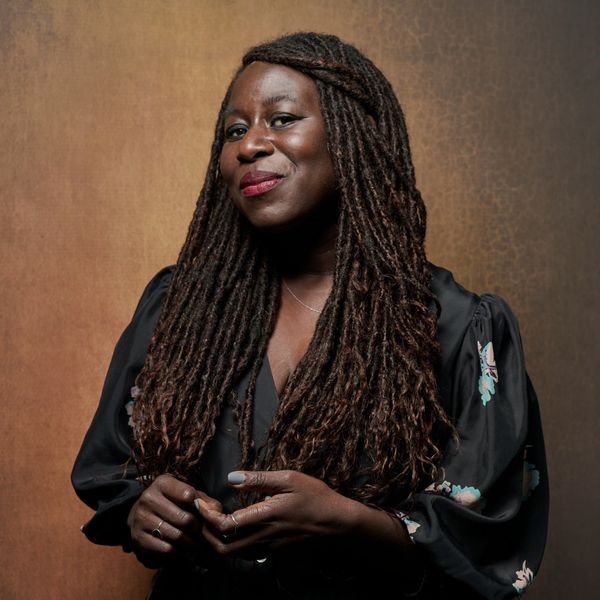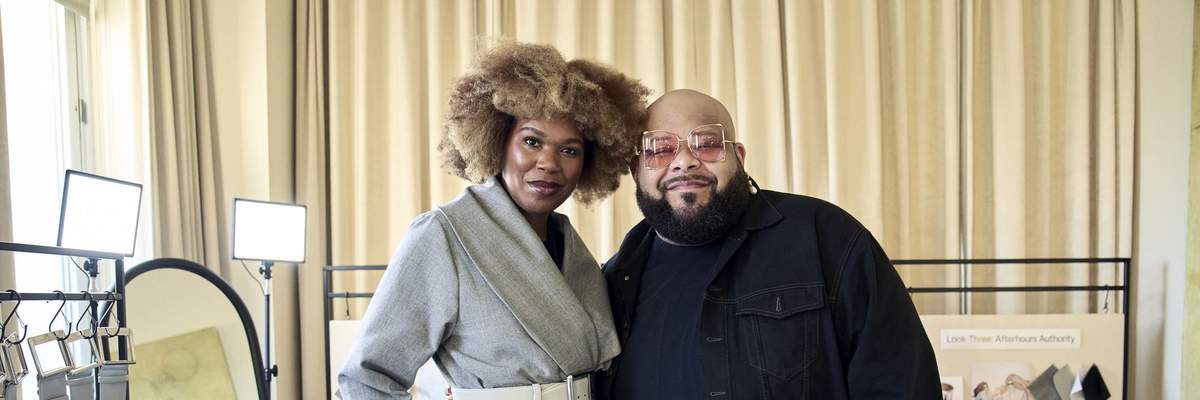



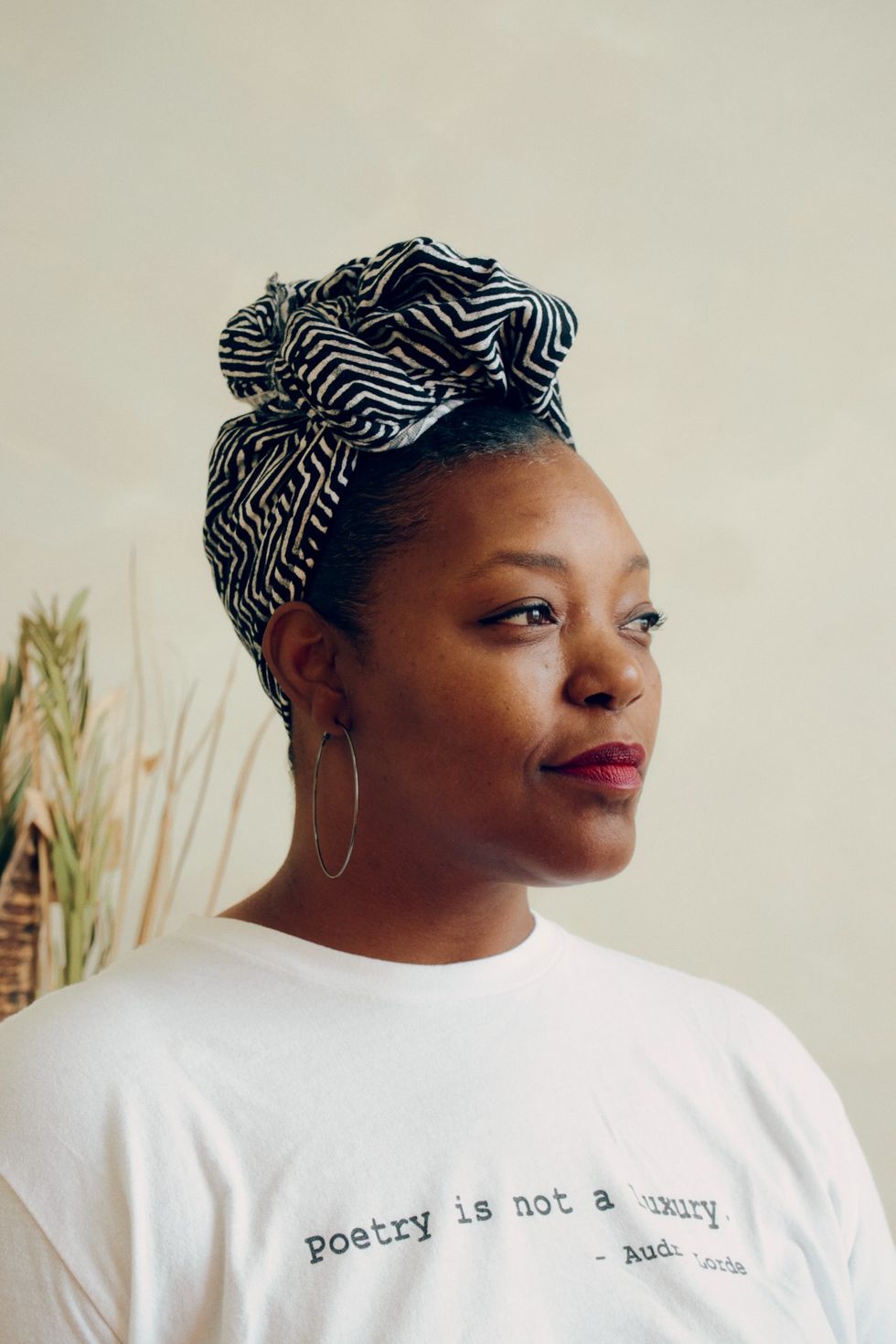
You know you’re dealing with a truly talented and profound voice of a generation when the powers that be attempt to silence it. As a poet, educator, and cultural curator, Mahogany L. Browne has carved out a powerful space in the world of literature and beyond.
From penning the viral poem, “Black Girl Magic,” to writing Woke: A Young Poet’s Call To Justice (a book once banned from a Boston school library), to becoming the 2024 Paterson Poetry Prize winner and a poet-in-residence at Lincoln Center—her path exemplifies resilience, reinvention, and unapologetic artistry. She's published more than 40 works and paid the bills with her craft, a divine dream for many creatives seeking release, autonomy, and freedom in a tough economic climate.
A Goddard College graduate, who earned an MFA from Pratt Institute and was awarded an honorary doctorate from Marymount Manhattan College, Mahogany offers unapologetic realness with a side of grace and empowerment. "I started touring locally. I started creating chat books so that those poems will go in the hands of the people who were sitting in the rooms," she shared.
"And then I started facilitating poetry workshops, so I used my chat books as curriculum. And that, in turn, allowed me to further invest in my art and show the community and people who were hiring me that it wasn't just a one-off, that it's not just, you know, a fly by night—that I am invested in this art as much as I am invested in your community, in your children's learning, in our growth."
Mahogany has a special way of moving audiences, and her superpower sparks shifts in perspective, post-performance introspection, and strengthening of community bonds, especially among Black women. (One can undeniably recognize her gift for arousal of the spirit and mind merely from her listening to her insights from the other side of a Google Hangout call. I can only imagine the soul-stirring, top-tier sensory encounter when watching her perform in person.)
In this chat with xoNecole, Mahogany reflects on sustaining a creative career, the aftermath of writing a banned book, and using poetry for both healing, community-building, and activism.
Anthony Artis
xoNecole: What are three key things that have laid the foundation for a sustainable creative career for you?
Mahogany L Browne: What has helped me is that I'm willing to go in being an expert at knowing poetry and knowing the way in which art can change the landscape of our lives, not just as a poet, but also as a poetry facilitator. How you move through classes, those things are mastered, right? So when I go into another space that's maybe tech-heavy, I don't mind learning and being, you know, a student of the wonder of how we can make this magic, work together.
Two, you’ve got to know how to pivot. Sometimes we say, ‘Alright, this is what my life is going to be. I'm going to be a New York Times best-selling author. I'm going to, you know, have an album that's Grammy-nominated. And then, say you get dropped from your record label. That doesn't mean you can't make an album anymore. You can also still create an album that can be submitted to the Grammys. So, what does a pivot look like as an artist who doesn't have an institution behind them? Pivot being a student of the wonder.
Relationships also really help. How do I serve the community? And in turn, that tells me how the community can show up. For me, I have long-standing ties with a community that will outlast my one life. So, what does it mean to create space where these relationships can develop, can be nurtured, can be rooted, can be cultivated? Creating space—it happens through relationships.
xoN: With today’s economic challenges, what does your current creative process look like, and what are you working on?
MB: I’m always thinking five years ahead. I just reviewed the pages for two children’s books and recently released a YA novel. I’m drafting an adult fiction manuscript now.
Anything I create is founded with the root of poetry, but it can exist in captions. It can exist in commercials. It can exist as a musical. So that's where I’m at now.
xoN: You started performing "Black Girl Magic" in 2013, had an acclaimed performance of it via PBS and the work went on to viral success shortly after. Talk more about the inspiration. And what do you think about the continued relevance more than a decade later?
MB: I wrote it as a rally cry for the mothers who had been keeping themselves truly in harm's way by, you know, being a part of the community right after the death of their child or their loved one. They are usually mothers of victims of police brutality—and just seeing how they showed up in these community spaces, they are devout to the cause but obviously still grieving.
"I wanted this poem to be just a space of reclamation, of joy and of you, of your light, of your shine, of your brilliance, in any which way in which you fashion. Every room you enter is the room you deserve to be in. What does it mean to have a poem like that that exists?"
And the first time I did the poem, the Weeping that occurred, right? It was like this blood-letting of sorts. The next time I performed it, I'm moved to tears because I'm seeing how it's affecting other women who have just been waiting to hear, ‘You belong. You deserve. You are good. We see you. Thank you, despite everything that they said to make you regret being born in this beautiful brown, dark-skinned, light-skinned, but Black body.’
Black women are the backbone—period. Point blank. And so, that that poem became a necessity, not just to the fortitude of Black women in the community, but like you know, in service of healing the Black women.
xoN: One of your books was banned at a school in Boston, and it was later reinstated due to parental and activist support. What was that experience like?
MB: Well, I think it happened because they were racist. That's it. Point blank. The reversal of it was empowering, right? I realized, oh, I thought we just had to sit here and be on a banned book list. But no, parents are actually the leaders of this charge.
So to see that, the parents said, ‘Nah, we're not gonna let you take this book out of my baby’s school just because it's a Black kid on the front saying, ‘Woke’ and they're talking about being a global citizen. They're talking about accountability. They're talking about accessibility. They're talking about allyship, and you don't want them to have compassion or empathy or have even an understanding, right? So no, we rebuke that, and we want this book here anyway.’ To see that happen in that way. I was, like, reaffirmed. Absolutely.
xoN: You recently organized the Black Girl Magic Ball at the Lincoln Center in New York. Honorees included author and entrepreneur Rachel Cargle and National Black Theater CEO Sade Lythcott. What impact did it have and what expanded legacy do you hope to leave with your creative works?
MB: I was really interested in not celebrating just the book, but celebrating the community that made the book possible. And so I gave out five awards to women doing that thing, like, what does it mean to be a Black girl in this world?
I just thought it was gonna be an amazing time. Everybody's gonna dress up—we're gonna celebrate each other. And boom, I then realized that it responded to like a gaping hole. There was a missing thing for Black girls of all walks of life, all ages, right?
"It's very intergenerational. That was intentional to come together and celebrate just being us."
You have all these instances where just being you is either the butt of a joke or it's diminished and not worthy of a specific title in these larger institutions. So what does it mean to just to be loved up on and celebrated?
It felt like a self-care project at first. You know, for the first couple of years, folks were coming and they were getting that sisterhood. They were getting that tribe work that they were missing in their everyday lives.
I love the Black Girl Magic Ball because we got us. If I go out with a bang, they'll remember that Mahogany worked her a** off to make sure all the Black girls everywhere knew that she was the light. We are the blueprint.
For more information on Mahogany L. Browne, her work, and her future projects, visit her website or follow her on IG @mobrowne.
Featured image by Anthony Artis