The fact sadly remains that the presence of Black women leading in multinational companies remains scarce.
Despite decades of conversations about diversity, equity, and inclusion, the numbers are still sobering. According to recent figures, only 4.4% of management professionals are Black women, and 1.4% of them hold C-suite roles. There are several barriers to landing those roles that have little to do with capability or education, from systemic challenges related to race, to career and culture pipelines connected to allyship, sponsorship, and promotion pathways.
Still, there are women who do break through with leadership, not only challenging outdated narratives but also embodying a level of excellence, resilience, and vision that sets a standard across industries.
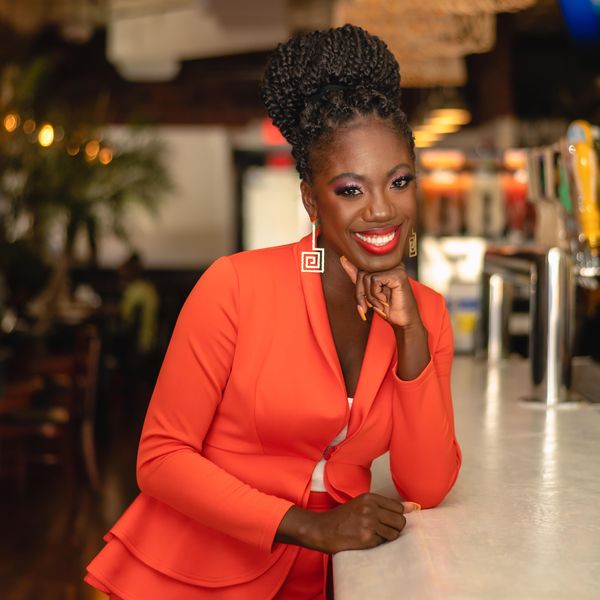
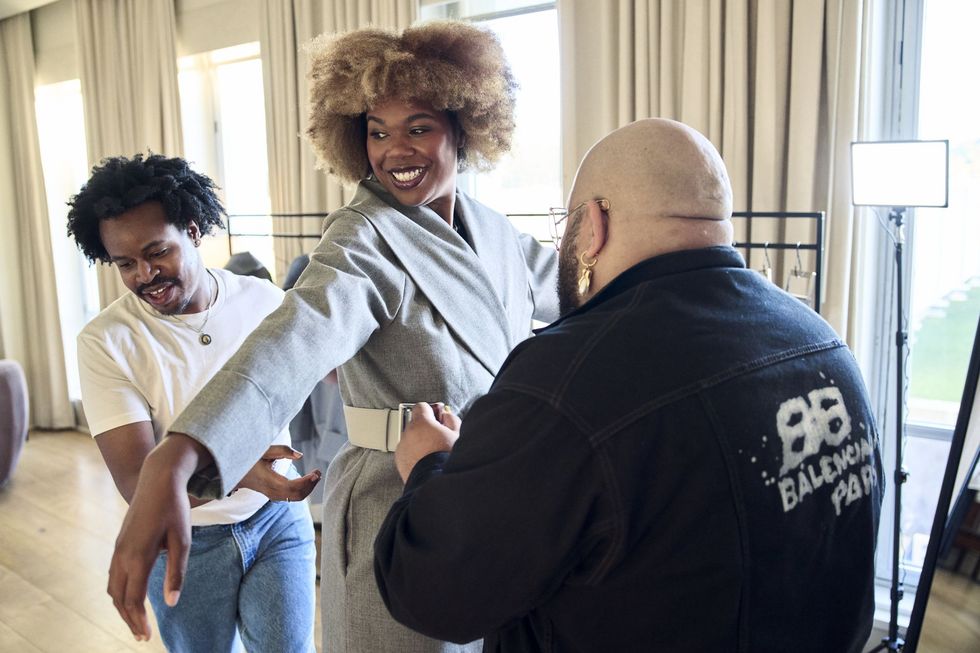
Gabrielle Gambrell, chief communications officer at Hachette Book Group, has enjoyed the journey of developing hard-earned wisdom about leaning into the pivots and transitions of a career. She’s gone from running talent relations at Live with Regis and Kelly to leading DEI comms at NBCUniversal to shaping young minds as a professor at Columbia University. Now, in publishing, she’s still carving new paths on her own terms.
Born and raised in Los Angeles, for Gambrell, the formula for career growth is simple but powerful: mentors, receipts, and confidence. “No one is going to just come to you and give you a bag of money—you have to ask and advocate,” she shares about advice a mentor once gave her.
She took that to heart, building a career strategy around speaking up, keeping a weekly “brag sheet” of wins, and walking unapologetically in her value.
In this interview with xoNecole, the powerhouse communicator breaks down how women can thrive through pivots, why old-school networking still beats endless online applications, and why family values and faith anchor her legacy.
xoNecole: You've had a diverse and successful career that included several pivots, working in global diversity communications with NBCUniversal to being a talent assistant on a very major TV show, to becoming a professor and now in your current role at Hachette Book Group. What would you say are three key career advancement actions that you would say helped you sustain those pivots?
Gabrielle Gambrell: At CBS, I was there for seven years being my millennial self. That's the longest job I've ever had, and I'm excited about my current role in the ship, because I plan to be here for quite some time. I just absolutely love it. But when I was at CBS, I was working hard, reporting to the chief communications officer, doing amazing things, working on the Super Bowl, working on the U.S. Open, working on the Grammys, working on executive comms, helping to prepare things for the CEO of CBS Corporation. And I was in my 20s just living my dream, but I wasn't making a lot of money, to be honest.
A mentor taught me early on in my career that you have to ask and advocate and prove every dollar, every opportunity you want, and every dollar and every title that you want. And so I then learned to create a brag sheet.
xoN: Wait, let’s pause there for a second. A brag sheet? Explain what exactly that is and how women can start unapologetically logging their wins, especially with today’s challenges of unemployment and underemployment?
GG: It’s typically updated on a weekly basis, and so I look at that to say, "What did I do this week that was transformative? What did I do when my boss said, ‘Good job. Amazing work?' What did I do that's never been done before? What did I put into place to elevate the brand and company?’"
And so because I always maintain that brag sheet, I can always advocate for myself. I can always kind of flex, if you will, to say, ‘Hey, these are some of my successes, and this is why I deserve x, y, z. So that's one thing that, like completely changed my life.
"A mentor taught me early on in my career that you have to ask and advocate and prove every dollar, every opportunity you want, and every dollar and every title that you want. I then learned to create a brag sheet."
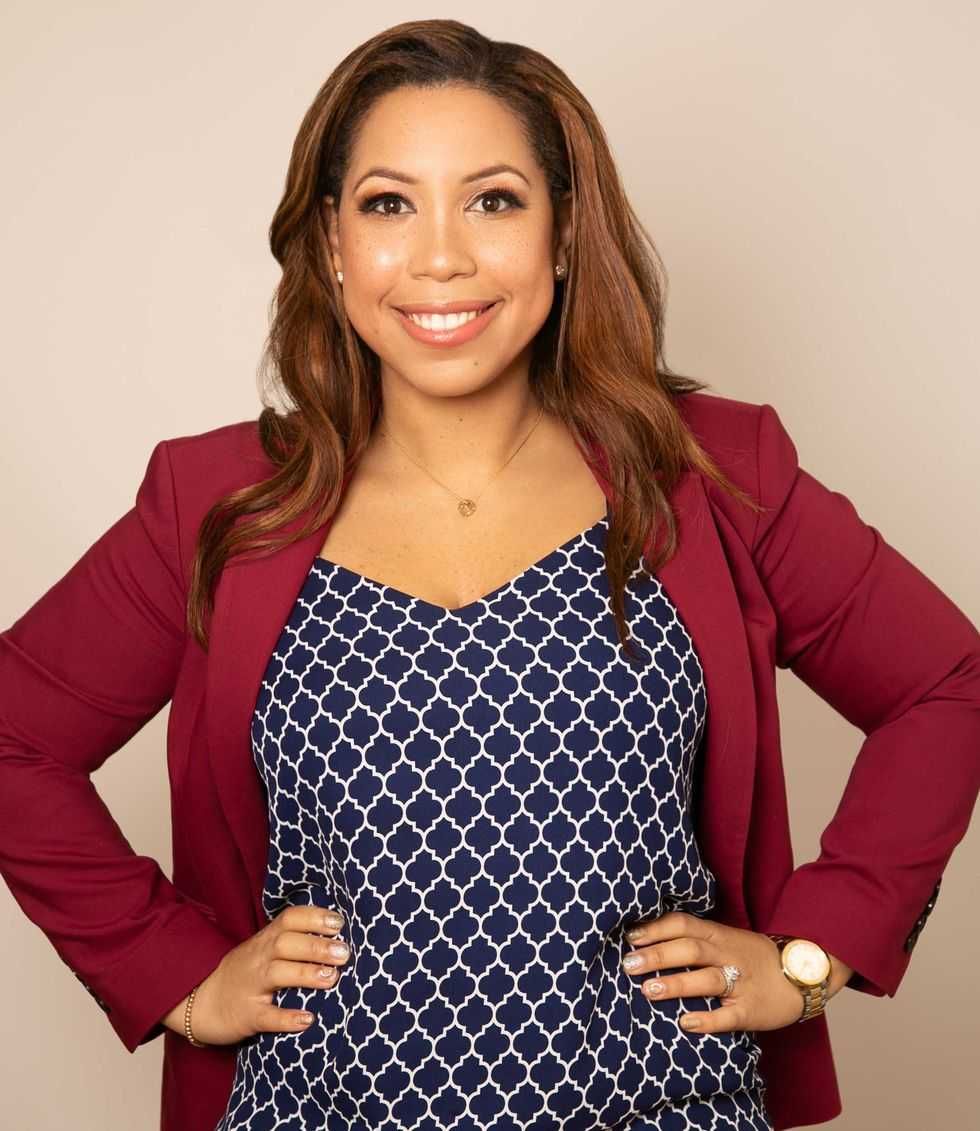
Courtesy
xoN: Well, that's awesome. And because there's a lot in the news about women being laid off, women not being hired, and a lot of people are unemployed right now. How do you maintain confidence with this sheet when you’re going through the ups and downs of career transitions?
GG: We're in a very, very unique time where someone can be immensely talented, so talented and face employment difficulties. And what I've also been privy to is people just coming to you all the time, where people are sliding to your private messages on LinkedIn, saying ‘How are you doing?’ ‘I got an opportunity.’ ‘Have you thought about this?’ ‘Have you thought about that?’ Most of the time I hear about people obtaining opportunities from their networks. To be honest, it's not from simply applying for a role.
Heaven forbid you get laid off and you no longer have access to your work email, so you can't go look in those folders to see what your successes and wins were. So, it's always making time—no matter where you are in your career—and making that a part of your schedule, making the brag sheet a part of your routine. It can be in a Google Doc, spreadsheet, or whatever way you want to keep track of those wins, even when you’re looking for the next thing.
xoN: I love that, because you're right. You can be kind of a worker bee, and then later on, when you're looking for work, it's like, ‘Well, what did I do?’ Now, in your current role, what has been a major win for you?
I have a phenomenal boss. I work with amazing, brilliant people at Hachette Book Group, and I'm very grateful and blessed and happy to have the role that I have.
We recently had the Changing the Story Festival, which was a diversity, equity and inclusion festival. I’m proud of that. I'm proud of moments like when the CEO and our entire staff had a day of listening to panels and seminars and hearing from diversity, equity and inclusion experts, and made a clear correlation to how diversity, equity and inclusion positively impacts the business. Those are the things I'm excited about and make it amazing to work for this company.
xoN: It’s always good to continue to be excited about your job after decades of working in industries. What would you want your legacy to be overall in your career?
GG: When, I think about legacy, when I think about brand, when I think about when it's all said and done: God is so good. I'm a woman of God. I'm grateful for God's blessings. I am so very, very blessed. I want people to say she was a great person. She contributed to society. Her family meant the most to her, and when I think about my legacy and what matters most to me, at the very top of that list is family, my children.
I'm at a place in my life that if somebody doesn't honor or respect me being a mother, that's not the proper place for me. If someone doesn't honor and respect that I will I'm going to be at parent-teacher night, my son does taekwondo. He's five years old, and he's a blue belt. When he gets his next belt, I will be there.
I would want my legacy to be that I am an innovative, creative, forward thinking person whose values include family, motherhood, who has an interest in all things media.
Let’s make things inbox official! Sign up for the xoNecole newsletter for love, wellness, career, and exclusive content delivered straight to your inbox.
Featured image courtesy of Gabrielle Gambrell
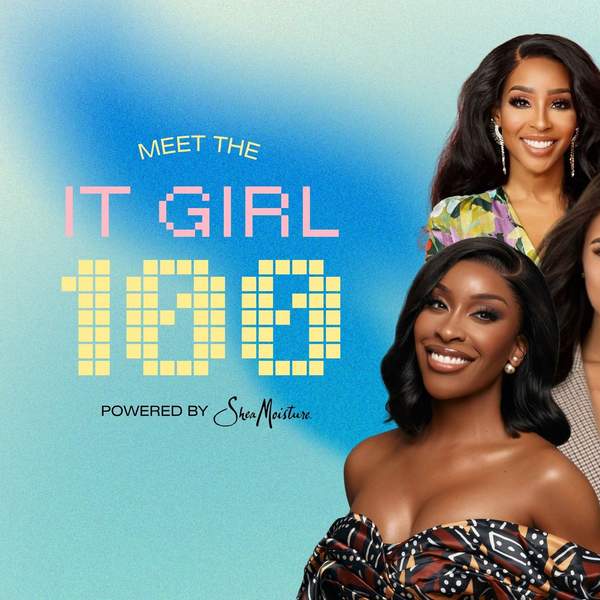
Because We Are Still IT, Girl: It Girl 100 Returns
Last year, when our xoNecole team dropped our inaugural It Girl 100 honoree list, the world felt, ahem, a bit brighter.
It was March 2024, and we still had a Black woman as the Vice President of the United States. DEI rollbacks weren’t being tossed around like confetti. And more than 300,000 Black women were still gainfully employed in the workforce.
Though that was just nineteen months ago, things were different. Perhaps the world then felt more receptive to our light as Black women.
At the time, we launched It Girl 100 to spotlight the huge motion we were making as dope, GenZennial Black women leaving our mark on culture. The girls were on the rise, flourishing, drinking their water, minding their business, leading companies, and learning to do it all softly, in rest. We wanted to celebrate that momentum—because we love that for us.
So, we handpicked one hundred It Girls who embody that palpable It Factor moving through us as young Black women, the kind of motion lighting up the world both IRL and across the internet.
It Girl 100 became xoNecole’s most successful program, with the hashtag organically reaching more than forty million impressions on Instagram in just twenty-four hours. Yes, it caught on like wildfire because we celebrated some of the most brilliant and influential GenZennial women of color setting trends and shaping culture. But more than that, it resonated because the women we celebrated felt seen.
Many were already known in their industries for keeping this generation fly and lit, but rarely received recognition or flowers. It Girl 100 became a safe space to be uplifted, and for us as Black women to bask in what felt like an era of our brilliance, beauty, and boundless influence on full display.
And then, almost overnight, it was as if the rug was pulled from under us as Black women, as the It Girls of the world.
Our much-needed, much-deserved season of ease and soft living quickly metamorphosed into a time of self-preservation and survival. Our motion and economic progression seemed strategically slowed, our light under siege.
The air feels heavier now. The headlines colder. Our Black girl magic is being picked apart and politicized for simply existing.
With that climate shift, as we prepare to launch our second annual It Girl 100 honoree list, our team has had to dig deep on the purpose and intention behind this year’s list. Knowing the spirit of It Girl 100 is about motion, sauce, strides, and progression, how do we celebrate amid uncertainty and collective grief when the juice feels like it is being squeezed out of us?
As we wrestled with that question, we were reminded that this tension isn’t new. Black women have always had to find joy in the midst of struggle, to create light even in the darkest corners. We have carried the weight of scrutiny for generations, expected to be strong, to serve, to smile through the sting. But this moment feels different. It feels deeply personal.
We are living at the intersection of liberation and backlash. We are learning to take off our capes, to say no when we are tired, to embrace softness without apology.
And somehow, the world has found new ways to punish us for it.

In lifestyle, women like Kayla Nicole and Ayesha Curry have been ridiculed for daring to choose themselves. Tracee Ellis Ross was labeled bitter for speaking her truth about love. Meghan Markle, still, cannot breathe without critique.
In politics, Kamala Harris, Letitia James, and Jasmine Crockett are dragged through the mud for standing tall in rooms not built for them.
In sports, Angel Reese, Coco Gauff, and Taylor Townsend have been reminded that even excellence will not shield you from racism or judgment.

In business, visionaries like Diarrha N’Diaye-Mbaye and Melissa Butler are fighting to keep their dreams alive in an economy that too often forgets us first.
Even our icons, Beyoncé, Serena, and SZA, have faced criticism simply for evolving beyond the boxes society tried to keep them in.
From everyday women to cultural phenoms, the pattern is the same. Our light is being tested.

And yet, somehow, through it all, we are still showing up as that girl, and that deserves to be celebrated.
Because while the world debates our worth, we keep raising our value. And that proof is all around us.
This year alone, Naomi Osaka returned from motherhood and mental health challenges to reach the semifinals of the US Open. A’ja Wilson claimed another MVP, reminding us that beauty and dominance can coexist. Brandy and Monica are snatching our edges on tour. Kahlana Barfield Brown sold out her new line in the face of a retailer that had been canceled. And Melissa Butler’s company, The Lip Bar, is projecting a forty percent surge in sales.

We are no longer defining strength by how much pain we can endure. We are defining it by the unbreakable light we continue to radiate.
We are the women walking our daily steps and also continuing to run solid businesses. We are growing in love, taking solo trips, laughing until it hurts, raising babies and ideas, drinking our green juice, and praying our peace back into existence.
We are rediscovering the joy of rest and realizing that softness is not weakness, it is strategy.
And through it all, we continue to lift one another. Emma Grede is creating seats at the table. Valeisha Butterfield has started a fund for jobless Black women. Arian Simone is leading in media with fearless conviction. We are pouring into each other in ways the world rarely sees but always feels.

So yes, we are in the midst of societal warfare. Yes, we are being tested. Yes, we are facing economic strain, political targeting, and public scrutiny. But even war cannot dim a light that is divinely ours.
And we are still shining.
And we are still softening.
And we are still creating.
And we are still It.

That is the quiet magic of Black womanhood, our ability to hold both truth and triumph in the same breath, to say yes, and to life’s contradictions.
It is no coincidence that this year, as SheaMoisture embraces the message “Yes, And,” they stand beside us as partners in celebrating this class of It Girls. Because that phrase, those two simple words, capture the very essence of this moment.
Yes, we are tired. And we are still rising.
Yes, we are questioned. And we are the answer.
Yes, we are bruised. And we are still beautiful.

This year’s It Girl 100 is more than a list. It is a love letter to every Black woman who dares to live out loud in a world that would rather she whisper. This year’s class is living proof of “Yes, And,” women who are finding ways to thrive and to heal, to build and to rest, to lead and to love, all at once.
It is proof that our joy is not naive, our success not accidental. It is the reminder that our light has never needed permission.
So without further ado, we celebrate the It Girl 100 Class of 2025–2026.
We celebrate the millions of us who keep doing it with grace, grit, and glory.
Because despite it all, we still shine.
Because we are still her.
Because we are still IT, girl.
Meet all 100 women shaping culture in the It Girl 100 Class of 2025. View the complete list of honorees here.
Featured image by xoStaff
Sweet Dreams: 10 Things Science Reveals About Dreams That Might Make You Rethink Sleep
I do so much random online research that I can’t even really tell you how I ended up reading about dreaming — but boy, did it pique my curiosity enough to want to write about it. For instance, did you know that your dreams tend to be longer during the morning time, that you can remember your dreams better on the weekends, and that, contrary to popular belief, not everyone dreams in color? Reportedly, somewhere around 12 percent of humans actually dream in black and white.
Since we all spend roughly one-third of our lives sleeping, and a good portion of that is while we are in a dream state, let’s take a moment to explore some fascinating (and proven) facts about the topic of dreaming.
It just might cause you to think more (or differently) about how you rest and when you rest — so that the quality of your dreams can become better than ever.
1. Men and Women Dream Pretty Differently
GiphyA quote that I like and use often is, “If two people were exactly alike, one of them would be unnecessary.” (Larry Dixon) And yes, men and women are created differently in order to balance one another — and I will forever die on that hill. Which is why it doesn’t surprise me in the least that, even when it comes to dreaming, males and females are not exactly the same.
Although research does indicate that dreaming, in part, is about how we process memories while we sleep regardless of our gender, men’s dreams tend to be more about action while women’s dreams are more about conversation. Not only that but women’s dreams are typically longer; men dream about other men more than women do (interesting), and women dream more from their own perspective while men daydream more with the topic usually being about sex.
2. Lucid Dreaming Is a Method to “Control” Your Dreams
GiphyIf it feels like you are aware of the fact that you are dreaming as you are doing so, pardon the pun, but it’s not all in your head. What this is called is lucid dreaming and, the fascinating thing about it is, to a certain extent, you can actually control these types of dreams whenever you have them. If the mere thought of this fascinates you and you want to try and “rig up” some of your dreams (LOL) — some sleep experts say that doing things like keeping a dream diary and a sleep schedule can help to make this happen. Anyway, you can read more about lucid dreaming here.
3. Dreams Typically Have a Short Shelf Life
GiphyAlthough it’s been reported that people tend to spend somewhere around two hours of their night dreaming, the thing to keep in mind is most individuals have multiple dreams during that period of time — and for this reason, oftentimes dreams last for no longer than 5-10 minutes tops (although some have the ability to last considerably longer. You can read more about that here and here).
4. Dreams Happen When You Are in REM Sleep (You’re “Paralyzed” Then Too)
GiphyWhen it comes to sleeping, it actually happens in four different stages. While you can read more about those here, as far as your dream state is concerned, most of that tends to happen during your rapid eye movement cycle which is better known as REM. It is when you are in your final stage of sleep which is why your dreams typically are the most intense during that time.
Know what else is wild about dreaming during REM? Although you don’t realize it, your body is actually paralyzed. And although, initially, that might sound low-key terrifying, it’s actually a blessing in disguise because your brain is telling your muscles to stop working (temporarily) and that is what ultimately keeps you from acting out whatever you are dreaming about. The more you know.
5. Certain Sex Dreams Have NOTHING to Do with Sex At All
GiphySex-themed dreams are very normal and quite common. Thing is, although the dreams may be about sex, oftentimes what they are interpreting is something entirely different. For instance, a BDSM dream is oftentimes about having a controlling parent, while a sex dream that involves a lot of dirty talk could represent someone who wants to free themselves from how others perceive them, and recurring sex dreams about your ex typically means that there are some unresolved issues that you may have with them.
Oh, and while we’re on this topic, dreams about cheating usually means that you are feeling some sort of jealousy in your relationship while sex with a boss usually means that you want to move up in your job or be appreciated more often — not that you want them in a sensual type of way.
6. You Can’t Read or Tell Time in Your Dreams
GiphyHere’s something that you’ve probably never thought about before — when you think back on the dreams that you can remember (more on that in a bit), how many of them do you recall reading or even telling time in? If you said “a few,” science would probably give you the side-eye because, according to their research, reading (and telling time) is virtually impossible to do whenever you are in your dream state.
The reason why is because, while you are dreaming, the logical and intellectual part of your brain pretty much shuts down. If that bothers you, the easiest way to try to read (or tell time) would be to train your mind to do some of the lucid dreaming that we already talked about.
7. Your Recurring Dreams Typically Mean You Need to Address Something
GiphyOut of all of the things that I’ve mentioned about dreams, this is probably the most obvious revelation — if you are having a recurring dream, it tends to mean that either you have some unresolved issues in your life or there is a need that needs to be met that hasn’t been yet. While doing a bit of research on this one specifically, I thought it was interesting that many mental health experts say that some of the most common recurring dreams involve flying, falling, encountering a dead individual, your teeth falling out or being nude.
And what are some ways to “end” recurring dreams? See a therapist. State what your needs actually are (to the person who is not meeting them). Lower your stress levels. Get more consistent rest. Speak with your doctor about altering your medications (if you happen to be on some). To that last point, a not-so-fun fact: melatonin usage is sometimes attached to nightmares. Goodness.
8. Foods You Consume Can Influence Your Dream State
GiphyThere are several reasons why you shouldn’t eat immediately before turning in at night; one reason is because it has the ability to mess with your body’s natural circadian rhythm which is your system’s 24-hour clock. This is relevant when it comes to sleep because your circadian rhythm helps to control things like your sleeping pattern.
Another thing to take note of is to not only push the plate back 2-3 hours before going to bed but to watch what you do choose to consume as well. That’s because, believe it or not, certain foods do have an impact on your dream life. Like did you know that dairy can cause digestive issues that can lead to microaggressions that can give you very strange dreams?
Or were you aware that sugary foods can trigger your nervous system and make your dreams more vivid and intense? Interestingly enough, dairy, sweets and also spicy foods can also increase your chances of having a nightmare. Hey, don’t shoot the messenger, chile.
9. Is It True That Some People Don’t Dream at All?
GiphyI don’t know about y’all, but when I was growing up, I used to hear that if you don’t dream, you’re crazy. The actual fact is that, although most people absolutely do dream, the reason why they don’t remember them (or they dream less than other people) is because they don’t fall into REM sleep as much or often as they should.
And what are some of the main reasons for why this would happen? Sleep disorders, depression and medications that treat anxiety are all things that top the list. So, if not dreaming is something that bothers you, speak with your doctor and consider seeing a sleep specialist. An underlying issue could be the cause.
10. Not Only Scary Movies Lead to Nightmares
GiphyWhile reading a Harvard-based article entitled, “Nightmares and the Brain,” I thought it was interesting that it separated nightmares from night terrors (nightmares can be remembered; night terrors cannot although people do wake up screaming or frightened), that night terrors mostly happen to children and “Night terrors are not technically dreams but are instead sudden fearful reactions that occur during transitions from one sleep phase to another.”
Okay, but clearly people have actual nightmares (1 in 20 people say that they do at least once a week); however, guess what the source of a lot of them are? While sometimes it’s a horror film, oftentimes it’s stress, anxiety or simply sleep deprivation. Honestly, I might have a nightmare a couple of times a year, tops (and I remember my dreams on a daily basis). So, if that’s a sign that I’m managing stress well — happy to hear it!
____
Welp, there you have it: 10 facts about dreams. Now that you know them, does it make you want to approach sleeping — and dreaming — in a different way? If so, hop in the comments and tell us why. Because, clearly, dreaming is more than just a notion. Amazing.
Sweet dreams to all, y’all.
Let’s make things inbox official! Sign up for the xoNecole newsletter for love, wellness, career, and exclusive content delivered straight to your inbox.
Featured image by PeopleImages/Shutterstock