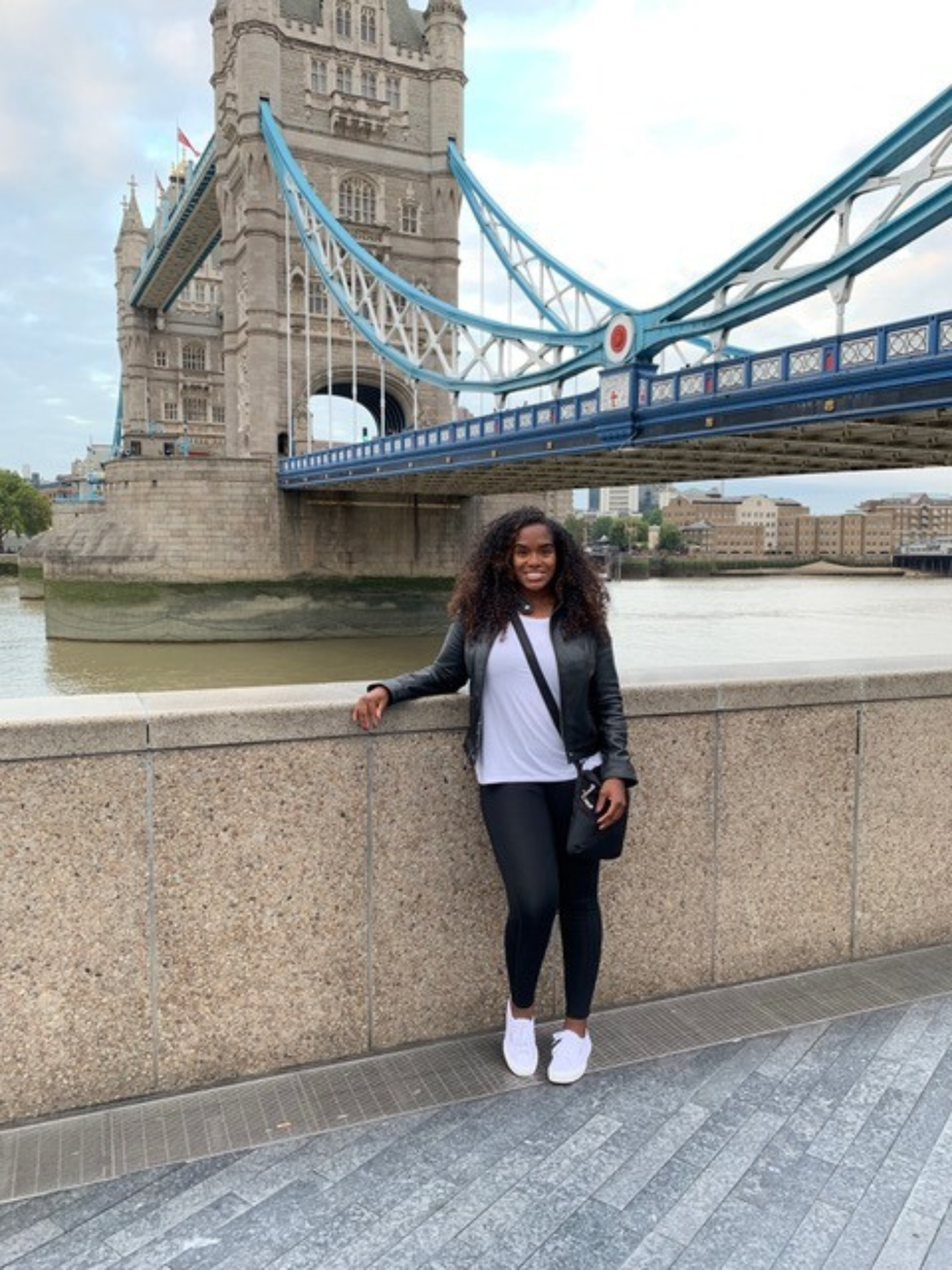



Oftentimes, in the Black culture, we place a high value on independence, particularly when it comes to achievements like getting an education, buying a house, or starting a new business. And this may be because many of us equate success with self-sufficiency. Make no mistake, independence isn’t a bad thing. But I think it’s also important to recognize that neither is dependence.
“I can do it myself.”
That was my go-to response. Even though there were times when I didn’t actually know how I was going to do it. I sure as hell wasn’t going to concede to that idea. There were even times in my warped thinking when I had convinced myself that some people only offered help (usually in the form of money) because they assumed I needed it. And I often did. But I wasn’t going to cop to that, either. I’d figure it out, and once I did, I’d feel so much better about myself. Or so I thought.
I read a meme online that said, "Hyper-independence is a trauma response to not being taken care of well." And on that particular day, it resonated with me in a way I didn't quite expect.
What is hyper-independence and is it a trauma response?
 Giphy
GiphyThe American Psychological Association (APA) defines trauma as an emotional response to a terrible event. This can include the loss of a loved one, physical abuse, or being bullied. In some cases, being the witness to a life-threatening event such as an illness or natural disaster can also cause trauma.
Dr. Joanne Frederick, a licensed professional counselor and a professor at George Mason University agrees that hyper-independence can be a result of trauma and may show up in one or more of the following ways:
- Taking on too much
- Saying no to help
- Having trouble with delegating tasks
For me, agreeing to projects, giving my last, and working full-time while also going to school nearly full-time gave me what I now know to be a false narrative that my self-worth was tied to what I could do rather than simply who I was.
Because of this, I said yes when I should have (and sometimes wanted to) say no. And on many occasions, I declined help from people who could have easily lightened my load which caused me to overextend myself to the point of burnout, emotional bankruptcy, and physical exhaustion.
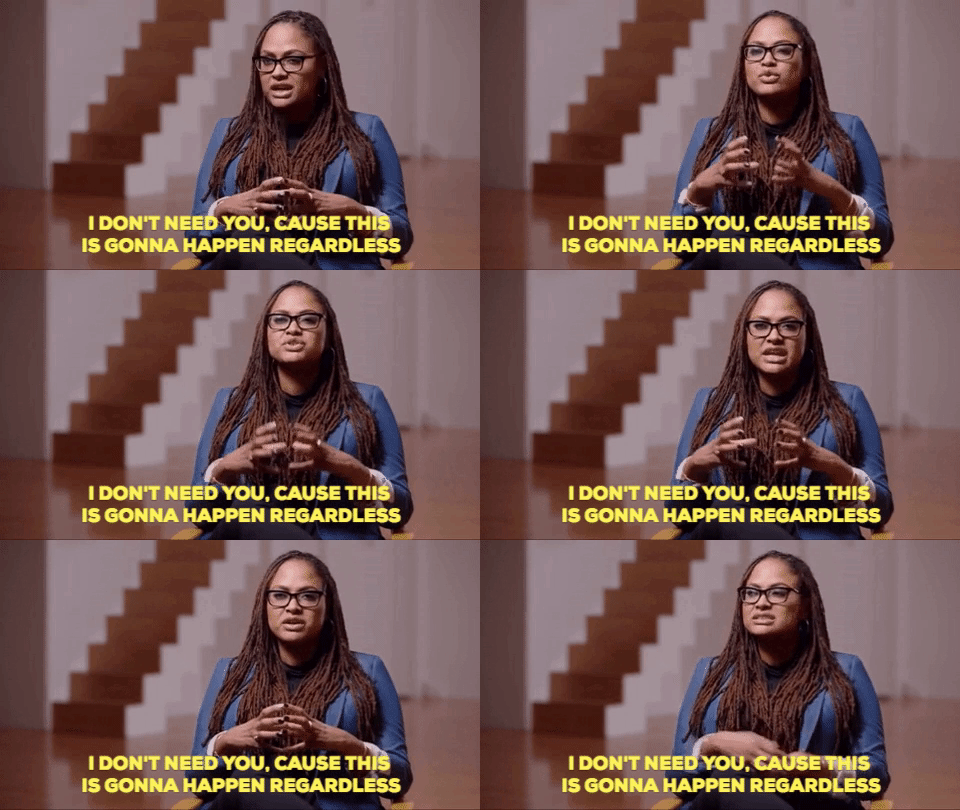
The thing is, my independence was connected to my pride. Being able to accomplish the things that I did was my way of saying, “Look what I was able to do. Me, a little Black girl who was supposed to be a statistic. I made it on my own.” I didn’t want to demonstrate/depict/portray an image of “not having it together” and for me, that meant doing it without help. Black women are often praised for what many have referred to as “supernatural strength'' and I, like many others before me, bought into this narrative.
At first glance, it seems like a positive attribute until you look in the mirror one day and don’t physically recognize your own reflection because while you were busy trying to be everything to everybody, you forgot to take care of yourself with food and water and sleep. And yes, that actually happened to me.
I didn’t want to admit to the people (at my church, at my school, or on my job) that I wasn’t the superwoman they thought I was. More than that, I didn’t want to admit it to myself. For so long, I felt like the people who knew me, expected me to look, act, and behave a certain way. The way I had done my whole life. And on some level, I feared that people would think less of me if I ever showed that I didn’t.
 Giphy
GiphyI’m learning that the difference between independence and hyper-independence is acknowledging your own limitations.
In the past, I never wanted to seem incapable or incompetent and unfortunately, I associated asking for help as a (weakness) character flaw instead of realizing that it actually takes strength to admit when you need advice, guidance, or a helping hand. It’s not a character flaw. It’s actually an honorable trait. It shows humility and vulnerability. It shows that you are human.
Personally, I think social media and social comparison have also influenced my ideas around “doing it on my own” with the “self-made” culture and all. As good as it sounds, the truth is no one and I do mean NO ONE ever made it all on their own and many great leaders in history have said the same.
How to work through your trauma
 Journaling For Me GIF by The BacheloretteGiphy
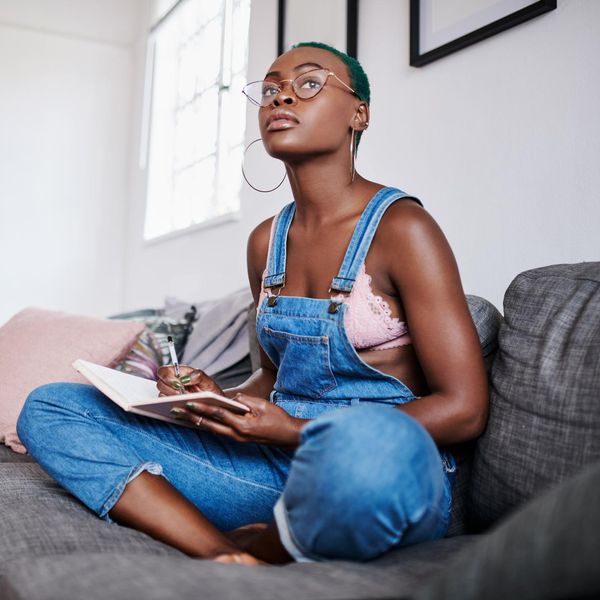
The first thing you’ll need to do in order to work through your trauma is to recognize that you have experienced a traumatic event. This could look like expressing your thoughts through journaling, or talking to a trusted family member or friend. It may also require seeking professional help through counseling or therapy.
You may also benefit from the following tips:
- The next time you feel inclined to resist an offer of assistance, take a moment to examine why. Do you truly not need the help or could delegating some responsibility actually make the situation better?
- Consider what it would be like to let someone else handle the situation. Perhaps that could give you more time with your family or take some time for yourself.
- If you don’t need help on the specific task they offered help on, assess your other duties to see if there are other tasks you could use assistance on.
- Remember that dependence is not bad and that interdependence is the “secret” to getting it all done.
 Youtube Reaction GIF by Lilly SinghGiphy
As I reflected on reasons why Black women may experience hyper-independence, I was reminded of a concept I learned in grad school. Relational dialectics is a communication theory that was born out of the philosophical belief of Dialectics, which is used to explain the relationship between opposing thoughts. Basically, Dialectics is the discourse between two different points of view, or in layman's terms, a contradiction. Think of it this way in terms of a Black woman versus a strong Black woman.
On one hand, the “Black woman” is a minority who is used to struggling. And on the other hand, there’s the “strong Black woman” who can do anything that comes her way. Now imagine that you have to prove one idea is true and refute the other.
The theory of Dialectics is a way to help us recognize that both ideas may exist, simultaneously. This "push and pull" ideology dates back to the classical era of Greek philosophers such as Socrates, Plato, and Aristotle. Although called by a different name, the methodology/way of thinking was founded on the idea of two opposing/contrasting thoughts/ideas being so drastically different that they either: (1) determine one to be “true” over the other, (2) find neither to be true or (3) establish both to be true to some extent, resulting in further exploration of either or both sides. With this understanding, it’s easier to see how the two may be interconnected, perhaps even influencing one another.
 Yvonne Orji Therapy GIF by Insecure on HBOGiphy
Similar concepts exist in other cultures, for example, the dynamism of the Yin and Yang. Much like Dialectics, practitioners of the Yin and Yang concept believe “the balance of emotional values in a relationship is always in motion, and any value pushed to its extreme contains the seed of its opposite.” Thus, the study of Dialectics is really about how to have a conversation that leads to truth. This is different from the eristic method, which is when someone argues just to win, and from the didactic method, which is when one person teaches another. Essentially, Dialectics not only teaches us how people argue, but it can also demonstrate how we can learn from each other.
With this understanding in mind, I wanted to examine the relationship between dependence, independence, and hyper-independence. Maybe these states of being aren’t as compartmentalized as they seem. Maybe the act of being independent is having the ability to care for yourself enough to know when it's time to let someone else who also cares, care for you.
“I could really use your help on this.”
For so long, I was the person who said “no,” before I said, “yes.” But I’m learning to say, “This is actually hard but I’m so used to doing things all by myself. I really appreciate you for offering to help.”
And I actually feel stronger than ever.
Let’s make things inbox official! Sign up for the xoNecole newsletter for daily love, wellness, career, and exclusive content delivered straight to your inbox.
Featured image by Getty Images
- I Manifested Becoming A Single Mom - xoNecole: Women's Interest ... ›
- Amanda Seales Black Women Self-Care Wellness - xoNecole ... ›
- Beyonce Motivation Meme You Have The Same Hours - xoNecole ... ›
- Beyonce Motivation Meme You Have The Same Hours - xoNecole: Women's Interest, Love, Wellness, Beauty ›
- 10 Quick And Easy Journal Prompts For Entrepreneurs - xoNecole: Women's Interest, Love, Wellness, Beauty ›
- How To Cultivate Better Self-Worth - xoNecole ›