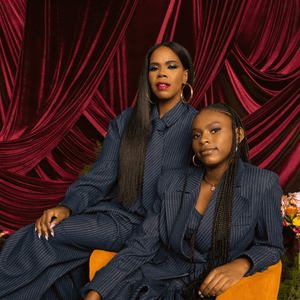

We all have heard the terms "Black girl magic" and "self-care" thrown around a lot over the past few years, and they seem to do this very confusing dance that a trauma-bonded couple might enjoy. What self-care means can depend on the person, their socioeconomic status, their lifestyle, their culture, and their career. And, of course, Black girl magic seems to apply to any woman of color who is wearing that same superwoman cape Karen White very beautifully lamented about in the '80s.
And for many women, self-care is something that has to fold into their desires to hold their households, spouses, and families down or pursue the life of their dreams. If you work hard, achieve, and gain recognition—well, there's the "magic"—then you just throw in a few bubble baths, mani-pedi appointments, and European vacays in there for the self-care checklist, so you don't "burn out."
You might even go a bit deeper into therapy, diet and exercise transformations, 24-7 leisure living, or religious epiphanies. Go off, sis.
Well, I want to give an honor and shout out to the pro athletes who have recently shown many of us a very different version of self-care. Though their actions aren't new to celebrities and high-earning everyday professionals, they've shined a renewed light on what truly matters when one thinks about preserving what's important in the grand scheme of things. The concept certainly takes a whole different turn once sports records, millions of dollars, career credibility, and people's livelihoods are at stake.
I know I might hurt a few feelings with this one, but I'm going to go there: Their latest exercises in self-care on the part of our amazing athletic sisters put the term "Black girl magic" on its heels and sparks a question of identifying what "strong" can look like that many of us don't want to face.

Jamie Squire/Getty Images
Self-care takes a different spin when you think about the power of shaking off the mystical label given to Black women who are simply being excellent, gifted human beings (and should not be solely defined by race or skin tone when talking about our amazingness).
This version allows us to throw that stereotypical, overused, superwoman cape to the side, and really start to look at what being the best version of ourselves requires—no matter what phase of life we might be in.
Take pro gymnast Simone Biles, who was all set to light the Tokyo Olympic games on fire when she abruptly chose to sit this year's festivities out. She already holds records in her sport and is known as a young legend at 24, with more than 30 Olympic and world medals. She faced harsh criticism for her decision and was accused of letting down her team, but she stood her ground, telling reporters:
"I just felt like it would be a little bit better to take a back seat, work on my mindfulness."
She's also decided to focus more on mental health advocacy. For one of the few Black women on her level in a sport that's majority-white, that had to have been a difficult decision, and even beyond the racial aspect, there's this sense that athletes should be able to push through both physical and mental challenges to get the job done.
Just take a look at this story about Serena Williams' Australian Open win while pregnant or this one about a past Venus Williams win at the U.S. Open or this whole list of athletes that have performed—and triumphed—through painful injuries. (My own father played basketball and once completed a whole game with a torn ankle. By the time he got home, his whole leg looked like an elephant's. He shrugged it off, wrapped it, iced it, and was back playing a few days later.)
Sound familiar? As Black women, we're often expected to just bear the brunt of pain or hardship in order to "push through" or reach a certain goal, and even the progressive among us (i.e. me) who tell ourselves that we will not be defined by the echoing voices of our grandmas, aunties, or moms—those voices don't allow for "giving up" or "letting people down"—we still push ourselves to the limit almost by default.
There's a trigger there that says, "Nah, I can't just walk away. I have bills to pay," or "Taking a break is weak. I can do more. That's what it takes to be among the best. I must ride this wave until the wheels fall off and reach success by any means."
And to the sis shaking your head, like, "Nah, that ain't me," just think about that last time you didn't say no to an opportunity because you didn't want to miss out, when that Twitter post, IG photo, or Facebook message didn't trigger a response of wanting to do something that would push a boundary when you couldn't say "I'm busy" to that fantasy bae, or you had to get that 10th toy for your kids that you really couldn't afford. Yea, you, too. You are us, too.

Tim Clayton/Corbis via Getty Images
When Naomi Osaka, the world's second-ranked tennis player, withdrew from the French Open this year to focus on her mental health, she faced thousands of dollars in fines for not completing a press conference in her effort to preserve her sanity. She was publicly shamed and met with doubt, as critics turned on her stating that she was simply making excuses.
It's all "Black girl magic" until you need a day off or a break. Being great at what you do in your career doesn't allow for a sick day or even a change of course, and if you're this super-powered character--as many high-achieving Black women have been pegged to be—you can't really be human.
This, to me, is dangerously similar to those archaic, racist theories about the performance and endurance abilities of African slaves and how they had a "higher tolerance for heat," an built-in "immunity to certain diseases" and "were impervious to pain."
And here comes that trauma-bonding two-step between self-care and Black girl magic yet again. Who needs much self-care when you're a durable, high-functioning, well-oiled, enchanted supernatural creature who's just expected to thrive and survive?
Simone Biles, Naomi Osaka, Serena and Venus Williams, shot-put Olympian Raven Saunders, WNBA stars Maya Moore, Renee Montgomery, and Chamique Holdsclaw—these are just a few of our athletic Black queens who are showing us that self-care means taking the time to step away and advocate for the foundational parts of life that enrich all that so-called "magic."
Their pause-for-the-cause moments haven't diminished their accomplishments, greatness, or legacies—they've enhanced them.
Our mental and physical health and safety anchor us and allow us to be able to be our full selves, whether that means winning trophies, breaking records, making big bucks, or not. And there's no amount of superhuman stereotyping that can deny that.
These women prove that self-care can indeed mean walking away from high stakes and taking a few steps back to address and develop elements of our lives and selves that lend to balance. As Black women, we've got to be inspired by these athletes to redefine what self-care really means for our lives beyond a surface-level, fly-by-night buzzword.
When we lay the incredibly draining pressure of holding "magic" in our bosoms and embrace the vulnerability of our humanity in a way that honors the fullness and balance of who we are and what we're called to accomplish, we can truly reach our God-given potential.
Featured image Tim Clayton/Corbis via Getty Images
- Issa Rae Dishes On Her Self-Care Secrets - xoNecole: Women's ... ›
- Radical Self-Care Routine Black Women - xoNecole: Women's ... ›
- Black Plant Moms Redefining Self-Care House Plants - xoNecole ... ›
- Zendaya On Radical Self-Care & Black Joy - xoNecole: Women's ... ›
- I Went To The Largest Self-Care Retreat For Black Women In The ... ›
- Three Black Women Activists Get Real About Self-Care, Self ... ›