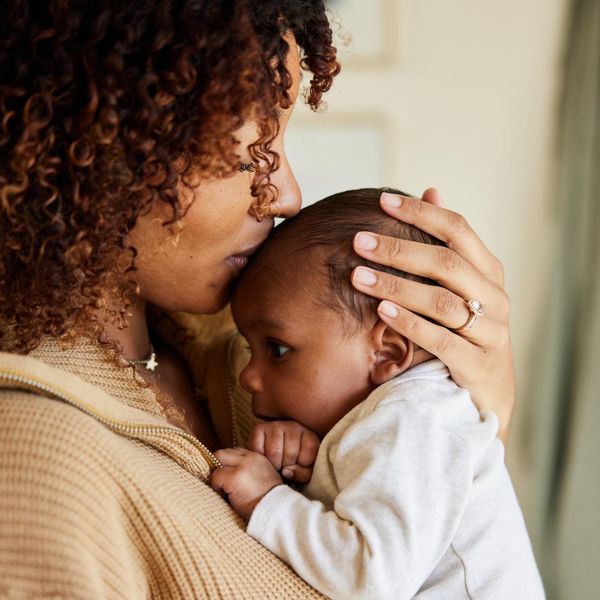




If you’re one to track celebrity news — which, let’s be real, is oftentimes nothing more than gossip — you’ve probably noticed that actor and singer Halle Bailey’s name has been coming up quite a bit as of late. Last week, she announced a mini solo residency (her first) that sold out in a matter of minutes, and since she and artist DDG (the father of her firstborn son, Halo) have broken up, it’s like folks are publishing minute-by-minute updates on what co-parenting is like for the both of them (and between them).
However, what caught and held my attention was her sharing the fact that she has been going through postpartum depression in the midst of…it all.
As Halle went on to explain her extreme anxiety when it came to being apart from her baby for more than 30 minutes, looking in the mirror and not really recognizing herself, and feeling triggered (in ways she probably wouldn’t be otherwise) — as a doula (which is basically a birthing assistant) who has had a front seat to clients who’ve battled with postpartum depression as well (and also as someone who knows that somewhere around 1 in 8 women deal with it on some level), I thought that now would be as good of a time as any to address some things about postpartum depression head on.
One, so that it can be taken more seriously than it oftentimes is. Two, so that you can know what to potentially look out for if you’re pregnant or someone you care about is. And, last but not least, if you have recently been diagnosed with postpartum depression, you can know that there is absolutely nothing to feel ashamed about — and that you are certainly not alone.
Postpartum Depression. Revisited.

Getty Images
First up, I’m not even gonna begin to act like I can cover something as…vast as postpartum depression in one article. However, I am going to try to provide a bit of fact-based intel, just so you can separate myths, rumors, and the attitude of dismissiveness from what this type of depression is actually all about.
Postpartum depression (which is sometimes also referred to as perinatal depression and is also known as PPD) is the type of depression that occurs either during a woman’s pregnancy or shortly after she gives birth. Although the Greek philosopher and physician Hippocrates spotted emotional challenges that new moms would experience all the way back in his day (which was a LONG time ago), it actually wasn’t until — check it — 1994 (just 30 years ago — SMDH) that the Diagnostic and Statistical Manual of Mental Disorders formally listed postpartum depression “medically defined concept.”
Since then, even more studies have been trying to get to the root of postpartum depression. For instance, a UCLA team came to the conclusion about a decade ago that pregnancy alters the brain on many different levels. It does this by (for example) causing neurosteroid chemicals to skyrocket during pregnancy and then plummet after giving birth, which can cause the brain to go through extremes in order to resume some sort of balance.
In 2019, in response to this, the FDA approved Zulresso (brexanolone). New moms 15 and over can take it, although it absolutely must be under the supervision of a medical professional due to some of its potential side effects.
It also should go on record that there are three different types of postpartum depression — there’s the “baby blues” that easily at least half (some reports say as much as 75 percent) of new moms go through which is pretty (self-) manageable; there’s postpartum depression that comes with more severe symptoms (more on that in a sec), and then there’s postpartum psychosis which is the most extreme kind of PPD. Around 1 in 1,000 women are diagnosed with it, and it can include paranoia, hallucinations, and mania.
Okay, so how can you know if what you are experiencing is “baby blues” or something more serious? That is an excellent question.
5 Early Signs of Postpartum Depression
Getty Images
Although some of my clients are individuals who I didn’t know prior to their pregnancy, some people have been friends. One friend, in particular, I had known for about 20 years at the time that I helped her give birth to her first child ,and so I knew her personality very well. That’s why, when I noticed some of the signs that I’m about to share, I alerted her midwife ASAP.
Initially, her midwife said that we should wait a couple of weeks to see if it really was postpartum depression, yet my friend was moving so out of character that I wouldn’t let up. Later on, her midwife told me that she was glad that I didn’t wait because my friend ended up going through a pretty serious bout of postpartum depression for a few months.
1. Early signs of PPD: Your emotions don't "level out" within the first couple of weeks.
Listen, if premenstrual syndrome (PMS) is real (and it is), in part due to all of the hormonal changes that we go through (perimenopause comes to mind, too), I bet you can just imagine all that is going on, hormonally, after giving birth. And while the first couple of weeks can seem a bit all over the place, if you’re not starting to feel like your old self within a couple of weeks or so, don’t merely shrug that off; it could be a postpartum depression warning sign.
2. Early signs of PPD: Your anxiety is through the roof.
Something that really let me know that something was up with my friend is she was obsessed with feeding her child (a part of the issue was mastitis, which is an infection within a woman’s breast tissue). It was so much to the point that she wouldn’t sleep, and when I would be insistent upon it, she would put a bottle up on a pregnancy pillow and prop her baby up next to it (keep in mind that this was a newborn). She was super anxious and irritable, which can be another warning sign of entering into postpartum depression.
3. Early signs of PPD: Your day-to-day patterns are drastically shifting.
Your baby is going to create a new normal for your life; that is guaranteed. However, if you’re noticing that you are totally deviating from everything that you typically do as far as your daily routine goes, while this could be the case for the first few weeks, pay close attention to if it remains that way for longer periods of time. This can be tied to short-term memory loss or feeling very disoriented — another telling sign.
4. Early signs of PPD: You are beyond exhausted.
I once read that new parents tend to lose somewhere around three hours of sleep each and every night during the first year of their child’s life (chile) — and yes, that is going to lead to feeling tired, drained…weary even. Oh, but the exhaustion that I’m speaking of here is when you are well past feeling like you are running on fumes.
Depression exhaustion is when your brain is foggy, your focus is off, and you start leaning into feeling like you’re just existing instead of living because that’s just how worn out you are — and when you can’t seem to find relief, no matter how hard you try, that’s when it could teeter into depression if you’re not careful.
5. Early signs of PPD: You're either overly concerned with or totally detached from your child.
If you can’t think about anything but your baby or you don’t really feel much of an attachment at all, both of these can be signs of postpartum depression setting in as well. While science is still trying to figure out if shifts in oxytocin play a role, it is clear that changes in estrogen, progesterone, and within your thyroid can lead to either outcome — and both aren’t what’s ideal when you have a baby.
5 Signs of Full-Blown Postpartum Depression

Getty Images
To be honest, everything that I just said can be a warning sign or a clear indication that you are in postpartum depression. The reason why I separated them from the ones that we are about to discuss is that if you only have one of what I just said, it may not be depression; however, if you’ve got three or more of them going on, definitely contact your doctor or midwife, just as soon as you possibly can — especially if they are compounded by these too.
1. Signs of PPD: Loss of appetite
When you’re depressed, it can sometimes cause you to not want to do basic things like showering or eating. A part of this may be due to something known as anhedonia, which is basically the ability to enjoy pleasurable things like food. Thing is, though, in order for you to get your strength back and for your baby to receive the nutrients that they need (if you are breastfeeding), you’ve got to eat. Besides, not eating can lower your blood sugar levels and that can impact your moods.
2. Signs of PPD: Insomnia
It probably doesn’t surprise you that, reportedly, 75 percent of people who are depressed struggle with getting a good night’s rest. The hamster wheel that it can put you on is wild, too, because you initially may struggle with sleeping because you are anxious or worrying a lot, which can have your emotions so all over the place to the point that you need sleep to regulate them…which you can’t seem to get because, again, you’re worrying so much.
There’s no way around the fact that a lack of sleep and depression are linked, so if you’re going days without at least getting some naps in, that could be a sign that postpartum depression has set in. (By the way, lemon balm is something that you might want to try if you can’t seem to sleep and you’re looking for an all-natural way to deal with it.)
3. Signs of PPD: Non-stop crying
If you ever get around to reading TIME’s “The Science of Crying,” you’ll get that nothing about crying is black and white. And honestly, if you’re crying from time to time after having a baby, that is completely understandable — encouraged even because it can help to reduce stress and pain; in fact, it’s pretty damn therapeutic.
What you shouldn’t overlook is if you’re experiencing crying spells to the point where it feels like you can’t stop. That can be an indication of depression because what you are expressing is feelings of hopelessness on some level.
4. Signs of PPD: Suicidal ideations
At the top of this year, Healthline published, “People with Perinatal or Postpartum Depression Face Higher Suicide Risk.” Hormones play a role in this. So does suppressing emotions if you feel some sort of guilt or shame for even having those thoughts during such a special time in your life. Then, if you add to the fact that reportedly only 15 percent of women seek professional mental health support for postpartum depression — sometimes it all can become so overwhelming that ending one’s life seems like the only way out. IT’S NOT.
If you’re thinking about suicide, even just a little bit, please speak up. Again, there’s nothing to be ashamed of; you simply need some expert assistance to get you through it.
5. Signs of PPD: Thoughts of hurting your child.
If it gets to the point where you are considering harming your child, that leans into the psychosis level of postpartum. Still, if a woman is going through all of the signs that I just mentioned, simultaneously, imagine how defeated she must feel. Anyway, although this isn’t the most common sign, it is the one that needs immediate professional help.
What Should You Do If You’re Going Through Postpartum Depression

Getty Images
So, after reading all of this, you definitely sense that you or someone you know has some postpartum depression going on. What should you do? The first thing is what I’ve already mentioned, which is to make an appointment to see your doctor or midwife. Please don’t try, and “Google your way” into a remedy or solution because a medical professional may need to do lab work and mental health screenings to get to the root of what could be causing it. Next, if you are officially diagnosed, get a solid support system around you.
Remember (and it really can’t be said enough), postpartum depression is NOTHING to be embarrassed about or ashamed of. You had a baby, which is a supernatural feat; it may take some time to recover from all that came with doing that — and that is okay. Next, you might want to consider getting a postpartum therapist — and yes, there is such a thing. They can help you to better articulate your feelings and needs, offer proven tips to get you through this particular season, and help you to find therapy treatments that will be most effective for you personally.
All-Natural Remedies for Postpartum Depression
Getty Images
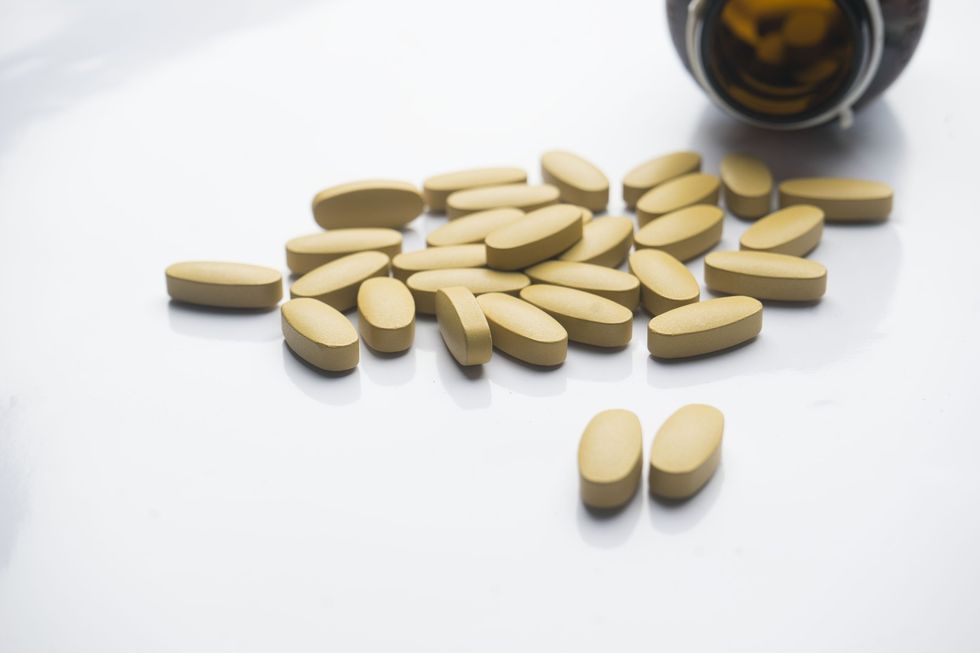
Please hear me loud and clear when I say that natural remedies for postpartum depression need to be accompanied by a physician’s (or midwife’s) knowledge and care.
The reason why I can’t stress that enough is, again, postpartum depression is nothing to be flippant with or about, and simply thinking that you can take a supplement and call it a day is irresponsible at best. At the same time, though, there are things that can complement whatever your doctor or midwife suggests as you’re on the road to healing from it.
1. Postpartum depression remedies: Get some omega-3s into your system.
Omega-3 fatty acids help to keep your cell membranes in peak condition, and yes, they have been proven to help reduce some of the symptoms that are associated with (postpartum) depression. In fact, some doctors recommend consuming these types of fatty acids throughout your pregnancy in order to reduce the chances of being diagnosed with postpartum depression. There are supplements that are available, and foods like flaxseeds, chia seeds, walnuts, meat from grass-fed animals, and salmon are filled with this particular nutrient, too.
2. Postpartum depression remedies: Consider some postpartum yoga.
Remember how Halle Bailey basically said that she felt disconnected from her body? Something that can help you to “reconnect” is postpartum yoga. Since it’s a form of exercise that decreases stress and anxiety, it’s low-impact, and it can help you to feel better about your body again — all of this works together to get you through postpartum depression.
3. Postpartum depression remedies: Fast from sugar, caffeine, and alcohol.
Sugar, caffeine, and alcohol are all stimulants — the kind that can make you feel energized and then cause you to crash a few hours later. When you have postpartum depression, you’re already on an emotional roller coaster ride, so you need to consume these things in extreme moderation.
Sugar? Studies say that it can actually make depression-related symptoms worse. Caffeine is a bit of a mixed bag; however, if it made you anxious before getting pregnant, you definitely should speak with your doctor before consuming it after pregnancy. Alcohol? It also increases your depression symptoms; plus, it’s potentially addictive.
4. Postpartum depression remedies: Get yourself an accountability partner.
Suffering in silence. A lot of new moms do it, which is why I was so glad that Halle spoke up about what she has currently been going through. When I say that you need an accountability partner (preferably a non-relative if you've got bossy or controlling ones who want to tell you "how things are done"), what I mean is you need someone who will help you to stick to your plans/goals for healing from postpartum depression, while supporting and encouraging you on your low days; you also need someone who will be great at helping you to feel good about yourself again.
Postpartum depression isn’t really something that you can get through (well) alone. Please don’t try to.
5. Postpartum depression remedies: Ramp up the self-care.
LISTEN, if there is ever a time when you shouldn’t feel the least bit guilty about getting (extra) massages, facials, or whatever else makes you feel pampered and beautiful — right after having a baby would be it. In fact, if you are currently pregnant, I recommend that you create a “pamper me budget” for your postnatal care. Why? Well, sometimes, one of the hardest things about adjusting to the new normal of a baby is trying to find the balance between prioritizing them vs. yourself.
When it comes to this final point, you’ve got to always remember that the healthier you are — mind, body, and spirit — the better off your baby will be, and that means that you’ve got to take premium care of your mental health…and yes, self-care via pampering plays a big role in that (check out “5 Reasons You Should Unapologetically Pamper Yourself”).
Why You Should Consider Hiring a Postpartum Doula
Getty Images
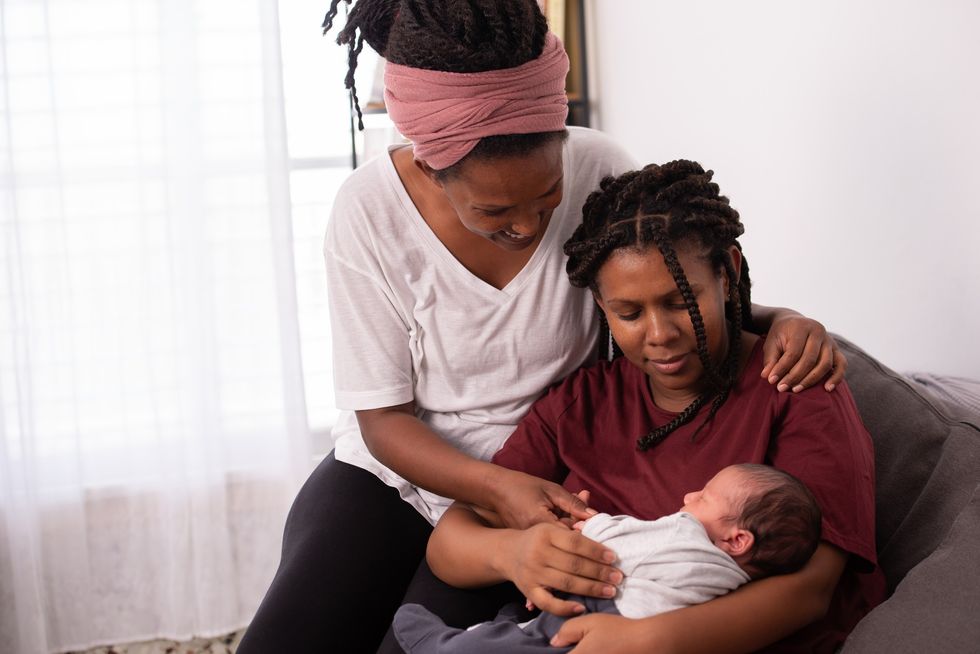
The way that my particular doula services work is I come into the pregnant mom’s life during the beginning of her third trimester and then stick around for a month following her giving birth to her child. That way, I can monitor any potential signs of postpartum depression, give her partner a break (yes, fathers have needs that shouldn’t be ignored during that time, too), and I can help around the house if the mom is too tired or physically not up to doing things like washing dishes or even changing her baby sometimes.
Although I do this naturally, the technical term for this type of doula is a postpartum doula. And even though we're all given information on how to provide postpartum care during “doula school,” a postpartum doula’s training is focused especially on how to support moms and babies after mom gives birth.
This can include doing all of the things that I already mentioned, as well as offering breastfeeding assistance (because it can sometimes take a minute to figure it out, trust me), running errands, preparing meals, helping out with other members of the family (like the other children) — some postpartum doulas will even spend the night a few nights a week so that the mom can get some quality rest.
Indeed, one of my favorite things about a postpartum doula is that while a baby nurse mostly only focuses on the newborn’s needs, a postpartum doula helps the entire family. Yeah, they are pretty bomb and can be a real godsend on a billion different levels. For information on how to find a doula or postpartum doula, click here. For information on how to become a DONA-certified doula, click here.
____
This one was lengthy (even for me — LOL), yet I hope you can see why it needed to be.
Halle, thanks again for bringing this issue to light. I salute you.
Having a baby is miraculous. New moms deserve all of the support that they need once they do it.
Let’s make things inbox official! Sign up for the xoNecole newsletter for love, wellness, career, and exclusive content delivered straight to your inbox.
Featured image by