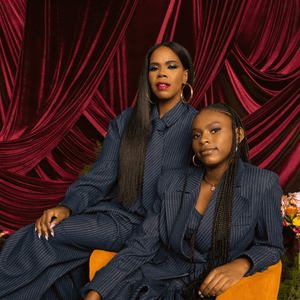
Black women emcees have been an essential part of sculpting hip-hop music since the late '70s. The genre has grown from the streets of New York City to become one of the most influential musical genres in the world. Though hip-hop is still a very male-dominated industry, women have made their way of snatching the sound and owning their place in the industry.
When female rappers entered the scene, they showed up with bars as prolific or better than their male counterparts — dressed from head to toe in a sexy tomboy flair that was beyond captivating on stage. Black women emcees have created their own lane, starting from battle rapping about systemic challenges in the Bronx, N.Y., to going all the way "Up" with Cardi B celebrating sexual liberation.
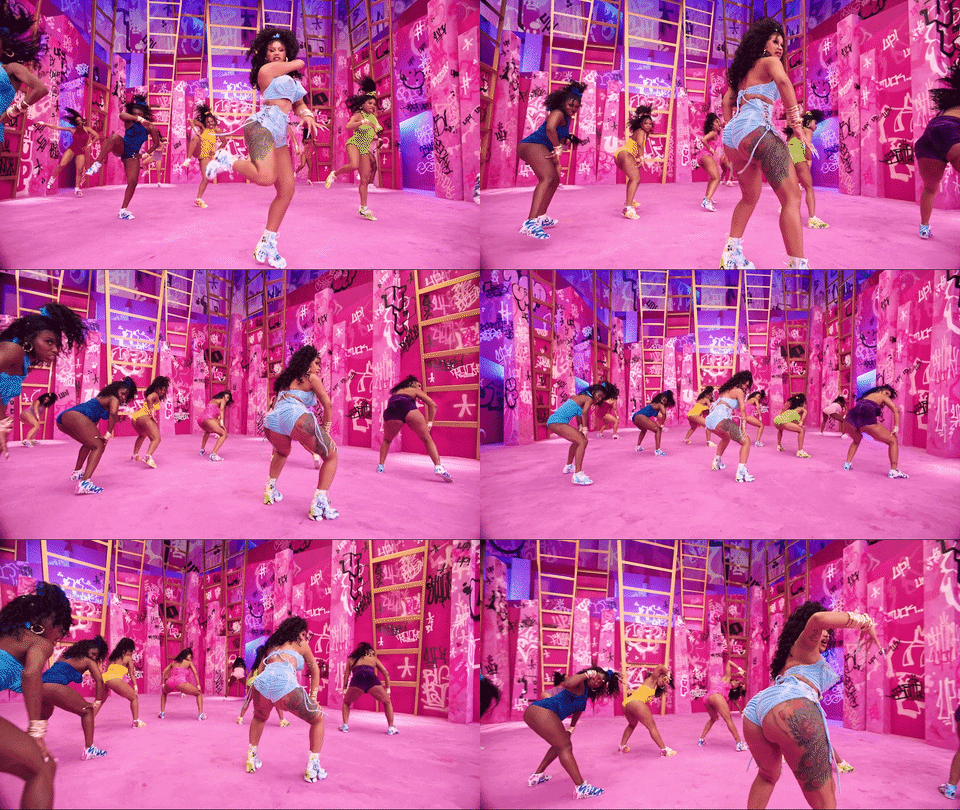
However, some of the biggest challenges in hip-hop music lie in the lack of radical feminism in the genre that shows a vast display of Black women artists of every shade, size, and sexuality—without being hypersexualized. They all need to be seen and celebrated as a mass-market artist.
Over the last few generations, the evolution of hip-hop's purpose and sound has changed dramatically—mainly for mass production and consumption. That's expected because change is inevitable in every form of music, but hip-hop is unique. It was used to amplify the voice of the unheard and highlight systemic oppression related to race and class issues. However, its hypermasculine aspect has always made combating sexism one of the most complex areas to address and has posed a challenge to forging progressive, long-term opportunities for Black women rappers.
Hip-hop scholar Kylie Thompson states in the analysis, When Feminism Meets Hip-Hop, "Some female hip-hop emcees have been able to challenge the sexist culture of the industry and assert a black feminist voice; albeit the large-scale commercialization of hip-hop makes it especially difficult for women's voices to be heard in a political context that runs counter to pervasive patriarchal structures. Thus, women must carefully adapt, form, and manipulate language in order to make their music both marketable and political."
These circumstances have made it significantly more difficult for women rappers to compete in a market that could care less about women succeeding in it because a high percentage of the content is about objectifying them.
Cardi B Megan Thee Stallion GIF by Recording Academy / GRAMMYsGiphyBlack women emcees carry a different burden on their shoulders: to be Black, female, get the same opportunities as their male counterparts, and remain in high demand on the global charts. Black artists shouldn't just be the backbone to the sound. They should also be the face of the evolved sound.
This is a tribute to icons and holds them accountable so we can all show up better for all Black female hip-hop artists in the game, respectfully!
Let's take a deep dive into the evolution of hip-hop, amplifying the various forms of feminism throughout the genre's history, addressing hypersexuality, colorism, pretty privilege, and body positivity:
Black Feminism in Hip-Hop: Radical vs. Liberal
Before we can talk about the state of Black women artists in hip-hop, we must first broach the subject of feminism and the essence it carries in the music. Though every Black women artist isn't as intentional about being a feminist, most of the world automatically perceives them to be because of the lineage that several Black women iconic emcees started prior. There are two primary forms of feminism that are often conveyed in hip-hop; radical and liberal feminism, they are both needed, but the bigger question is whether they are both as appreciated by today's society.
Radical Black feminism came first because it was the only acceptable way to compete in the market with their male counterparts in the 70s. Hip-hop feminism centers Black women's voices via hip-hop as a means to increase agency, self-definition, and self-determination. Self-definition, according to scholar Patrick D. Bennett, refers to how Black women express their identities and experiences for themselves, while self-determination allows for Black women to choose who or what they want to be. In the documentary My Mic Sounds Nice: The Truth About Women and Hip-Hop, legendary hip-hop artist Roxanne Shantel said, "It wasn't about make-up or having outfits ready, I rapped in whatever I had on when I had a show or battle rap because it was about talent not looks."
In this timeframe of hip-hop, if you weren't a lyricist as a women emcee, you couldn't compete. And Black women rap artists like MC Lyte, Salt-N-Pepa, J.J.Fad, Queen Latifah, and the one-and-only Ms. Lauryn Hill, didn't hesitate to challenge sexism, addressing men and how they talk to or talk about women.
Queen Latifah GIF by VH1 Hip Hop HonorsGiphyHip-hop thought leader Imani Perry has written about this struggle within the male-dominated field, stating, "As a masculinist form with masculinist aesthetics, hip-hop and the art form's masculinist ideals of excellence and competitiveness have often forced women to occupy roles gendered male."
And the freedom men have to be anything they want to be, and most of society enables them without question, isn't the same expectation that applies to women—who are more likely to get harshly criticized by society collectively.
As hip-hop evolved in the 90s, the sound changed dramatically from women hip-hop artists, and liberal feminism became more mainstream and left radical feminism a bit in the shadows of hip-hop instead of it being its main focus. Kylie further states that "liberal feminism boils down to individualism, positing the individual as the 'be-all, end-all of social life. This line of reasoning essentially aims to change or undo the socialization of individuals so that women can have and do what men can have and do." Liberal feminism brought forth undeniable individuality but took away from perpetuating social change and ignored the more significant issue of patriarchy.
In comparison, radical feminism addresses the collective issues the patriarchal system often looks away from. There is space for both radical and liberal feminism. But when it becomes too much of one versus the other, it often becomes detrimental to Black women rappers' progression in the industry.
Hypersexuality orchestrated by female hip-hop artists has become one of today's modern-day forms of feminism — to some, it may be an illusion, and to others, it may be perceived as power. The rise of liberal feminism exploring sexual liberation stemmed from the '90s with female artists Lil' Kim and Foxy Brown, both having an aligned rise in the industry that led to a divine royal battle. They brought unapologetic power to Black women's stance in hip-hop; both of them were phenomenal rappers that everyone wanted to listen to.
If you weren't listening to Notorious K.I.M., you were listening to Chyna Doll. But their sexualized stance also subconsciously brought a lot of pressure to other Black women artists in the industry.
In the documentary, My Mic Sounds Nice: The Truth about Women and Hip-Hop, Missy Elliott talked about feeling that "maybe I gotta go a little tighter to be sexy to be more acceptable," after Kim and Foxy took over the scene.
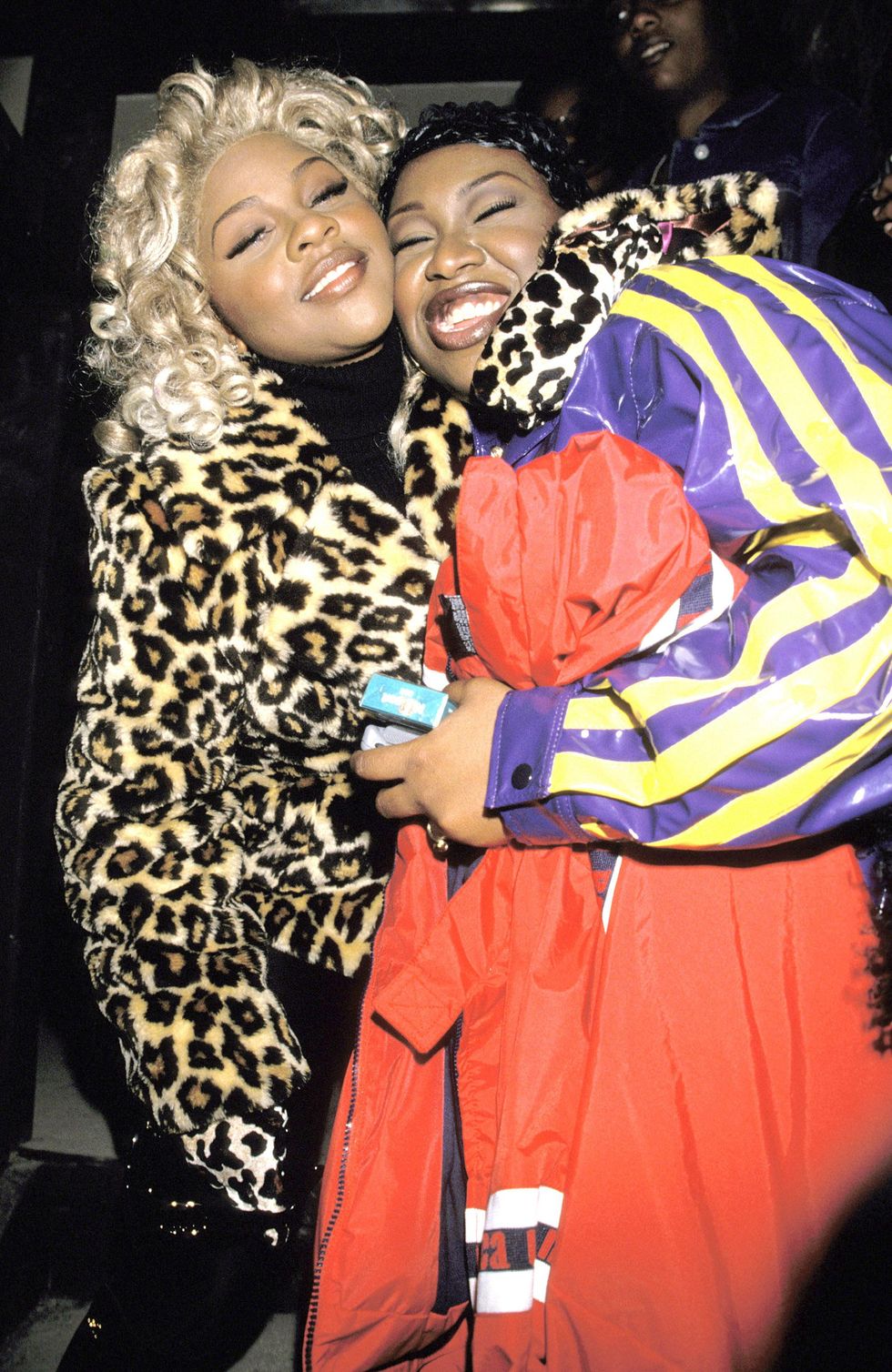
KMazur/WireImage via Getty Images
This changed the game entirely for women emcees and has made it a lot harder for radical women rappers to have a chance at success in mainstream hip-hop because most music today is being based on sexualization and very little content that speaks to the reality of the everyday woman.
Feminist writer Ariel Levy affirmed this further by saying that such a culture isn't progressive when women are capable of acting as participants of their own objectification. So we can't just blame men for objectifying us when now we are taking part in the same perspective to convince society that Black women rappers are enough and are as valuable to their male counterparts and that we'll agree to produce what sells most, delivering a homogeneous perspective of female dominance in today's hip-hop climate.
We have to be held as accountable as our male counterparts if we want to see sustaining change.
Communications studies professor-Jared Ball of Morgan State University wrote, "Today's contemporary hip-hop from women paves a space for these women, instead, to become the representative, as they have been increasingly able to compete and succeed with the men in the same genre. Regardless of artistic intent and the artist's desire to claim agency of their own bodies, these still may not exempt them from objectification."
So though Black women rappers are finally taking up more of the spotlight, their integrity is being challenged based on how they'd like to present themselves. Do all women in the game want to show more skin, or is it encouraged by people behind the lens of those scenarios?
twerk good form GIF by Nicki MinajGiphyTo paint a picture of how powerful hypersexuality is in the industry, let's think of some of the most popular Black women rappers, Nicki Minaj, Cardi B, and Megan Thee Stallion. Though Minaj may be a bit more well-versed in the content she raps about, her biggest hits stem from the hypersexual lens. Lyrics like these featured in her song "Boss Ass Bitch":
P-p-p-pussy like girls
Damn, is my pussy gay?
It's a holiday, Play-With-My-Pussy Day
Pussy this, pussy that, pussy taken
Pussy ride dick like she a Jamaican
Pussy stay warm, pussy on vacation
You loose bitches need a pussy renovation
Y-y-you could eat it with a pussy reservation
P-p-pussy 'bout to get a standin' ovation
Clap, clap, clap for this pussy, nigga
The line, "But I can't give this pussy to a pussy nigga" depicts the imagery of manipulation and power plays gained through sex.
Most of Megan Thee Stallion's Billboard hits are all hypersexualized, from "Body," "Cry Baby," "Thot Shit," and "Savage," to "Hot Girl Summer."
In Stallion's song "Cry Baby," she raps:
Lay on my stomach, toot it up, do the crybaby (crybaby)
Look back, hold it open, now he annihilated (yeah)
Moaning like a bitch when he hit this pussy
Damn, he probably wanna wear my hoodie (ah)
Choke me, spank me, look at me, thank me (thank me)
If I give it to another nigga, he'll hate me (he'll hate me)
Spit, slurp, give him that work
Fell too fast for me, now the nigga hurt."
Cardi B Booty GIF by Megan Thee StallionGiphyAnd as a result of parading the excess liberal feminism, she was recently awarded three Grammys in 2021 for "Best New Artist," "Best Rap Song," and "Best Rap Performance"—so in more ways than one society is fully here for hypersexuality being the center of the conversation.
And Cardi B's Billboard hits like "Up," "WAP," "Wildside" have been in high demand based on the several weeks they stayed glued to the top 10 spots on the Billboard charts. So at this point, their success sets the mark for what's in demand from Black women artists compared to vice versa. Cardi B and Megan Thee Stallion's "WAP" came in at No. 2 on the staff's pick of the best rap songs for 2020, and it spent four weeks as the No.1 spot on the Billboard charts.
Then you have our good sis Nicki Minaj's "Anaconda," which spent 26 weeks at No.1 on the Billboard charts and perpetuates the image that appeals to mass audiences. Because of its success, this type of music will continue to be produced.
In that sense, liberal feminism supersedes the industry beliefs of radical feminism and its ability to sell. Sex sells, and songs about the collective do not.
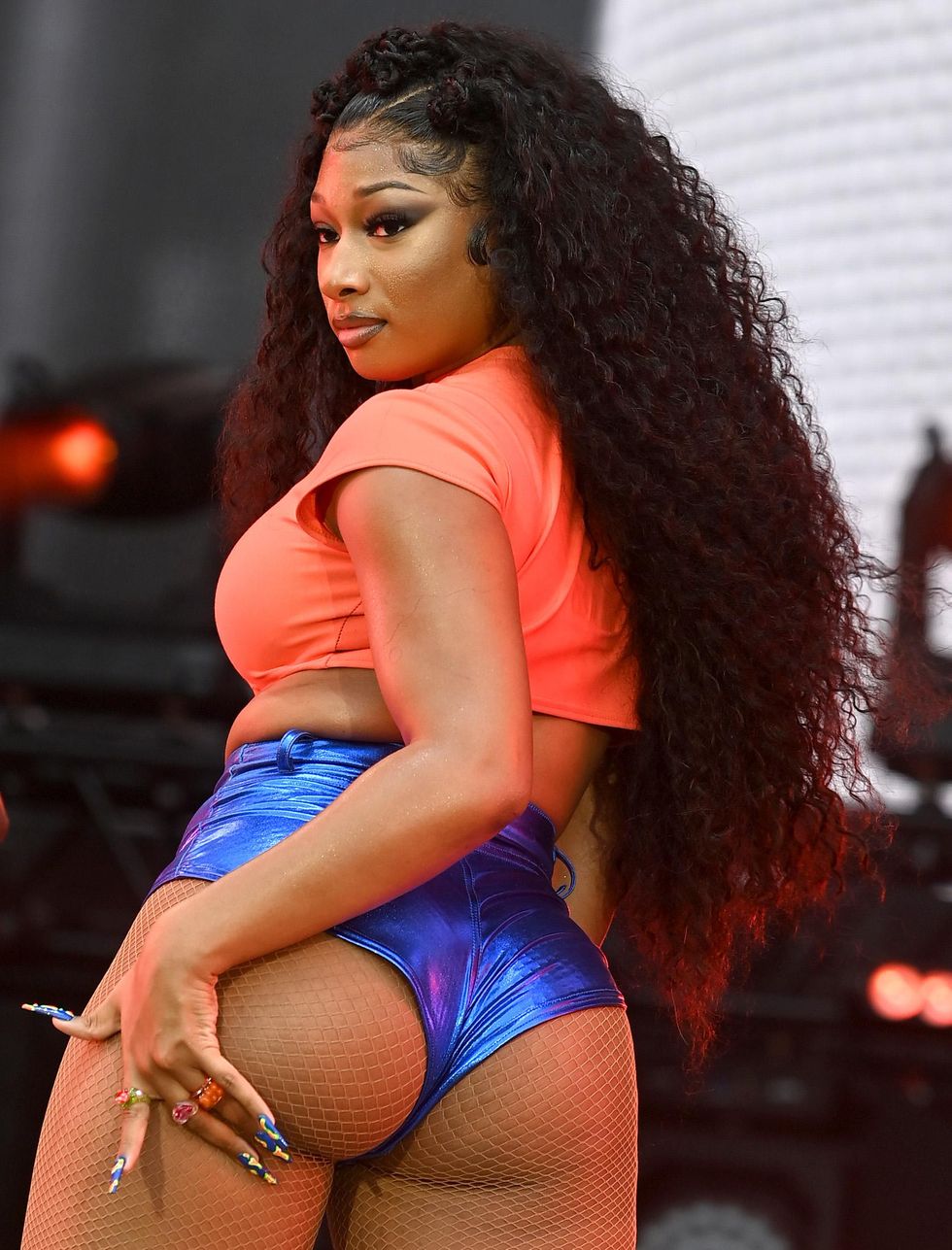
Paras Griffin/Getty Images
The one-and-only Lauryn Hill's "Doo Wop (That Thing)," produced in 1998, was No. 1 on the Billboard charts for 22 weeks? The insanely talented and lyricist Missy Elliott still doesn't have a Billboard No.1 hit to this day, which is disheartening because of the impact she has had on hip-hop music, coming through with unmatched energy and bars as charismatic as any man or woman before or after her—yet it is not as valued collectively by music executives and society.
Where does the hip-hop industry allow women like Rapsody, Tierra Whack, Noname, Chika, and Little Simz the same opportunity to shine like most mainstream women artists that often project the homogeneous lens to thrive and compete in this highly ego-driven industry?
Pretty Ugly GIF by Tierra WhackGiphyIn many ways, we can't fully blame liberal women artists because they are trying to compete in a market that was never built for them, but the question is at what cost? Hip-hop scholars mentioned, "Many women have turned to claim or embrace their sexualities under the guise of true empowerment because they feel valued as a sexual object... But this liberal sexual empowerment, claiming the right to assert the individual agency to sexualize oneself, is only an illusion because the power given still comes from men and the male gaze."
And the biggest question of them all is why are most mainstream Black women artists light skin, bi-racial, or racially ambiguous, and the majority of the underground women rappers are dark skin women?
It's far from ironic that this is very much on script with the extensive history of colorism that affects Black women more than Black men in the music industry.
Colorism, Pretty Privilege And Body Positivity In Hip-Hop
Colorism to many ears may come off like a tiresome topic, but it's a very much-needed conversation in regards to dark skin Black women being misrepresented in the industry. And often, feelings of inadequacy crafted by colorist themes materialize in Black female rappers as well. Years ago, Lil' Kim spoke about her deep-rooted insecurities based on her complexion and body, leading to her extensive obsession with tons of cosmetic surgeries and skin bleaching.
Kim stated, "I have low self-esteem, and I always have. Guys always cheated on me with women who were European-looking. You know, the long-hair type, really beautiful women that left me thinking, 'How can I compete with that?' Being a regular black girl wasn't good enough."
Lil' Kim's struggle with being a "regular Black girl," and the apparent rejection of her Blackness by Black men even before entering the rap industry shows that America's European standards of beauty produce a proclivity for light skin by men and a lack of self-confidence in Black women, as seen in Lil' Kim.
lil kim GIF by VH1 Hip Hop HonorsGiphyWith these European standards of beauty palpable in every part of the media and pop culture, its presence in rap is not nonplus. However, rap could change this narrative of "light is right." That toxic mindset and pretty privilege often co-exist in the hip-hop industry, allowing many individuals instant success if they fit a certain aesthetic. An interesting exception was when Saweetie went viral after she dropped her single "Icy Girl" and Hot 97's Ebro Darden didn't perpetuate the same narrative during an interview in February 2018. He described her freestyle as "basic" and mentioned she needed to work harder to "impress" him.
Regardless of his commentary, the bar is very low for certain female rappers to have easy access to success over their peers based on complexion. The industry is not as much fixated on thought-provoking lyrics and their impact. When you add the layers of additional intersectional walks of sexuality, particularly darker shades of women, and fatphobia–there is an inevitable amount of trauma and rejection to work through.
2018 GIF by BET Hip Hop AwardsGiphyGrammy-nominated artist Chika told The Root, "I am not the spokesperson for body positivity. I'm not the spokesperson for being dark-skinned. I'm not the spokesperson for having a nappy-ass dread head. I am none of those things. Stop asking me questions that you should figure out for yourself."
The reality is Black men aren't pressed because they are dark-skinned or wear their fades or cornrows, but Black women are often trolled for their Blackness, and the guidelines are incredibly rigid and overwhelming to maneuver through. It's like just being Black and a woman is a more significant problem.
When white women wear the same hairstyles and get the additional surgeries enhancements, it's edgy and glorified, but let a Black woman be herself, and it's a problem. In Lizzo and Cardi B's song "Rumors" the duo challenges stereotypes of their personal trauma of not ever feeling like they amount too much, Lizzo is tenaciously working through fatphobia commentary.
And Cardi B recently addressed rumors about her BBL and other surgeries to enhance her assets. The reality is, there have been underlying, deep-rooted issues in hip-hop that normalize the practice of artists suppressing their pain and insecurities.
This needs to be dismantled so Black women artists can have the space to not always feel like they need to take life-threatening measures for validation or to compete.
The Future For Black Women In Hip-Hop
Saweetie Dojacat GIF by Trés SheGiphyThe moral of the story: We need the balance of both worlds—radical and liberal feminism. There is room for both conversations to be had; everything does not revolve around sex, we can also make space to address the other hundreds of topics that we face as women. The market is currently too fixated on one area over another. And it continually takes away many opportunities from radical artists and leaves women questioning their integrity regarding showing more skin than they're comfortable with to be competitive in this market.
Some of the things women mainstream rappers can do to help shed light on rappers opposite of them is to seek them out and propose a collaboration. Whether it be a single, being an opener at their show, or just promoting their work to change the narrative of there being only one main type of women rapper in today's hip-hop.
The world may have found ways to commodify the sound, but there is power in unity and sculpting a new art form of hip-hop music.
Featured Image via Giphy
- Saweetie Quavo Success - xoNecole: Women's Interest, Love ... ›
- The 'Fits You Missed From The 2021 BET Hip Hop Awards Red ... ›
- This Hip-Hop Medium Became A Self-Made Millionaire By Walking ... ›
- Meet The Hip-Hop Herbalist That's Merging Trap Music & Holistic ... ›
This Is How To Keep 'Holiday Season Stress' From Infecting Your Relationship
Hmph. Maybe it’s just me, but it seems like there is something really weird happening in the fall season air (because winter doesn’t officially begin until December 21) that cuddle season is in full swing while break-up season is as well. In fact, did you know that break-ups are so popular during the holiday season that December 11 is deemed Break-Up Day?
The reasons why relationships shift around this time vary; however, I did both roll my eyes and chuckle when I read that a very popular one is because it’s an easy way to get out of getting one’s significant other a Christmas present. SMDH.
Anyway, I personally think that the less shallow folks out here may contemplate calling things “quits” or they at least distance themselves a bit from their partner (and what I’m referring to is serious relationships) due to all of the stress and strain that oftentimes comes with the holidays whether it be financial, familial, due to their tight schedules or something else.
Listen, I would hate for you and your man to miss the fun and happiness of experiencing this time of year, all because you are so overwhelmed or irritated that you can’t really enjoy it. That’s why I have a few practical tips for how to avoid allowing the typical holiday season stress from INFECTING your relationship.
Manage Your Expectations
GiphyUnmanaged expectations. If there is a main reason why the holiday season tends to be so stress-filled for so many people, I’d bet good money that this is the cause. And when you’re in a long-term relationship, expectations can manifest themselves in all sorts of cryptic and/or unexpected ways. You might have relatives who assume that you are going to be with them for Thanksgiving or Christmas when you have other plans in mind. You might be thinking that you are going to spend one amount for presents while your man is thinking something totally different. When it comes to scheduling, your signals may be crossed.
And you know what? To all of these scenarios, this is where clear and consistent communication come in. Don’t assume anything. Don’t dictate anything either. From now until New Year’s, mutually decide to check in once a week, just to make sure that you are both on the same page as it relates to the holidays and what you both are thinking will come along with it. The less blindsided you both feel, the less stressed out you will be. Trust me on this.
Set (and Keep) a Budget
GiphyOkay, so I read that last year, 36 percent of Americans incurred some type of holiday-related debt. Hmph. Last year, there was still some sense of normalcy in this country, chile, so I can only imagine what finances are gonna look like over the next several weeks. That said, since I don’t know a lot of people who don’t find being broke stressful, make sure that you and your bae set a budget and then stick to it this year — no ifs, ands or buts.
Because really, y’all — it doesn’t make sense to deplete savings and/or max out credit cards for a few days of giggles only to be damn near losing your mind because you don’t know how to make ends meet come Dr. Martin Luther King, Jr. Day.
And by the way, this tip doesn’t just speak to things like food and gifts; I also mean travel. If it doesn’t make a ton of sense (or cents) to be all over the place this year — DON’T BE.
Keep Matthew 5:37 at the Forefront
GiphyIf off the top of your head, you don’t know what Matthew 5:37 says, no worries, here ya go: “But let your ‘Yes’ be ‘Yes,’ and your ‘No,’ ‘No.’ For whatever is more than these is from the evil one.” That verse right there? Oh, it’s a boundaries lifesaver! I say that because do you see “maybe” or “I’ll think about it” in there? Nope. LOL. It says that you should tell people “yes” or “no” and leave it at that — and that complements Anne Lamott’s quote, “’No’ is a complete sentence” impeccably well. Yeah, you’ve got to remember that anything beyond a yes or no to a request is privileged information; you don’t owe anyone details or an explanation.
Besides, if you are really honest with yourself, when someone asks you something and you give a “Umm, let me think about it” kind of reply, more times than not, you already know what your answer is going to be — so why not let you both off of the hook? Give your response. Commit to that. And let everyone (including yourself) get on with their lives and schedules.
I promise you that when it comes to those holiday parties, you are pissing more folks off by not RSVP’ing or doing so and not showing up than just saying, “Thank you but not this year” off the rip.
Remember That Your Personal Space Is Privilege Not a Right
GiphyA friend of mine recently bought a new house and invited me over to come see it. He’s a single man with no children, so as I was taking in all of the space that he had, especially as I walked through his finished basement, I joked about relatives coming to live with him. “Hell no” and “absolutely not” were pretty much his immediate responses as he went on to say that some folks even had the nerve to be offended when he told them that he had no intentions on taking DNA in.
Ain’t it wild how people think that your stuff is their right? And yes, that brings me to my next point. Your home is your sanctuary space. If you want to host folks this year — cool. If not, ALSO COOL. Please don’t let folks (family included) guilt you into how they want you to act or even into what they would do if the shoe was on the other foot. You are not them — and as one of my favorite quotes states, “If two people were exactly alike, one of them would be unnecessary.” (A man by the name Larry Dixon said that.)
Hell, my friends? They know that I am good for sending them random things that they need or even want all throughout the year. Coming over to hang out at my pace, though. Uh-uh. Chalk it up to being a card-carrying member of the ambivert club yet I like keeping my living space personal — and I sleep like a baby, each and every night, for feeling that way.
Always remember that your space, your time, your resources, your energy and shoot, yourself period (including your relationship), are all things that are your own. You get to choose how, when and why you want to share them. The holiday season is certainly no exception.
Cultivate Some “You Two Only” Traditions
GiphyIt’s not uncommon for some couples to hit me up after the holiday season to “detox.” Sometimes it’s due to the financial drama (and sometimes trauma) that they experienced. Sometimes it’s because they allowed their relatives (especially in-laws) to get more into their personal business than they should’ve. More than anything, though, it tends to be because they didn’t get enough quality time together and so ended up feeling “disconnected.”
Please don’t let that happen. Listen, I’m not even a holidays kind of woman and yet, I will absolutely sit myself down with some hot chocolate and chocolate chip cookies to enjoy a Hallmark holiday film or two. Aside from the fact that most of them are lighthearted and sweet, I also like that they usually focus on couples loving on each other amidst all of the holiday beauty and ambiance — which is something that all couples should set aside some time to do.
Maybe it’s a vacation. Maybe it’s a staycation. Or maybe it’s my personal favorite, A SEXCATION. Whether it’s for a few days, the weekend or even overnight — don’t you let the holidays go by without setting aside time for you and your man to celebrate one another. Don’t you dare (check out “Are You Ready To Have Some Very Merry 'Christmas Sex'?”).
GET. SOME. REST.
GiphyI once read that 8 out of 10 people get stressed out over the holidays and 3 out of 10 lose sleep during to it — and when you’re stress-filled and sleep-deprived, that can absolutely lead to hypersensitivity, making mountains out of molehills and even not being in the mood for sex.
Your relationship can’t afford to go through any of this, so definitely make sure to prioritize rest. I don’t care how unrealistic it might seem during this time, sleep should never be seen as a luxury; it will always and forever be a great necessity.
That said, try to get no less than six hours of shut-eye in (check out “6 Fascinating Ways Sex And Sleep Definitely Go Hand In Hand”) and even ask your bae to take a nap with you sometimes (check out “Wanna Have Some Next-Level Sex? Take A Nap, Sis.”). Not only will sleep help to restore your mind, body and spirit but, when it’s with your partner, it’s an act of intimacy that can make you both feel super connected, even in the midst of what might feel like chaos.
___
Holiday season stress is real. Still, never give it the permission or power to throw your relationship off. Put you and your man first and let the holidays be what they are gonna be, chile.
Let’s make things inbox official! Sign up for the xoNecole newsletter for love, wellness, career, and exclusive content delivered straight to your inbox.
Featured image by Shutterstock
'Constant Reassurance' Is The Relational Orange Flag No One Wants To Address
Read more than scroll. Boy, if there is a motto that I would encourage people to implement, now more than ever in their life, it would be how important it is to read (actual books, researched data and fact-based information) over merely scrolling via social media. Because boy — every time I look out on apps to see what folks are talking about, I don’t know if I’m impressed with or appalled by how many nothing-more-than-emotionalized opinions are so boldly stated when, after five minutes on Google, it’s clear that there are virtually zero facts to back them up.
Not to mention the fact that so many folks literally don’t read (you know, past skimming) anymore — and yes, I have stats to prove it. I recently read that back in 2022, reportedly, a little over 48 percent of people read one book over the course of that entire year (that is not a good thing and proves that book reading is on a steady decline). Meanwhile, the amount of time that is spent on social media: 2.5 hours on a daily basis. That’s 150 minutes of listening to folks just say…whatever. And if you listen to it long enough, you could actually start believing it as gospel.
This includes what I am going to touch on today: the belief that if someone really cares about you, they should constantly reassure you. Y’all damn near are gonna have me join the world of social media again, just to address this one fallacy. For now, though, I’ll settle for making some points via this article — because as you can see from the title, I don’t agree with that conclusion at all.
In fact, I personally believe that thinking this way is a pretty big relational orange — if not red — flag.
Reassurance. And What It Does for a Child.
GiphyIf you’ve read enough of my content, you know that I am big on word definitions — and when it comes to the word “reassurance,” the meaning alone explains why this article has the title that it does:
Reassurance: something, such as information, praise, or an action or gesture, that soothes, comforts, or restores to confidence
Reassurance restores confidence. Bookmark that, please. I will certainly circle back to that point before I am done.
Okay, so when it comes to, say a child, there is absolutely a place for reassurance. That’s because they are still in the process of significant self-development and so they need reassurance in order to feel safe, secure and loved. It’s also a way for them to establish trust in others.
However, did you know that many mental health experts say that if a child deals with, say anxiety, constant reassurance can actually be counterproductive because they can start to rely on external validation to emotionally stabilize them instead of learning how to remain calm and relaxed on their own (yeah, bookmark that too)? Some other ways that constant reassurance can become potentially problematic is it can cause kids to create problems that don’t exist, to overthink and to jump to the wrong conclusions (hmm…very interesting).
And so, already, we’re seeing something pretty interesting, right? Although reassurance has its place, too much of it, even for kids, typically ends up doing more harm than good.
Let’s keep building.
How 'Lack' As a Child Can Manifest As an Adult
GiphyOkay, so we just touched on how constant reassurance can be counterproductive for an anxious child. Now what about when that child grows up? If they never learned how to properly and effectively deal with their anxiety, what then? Well, this is where attachment styles can very easily come into play — especially since one of them is literally called “anxious attachment style.”
Anxious attachment style is rooted in insecurity. It typically stems from experiencing the type of dysfunctional upbringing that resulted in one or both parents being unpredictable or inconsistent in their caregiving approach and techniques. As a result, the child deals with things like fear of abandonment or rejection and, without healing from that, they become an adult who is pretty much the exact same way.
In relationships, it can manifest in them being extra clingy, codependent, super jealous, controlling or — catch it — someone who is always looking for validation and reassurance.
Hmph. Did you catch that? Did you really catch that? Needing constant reassurance in a relationship IS NOT something that should automatically come with a relationship. In fact, if you’re someone who has this type of need or even expectation, there’s a really good chance that what you actually need is therapy — not for your partner to work harder to make you feel better about yourself or the relationship.
Which brings me to my next point.
Relationships Can Be Therapeutic. They Aren’t Therapy, Though.
GiphySomething that some of my clients will tell you that they’ve heard me say, more than once I might add is, “PARENT and PARTNER are not palindromes.” A palindrome is a word (line, sentence, etc.) that is the same whether it is spelled backwards or forwards — and while, of course, parent and partner couldn’t qualify as being that, what I mean is there are far too many people who think that partners should pick up where parents left off and/or dropped the ball — and that is a super unhealthy approach to relationships. Come to think of it, not only is it unhealthy but really unfair as well.
This is exactly why I’m not big on phrases like “the princess treatment” in adult relationships. A princess is the daughter of a king while a queen is the wife of one. For a grown woman to expect a man to do what a father did for her as a child without accepting that as an adult, there are far more responsibilities as a wife that comes into play? Yep, that is toxic thinking.
And you know what? So is expecting your partner to overcompensate for where your father and/or mother didn’t show up in the way that they should have. That is not your partner’s fault, their role or their assignment while dating you. If you feel otherwise, it really is time to speak with a professional who can help you to do a bit of “reprogramming” in your thinking because, for you to feel and/or assume that since your parents didn’t make you feel confident and secure or teach you how to value yourself, your partner should work overtime to make up for it? There is not one thing that is healthy, mature or emotionally solid about having that type of mindset.
And that is why I am also good for saying that, although relationships can be therapeutic (healing), they should never EVER be seen as therapy. Therapists are trained to deal with the mental and emotional challenges that people have. On the other hand, no one should expect their partner to have the knowledge and expertise that professionals do — and while we’re here, partners also shouldn’t trust that someone who needs the assistance of a therapist to become whole (again) would know exactly what steps are required for that to happen.
So yeah, if you’re someone who thinks that being loved means that someone needs to constantly make you feel good about yourself or secure in the relationship — you probably do have an anxious attachment style. See a professional to get that confirmed, though. Because no one should have to make you feel valued or worthy. That is an inside job.
And this brings me to my final point.
It’s Not Fair to Want Someone to Love You More than You Do
GiphyFor this last point, something that Christ once said immediately comes to mind:
“No one puts a piece of unshrunk cloth on an old garment; for the patch pulls away from the garment, and the tear is made worse. Nor do they put new wine into old wineskins, or else the wineskins break, the wine is spilled, and the wineskins are ruined. But they put new wine into new wineskins, and both are preserved.” (Matthew 9:16-18 — NKJV)
A lot of times, Christ spoke in parables because it was easier for people to get where he was coming from (Matthew 13:13). Anyway, along these lines, what would be the point in pouring a liquid into a bottle that has a hole in it? It’s not built to contain and maintain the fluid and so, no matter how delicious the drink may be, no matter how many times it’s poured into the bottle, the bottle is never going to remain full — because it has cracks in it.
BOOKMARK THAT.
My fourth baby’s daddy (check out “Why I Named The Children I Aborted”), while we were in the process of our “exit interview” (which is what I choose to call it) of our dynamic, he said something that has always stayed with me: “Shellie, your biggest problem is you receive compliments are revelations when they should be seen as confirmations.” Hmph. The irony of HIM saying that is kind of a trip and yet, at the time when we were experiencing each other, he was exactly right. I should’ve never had such a low sense of self-worth that whatever a man said to me had me so in awe that I either felt extremely grateful or became super addicted to his validation.
And y’all, that is exactly what needing constant reassurance looks like — because why does someone need to keep telling you that you are beautiful, keep saying that you are wonderful, keep letting you know that they want to be with you — keep restoring your confidence in yourself and in your relationship with them?
In other words, why should they work harder at making you feel good about yourself and solid in your relationship than you are willing to? Isn’t that just like pouring liquid into a broken bottle?
There is someone in my family tree who I had to distance myself from because he kept venting to me about his marriage and the fact that his wife was just like this. Sadly, it was never (and I do mean NEVER) enough that he chose her — whenever she felt some type of way about herself, here she came looking for him to fill her voids. After a couple of years of the nonstop needs for reassurance, he was worn out from doing it and I was exhausted from hearing about it. He was too scared to call her out and she was too unaccountable to get the real help that she needed. Whew. Toxic on top of toxic.
So Shellie, what are you saying — that we shouldn’t expect compliments, affirmations, support and encouragement in our relationships? Chile, if that is what you got out of this, you are choosing to think that way because that couldn’t be further from where I am coming from.
Again, you’ve got to remember what reassurance means: it’s about restoring confidence. A compliment is “an expression of praise, commendation, or admiration” yet if you already know that you are pretty, smart, funny, whatever, someone telling you that isn’t “building your confidence;” it’s cosigning on something that you are already aware of. Encouragement is about inspiring or stimulating someone and so yes, of course, the right partner is going to want to see you win in life and so they are going to offer up influence and motivation to help you — but what if they aren’t there?
Shouldn’t you be able to encourage yourself? ABSOLUTELY. However, expecting them to restore your confidence due to things that have nothing to do with them or because you simply lack self-confidence? That is not how relationships are to go. If you aren’t sure of yourself (which is a foundational definition of confident), get to the root of why and then figure what you need to do to become sure — that way, your partner doesn’t have to constantly “fill you up;” actually, what they do will be surplus instead of void-filling because your “bottle” will be unbroken.
____
I’m telling you, if you pay attention to the relationship side of socials, at least twice a day, someone will talk about how they think that a relationship should entail receiving constant reassurance. Lies on top of lies. No one should think that love means trying to make someone else feel sure about themselves because they don’t know how to do so on their own.
And this is why I say that expecting constant reassurance is an orange, if not red, flag.
Because when you already feel good about yourself, there is no need.
And if you don’t, figuring out how to is an inside job — FIRST.
Let’s make things inbox official! Sign up for the xoNecole newsletter for love, wellness, career, and exclusive content delivered straight to your inbox.
Featured image by Shutterstock


Booty GIF by Doja Cat