


I moved to Vietnam in April 2014 from South Korea to teach English. After living in Korea for two years, and adopting a Korean skin care routine, my skin was pretty flawless. But after my move, my skin rebelled, and I had one of the worst breakouts I'd ever had. Enter my new issues with hyperpigmentation.
It started off with a few pimples that I could keep under control, but by the next year, I had a full-blown acne problem. A combination of the terrible pollution in Ho Chi Minh City mixed with the hot, humid climate left the skin around my chin, cheeks, and jawline a hot mess.
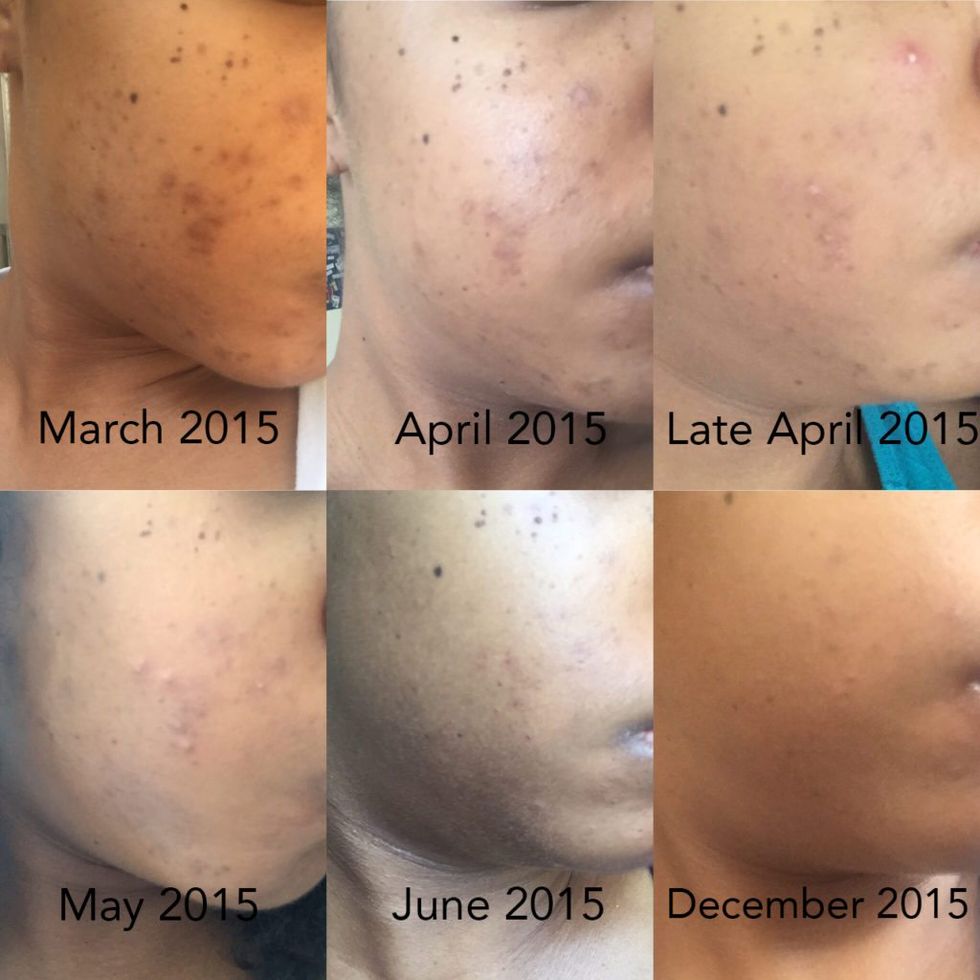
I finally managed to tame the breakout, but I was left with nasty post-inflammatory hyperpigmentation, or PIH for short. It made me self-conscious and I hated going outside without makeup. My skin felt smooth, but looked as if I was a 16-year-old hormonal teenager. No ma'am!

One of my friends introduced me to the world of AHAs, or Alpha-Hydroxy Acids, and my life has forever been changed. AHAs work by gently exfoliating the top layer skin to remove dead skin cells. As a result, using AHAs reveal healthy, younger looking skin, free of PIH.
There are three types of AHAs that I gravitate towards: glycolic acid, lactic acid, and mandelic acid. Glycolic acid is the most common type of AHA. Its molecules are smaller than other AHAs, which is why people typically see faster results using glycolic acid, but it's also more irritating than other types of AHAs. If you have sensitive skin, lactic acid is a better option since it's much more gentle than glycolic. But by far my favorite AHA is mandelic acid. Derived from bitter almonds, mandelic acid is just as effective as glycolic acid, but causes significantly less redness, flakiness, and dry skin. Mandelic acid is also a better choice for Black women as it doesn't cause additional skin discoloration like glycolic acid can.
Armed with my newfound education in AHAs and all that they can do, I incorporated them into my modified Korean skincare routine, and slowly but surely, saw impressive results. After about three months, my skin was completely acne and PIH free! My skin currently looks the best it's ever had, and I'm constantly getting compliments on my glowy skin. It's a far cry from where I was at the beginning of the year!
My nighttime skincare routine goes something like this:
**Note, I only apply AHAs at night as they make your skin sensitive to the sun!**
Step One:
Remove makeup and sunscreen with an oil based cleanser. I love the Illi Total Aging Care Cleansing oil, but you can also use any basic oil like olive oil or argan oil. I personally do not use coconut oil as it's slightly comedogenic and causes me to break out.
Step Two:
Cleanse skin again using a gentle foaming cleanser. One of my all time Korean beauty favorites is the su:m37 Miracle Rose Cleansing Stick. It's so popular, it was discontinued for a while to allow for the company to restock. Next, follow up with a toner. I am obsessed with Son and Park's Beauty Water, an all in one cleaner, toner, and hydrating treatment.
Step Three:
Use an AHA serum/treatment. I like to apply it with my hands instead of a cotton pad as it doesn't waste product. AHA serums are typically a bit expensive, and I like to save money! Gently press the product into your skin and wait between 20 to 30 minutes before moving on to your next skincare step. Why the waiting period? AHAs work at a lower pH, typically less than 4. Applying a moisturizer directly after your AHA treatment increases the pH of your skin, which renders the active ingredients in your treatment useless.
So the waiting period is necessary to allow the AHAs to work their exfoliating magic! I also apply my AHA serum as a spot treatment, to help speed up the healing process of any existing breakouts. While I wait for the AHA to do its thing, I usually get my clothes and lunch ready for the next day. My current favorite is the Vivant Skincare 8% 3-in-1 Mandelic Acid Serum. Paula's Choice is also another great option to find affordable and effective AHA treatment serums.
Step Four:
Apply a hydrating toner or serum. In Korean skincare, most toners are for hydration, not for cleansing. I love theWhamisa Organic Flowers Deep Rich Essence Toner. I have oily skin, but my skin feels pretty dry after applying my AHA treatment, so I make sure to hydrate my skin a ton at night. If you really want to indulge, use a sheet mask for this step. Beautibi is sheet mask heaven!
Step Five:
Apply your moisturizer or facial oil (or if you're like me, both!), and BOOM! You are finished for the night. I'm currently loving the Whamisa Organic Flowers Facial oil, and the Cosrx Ultimate Moisturizing Honey Overnight Mask. I mix them together for the ultimate hydrating boost.
 In the morning, make sure to apply a sunscreen after your moisturizer, and before you apply primer or makeup. As I mentioned earlier, AHAs make your skin photosensitive, so wearing sunscreen during the day is non-negotiable. Don't make the mistake of investing in expensive AHA treatments only to not use sunscreen! My favorite sunscreen is the Biore UV Aqua Rich Watery Essence. It's perfect for oily skinned women, and wears under makeup like magic.
Following this routine, I managed to get rid of my PIH. Now, my skin is bright, clear, smooth and soft. I rarely have breakouts, and my skin is even toned. My biggest bit of advice during this whole process is to be patient and start off very slowly with your AHA treatment. Use the lowest percentage product (3%-5%) possible, twice a week at first. If your skin starts flaking, purging, is red and unusually dry, scale back your use. Once your skin starts adjusting to treatment, you can increase your usage, and then increase your AHA percentage.
I'm currently up to using 8%-10% products and am going to move up to 15%! Adding in AHAs to my skincare routine has drastically changed the appearance of my skin every way! It's not an overnight cure, but the best things come to those who wait!
Related Stories
xoNecole Readers Reveal How They Get Rid Of Dark Spots - Read More
I Got a Chemical Peel to Help My Acne & Here's What Happened - Read More
This Is How You Should Layer Your Skincare Products - Read More
Featured image by Getty Images
- About Face: Sammy Approved - xoNecole: Women's Interest, Love ... ›
- 8 Best Products For Hyperpigmentation - Dark Skin - xoNecole ... ›
- All-Natural Ways To Achieve Flawless Skin - xoNecole: Women's Interest, Love, Wellness, Beauty ›
- The Absolute Best Makeup Removers To Buy - xoNecole: Women's Interest, Love, Wellness, Beauty ›
- How To Treat Hyperpigmentation, 10 Ways ›
- Chemical Peel Experience: Before & After - xoNecole: Women's Interest, Love, Wellness, Beauty ›
- 10 Dry Skin Remedies - xoNecole: Women's Interest, Love, Wellness, Beauty ›
- Chemical Peel: Before During & After - xoNecole: Women's Interest, Love, Wellness, Beauty ›
- Natural Remedies Hormonal Acne - xoNecole: Women's Interest, Love, Wellness, Beauty ›
- Best Vitamin C Serums Dark Spots - xoNecole: Women's Interest, Love, Wellness, Beauty ›
- Adult Acne: How To Get Rid Of It Fast, Naturally - xoNecole: Women's Interest, Love, Wellness, Beauty ›
- The 10 Best Sunscreens For Dark Skin - xoNecole ›
- Post-Inflammatory Hyperpigmentation Treatments - xoNecole ›
- 6 Cleansers Made With Melanin Skin In Mind - xoNecole ›
- This At-Home Chemical Peel Helped Fade My Acne Scars - xoNecole ›
- Hyperpigmentation: What Is It And How to Get Rid of It | Honest ›
- What Is Hyperpigmentation and How Do You Get Rid of Dark Spots ... ›
- How I Cleared My Hyperpigmentation With Snail Mucin: Before and ... ›
- 7 Ways To Treat Hyperpigmentation ›
- Get Rid of Hyperpigmentation Naturally Without a Trip to the ... ›