
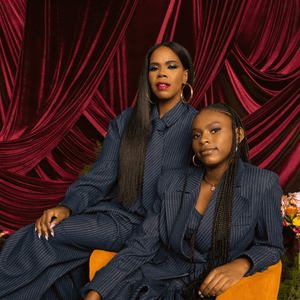
It's a new year but many are facing the same challenges they did in 2024, especially when it comes to employment. National unemployment during the third quarter of last year stood at 6.5 percent, and the highest rates, specific to location, being in Washington, D.C. (10.1 percent) and Kentucky (10.9%). And while this might seem like yet another report of gloom and doom when it comes to jobs for Black folk (I mean, what's new?), we acknowledge but we don't dwell over here.
Plus, if you've found yourself hitting major walls in the job search misadventures, sometimes it's best to take a pause and consider embracing a more radical approach that's less about action and more about inaction. Here's where the anti-work movement comes in. But what does this look like for Black women who literally need that coin to pay bills, take care of their children, splurge on that international trip, or reinvest in a side hustle? Let's get into it.
What Is the Anti-Work Movement?
Back in 2021, Black women led during the Great Resignation, and the Anti-Work Movement also gained steam, with more than 800,000 Reddit users "contemplating unemployment for all, not just the rich," according to Forbes. By 2023, the BBC reports, subscribers contributing to (or at least silently interested in) the conversation increased to 1.7 million.
The whole premise of the Anti-Work Movement centers on redefining what a healthy work environment really looks like. It's about taking companies to task about how well professionals are compensated for their gifts, time, and talents (or not), and to advocate for ways to make money that don't involve giving your blood, sweat, tears, and survival to a company for pennies on the dollar.
With the anti-work movement, there's also a sense of community where people can actually find others who relate to their struggles, who are offering solutions for a better way of working and living, and are calling out companies and managers who accommodate toxic work cultures and systems.
How The Anti-Work Movement Impacts Black Women

Thomas Barwick/Getty Images
With the anti-work movement, there's a sense of fighting for quality versus quantity, prioritizing self-care and balance, and fighting against exploitation, imbalance, and greed. For Black women, this can be essential, vital, and life-saving.
"I am only able to have a life-giving rest practice because I have boundaries that center my divinity. I don’t attach my worth to my accomplishments, to-do list or career," writes Tricia Hershey, founder of the Nap Ministry, an activism and community organization that promotes the liberating benefits of rest, recently wrote on her website. "I truly never have and I’m so grateful for this feat. Even when I was unemployed, I knew deep down I was enough and my life was worth so much. It’s as if capitalism, white supremacy, and patriarchy had not hooked its beast-like tentacles into my being. I had escaped."
And while the Nap Ministry centers on rest advocacy and not on avoiding work altogether, it presents the perfect example of how a shift in strategy and thought process—especially when it comes to the stress and anxiety associated with a high-powered, high-paying job or a very frustrating job search—can totally change your life for the better.
Hershey's insights on unemployment (and the success evidence of her platform to the tune of more than 555,000 Instagram followers, in-demand speaking opportunities, and recent book release) prove that you, too, can survive releasing the stress and reevaluating your why in order to find peace and get your sanity back.
In her research, “You Won’t Break My Soul: Black Women’s Contemporary Anti-Work Philosophies and Post-Work Experiences,” Dr. Sharla Berry, a Southern California scholar and lecturer, explores how Black women are considering and testing out contemporary anti-work philosophies and making shifts that challenge “collective action and policy” and moves toward “individual responses to the problems of work.”
When asked last year about her interest in exploring the topic of anti-work, she indicated that the curiosity was sparked by something she could relate to. “I was doing some research, I guess, to support how I was already feeling and how so many Black people were feeling which is this idea that work is not working for us,” Berry said during a July 2024 interview with Blacktivism In The Academy podcast.
“I think what’s important about anti-work is that it doesn’t necessarily mean that you don’t work,” she continued. “We still live in a capitalistic society, so not working, for many, may not be accessible or practical, though increasingly Black people are to make it, so, and we can talk about that. I think the larger idea is a stance, it’s a way of thinking critically about work, it’s a way of resisting the supremacy of work in your life, it’s an approach to organizing and collaborating around resisting work, and it's a way of thinking about how you lead and the role you take on as a boss, a manager, in your own head and in others’.”
The Unique Ways Black Women Can Embrace Anti-Work Philosophy
For Black women, the foundational concepts of the Anti-Work Movement (and the subsequent self-discovery and self-exploration that can be inspired by it) present its own set of empowering enlightenment, and a rethinking of the return on investment of your grind. (And of course, there are double-edge-sword-like challenges, since we still face workplace discrimination, unequal pay, disproportionate numbers related to serving as head of household (or breadwinner), and oh, there's that disparity of white and socioeconomic privilege related to having limits on our choices when it comes to when, where and how we earn our money.)
There are ways we can empower ourselves by simply considering the different ways of thinking about how we approach work, job seeking, and placing value on how we spend our time. Here's how:
1. Rethink your ultimate overall "why" and how work feeds that "why."
This is especially important during a job search where you're not getting callbacks or you're being offered low-quality experiences for low or inadequate pay. I've experienced this, especially as a self-employed freelancer, and I've walked away from opportunities simply because I'd outgrown them and wanted more, even when I didn't have a Plan B. I just wouldn't settle for other offers to do the same work for the same pay.
I've always enjoyed pouring into others and I find joy in being able to sleep peacefully at night knowing I've made a real, tangible, measurable difference. I like being known for leadership and being visible (and openly rewarded both verbally and financially) for my impact on a company or a team.
I began to think about my bottom line, which wasn't being able to afford designer clothes or a five-bedroom house, but doing work that makes my soul smile while, at the same time, being able to afford to pay affordable basic bills, buy a few dozen new books and art every month, and enjoy the priceless elements of life like friendship, fellowship, and enriching travel experiences.
Consider taking a detour from that hyper-focus on your current industry and work a retail, remote, or gig job. Put some pressure on that side hustle and get it going. Those actions might be the better move than sending that 100th resume for that corporate marketing job.
Sometimes embracing an anti-work approach means downsizing, selling everything and moving to another city or country, finding other ways to finance lodging (ie becoming a resident assistant, live-in nurse, or joining the Peace Corps), or finally monetizing that YouTube channel that's been collecting digital dust. It might be tapping into your artistic side, applying for grants, or unapologetically going hard polyworking until you reach your sabbatical fund goal.
2. Slowly give less power to being booked and busy, and more power to self-reflection and service.
Service opportunities can put you in rooms that might have been closed to you as a random, faceless job seeker. Many CEOs, hiring managers, and executives give of their time and money to various causes, so any time you can set $50-$200 to buy a ticket to a gala or fundraiser, or you can volunteer (for free) for major causes for civic organizations, educational institutions or churches, do it.
Find people you can network with, carpool to save costs and ask for help. The anti-work movement also includes a huge component dependent on community-building and human engagement (as activism always does), so get out of that LinkedIn inbox and out in those volunteer streets.
At one time, when I was in between clients and the bills were piling up, I decided to stop with the follow-up emails and find out how I could use my talents pro bono through Taproot Foundation. I ended up connecting with a savvy nonprofit founder serving youth in Jamaica and helped the organization redevelop elements of its branding and messaging. It was a big boost to my confidence after weeks of nos and no responses and reminded me that there is always light at the end of the tunnel. I was also, shortly after the project ended, able to add to my portfolio for a job I landed.
3. Release the pressure of worrying about what others might think and really lean deeply into your calling through alternative exploration.
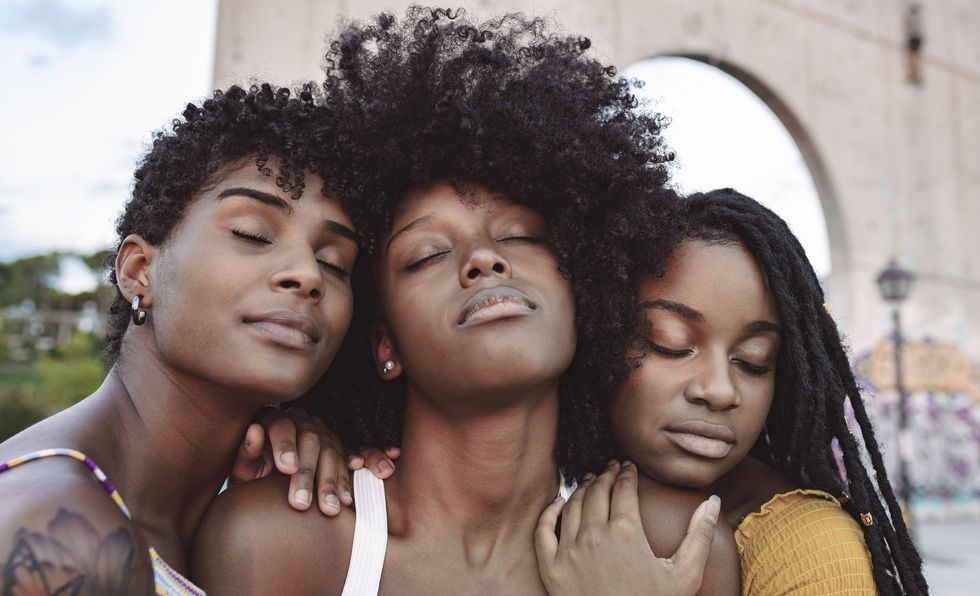
Photo by Westend61/Getty Images
When you're forced to be creative and innovative, it's a great opportunity to see what you're truly made of and free yourself from the leash that is public (or family) approval. Many of us grow up being told that when you're not working you're "lazy," "unaccomplished," or "not winning," and there's this unnecessary shame attached to it for those of us who are accomplished, smart ambitious professionals simply going through the motions of real life.
Whenever I'd find myself unemployed--whether I quit or was let go---I'd hear my Granny's judgmental (but lovingly concerned) voice in my head saying, "How you lose a good job like that?" Sometimes that "good job" is a detriment to our physical and mental health or it can be the one thing that's hindering us from doing what we're truly on Earth to do simply because we're scared of the scorn and shame of quitting. And we have every right to outgrow a role or industry.
Taking some time off of that job search, finding ways to maximize your savings, investments, and other financial support resources, and radically rethinking your approach to making money can definitely help to strengthen your sense of self, your skills, and your ability to overcome anything life throws your way.
Listen, I've worked call center jobs, did DoorDash (where dogs all but attacked me for a huge trough of chicken on a back country road), and even lived off of a severance check for a while with no effort to look for a job at times when I decided to fully release and allow God to do His thing.
Each experience taught me something deeply profound about self-reliance and independence. They reinforced that I am a slave to no job, rejection email, client contract, outstanding bill, or title. I can do all things, as God intended, and I can live fully and abundantly regardless of an economy or unemployment rate.
Let’s make things inbox official! Sign up for the xoNecole newsletter for love, wellness, career, and exclusive content delivered straight to your inbox.
Featured image by vgajic/Getty Images
Because We Are Still IT, Girl: It Girl 100 Returns
Last year, when our xoNecole team dropped our inaugural It Girl 100 honoree list, the world felt, ahem, a bit brighter.
It was March 2024, and we still had a Black woman as the Vice President of the United States. DEI rollbacks weren’t being tossed around like confetti. And more than 300,000 Black women were still gainfully employed in the workforce.
Though that was just nineteen months ago, things were different. Perhaps the world then felt more receptive to our light as Black women.
At the time, we launched It Girl 100 to spotlight the huge motion we were making as dope, GenZennial Black women leaving our mark on culture. The girls were on the rise, flourishing, drinking their water, minding their business, leading companies, and learning to do it all softly, in rest. We wanted to celebrate that momentum—because we love that for us.
So, we handpicked one hundred It Girls who embody that palpable It Factor moving through us as young Black women, the kind of motion lighting up the world both IRL and across the internet.
It Girl 100 became xoNecole’s most successful program, with the hashtag organically reaching more than forty million impressions on Instagram in just twenty-four hours. Yes, it caught on like wildfire because we celebrated some of the most brilliant and influential GenZennial women of color setting trends and shaping culture. But more than that, it resonated because the women we celebrated felt seen.
Many were already known in their industries for keeping this generation fly and lit, but rarely received recognition or flowers. It Girl 100 became a safe space to be uplifted, and for us as Black women to bask in what felt like an era of our brilliance, beauty, and boundless influence on full display.
And then, almost overnight, it was as if the rug was pulled from under us as Black women, as the It Girls of the world.
Our much-needed, much-deserved season of ease and soft living quickly metamorphosed into a time of self-preservation and survival. Our motion and economic progression seemed strategically slowed, our light under siege.
The air feels heavier now. The headlines colder. Our Black girl magic is being picked apart and politicized for simply existing.
With that climate shift, as we prepare to launch our second annual It Girl 100 honoree list, our team has had to dig deep on the purpose and intention behind this year’s list. Knowing the spirit of It Girl 100 is about motion, sauce, strides, and progression, how do we celebrate amid uncertainty and collective grief when the juice feels like it is being squeezed out of us?
As we wrestled with that question, we were reminded that this tension isn’t new. Black women have always had to find joy in the midst of struggle, to create light even in the darkest corners. We have carried the weight of scrutiny for generations, expected to be strong, to serve, to smile through the sting. But this moment feels different. It feels deeply personal.
We are living at the intersection of liberation and backlash. We are learning to take off our capes, to say no when we are tired, to embrace softness without apology.
And somehow, the world has found new ways to punish us for it.

In lifestyle, women like Kayla Nicole and Ayesha Curry have been ridiculed for daring to choose themselves. Tracee Ellis Ross was labeled bitter for speaking her truth about love. Meghan Markle, still, cannot breathe without critique.
In politics, Kamala Harris, Letitia James, and Jasmine Crockett are dragged through the mud for standing tall in rooms not built for them.
In sports, Angel Reese, Coco Gauff, and Taylor Townsend have been reminded that even excellence will not shield you from racism or judgment.

In business, visionaries like Diarrha N’Diaye-Mbaye and Melissa Butler are fighting to keep their dreams alive in an economy that too often forgets us first.
Even our icons, Beyoncé, Serena, and SZA, have faced criticism simply for evolving beyond the boxes society tried to keep them in.
From everyday women to cultural phenoms, the pattern is the same. Our light is being tested.

And yet, somehow, through it all, we are still showing up as that girl, and that deserves to be celebrated.
Because while the world debates our worth, we keep raising our value. And that proof is all around us.
This year alone, Naomi Osaka returned from motherhood and mental health challenges to reach the semifinals of the US Open. A’ja Wilson claimed another MVP, reminding us that beauty and dominance can coexist. Brandy and Monica are snatching our edges on tour. Kahlana Barfield Brown sold out her new line in the face of a retailer that had been canceled. And Melissa Butler’s company, The Lip Bar, is projecting a forty percent surge in sales.

We are no longer defining strength by how much pain we can endure. We are defining it by the unbreakable light we continue to radiate.
We are the women walking our daily steps and also continuing to run solid businesses. We are growing in love, taking solo trips, laughing until it hurts, raising babies and ideas, drinking our green juice, and praying our peace back into existence.
We are rediscovering the joy of rest and realizing that softness is not weakness, it is strategy.
And through it all, we continue to lift one another. Emma Grede is creating seats at the table. Valeisha Butterfield has started a fund for jobless Black women. Arian Simone is leading in media with fearless conviction. We are pouring into each other in ways the world rarely sees but always feels.

So yes, we are in the midst of societal warfare. Yes, we are being tested. Yes, we are facing economic strain, political targeting, and public scrutiny. But even war cannot dim a light that is divinely ours.
And we are still shining.
And we are still softening.
And we are still creating.
And we are still It.

That is the quiet magic of Black womanhood, our ability to hold both truth and triumph in the same breath, to say yes, and to life’s contradictions.
It is no coincidence that this year, as SheaMoisture embraces the message “Yes, And,” they stand beside us as partners in celebrating this class of It Girls. Because that phrase, those two simple words, capture the very essence of this moment.
Yes, we are tired. And we are still rising.
Yes, we are questioned. And we are the answer.
Yes, we are bruised. And we are still beautiful.

This year’s It Girl 100 is more than a list. It is a love letter to every Black woman who dares to live out loud in a world that would rather she whisper. This year’s class is living proof of “Yes, And,” women who are finding ways to thrive and to heal, to build and to rest, to lead and to love, all at once.
It is proof that our joy is not naive, our success not accidental. It is the reminder that our light has never needed permission.
So without further ado, we celebrate the It Girl 100 Class of 2025–2026.
We celebrate the millions of us who keep doing it with grace, grit, and glory.
Because despite it all, we still shine.
Because we are still her.
Because we are still IT, girl.
Meet all 100 women shaping culture in the It Girl 100 Class of 2025. View the complete list of honorees here.
Featured image by xoStaff
Because We Are Still IT, Girl: It Girl 100 Returns
Last year, when our xoNecole team dropped our inaugural It Girl 100 honoree list, the world felt, ahem, a bit brighter.
It was March 2024, and we still had a Black woman as the Vice President of the United States. DEI rollbacks weren’t being tossed around like confetti. And more than 300,000 Black women were still gainfully employed in the workforce.
Though that was just nineteen months ago, things were different. Perhaps the world then felt more receptive to our light as Black women.
At the time, we launched It Girl 100 to spotlight the huge motion we were making as dope, GenZennial Black women leaving our mark on culture. The girls were on the rise, flourishing, drinking their water, minding their business, leading companies, and learning to do it all softly, in rest. We wanted to celebrate that momentum—because we love that for us.
So, we handpicked one hundred It Girls who embody that palpable It Factor moving through us as young Black women, the kind of motion lighting up the world both IRL and across the internet.
It Girl 100 became xoNecole’s most successful program, with the hashtag organically reaching more than forty million impressions on Instagram in just twenty-four hours. Yes, it caught on like wildfire because we celebrated some of the most brilliant and influential GenZennial women of color setting trends and shaping culture. But more than that, it resonated because the women we celebrated felt seen.
Many were already known in their industries for keeping this generation fly and lit, but rarely received recognition or flowers. It Girl 100 became a safe space to be uplifted, and for us as Black women to bask in what felt like an era of our brilliance, beauty, and boundless influence on full display.
And then, almost overnight, it was as if the rug was pulled from under us as Black women, as the It Girls of the world.
Our much-needed, much-deserved season of ease and soft living quickly metamorphosed into a time of self-preservation and survival. Our motion and economic progression seemed strategically slowed, our light under siege.
The air feels heavier now. The headlines colder. Our Black girl magic is being picked apart and politicized for simply existing.
With that climate shift, as we prepare to launch our second annual It Girl 100 honoree list, our team has had to dig deep on the purpose and intention behind this year’s list. Knowing the spirit of It Girl 100 is about motion, sauce, strides, and progression, how do we celebrate amid uncertainty and collective grief when the juice feels like it is being squeezed out of us?
As we wrestled with that question, we were reminded that this tension isn’t new. Black women have always had to find joy in the midst of struggle, to create light even in the darkest corners. We have carried the weight of scrutiny for generations, expected to be strong, to serve, to smile through the sting. But this moment feels different. It feels deeply personal.
We are living at the intersection of liberation and backlash. We are learning to take off our capes, to say no when we are tired, to embrace softness without apology.
And somehow, the world has found new ways to punish us for it.

In lifestyle, women like Kayla Nicole and Ayesha Curry have been ridiculed for daring to choose themselves. Tracee Ellis Ross was labeled bitter for speaking her truth about love. Meghan Markle, still, cannot breathe without critique.
In politics, Kamala Harris, Letitia James, and Jasmine Crockett are dragged through the mud for standing tall in rooms not built for them.
In sports, Angel Reese, Coco Gauff, and Taylor Townsend have been reminded that even excellence will not shield you from racism or judgment.

In business, visionaries like Diarrha N’Diaye-Mbaye and Melissa Butler are fighting to keep their dreams alive in an economy that too often forgets us first.
Even our icons, Beyoncé, Serena, and SZA, have faced criticism simply for evolving beyond the boxes society tried to keep them in.
From everyday women to cultural phenoms, the pattern is the same. Our light is being tested.

And yet, somehow, through it all, we are still showing up as that girl, and that deserves to be celebrated.
Because while the world debates our worth, we keep raising our value. And that proof is all around us.
This year alone, Naomi Osaka returned from motherhood and mental health challenges to reach the semifinals of the US Open. A’ja Wilson claimed another MVP, reminding us that beauty and dominance can coexist. Brandy and Monica are snatching our edges on tour. Kahlana Barfield Brown sold out her new line in the face of a retailer that had been canceled. And Melissa Butler’s company, The Lip Bar, is projecting a forty percent surge in sales.

We are no longer defining strength by how much pain we can endure. We are defining it by the unbreakable light we continue to radiate.
We are the women walking our daily steps and also continuing to run solid businesses. We are growing in love, taking solo trips, laughing until it hurts, raising babies and ideas, drinking our green juice, and praying our peace back into existence.
We are rediscovering the joy of rest and realizing that softness is not weakness, it is strategy.
And through it all, we continue to lift one another. Emma Grede is creating seats at the table. Valeisha Butterfield has started a fund for jobless Black women. Arian Simone is leading in media with fearless conviction. We are pouring into each other in ways the world rarely sees but always feels.

So yes, we are in the midst of societal warfare. Yes, we are being tested. Yes, we are facing economic strain, political targeting, and public scrutiny. But even war cannot dim a light that is divinely ours.
And we are still shining.
And we are still softening.
And we are still creating.
And we are still It.

That is the quiet magic of Black womanhood, our ability to hold both truth and triumph in the same breath, to say yes, and to life’s contradictions.
It is no coincidence that this year, as SheaMoisture embraces the message “Yes, And,” they stand beside us as partners in celebrating this class of It Girls. Because that phrase, those two simple words, capture the very essence of this moment.
Yes, we are tired. And we are still rising.
Yes, we are questioned. And we are the answer.
Yes, we are bruised. And we are still beautiful.

This year’s It Girl 100 is more than a list. It is a love letter to every Black woman who dares to live out loud in a world that would rather she whisper. This year’s class is living proof of “Yes, And,” women who are finding ways to thrive and to heal, to build and to rest, to lead and to love, all at once.
It is proof that our joy is not naive, our success not accidental. It is the reminder that our light has never needed permission.
So without further ado, we celebrate the It Girl 100 Class of 2025–2026.
We celebrate the millions of us who keep doing it with grace, grit, and glory.
Because despite it all, we still shine.
Because we are still her.
Because we are still IT, girl.
Meet all 100 women shaping culture in the It Girl 100 Class of 2025. View the complete list of honorees here.
Featured image by xoStaff