Grief. Boy, if there is one thing that is layered, seasonally intense, and very personalized to each human being (meaning, no one can tell you when or how to grieve), grief would have to be it. And yet, live long enough and you’re bound to experience it — not just in one way either. Grief tends to come with the loss of a loved one. Grief tends to show up via the ending of a relationship (including a friendship). Grief shows up during various types of life transitions.
Grief even reveals itself as you are shedding pieces of who you are (in order to become who you need to be). And that is why I have always appreciated and even resonated with the quote by author Colin Murray Parkes about grief: “Grief is the price that we pay for love.”
Because here’s the thing — just as love has seasons and stages, so does, well, grief: denial, anger, bargaining, depression and acceptance, and what a lot of people don’t tell you is the stages can come in cycles and even overlap. It’s important that when this happens, you are both self-compassionate as well as hypervigilant when it comes to implementing self-care.
And that’s what moved me so about the lead video for this piece (see below), where Regina King (someone who I enjoy and appreciate on so many levels) is talking about where she currently is, in her own grief, almost three years after her son Ian’s passing. In her eyes, there is both sadness (a stage of grief) and resilience (a form of acceptance) and, to me, it serves as a reminder that through grief, we must nurture self. It is essential. It is paramount.
The article continues after the video.
If you are currently in the stage of grieving something or someone, here are 10 things that you can do, physically, to get through — not over but through — what you are currently experiencing. Because another quote that I honor about grief? “Sometimes the healing hurts more than the wound.” (Unknown)
Or, as my mother used to say, “Surgery hurts but it can also cure.” Amen.
1. Do Some Grief-Themed Meditations

Unsplash
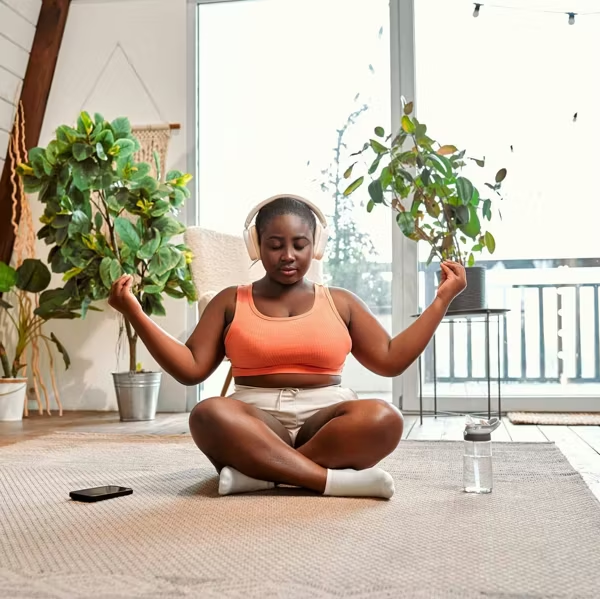
Meditation is something that we’re always gonna back over on this side of the internet because science gives us far too many reasons to. Over the years, research has proven that meditation reduces stress and anxiety, promotes self-awareness and a higher sense of self-worth and it can help you to become more compassionate while improving your quality of rest.
And when it comes to grief, specifically, by getting still enough to feel what you are going through (whatever stage of grief it may be), it can help you to understand what your present needs are, it can encourage you to be kinder and more patient with yourself and it can also reduce your chances of falling into depression. If you would like to tap into this more, check out Mindful’s “A 12-Minute Meditation for Grief and Loss” or go to YouTube and put “grief meditations” in the search field.
2. Use Essential Oils (That Make the Grieving Process Easier)
At this point, I’m really starting to wonder if there is anything that essential oils can’t do. I say that because, over the years, I’ve written articles like, “8 Essential Oils That Will Manifest (More Of) Your Feminine Energy” and “You'd Be Amazed How Much These 10 Essential Oils Can Give You Some Blissful Sleep” — and, believe it or not, there are even oils that can help to bring ease and comfort during the grieving process.
Some of those include lavender (it decreases anxiety); chamomile (it helps to balance your moods); sandalwood (it calms your senses); jasmine (it cultivates peace), and rosemary (it reduces your cortisol levels which basically means that it reduces stress).
To get the most out of these oils, you can either apply them to one of your pressure points, put them into a diffuser and add a couple of drops to your bedding for a more restful night’s sleep.
3. Spend More Time in Nature

Unsplash
There is a chapter in the Bible that says there is a time and season for everything. If you read Ecclesiastes 3 all the way through, you will notice that there are times for death, crying, mourning and losing — it’s all a part of life. And perhaps the reason why nature can help us to get through those things is because it literally goes through seasons of transition; it’s not summer all of the time and it’s not winter all of the time either.
Aside from the “poetic” insights that nature can provide, the American Psychological Association says that doing something as simple as taking a walk outdoors can lower your stress levels, help you to feel happier and it can boost your cognitive abilities. In fact, if you want to bring some nature indoors, plants have a way of also reducing your stress levels and making you physically feel better (since they help to keep indoor pollution down to a minimum).
4. Limit Your Alcohol Intake
It’s not uncommon that, when some people are going through certain stages of grief, they will drink alcohol more often than they usually do. The challenge with that is, although it may feel like an initial stimulant, it’s actually a depressant; this means that it can slow down your brain and make you feel calm at first while also blurring your vision, impairing your judgment and causing you to feel disoriented in the process.
The roller coaster ride of what alcohol can do is why it’s not a good idea to consume a lot of it if you are going through an intense grieving process. Because here’s the thing — it’s not as difficult to develop a dependency on alcohol as you might think; especially if you have a family history of alcoholism or you’ve relied on it as a way to cope with stress or pressures in the past.
5. Up Your Vitamin B, C and Magnesium Doses
Unsplash
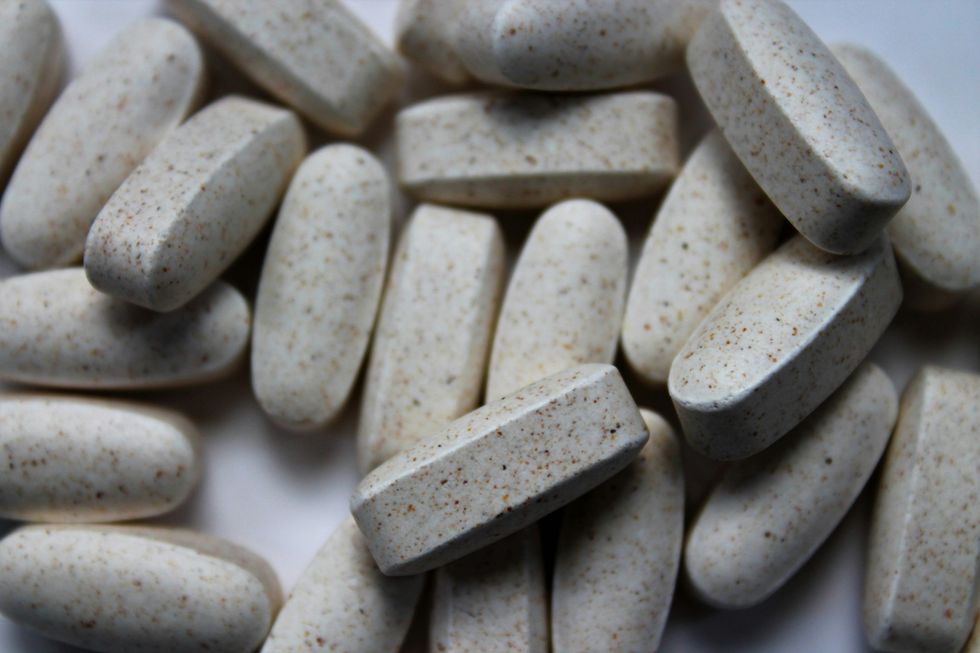
It’s pretty understandable that while you are grieving, you may not have much of an appetite; that’s why it’s important to take supplements in order to get certain nutrients into your system. For instance, B-vitamins help to reduce stress, anxiety and feelings related to depression; vitamin C will strengthen your immunity (because the last thing that you want to be is sick when you’re grieving) and, to keep your cortisol (stress hormone) levels in check, magnesium will help to stabilize your moods.
By the way — foods that are high in “B” include spinach, eggs and beef; foods that are filled with Vitamin C include citrus fruit, berries and yellow peppers, and foods that are packed with magnesium include whole grains, avocados and cashews.
6. Get More Hugs
Not too long ago, I stumbled across an article entitled, “A Hug Only Takes 10 Seconds, Yet the Benefits Last Forever” and it really is true. For one thing, hugs are a physical expression of sympathy, compassion and even empathy — and all of that can help to decrease your stress levels, reduce feelings of fear (yes, literally) and lower experiences of (mild) physical pain and discomfort that you might have. Also, hugs can make it easier for you to express whatever you may be currently going through to other people.
In fact, some therapists say that we need multiple hugs a day, whether we are feeling low/need an extra layer of support or not. How many exactly? Popular therapist Virginia Satir believes this: “We need 4 hugs a day for survival. We need 8 hugs a day for maintenance. We need 12 hugs a day for growth.” So, even if you think that you don’t feel like receiving physical affection, be open to it. A hug can do what all of these other tips simply…can’t.
7. Make Plans for Special Days (That Are Connected to Your Grief)

Unsplash
Ask anyone who has lost someone close to them (whether it was through death, a break-up or life-altering transition of a relationship…of any kind) and they will probably tell you that holidays, birthdays and anniversaries are oftentimes the hardest days to get through. To this, I say, make a point to do something special — whether grand or small — on those days instead of dreading them.
When it comes to my late fiancé, he will have been gone 30 years this November 3. Every year, I will get his favorite Checker’s meal (that man ate Checker’s and pizza more than anything else; it was wild!) and listen to some of his favorite music (The Roots, Biggie, D’Angelo, Faith Evans and Groove Theory…for starters; he used to intern where he would get early releases of things and it was awesome). It always puts a smile on my face to do so because it reminds me that love doesn’t die…it shifts forms.
8. Try a Grief Journal and/or Grief Therapy
So, here’s the thing about journaling — if writing isn’t really your thing (or grieving currently has you feeling pretty close to exhausted most of the time), you can always pull out your phone and record some voice notes. Just remember that there is plenty of research which supports that journaling (of any kind) can help to relieve anxiety, reduce stress and help you to face whatever you are feeling head-on. A bonus? If you journal consistently, it can help you to document the progress that you are making through your feelings and stages of grieving.
The same thing can be said for grief therapy; especially since grief therapists/counselors/life coaches are trained to help you get through whatever season of grief that you might be going through.
And what are some clear indicators that you might need some extra assistance with your grief? You are experiencing suicidal ideations. You seem “stuck” in a stage (especially if it is sadness or anger). You don’t have any reliable support (meaning, you feel like you are dealing with everything that you are going through on your own). You are participating in (potentially) destructive habits or acts of self-sabotage. Your grief is affecting your quality of life (long-term). If any of these apply, please let someone know. There is absolutely nothing to be ashamed of. Again, grief comes to us all.
9. Add More “Comfort” to Your Bedding

Unsplash
Personally, I’m a believer when it comes to color psychology (check out “Understanding Color Psychology Will Sharpen Your Lens On Life” and “This Is How Color Psychology Can Significantly Improve Your Sex Life”) and that is why I definitely think that when you are going through the grieving process, you should consider upgrading/updating your bedding. Since sleep is probably already a challenge for you (because grief elevates stress and stress is tied to restlessness and insomnia), sometimes a change of scenery in your bedroom can feel comforting.
First up, go with colors that cultivate feelings of happiness and security like shades of blue, orange, pink, yellow and green. Invest in a(nother) down or down alternative comforter. Surround yourself with, what I call “stuffed animals for adults” — tons of pillows; they can provide comfort and a sense of protection at night. You need to feel nuzzled in comfort at night — new bedding can help to make that happen.
10. Put Yourself on a Sleep Schedule
As you’re going through the various stages of grief (sometimes more than once), I actually read before that an acute level of it can take somewhere around a year before you settle into a new normal. During that time, your heart rate might randomly speed up, you may experience joint discomfort and headaches, concentrating could prove to be challenging, you might catch colds quicker and easier — and yes, all of this can lead to really struggling with getting to sleep.
Something that can help with this is putting yourself on a sleep schedule. By creating (and maintaining) a sleep schedule for yourself, that can place your circadian rhythm (the 24-hour cycle that helps you to get the kind of sleep that you need) into a routine that can make it easier for you to not only fall asleep but stay asleep — and the more rest you have, the easier it will be to face the grief cycles that you are going through. For other tips on how to get the quality of sleep that you both need and deserve, check out “These Sleep Hacks Will Make Getting A Good Night’s Rest So Much Easier.”
____
Artist Yumi Sakugawa once said, “Sometimes it’s okay if the only thing you did today was breathe.” When you’re walking through grief, please take this especially to heart.
And listen, if you apply even one of these tips to your breathing, pat yourself on the back. You are showing signs of wanting to get through the grief — and that makes you stronger than you will ever know.
Let’s make things inbox official! Sign up for the xoNecole newsletter for love, wellness, career, and exclusive content delivered straight to your inbox.
Featured image by Unsplash

Because We Are Still IT, Girl: It Girl 100 Returns
Last year, when our xoNecole team dropped our inaugural It Girl 100 honoree list, the world felt, ahem, a bit brighter.
It was March 2024, and we still had a Black woman as the Vice President of the United States. DEI rollbacks weren’t being tossed around like confetti. And more than 300,000 Black women were still gainfully employed in the workforce.
Though that was just nineteen months ago, things were different. Perhaps the world then felt more receptive to our light as Black women.
At the time, we launched It Girl 100 to spotlight the huge motion we were making as dope, GenZennial Black women leaving our mark on culture. The girls were on the rise, flourishing, drinking their water, minding their business, leading companies, and learning to do it all softly, in rest. We wanted to celebrate that momentum—because we love that for us.
So, we handpicked one hundred It Girls who embody that palpable It Factor moving through us as young Black women, the kind of motion lighting up the world both IRL and across the internet.
It Girl 100 became xoNecole’s most successful program, with the hashtag organically reaching more than forty million impressions on Instagram in just twenty-four hours. Yes, it caught on like wildfire because we celebrated some of the most brilliant and influential GenZennial women of color setting trends and shaping culture. But more than that, it resonated because the women we celebrated felt seen.
Many were already known in their industries for keeping this generation fly and lit, but rarely received recognition or flowers. It Girl 100 became a safe space to be uplifted, and for us as Black women to bask in what felt like an era of our brilliance, beauty, and boundless influence on full display.
And then, almost overnight, it was as if the rug was pulled from under us as Black women, as the It Girls of the world.
Our much-needed, much-deserved season of ease and soft living quickly metamorphosed into a time of self-preservation and survival. Our motion and economic progression seemed strategically slowed, our light under siege.
The air feels heavier now. The headlines colder. Our Black girl magic is being picked apart and politicized for simply existing.
With that climate shift, as we prepare to launch our second annual It Girl 100 honoree list, our team has had to dig deep on the purpose and intention behind this year’s list. Knowing the spirit of It Girl 100 is about motion, sauce, strides, and progression, how do we celebrate amid uncertainty and collective grief when the juice feels like it is being squeezed out of us?
As we wrestled with that question, we were reminded that this tension isn’t new. Black women have always had to find joy in the midst of struggle, to create light even in the darkest corners. We have carried the weight of scrutiny for generations, expected to be strong, to serve, to smile through the sting. But this moment feels different. It feels deeply personal.
We are living at the intersection of liberation and backlash. We are learning to take off our capes, to say no when we are tired, to embrace softness without apology.
And somehow, the world has found new ways to punish us for it.

In lifestyle, women like Kayla Nicole and Ayesha Curry have been ridiculed for daring to choose themselves. Tracee Ellis Ross was labeled bitter for speaking her truth about love. Meghan Markle, still, cannot breathe without critique.
In politics, Kamala Harris, Letitia James, and Jasmine Crockett are dragged through the mud for standing tall in rooms not built for them.
In sports, Angel Reese, Coco Gauff, and Taylor Townsend have been reminded that even excellence will not shield you from racism or judgment.

In business, visionaries like Diarrha N’Diaye-Mbaye and Melissa Butler are fighting to keep their dreams alive in an economy that too often forgets us first.
Even our icons, Beyoncé, Serena, and SZA, have faced criticism simply for evolving beyond the boxes society tried to keep them in.
From everyday women to cultural phenoms, the pattern is the same. Our light is being tested.

And yet, somehow, through it all, we are still showing up as that girl, and that deserves to be celebrated.
Because while the world debates our worth, we keep raising our value. And that proof is all around us.
This year alone, Naomi Osaka returned from motherhood and mental health challenges to reach the semifinals of the US Open. A’ja Wilson claimed another MVP, reminding us that beauty and dominance can coexist. Brandy and Monica are snatching our edges on tour. Kahlana Barfield Brown sold out her new line in the face of a retailer that had been canceled. And Melissa Butler’s company, The Lip Bar, is projecting a forty percent surge in sales.

We are no longer defining strength by how much pain we can endure. We are defining it by the unbreakable light we continue to radiate.
We are the women walking our daily steps and also continuing to run solid businesses. We are growing in love, taking solo trips, laughing until it hurts, raising babies and ideas, drinking our green juice, and praying our peace back into existence.
We are rediscovering the joy of rest and realizing that softness is not weakness, it is strategy.
And through it all, we continue to lift one another. Emma Grede is creating seats at the table. Valeisha Butterfield has started a fund for jobless Black women. Arian Simone is leading in media with fearless conviction. We are pouring into each other in ways the world rarely sees but always feels.

So yes, we are in the midst of societal warfare. Yes, we are being tested. Yes, we are facing economic strain, political targeting, and public scrutiny. But even war cannot dim a light that is divinely ours.
And we are still shining.
And we are still softening.
And we are still creating.
And we are still It.

That is the quiet magic of Black womanhood, our ability to hold both truth and triumph in the same breath, to say yes, and to life’s contradictions.
It is no coincidence that this year, as SheaMoisture embraces the message “Yes, And,” they stand beside us as partners in celebrating this class of It Girls. Because that phrase, those two simple words, capture the very essence of this moment.
Yes, we are tired. And we are still rising.
Yes, we are questioned. And we are the answer.
Yes, we are bruised. And we are still beautiful.

This year’s It Girl 100 is more than a list. It is a love letter to every Black woman who dares to live out loud in a world that would rather she whisper. This year’s class is living proof of “Yes, And,” women who are finding ways to thrive and to heal, to build and to rest, to lead and to love, all at once.
It is proof that our joy is not naive, our success not accidental. It is the reminder that our light has never needed permission.
So without further ado, we celebrate the It Girl 100 Class of 2025–2026.
We celebrate the millions of us who keep doing it with grace, grit, and glory.
Because despite it all, we still shine.
Because we are still her.
Because we are still IT, girl.
Meet all 100 women shaping culture in the It Girl 100 Class of 2025. View the complete list of honorees here.
Featured image by xoStaff
These Black Women Left Their Jobs To Turn Their Wildest Dreams Into Reality
“I’m too big for a f***ing cubicle!” Those thoughts motivated Randi O to kiss her 9 to 5 goodbye and step into her dreams of becoming a full-time social media entrepreneur. She now owns Randi O P&R. Gabrielle, the founder of Raw Honey, was moving from state to state for her corporate job, and every time she packed her suitcases for a new zip code, she regretted the loss of community and the distance in her friendships. So she created a safe haven and village for queer Black people in New York.
Then there were those who gave up their zip code altogether and found a permanent home in the skies. After years spent recruiting students for a university, Lisa-Gaye Shakespeare became a full-time travel influencer and founded her travel company, Shakespeare Agency. And she's not alone.
These stories mirror the experiences of women across the world. For millions, the pandemic induced a seismic shift in priorities and desires. Corporate careers that were once hailed as the ultimate “I made it” moment in one's career were pushed to the back burner as women quit their jobs in search of a more self-fulfilling purpose.
xoNecole spoke to these three Black women who used the pandemic as a springboard to make their wildest dreams a reality, the lessons they learned, and posed the question of whether they’ll ever return to cubicle life.
Answers have been edited for context and length.
xoNecole: How did the pandemic lead to you leaving the cubicle?
Randi: I was becoming stagnant. I was working in mortgage and banking but I felt like my personality was too big for that job! From there, I transitioned to radio but was laid off during the pandemic. That’s what made me go full throttle with entrepreneurship.
Gabrielle: I moved around a lot for work. Five times over a span of seven years. I knew I needed a break because I had experienced so much. So, I just quit one day. Effective immediately. I didn’t know what I was going to do, I just knew I needed a break and to just regroup.
Lisa-Gaye: I was working in recruiting at a university and my dream job just kind of fell into my lap! But, I never got to fully enjoy it before the world shut down in March [2020] and I was laid off. On top of that, I was stuck in Miami because Jamaica had closed its borders due to the pandemic before I was able to return.

Randi O
xoN: Tell us about your journey after leaving Corporate America.
Randi: I do it all now! I have a podcast, I’m an on-air talent, I act, and I own a public relations company that focuses on social media engagement. It’s all from my network. When you go out and start a business, you can’t just say, “Okay I’m done with Corporate America,” and “Let me do my own thing.” If you don’t build community, if you don’t build a network it's going to be very hard to sustain.
Gabrielle: I realized in New York, there was not a lot to do for Black lesbians and queer folks. We don’t really have dedicated bars and spaces so I started doing events and it took off. I started focusing on my brand, Raw Honey. I opened a co-working space, and I was able to host an NYC Pride event in front of 100,000 people. I hit the ground running with Raw Honey. My events were all women coming to find community and come together with other lesbians and queer folks. I found my purpose in that.
Lisa-Gaye: After being laid off, I wrote out all of my passions and that’s how I came up with [my company] Shakespeare Agency. It was all of the things that I loved to do under one umbrella. The pandemic pulled that out of me. I had a very large social media following, so I pitched to hotels that I would feature them on my blog and social media. This reignited my passion for travel. I took the rest of the year to refocus my brand to focus solely on being a content creator within the travel space.

Gabrielle
xoN: What have you learned about yourself during your time as an entrepreneur?
Randi: [I learned] the importance of my network and community that I created. When I was laid off I was still keeping those relationships with people that I used to work with. So it was easy for me to transition into social media management and I didn’t have to start from scratch.
Gabrielle: The biggest thing I learned about myself was my own personal identity as a Black lesbian and how much I had assimilated into straight and corporate culture and not being myself. Now, I feel comfortable and confident being my authentic self. Now, I'm not sacrificing anything else for my career. I have a full life. I have friends. I have a social life. And when you are happy and have a full quality of life, I feel like [I] can have more longevity in my career.
Lisa-Gaye: [I'm doing] the best that I've ever done. The discipline that I’m building within myself. Nobody is saying, ‘Oh you have to be at work at this time.’ There’s no boss saying, ‘Why are you late?’ But, if I’m laying in bed at 10 a.m. then it's me saying [to myself], 'Okay, Lisa, get up, it's time for you to start working!’ That’s all on me.
xoNecole: What mistakes do you want to help people avoid when leaving Corporate America?
Randi: You have to learn about the highs and lows of entrepreneurship. You have a fast season and a slow season and I started to learn that when you're self-employed the latter season hits hard. Don't get caught up on the lows, just keep going and don't stop. I’m glad I did.
Gabrielle: I think everyone should quit their job and just figure it out for a second. You will discover so much about yourself when you take a second to just focus on you. Your skill set will always be there. You can’t be afraid of what will happen when you bet on yourself.
Lisa-Gaye: When it comes to being an influencer the field is saturated and a lot of people suffer from imposter syndrome. There is nothing wrong with being an imposter but find out how to make it yours, how to make it better. If you go to the store, you see 10 million different brands of bread! But you are choosing the brand that you like because you like that particular flavor.
So be an imposter, but be the best imposter of yourself and add your own flair, your own flavor. Make the better bread. The bread that you want.

Lisa-Gaye Shakespeare
xoNecole: Will you ever return to your 9 to 5?
Randi: I wouldn’t go back to Corporate America. But I don’t mind working under someone. A lot of people try to get into this business saying, “I can't work under anyone.” That’s not necessarily the reason to start a business because you're always going to answer to somebody. Clients, brands, there’s always someone else involved.
Gabrielle: I went back! I really needed a break and I gave myself that. But, I realized I’m a corporate girl, [and] I enjoy the work that I do. I’m good at it and I really missed that side of myself. I have different sides of me and my whole identity is not Raw Honey or my queerness. A big side of me is business and that’s why I love having my career. Now I feel like my best self.
Lisa-Gaye: I really don’t. For right now, I love working for myself. It's gratifying, it's challenging, it's exciting. It’s a big deal for me to say I own my own business. That I am my own boss, and I'm a Black woman doing it.
Let’s make things inbox official! Sign up for the xoNecole newsletter for love, wellness, career, and exclusive content delivered straight to your inbox.
Featured image courtesy of Lisa-Gaye Shakespeare
Originally published on February 6, 2023