Meet The Black Woman Making Sure Everyone Gets A Say In Self-Help And Wellness

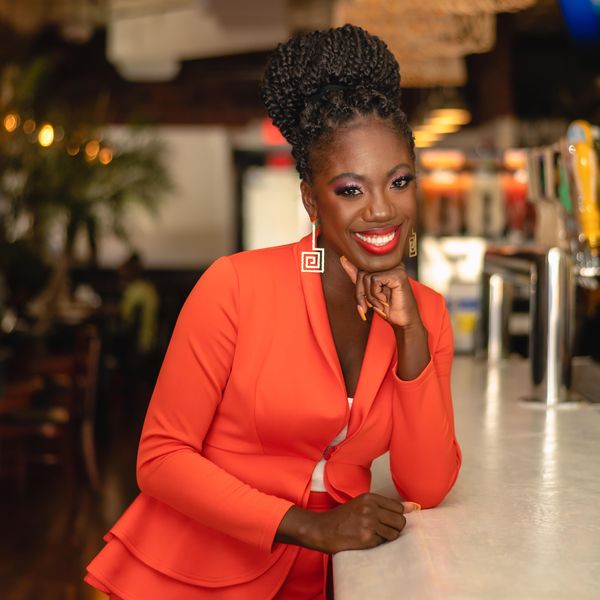
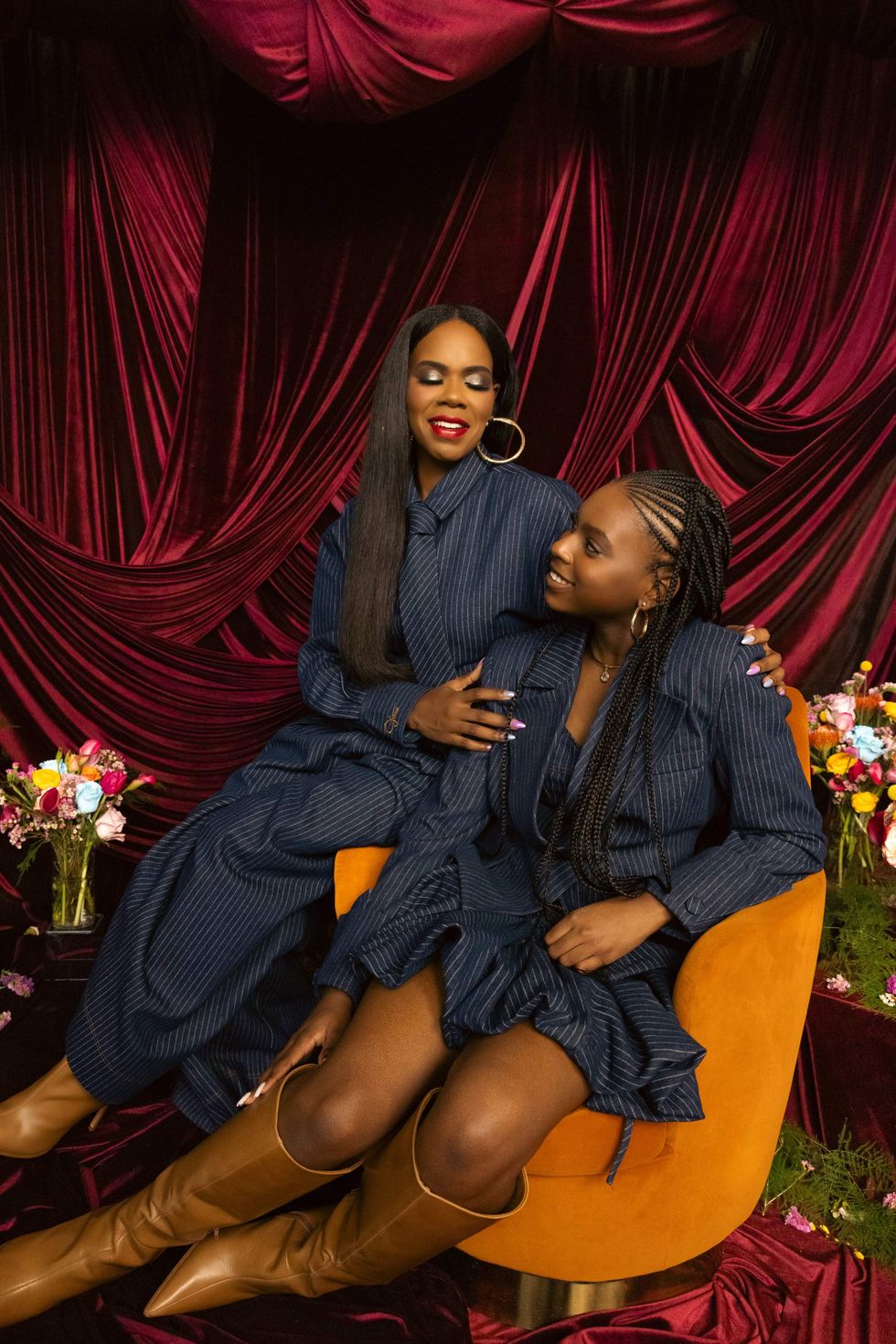
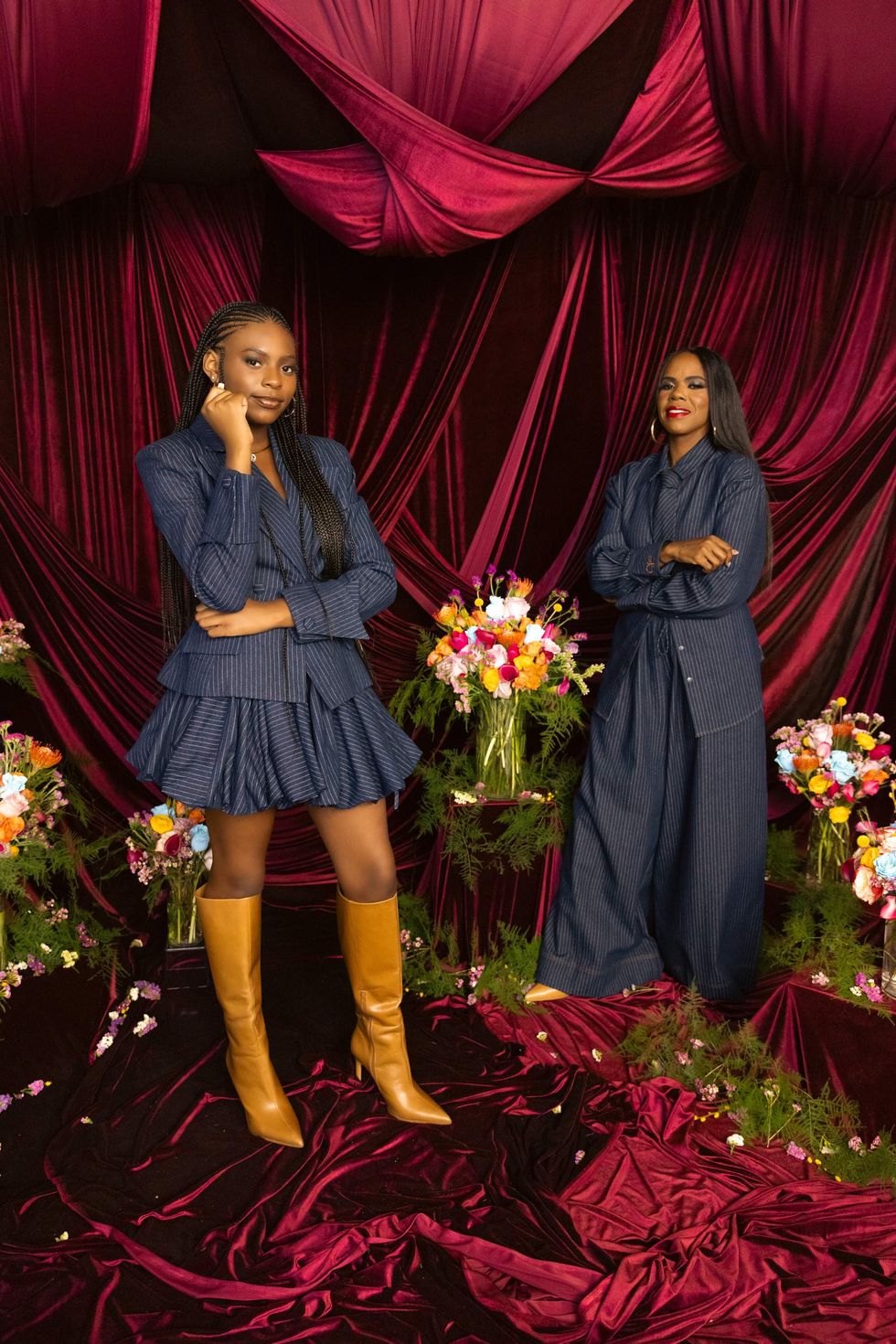
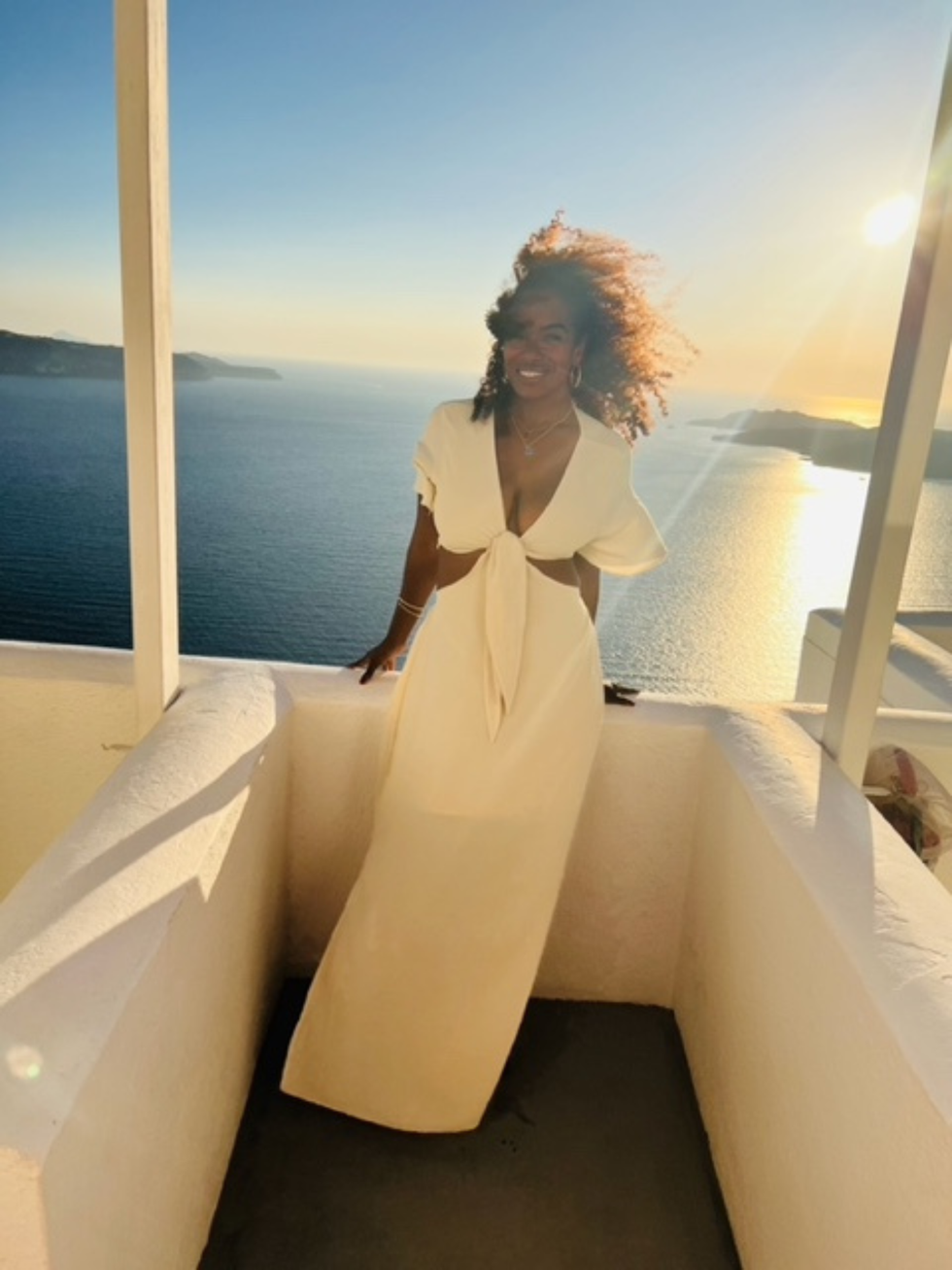
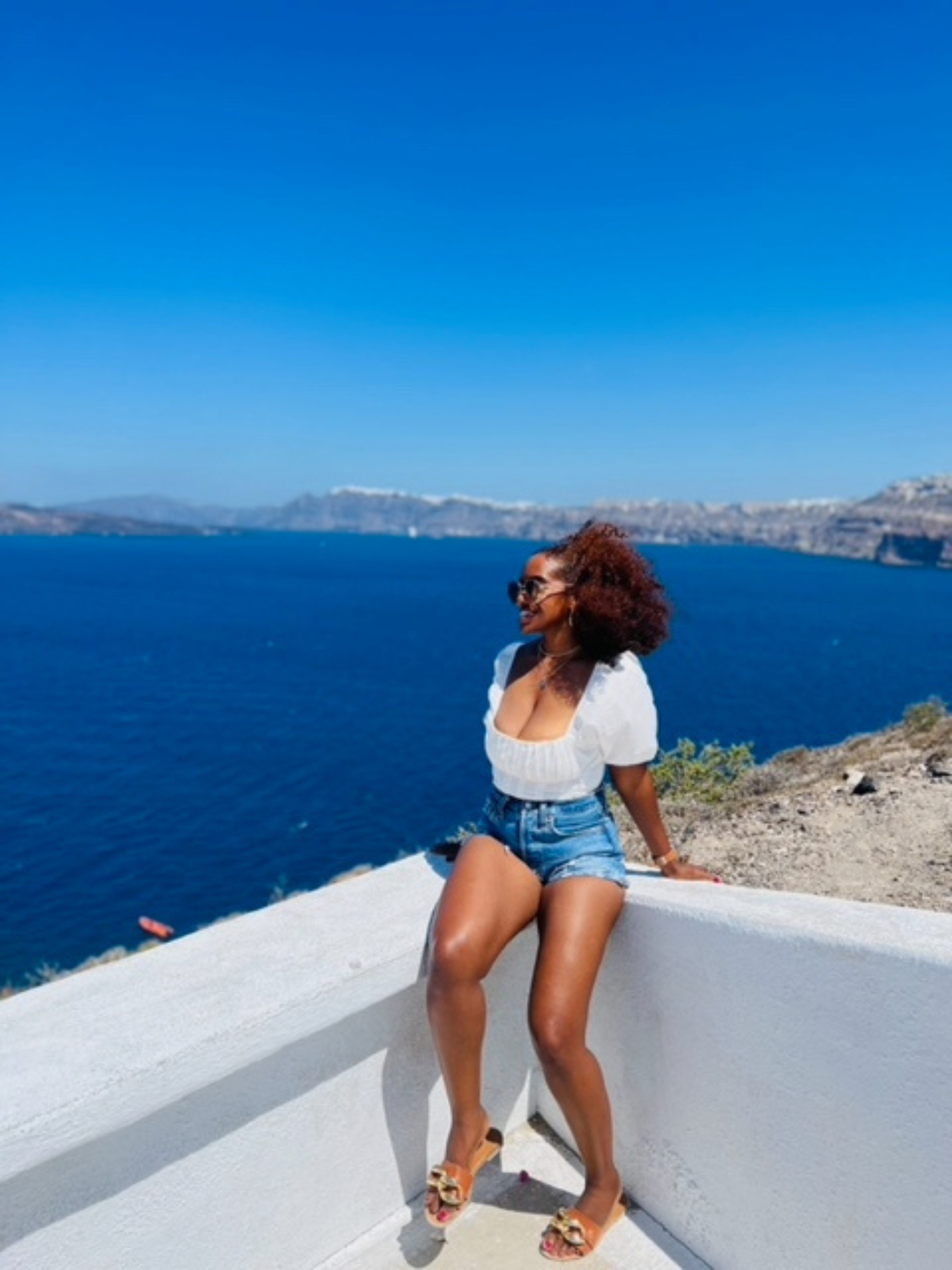
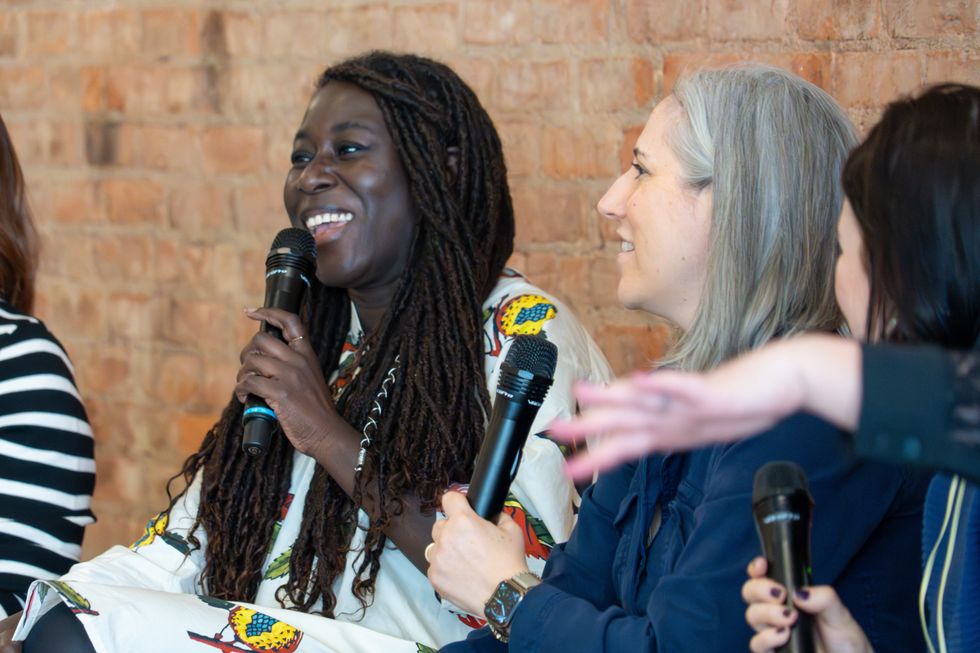
Nana Twumasi, a Ghanaian-American, Brooklyn, N.Y.-based writer and editor, has etched a niche in the wellness and self-help publishing space, an intriguing move to mesh her love of information with her creative acumen as a writer’s editor.
The Oberlin College and California College of the Arts graduate has written prose and nonfiction work that has been published in various literary journals, and she’s an early disruptor in the wellness and psychology publishing space, with roles at Callisto Media, which allowed her the opportunity to be instrumental in expanding knowledge bases.
Today, as vice president and publisher of the Balance imprint at Grand Central Publishing, she’s able to amplify diverse scholarly voices on vital topics like addressing grief and pain in Black men, down-to-earth financial freedom insights for Latinas, and the struggles of high-performing Black women executives to find life harmony while still seeking career excellence.
The keyword here is scholarly—books that back up insights with actual research and decades of experienced exploration from credible sources. In a time where the number of social media followers can offer carte blanche expert labels, this is important and it’s profound when a Black woman is at the helm of executing pitch approvals, campaign launches, and budgets.
We talked with Nana about what led her into wellness and self-help publishing, working with authoritative voices like Dr. Kameelah Phillips how women can break the mold and thrive as creatives with business acumen within it, and her own word as a
xoNecole: Talk a bit about your career journey. Were you always interested in being in publishing, particularly in the wellness and self-help space?
Nana Twumasi: I ended up getting a job at a children's book publisher in Minneapolis. And at that time, I was also really interested in photography, so that particular job was as a photo researcher. If you're familiar with children's books—especially nonfiction ones that incorporate historical photos and illustrations and things like that— it was my job, among a team of people, to either research and find that imagery or manage photo shoots and things like that. So I did that for a few years, and it was a really good learning experience, just about how books come together in general.
And then I decided I wanted to go to grad school and really try to pursue being a writer, you know. So I ended up in California getting my masters in writing. And then, you know, as happens, I graduated, and I was like, oh, boy, I need a job.
And at that time, one of my school colleagues, my grad school colleagues, had started working at Jossey Bass, which was an independent publisher based in San Francisco. They had just been purchased by John Wiley and Sons, which is a larger publisher that's now based in Hoboken, N.J.
I was hired as an editorial assistant, which is generally where people start in the industry. [One of my bosses] was a very storied editor in both New York and San Francisco. He had worked at Rolling Stone. He had worked with Tom Robbins, the novelist. He had a long career, and he was doing the more kind of like wellness, self-improvement, marriage relationships, some spirituality, that basically most of the categories that I work in now. I just kind of gravitated more towards those categories and the things that he was working on.
I love knowledge. I love learning. I think other people do too, and those are the resources that we're producing is educating people, helping people solve problems, and helping people discover new ways of thinking about something.
And so whether that's how to parent your teenager, or if you want to, you know, improve your protein intake, or if you want to, you know, manage your relationship better, the best information you're going to get is by someone who's an expert, who studied or practiced, or, you know, had some like, real-life experience doing a thing.
xoN: You’ve been five years in this role. What does a day in your life look like for you and how has it changed since your first day?
NT: There's a lot of behind the scenes work that goes into a book, and so most of my day is spent talking about talking about it. My role is kind of twofold, maybe, maybe three-fold even. So, I run an imprint which is essentially a small business. I manage a team of people. So, I have two editors that report to me, as well as an assistant who also is starting to manage her own editorial projects. And then I'm also an editor myself. I also work on my own projects—work with my own authors, etc.
So on any given day, depending on the day you would talk to me varies. I’ll meet with a potential author that I've been in communication with about acquiring a book of hers, and we're talking about what that might look like. What does she need to move forward? What do I need to move forward with the project—what the possibilities might be?
We also look at our cover designs for the books that are coming out in Fall 2026, so publishing is always working at least a year ahead.
I do some editorial work. ….It's a lot of meetings, a lot of talking, a lot of collaborating with people across the process. You know, we have regular, I meet regularly with our publicists, which are with our marketers, with the, you know, division leadership,
xoN: How does being an accomplished editor and writer yourself play into your role as an executive?
NT: There is a fair amount of creativity and creative thinking that goes into running this imprint, because it's not just looking at a set of numbers and trying to make it the most strategic decision. There are so many factors to consider and the way that we think about them.
We solve problems here, it always has to lend itself, because we're not just making widgets, you know, we're making a thing that is created by somebody, that will go on to be used by a person. So we can't just treat it like a thing that doesn't have feeling.
So I don't find that I'm having to, like, use one part of my brain or use another part of my brain to do one thing or the other. The whole business involves a fair amount of creativity.
xoN: With a great focus on diverse voices, what are some milestones, or maybe some projects that you have worked on recently?
NT: Sometimes, if you look at a niche, it's a few million people, you know. So that, to me, is like, ‘Well, that seems like an opportunity.’ We've done Permission To Come Home, which is a mental health resource for Asian Americans. The Invisible Ache, which is a mental health book that's focused on Black men and is co-written by actor, Courtney B Vance.
We've done a book called Playing a New Game, which is a research-based resource for Black women in the workplace. There are many titles from diverse voices on topics that are important.
I worked on The Empowered Hysterectomy by Kameelah Phillips, who is actually a real-world Boston alum and is now an OB-GYN based in New York. I was inspired to do that book because my best friend had a hysterectomy a few years ago. …I was motivated to find someone who could speak to that with some authority.
A lot of what we know about gynecology was gleaned from experimenting on Brown women’s bodies. I have a soft spot for that book. The author is Black, the publisher and editor and the agent are also Black women. That was very important to me.
xoN: As a publisher, what are the books that you read just for fun?
Courtesy
NT: I'm, you know, I'm a long-time book nerd, so that's challenging to choose one. I read all day, every day. Most of my personal time is spent reading literary fiction. That's what I love to read. I’ll occasionally read nonfiction if it's a topic that I'm interested in.
I'm currently reading Toni at Random, which is a biography of Toni Morrison specifically about her work as an editor at Random House. Yes, yes, yeah. So I'm, I'm calling that my, you know, beginning of the school year homework—as we're starting the fall and everyone's back to work after the summer. I'm finding that to be really wonderful and inspirational for myself as an editor in general, as it is, an editor of color, and as a publisher.
xoN: What’s the key to breaking into and sustaining a career in publishing on the business side, especially for Black women?
NT: Intrapreneurship and determination are definitely part of it. I think people come into this—and I certainly did—thinking, ‘I'm creative. I love to read. I love books. I love knowledge.’ All the things that I said at the beginning. ‘I love learning.’ And then you kind of get, kind of like, hit in the face by the fact that, like, ‘Oh, this is a business.’
There are profit margins and all kinds of things that we have to be confronted with. And so you do really have to be savvy about that stuff. You really have to think about like, if I buy this at this price and I sell it at this price, am I going to make a profit? And it feels uncomfortable to talk about creative work like that. It really does. But that's what's happening.
This interview was edited for brevity.
Let’s make things inbox official! Sign up for the xoNecole newsletter for love, wellness, career, and exclusive content delivered straight to your inbox.
Featured image by DP Jolly
Because We Are Still IT, Girl: It Girl 100 Returns
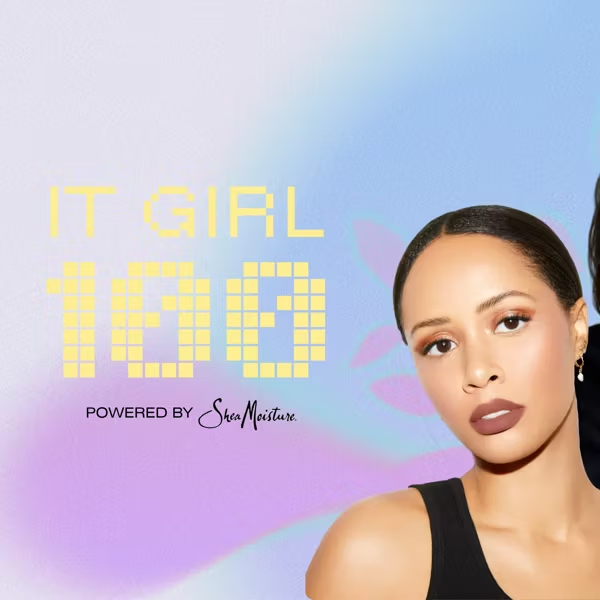
Last year, when our xoNecole team dropped our inaugural It Girl 100 honoree list, the world felt, ahem, a bit brighter.
It was March 2024, and we still had a Black woman as the Vice President of the United States. DEI rollbacks weren’t being tossed around like confetti. And more than 300,000 Black women were still gainfully employed in the workforce.
Though that was just nineteen months ago, things were different. Perhaps the world then felt more receptive to our light as Black women.
At the time, we launched It Girl 100 to spotlight the huge motion we were making as dope, GenZennial Black women leaving our mark on culture. The girls were on the rise, flourishing, drinking their water, minding their business, leading companies, and learning to do it all softly, in rest. We wanted to celebrate that momentum—because we love that for us.
So, we handpicked one hundred It Girls who embody that palpable It Factor moving through us as young Black women, the kind of motion lighting up the world both IRL and across the internet.
It Girl 100 became xoNecole’s most successful program, with the hashtag organically reaching more than forty million impressions on Instagram in just twenty-four hours. Yes, it caught on like wildfire because we celebrated some of the most brilliant and influential GenZennial women of color setting trends and shaping culture. But more than that, it resonated because the women we celebrated felt seen.
Many were already known in their industries for keeping this generation fly and lit, but rarely received recognition or flowers. It Girl 100 became a safe space to be uplifted, and for us as Black women to bask in what felt like an era of our brilliance, beauty, and boundless influence on full display.
And then, almost overnight, it was as if the rug was pulled from under us as Black women, as the It Girls of the world.
Our much-needed, much-deserved season of ease and soft living quickly metamorphosed into a time of self-preservation and survival. Our motion and economic progression seemed strategically slowed, our light under siege.
The air feels heavier now. The headlines colder. Our Black girl magic is being picked apart and politicized for simply existing.
With that climate shift, as we prepare to launch our second annual It Girl 100 honoree list, our team has had to dig deep on the purpose and intention behind this year’s list. Knowing the spirit of It Girl 100 is about motion, sauce, strides, and progression, how do we celebrate amid uncertainty and collective grief when the juice feels like it is being squeezed out of us?
As we wrestled with that question, we were reminded that this tension isn’t new. Black women have always had to find joy in the midst of struggle, to create light even in the darkest corners. We have carried the weight of scrutiny for generations, expected to be strong, to serve, to smile through the sting. But this moment feels different. It feels deeply personal.
We are living at the intersection of liberation and backlash. We are learning to take off our capes, to say no when we are tired, to embrace softness without apology.
And somehow, the world has found new ways to punish us for it.

In lifestyle, women like Kayla Nicole and Ayesha Curry have been ridiculed for daring to choose themselves. Tracee Ellis Ross was labeled bitter for speaking her truth about love. Meghan Markle, still, cannot breathe without critique.
In politics, Kamala Harris, Letitia James, and Jasmine Crockett are dragged through the mud for standing tall in rooms not built for them.
In sports, Angel Reese, Coco Gauff, and Taylor Townsend have been reminded that even excellence will not shield you from racism or judgment.

In business, visionaries like Diarrha N’Diaye-Mbaye and Melissa Butler are fighting to keep their dreams alive in an economy that too often forgets us first.
Even our icons, Beyoncé, Serena, and SZA, have faced criticism simply for evolving beyond the boxes society tried to keep them in.
From everyday women to cultural phenoms, the pattern is the same. Our light is being tested.

And yet, somehow, through it all, we are still showing up as that girl, and that deserves to be celebrated.
Because while the world debates our worth, we keep raising our value. And that proof is all around us.
This year alone, Naomi Osaka returned from motherhood and mental health challenges to reach the semifinals of the US Open. A’ja Wilson claimed another MVP, reminding us that beauty and dominance can coexist. Brandy and Monica are snatching our edges on tour. Kahlana Barfield Brown sold out her new line in the face of a retailer that had been canceled. And Melissa Butler’s company, The Lip Bar, is projecting a forty percent surge in sales.

We are no longer defining strength by how much pain we can endure. We are defining it by the unbreakable light we continue to radiate.
We are the women walking our daily steps and also continuing to run solid businesses. We are growing in love, taking solo trips, laughing until it hurts, raising babies and ideas, drinking our green juice, and praying our peace back into existence.
We are rediscovering the joy of rest and realizing that softness is not weakness, it is strategy.
And through it all, we continue to lift one another. Emma Grede is creating seats at the table. Valeisha Butterfield has started a fund for jobless Black women. Arian Simone is leading in media with fearless conviction. We are pouring into each other in ways the world rarely sees but always feels.

So yes, we are in the midst of societal warfare. Yes, we are being tested. Yes, we are facing economic strain, political targeting, and public scrutiny. But even war cannot dim a light that is divinely ours.
And we are still shining.
And we are still softening.
And we are still creating.
And we are still It.

That is the quiet magic of Black womanhood, our ability to hold both truth and triumph in the same breath, to say yes, and to life’s contradictions.
It is no coincidence that this year, as SheaMoisture embraces the message “Yes, And,” they stand beside us as partners in celebrating this class of It Girls. Because that phrase, those two simple words, capture the very essence of this moment.
Yes, we are tired. And we are still rising.
Yes, we are questioned. And we are the answer.
Yes, we are bruised. And we are still beautiful.

This year’s It Girl 100 is more than a list. It is a love letter to every Black woman who dares to live out loud in a world that would rather she whisper. This year’s class is living proof of “Yes, And,” women who are finding ways to thrive and to heal, to build and to rest, to lead and to love, all at once.
It is proof that our joy is not naive, our success not accidental. It is the reminder that our light has never needed permission.
So without further ado, we celebrate the It Girl 100 Class of 2025–2026.
We celebrate the millions of us who keep doing it with grace, grit, and glory.
Because despite it all, we still shine.
Because we are still her.
Because we are still IT, girl.
Meet all 100 women shaping culture in the It Girl 100 Class of 2025. View the complete list of honorees here.
Featured image by xoStaff
Someone's Trying To Hook You Up? Ask These 6 Questions First
As we all know, it’s cuffing season. We’re also on the cusp of the holiday season, and that happens to be the time of year when a lot of people get engaged. And that’s why the fall and winter seasons are the times of the year when folks wanna play matchmaker.
And so, sis, if at least one person in your life is currently trying to set you up with someone they know right now — charge it to it being “tis the season” more than anything else. Because let’s be real — folks tend to be more lovey-dovey than ever right about now, and that is usually what inspires them to try to get as many people boo/bae’d up as possible. Chile…CHILE.
It’s not like it has to be a bad thing. In fact, studies say that somewhere around 15 percent of engaged couples actually met through a friend. All I’m saying is, before you entertain someone’s “I’ve got someone I want you to meet” invitation, it would benefit you to interview them first — for the sake of all parties involved.
The questions that I recommend asking? The following six are what I think can get everyone on the same page, so that there is more pleasure than regret from the hook-up attempt.
1. Why Are They So Invested?
GiphyTwo things that I recently watched over again are the series Survivor’s Remorse (the writing is so damn good) and a movie called Trapped in Temptation (both are currently on Tubi). Something that both of them made me think about is the fact that motive reveals a lot when it comes to why people say and do the things that they do.
When it comes to the movie, specifically, without giving the film away — let me just say that, if you are in a relationship, be really careful about listening to individuals who try to talk you out of maintaining it. More times than not, the motive is shady as hell. And honestly, sometimes people who are close to obsessed with you being in one deserve a bit of side-eye too.
Now, if it’s someone who loves all things love, they are in love and they want you to experience something similar — that’s sweet. Just make sure that they are approaching the set up from a healthy space. What I mean by that is they don’t see singleness as some sort of relational handicap or they aren’t trying to override what you want for your life as if they somehow know better (there are so many ways to be a control freak, y’all).
Hmph. Now that I think about it — make sure that the set-up crew isn’t trying to use you to “save” some male friend or relative of theirs. I say that because I once knew a mother whose son had — count ‘em — 10 kids and she was FOREVER trying to get me to date him. Girl, that wasn’t for me. She was looking for a Holy Ghost Jr. for that child of hers. I’ll pass. HARD PASS.
Bottom line with this one — if someone wants to set you up with someone else, the first thing to ask is why? Make sure to really listen to what their answer is. Then pay attention to if your mind, body and spirit are at peace with their answer(s).
2. Do They Know What You Want?
GiphyI don’t know about y’all, but the people (and let’s be honest, by far, it’s usually women) who have tried to set me up with someone? They didn’t even know what my preferences or type was. Hell, they didn’t even know my thoughts or timeline as it relates to being in a serious relationship were either. And what that boils down to is they were trying to hook me up based on their agenda, not mine — and that usually meant that the guys who they came up with? Yeah…I was good on them. LOL.
Yeah, if someone wants to hook you up, you definitely should ask them if they know what you are looking for in a guy when it comes to his looks, personality, passions, spirituality, relational desires and goals, location, etc. Because, indeed, what is the point in going out with someone who is fine as hell and yet, you want kids and he doesn’t (or vice versa) or who has a great personality yet he isn’t even in the same ballpark of your spiritual beliefs?
If your friend really wants to help you out, valuing your time should come with that — and that means bringing someone into your life who complements your lifestyle. No wiggle room here.
3. Are They Aware of Your Deal-Breakers?
GiphyLast year, I wrote an article for the platform entitled, “Should Bad Sex Actually Be A Relationship Deal-Breaker?” The thing that I think needs to go on record about deal-breakers is they aren’t exactly standards that you have. No, a deal-breaker is something that can’t be worked out even after trying to negotiate or compromise. When it comes to relationships, a deal-breaker might be how long two people should date before becoming exclusive or getting engaged. Another deal-breaker might be if being religious is more important than being spiritual and how that manifests itself (church or no church, etc.). And yes, another deal-breaker may be what each other’s sexual needs and expectations are.
When someone is setting you up, it is imperative that they know about your standards. For instance, for me, I am not interested in dating a divorced person, pretty much ever (I Corinthians 7:10-11). I’ve had friends who have tried to hook me up with that demographic before and it has always been a moot effort. The fact that some of them have gotten frustrated with my convictions has absolutely nothing to do with me. Some have tried to get me to compromise my deal-breakers too — like a long-distance relationship. Is it a firm “naw”? No. However, it’s not really something that I am interested in, so why not just…recommend someone local?
Yeah, if someone thinks that they know you well enough to hook you up, they absolutely should be well-versed in what your deal-breakers are before they do. And if they’ve never asked, all they are doing is assuming — and we know what that typically means. LOL.
4. What Is Their Track Record?
GiphyIt’s kind of wild that we now live in a time when more couples meet online than they do through “old-fashioned ways” like via their friends (although some reports say that Gen Z is getting back to that) — and yet, here we are. Still, if you are willing to let someone play pseudo matchmaker in your life, you are well within your rights to inquire about their track record in that department. Have they hooked others up, successfully, before? Has any of their “Cupid work” caused both people to get exactly what they wanted out of the situation? If/when things went awry, why was that?
I know someone who is constantly trying to hook people up. Thing is, maybe 10-15 percent (no joke) of their efforts have proven to be positive and fruitful — and we’re talking about close to close to two decades of them doing it. Listen, time is too precious to be out here doing stuff ONLY to please other people. That said, if someone wants you to devote some time to one of their grand ideas, you are well within your rights to ask about their past and current success score when it comes to it.
5. Can They Keep Their Own Feelings Out of It?
GiphyWanna know if someone who is offering to do something for you is actually doing it more for themselves? If they try to make it be about them when things don’t go the way they would like, that is a dead ringer. An example? They post a message about you on social media and then question you about why you didn’t do the same thing in return. Another example? They do something for you and then throw it in your face during an argument. Still another example? They set you up with someone, it doesn’t work out, and suddenly you’ve put them in a weird spot. No dear — you put your own self in that position by trying to hook two people up in the first place.
I promise you, it will spare everyone unnecessary energy spent (or even drama experienced) if, before you agree to be hooked up, you get the matchmaker on record stating that they will keep their emotions out of it as much as possible. MEANING — they will do the introductions and then let the chips fall where they may. If they can’t do this, my two cents (save it or spend it) would be to decline the offer. Because all you need is someone texting you about why you haven’t called their cousin back or having an attitude with you when you break up with some guy at their church who they thought was the perfect catch (P.S. These aren’t hypothetical examples — LOL).
6. Will They Respect Your Boundaries? Start to Finish?
GiphyYeah, this final one is a biggie. Just because someone sets you up with another person, that doesn’t automatically or necessarily mean that they should have the right to the details of the dynamic. I don’t care if it’s the first date or the 10th date. I don’t care if you decide to just be sex buddies or to have a full-blown relationship. I don’t care if you stay together or break-up — it’s your relationship which makes it your business. Whatever you share is privileged data.
Yeah, I would say that probably the most challenging thing about being hooked up by someone you know is they have a tendency to think that they are a part of the relationship too — and that is a lie. If things go well beyond a couple of dates, you and the guy should discuss what you will both share with the person who introduced you and then agree to stick to that boundary, no matter what. It’s a great way to protect the dynamic, to keep “outside voices” from influencing the growth and to navigate how you want to move, moving forward.
Someone who hooked you up for the right reasons and knows how to honor limits? They will understand. Will they ask questions? Absolutely. Will they pry? Nah.
___
Should you sit and let someone hook you up? I mean, you never know how your blessing will come. Just make sure that they are prepared for you to do some digging into their mindset before they start sweetly meddling into your love life.
It’s only fair. Hell, and right. LOL.
Let’s make things inbox official! Sign up for the xoNecole newsletter for love, wellness, career, and exclusive content delivered straight to your inbox.
Featured image by PeopleImages/Shutterstock