Willow Smith Recalls Having To Do Her Own Hair Because A Stylist Couldn’t Do It

We all know the feeling. You plop down in a stylist's seat excitedly waiting for your slay to begin, only to be met with a look of panic when they actually lay eyes on your hair. As a woman with thick and coarse 4C textured hair, I know that gaze well. Sadly, so do most Black women, and it's been an ongoing problem in the entertainment world for decades.
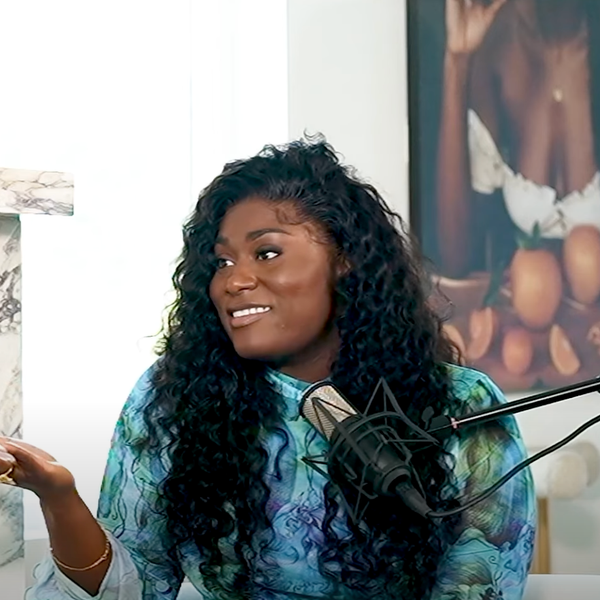
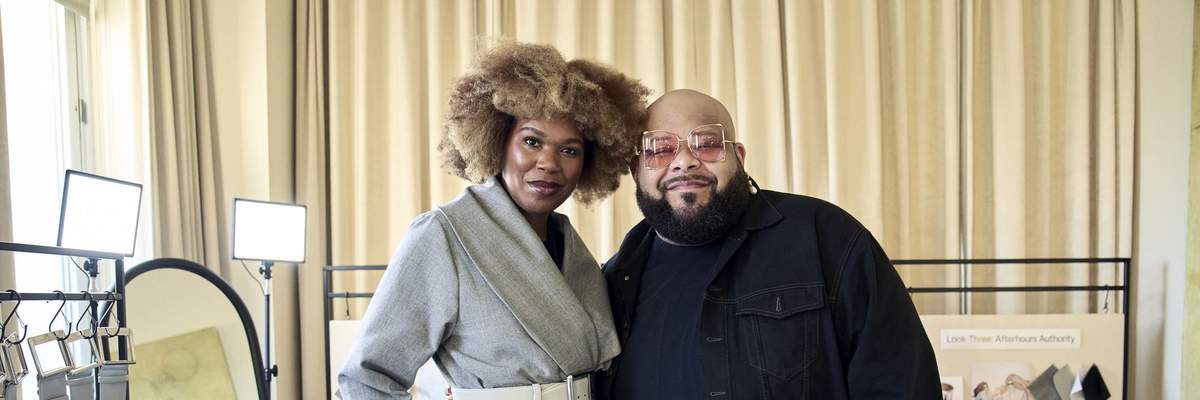
During a recent episode of Red Table Talk available on Facebook Watch, Willow Smith shared her experience of having to style her own hair at a major fashion event. She says:
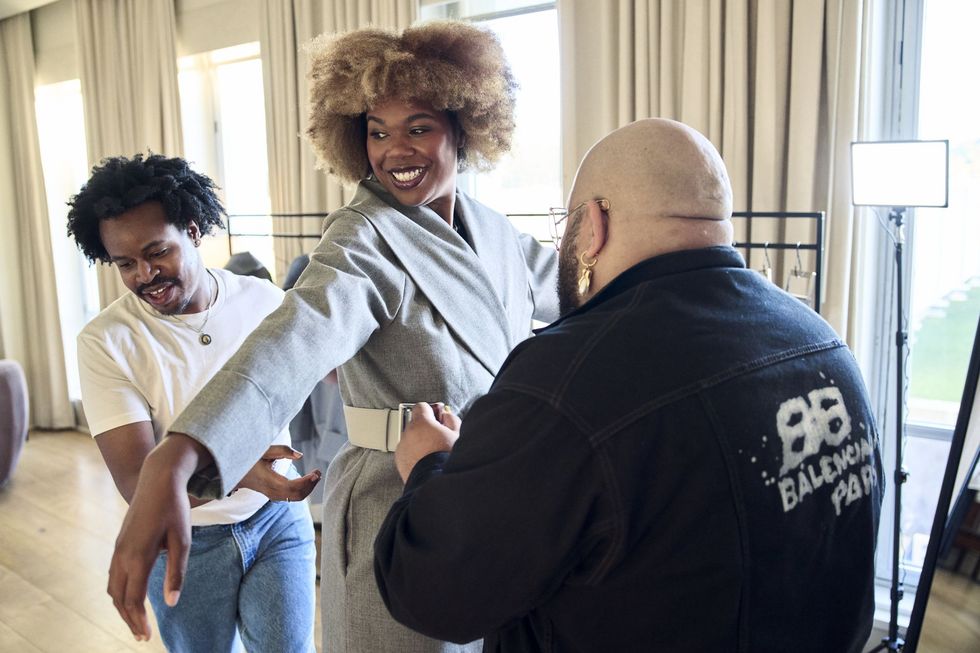
"All of the white models were getting their hair done and they all had somebody. The person that was supposed to come do my hair, came, looked at it, and tried to do something to it; tried to touch it. I can tell they were extremely (pauses) perturbed. I could tell that they were just like, I don't know what I'm doing. That anxiety of looking at them in the mirror not knowing what to do with my head, made me feel like, I'm going to just take the reins. So, I basically did my own hair for a really high fashion shoot. That should never be happening."
Although her story is unfortunate, it's not surprising at all. However, it does make you think, with Black creatives making such an impact in Hollywood and the entertainment space, why are we still not being catered to in the same way? I mean just imagine being a Black hairstylist or make-up artist that gets booked for a high profile event and being unable to style white women's hair or face. Chile, we'd be fired so quick! There is a desire to increase diversity and representation in media, but what goes on behind the scenes suggests that that mobility is surface.
As a model, Willow has been afforded many opportunties to work with major brands like Chanel and Mugler, but is it really a seat at the table if she and women like her aren't afforded the tools and resources to bring their best selves to these spaces? Black women being met with stylists who don't know how to work with their hair is nothing new. If white stylist can't learn to work with our hair, so much so we have to do our own hair on these sets, maybe the bigger conversation is how important it is to make sure representation and diversity isn't just represented on screens, but behind the scenes as hairstylists and makeup artists on set too. Also, when we get opportunities, it is important to share them!
Speaking of sharing, here is a list of amazing Black women who have also spoken up about the discrimination of having to do their own hair on sets in Hollywood.
Natasha Rothwell
With the exception of her show Insecure, writer and actress Natasha Rothwell noted having to spend her last in the early stages of her career to ensure her hair was on point, a burden her white counterparts never had to bear. She said, "They can wake up, roll out of bed and don't have to worry about what's in their bag."
"It's a real disservice to actors of color who are effectively doing someone else's job and not getting paid for it. There's nothing [more] dehumanizing than sitting in a hair and makeup chair and watching your co-stars go through the works and leave, and you're still there because someone's moving very slowly because they're very scared. It's [you] feeling like a problem to be solved."
Taraji P. Henson
"If you know how to do it, great. If you don't, pass it to somebody who does. It has nothing to do with pride or ego," Henson told The Hollywood Reporter. "I'm not saying you have to be black to know how to do [that] hair, but you got to know what the hell you're doing. When an actress of color requests a hairstylist, listen to them. They're not being difficult."
Olivia Anakwe
In 2019, the model vocalized her experiences at Paris Fashion Week and not being able to find a stylist who knew how to do her hair. She wrote in her Instagram caption:
"I arrived backstage where they planned to do cornrows, but not one person on the team knew how to do them without admitting so. After one lady attempted and pulled my edges relentlessly, I stood up to find a model who could possibly do it. After asking two models and then the lead/only nail stylist, she was then taken away from her job to do my hair.
"This is not OK. This will never be OK. This needs to change. No matter how small your team is, make sure you have one person that is competent at doing afro texture hair care OR just hire a black hairstylist! Black hairstylists are required to know how to do everyone's hair, why does the same not apply to others?"
Tia Mowry-Hardrict
Like many other actresses included in this list, Tia Mowry-Hardrict also recalls being tearful on set. She told NBC News:
"It's mind-blowing to me that we still have to —- meaning Black actresses —- have to fight to have Black hairdressers on set for us. There was one time in particular I was doing this movie and, my God, I was the lead. And after this person did my hair, I cried. I was like 'I cannot, like, I cannot go out there looking like this.' I just don't understand why you have to fight to get someone to understand the importance of that."
Halle Berry
While Halle Berry looks like she was made to rock her signature pixie cut, the style was actually a product of her environment as an up-and-coming actress who had trouble finding stylists who knew how to do Black hair on set. She revealed:
"That's why I had short hair. [Maintaining] it was easy. I think as people of color, especially in the business, we haven't always had people that know how to manage our hair. Those days are different now, that's when I started."
Queen Latifah
Queen Latifah, who notably did her own hair during her time starring in the hit sitcom Living Single, but expressed that change needs to be a focus:
"It's not because their heart wasn't in the right place — they just didn't have the skill set to do Black hair. As African-Americans, we have all different shapes, sizes, colors, textures, and you got to be able to work with that. We are always in a position to be able to work with what White people do. That's just how it's been, but it has to be reversed. It has to be some respect over here and figuring out what to do with our hair. So we just really need to add more people to the industry."
Gabrielle Union
Gabrielle Union is never one to mince words when it comes to speaking her truth. In a 2017 Glamour essay, she wrote about her experience when getting started as an actress:
"I was like a guinea pig on set, and I didn't yet have enough power to request a stylist who I actually wanted to touch my hair. It got to the point that I would pay to have my hair done before I got to work and pray they didn't screw it up."
"I realized very quickly that there were many people in hair and makeup trailers who were totally unqualified to do my hair. Hairstylists used Aqua Net–like hairspray with crazy amounts of alcohol, which caused chunks of my hair to literally come off on a styling tool."
Gabourey Sidibe
Gabourey Sidibe shared in at tweet in 2019:
"If they don't have the budget to hire a Black hairstylist for me, or won't, I just get the director to agree that my character should have box braids or Senegalese twist."
Aisha Dee
In the Freeform series, The Bold Type, actress Aisha Dee plays the biracial, bisexual, bold Kat. However, she made it known before the series' end that all was not as progressive as it seemed behind the scenes on set. She shared on Instagram:
"It took three seasons to get someone in the hair department who knew how to work with textured hair. This was impactful on so many levels, and I'm grateful for the women who show me how to embrace and love my hair in a way I never had before. I want to make sure that no one else ever has to walk onto a set and feel as though their hair is a burden. It is not."
Candice Patton
The Flash star Candice Patton revealed during a SXSW panel in 2019 that she, too, has encountered when she said she needed "someone who can do Black hair.":
"At work, I don't want to be labeled a diva because I have to say to production, 'I need someone who can do Black hair. I need someone who knows and understands how to do Black makeup.' It is not the same. We do not share the same kind of skin. We do not need the same kind of makeup. And not everyone knows how to paint me in a way that makes me feel comfortable on camera, and me asking for that is not me being difficult. It's me being a diverse talent on this network asking for something that's different. And if you hire me, you hire me with the intent of knowing that I have different requirements and different needs—and that's just what it is. I think there's a lot of education that still needs to happen."
Jurnee Smollett
Actress Jurnee Smollett was able to advocate for her desire to have a Black stylist on set of Birds of Prey by talking to her co-star Margot Robbie about wanting one. She stated:
"In pre-production, when we were creating a look for the hair, for me it was very important to bring a woman of color on in the hair department to create the look for Black Canary. My hair, my texture, the kind of blonde we were going for…and I called her up and I said, 'Honestly, Margot, it's different. I need Nikki Nelms and this is why I need her.'"
Featured image by Jerritt Clark/Getty Images for Savage X Fenty Show Vol. 2 Presented by Amazon Prime Video
- Nia Long Had The Best Response To Being Labeled 'Difficult' In ... ›
- 14 Black AF TV Show Characters That Are Our Forever Natural Hair ... ›
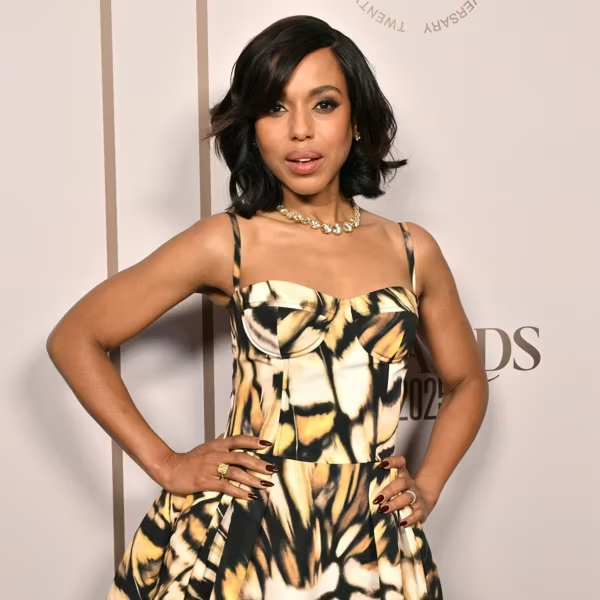
Because We Are Still IT, Girl: It Girl 100 Returns
Last year, when our xoNecole team dropped our inaugural It Girl 100 honoree list, the world felt, ahem, a bit brighter.
It was March 2024, and we still had a Black woman as the Vice President of the United States. DEI rollbacks weren’t being tossed around like confetti. And more than 300,000 Black women were still gainfully employed in the workforce.
Though that was just nineteen months ago, things were different. Perhaps the world then felt more receptive to our light as Black women.
At the time, we launched It Girl 100 to spotlight the huge motion we were making as dope, GenZennial Black women leaving our mark on culture. The girls were on the rise, flourishing, drinking their water, minding their business, leading companies, and learning to do it all softly, in rest. We wanted to celebrate that momentum—because we love that for us.
So, we handpicked one hundred It Girls who embody that palpable It Factor moving through us as young Black women, the kind of motion lighting up the world both IRL and across the internet.
It Girl 100 became xoNecole’s most successful program, with the hashtag organically reaching more than forty million impressions on Instagram in just twenty-four hours. Yes, it caught on like wildfire because we celebrated some of the most brilliant and influential GenZennial women of color setting trends and shaping culture. But more than that, it resonated because the women we celebrated felt seen.
Many were already known in their industries for keeping this generation fly and lit, but rarely received recognition or flowers. It Girl 100 became a safe space to be uplifted, and for us as Black women to bask in what felt like an era of our brilliance, beauty, and boundless influence on full display.
And then, almost overnight, it was as if the rug was pulled from under us as Black women, as the It Girls of the world.
Our much-needed, much-deserved season of ease and soft living quickly metamorphosed into a time of self-preservation and survival. Our motion and economic progression seemed strategically slowed, our light under siege.
The air feels heavier now. The headlines colder. Our Black girl magic is being picked apart and politicized for simply existing.
With that climate shift, as we prepare to launch our second annual It Girl 100 honoree list, our team has had to dig deep on the purpose and intention behind this year’s list. Knowing the spirit of It Girl 100 is about motion, sauce, strides, and progression, how do we celebrate amid uncertainty and collective grief when the juice feels like it is being squeezed out of us?
As we wrestled with that question, we were reminded that this tension isn’t new. Black women have always had to find joy in the midst of struggle, to create light even in the darkest corners. We have carried the weight of scrutiny for generations, expected to be strong, to serve, to smile through the sting. But this moment feels different. It feels deeply personal.
We are living at the intersection of liberation and backlash. We are learning to take off our capes, to say no when we are tired, to embrace softness without apology.
And somehow, the world has found new ways to punish us for it.

In lifestyle, women like Kayla Nicole and Ayesha Curry have been ridiculed for daring to choose themselves. Tracee Ellis Ross was labeled bitter for speaking her truth about love. Meghan Markle, still, cannot breathe without critique.
In politics, Kamala Harris, Letitia James, and Jasmine Crockett are dragged through the mud for standing tall in rooms not built for them.
In sports, Angel Reese, Coco Gauff, and Taylor Townsend have been reminded that even excellence will not shield you from racism or judgment.

In business, visionaries like Diarrha N’Diaye-Mbaye and Melissa Butler are fighting to keep their dreams alive in an economy that too often forgets us first.
Even our icons, Beyoncé, Serena, and SZA, have faced criticism simply for evolving beyond the boxes society tried to keep them in.
From everyday women to cultural phenoms, the pattern is the same. Our light is being tested.

And yet, somehow, through it all, we are still showing up as that girl, and that deserves to be celebrated.
Because while the world debates our worth, we keep raising our value. And that proof is all around us.
This year alone, Naomi Osaka returned from motherhood and mental health challenges to reach the semifinals of the US Open. A’ja Wilson claimed another MVP, reminding us that beauty and dominance can coexist. Brandy and Monica are snatching our edges on tour. Kahlana Barfield Brown sold out her new line in the face of a retailer that had been canceled. And Melissa Butler’s company, The Lip Bar, is projecting a forty percent surge in sales.

We are no longer defining strength by how much pain we can endure. We are defining it by the unbreakable light we continue to radiate.
We are the women walking our daily steps and also continuing to run solid businesses. We are growing in love, taking solo trips, laughing until it hurts, raising babies and ideas, drinking our green juice, and praying our peace back into existence.
We are rediscovering the joy of rest and realizing that softness is not weakness, it is strategy.
And through it all, we continue to lift one another. Emma Grede is creating seats at the table. Valeisha Butterfield has started a fund for jobless Black women. Arian Simone is leading in media with fearless conviction. We are pouring into each other in ways the world rarely sees but always feels.

So yes, we are in the midst of societal warfare. Yes, we are being tested. Yes, we are facing economic strain, political targeting, and public scrutiny. But even war cannot dim a light that is divinely ours.
And we are still shining.
And we are still softening.
And we are still creating.
And we are still It.

That is the quiet magic of Black womanhood, our ability to hold both truth and triumph in the same breath, to say yes, and to life’s contradictions.
It is no coincidence that this year, as SheaMoisture embraces the message “Yes, And,” they stand beside us as partners in celebrating this class of It Girls. Because that phrase, those two simple words, capture the very essence of this moment.
Yes, we are tired. And we are still rising.
Yes, we are questioned. And we are the answer.
Yes, we are bruised. And we are still beautiful.

This year’s It Girl 100 is more than a list. It is a love letter to every Black woman who dares to live out loud in a world that would rather she whisper. This year’s class is living proof of “Yes, And,” women who are finding ways to thrive and to heal, to build and to rest, to lead and to love, all at once.
It is proof that our joy is not naive, our success not accidental. It is the reminder that our light has never needed permission.
So without further ado, we celebrate the It Girl 100 Class of 2025–2026.
We celebrate the millions of us who keep doing it with grace, grit, and glory.
Because despite it all, we still shine.
Because we are still her.
Because we are still IT, girl.
Meet all 100 women shaping culture in the It Girl 100 Class of 2025. View the complete list of honorees here.
Featured image by xoStaff
Restlessness. It’s a word that we all know the meaning of, and yet, when you are in your bed and you are actually experiencing restlessness — few things are less annoying. Because if there’s one thing that I’m pretty sure we all can agree on, it’s the fact that when we go to our bedroom, turn off the lights, and snuggle up in our sheets, what we want to do is fall asleep and stay that way — not toss and turn all throughout the night.
So, what causes us to have moments when we’re not experiencing the sound sleep that we so desire? While I wish that I had a black and white answer for you, the reality is that several different factors (sometimes working together) may be the cause. That’s the bad news.
The good news is that if you check out the 10 leading causes below, by process of elimination, you might be able to get to the root of your own restless evenings — so that you can finally get the kind of quality rest that you well deserve.
1. Eating (Too) Late
GiphyLet’s start off with one that has a couple of layers to it. Although it is a good idea to not have a large meal less than two hours before turning in, some experts do say that a light snack that consists of natural melanin, serotonin or tryptophan could be helpful.
The reason why eating too much before bedtime isn’t a good idea is because the digestive process can be a pretty active one. Plus, it increases your chances of experiencing acid reflux and heartburn. On the other hand, snacking on almonds or tart cherries (melatonin), cheese or pumpkin seeds (serotonin) or yogurt or peanut butter (tryptophan) can be just what you need to lull your system to sleep.
Bottom line here: It’s not if you eat but what you eat…and when.
2. Junk Food
GiphySpeaking of foods, if junk food is totally your thing, first check out “Why You Should Consider Leaving Fast Food Alone” — and then at least try avoiding that stuff if you’re heading off to bed. Fried foods are hard to digest. Sugary foods (and carbs) can raise your blood sugar levels. Processed foods contain a lot of salt and salt can raise your blood pressure which can result in sleep disturbances. So, if you’re in the habit of going through a drive-thru at night, here’s a good reason to rethink doing so in the future.
3. Your Bedroom Is Too Hot
GiphyThis one right here, I can absolutely attest to — because when I am hot in a room, I can pretty much kiss sound sleeping goodbye. SMDH. The problem here is that when your body temperature is high, that can mess with your REM (rapid eye movement) sleep. Not only that but, in order for your system to produce the melatonin that it needs to keep you sleeping soundly, your body needs to be at a cooler temperature. And that is why your room sitting at somewhere around 65 degrees is ideal.
4. Your Bedding
GiphyI have a friend who just bought a house and I’m getting him a comforter for a housewarming present. Listen, don’t sleep on the power of amazing bedding because it, too, plays a role in how well you rest. Of course, you need to invest in a good mattress (you can read more about that here and here); however, when it comes to things like your sheets and your comforter, there are a few things to keep in mind.
Your sheets need to be made out of breathable fabrics like cotton, not ones like nylon, polyester or even silk. The reason why is because the latter traps in heat and we’ve already discussed what an elevated body temperature can do to you. Oh, and if you’re someone who enjoys flannel sheets during the fall and winter season, it’s probably better to get some blankets that you can “layer your bed” with instead; flannel can get mighty hot in the midnight hour too.
It’s also important that your sheets aren’t too small or too big for your mattress because that can make your bed feel uncomfortable. And comforter-wise, try and go with a color that doesn’t overstimulate you — neutrals and shades of blues, greens and yellows can accomplish this for you. And P.S., one of the best comforter brands around? Coma Inducer. I’ve been rocking with them for several years at this point and I don’t have not one regret.
5. Java and/or Alcohol
GiphyI’m not much of a coffee drinker (although I do adore coffee ice cream; go figure). I didn’t grow up with it (tea was in abundance in my home) and so it’s not something that I ever really think about. I do have friends who will drink coffee before bedtime, though, and that baffles me because coffee (due to the caffeine that is in it) is a stimulant — and that for that reason alone, you’d be better off having it in the morning instead of at night.
As far as alcohol goes, although it technically it’s a depressant, for the first couple of hours that it is in your system, it acts like a stimulant — which means that it tends to put your system on quite the roller coaster ride; one that you should want to avoid if you’re trying to get a good night’s rest.
My recommendation? Go the tea route and sip on some chamomile, lavender, ginseng, green or passionflower tea. All contain properties that are proven to relax your mind, body and spirit, so that you can fall asleep quicker and stay asleep longer.
6. Stress and Anxiety
GiphyListen, the summer of 2025 for me? Whew, chile (check out “I've Been Estranged From My Mom For Years. She Died Last Week.” and “I Was Hired To Be An Online Life Coach. Then Got Scammed For $4K. Here's How To Avoid This.”). Other than the couple of weeks when my mother was on a swift decline (and I was concerned about her physical suffering), thankfully, I didn’t lose much sleep, though — and praise the Lord for that because stress (and anxiety) definitely have a way of jacking up sleep patterns.
That’s because when you are stressed out, your cortisol (which is your stress hormone) spikes and that can hinder sound sleep — which can result in you feeling fatigued and irritable throughout the day. So, if you are stressed out — exercise, journal, meditate, spend quality time with fun and supportive people…oh, and have sex. All of these things are proven ways to calm and relax you — on a few different levels.
7. Late Day Naps
GiphyI adore sleep — always have. So, I can’t even say that it’s my age that has a sistah out here excited about taking a nap in the middle of the day (I work from home). And what I have to watch is not napping for too long or taking a nap that is too late in the day. Why? Because it can totally jack up my sleep patterns because it ends up throwing off my sleep schedule.
According to sleep experts, the way to avoid this is by scheduling your nap out about eight hours before your bedtime and also making sure that your nap doesn’t last any longer than 30 minutes (set an alarm, if you have to). If you do both of these things, you can get the benefits of a nap and the benefits of 6-8 hours of sleep without having to compromise either one.
8. Not Having a Sleep Schedule
GiphyAs humans, we really are creatures of habit. In fact, if you do something consistently enough, it can become automatic to you — it can end up being something that you do without really thinking about it at all. And that’s why it’s a good idea to at least consider coming up with some sort of a sleep schedule; that way, you can train your mind and body to have a pattern of rest.
The beauty of this is a sleep schedule can help you to reduce your stress levels, strengthen your brain, maintain a healthy weight, put you in a better mood and make you more productive throughout the day. On the other hand, not having a sleep schedule can make it really challenging for you to get quality rest at night. It only takes a few minutes to come up with a schedule and it’s well worth your time.
9. Too Much Stuff on Your Bed
GiphyEver heard that a cluttered desk reveals a cluttered mind? If you believe that, how in the world could this not translate to a bed as well? Hell, I even read an article which said that having a lot of stuff underneath your bed can wreck your sleep because it can trigger feelings of anxiety and restlessness and that’s because clutter can overstimulate you and keep you from being at peace.
Look, there’s no telling how many times I’ve said that bedrooms are for sex and sleep only (many interior designers feel the same way) — which means that your bed shouldn’t look like a makeshift office, it shouldn’t have clothes all over it and, even if you are an avid reader, it shouldn’t look like a horizontal bookshelf (where’s your nightstand at?).
You need to feel free to move comfortably about on your bed throughout the night — which ALSO means that, although I personally call pillows “stuffed animals for adults,” you still don’t need a ton of those on your bed either; two for sleeping and 2-3 more for décor purposes are typically ideal.
10. Your Damn Cell Phone
GiphyYou’ve probably heard this before and yet, since reportedly most of us check our phones somewhere around 205 times a day — I’m willing to bet that at least 10 of those times are while you’re in bed or when you’re up to make a bathroom run in the middle of the night. Yeah, as tempting as that might be, try to break that habit because the blue light that emits from your phone can disrupt how your system processes melatonin — and that is another way that you can find yourself really struggling to fall asleep again.
Whatever is on your phone, it can’t wait. It’s not worth your beauty sleep, chile.
BONUS: Imbalanced Hormones
GiphyHormonal imbalance is absolutely something that can have you tossing and turning all night long. If it’s due to all that is going on with you the week before your period, try exercising earlier in the day in order to help you sleep more soundly at night. If it’s because you are in the latter stages of perimenopause, consuming foods that are rich in phytoestrogens (plant-based estrogen) could help to level things out. Some of those foods include sesame seeds, garlic, peaches, berries and cabbage.
____
YOU NEED SLEEP. Yes, I am yelling it because nothing is worth compromising it.
So, if you see yourself in anything that I just said, try making some adjustments tonight.
Within a week or so, you should find yourself sleeping more and tossin’ and turnin’ a heck of a lot less.
Beautiful.
Let’s make things inbox official! Sign up for the xoNecole newsletter for daily love, wellness, career, and exclusive content delivered straight to your inbox.
Featured image by TheVisualsYouNeed/Shutterstock