


As you mature from a child into adulthood, you come to realize that most of our parents did the best they could, raising us with the tools and information they had at the time. But as many of us embark on our own parenting journeys or ponder whether it’s the right route for us to take, we now have new resources, healed trauma, and higher levels of self-awareness that can help us make informed decisions on how to parent our children.
Just like it takes a village to raise a child, it also takes the right frameworks and methods to approach parenting's most challenging moments. From breaking rules to the occasional public meltdown, one parenting style suggests that no matter the hiccup, the behavior of a child should be met with compassion, kindness, and empathy. And such is the case for gentle parenting.
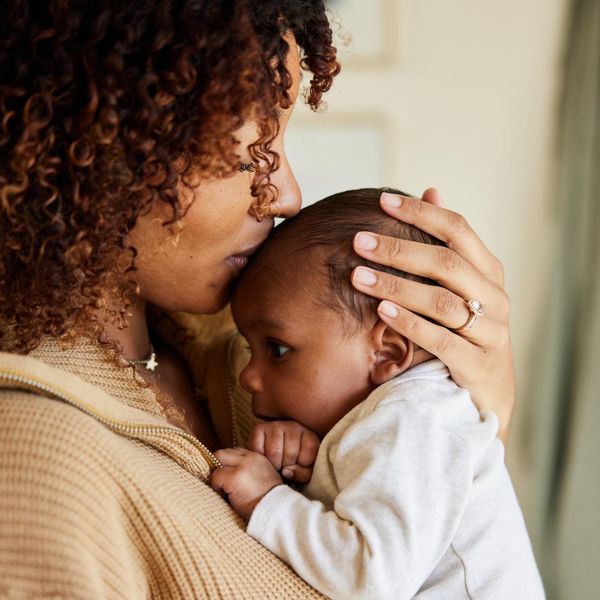
Gentle parenting is a parenting style that prioritizes understanding over punishment. It’s a science-based approach to parenting that focuses on respecting, supporting, and empathizing with a child’s needs and feeling while promoting their emotional and social development. Gentle parenting emphasizes the importance of positive communication, active listening, and boundary setting in a collaborative and compassionate way, empowering children to embrace their autonomy within a safe and nurturing environment.
“You cannot be a gentle parent if you are not first a conscious parent,” says Lisa Jean-Francois, a parenting and mental health content creator, who refers to gentle parenting as an act of “conscious parenting.”
As a neurodivergent wife, and mother of two sons — one of which is neurodivergent as well, she first began implementing gentle parenting during the pandemic while spending more time at home with her children. During that time, she began to realize that the reactive parenting style she was implementing with her children was no longer productive. “I was sick of yelling and threatening,” she tells xoNecole. “I was frustrated with the way things weren’t operating in my household, and I was relying on threatening and spanking.” Soon she discovered a Facebook group called Decolonized Parenting that exposed her to other Black parents looking to explore different tools outside of spanking and hitting, along with the mindset shift that came with it.
She explains that implementing a gentle and conscious approach to parenting first requires a deep level of self-awareness. “You have to make a decision to examine yourself, what your triggers are, and understand that the way you were treated as a child wasn’t beneficial to you then or now as a grown-up,” she says.
If it’s hard to fathom what your childhood might have looked like with this type of parenting technique in place, there’s a deeper reason behind why that could be. While many of us grew up in strict households ran on the foundation of structure, harsh disciple, and “do as I say” recoils, we can see that much of how we were parented was the direct result of ongoing cycles of fear and trauma passed down from the generations before. An approach to discipline that was put in place to protect us from the anti-Black society we live in to shield us from irreversible harm.
Traditional parenting styles within the Black community have been deemed as “violent” but necessary for our ongoing safety and survival. However, many young parents are now considering gentle parenting as a revolutionary act of healing generational trauma, offering an alternative to corporal punishment.
Still, it’s an unlearning process that must first begin with the parent.
“It’s doing the work on yourself, regulating your emotions, and then responding to your children's needs without shame, threats, fear, punishments, hitting, or yelling,” Jean-Francois explains. “You don't have to be a child development expert, but you should have an understanding of it because one of the reasons adults are often reactive to the behaviors of our children is because they don't fully understand how a child’s brain processes information.” With new research available, parents are now able to explore alternative child disciple tactics that are age-appropriate and aim to teach, and not punish.
“People will respond to tantrums harshly because they believe that it's an act of disobedience or defiance. But in truth, children between the ages of one to three will have moments where they are emotionally dysregulated, and it's absolutely developmentally appropriate,” Jean-Francois says. “Once you have that understanding, you're able to then problem solve and not take your child’s behavior personally.”
But it’s important to note that gentle parenting is more than just about finding ways to tame the nature of a child. In fact, Jean-Francois has found that gentle parenting has revealed parts of her inner child that need care and reparenting. “There really isn't any aspect of the way I parent my children that resembles even remotely the way I was parented,” she says. “I had to understand that my child is not beneath me. I'm not an authority over my child; my child is their own person. My role is to operate as their guide.”
For parents who are looking to practice gentle parenting, Jean-Francois says that self-education is key. Patience and books like The Whole Brain Child have been essential tools in her journey, along with having grace with your child’s development — at every stage. “You're going to keep responding to your child’s behavior like it’s a personal attack, so you have to understand the way their brain operates,” she shares.
Since implementing conscious, gentle parenting, Jean-Francois has found that the greatest reward has come through the proof that her children respect her, over fearing her, and even at their young ages, can advocate for themselves.
“My oldest son was raised for six years without a conscious mom or conscious dad, so he still kind of carries some of those things. But I see the results in the way in which he communicates with me,” she says.
“If I talk to him with any bass in my voice, he’ll say to me, I don't like the way you're speaking to me. Can you lower your voice? I don't talk to you like that. Why are you talking to me like that? He'll check you,” she shares lightheartedly. “I can see he’s not going to be a victim the way I was a victim in so many ways in my life. If those two things are all I get out of this journey, I think I’ve done really well.
Let’s make things inbox official! Sign up for the xoNecole newsletter for daily love, wellness, career, and exclusive content delivered straight to your inbox.
Feature image by Srdjan Pav/ Getty Images