Although some parts of the country have begun different phases of reopening, most of us have been in quarantine for almost three months due to the COVID-19 outbreak. While most folks were doing their best to stay home and avoid going outside, especially to doctor's offices and hospitals, one group did not have that luxury: first-time parents.
So many couples spend months planning for what their introduction into parenthood will look like, from packing a hospital bag, to choosing their baby's outfit for leaving the hospital, soon-to-be mothers and fathers can outline these details months in advance in order to be prepared for labor, childbirth, and the first couple months thereafter. For parents starting that journey in the first few months of 2020, COVID-19 completely changed that and they've entered this new stage of their lives in a completely unorthodox way.
In honor of June being a month where we celebrate black men and fathers, I spoke with four first-time dads to hear about their experiences entering this new stage of their lives during a pandemic. With everything from the unique hospital experience to feelings around raising a black son in America, these fathers bare it all.
Cheikh Gueye, Brooklyn, NY
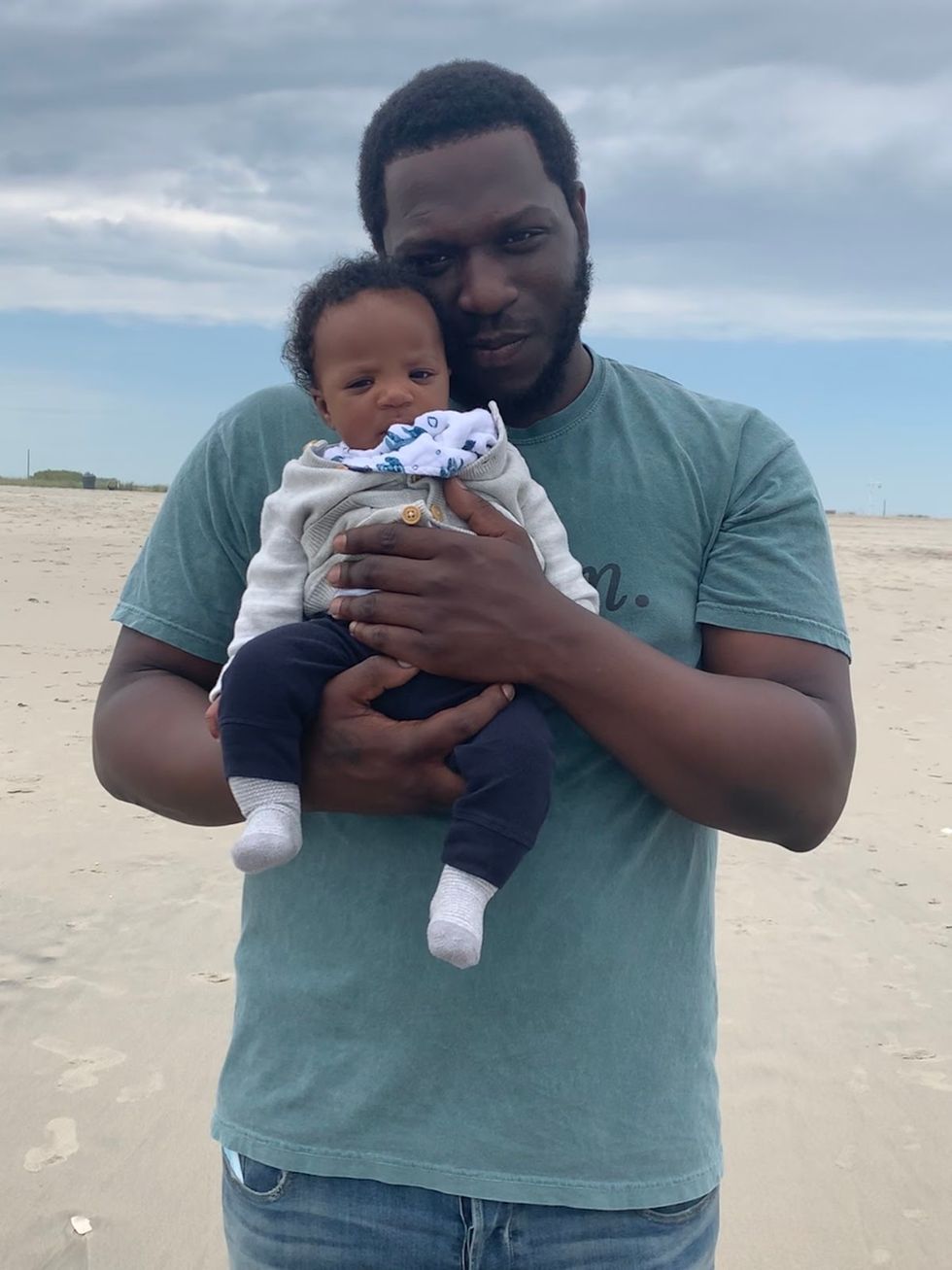
"We consider ourselves to have had [our son] Lamine in the dead heat of the pandemic. It's when a lot of hospitals had converted many of their floors to COVID-19 floors. So of course, for me, my main concern was whether or not I would even be allowed in the building. So that was traumatizing, just hoping that you could be there. Fortunately, for us, we had a midwife who works out of the hospital so she was able to guide us through the process. But just the smaller things like having to have on your mask the entire time and not being able to see facial expressions. It was hard."
How has it been having to quarantine and not have family around?
"That was an experience we weren't really thinking we would have. My family is centered around being around each other and spending that time together. We were unfortunately robbed of that time. Even just people coming by, because they're anxious and just standing outside was something we had to adjust to. My one sibling was just able to see him and this is his second month. The only person who did see him was my mother, and she was the only person up until [our son was] two months. People schedule a lot of Zoom calls right now so we will just pop up with the baby and you can see the light in the room change and people are happy just to have something so special during these crazy times."
What has been the hardest part of this experience?
"With myself being so centered as a family person, not being able to share this special time [has been hard]. As a first-time father, not being able to spend the time with my family has been super rough for me. Especially in a heightened-sensitivity time where Black men are being murdered continuously. The prospect of having to raise a young black man in this climate. Some days, it's a gift and some days it's a curse because you feel like the country is moving towards change, but you're still nervous because you're still a black man growing up in the United States."
What is one word you would use to describe becoming a father during this time?
"I would say 'difficult'. I didn't think it would be this difficult, because you have all of these preconceived notions on what it would be."
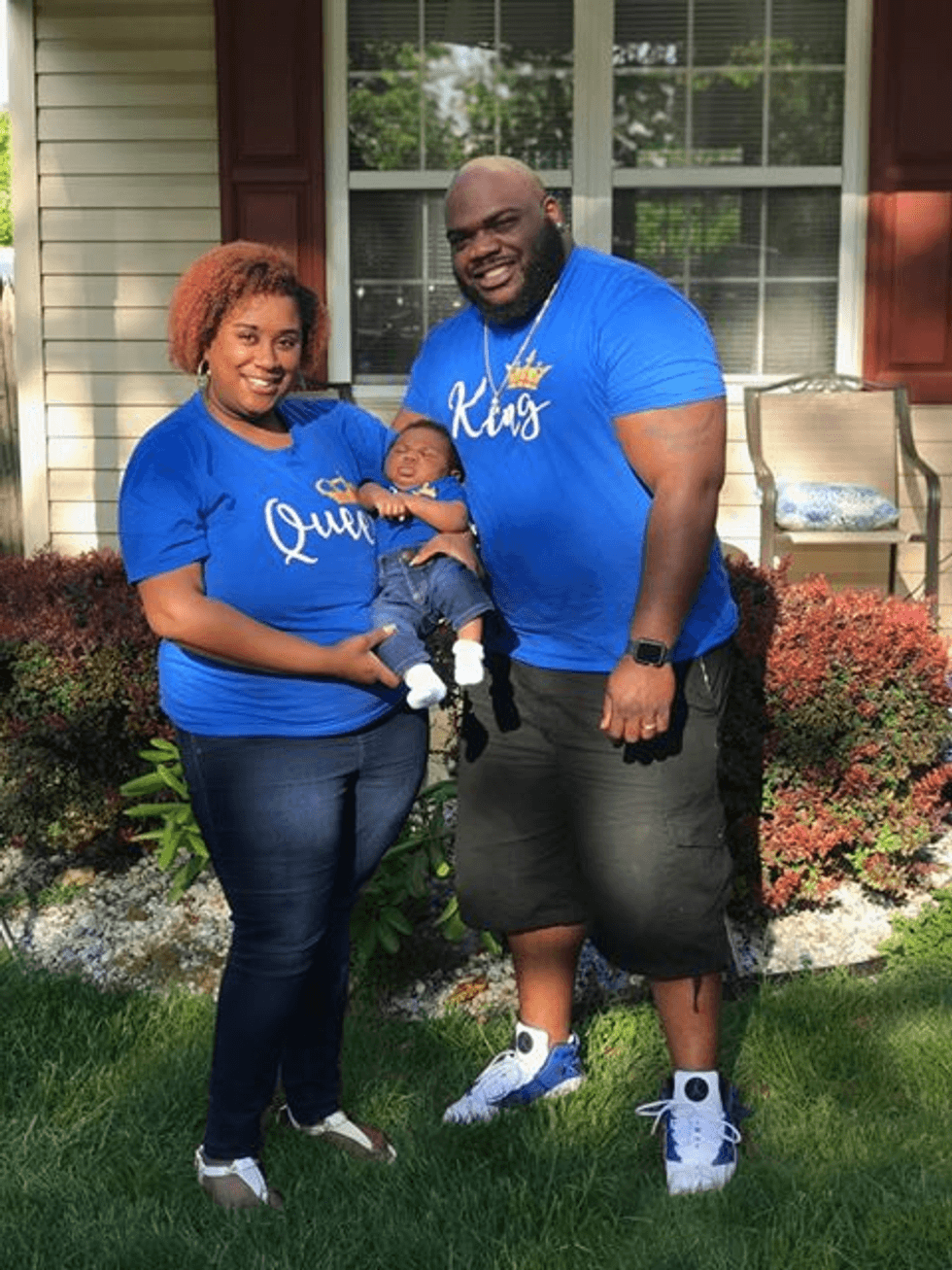
Joshua Bennett, West Chester, PA
How was your hospital experience in the middle of a pandemic?
"It was nerve-racking going into the hospital. I wasn't even sure if I was going to be allowed in the hospital. Once there, we could not leave the hospital room and it was very uncomfortable and also hard to stay cooped up in the room. A big difference from what was expected was that there were no visitors allowed after our son was born. We also had to order food from the hospital cafeteria and it was brought to us by the doctors and nurses. I will say this brought me and my wife closer because I was able to comfort her and do things for her. She had a C-Section and it gave me a newfound respect for her."
Were there any expectations you had about the early parts of fatherhood that were impacted?
"Not really. There were adjustments that needed to be made with late nights, feedings, and figuring out what he needs. Not being able to go outside has been impacted as well. My mother has not been able to visit and see him because she is a healthcare worker in NYC and was exposed to the virus. My wife's father also isn't able to visit to see the baby because he is still working. It is hard because you want them to see the child but they haven't been able to."
Once outside fully opens back up, what's the first thing you want to do with you son?
"Travel. I want to be able to travel with him and see the world. Me and my wife like to travel, and travel often, so we want that for him."
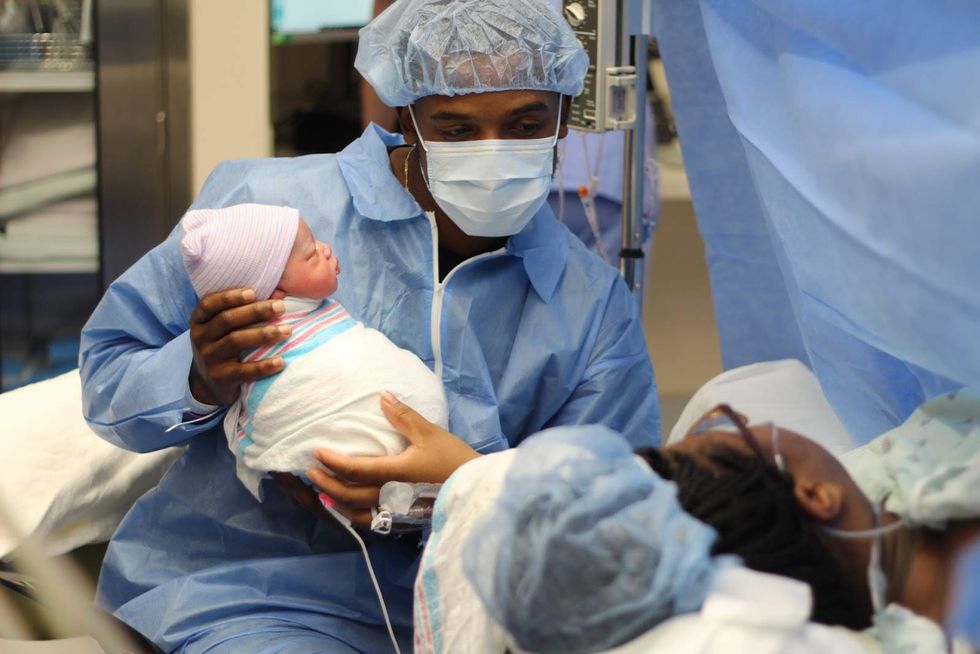
Shaq Young, Columbia, SC
How was it entering fatherhood and then the pandemic hitting soon after?
"My wife was actually about to return to work right before quarantine. I had gone back to work February 9 and on March 13, everything shut down. Actually, lockdown was somewhat of a blessing because I get to spend more time with the baby while home."
How has it been navigating working from home and having a newborn?
"The challenging part is juggling working the same schedule since my wife and I are both teachers. I'm a PE teacher so I try to go last with my work stuff so that my wife can get her work done while I look after [our daughter] Karter. I've been doing videos of physical education with kids and pre-recording the videos help with the schedule. Also, having open hours for the kids to reach out if they need me helps."
What has been the hardest part so far?
"Not having the freedom to go out and get a breather, or having a break. Just having a newborn baby has been a struggle since it's a new experience for us. Also, no one has visited since March 13, but before then we had visitors twice a week almost. We had a picnic in the park for Mother's Day but it was still different."
What is one word you would use to describe becoming a father during this time?
"'Roller coaster'. People enjoy riding because it's fun. And throughout the roller coaster, there are ups and downs but when you get off, it's a fun ride. [I say that] partially due to quarantine and partially due to just being new parents and having a newborn."
Marcus Rice, Atlanta, GA
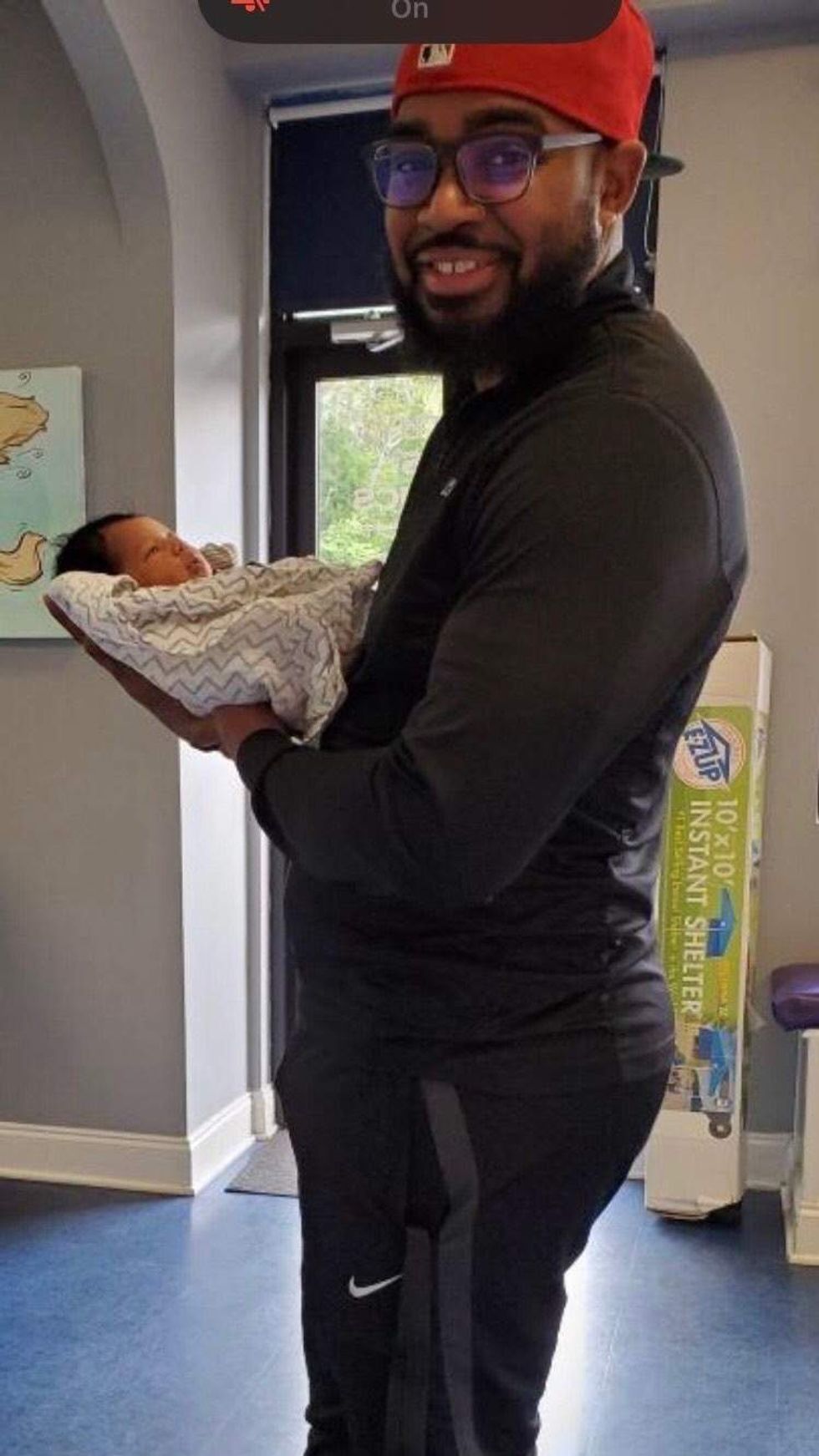
How was your hospital experience in the middle of a pandemic?
"The hospital experience was rather unique. We had to go in through a separate entrance and there were additional steps taken before being admitted. Everyone had to be screened, if you showed any symptoms you couldn't go in. The hospital was actually calm, there were not a lot of people. Everyone stayed inside of their rooms. No visitors were allowed but I did have the option to leave and get food."
How was the transition back home from the hospital?
"We are both full-time students so we didn't really need to leave the house. We've used grocery and food delivery services for meals. We've been super cautious having people around the baby, even more so now than ever, so no visitors."
Once outside fully opens back up, what's the first thing you want to do with your daughter?
"Go to the pool, or to the park. If we weren't in quarantine, we would have wanted to be out. And enjoy being outside. Maybe even do a photoshoot for her, and start creating memories."
What is one word you would use to describe becoming a father during this time?
"'Blessing'."
Featured image by Shutterstock
Because We Are Still IT, Girl: It Girl 100 Returns
Last year, when our xoNecole team dropped our inaugural It Girl 100 honoree list, the world felt, ahem, a bit brighter.
It was March 2024, and we still had a Black woman as the Vice President of the United States. DEI rollbacks weren’t being tossed around like confetti. And more than 300,000 Black women were still gainfully employed in the workforce.
Though that was just nineteen months ago, things were different. Perhaps the world then felt more receptive to our light as Black women.
At the time, we launched It Girl 100 to spotlight the huge motion we were making as dope, GenZennial Black women leaving our mark on culture. The girls were on the rise, flourishing, drinking their water, minding their business, leading companies, and learning to do it all softly, in rest. We wanted to celebrate that momentum—because we love that for us.
So, we handpicked one hundred It Girls who embody that palpable It Factor moving through us as young Black women, the kind of motion lighting up the world both IRL and across the internet.
It Girl 100 became xoNecole’s most successful program, with the hashtag organically reaching more than forty million impressions on Instagram in just twenty-four hours. Yes, it caught on like wildfire because we celebrated some of the most brilliant and influential GenZennial women of color setting trends and shaping culture. But more than that, it resonated because the women we celebrated felt seen.
Many were already known in their industries for keeping this generation fly and lit, but rarely received recognition or flowers. It Girl 100 became a safe space to be uplifted, and for us as Black women to bask in what felt like an era of our brilliance, beauty, and boundless influence on full display.
And then, almost overnight, it was as if the rug was pulled from under us as Black women, as the It Girls of the world.
Our much-needed, much-deserved season of ease and soft living quickly metamorphosed into a time of self-preservation and survival. Our motion and economic progression seemed strategically slowed, our light under siege.
The air feels heavier now. The headlines colder. Our Black girl magic is being picked apart and politicized for simply existing.
With that climate shift, as we prepare to launch our second annual It Girl 100 honoree list, our team has had to dig deep on the purpose and intention behind this year’s list. Knowing the spirit of It Girl 100 is about motion, sauce, strides, and progression, how do we celebrate amid uncertainty and collective grief when the juice feels like it is being squeezed out of us?
As we wrestled with that question, we were reminded that this tension isn’t new. Black women have always had to find joy in the midst of struggle, to create light even in the darkest corners. We have carried the weight of scrutiny for generations, expected to be strong, to serve, to smile through the sting. But this moment feels different. It feels deeply personal.
We are living at the intersection of liberation and backlash. We are learning to take off our capes, to say no when we are tired, to embrace softness without apology.
And somehow, the world has found new ways to punish us for it.

In lifestyle, women like Kayla Nicole and Ayesha Curry have been ridiculed for daring to choose themselves. Tracee Ellis Ross was labeled bitter for speaking her truth about love. Meghan Markle, still, cannot breathe without critique.
In politics, Kamala Harris, Letitia James, and Jasmine Crockett are dragged through the mud for standing tall in rooms not built for them.
In sports, Angel Reese, Coco Gauff, and Taylor Townsend have been reminded that even excellence will not shield you from racism or judgment.

In business, visionaries like Diarrha N’Diaye-Mbaye and Melissa Butler are fighting to keep their dreams alive in an economy that too often forgets us first.
Even our icons, Beyoncé, Serena, and SZA, have faced criticism simply for evolving beyond the boxes society tried to keep them in.
From everyday women to cultural phenoms, the pattern is the same. Our light is being tested.

And yet, somehow, through it all, we are still showing up as that girl, and that deserves to be celebrated.
Because while the world debates our worth, we keep raising our value. And that proof is all around us.
This year alone, Naomi Osaka returned from motherhood and mental health challenges to reach the semifinals of the US Open. A’ja Wilson claimed another MVP, reminding us that beauty and dominance can coexist. Brandy and Monica are snatching our edges on tour. Kahlana Barfield Brown sold out her new line in the face of a retailer that had been canceled. And Melissa Butler’s company, The Lip Bar, is projecting a forty percent surge in sales.

We are no longer defining strength by how much pain we can endure. We are defining it by the unbreakable light we continue to radiate.
We are the women walking our daily steps and also continuing to run solid businesses. We are growing in love, taking solo trips, laughing until it hurts, raising babies and ideas, drinking our green juice, and praying our peace back into existence.
We are rediscovering the joy of rest and realizing that softness is not weakness, it is strategy.
And through it all, we continue to lift one another. Emma Grede is creating seats at the table. Valeisha Butterfield has started a fund for jobless Black women. Arian Simone is leading in media with fearless conviction. We are pouring into each other in ways the world rarely sees but always feels.

So yes, we are in the midst of societal warfare. Yes, we are being tested. Yes, we are facing economic strain, political targeting, and public scrutiny. But even war cannot dim a light that is divinely ours.
And we are still shining.
And we are still softening.
And we are still creating.
And we are still It.

That is the quiet magic of Black womanhood, our ability to hold both truth and triumph in the same breath, to say yes, and to life’s contradictions.
It is no coincidence that this year, as SheaMoisture embraces the message “Yes, And,” they stand beside us as partners in celebrating this class of It Girls. Because that phrase, those two simple words, capture the very essence of this moment.
Yes, we are tired. And we are still rising.
Yes, we are questioned. And we are the answer.
Yes, we are bruised. And we are still beautiful.

This year’s It Girl 100 is more than a list. It is a love letter to every Black woman who dares to live out loud in a world that would rather she whisper. This year’s class is living proof of “Yes, And,” women who are finding ways to thrive and to heal, to build and to rest, to lead and to love, all at once.
It is proof that our joy is not naive, our success not accidental. It is the reminder that our light has never needed permission.
So without further ado, we celebrate the It Girl 100 Class of 2025–2026.
We celebrate the millions of us who keep doing it with grace, grit, and glory.
Because despite it all, we still shine.
Because we are still her.
Because we are still IT, girl.
Meet all 100 women shaping culture in the It Girl 100 Class of 2025. View the complete list of honorees here.
Featured image by xoStaff
Because We Are Still IT, Girl: It Girl 100 Returns
Last year, when our xoNecole team dropped our inaugural It Girl 100 honoree list, the world felt, ahem, a bit brighter.
It was March 2024, and we still had a Black woman as the Vice President of the United States. DEI rollbacks weren’t being tossed around like confetti. And more than 300,000 Black women were still gainfully employed in the workforce.
Though that was just nineteen months ago, things were different. Perhaps the world then felt more receptive to our light as Black women.
At the time, we launched It Girl 100 to spotlight the huge motion we were making as dope, GenZennial Black women leaving our mark on culture. The girls were on the rise, flourishing, drinking their water, minding their business, leading companies, and learning to do it all softly, in rest. We wanted to celebrate that momentum—because we love that for us.
So, we handpicked one hundred It Girls who embody that palpable It Factor moving through us as young Black women, the kind of motion lighting up the world both IRL and across the internet.
It Girl 100 became xoNecole’s most successful program, with the hashtag organically reaching more than forty million impressions on Instagram in just twenty-four hours. Yes, it caught on like wildfire because we celebrated some of the most brilliant and influential GenZennial women of color setting trends and shaping culture. But more than that, it resonated because the women we celebrated felt seen.
Many were already known in their industries for keeping this generation fly and lit, but rarely received recognition or flowers. It Girl 100 became a safe space to be uplifted, and for us as Black women to bask in what felt like an era of our brilliance, beauty, and boundless influence on full display.
And then, almost overnight, it was as if the rug was pulled from under us as Black women, as the It Girls of the world.
Our much-needed, much-deserved season of ease and soft living quickly metamorphosed into a time of self-preservation and survival. Our motion and economic progression seemed strategically slowed, our light under siege.
The air feels heavier now. The headlines colder. Our Black girl magic is being picked apart and politicized for simply existing.
With that climate shift, as we prepare to launch our second annual It Girl 100 honoree list, our team has had to dig deep on the purpose and intention behind this year’s list. Knowing the spirit of It Girl 100 is about motion, sauce, strides, and progression, how do we celebrate amid uncertainty and collective grief when the juice feels like it is being squeezed out of us?
As we wrestled with that question, we were reminded that this tension isn’t new. Black women have always had to find joy in the midst of struggle, to create light even in the darkest corners. We have carried the weight of scrutiny for generations, expected to be strong, to serve, to smile through the sting. But this moment feels different. It feels deeply personal.
We are living at the intersection of liberation and backlash. We are learning to take off our capes, to say no when we are tired, to embrace softness without apology.
And somehow, the world has found new ways to punish us for it.

In lifestyle, women like Kayla Nicole and Ayesha Curry have been ridiculed for daring to choose themselves. Tracee Ellis Ross was labeled bitter for speaking her truth about love. Meghan Markle, still, cannot breathe without critique.
In politics, Kamala Harris, Letitia James, and Jasmine Crockett are dragged through the mud for standing tall in rooms not built for them.
In sports, Angel Reese, Coco Gauff, and Taylor Townsend have been reminded that even excellence will not shield you from racism or judgment.

In business, visionaries like Diarrha N’Diaye-Mbaye and Melissa Butler are fighting to keep their dreams alive in an economy that too often forgets us first.
Even our icons, Beyoncé, Serena, and SZA, have faced criticism simply for evolving beyond the boxes society tried to keep them in.
From everyday women to cultural phenoms, the pattern is the same. Our light is being tested.

And yet, somehow, through it all, we are still showing up as that girl, and that deserves to be celebrated.
Because while the world debates our worth, we keep raising our value. And that proof is all around us.
This year alone, Naomi Osaka returned from motherhood and mental health challenges to reach the semifinals of the US Open. A’ja Wilson claimed another MVP, reminding us that beauty and dominance can coexist. Brandy and Monica are snatching our edges on tour. Kahlana Barfield Brown sold out her new line in the face of a retailer that had been canceled. And Melissa Butler’s company, The Lip Bar, is projecting a forty percent surge in sales.

We are no longer defining strength by how much pain we can endure. We are defining it by the unbreakable light we continue to radiate.
We are the women walking our daily steps and also continuing to run solid businesses. We are growing in love, taking solo trips, laughing until it hurts, raising babies and ideas, drinking our green juice, and praying our peace back into existence.
We are rediscovering the joy of rest and realizing that softness is not weakness, it is strategy.
And through it all, we continue to lift one another. Emma Grede is creating seats at the table. Valeisha Butterfield has started a fund for jobless Black women. Arian Simone is leading in media with fearless conviction. We are pouring into each other in ways the world rarely sees but always feels.

So yes, we are in the midst of societal warfare. Yes, we are being tested. Yes, we are facing economic strain, political targeting, and public scrutiny. But even war cannot dim a light that is divinely ours.
And we are still shining.
And we are still softening.
And we are still creating.
And we are still It.

That is the quiet magic of Black womanhood, our ability to hold both truth and triumph in the same breath, to say yes, and to life’s contradictions.
It is no coincidence that this year, as SheaMoisture embraces the message “Yes, And,” they stand beside us as partners in celebrating this class of It Girls. Because that phrase, those two simple words, capture the very essence of this moment.
Yes, we are tired. And we are still rising.
Yes, we are questioned. And we are the answer.
Yes, we are bruised. And we are still beautiful.

This year’s It Girl 100 is more than a list. It is a love letter to every Black woman who dares to live out loud in a world that would rather she whisper. This year’s class is living proof of “Yes, And,” women who are finding ways to thrive and to heal, to build and to rest, to lead and to love, all at once.
It is proof that our joy is not naive, our success not accidental. It is the reminder that our light has never needed permission.
So without further ado, we celebrate the It Girl 100 Class of 2025–2026.
We celebrate the millions of us who keep doing it with grace, grit, and glory.
Because despite it all, we still shine.
Because we are still her.
Because we are still IT, girl.
Meet all 100 women shaping culture in the It Girl 100 Class of 2025. View the complete list of honorees here.
Featured image by xoStaff