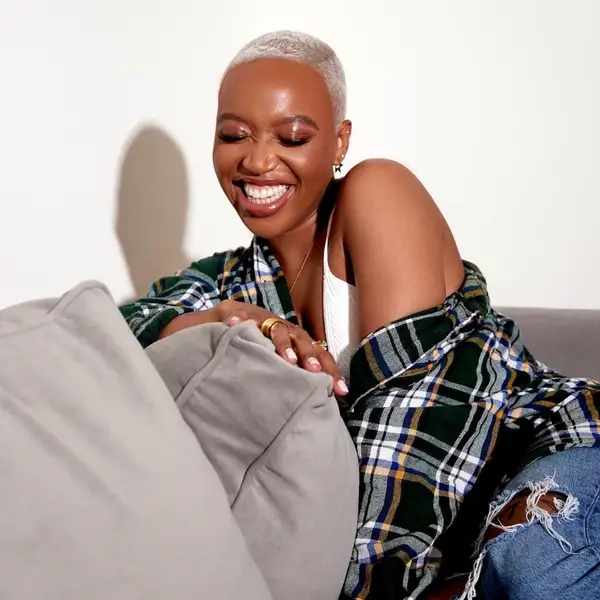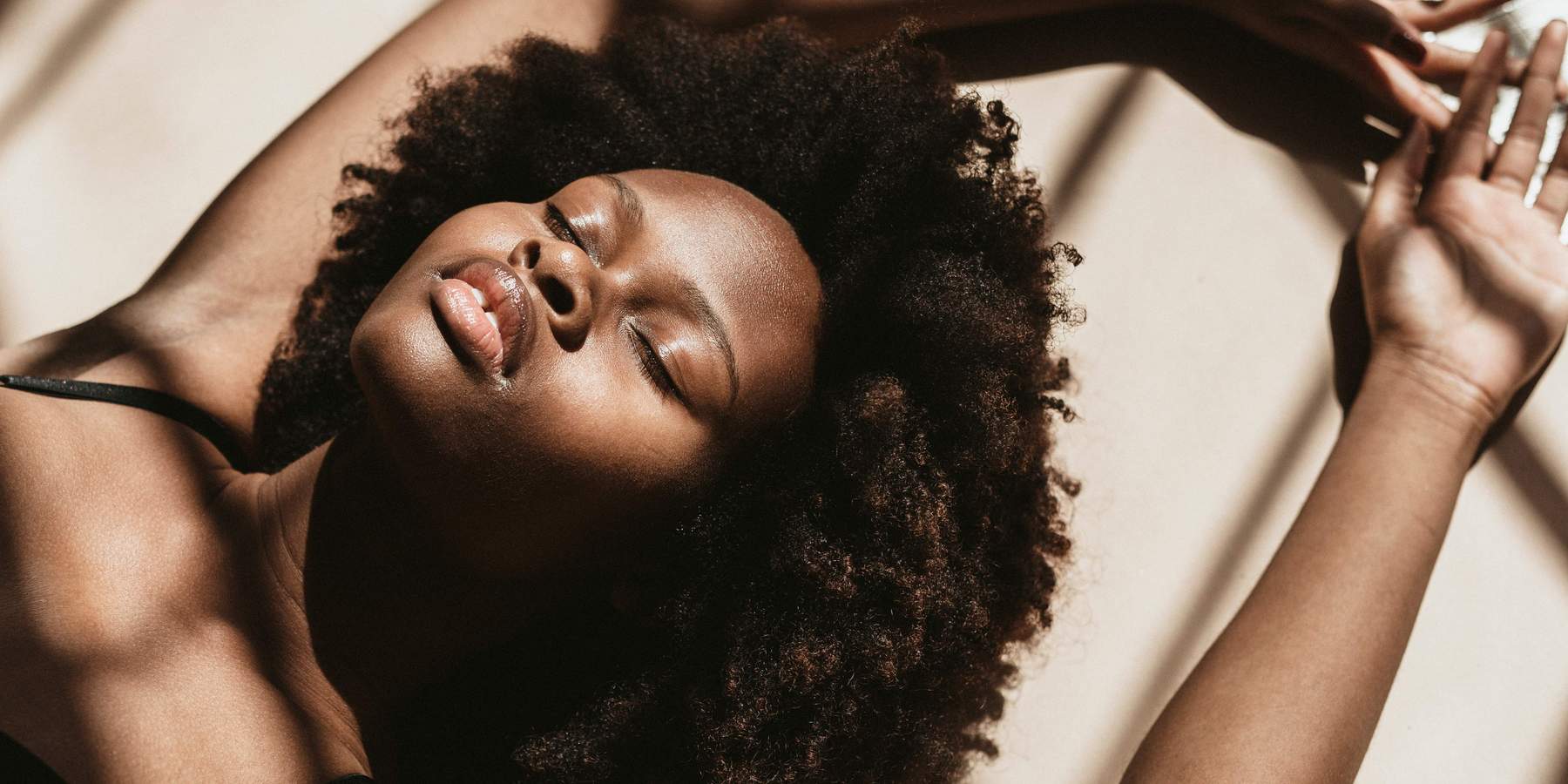
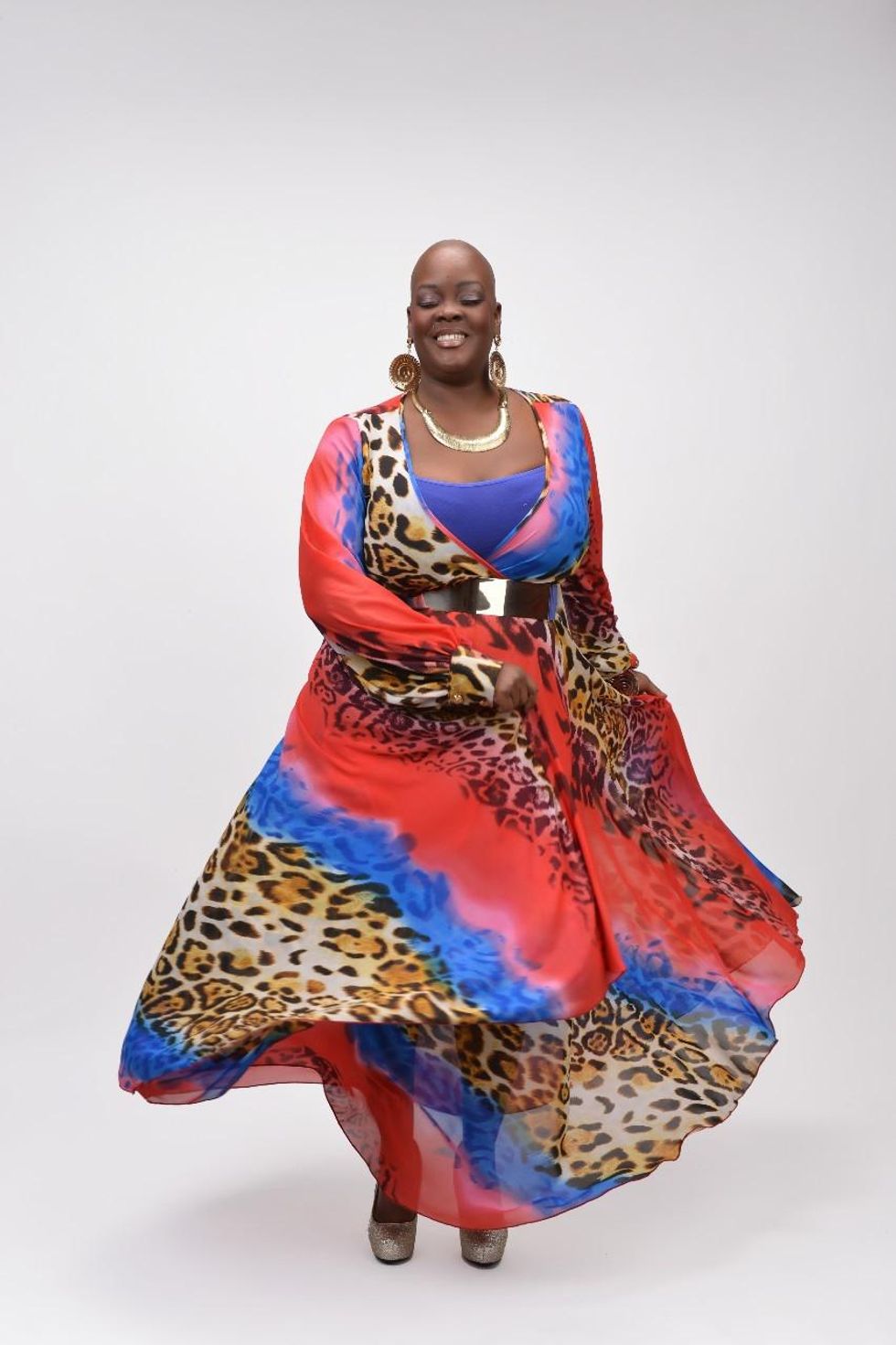
If a breath of fresh air was a person, it would be Sonya Renee Taylor. Even via our Zoom call, the poet, best-selling author, and social justice advocate exudes that perfect mix of grace, intellect, and tell-it-like-it-is candor of your favorite auntie or podcast host. Taylor, who started The Body Is Not An Apology movement in 2011 and wrote The New York Times best-seller The Body Is Not An Apology: The Power of Radical Self-Love in 2018, has used her voice and platform to create a profound safe space, and drive a movement behind being unapologetically yourself as a Black woman and embracing all that comes with that journey.
Sonya has also powerfully taken on the dismantling of systems set up in the U.S. that support body-based oppression and stifle true "radical self-love," stepping beyond shame and so-called societal "norms" of what being a woman supposedly should be and into inner transformation that blossoms divinely. I had a conversation with Taylor that not only blessed my soul—and reaffirmed my own journey toward self-love— about what exactly “radical self-love” means, how concepts of body positivity have evolved—or not—and how we, as Black women, can take back our power to define womanhood on our own terms.
Courtesy of Sonya Renee Taylor
xoNecole: So, you've been a fierce advocate for 'radical' self-love, and your poetry as well as your platform have seen global recognition. You've touched so many people. How did the idea for your platform and book, 'The Body Is Not An Apology,' come about?
Sonya Renee Taylor: From a place of love. I’d asked my friend about her sexual health choices and why she wasn’t using protection with this person that I knew was a casual partner. And my friend responded very honestly–very transparently—and shared that because of her disability–she has cerebral palsy—that she felt it made it difficult already to be sexual so she didn’t feel entitled to ask this person to use a condom.
xoNecole: Oh wow...no!
SRT: And my immediate response—that I’m very clear today, was through me, not of me—I said, "Your body is not an apology. It’s not something you offer someone to say, 'Sorry for my disability.'" And those words resonated. They stuck for me. They felt like I wasn’t just sharing a message with a friend. I also was communicating something that I needed to know too, and you know, at the time I was a poet and so when something particularly compelling showed up, I wrote about it. I was going to write the poem with this refrain, “The body is not an apology.” So I wrote that poem, and I began performing it and sharing it.
I believe that language is always making things manifest, so what we speak over our lives always comes into being—good, bad, or indifferent. And so those words—the words I had written in this poem–started challenging me to look at the places where I was still living like my own body was an apology. In a small way, a few months prior, I’d taken a photo of myself—a selfie in a black corset—and I felt sexy and delicious. I also felt like I didn’t have a right to feel sexy and delicious in this fat, dark-skin body and so I hid the picture away until February 9, 2011.
"I believe that language is always making things manifest, so what we speak over our lives always comes into being—good, bad, or indifferent."
Prompted by someone who posted a photo of a plus-sized model, naked, on my Instagram page, I went and googled her quickly and one of the first ads that came up was with her in a black corset for a lingerie campaign. I just felt inspired. Why am I hiding this thing that I feel good about? What would it look like if I just posted this picture? So I posted it and asked people on Facebook, "Post a picture where you feel beautiful and powerful in your body." The next day about 30 people had tagged me in photos. I was like, ‘Maybe we just need a little space where we’re allowed to affirm ourselves and each other. So maybe I’ll start a little Facebook page and I’ll name it after this poem, and I’ll call it, ‘Your Body Is Not An Apology.’'
So, I started a Facebook page and that was 11 years ago, a New York Times best-seller-ago and a multimedia company ago.
xoNecole: That's amazing! There are a lot of women who feel like they have to dishonor themselves in order to appease a partner sexually. I love that you were that friend. Now tell me this: How has the concept of self-love evolved for you today, considering your success and considering that body positivity and self-love now seem to be trending topics. What have you seen in terms of evolution, if any?
SRT: I think that part of the reason the word ‘radical’ ended up on self-love—when I started this 11 years ago, there were less than one page of hits on the page of ‘radical self-love—it was me and one other person. [Laughs] At the time, I was really talking about body empowerment and how we honor all bodies. What’s happened over time, for me, it’s become very clear that our relationship to self-worth— to our sense of enoughness—filters into every aspect of existence. And not just our existence but everybody’s existence. This thing we think of as this very individual experience that we’re having by ourselves—in how we relate to our body—actually has global, political, and socioeconomic consequences.
‘Radical’ is so important in self-love because I want people to make the connection that I’m talking about a kind of love that changes systems, that I’m talking about a kind of love that transforms policies, that transforms institutions. I’m talking about a kind of love that transforms how we show up in the world, which consequently changes how the world exists. And I have seen, over and over again in my own life, that when I am connected to [and] moving from my own radical self-love, I am looking at how the world has said I’m supposed to experience being this fat, Black, bald, queer, neurodivergent woman—what the world says that’s supposed to mean—versus what I inherently understand what my true self knows about that, which is that each and every aspect of me is divine and that when I buy into what the system has told me to buy into about that, that I reinforce all of those negative aspects of the system.
"It’s become very clear that our relationship to self-worth— to our sense of enoughness—filters into every aspect of existence. And not just our existence but everybody’s existence. This thing we think of as this very individual experience that we’re having by ourselves—in how we relate to our body—actually has global, political, and socioeconomic consequences."
If I listen to what the world says about being a dark-skinned Black woman, I immediately become an agent of anti-Blackness. I immediately become an agent of white supremacist delusion. When I believe what the world tells me about my fat body, I immediately become an agent of fatphobia. And so, all of those systems stand because so many of us have been indoctrinated to be agents for them, knowingly and unknowingly. So, every time I tap into my own radical self-love, I divest from that job I was given, that I didn’t even know I was given, to keep furthering those systems.
And I think that that is where body positivity misses the boat because body positivity has been co-opted and turned into this incredibly apolitical thing. Body positivity was born out of the fat liberation movement of the ‘70s, which was started by queer women, disabled communities, and people of color, and it was co-opted so that white ladies could feel good in their size 14 jeans. That’s cute. I want that for people, I suppose.
I don’t want you to feel terrible about yourself, but how does that impact the wage gap for Black women? How does that stop extra-judicial killing by the police? It doesn’t, and the radical self-love I’m talking about interrupts those systems, interrupts those ideas that there are bodies that are not worthy of resources, opportunity, and life. And so, consequently, we devalue those bodies. [Transforming that system is] what radical self-love does. And to me, that’s an inherently political act.
xoNecole: So let's talk more about redefining 'woman' in that context then. Oftentimes, being a Black woman, we were raised with concepts and issues with our bodies, from our grandmas to our moms to our aunties. For me, I grew up tall and slim, so anything above a size 6 was said to be "fat" in a negative way in my family. How do we as Black women really embrace 'radical' self-love, especially considering some of the things we've been taught about ourselves?
SRT: One of the things I advocate for is that first, we have to understand where those [negative messages] come from. Oftentimes we think that we created them. Like, ‘I have this judgment about myself, this thing that popped up in my head,’ or ‘I have this judgment about myself and the boy in 8th grade gave it to me or my grandmama gave it to me.’ So we have this very centralized focus of responsibility. I encourage people to zoom the lens out and to understand that it’s an individual experience they’re having inside of a larger context of systems and structures. Your grandmother got the message that ‘fat’ was bad. Where did she get that message from?
She got it from a campaign that started in the 19th century, the late 1800s, right after the abolition of slavery, where white people needed to figure out new ways to reconstruct their power. They needed to figure out ways to reaffirm their superiority. Dieting and control of the body became that new way. And we know about this because, in the book Fearing the Black Body by Sophia Strings, she talks about the historical and racial origins of fatphobia. So that wasn’t an idea your grandma just came up with. It was an idea inside a larger system—a system we call white supremacy, inside of what I call white supremacist delusion. I don’t want to get it twisted. Inside of that system is another doll—that doll is called fatphobia. And then, inside of that system, there are communities who pass on, and become unwitting agents of that system because they’ve been told these messages.
If you can get [to] that larger level, you can recognize that these ideas are not my ideas. They are the ideas of a larger system that’s designed to control me and manipulate me, that’s designed to further marginalize and oppress me. I don’t want to be an agent of that. So, then what do I do? I start raising the consciousness and I start taking new action based off of that awareness. “Well, this is what I used to do, based on that indoctrination. What can I do now? Well, maybe I could make a little money jar, and every time I say something fatphobic about myself, I put a little something in there.” That’s my reminder to invest in myself and divest from that system.
There are small little activities we can do to help interrupt old patterns—those old stories of womanhood that often come out of those systems, but it’s important to recognize that it was the system that told us that. It’s not our authentic self. Authentic self understands our inherent worthiness.
xoNecole: A lot of us look in the mirror and see those delusions. I've never outlived the negative feelings of my Granny calling me "fat" when I gained any amount of weight. It makes you feel like you're not enough. It's taken me decades to undo the effects of that, with therapy as well. Are you an advocate of therapy as a resource to tap into that 'radical' self-love?
SRT: Absolutely. I'm a wildly unapologetic advocate of therapy. My therapist is my longest relationship. We’ve been together for 10 years. So one of the things I think particularly Black women need to give themselves permission to do is to invest in ourselves. We’ve been so conditioned to take care of everybody else—to take care of everybody else’s well-being, to look out for everyone else. And what I am a profound advocate of is that it’s of no use to anyone to give from a dwindling cup.
What I give from is my overflow and I give from my overflow for two reasons: One, what’s in my cup belongs to me. That’s how I sustain myself. So what you give is more vibrant and more beautiful from overflow. And two, I am not doing anyone any favors—I’m not actually offering the world a real gift to, like, have my backwash or the dribble at the bottom of my cup. I make sure that my cup is full first so that whatever it is I’m giving is a generous and joyful gift to the world and that, to me, relates to therapy or whatever healing modalities that we decide to undertake.
"What I give from is my overflow and I give from my overflow for two reasons: One, what’s in my cup belongs to me. That’s how I sustain myself. So what you give is more vibrant and more beautiful from overflow. And two, I am not doing anyone any favors—I’m not actually offering the world a real gift to, like, have my backwash or the dribble at the bottom of my cup. I make sure that my cup is full first so that whatever it is I’m giving is a generous and joyful gift to the world and that, to me, relates to therapy or whatever healing modalities that we decide to undertake."
First, let me learn to take good, good, good, good, good care of me. Because, one, so that I can give a fantastic instruction guide for whoever else shows up and says they want to do the job, and, two, so that when I’m offering something to the world, it never has the bitter taste of resentment and it never has the flavorlessness of exhaustion. It doesn’t have any of those qualities because it’s so full of what it is that I, first, offer myself.
Find out more about Sonya Renee Taylor and The Body Is Not An Apology via her Instagram or website.
Featured image courtesy of Sonya Renee Taylor
Because We Are Still IT, Girl: It Girl 100 Returns
Last year, when our xoNecole team dropped our inaugural It Girl 100 honoree list, the world felt, ahem, a bit brighter.
It was March 2024, and we still had a Black woman as the Vice President of the United States. DEI rollbacks weren’t being tossed around like confetti. And more than 300,000 Black women were still gainfully employed in the workforce.
Though that was just nineteen months ago, things were different. Perhaps the world then felt more receptive to our light as Black women.
At the time, we launched It Girl 100 to spotlight the huge motion we were making as dope, GenZennial Black women leaving our mark on culture. The girls were on the rise, flourishing, drinking their water, minding their business, leading companies, and learning to do it all softly, in rest. We wanted to celebrate that momentum—because we love that for us.
So, we handpicked one hundred It Girls who embody that palpable It Factor moving through us as young Black women, the kind of motion lighting up the world both IRL and across the internet.
It Girl 100 became xoNecole’s most successful program, with the hashtag organically reaching more than forty million impressions on Instagram in just twenty-four hours. Yes, it caught on like wildfire because we celebrated some of the most brilliant and influential GenZennial women of color setting trends and shaping culture. But more than that, it resonated because the women we celebrated felt seen.
Many were already known in their industries for keeping this generation fly and lit, but rarely received recognition or flowers. It Girl 100 became a safe space to be uplifted, and for us as Black women to bask in what felt like an era of our brilliance, beauty, and boundless influence on full display.
And then, almost overnight, it was as if the rug was pulled from under us as Black women, as the It Girls of the world.
Our much-needed, much-deserved season of ease and soft living quickly metamorphosed into a time of self-preservation and survival. Our motion and economic progression seemed strategically slowed, our light under siege.
The air feels heavier now. The headlines colder. Our Black girl magic is being picked apart and politicized for simply existing.
With that climate shift, as we prepare to launch our second annual It Girl 100 honoree list, our team has had to dig deep on the purpose and intention behind this year’s list. Knowing the spirit of It Girl 100 is about motion, sauce, strides, and progression, how do we celebrate amid uncertainty and collective grief when the juice feels like it is being squeezed out of us?
As we wrestled with that question, we were reminded that this tension isn’t new. Black women have always had to find joy in the midst of struggle, to create light even in the darkest corners. We have carried the weight of scrutiny for generations, expected to be strong, to serve, to smile through the sting. But this moment feels different. It feels deeply personal.
We are living at the intersection of liberation and backlash. We are learning to take off our capes, to say no when we are tired, to embrace softness without apology.
And somehow, the world has found new ways to punish us for it.

In lifestyle, women like Kayla Nicole and Ayesha Curry have been ridiculed for daring to choose themselves. Tracee Ellis Ross was labeled bitter for speaking her truth about love. Meghan Markle, still, cannot breathe without critique.
In politics, Kamala Harris, Letitia James, and Jasmine Crockett are dragged through the mud for standing tall in rooms not built for them.
In sports, Angel Reese, Coco Gauff, and Taylor Townsend have been reminded that even excellence will not shield you from racism or judgment.

In business, visionaries like Diarrha N’Diaye-Mbaye and Melissa Butler are fighting to keep their dreams alive in an economy that too often forgets us first.
Even our icons, Beyoncé, Serena, and SZA, have faced criticism simply for evolving beyond the boxes society tried to keep them in.
From everyday women to cultural phenoms, the pattern is the same. Our light is being tested.

And yet, somehow, through it all, we are still showing up as that girl, and that deserves to be celebrated.
Because while the world debates our worth, we keep raising our value. And that proof is all around us.
This year alone, Naomi Osaka returned from motherhood and mental health challenges to reach the semifinals of the US Open. A’ja Wilson claimed another MVP, reminding us that beauty and dominance can coexist. Brandy and Monica are snatching our edges on tour. Kahlana Barfield Brown sold out her new line in the face of a retailer that had been canceled. And Melissa Butler’s company, The Lip Bar, is projecting a forty percent surge in sales.

We are no longer defining strength by how much pain we can endure. We are defining it by the unbreakable light we continue to radiate.
We are the women walking our daily steps and also continuing to run solid businesses. We are growing in love, taking solo trips, laughing until it hurts, raising babies and ideas, drinking our green juice, and praying our peace back into existence.
We are rediscovering the joy of rest and realizing that softness is not weakness, it is strategy.
And through it all, we continue to lift one another. Emma Grede is creating seats at the table. Valeisha Butterfield has started a fund for jobless Black women. Arian Simone is leading in media with fearless conviction. We are pouring into each other in ways the world rarely sees but always feels.

So yes, we are in the midst of societal warfare. Yes, we are being tested. Yes, we are facing economic strain, political targeting, and public scrutiny. But even war cannot dim a light that is divinely ours.
And we are still shining.
And we are still softening.
And we are still creating.
And we are still It.

That is the quiet magic of Black womanhood, our ability to hold both truth and triumph in the same breath, to say yes, and to life’s contradictions.
It is no coincidence that this year, as SheaMoisture embraces the message “Yes, And,” they stand beside us as partners in celebrating this class of It Girls. Because that phrase, those two simple words, capture the very essence of this moment.
Yes, we are tired. And we are still rising.
Yes, we are questioned. And we are the answer.
Yes, we are bruised. And we are still beautiful.

This year’s It Girl 100 is more than a list. It is a love letter to every Black woman who dares to live out loud in a world that would rather she whisper. This year’s class is living proof of “Yes, And,” women who are finding ways to thrive and to heal, to build and to rest, to lead and to love, all at once.
It is proof that our joy is not naive, our success not accidental. It is the reminder that our light has never needed permission.
So without further ado, we celebrate the It Girl 100 Class of 2025–2026.
We celebrate the millions of us who keep doing it with grace, grit, and glory.
Because despite it all, we still shine.
Because we are still her.
Because we are still IT, girl.
Meet all 100 women shaping culture in the It Girl 100 Class of 2025. View the complete list of honorees here.
Featured image by xoStaff
It Girl 100 Class Of 2025: Meet The Empire Builders You Need To Know
She's a boss, and she's minding the business that pays her. Literally and figuratively.
Whether she's launching her next business venture, turning passion projects into paper, or building her side hustle into a legacy, she's proof that visionary women don't wait for a seat at the table. She builds her own, then pulls up a chair for the next woman. The empire-builders of xoNecole's 2025 It Girl 100 lead with purpose and profit, spinning their "why" into wealth.
This year's It Girl 100 is a mosaic of brilliance, spotlighting entrepreneurs, cultural disruptors, beauty visionaries, and boundary-pushing creatives who embody the spirit of "Yes, And." This digital celebration honors the women who embrace every facet of themselves, proving you can chase the bag and still honor your desire to live life softly.
The women repping for the Business category are empire builders shaping the next generation of entrepreneurship, as founders, investors, and CEOs, shifting culture while expanding their brands and their net worth.
Here's the roll call for xoNecole's It Girl 100 Class of 2025: Business.

Artist and Founder of GROWN Media Kaya Nova
Courtesy
Kaya Nova
Her Handle: @thekayanova
Her Title: Artist and Founder, GROWN Media
Who's That It Girl: Kaya Nova is the artist-entrepreneur whose voice bridges melody and empowerment as the founder of GROWN Mag and GROWN Media. We celebrate her for turning her artistry into activism, creating music and experiences that honor womanhood, vulnerability, and the beauty of becoming your full self.
Her "Yes, And" Statement: "Yes, I'm multitalented and I'm powerful beyond measure."

Founder and CEO of Vineyard Icon Erin Goldson
Courtesy
Erin Goldson
Her Handle: @eringoldson
Her Title: Founder and CEO of Vineyard Icon
Who's That It Girl: We are inspired by Erin Goldson, brand marketer and founder of Vineyard Icon, a platform celebrating Martha’s Vineyard culture and creativity. She blends strategy and community building with effortless polish to turn ideas into impact.

Founder and CEO, My Happy Flo Necole Kane
Courtesy
Necole Kane
Her Handle: @hellonecole
Her Title: Founder and CEO, My Happy Flo
Who's That It Girl: Necole Kane is a media mogul and entrepreneur who founded NecoleBitchie.com and xoNecole.com. She now leads feminine wellness brand My Happy Flo, advocating for women's hormonal health through plant-based supplements and holistic solutions.

FORVR MOOD Co-Founder and Content Creator Jackie Aina
Credit: Kirstin Enlow
Jackie Aina
Her Handle: @jackieaina
Her Title: FORVR MOOD Co-Founder and Content Creator
Who's That It Girl: A trailblazer who changed the face of beauty forever, Jackie Asamoah built a legacy on authenticity and advocacy. We love her for redefining luxury through inclusion and for reminding women everywhere that self-care is a radical, joyful act.
Her "Yes, And" Statement: "Yes, I'm owning my power and finding balance in it."

Founder and Investor Shannae Ingleton Smith
Courtesy
Shannae Ingleton Smith
Her Handle: @torontoshay
Her Title: Founder and Investor
Who's That It Girl: Shannae Ingleton Smith is President and Co-founder of Kensington Grey, an influencer agency representing 200+ creators. A former media sales executive, she now invests in creator-led startups, including 12PM Studios.
Her "Yes, And" Statement: "Yes, I’m breaking ceilings and expanding the table."

Founder of LORVAE De'arra Taylor
Courtesy
De'arra Taylor
Her Handle: @dearra
Her Title: Founder of Fashion Brand LORVAE
Who's That It Girl: We celebrate De'arra Taylor as the founder and CEO of LORVAE, an eyewear brand built on reinvention, confidence, and bold individuality. Her creative direction turns sunglasses into statements and community into a lifestyle.

Founder of The Lip Bar Melissa Butler
Courtesy
Melissa Butler
Her Handle: @melissarbutler
Her Title: Founder of The Lip Bar
Who's That It Girl: Melissa Butler transformed The Lip Bar from a kitchen concept into a multimillion-dollar movement. We honor her for challenging industry norms and proving that boldness, beauty, and business brilliance can coexist unapologetically.

Director of Cultural Strategy & Innovation Denetrias Charlemagne
Courtesy
Denetrias “Dee” Charlemagne
Her Handle: @dcharlemagne
Her Title: Director of Cultural Strategy & Innovation, Walmart
Who's That It Girl: A powerhouse behind purpose-driven partnerships, Denetrias Charlemagne bridges culture and commerce at Walmart with grace and innovation. We honor her for amplifying representation in retail and using her platform to build spaces where authenticity and excellence thrive.

Chief Brand Officer at Unrivaled Kirby Porter
Courtesy
Kirby Porter
Her Handle: @kirbyporter
Her Title: Chief Brand Officer, Unrivaled
Who's That It Girl: Strategic, visionary, and driven by impact, Kirby Porter is building the future of athlete branding. We’re inspired by her as the founder of New Game Labs and Chief Brand Officer at Unrivaled, showing that strategy can be soulful and sport can be storytelling.

Founder and CEO of EveryStylishGirl Nana Agyemang
Courtesy
Nana Agyemang
Her Handle: @itsreallynana
Her Title: Founder and CEO of EveryStylishGirl
Who's That It Girl: A journalist turned founder, Nana Agyemang built EveryStylishGirl to amplify Black women in media. We love her for opening doors, building pipelines of opportunity, and using her voice to change the face of modern storytelling.
Her "Yes, And" Statement: "Yes, I'm a boss and I'm still soft."

Vice President of Content at ESSENCE Nandi Howard
Courtesy
Nandi Howard
Her Handle: @itsnandibby
Her Title: Vice President of Content, ESSENCE
Who's That It Girl: We are inspired by Nandi Howard, Vice President of Content and Editorial at ESSENCE. Her leadership elevates Black culture with clarity and celebration and shapes the stories and standards that move audiences.

Founder of Sisters In Media Oladotun Idowu
Courtesy
Oladotun Idowu
Her Handle: @ola_idowu
Her Title: Founder of Sisters In Media
Who's That It Girl: We celebrate Oladotun Idowu, entertainment marketing leader at Campari Group and founder of Sisters in Media, for bridging brands and culture while championing women of color across media. Strategy and purpose guide her work.
Her "Yes, And" Statement: "Yes I'm walking into rooms with boldness and grace knowing that God has way more in stored for me."

Founder of Fortune & Forks Krystal Vega
Courtesy
Krystal Vega
Her Handle: @krystalvega
Her Title: Founder of Fortune & Forks, Multimedia
Who's That It Girl: Krystal Vega’s work lives at the intersection of innovation and influence. We celebrate her as a next-gen entrepreneur shaping digital spaces where women of color lead confidently, create fearlessly, and build legacies beyond the screen.
Her "Yes, And" Statement: "Yes, I'm that girl and so are you."

Founder of Fortune & Forks Naomi Wright
Courtesy
Naomi Wright
Her Handle: @naomiwrighttt
Who's That It Girl: Naomi Wright leads with style, purpose, and power. We’re inspired by her for building platforms like Fortune & Forks that merge beauty, business, and bold self-expression, proving that influence can be both impactful and intentional.

Entrepreneur and Podcast Host Emma Grede
Shutterstock
Emma Grede
Her Handle: @emmagrede
Her Title: Entrepreneur and Podcast Host
Who's That It Girl: Emma Grede is CEO and co-founder of Good American, and founding partner of SKIMS. She's a podcast host and the first Black female investor on ABC's Shark Tank.

CEO and Founder of TFNA Entertainment & Sports Management Kia Brooks
Courtesy
Kia Brooks
Her Handle: @kiajbrooks
Her Title: CEO and Founder of TFNA Entertainment & Sports Management
Who's That It Girl: Entrepreneur and mother, Kia J. Brooks leads TFNA Talent Agency, representing top athletes and creatives. She’s known for breaking barriers, negotiating record NIL deals, and empowering others to build generational wealth.

Sports & Entertainment Brand Manager Des Dickerson
Courtesy
Des Dickerson
Her Handle: @itsurdestinee
Her Title: Sports & Entertainment Brand Manager and Media Strategist
Who's That It Girl: Des Dickerson is a sports and entertainment brand manager and media strategist who works with top athletes and entertainers to elevate their platforms. She is recognized for creating innovative partnerships and driving visibility in sports and entertainment.
Her "Yes, And" Statement: "Yes, I build opportunities for athletes and entertainers and I transform them into lasting influence."

President of Collective Edge Management Shayla Cowan
Courtesy
Shayla Cowan
Her Handle: @shayla_pc
Her Title: President, Collective Edge Management
Who's That It Girl: Shayla Cowan is an award-winning producer and President of Collective Edge. She's produced blockbuster films including Girls Trip and Beast, championing boundary-pushing storytellers and innovative artistry in entertainment.

Co-Founder & CEO of Fearless Fund
Courtesy
Arian Simone
Her Handle: @ariansimone
Her Title: Co-Founder & CEO, Fearless Fund
Who's That It Girl: Arian Simone champions women of color in venture capital. She advocates for economic justice, investing globally in women entrepreneurs and addressing funding disparities rooted in racism and sexism through resilient, purpose-driven leadership.

Founder of Global State of Women and Seed, Valeisha Butterfield
Courtesy
Valeisha Butterfield
Her Handle: @valeisha
Her Title: Founder of Global State of Women and Seed
Who's That It Girl: Valeisha Butterfield Jones is a globally recognized leader in tech, entertainment, and politics. This year, she created the Global State of Women platform, providing emergency grants to women facing high unemployment rates.
Founder and Content Creator Ava PearlCourtesyAva Pearl
Her Handle: @avapearl
Her Title: Founder and Content Creator
Who's That It Girl: Ava Pearl is the founder of Curly Culture and Curly Con LA, initiatives that champion natural hair and foster community within the beauty industry. As a beauty and lifestyle content creator, she is dedicated to creating impactful content that inspires authenticity, confidence, and self-expression.
Her "Yes, And" Statement: "Yes, I’m rooted in authenticity and rising with purpose."
Now that you've met the ladies about their business, see who else made our list. Tap into the full It Girl 100 Class of 2025 and meet all the women changing game this year and beyond. See the full list here.
Featured image by xoStaff