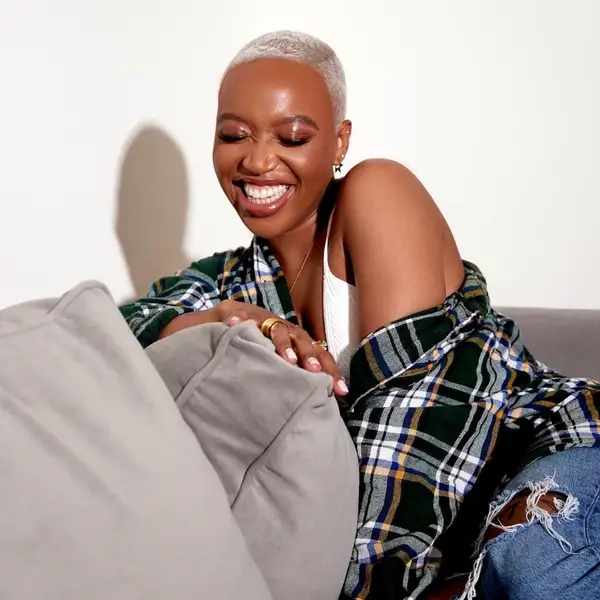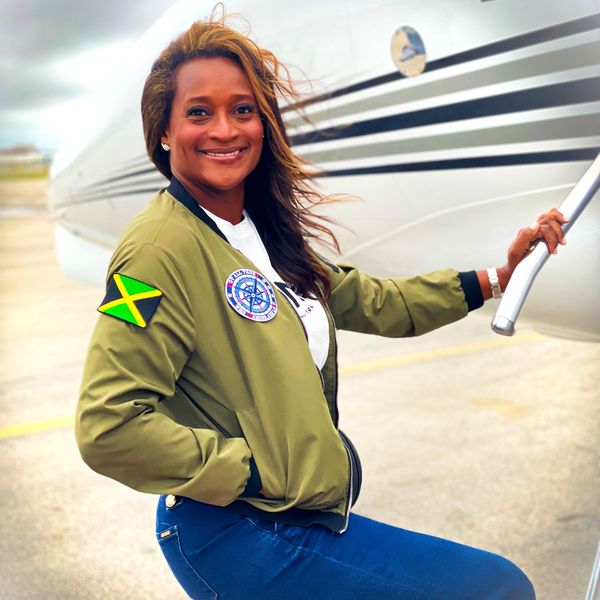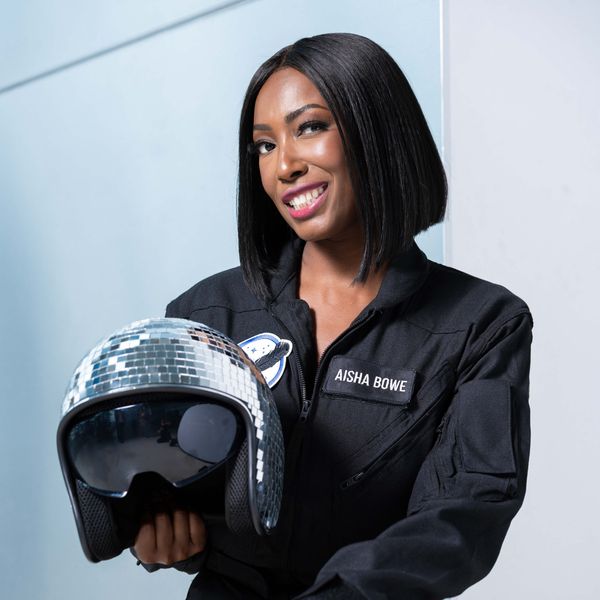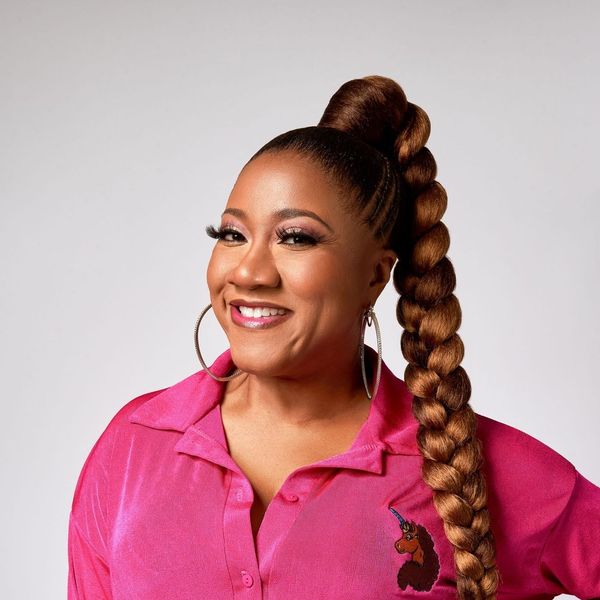

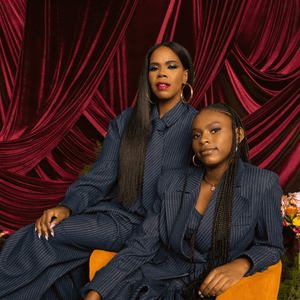

You know you are in the presence of Black Girl Magic when every time words are spoken, clusters of gems are dropped and you realize you need a basket to catch them all. That's the experience I had when I interviewed three of the five founders of CurlFest, the world's largest natural beauty festival. Simone Mair, Tracey Coleman, and Melody Henderson can attest to the fact that the one thing that binds us all together as black women, is our hair. Whether it's kinky, curly, or coily, there is an unspoken connection we have with one another when we're in our natural state. We all have dealt with those difficult wash-and-gos, or the twist outs that didn't work out the way it did for that YouTuber.
Most importantly, we also know what it's like to feel the stares, or hear the negative comments in regards to how we choose to wear our crowns. The founders of CurlFest agreed that there was an undeniable need for a brand that empathized with the experiences of women of color. Melody, who acts as the design guru among the tribe, said, "It was really to fill a need, to fill a void. My background (career in marketing), my whole question was always, 'Why aren't we being seen, why aren't we part of the story?' And the five of us wanted to be part of that solution. How can we, as women of color, in our natural state, in any capacity, be a part of the story?"
Thus, the Curly Girl Collective was born.
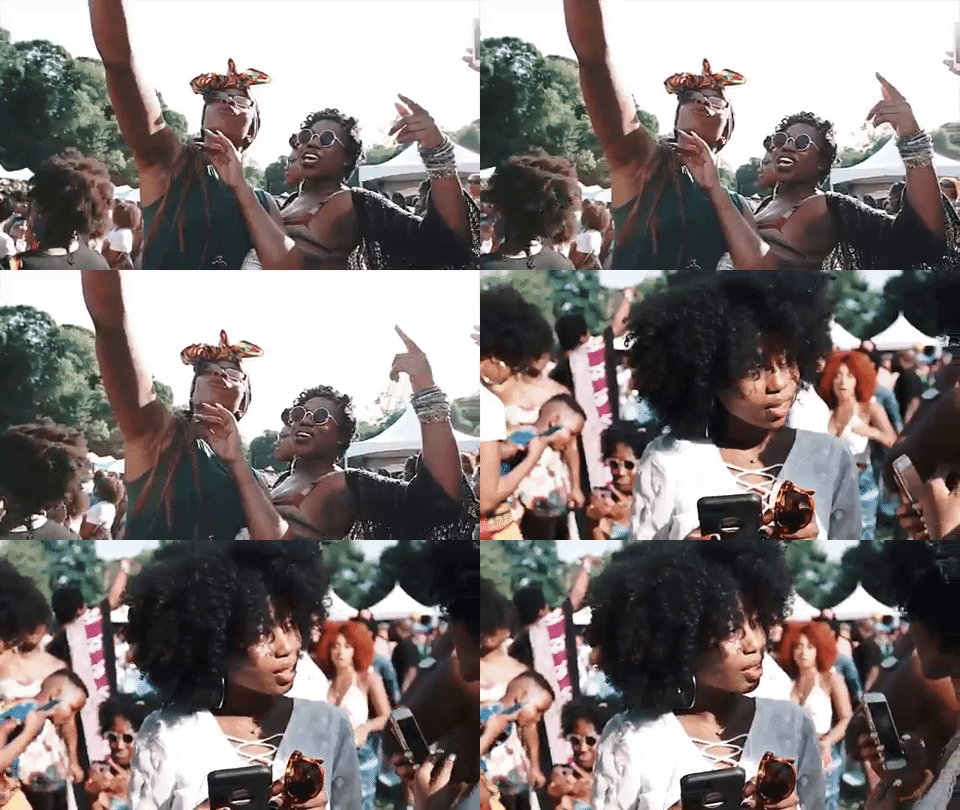
The brand started with five women seeking to create a space for women of color to talk about their experiences with their hair, as well as others' perceptions. It was a judgment-free zone that they soon realized many other women probably need as well. Creative marketing consultant and freelance writer, Tracey Coleman, who makes up ⅕ of the Curly Girl Collective explained, "At first people (brands and press), weren't really interested just because they didn't deem it as important. And as the narrative has changed on what beauty looks like, it's a huge shift from when we started. You're seeing more women of color and women with natural hair in commercials and in movies and in leading roles and all over the world. That's when the media starts to listen, and we're a part of what's driving that."
"The media realized that this was an important story that needed to be told."
Tracey and her teammates have made it their mission to develop fun and unique ways to help multicultural women celebrate their natural beauty. The first CurlFest was launched in 2014, and in just four years, this tribe of girl bosses was able to take their at-home business and transform it into a staple event in the natural hair community.
The founders of CGC are proof that heavy is the head that wears the crown, even if that crown is a mane full of beautiful curls. Simone, who is also an award-winning volunteer, told us, "I think sometimes as women of color, we're kind of a double minority here and naturally have more to prove."
"We kind of have to work twice as hard as some of our counterparts, so there are challenges."
Despite these challenges, these queens are thriving honey, and they shared some gems with me that will help you flourish, too. I got to speak with these ladies more about their roots (both proverbial and natural), as well as how pursuing your passion can truly liberate you from the daily grind and ultimately allow you to develop a profitable business.
What is the secret to your success? How did your brand become so well known in what seems like such a short amount of time?
Tracey: The growth was interesting...there isn't some marketing campaign behind it, or a celebrity that's driving it, or something that happened that went viral. Honestly, it's the energy that people feel when they come to CurlFest and that feeling of appreciation and celebration of who they are. That comes through in what people say about the event to their friends and family, and what they say on social media.
One thing that we've learned is that you can market something all day long, but at the end of the day, it really speaks for itself. The fans actually drove the growth, they decided that they were coming back the next year. Every single year, they're telling their friends, and telling their cousins. It's a blessing not to have to have to market the event because the demand is there.
What do you think was the major turning point? How did you turn your passion into profit?
Melody: I believe that the passion and the profit actually are intertwined. I think we are where we are today because that passion never went away. There's five of us, and we are literally doing this around the clock: putting on something that can support the 30,000 people. But what's driving it is that passion. The turning point really came when brands started to realize that we were bringing them qualified leads.
It's not a commercial you're bringing to the masses. People are opting into CurlFest, people are looking forward to CurlFest for the entire year. So, knowing that from a brand perspective, when you start to talk about revenue and finances, we're telling them "This is your demographic and we're able to tell you what they need, we're able to tell you what's missing, and we're able to tell you how you can plug in."
When we had our first CurlFest, there were two brands on the lawn. So, now you fast forward to this year, it was in the mid-twenties. A lot of that is really based on fostering relationships, building a network, really holding true to what our brand is with no apology.
We typically see the glamour of what success looks like, but not so much the setbacks. With social media, everyone makes it look so easy. What have been some of the challenges that you've had building this business, and what are the ways that you've been able to overcome them?
Tracey: With that type of growth happening that fast, we had to learn really fast. We had to bring on other experts in other fields and people that could support us. We've learned that with the five of us, we all have full-time jobs. You realize that for us to maintain that and to support the growth of CurlFest that was happening so quickly, we had to tap into our village. Most entrepreneurs learn that as you grow, you have to expand to let people help you.
That's really any business, if you're trying to grow your baby, you have to let your village support that baby.
That's what we've done over the years to help us grow so fast.
What does it mean to the team to have so much support for CurlFest from black women?
Melody: A lot of times we don't realize the psychological things are happening because of how society is telling how us we should be. The fact that we're able to play a role in breaking down some of those barriers is amazing. We often marvel at the success of others wondering whether or not we also have what it takes to get into business for ourselves. Instead of being paralyzed by the fear of "what if", be empowered by it.
Turning your passion into profit IS possible. The Curly Girl Collective shows us that when you combine your passion with your drive, determination, and fearless forward progress, anything can happen. Make sure to follow the Curly Girl Collective on Facebook, Instagram, and Twitter for updates and fly content from past events.
Featured image by Cincinart/Shutterstock.com