
R. Kelly Has Been Sentenced. Here's What Black Women Activists Have to Say

*Editors note: this article contains information about sexual assault, child pornography and rape. Please read with care. If you have experienced sexual violence and are in need of crisis support, please call the RAINN Sexual Assault Hotline at 1-800-656-HOPE (4673). If you are thinking about suicide, please call the National Suicide Prevention Lifeline at 1-800-273-TALK (8255) or the Suicide Crisis Line at 1-800-784-2433.
On June 29th, R&B singer and producer Robert Kelly, best known by his stage name R. Kelly was sentenced to 30 years in prison by New York Federal Court after being convicted in September of 2021 on charges of racketeering and sex trafficking. The sentencing was announced after many of his victims tearfully shared the impact his graphic abuse of them has had on their lives. This conviction and sentencing come nearly thirty years after the singer began facing allegations ranging from rape, possessing child pornography, marrying a then-15-year-old Aaliyah, having his own sex cult, and more.
In the weeks leading up to the sentencing, xoNecole spoke with four Black women activists who work diligently to address sexual violence within the music industry and writ large on R. Kelly’s conviction. Now that Kelly has been sentenced, we’re sharing our conversations with each one, condensed below: author and founder of the Me Too movement Tarana Burke (featured in the docuseries Surviving R. Kelly and the Russell Simmons documentaryOn The Record) and the founders of the #MuteRKelly movement Kenyette Barnes and Oronike Odeleye (who also appeared in Surviving R. Kelly ) and author and activist Sil Lai Abrams, who shared allegations against Russell Simmons in The Hollywood Reporter and the HBOMax documentary On The Record.
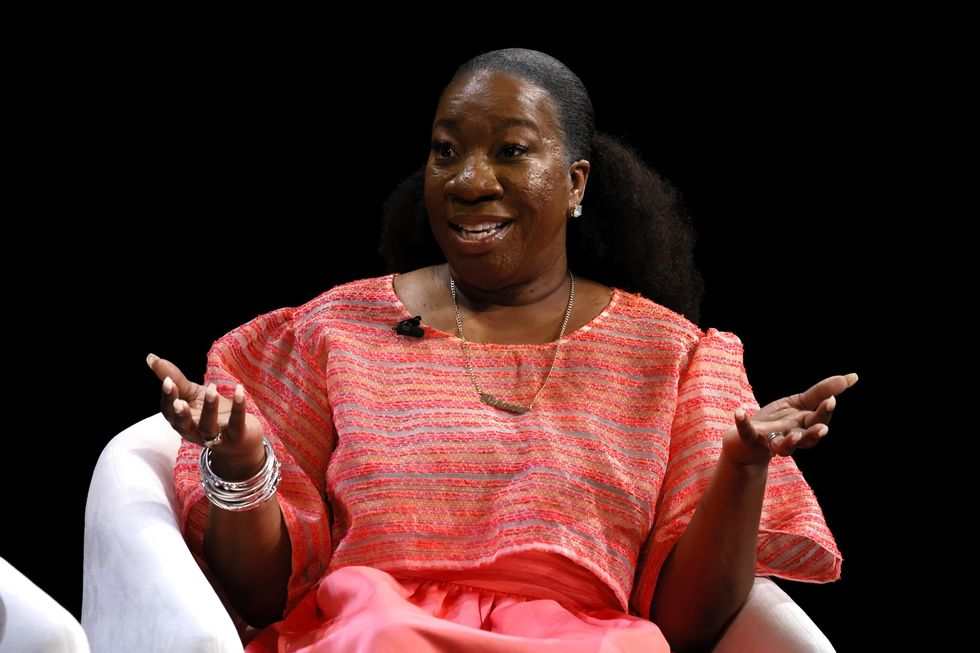
NEW YORK, NEW YORK - JUNE 07: Tarana Burke speaks onstage at the TIME100 Summit 2022 at Jazz at Lincoln Center on June 7, 2022 in New York City.
Photo by Jemal Countess/Getty Images for TIME
xoNecole: I also invited journalist and Surviving R Kelly documentarian dream hampton who declined an interview but did provide a statement:
“As someone who wants to believe in restorative justice, I think this could have been the beginning of actual healing and justice had R Kelly, at any point, admitted to the harm he's caused for decades. His victim should have a financial fund from which they can draw to rebuild their lives. He could have changed the culture by being accountable in this way. He could have opened up a conversation where predators and abusers could enter too. Which is radical. But no, he'll have his sentence meted out to him by a broken system. He will continue to have the currency of love and devotion by countless Black people, even as he spends these years in prison. It is all a shame.”
xoNecole: What was your initial reaction to the news of R. Kelly’s conviction?
Tarana Burke: I was asked this question when [Harvey] Weinstein was convicted when [Bill] Cosby was convicted and it stays the same: these convictions are not a victory. I understand the catharsis for the survivors. There is a duality, that you have an immediate sort of excitement that feels like we have *something.* Right? You can’t help it. I think that’s human nature. That feeling of we have something, especially as Black women. Because we never get anything. So, I think there’s that first wave of that.
And then there’s the immediate slap in the face – especially if you engage in anything public, like social media or walking down the street – of the rejection of that. So my reaction came in stages, is what I’m explaining. That first stage of sort of surprise and relief that we got something. And that something is acknowledgment of that – even from a f-cked up system – an acknowledgment that our trauma and our pain deserve acknowledgment. It deserves accountability. You have that first wave and then you get slapped in the face with “no, it doesn’t.” I don’t know if we even had sixty seconds of whatever that first wave was. I get settled in just the catharsis of the survivors. It’s like they get a chance to breathe after holding this sh-t for so long. They get a chance to be like, “I get to hold something.”
Sil Lai Abrams: I was not surprised because the conviction was the result of decades of lobbying by activists and advocates. In many ways, his social currency in the Black community was diminished in a way that would enable a conviction to occur in the criminal legal system. To dream’s point, the system as it exists is not one that takes into consideration the needs of survivors or even those that have caused harm. He’s being used as a totem in many respects and I believe that his conviction in some way shields other people who cause sexual harm because I think that society can look at him, point to what will occur with him, and say, “You see? The system works because R. Kelly went to prison.” When in fact, his incarceration does nothing to address the systemic nature of sexual violence and the very broad ways in which harm affects our entire society.
Oronike Odeleye: Honestly, my first reaction was relief. I was relieved for his victims because they have been gaslit for years about the abuse that they’ve suffered. I was also relieved for myself. This has been a long journey that I did not mean to embark on [as a founder of the #MuteRKelly movement]. It’s been emotional and hard, so I’m glad that my part was over and now someone else can take over. And I was relieved for our community because for so many people, a lot of the visceral and emotional reaction they had to this was not necessarily about R. Kelly but about their own interactions. Their own experiences of abuse and trauma that they had carried, a lot of the secrets they had carried and they wanted to see justice play out. I was relieved for everyone involved.
Kenyette Barnes: It was very complex emotions. There was sadness of course because no one wants to be a part of perpetuating a broken system that over incarcerates Black bodies. However, thirty years has gone by and nothing has been done. And on several occasions, I believe that Robert Kelly had the opportunity to fix this in some way and didn’t. So my feelings were sadness because I feel like why did it get this far? My next emotion was a sense of relief for the survivors. They had been fighting for years. The #MuteRKelly movement had put that advocacy on a global stage. And through strategic organizing had resulted in a financial boycott of his music. We received some backlash and unfortunately, this accountability included the criminal justice system.
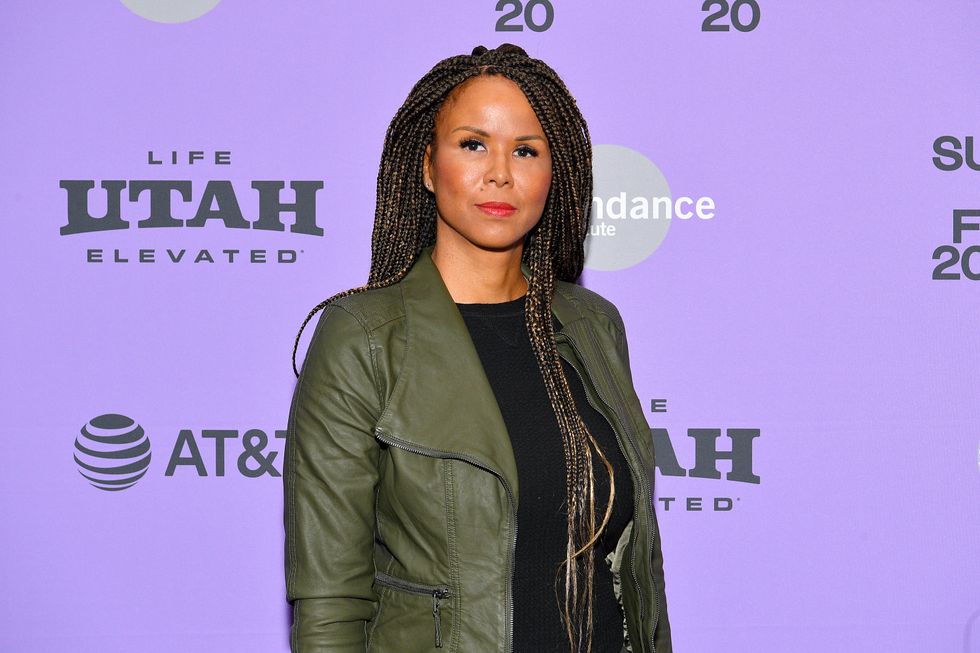
PARK CITY, UTAH - JANUARY 25: Sil Lai Abrams attends the 2020 Sundance Film Festival - "On The Record" Premiere at The Marc Theatre on January 25, 2020 in Park City, Utah.
(Photo by Dia Dipasupil/Getty Images)
xoNecole: It’s been nearly thirty years since allegations against R. Kelly first started. Why do you think it’s only now that we’re seeing a conviction?
TB: There had to be like six exposés. I feel like The Miami Herald did one. The Chicago Tribune did one. The Village Voice did one. And so, it’s not from lack of media coverage. It’s not from a lack of raising voices. Every Black woman journalist that I know has been raising their voice across social media. More than one social media campaign. Because #MuteRKelly preceded #MeToo going viral. People conflate those two. The #MuteRKelly hashtag started in August of 2017 after the article came out in Buzzfeed. It got amplified after the #MeToo movement went viral [in October 2017]. So, it took all of that and then the documentary to get people to pay attention. But it was like we had to stand on our heads and light ourselves on f-cking fire in order to get one singular Black man. There’s this narrative about the Black man being targeted. It’s so crazy because that was the singular person. And to your point, we’ve been talking about him for nearly twenty-five, thirty years. And it took that because of that famous Jim DeRogatis quote from The Village Voice where he says the one thing that he’s discovered in all these years that he’s been chasing R. Kelly is that nobody in America matters less than Black girls. I’m paraphrasing the quote, but I’ll never forget reading that quote. This is a sixty-something-year-old white man from Chicago who writes about rock n’ roll, who just on his own was so bugged out about how no one was paying attention to R. Kelly.
SLA: The #MuteRKelly campaign is really the driver behind this push for accountability, this incarceration, without which I don’t believe this would’ve occurred. It took a certain amount of critical mass to come together. They had built a groundwork and a framework for the campaign in the years preceding the #MeToo era. So when #MeToo exploded in 2017, it just facilitated his downfall, so to speak, because there was such a tremendous body of work, of evidence that had been collected and been disseminated for at least three years, I think. So, I believe that is a large part of why this has happened.
In addition, our views around sexual harm have evolved. And even now when someone is now “legal,” [i.e. age 18+] that is no longer seen as a shield against allegations or recognition of predatory behavior. So, for example, you could see an 18-year-old in a consensual – “consensual” – relationship with a 45-year-old and people don’t respond the same. People will call that out and note the disparities in power between the two parties. And I think that’s a big part of it. There is a very slow shift that’s going on in online discourse and I think that’s very healthy. I think another reason why change is happening is because many of the barriers that existed before such as all-powerful public relations agencies and representatives for some celebrities are no longer as effective because social media has had a democratizing effect upon those who recognize harm is occurring.
OO: I think so much has changed within our society. The way we talk about sexual abuse, the way we think about rape. The way we now have vocabulary around grooming. The way that we understand consent. The way that we talk about adulthood and childhood are different than when these allegations first came out thirty years ago. So, I think we are in a place now, to really reckon with all the things that he’s been doing. I think the time that it came out, the idea of these rampant groupies I guess a very dominant idea. We did not think about women’s bodies in the same way. We really thought about women’s bodies as the spoils of war for rich and famous men.
KB: Because they were Black girls and we didn’t give a damn. Even in the space of defending Blackness against white supremacy, that Blackness is Black masculinity. It is not Black femininity. We look at rates that over 60% of Black girls are going to be a survivor of sexual assault before her 18th birthday. Sexual violence as a practice tends to be intraracial.
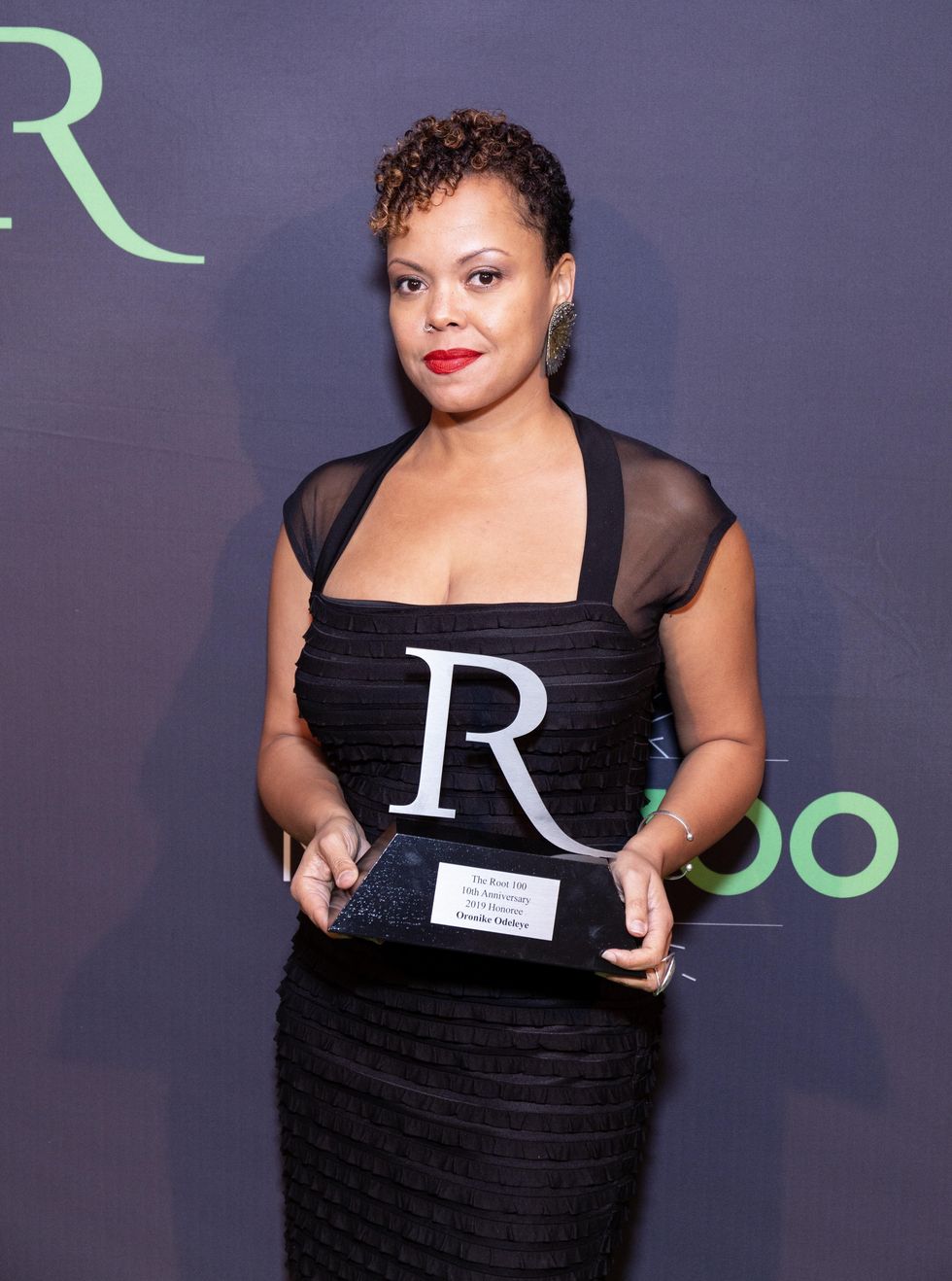
NEW YORK, NEW YORK - NOVEMBER 21: Oronike Odeleye attends 2019 ROOT 100 Gala at The Angel Orensanz Foundation on November 21, 2019 in New York City.
(Photo by Arturo Holmes/Getty Images)
xoNecole: Why do you think the #MeToo movement hasn’t taken off in the music industry the same way it's taken off in Hollywood?
TB: This idea though that Hollywood was broken wide open is not true. I think the cases that we saw were really huge. Weinstein was obviously the big one and there’s several more behind that. And for one Weinstein, there’s 25 that we don’t know about. And that’s why they keep trickling out little by little and they just get less and less attention every year. Because people care less and less every year. So the question of why hasn’t there been a case as big as Harvey Weinstein in the music industry? I don’t know. Most people when they ask this question they’re asking about hip hop and R&B. I have heard horrific stories off the record that artists have shared with me or industry folks have shared with me and I’ve said why won’t you come forward? And they’re like, "There’s no way that my career would recover if we did." In fact, there were people who would not come forward about R. Kelly even though R. Kelly doesn’t even have a career, because they were scared of the retribution inside of the industry. So, I don’t know what the music industry is set up in vs. Hollywood in terms of the way people’s careers are controlled. But if we’re talking about white women vs. Black women, Black women just have way less protection. And I think Black women have way more to lose. Even if you look inside Hollywood, how many Black women in Hollywood have come forward? And the ones that did come forward, look what happened to them.
SLA: The music industry has always been one in which personal relationships can facilitate success even with individuals with no talent. There isn’t a requirement of any type of education. The barrier to entry is very, very low in many respects. Which is a good thing. At the same time, in the way in which people are connected to each other and the amount of money that’s at stake, people are unwilling to go against the status quo. They’re not willing to speak up because they don’t want to have their money messed with. I believe that society is a cesspool of relationships that are highly interwoven and interconnected, the music industry in particular is just particularly patriarchal. It’s particularly rife with nepotism in a way that really encourages groupthink and group movement.
OO: Well, I don’t know if I would agree with [the framing of that question]. I think that it has in fact put artists and record labels on notice that the community is paying attention. Right now, I’m seeing so much conversation around Trey Songz. We’re seeing so much conversation around Chris Brown. We’re seeing so much conversation about Tory Lanez and violence against women. So I think everyone is hyper-tuned in and paying attention now. And so I think people now are way quicker to call these things out when they’re seeing it and to come forward.
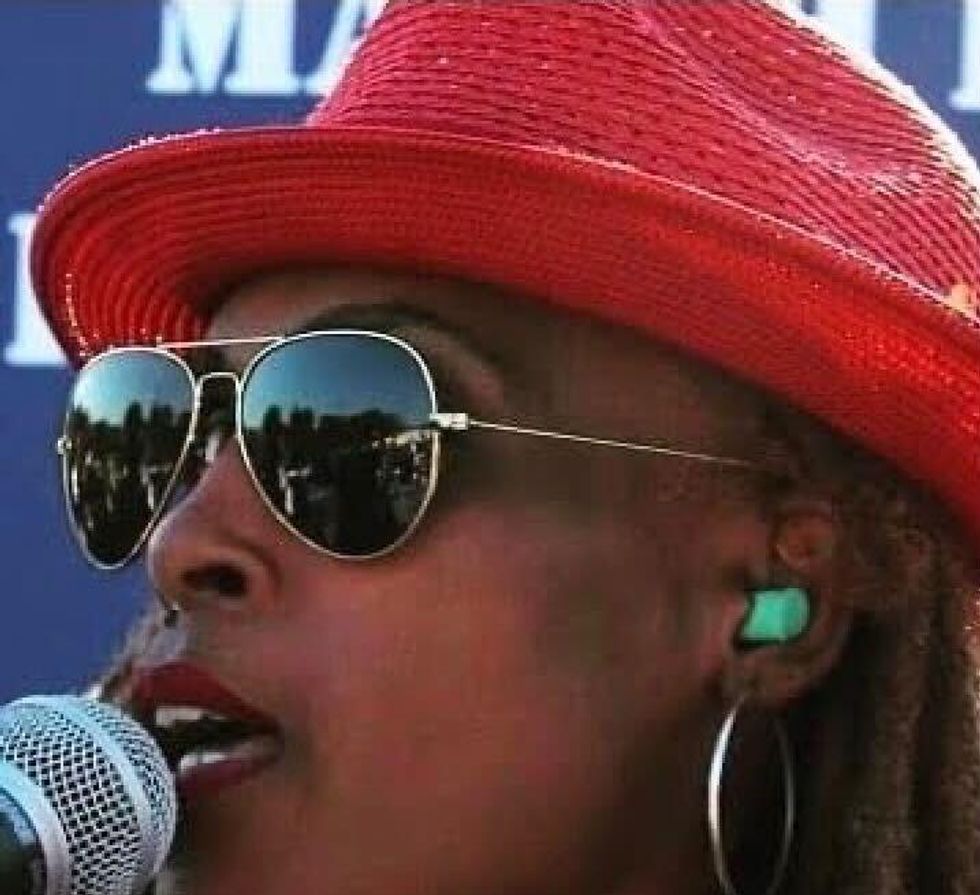
Kenyette Barnes
Photo courtesy of Kenyette Barnes
xoNecole: Even with the conviction of R. Kelly which has been a long, long time coming, the culture that created him and allowed him to thrive still exists. What do you think it’ll take to finally dismantle rape culture within the music industry and writ large?
TB: This is the magic question. I think we have to have a huge culture shift and I think it has to happen from multiple directions. The example I use all the time is cigarettes. A little over thirty years ago, we could smoke on airplanes. Most people under a particular age don’t remember that. I remember when you could smoke on airplanes, in clubs – everywhere. And that’s how I grew up. Sitting in the back of my father’s car with the windows closed and he was smoking a cigarette. Then there was a huge concerted effort to shift how we thought about smoking cigarettes. And it’s obviously a very different paradigm, but the reason that I use it is because when I think about how they came at that, it was political, because laws had to change that said you can’t smoke in public places. It was a public narrative. We had major campaigns but also you don’t see the Marlboro Man anymore. Cigarette smoking was cool because everybody did it everywhere. It was a part of the culture that was just sort of ingrained. The way that rape culture is so ingrained that it's natural to us. So there was a political intervention, there was a cultural narrative intervention. There was a research intervention. All of a sudden there was all this research on how second-hand kills. Obviously, people still smoke now. But the culture around smoking today and the culture around smoking thirty years ago are completely different. I think about shifting rape culture the same way. We need multiple interventions.
SLA: Going back to what dream said, I think that there needs to be a space in our society where people can actually acknowledge the harm that they’ve caused in a way that’s not going to be met with highly punitive measures. We have to look at the ways in which sexual harm is fostered. It happens everywhere, the music industry is an easy scapegoat. I honestly don’t have an answer if I knew what it would take I would be extremely wealthy. I don’t have the answers, I have some ideas but everything is connected to something else. I’m a huge advocate for restorative justice and our existing system just doesn’t work when it comes to facilitating some kind of redress, for harm period, but particularly for sexual harm. As dream had said, because Robert refuses to take responsibility, it doesn’t even open the door to any type of restorative action. But also, I don’t want to forget that we can posit about restorative justice and restorative practices and how I think that would be an appropriate way to proceed, but the people whose voices matter and who's going to drive restorative justice are his survivors. So if his survivors don’t want that to occur, I can’t offer that as a unilateral response that’s going to address things. Some might want to see him incarcerated. That’s their choice. I’m not going to shame them for it.
KB: I think what #MuteRKelly did was a direct attack at the music industry. And it was one of the first campaigns that really directly targeted the sexual oppression of Black women and girls. I think we’re going to have to continue those conversations. I think we’re going to have a call-in of the entertainment industry. We saw people like John Legend and Chance the Rapper really speak against this, but we need more.
If you have experienced sexual violence and are in need of crisis support, please call the RAINN Sexual Assault Hotline at 1-800-656-HOPE (4673).
Let’s make things inbox official! Sign up for the xoNecole newsletter for daily love, wellness, career, and exclusive content delivered straight to your inbox.
Eva Marcille On Starring In 'Jason’s Lyric Live' & Being An Audacious Black Woman
Eva Marcille has taken her talents to the stage. The model-turned-actress is starring in her first play, Jason’s Lyric Live alongside Allen Payne, K. Michelle, Treach, and others.
The play, produced by Je’Caryous Johnson, is an adaptation of the film, which starred Allen Payne as Jason and Jada Pinkett Smith as Lyric. Allen reprised his role as Jason for the play and Eva plays Lyric.
While speaking to xoNecole, Eva shares that she’s a lot like the beloved 1994 character in many ways. “Lyric is so me. She's the odd flower. A flower nonetheless, but definitely not a peony,” she tells us.
“She's not the average flower you see presented, and so she reminds me of myself. I'm a sunflower, beautiful, but different. And what I loved about her character then, and even more so now, is that she was very sure of herself.
"Sure of what she wanted in life and okay to sacrifice her moments right now, to get what she knew she deserved later. And that is me. I'm not an instant gratification kind of a person. I am a long game. I'm not a sprinter, I'm a marathon.
America first fell in love with Eva when she graced our screens on cycle 3 of America’s Next Top Model in 2004, which she emerged as the winner. Since then, she's ventured into different avenues, from acting on various TV series like House of Payne to starring on Real Housewives of Atlanta.

Je-Caryous Johnson Entertainment
Eva praises her castmates and the play’s producer, Je’Caryous for her positive experience. “You know what? Je’Caryous fuels my audacity car daily, ‘cause I consider myself an extremely audacious woman, and I believe in what I know, even if no one else knows it, because God gave it to me. So I know what I know. That is who Je’Caryous is.”
But the mom of three isn’t the only one in the family who enjoys acting. Eva reveals her daughter Marley has also caught the acting bug.
“It is the most adorable thing you can ever see. She’s got a part in her school play. She's in her chorus, and she loves it,” she says. “I don't know if she loves it, because it's like, mommy does it, so maybe I should do it, but there is something about her.”
Overall, Eva hopes that her contribution to the role and the play as a whole serves as motivation for others to reach for the stars.
“I want them to walk out with hope. I want them to re-vision their dreams. Whatever they were. Whatever they are. To re-see them and then have that thing inside of them say, ‘You know what? I'm going to do that. Whatever dream you put on the back burner, go pick it up.
"Whatever dream you've accomplished, make a new dream, but continue to reach for the stars. Continue to reach for what is beyond what people say we can do, especially as [a] Black collective but especially as Black women. When it comes to us and who we are and what we accept and what we're worth, it's not about having seen it before. It's about knowing that I deserve it.”
This interview has been edited for length and clarity.
Let’s make things inbox official! Sign up for the xoNecole newsletter for love, wellness, career, and exclusive content delivered straight to your inbox.
Feature image by Leon Bennett/WireImage
10 Women Tell Me Why They Made The Decision To Be Estranged From Their Parent(s)
Although there are many quotes that I have used in these articles throughout the years, I’d be almost shocked if the one that hasn’t been included the most is “Adulthood is surviving childhood.”
I thought about that one, again, recently, when I checked out a BuzzFeed article entitled, “People Are Just Now Realizing They Had An 'Eggshell Parent' And The Ways It's Secretly Impacting Their Adult Lives.” If you’ve never heard of “eggshelling” before, it’s a term that is used for if you felt like you had to walk on eggshells as a kid because your parents' emotions were super erratic and hella unpredictable. SMDH.
Personally, that is just one of the things I experienced while growing up, although the main reason why I’ve been estranged from my mother for (I think) about six years now (I honestly haven’t really been keeping track at this point) is because she simply doesn’t respect my boundaries. Even well into my adulthood, she has refused to do it and it was messing with my inner peace and personal growth on a few different levels — and y’all, I don’t care who it is, no one should have that kind of power over someone else’s life (if you want to read more about my journey with estrangement, I tackle the topic in my latest book).
And before some of you come with the ever-so-manipulated Bible verse “Honor your father and mother” (Exodus 20:12), I hope you also remember that there is a Scripture that says, “And you, fathers, do not provoke your children to wrath, but bring them up in the training and admonition of the Lord.” (Ephesians 6:4 — NKJV) To provoke is “to stir up, arouse, or call forth (feelings, desires, or activity)”; know what else it is: “to anger, enrage, exasperate, or vex.” Funny how it is not preached or taught nearly enough that parents are absolutely not supposed to raise their kids or treat their adult children in a way that angers, enrages, exasperates, or vexes them — and think about it: when’s the last time you heard a sermon on that? I’ll wait.
Besides, unless you’re someone who has made the courageous decision to put distance between the person/people who’ve raised you, you honestly don’t get how much of a sacrifice it can be. Very few of us are flippant about that decision. Very few of us saw our adult life without our parent(s) in it. Very few of us wanted to deal with all of the “fallout” that comes with making that kind of choice because listen, for me, it’s almost like being in witness protection in the sense of having to also leave certain people who are associated with her alone as well because either they also don’t respect boundaries or they try further victimize me by attempting to impose their opinions into something that they absolutely shouldn’t (for instance, when I shared what I went through with her, one of my closest friends at the time, more than once called me “petty”…yeah, he had to go; you don’t have to defend why you need to protect yourself…if you are doing that, those are unsafe people you are talking to).
It’s not like I’m rare either. In fact, it’s been reported that close to 30 percent of adults are currently estranged from at least one of their parents (you can read about it here, here, here, here, and here). And with that being said, today, we’re going to hear from 10 women (well, technically 12 if you include the videos at the beginning and end) as they share their own reasons why they made the decision to go “no contact” with their own parent/parents.
If you are estranged, I hope you will see that you are not alone. If you aren’t, I hope it will help you to have more compassion for those who have made this kind of choice. Because although “adulthood is surviving childhood” is true for many of us, it actually wasn’t supposed to be that way. And so, we’ve had to take great lengths to go from “surviving” to “flourishing”…even if that meant doing it without the ones who — alongside God, of course — created us.
Article continues after the video.
*Middle names are used so that people can speak freely*
1. Michelle. 32. Estranged from Her Mother for Four Years.
Giphy“My mother is a narcissist — only I didn’t know it because I didn’t have much to compare her to because she kept me away from a lot of…everything. Ironically, that is a telling sign that you’ve got a narcissistic parent: they think you are an extension of them, so they try and make you do everything just like them. Since they are so bad at respecting boundaries, they don’t care how old you are — they think they have a say in every decision that you make because their ego is bigger than their love.
It took me years of therapy to recognize this but once I did and I told my mom that she was hypercritical, that she used to pit me and my siblings against each other, that she only knows how to gaslight and manipulate — she played the victim and told me that if I couldn’t accept her as she was, we couldn’t have a relationship.
That’s another thing about narcissist: they hate accountability. I think there should be more articles about parents who are estranged from their kids because they pull that ‘my way or the highway’ BS. I didn’t exactly leave my mom, but I did tell her what I wasn’t going to tolerate. We haven’t spoken in four years, ever since I drew that line. She left because she didn’t know how to humble herself, and I am fine with that. Arrogant people are toxic to be around.”
2. Iyan. 36. Estranged from Her Parents for 11 Years.
Giphy“I don’t think that a lot of parents get that they act like their kids should idolize them, which is crazy. We’re not toys or puppets who are supposed to do whatever they say, whenever they say it. Even as a parent myself, I think there is a difference between a child’s individuality and a child obeying me. Too many other parents have too much ego to think the differences through. To your question — I am estranged from my parents because they disapproved of who I chose to marry. He’s not the same faith as them but I don’t think that would even matter because they damn near betrothed me when I was a kid.
They wanted to choose my career path, my husband, my role in church — everything. It got to the point where they were disrespecting my husband, our relationship, and my feelings, and so it was time to boomerang their own Bible and remind them that when you get married, you ‘leave and cleave’ to your spouse and move on from your family. If your family accepts that, they can be in your life. If not, you’ve got to move on. They chose for me to be estranged, not me. I put my husband first, just like I was supposed to.”
3. Jahkai. 29. Estranged from Her Mother for Four Years.
Giphy“Sometimes I think that people just have children so that they can have someone to boss around as kids and intimidate when they become adults. My mother is one of those people because it’s like her whole existence centers around trying to force me to live the life that she wants me to live. I used to be so afraid of her, even if that just meant afraid of her rejection, that I would go along with it.
Then I got pregnant with my daughter and saw that she wasn’t even going to respect me as a mom — and when I saw signs that she was going to try and pull that shit with my own child? The claws came out. I tried expressing my concerns and setting some boundaries, but she dismissed my feelings and walked right over my boundaries, so she had to go. There was no way that she was going to try and raise the child I birthed. My child needs peace. So do I.”
4. Gillian. 24. Estranged from Her Parents for Almost Two Years.
Giphy“I’m bisexual. That’s the beginning and end of it. I personally think it’s creepy when a parent can be so invested into their grown child’s sexuality that it ends up wrecking their own world. You sleep with who you want to sleep with, and I will do the same.
My parents don’t see it that way. They told me that unless I stop loving women, we have nothing to talk about. You only love me if I love who and how you love? That doesn’t sound like love at all.
I don’t expect my parents to agree with my life or even like it. I just don’t want you penalizing me because we are different. Seems really immature to be any other way…to me, anyway.”
5. Aubrie. 27. Estranged from Father for Four Years.
Giphy“My father always wanted me to be an accountant, and I hate math. That’s insane. That’s what happens when you don’t make the time to get to know your own children. So many parents are egomaniacs in that way — just because I look like you doesn’t mean that I am you. Until my sophomore year in college, I just held my tongue and suffered through my education because when I was living at home, I didn’t really have a choice, and when I went to school, my parents paid for my education.
They didn’t want me to have any debt, and I appreciated that, but my spirit was going into debt anyway because my dad had me on a path that I didn’t like or want, and my mom was too weak to speak up for either one of us. By my junior year, I couldn’t take it anymore and decided to get student loans, so that I could start over and major in English. That pissed my dad off two ways because I was changing my major and I was going to take on debt.
We’re not estranged in the classic sense. It’s more like he doesn’t come to the phone whenever I call, and he grunts words over the holidays. So, I call less and go home even less than that. We’re headed towards ‘no contact’ if he doesn’t get over the fact that he has a life, and so do I.”
6. Lameeya. 41. Estranged from Her Mother for Eight Years.
Giphy“My mother? I just don’t like her — I never really have. I can’t stand how we’ll all agree that you should choose your friends wisely, but when it comes to your blood, it’s like you should be all in their lap simply because they are related to you. Toxic is toxic, and my mother is the embodiment of that. She plays mind games. She manipulates. She gaslights. She’s spoiled and entitled. I would never pick her as a friend. She drains me in every way. It’s like whenever I would even sense that she was going to call or come around, I would get hives, and it got to the point where it didn’t make sense that I should suffer just because she’s my mother. Who came up with that?”
7. Sloane. 25. Estranged from Her Mother for One Year.
Giphy“I grew up COGIC. If you know, you know. When you’re a kid, you don’t know any different or better, but once I started to seek out my own path, I realized that Christianity just wasn’t for me. My mother damn near lives at church and so, of course, I was declaring that I wanted to go to hell in her eyes when I told her that I had chosen the Baháʼí faith. Christians can be so rude. Somehow, they want you to respect what they believe, but they are so comfortable preaching hell and damnation if you don’t think like them.
Anyway, a part of why I chose Baháʼí is because it’s very peaceful to me, and religion never brought me peace in my mother’s house. Now that I’m all about this peace-filled life, anything that is ‘anti’ it has to go. She was on the top of my list. If you can’t respect what makes me ‘me,’ why are you here? It’s just been a year now. If we remain out of contact, that’s kind of on her, but I have no desire to hear her preach every time we speak. Be my mom. I don’t want a pastor.”
8. Torrin. 33. Estranged from Her Parents for Six Years.
Giphy“You have your own dysfunctional issues going on if you think that you owe someone your sanity simply because they birthed you. A good parent doesn’t just give you life — they provide a safe environment for that life, and my parents didn’t.
My mother was hell on wheels, and my father was a weak man who let her be that way. She was controlling, erratic, and exhausting, while he just let it all happen.
I recently read that Khloe Kardashian said that her mom didn’t like it when she first started therapy. Controlling parents never do. It took me a lot of therapy to stop beating myself up mentally the way that my mother did emotionally and sometimes physically, but once I got that she was the problem and healing was the solution, I had no problem letting them both go: her for being abusive and my father for being complacent.”
9. Kristine. 40. Estranged from Her Mother for Six Months.
Giphy“You always want your parents to get along with your husband — I just didn’t bet on my mother loving him more than me, especially now that we are divorced. That man cheated on me, more than once, and although I didn’t tell my mom while we were married about it, once we separated and I explained why I made what was a really difficult decision for me, she kept finding excuses for him and even tried to make me feel bad for not trying to make it work. Divorces are hard, and the last thing I needed was my mother trying to ‘beat me up’ for standing up for myself.
Now I’ve got questions about her marriage because if you think that I should tolerate nonsense, have you been tolerating your husband’s? Has he been tolerating yours? You get a certain age, and you start to wonder how much projecting your parents do onto you. Anyway, we haven’t talked to each other in six months. She and my ex apparently still go out to dinner, though. You two enjoy.”
10. Madolyn. 45. Estranged from her Father for 20 Years.
Giphy“I had an abusive father. He was an alcoholic while I was growing up, and so fear instead of love kept me in communication with him once I became an adult. The plot twist is, he got clean while I was in college, but he suddenly had all kinds of amnesia about the pain that he caused. His apologies were sh-t like ‘I don’t remember that, but if you need me to apologize, okay.’ So, our lives were a living hell, and that’s all you’ve got because it hurts you too much to face it? Ain’t that a bitch.
The last time we spoke was right before I turned 25. I think someone is more harmful when they can’t own their sh-t than when they are actually doing it, because that means they could do it again. No thanks. I’ll take wholeness.”
____
As you can see, being estranged from a parent, going “no contact” with them, it has many layers, reasons, and scenarios. For me, as I listened to all of these women, what did come to my mind, though, is — how beautiful is it that, if the “beauty for ashes” in their stories is they had the strength to become self-aware, self-sufficient and healthy adults in spite of the cracks in their foundation, then there is a silver lining in it all. You should never feel guilt or shame for protecting yourself in ways that your parents absolutely should have. NOT. EVER.
And so, the sacrifice was well worth it — because ladies, look at you now. Salute.
Let’s make things inbox official! Sign up for the xoNecole newsletter for love, wellness, career, and exclusive content delivered straight to your inbox.

Featured image by madopile/Getty Images