

On a warm Friday evening, a few months before we found ourselves at the departure end of the Murtala Muhammad airport in Lagos, Nigeria, my husband and I finally sat down to figure out where to spend our Christmas holiday. We had put it off for a bit, procrastinating like we always do, but with only a few months left until the holiday season, it was now or never.
We wanted none of the fast-paced life that being in our city, Lagos presented. The year had been incredibly long, so we were choosing to ease into the new year in a slow, languorous way. Cappadocia in Turkey was high on our list, but eventually, we narrowed our options to the African continent. We are both Nigerians and fiercely proud of our African heritage, so we wanted to immerse ourselves in and enjoy more of what the continent had to offer.
Soon enough, we settled for Senegal for the diversity of its offerings: Senegal is home to 7 UNESCO world heritage sites, the tallest statue in Africa, has some of the most beautiful beaches, and is rich in culture and history. Many people visit Senegal solely for Dakar, its capital city. But if you search a little deeper and open your mind a little wider, you will discover that Senegal has more to offer than Dakar.
In our case, we explored two other cities in addition to Dakar, and looking back, I honestly can't imagine experiencing Senegal in any other way.
Saly
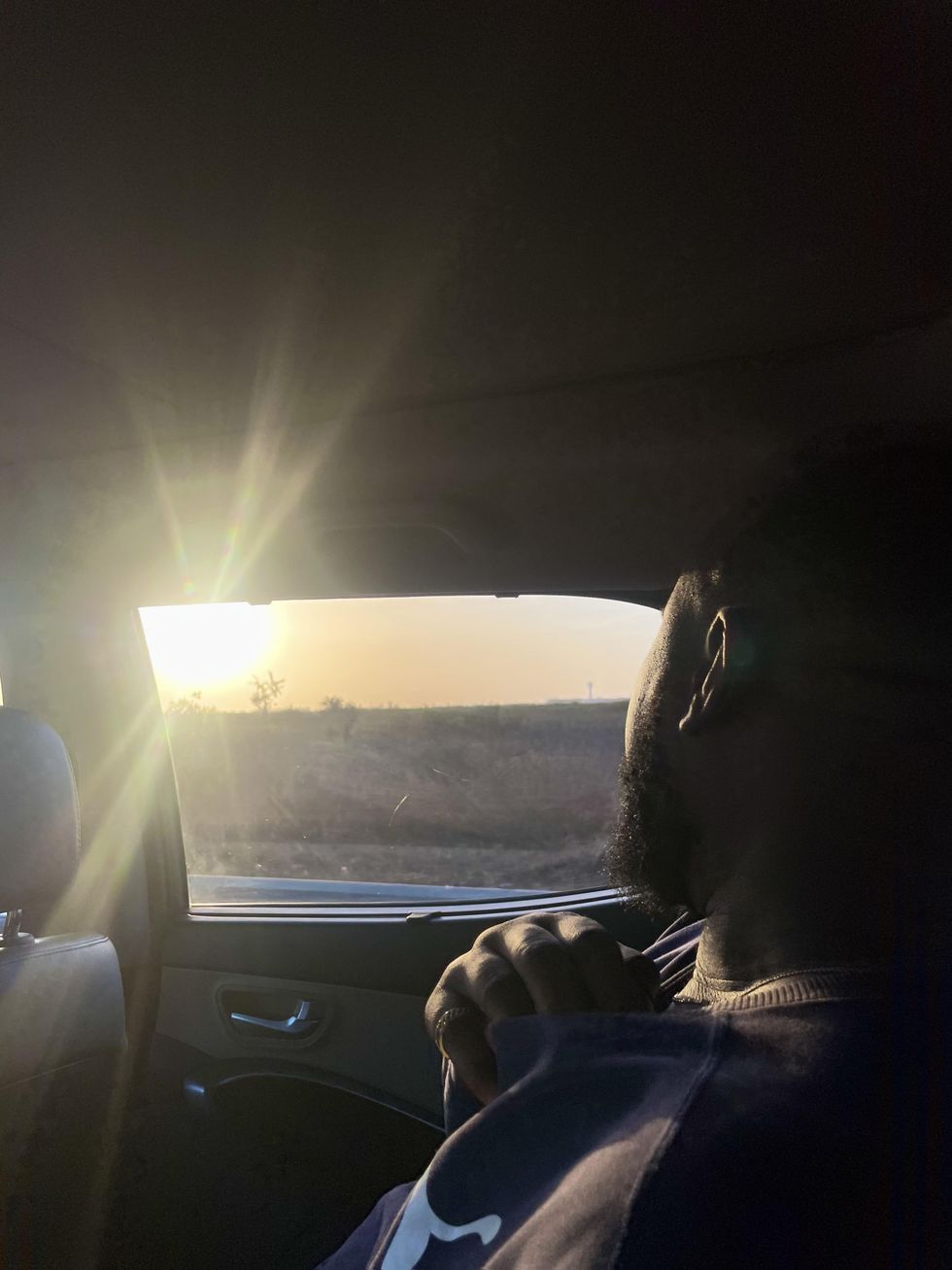
Cassie Daves and Mark Unuakhalu
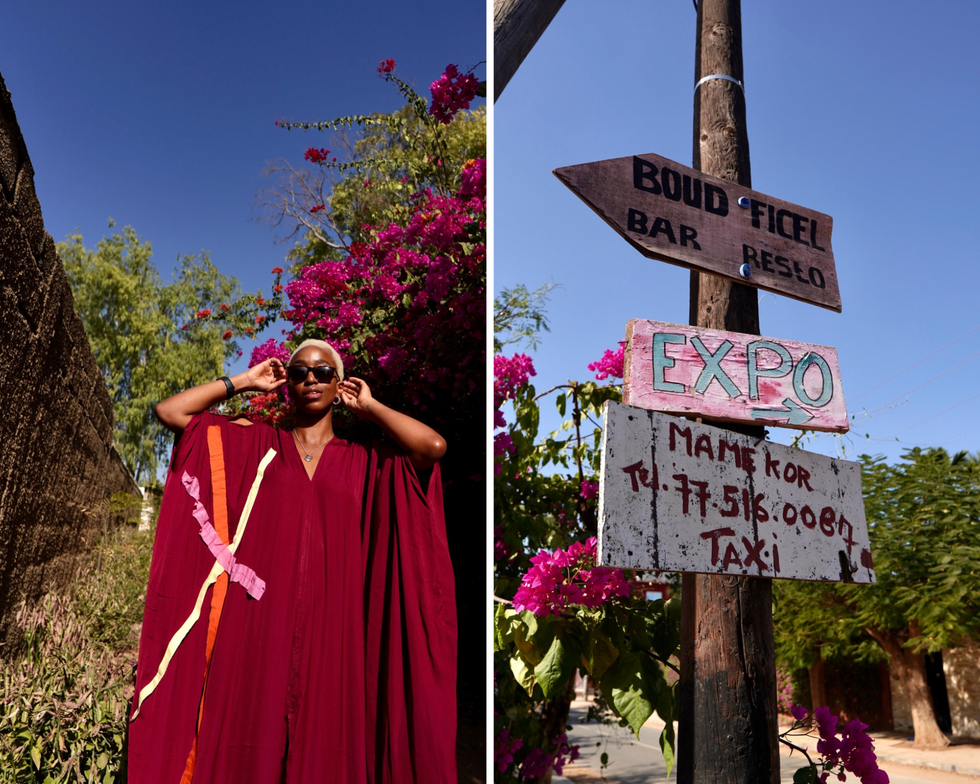
Our first stop was the beautiful beachside resort area of Saly, located in the Thiès region of western Senegal. We were welcomed into Saly by the most gorgeous sunset I had ever seen. It seemed to stretch for miles, following us on our ride to the hotel, dipping in and out as the roads winded as if to let us know that there was even more beauty awaiting us. Saly is a top tourist area in Senegal, and it is immediately clear why when you visit. It has the most gorgeous sunset and beaches, all ingredients for the perfect vacation.
Quick history tidbit: Saly was originally a Portuguese trading post known as Porto de Ale, which became Portudal, and later Sali Portudal.
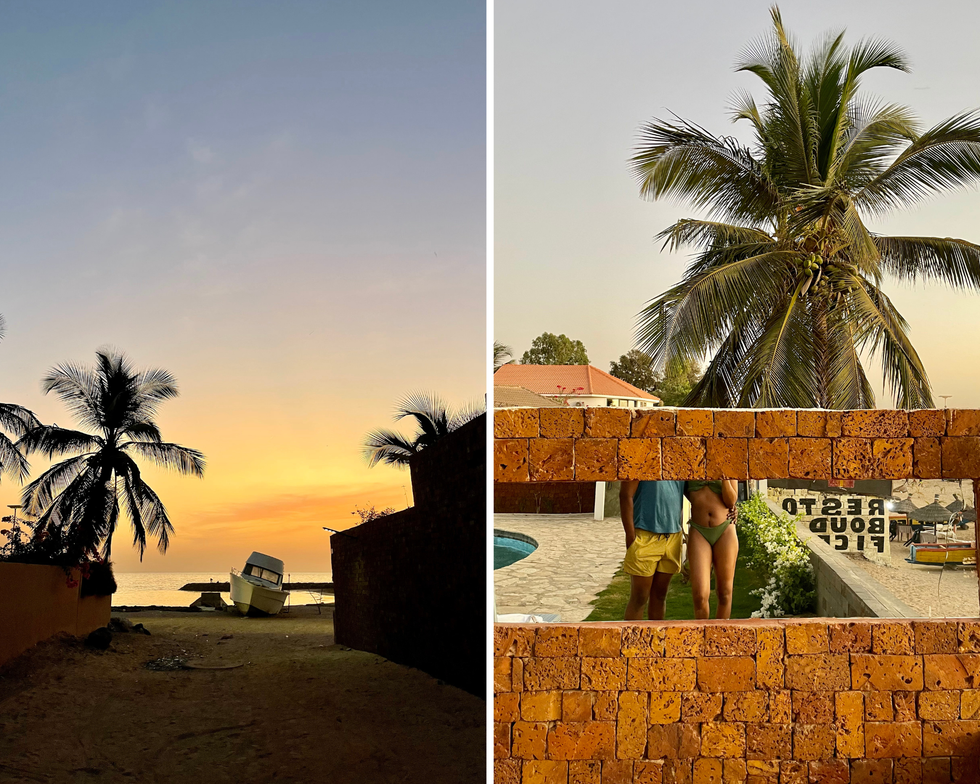
Cassie Daves and Mark Unuakhalu
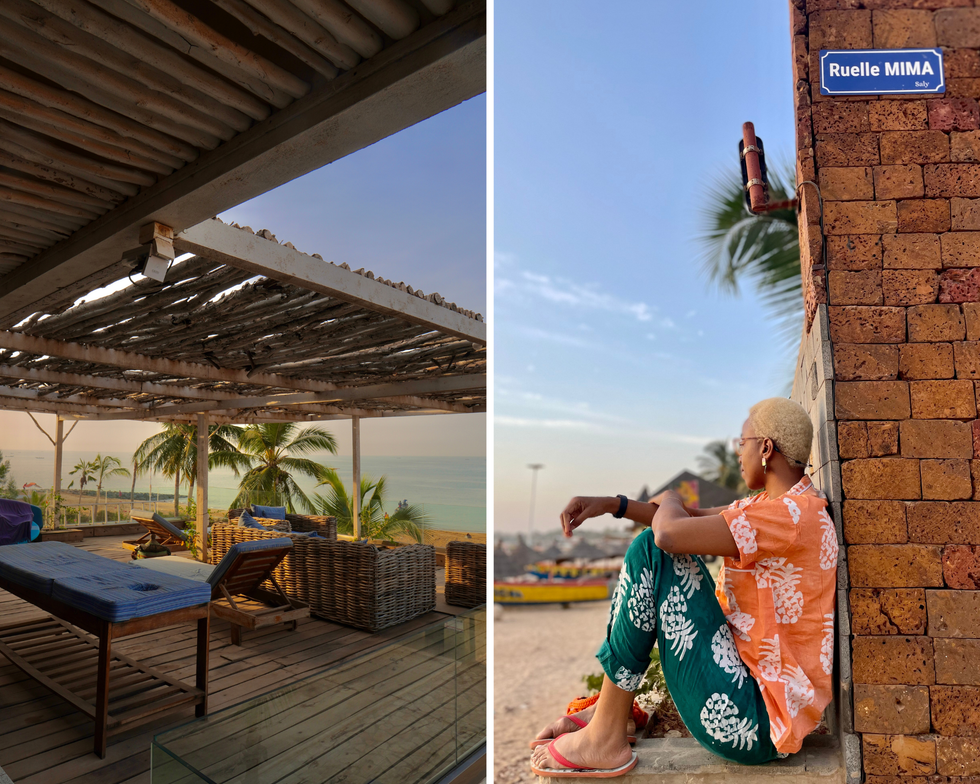
Cassie Daves and Mark Unuakhalu
As we pulled up to our hotel taking in the last sights of the glorious sunset, the waves in the far-off distance crashed against the beach, and we felt completely at home. Starting our Senegal city hopping with Saly couldn’t have been a more perfect choice.
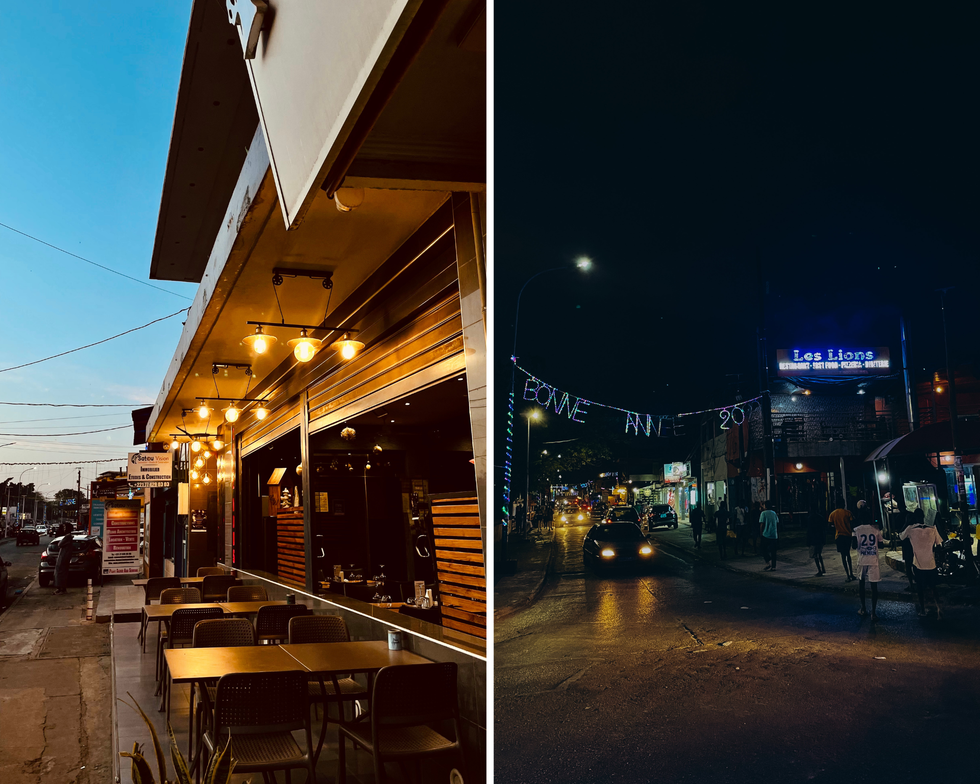
Although we spent a good chunk of our time in Saly indoors rejuvenating, we eventually ventured out to take a walk and feel the pulse of the city center. Neon lights and signs wishing people a happy holiday told us that this is a city that really values the people that it welcomes.
Cassie Daves and Mark Unuakhalu
Cassie Daves and Mark Unuakhalu
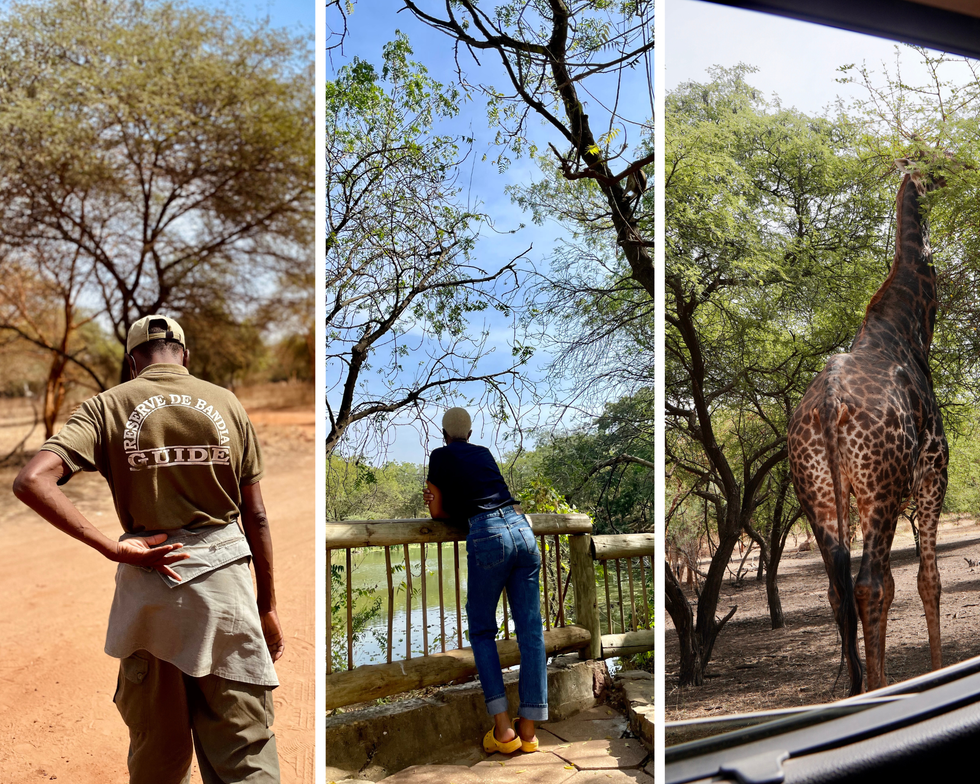
We also visited the Reserve de Bandia nature reserve which is about 15 kilometers from Saly and houses a lot of wild animals and over 120 species of birds. We opted for a private park guide instead of the group tours, so we went through the place in good time. Right opposite the reserve is their lion ranch. We found out about this much later, so sadly we didn’t get to see the lions.
Cassie Daves and Mark Unuakhalu
Our stay in Saly was truly invigorating, albeit short, so we couldn’t do a lot of things but we made sure to visit the arts and crafts market to find a bit of Saly to take home with us so that our trip here is forever memorialized.
Saint-Louis
Cassie Daves and Mark Unuakhalu
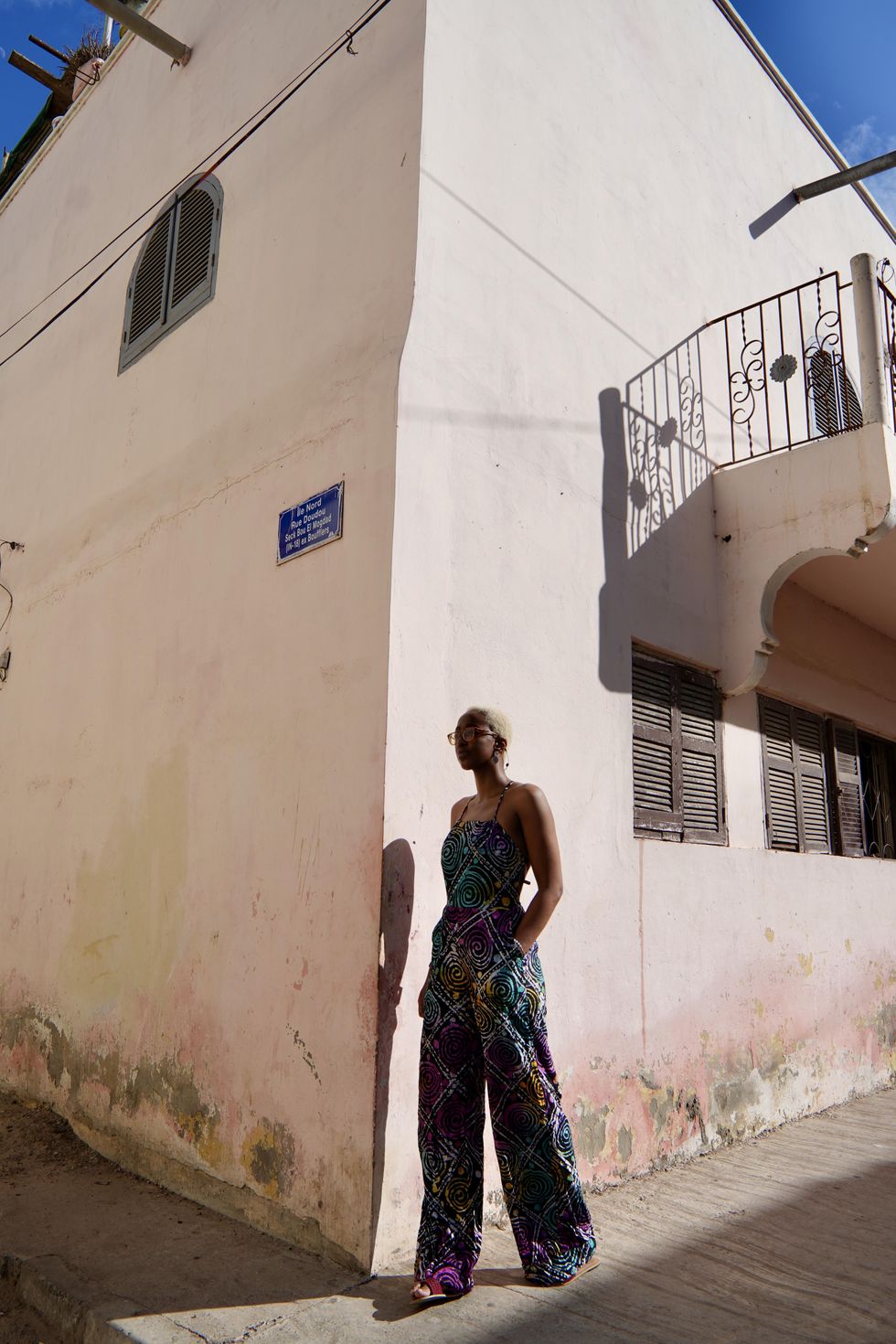
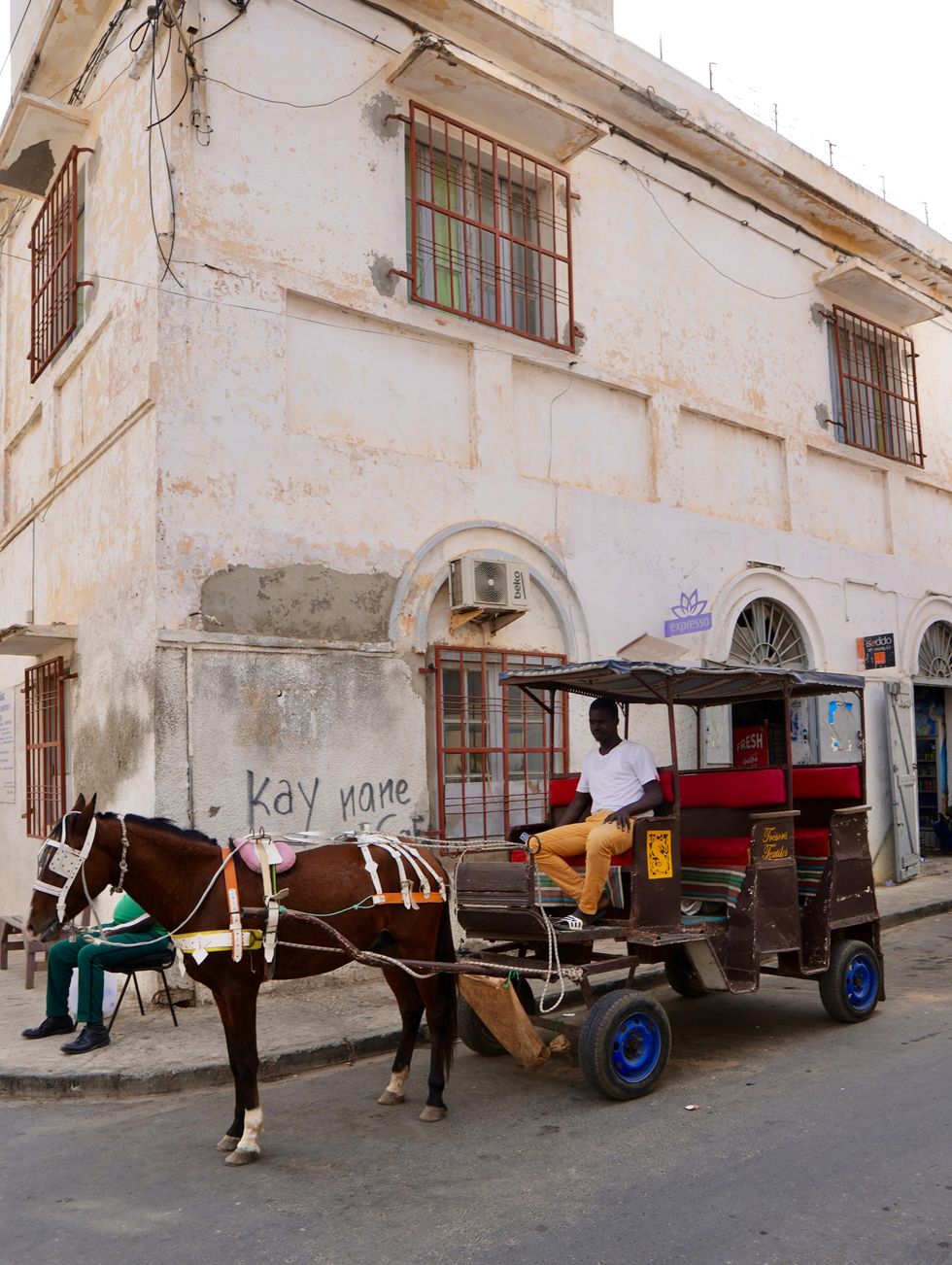
Our next stop after saying goodbye to our beautiful beach house in Saly was the island of Saint-Louis (or Ndar as it is called in the Wolof language), a city of brightly colored buildings, horse-drawn carts, and a charming rustic vibe. Saint-Louis is a good four-hour drive from Saly; not exactly the most scenic drive, but not the worst road trip we have been on either (and we have been on many).
In Saint-Louis, the influence of the colonizers is still visible. Albeit on the cusps of debilitation, the buildings are mainly colonial-style architecture, and as we later learned, have been intentionally preserved that way. (It is against the city rules to alter the building’s original external features.)
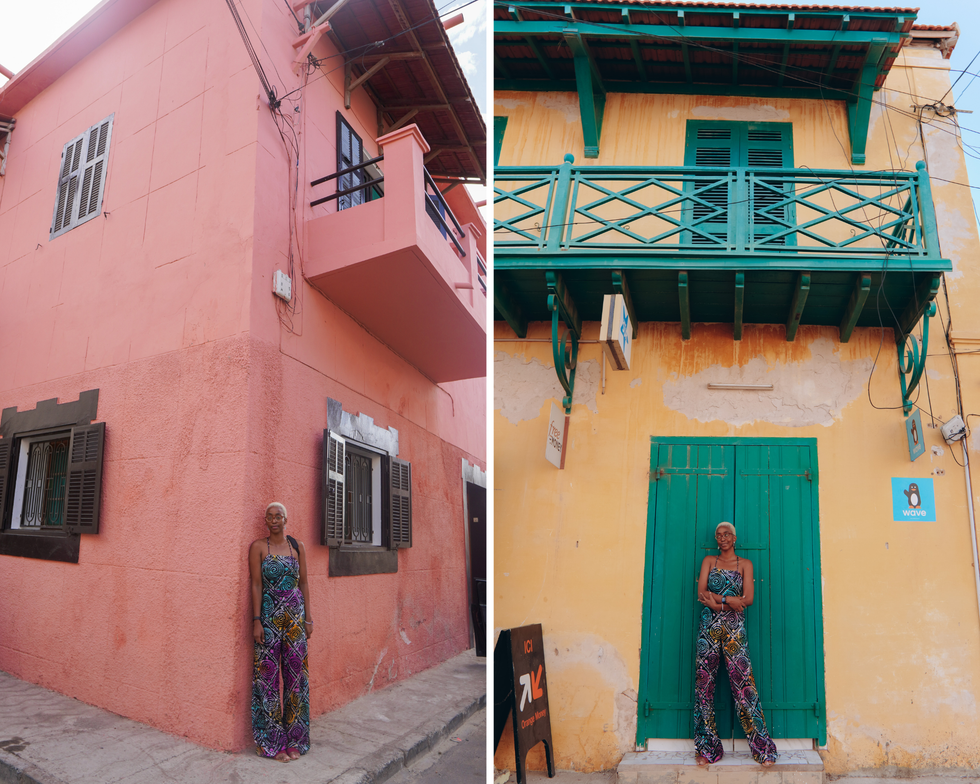
Cassie Daves and Mark Unuakhalu
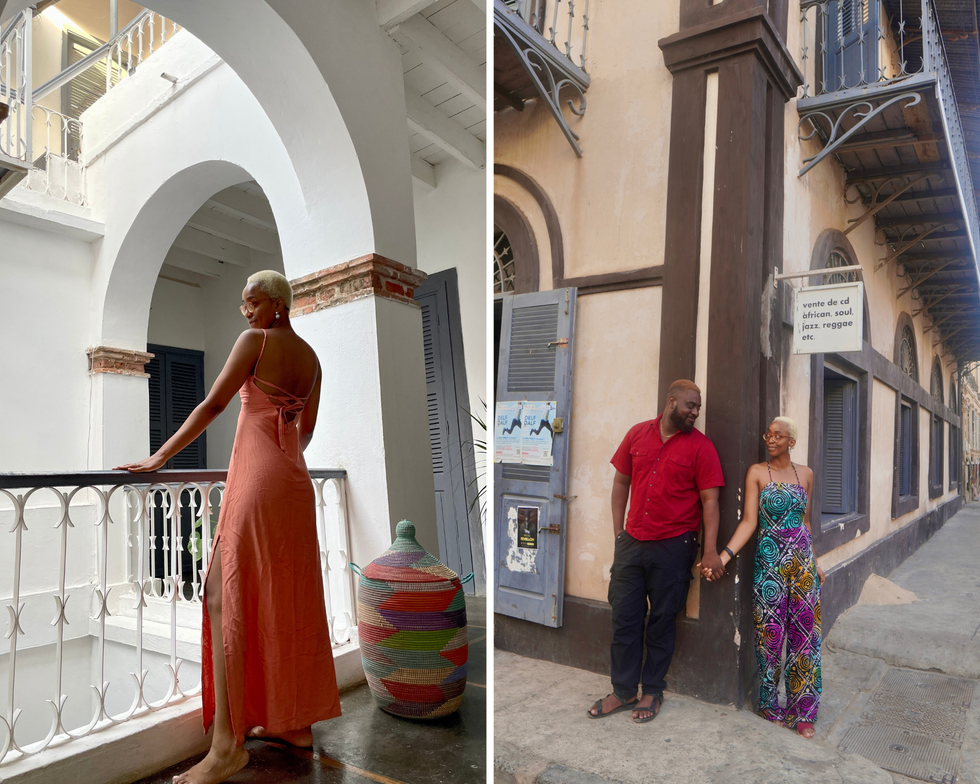
Cassie Daves and Mark Unuakhalu
Despite the long road trip to Saint-Louis, we were enamored by the city’s narrow roads, distinctive architecture, and laid-back vibes. Life seemed to move slowly in Saint-Louis, but we had zero complaints about this. It was exactly what we needed.
Quick history tidbit: Saint-Louis was the capital of Senegal from 1673 until 1902 and French West Africa from 1895 until 1902, when the capital was moved to Dakar. From 1920 to 1957, it also served as the capital of the neighboring colony of Mauritania which shares a border. The island of Saint-Louis is also a UNESCO world heritage site.
One thing we immediately noticed in Saint-Louis is the sheer number of people milling around in the streets, ready to approach you to make a case for whatever service or products they offer. And so it happened that on our arrival to Saint-Louis, whilst still trying to move our luggage from the trunk to the foyer of our hotel, we managed to make acquaintance with a convenience store owner and secure a date with an English-speaking tour guide for the next day.
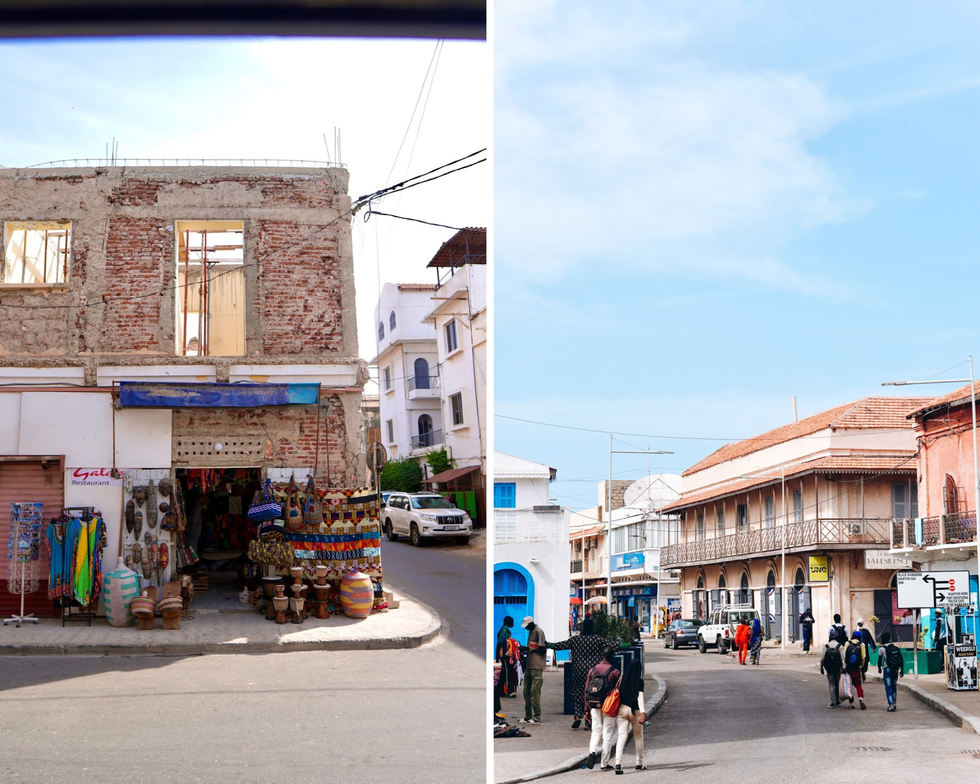
Cassie Daves and Mark Unuakhalu
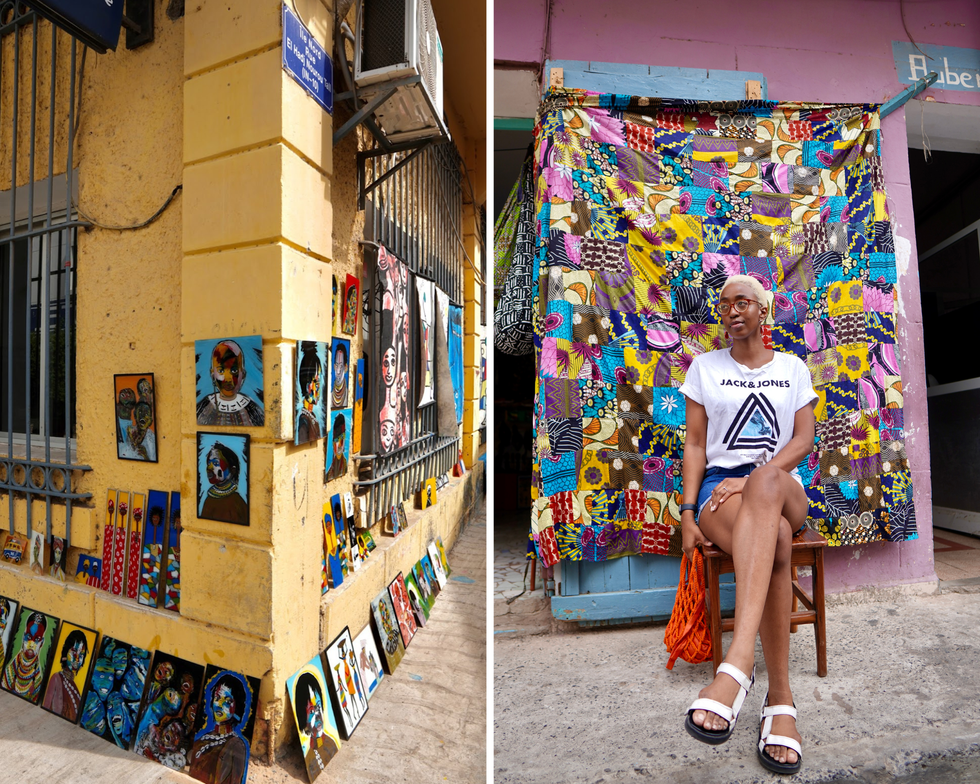
Cassie Daves and Mark Unuakhalu
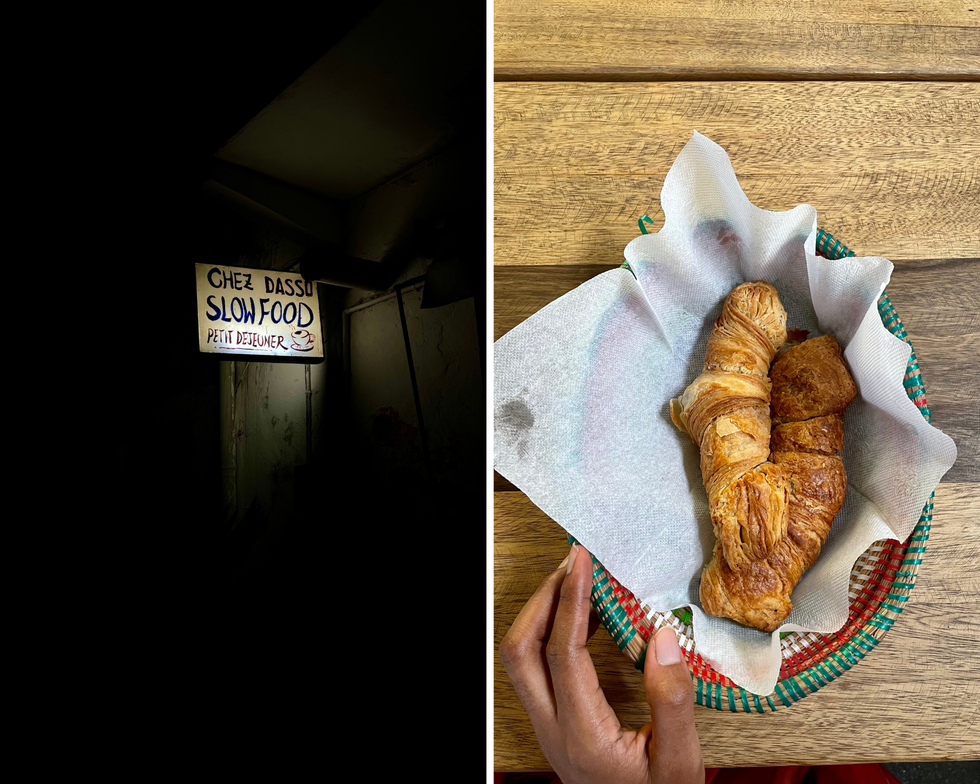
On our first day, we did a short walking tour of the city to find somewhere to grab lunch, but ended up learning about a concept called “slow food.” In Saint Louis, a good chunk of the restaurants there practice “slow food,” a concept hinged on a quality over quantity disposition, where meals are prepared lovingly with fresh produce and with a slower approach to cooking. Consequently, these restaurants open much later in the day. It was interesting to see a shift from fast food consumerism, but my stomach didn’t appreciate the late opening times.
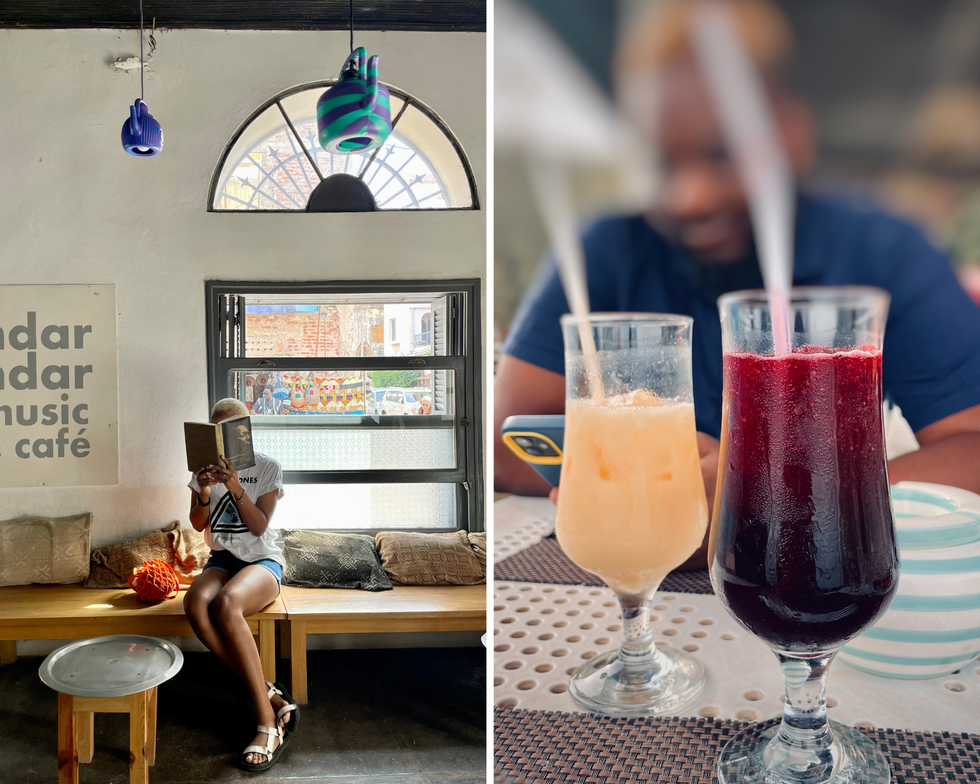
Because Senegal borders the Atlantic Ocean, fish is a key part of their cuisine. Three beloved dishes in Senegal are Thiéboudienne (Senegalese jollof rice), Yassa, and Mafe. Whatever you do, make sure you don't leave Senegal without trying Thieboudienne, Bissap (Hibiscus juice), and Bouye juice (juice from the Baobab tree).
Cassie Daves and Mark Unuakhalu
Cassie Daves and Mark Unuakhalu
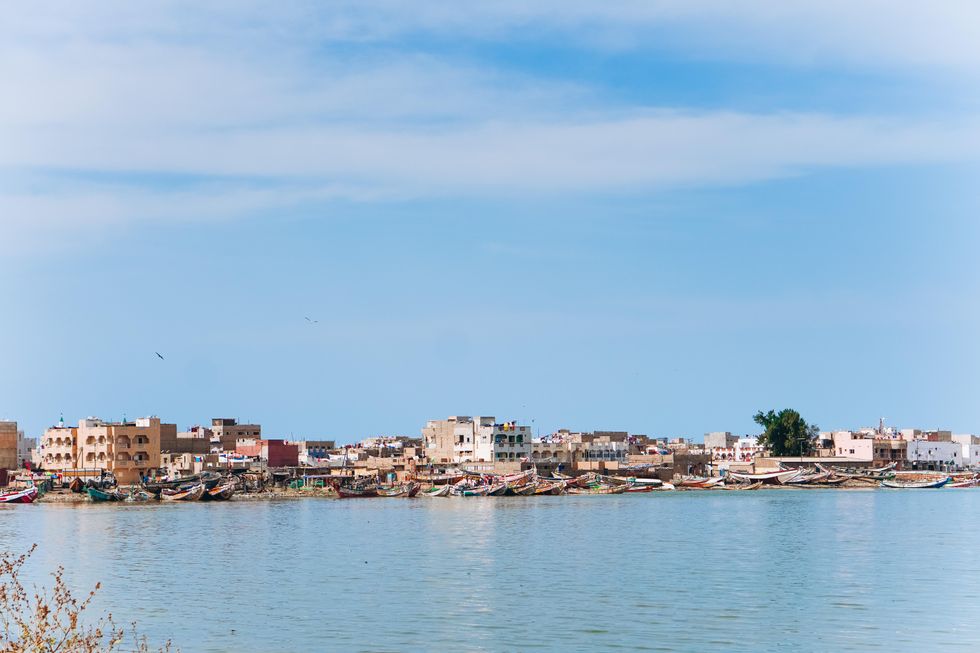
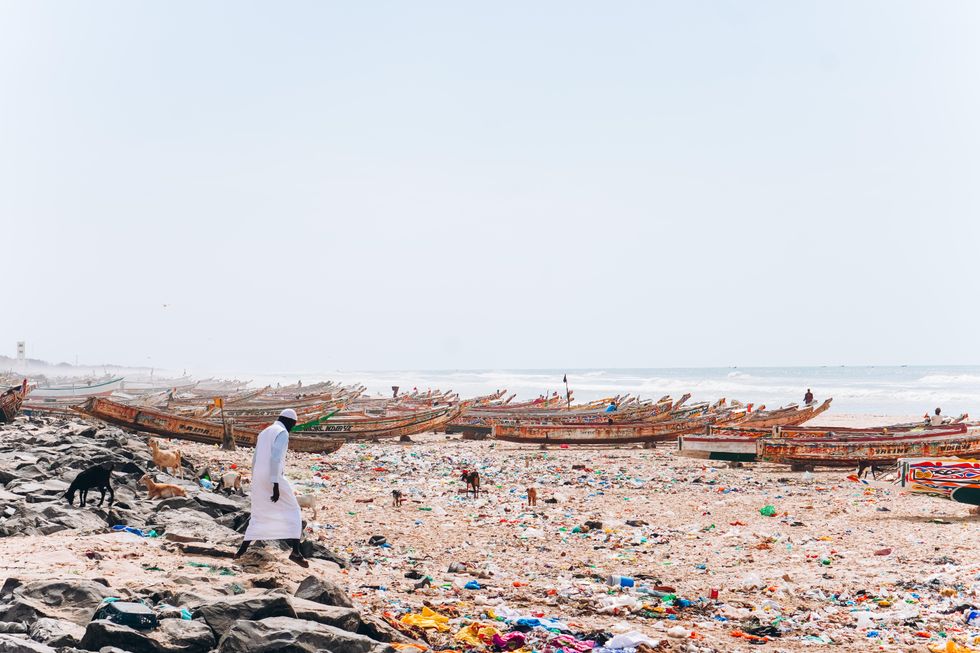
The next day, we had a simple breakfast and headed out with the tour guide for a horse-driven half-day tour of the island. He took us through the city and showed us the different facets of the island, pointing out the landmarks and noteworthy sights such as the Governor’s Palace, the cathedral and grand mosque, and the fishing village. It was particularly sad to see the effect of climate change and the subsequent decay in some parts of the city, especially in the fishing village.
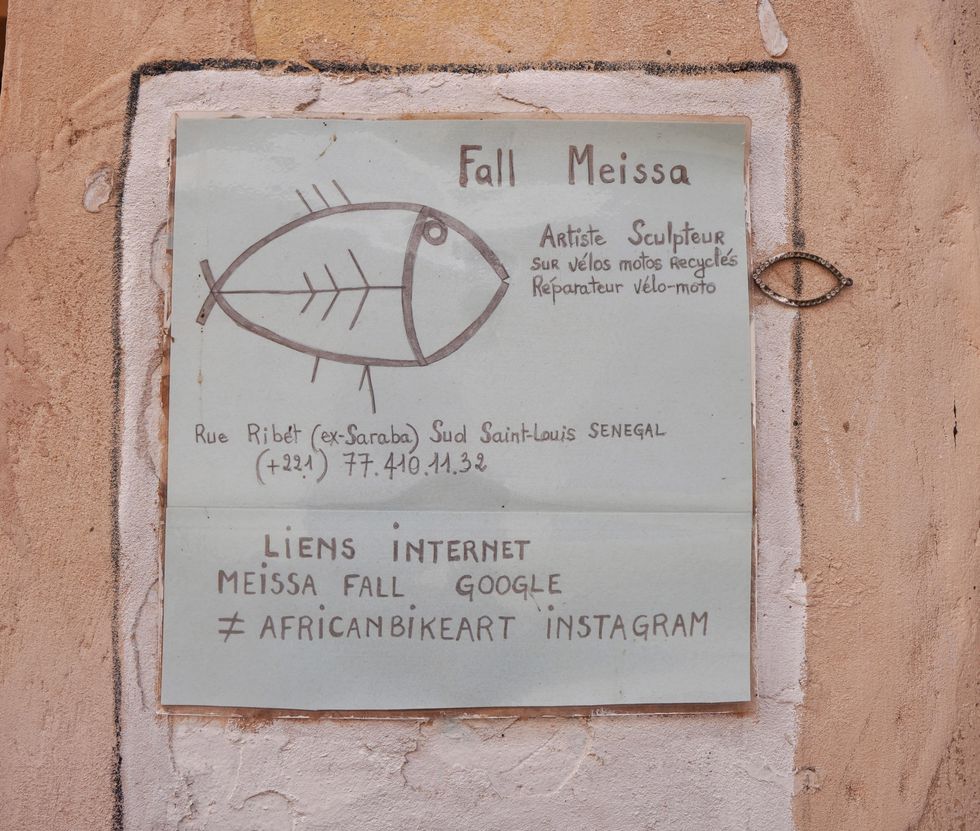
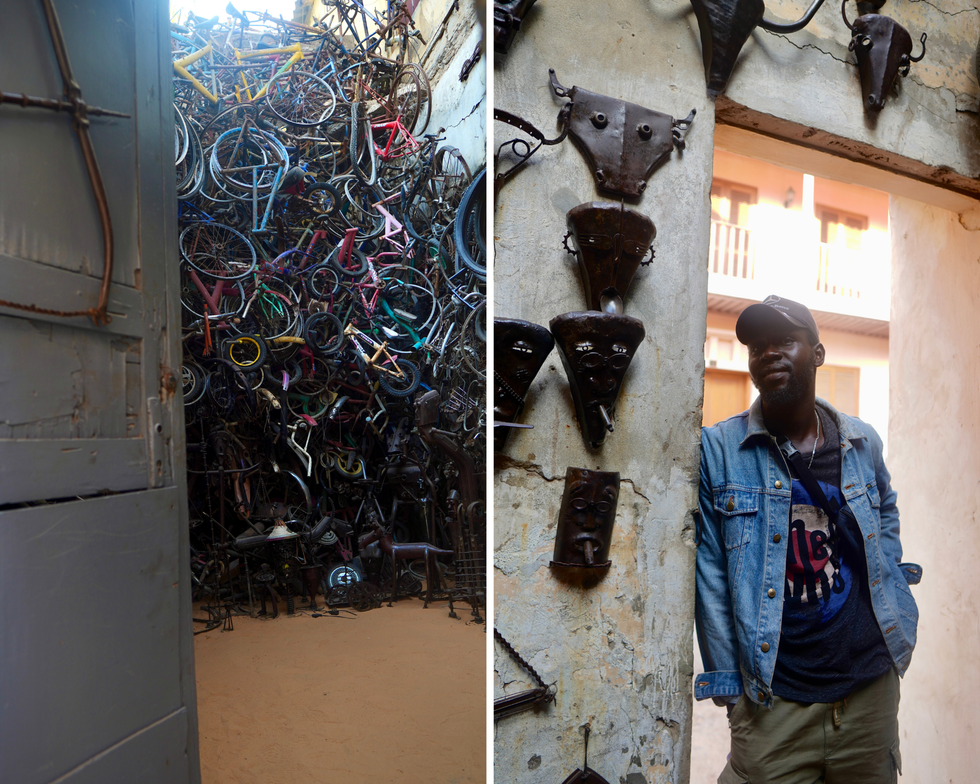
We also visited the art studio of Meissa and Bassirou Fall. Our tour guide pointed it out during the tour as a must-see, so we visited the next day and it was truly magical. Meissa and Bassirou Fall are a father-son duo who make unique art sculptures from discarded bicycle and motorcycle parts.
Cassie Daves and Mark Unuakhalu
Cassie Daves and Mark Unuakhalu
Cassie Daves and Mark Unuakhalu
Cassie Daves and Mark Unuakhalu
Cassie Daves and Mark Unuakhalu
Some say that a visit to Saint-Louis is not complete without visiting the Djoudj National Bird Sanctuary (a day trip) and the Langue de Barbarie (a half-day trip) but we opted out as we didn’t want to pack too many activities into our vacation.
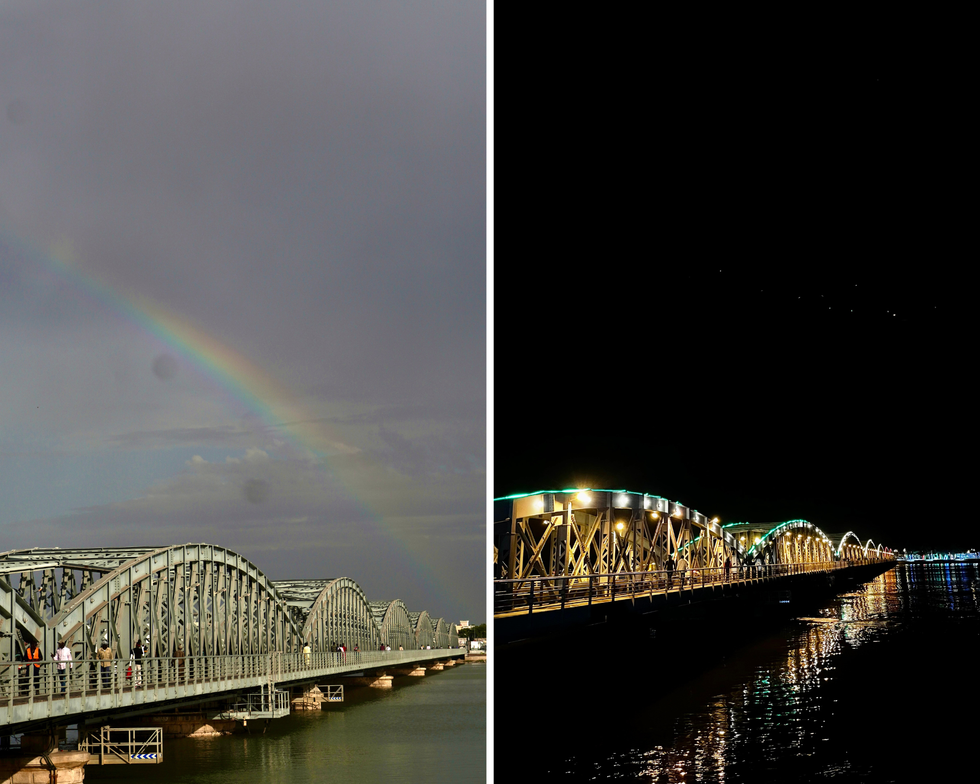
At night, we’d walk to the Faidherbe Bridge and marvel at how beautiful it looks when lit up. The Faidherbe Bridge is a road bridge over the Senegal River that links the island of the city of Saint-Louis in Senegal to the African mainland. You’ll cross it when driving into Saint-Louis but it is definitely worth a visit at night when it gets lit up.
Cassie Daves and Mark Unuakhalu
Dakar
Cassie Daves and Mark Unuakhalu
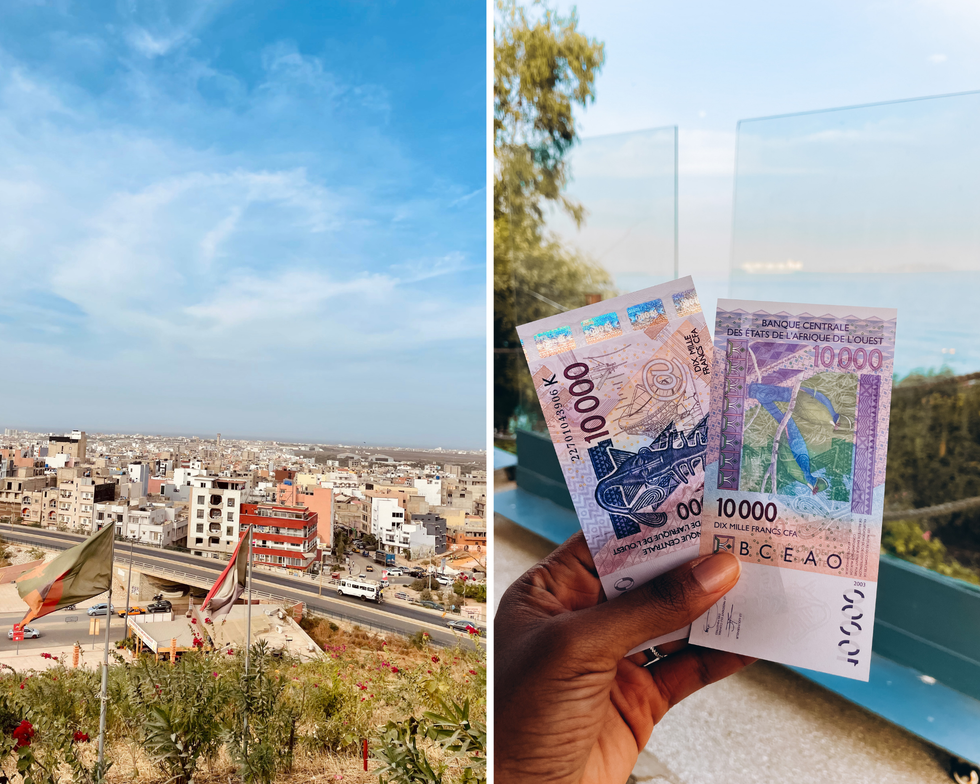
Ah, Dakar! Dakar was a love-hate experience for us. It reminded me a lot of my city in Nigeria: Lagos. They both have the same chaotic energy and buzz in the air, with little glimpses of magical moments that make you think it’s really not so bad after all. Leaving Dakar for last was an intentional decision because it was going to be the place with the most activity for us. We had a list of places we wanted to see but eventually only managed to do two out of the four places. There are only so many activities you can fit into a trip when you have just three days to spend.
Quick history tidbit: In 1902, Dakar replaced Saint-Louis as the capital of French West Africa. From 1959 to 1960, Dakar was the capital of the short-lived Mali Federation. In 1960, it became the capital of the independent Republic of Senegal.
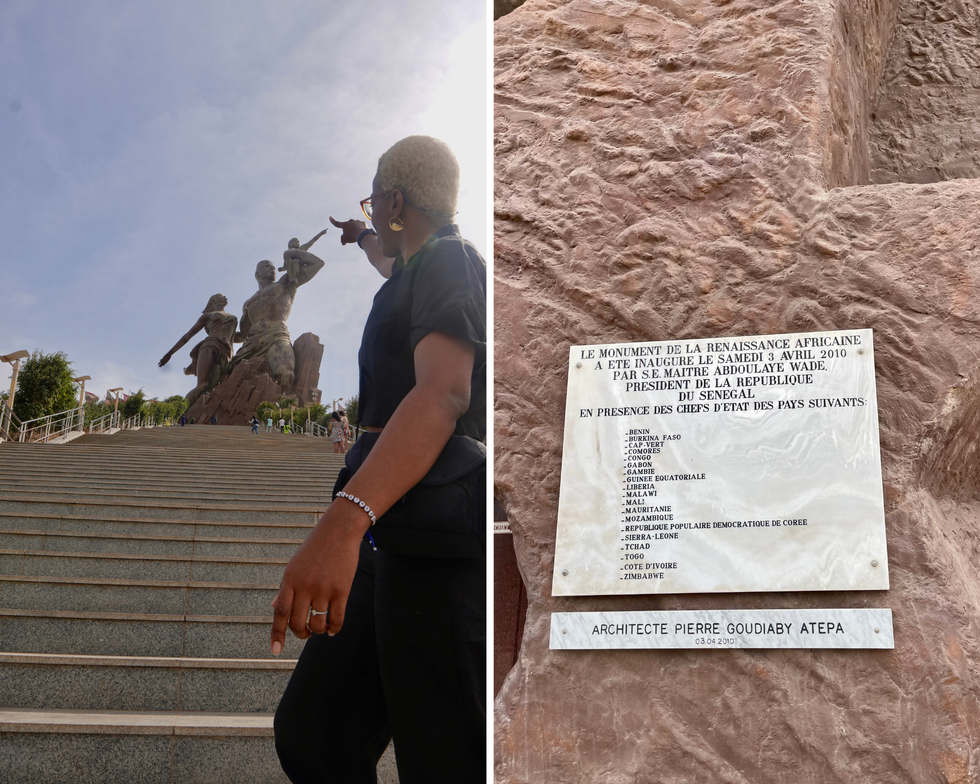
On the top of our list was the Monument de la Renaissance (The African Renaissance Monument), the tallest statue in Africa which was erected to mark Senegal’s 50 years of independence. After surviving the many steps that led to the front door of the statue (think of it as a mini hike), we paid an entrance fee and were ushered in.
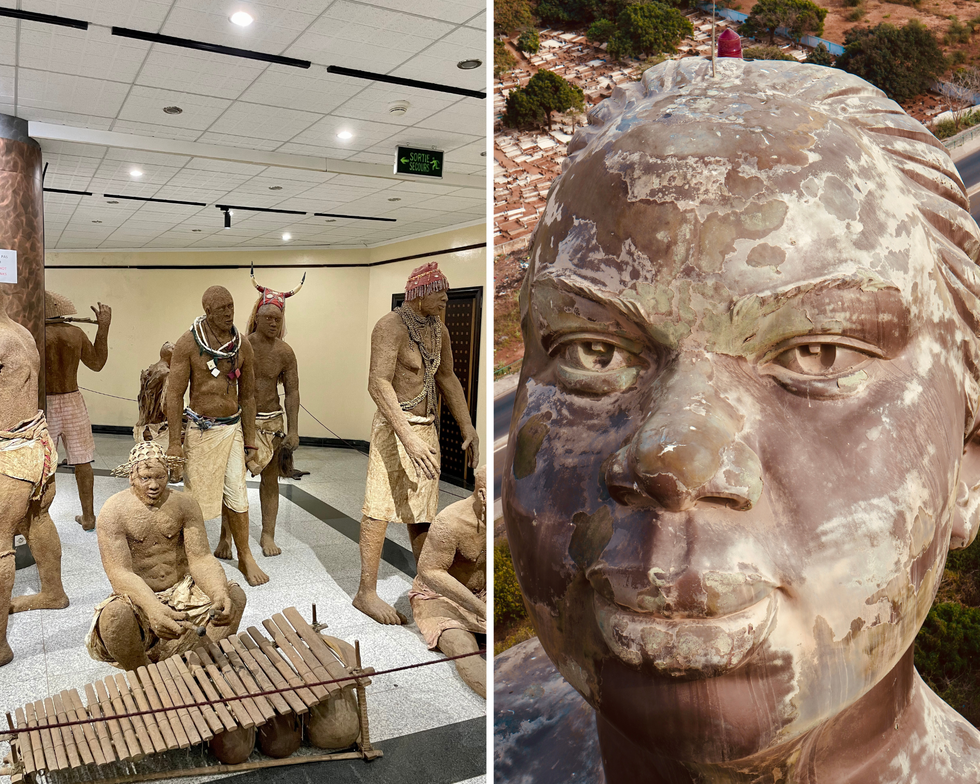
Inside told a story of Senegal, the African slave trade, and its journey to freedom/independence. We also got to see some unique artworks and crafts owned by the then-president of Senegal, Abdoulaye Wade. Afterward, we took an elevator to the top of the statue for a bird's-eye view of the city.
Cassie Daves and Mark Unuakhalu
Cassie Daves and Mark Unuakhalu
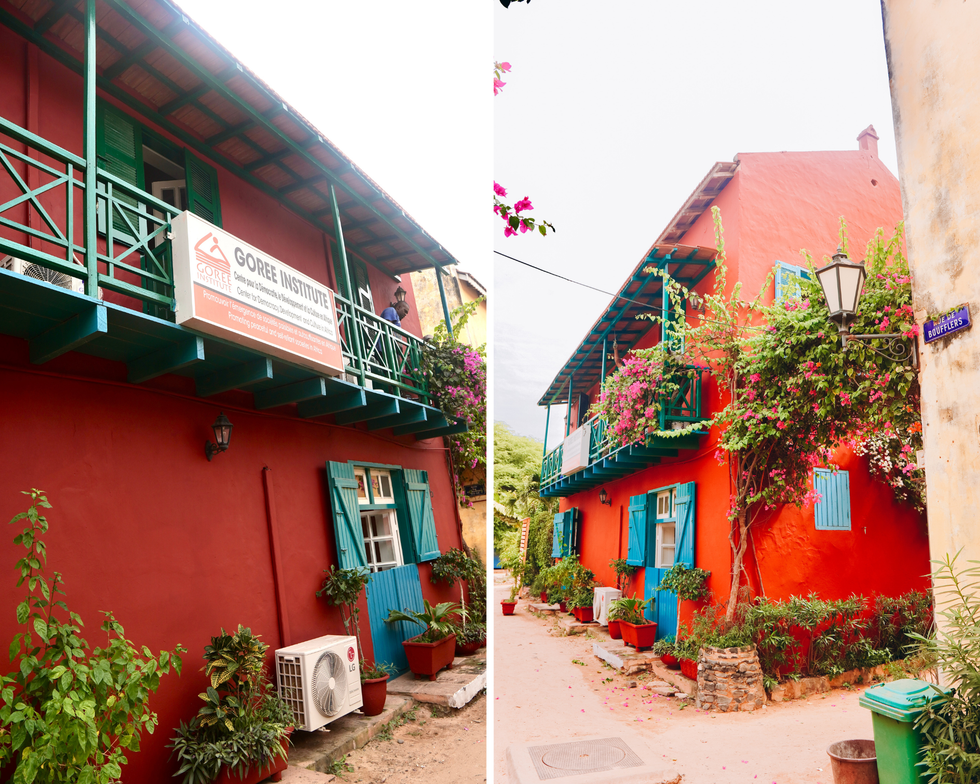
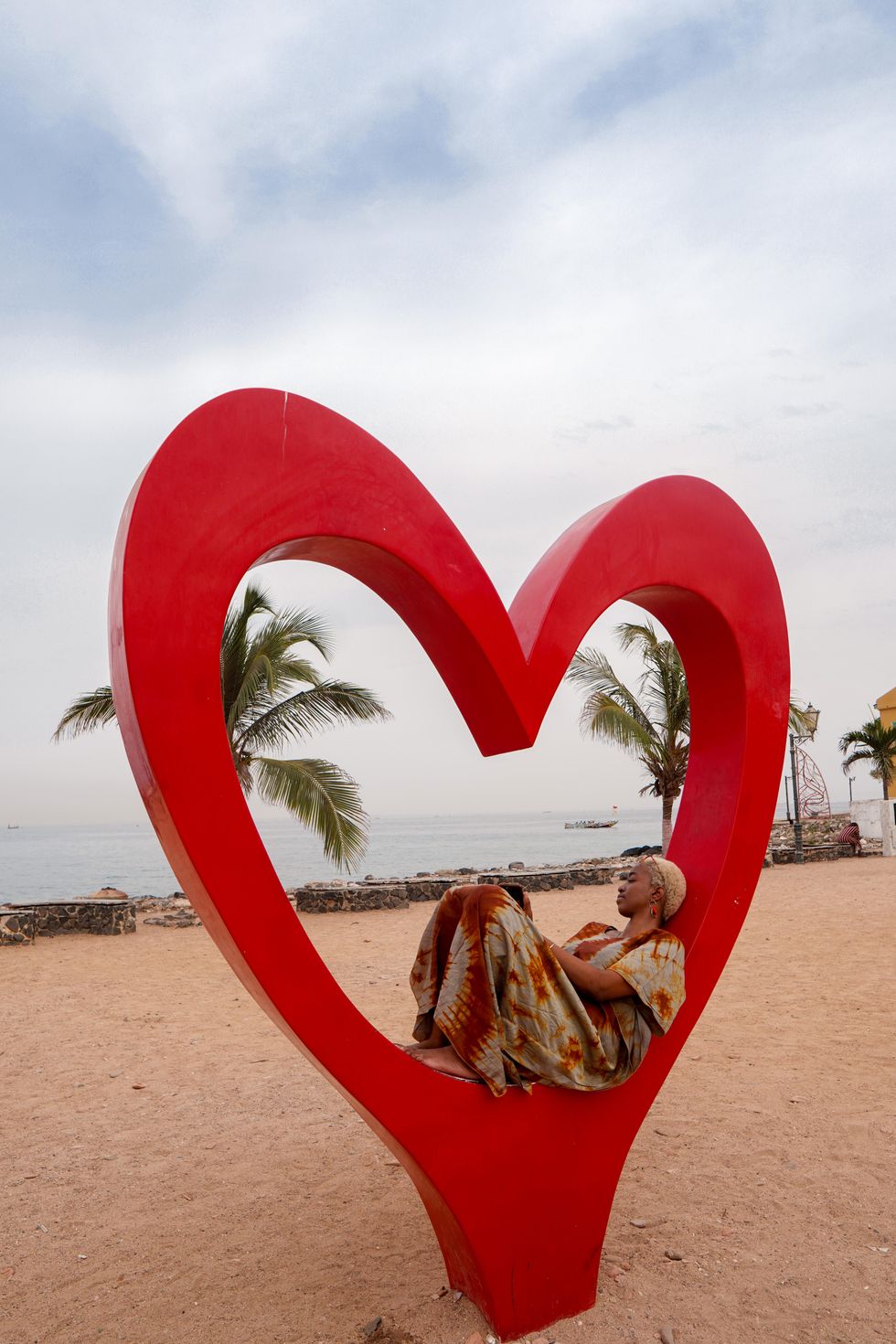
The next day, we set off to visit the highly acclaimed Goree Island (Île de Gorée in French). Goree is a beautiful and picturesque island with a not-so-beautiful past. It was the site of one of the most important slave trade ports in West Africa where millions of enslaved Africans were taken through to never return again. Now, it is a UNESCO World Heritage site and houses a community of about 1800 permanent residents.

Cassie Daves and Mark Unuakhalu
Cassie Daves and Mark Unuakhalu
Cassie Daves and Mark Unuakhalu
Goree attracts over 500,000 tourists yearly who visit for its history or solely to enjoy its visual aesthetics. But one thing is for sure, Goree Island is definitely a key part of anyone’s travels through Senegal so it felt fitting to end our time there with it. The next day, we packed our bags and said our goodbyes.
It was time to return back home.
Let’s make things inbox official! Sign up for the xoNecole newsletter for daily love, wellness, career, and exclusive content delivered straight to your inbox.
Featured image by Cassie Daves and Mark Unuakhalu

Because We Are Still IT, Girl: It Girl 100 Returns
Last year, when our xoNecole team dropped our inaugural It Girl 100 honoree list, the world felt, ahem, a bit brighter.
It was March 2024, and we still had a Black woman as the Vice President of the United States. DEI rollbacks weren’t being tossed around like confetti. And more than 300,000 Black women were still gainfully employed in the workforce.
Though that was just nineteen months ago, things were different. Perhaps the world then felt more receptive to our light as Black women.
At the time, we launched It Girl 100 to spotlight the huge motion we were making as dope, GenZennial Black women leaving our mark on culture. The girls were on the rise, flourishing, drinking their water, minding their business, leading companies, and learning to do it all softly, in rest. We wanted to celebrate that momentum—because we love that for us.
So, we handpicked one hundred It Girls who embody that palpable It Factor moving through us as young Black women, the kind of motion lighting up the world both IRL and across the internet.
It Girl 100 became xoNecole’s most successful program, with the hashtag organically reaching more than forty million impressions on Instagram in just twenty-four hours. Yes, it caught on like wildfire because we celebrated some of the most brilliant and influential GenZennial women of color setting trends and shaping culture. But more than that, it resonated because the women we celebrated felt seen.
Many were already known in their industries for keeping this generation fly and lit, but rarely received recognition or flowers. It Girl 100 became a safe space to be uplifted, and for us as Black women to bask in what felt like an era of our brilliance, beauty, and boundless influence on full display.
And then, almost overnight, it was as if the rug was pulled from under us as Black women, as the It Girls of the world.
Our much-needed, much-deserved season of ease and soft living quickly metamorphosed into a time of self-preservation and survival. Our motion and economic progression seemed strategically slowed, our light under siege.
The air feels heavier now. The headlines colder. Our Black girl magic is being picked apart and politicized for simply existing.
With that climate shift, as we prepare to launch our second annual It Girl 100 honoree list, our team has had to dig deep on the purpose and intention behind this year’s list. Knowing the spirit of It Girl 100 is about motion, sauce, strides, and progression, how do we celebrate amid uncertainty and collective grief when the juice feels like it is being squeezed out of us?
As we wrestled with that question, we were reminded that this tension isn’t new. Black women have always had to find joy in the midst of struggle, to create light even in the darkest corners. We have carried the weight of scrutiny for generations, expected to be strong, to serve, to smile through the sting. But this moment feels different. It feels deeply personal.
We are living at the intersection of liberation and backlash. We are learning to take off our capes, to say no when we are tired, to embrace softness without apology.
And somehow, the world has found new ways to punish us for it.

In lifestyle, women like Kayla Nicole and Ayesha Curry have been ridiculed for daring to choose themselves. Tracee Ellis Ross was labeled bitter for speaking her truth about love. Meghan Markle, still, cannot breathe without critique.
In politics, Kamala Harris, Letitia James, and Jasmine Crockett are dragged through the mud for standing tall in rooms not built for them.
In sports, Angel Reese, Coco Gauff, and Taylor Townsend have been reminded that even excellence will not shield you from racism or judgment.

In business, visionaries like Diarrha N’Diaye-Mbaye and Melissa Butler are fighting to keep their dreams alive in an economy that too often forgets us first.
Even our icons, Beyoncé, Serena, and SZA, have faced criticism simply for evolving beyond the boxes society tried to keep them in.
From everyday women to cultural phenoms, the pattern is the same. Our light is being tested.

And yet, somehow, through it all, we are still showing up as that girl, and that deserves to be celebrated.
Because while the world debates our worth, we keep raising our value. And that proof is all around us.
This year alone, Naomi Osaka returned from motherhood and mental health challenges to reach the semifinals of the US Open. A’ja Wilson claimed another MVP, reminding us that beauty and dominance can coexist. Brandy and Monica are snatching our edges on tour. Kahlana Barfield Brown sold out her new line in the face of a retailer that had been canceled. And Melissa Butler’s company, The Lip Bar, is projecting a forty percent surge in sales.

We are no longer defining strength by how much pain we can endure. We are defining it by the unbreakable light we continue to radiate.
We are the women walking our daily steps and also continuing to run solid businesses. We are growing in love, taking solo trips, laughing until it hurts, raising babies and ideas, drinking our green juice, and praying our peace back into existence.
We are rediscovering the joy of rest and realizing that softness is not weakness, it is strategy.
And through it all, we continue to lift one another. Emma Grede is creating seats at the table. Valeisha Butterfield has started a fund for jobless Black women. Arian Simone is leading in media with fearless conviction. We are pouring into each other in ways the world rarely sees but always feels.

So yes, we are in the midst of societal warfare. Yes, we are being tested. Yes, we are facing economic strain, political targeting, and public scrutiny. But even war cannot dim a light that is divinely ours.
And we are still shining.
And we are still softening.
And we are still creating.
And we are still It.

That is the quiet magic of Black womanhood, our ability to hold both truth and triumph in the same breath, to say yes, and to life’s contradictions.
It is no coincidence that this year, as SheaMoisture embraces the message “Yes, And,” they stand beside us as partners in celebrating this class of It Girls. Because that phrase, those two simple words, capture the very essence of this moment.
Yes, we are tired. And we are still rising.
Yes, we are questioned. And we are the answer.
Yes, we are bruised. And we are still beautiful.

This year’s It Girl 100 is more than a list. It is a love letter to every Black woman who dares to live out loud in a world that would rather she whisper. This year’s class is living proof of “Yes, And,” women who are finding ways to thrive and to heal, to build and to rest, to lead and to love, all at once.
It is proof that our joy is not naive, our success not accidental. It is the reminder that our light has never needed permission.
So without further ado, we celebrate the It Girl 100 Class of 2025–2026.
We celebrate the millions of us who keep doing it with grace, grit, and glory.
Because despite it all, we still shine.
Because we are still her.
Because we are still IT, girl.
Meet all 100 women shaping culture in the It Girl 100 Class of 2025. View the complete list of honorees here.
Featured image by xoStaff
I seriously doubt that it will come as a shock to anyone reading this that the “official” cold (and flu) seasons are considered to be during the fall and wintertime. However, what kinda tripped me out is that there really are only a few months of the year when we aren’t susceptible to catching a cold: May-July. SMDH.
Know what else is wild about colds? They have five stages: incubation (1-2 days); symptom onset (1-2 days); peak symptoms (1-2 days); plateau (2-3 days), and recovery (3-5 days) — and that is why, sometimes, it can seem like it takes FOREVER to get over a cold. Also, SMDH.
Luckily, there are some things that you can do to either speed up the healing process of a cold or make having one more bearable than usual. Things that are affordable, all-natural, and easy to incorporate into your daily routine.
Are you ready to know how to nip a damn cold in the bud…before you even get one?
Here ya go.
1. Fire Cider

Unsplash
Two drinks that I am gonna drink all the way down, each and every fall season, are hot chocolate and apple cider (that’s warmed up). So, when I read about something called “fire cider,” it absolutely caught my attention. If you’re not familiar with it, fire cider is a homemade drink that consists of things like apple cider vinegar, herbs and other ingredients that are specifically designed to boost your immune system.
I won’t lie to you — since some of the traditional recipes contain things like onion and garlic (sulfur has potent medicinal properties) and sometimes even hot peppers (which help to clear up congestion) — although fire cider might not be your favorite as far as your palate is concerned, the viruses (because there are reportedly somewhere around 200 of ‘em) that cause colds will lose a lot of their impact if you drink this; and that makes it worth a shot — well, swallow. Some fire cider recipes can be found here, here and here.
2. Probiotics
A few years ago, I wrote an article for the platform entitled, “80% Of Your Immunity Is In Your Gut. Take Care Of It Like This.” — and that alone should explain why and how a probiotic can help to prevent colds and make it easier to get over them. The reality is that a healthy gut is what helps to monitor how your immune system reacts and responds to harmful pathogens that may try and get into your system, including ones that cause the common cold.
And since probiotics feed your gut with “good bacteria,” this gives your gut the ability to be better (and quicker) at fighting off the bad. So yeah, take a probiotic — all of the time and definitely while you have a cold. It helps.
3. Peppermint (or Eucalyptus) Oil

Unsplash
Although I rarely get sick (praise the Lord!), when I do catch a cold, I think what I hate the most is not being able to comfortably breathe. Well, something that is proven to help with that is peppermint essential oil. That’s because it contains properties that act as a natural decongestant as well as a fever reducer. Another essential oil that can hook you up in this department is eucalyptus oil. It’s bomb because it helps to soothe a nagging cough, it can clear up chest congestion and ultimately makes it easier to breathe.
So, before turning in at night, either mix a few drops of one (or both) of these oils with a carrier oil like grapeseed, avocado or jojoba, warm it up for 10 seconds in the microwave and apply it to the sides of your nose or on your best or back. Or put the oil in a diffuser. It can quickly ease cold-related symptoms while also making it so much easier for you to rest (which is something else your body needs to get over a cold; more on that in a sec).
4. Zinc Lozenges
Zinc is a mineral that helps to keep your immune system healthy and strong — and since a weakened immunity is directly connected to having more colds (2-4 a year is considered to be “normal,” by the way), it’s always a good idea to have some zinc in your body. As it relates to colds, specifically, aside from the fact that zinc can help you from catching one to begin with, there are also studies which say that sucking on zinc lozenges can help to shorten the timespan of a cold as well.
To be fair, some people have said that zinc lozenges make them feel nauseated; however, everything has its pros and cons and so, how would you know if you’re one of these folks unless you try it? Oh, and while we are on this topic, there are also zinc supplements and foods that are high in zinc (like red meat, lentils, hemp seeds, cashews and quinoa) if you want to try and get more zinc into your system that way (although lozenges are gonna be your best bet on the shortening tip; just sayin’).
5. Foods Rich in Vitamin C

Unsplash
Speaking of foods that can fight a cold, out of all of what you’ve read here, probably what you are quite familiar with is the fact that vitamin C and colds are mortal enemies. In fact, one pretty significant study says that by taking one gram of vitamin C a day during a cold, you can reduce the severity of your symptoms by as much as 15 percent.
That’s because vitamin C is packed with antioxidants, it helps to reduce bodily inflammation and it helps to strengthen your immunity too. Foods that are full of vitamin C include chili and yellow peppers, kale, kiwi, papaya, broccoli, kale and citrus fruits.
6. Elderberry Tea
If you’re someone who likes to put preserves on your biscuits or toast, have you ever tried one that is made from elderberries (recipe here)? It’s actually pretty good — and good for you because elderberries are high in vitamin C, fiber and antioxidants. And that is why they are great whenever you are trying to hurry up and get over a cold because they also contain properties that are literally antiviral — and since a cold is a virus…well, there you have it.
One of the best ways to get elderberries into your system? Elderberry tea. If you add honey to it, honey can help to shorten symptoms like a stuffy nose, sore throat and cough by 1-2 days. Very cool.
7. REST

Unsplash
Did you know that even one day of not getting the sleep that you need to weaken your immune system and increase bodily inflammation at the same time too? That’s because one of the benefits of a good night’s rest is it rejuvenates and recharges your system, so that your immunity can work at its optimal level.
Not only that but, according to science, if you already have a cold, getting plenty of rest can benefit you on a few different levels as well. First, your cytokines (proteins that boost your immunity) are released when you sleep.
Second, your body temperature elevates enough to kill some of the bacteria and viruses that are making you sick. Finally, sleep provides you with the energy that you need in order to get through the day while you are healing from your sickness. So, if you want to get through your cold ASAP, be intentional about getting as much rest as you possibly can.
BONUS: A Humidifier
When you get a chance, please check out “10 Really Good Reasons To Get Yourself A Humidifier This Fall”. There really are all kinds of solid reasons to invest in a humidifier around this time of the year — and one of them is to make getting through the cold (and flu) season so much easier for you. Since humidifiers bring moisture into the air, that can help to loosen up congestion, soothe an irritated throat, decrease coughing, help with the healing process of respiratory infections and it can help you to sleep better — so that you can get past your cold sooner.
So, if you don’t already have a humidifier, cop one ASAP. Your future colds will absolutely hate that you did. LOL. For a list of some highly recommended humidifiers that are currently on the market, click here.
Let’s make things inbox official! Sign up for the xoNecole newsletter for love, wellness, career, and exclusive content delivered straight to your inbox.
Featured image by Casper1774 Studio/Shutterstock