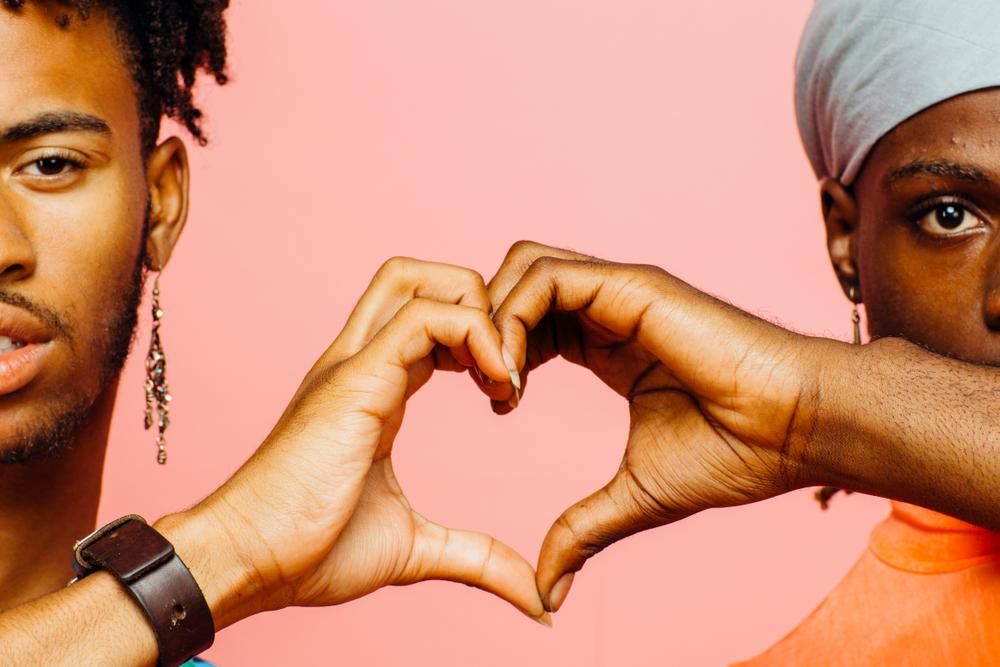
What is gender? A social construct? Probably. How many genders are there? These days, everyone's talking about gender and at this point we're all having to learn and unlearn what it is that we know about it -- which is a great thing because against all odds curiosity will snuff out ignorance and bigotry (fingers crossed). Gender (especially outside the binary) isn't a dirty word that we have to Google and delete the browser history for, so let's stop acting like it is! We spoke with three sexperts about gender -- Relational and Sex therapist D'Lessia Wedley, Sexologist and entrepreneur Malika O'Neill, and LMFT Graduate intern (concentration in sex ed and therapy) Kalila Griffin. I asked them the same five questions (basically) and here was the consensus:
Gender is fluid AF. And we should learn to be less rigid and more "go with the flow-ish."
But seriously...how many different genders are there? Well. All of our experts agreed that you cannot put a cap on or "quantify" gender. Wedley offers, "I cannot quantify gender. Gender is defined by how one identifies themselves, and the language and terminology are continually evolving. People must be aware that there is a difference between one's sex and gender. Sex is the biological makeup or medical terminology of a person, and gender being how one views themselves."
media4.giphy.com
Furthermore, Griffin points out defining gender is not that simple given that "language related to trans and gender non-conforming (TGNC) individuals is always evolving."
O'Neill elaborates on the complexity saying, "Scientifically one may say there are only two genders, man and woman. Those who exist outside these groups fall under the umbrella term non-binary or genderqueer. However, the truth is, there's no way to put a final number on how many genders there are because [as previously mentioned] gender is about a person's sense of self, and each individual person is likely to experience gender differently. I have read articles with over 100 genders to [those] claiming there are 4,000."
Though we are accustomed to the binary or the most known, used, and offered gender of male and female, here are 11 words to describe various genders and their experience, according to O'Neill:
- Agender: Not having a gender or identifying with a gender. They may describe themselves as being gender neutral or genderless.
- Bigender: A person who fluctuates between traditionally "male" and "female" gender-based behaviours and identities.
- Cisgender: A person whose gender identity and biological sex assigned at birth are the same. For example, they were born biologically as a male, and express their gender as male.
- Gender Fluid: A mix of boy and girl. A person who is gender fluid may always feel like a mix of the two traditional genders, but may feel more "man" some days, and more "woman" other days.
- Genderqueer: A gender identity label often used by people who do not identify with being a man or a woman, or as an umbrella term for many gender non-conforming or non-binary identities.
- Intersex: A person born with a reproductive or sexual anatomy that doesn't seem to fit the typical definitions of female or male. For example, a person might be born appearing to be female on the outside, but having mostly male-typical anatomy on the inside.
- Gender Variant: Someone who either by nature or by choice does not conform to gender-based expectations of society.
- Mx: Is a title (e.g. Mr., Ms., etc.) that is gender neutral. Pronounced miks, (similar to Ms) it is often the option of choice for folks who do not identify as cisgender.
- Third Gender: A term for a person who does not identify with either man or woman, but identifies with another gender. This gender category is used by societies that recognize three or more genders, both contemporary and historic, and is also a conceptual term meaning different things to different people who use it.
- Transgender: A person who lives as a member of a gender other than that expected based on sex assigned at birth.
- Two-Spirit: Is an umbrella term traditionally used by Native-American people to recognize individuals who possess qualities of both genders.
Featured image by Shutterstock
Related Articles Around the Web