xoNecole was in the Dolby Theater for our parent company Will Packer Productions' making history as the first all-Black producing team in the Oscars' 94 years--and yes, the moment was shocking and confusing, with guests reacting much like those at home, wondering was the presumed Best Actor Will Smith doing a bit when he walked onto the stage and open-handed slapped Chris Rock after a joke about Jada Pinkett-Smith's bald head? It was quickly clear that it wasn't, with those of us up in the theater's rafters looking to Twitter for a replay of what exactly went down.
But we should not forget some truly amazing moments in Black history that went down at this year's Oscars.
xoNecole was on the red carpet talking to your faves about what this moment meant for Black people, Oscars host Regina Hall, Best Supporting Actress Aunjanue Ellis, Oscar winner H.E.R., Oscar winner Ruth E. Carter, presenters Chloë x Halle and more:
Oscar Winner Samuel L. Jackson
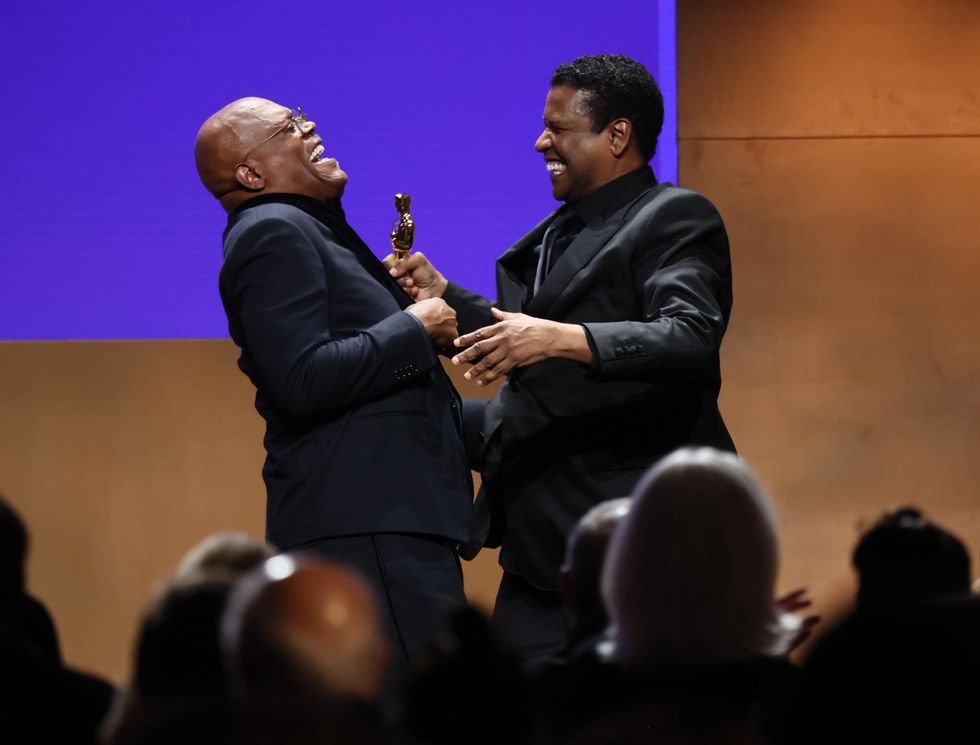
Samuel L. Jackson celebrates his Oscar with Denzel Washington
Mike Coppola/Getty Images
At The Academy's Governors Awards the night before the Oscars, Denzel Washington presented his peer and friend Samuel L. Jackson with this year's honorary Oscar. The 73-year-old acting veteran has been on our screens for most of his life, alongside Washington and Spike Lee. After being nominated for Supporting Actor for his role in Pulp Fiction, Jackson now has his first Oscar!
Blue Ivy Gave The Opening Performance
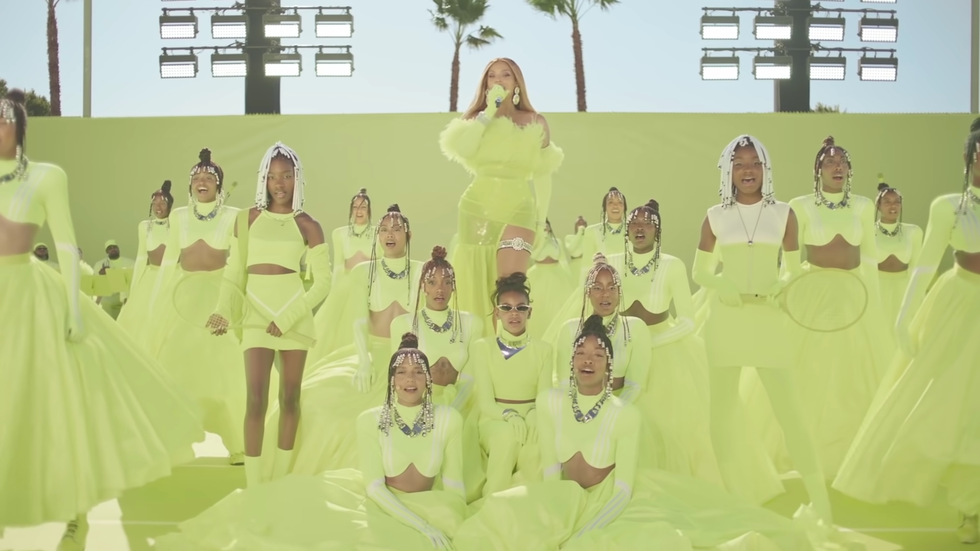
Baby, Blue Ivy was MOVING, okay? Dance moves on point. An icon. A legend. We didn't deserve it, but I'm so glad Blue Blue let her mom sing background for her debut performance at the Oscars. She can add this accolade to her illustrious Emmy, Grammy and literary awards.
'The Queen of Basketball' Received Best Documentary Short
One of the early, exciting moments from the pre-taped show was when The Queen ofBasketball won for best documentary short (just as I predicted!). The floor vibrated as the family of Lucy Harris, the first woman to ever play in the NBA, celebrated the Oscar win in her honor. Sadly, Lucy passed just months before the nominations were announced, so she never got to see how her pioneering story would reach international acclaim. "Hallelujah! Thank you, Jesus!" Her family and loved ones shouted out from the rafters above and behind me in the Dolby Theater. Their energy and joy were electric! And Director Ben Proudfoot ended his acceptance speech with an appeal: "President Biden, bring Brittney Griner home!" A Black history moment and icon we should never forget. Watch the Oscar-winning documentary short below:
Ariana DeBose Won Best Supporting Actress
The first award of the (televised) night went to Ariana DeBose for Best Supporting Actress in West Side Story, (as predicted) making her the first Afro-Latina, openly queer woman to win the award. Quoting her famous musical in her acceptance speech, she said "So to anyone who has ever questioned your identity, or you find yourself living in the gray spaces, I promise you this: there is indeed 'a place for us.'"
Megan Thee Stallion Is The First Female Rapper To Perform
One of the more pleasant surprises of the evening was seeing Megan Thee Stallion performing the hit song from Encanto by Lin Manuel Miranda, "We Don't Talk About Bruno." While you may remember the famous performance from Oscar winners Three-Six Mafia of "Hard Out Here For A Pimp," Megan's performance was the first-ever by a female rapper in Oscars history. Keep doing it big for the Hot Girls, Meg!
A Disabled Black Woman Was Defended Against Ableism and Misogynoir
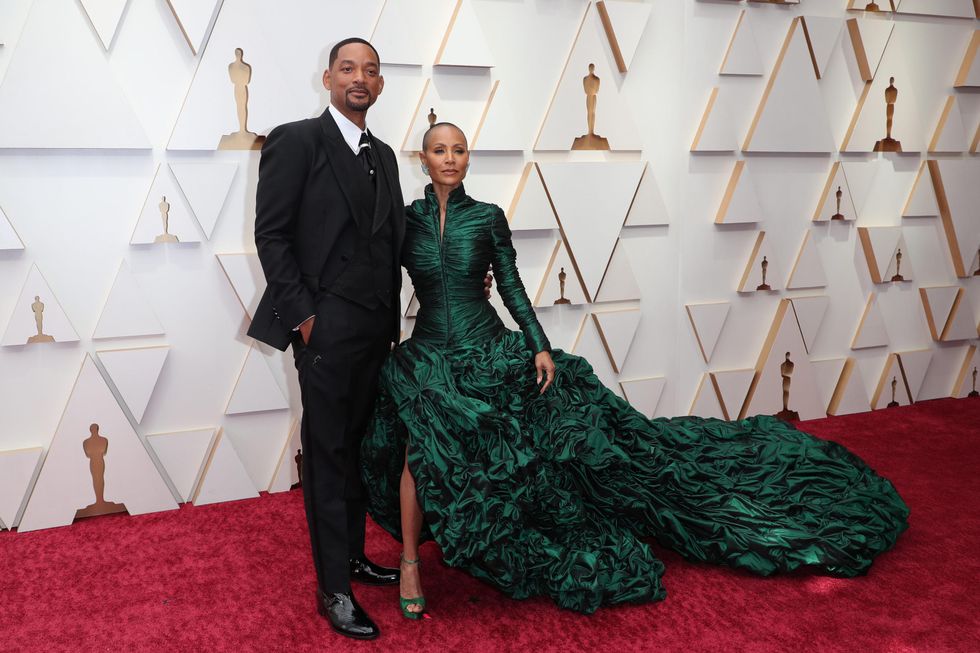
WILL SMITH, JADA PINKETT SMITH
THE OSCARS® – The 94th Oscars® aired live Sunday March 27, from the Dolby® Theatre at Ovation Hollywood at 8 p.m. EDT/5 p.m. PDT on ABC in more than 200 territories worldwide. (ABC)
For too long, comedians like Chris Rock have built their entire careers on mocking how Black women look, talk, dress and act and we're always expected to take it because it's "just jokes." I'd wager that part of what seems to be so offensive to people in the aftermath of the Slap is not that Chris Rock got popped in the mouth for mocking a Black woman's appearance, it's that this violent, ableist, misogynoiristic 'joke' is supposed to be acceptable. Open season on the most unprotected and disrespected people in America, the Black woman, is assumed, and how dare Chris Rock face consequences for it? Alopecia is an autoimmune disease. Jada Pinkett Smith is disabled. A Black disabled woman was defended against ableism and misogynoir in front of the world on Sunday night. While we'll have to wait for Jada to speak specifically on how she felt about the offense or the defense, I hope more 'comedians' think twice before mocking Black women for a white audience's laughter and actually try to be funny next time.
'Black Girl Magic' Poet Mahogany L. Browne Talks Banned Books And The Power Of The Creative Pivot
You know you’re dealing with a truly talented and profound voice of a generation when the powers that be attempt to silence it. As a poet, educator, and cultural curator, Mahogany L. Browne has carved out a powerful space in the world of literature and beyond.
From penning the viral poem, “Black Girl Magic,” to writing Woke: A Young Poet’s Call To Justice (a book once banned from a Boston school library), to becoming the 2024 Paterson Poetry Prize winner and a poet-in-residence at Lincoln Center—her path exemplifies resilience, reinvention, and unapologetic artistry. She's published more than 40 works and paid the bills with her craft, a divine dream for many creatives seeking release, autonomy, and freedom in a tough economic climate.
A Goddard College graduate, who earned an MFA from Pratt Institute and was awarded an honorary doctorate from Marymount Manhattan College, Mahogany offers unapologetic realness with a side of grace and empowerment. "I started touring locally. I started creating chat books so that those poems will go in the hands of the people who were sitting in the rooms," she shared.
"And then I started facilitating poetry workshops, so I used my chat books as curriculum. And that, in turn, allowed me to further invest in my art and show the community and people who were hiring me that it wasn't just a one-off, that it's not just, you know, a fly by night—that I am invested in this art as much as I am invested in your community, in your children's learning, in our growth."
Mahogany has a special way of moving audiences, and her superpower sparks shifts in perspective, post-performance introspection, and strengthening of community bonds, especially among Black women. (One can undeniably recognize her gift for arousal of the spirit and mind merely from her listening to her insights from the other side of a Google Hangout call. I can only imagine the soul-stirring, top-tier sensory encounter when watching her perform in person.)
In this chat with xoNecole, Mahogany reflects on sustaining a creative career, the aftermath of writing a banned book, and using poetry for both healing, community-building, and activism.

Anthony Artis
xoNecole: What are three key things that have laid the foundation for a sustainable creative career for you?
Mahogany L Browne: What has helped me is that I'm willing to go in being an expert at knowing poetry and knowing the way in which art can change the landscape of our lives, not just as a poet, but also as a poetry facilitator. How you move through classes, those things are mastered, right? So when I go into another space that's maybe tech-heavy, I don't mind learning and being, you know, a student of the wonder of how we can make this magic, work together.
Two, you’ve got to know how to pivot. Sometimes we say, ‘Alright, this is what my life is going to be. I'm going to be a New York Times best-selling author. I'm going to, you know, have an album that's Grammy-nominated. And then, say you get dropped from your record label. That doesn't mean you can't make an album anymore. You can also still create an album that can be submitted to the Grammys. So, what does a pivot look like as an artist who doesn't have an institution behind them? Pivot being a student of the wonder.
Relationships also really help. How do I serve the community? And in turn, that tells me how the community can show up. For me, I have long-standing ties with a community that will outlast my one life. So, what does it mean to create space where these relationships can develop, can be nurtured, can be rooted, can be cultivated? Creating space—it happens through relationships.
xoN: With today’s economic challenges, what does your current creative process look like, and what are you working on?
MB: I’m always thinking five years ahead. I just reviewed the pages for two children’s books and recently released a YA novel. I’m drafting an adult fiction manuscript now.
Anything I create is founded with the root of poetry, but it can exist in captions. It can exist in commercials. It can exist as a musical. So that's where I’m at now.
xoN: You started performing "Black Girl Magic" in 2013, had an acclaimed performance of it via PBS and the work went on to viral success shortly after. Talk more about the inspiration. And what do you think about the continued relevance more than a decade later?
MB: I wrote it as a rally cry for the mothers who had been keeping themselves truly in harm's way by, you know, being a part of the community right after the death of their child or their loved one. They are usually mothers of victims of police brutality—and just seeing how they showed up in these community spaces, they are devout to the cause but obviously still grieving.
"I wanted this poem to be just a space of reclamation, of joy and of you, of your light, of your shine, of your brilliance, in any which way in which you fashion. Every room you enter is the room you deserve to be in. What does it mean to have a poem like that that exists?"
And the first time I did the poem, the Weeping that occurred, right? It was like this blood-letting of sorts. The next time I performed it, I'm moved to tears because I'm seeing how it's affecting other women who have just been waiting to hear, ‘You belong. You deserve. You are good. We see you. Thank you, despite everything that they said to make you regret being born in this beautiful brown, dark-skinned, light-skinned, but Black body.’
Black women are the backbone—period. Point blank. And so, that that poem became a necessity, not just to the fortitude of Black women in the community, but like you know, in service of healing the Black women.
xoN: One of your books was banned at a school in Boston, and it was later reinstated due to parental and activist support. What was that experience like?
MB: Well, I think it happened because they were racist. That's it. Point blank. The reversal of it was empowering, right? I realized, oh, I thought we just had to sit here and be on a banned book list. But no, parents are actually the leaders of this charge.
So to see that, the parents said, ‘Nah, we're not gonna let you take this book out of my baby’s school just because it's a Black kid on the front saying, ‘Woke’ and they're talking about being a global citizen. They're talking about accountability. They're talking about accessibility. They're talking about allyship, and you don't want them to have compassion or empathy or have even an understanding, right? So no, we rebuke that, and we want this book here anyway.’ To see that happen in that way. I was, like, reaffirmed. Absolutely.
xoN: You recently organized the Black Girl Magic Ball at the Lincoln Center in New York. Honorees included author and entrepreneur Rachel Cargle and National Black Theater CEO Sade Lythcott. What impact did it have and what expanded legacy do you hope to leave with your creative works?
MB: I was really interested in not celebrating just the book, but celebrating the community that made the book possible. And so I gave out five awards to women doing that thing, like, what does it mean to be a Black girl in this world?
I just thought it was gonna be an amazing time. Everybody's gonna dress up—we're gonna celebrate each other. And boom, I then realized that it responded to like a gaping hole. There was a missing thing for Black girls of all walks of life, all ages, right?
"It's very intergenerational. That was intentional to come together and celebrate just being us."
You have all these instances where just being you is either the butt of a joke or it's diminished and not worthy of a specific title in these larger institutions. So what does it mean to just to be loved up on and celebrated?
It felt like a self-care project at first. You know, for the first couple of years, folks were coming and they were getting that sisterhood. They were getting that tribe work that they were missing in their everyday lives.
I love the Black Girl Magic Ball because we got us. If I go out with a bang, they'll remember that Mahogany worked her a** off to make sure all the Black girls everywhere knew that she was the light. We are the blueprint.
For more information on Mahogany L. Browne, her work, and her future projects, visit her website or follow her on IG @mobrowne.
Featured image by Anthony Artis
How To Travel With Your Friends While Maintaining Your Autonomy
I come to you fresh off of a vacation that I used my tax refund to pay for, delieverdt! I am advocating for you to consider group travel to get the most bang for your buck. Often, traveling with a group is way more budget-friendly to split high-end accommodations rather than paying for a hotel for one person (when solo traveling). And if you didn't know, rooming in a vacation home as opposed to a hotel room affords you the luxury of more privacy with features like a private pool, a whole kitchen, the ability to have your own room in a house, etc.
Yes, after watching a few reality TV episodes with people being bunched into a beautiful home only to start shaking tables and throwing drinks, it's tempting to let your imagination run wild with all of the negative scenarios that could play out when you travel with friends. I know mines did! However, with a little maturity and self-awareness and making an investment into having more effective communication skills when it comes to the hard stuff, I respectfully suggest that if you are reading this: You don’t really have a problem with group travel, you need to learn how to navigate traveling in a group setting.
Below are some tips I applied to my recent trip to maintain my autonomy while traveling with friends:
Set your personal intentions on why you are attending before agreeing.
The best way to enjoy group travel is to set one's intentions before going. Get your “why” defined because it's super important! Though you may have been invited to celebrate a friend's birthday or another occasion, I think it’s imperative to pair why you're coming to show support for another person with finding ways to take actions that will also benefit you. Unless you are one of the lucky ones getting an all-expense paid trip to celebrate with your friend, you are under no obligation to stick around your travel group every waking moment.
So let's explore your other intentions for saying yes to the trip. Is it to try some local cuisine, an excursion that you haven't participated in, or get into photography? Set that intention and stick to it because you deserve to feel fulfilled by the trip you're going on after spending your hard-earned money and PTO.

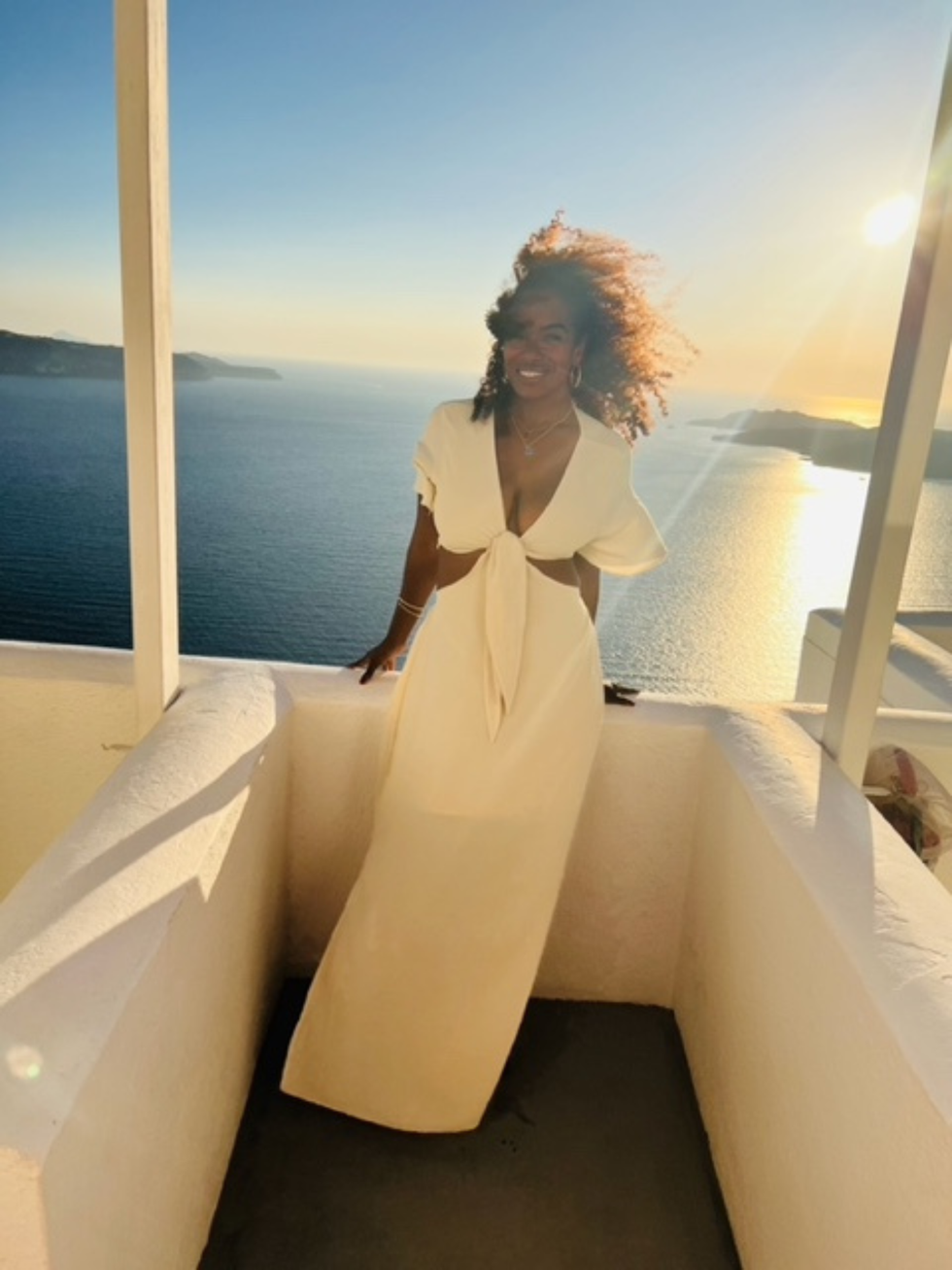
Courtesy of Zaniah B
Manage your trip mates' expectations by setting boundaries before the trip.
Effective communication is a major key; this is your chance to give the trip organizer a fair warning of what you are and are not interested in doing before they feel blindsided on the trip. For example, if you know you don't feel like ziplining this time around, let the group know ahead of time to manage the expectations of everyone being together on the trip, and this also creates an opportunity for some alone time.
And while you set your boundaries, make sure you are also planning time together with the group too! Meal time is a great way to regroup throughout the day to check in and allow yourself to say “yes” to an unexpected invitation to do something spontaneous with your girls! Give yourself just as much time to be with your group as you spend away from them. Balance is another major key!

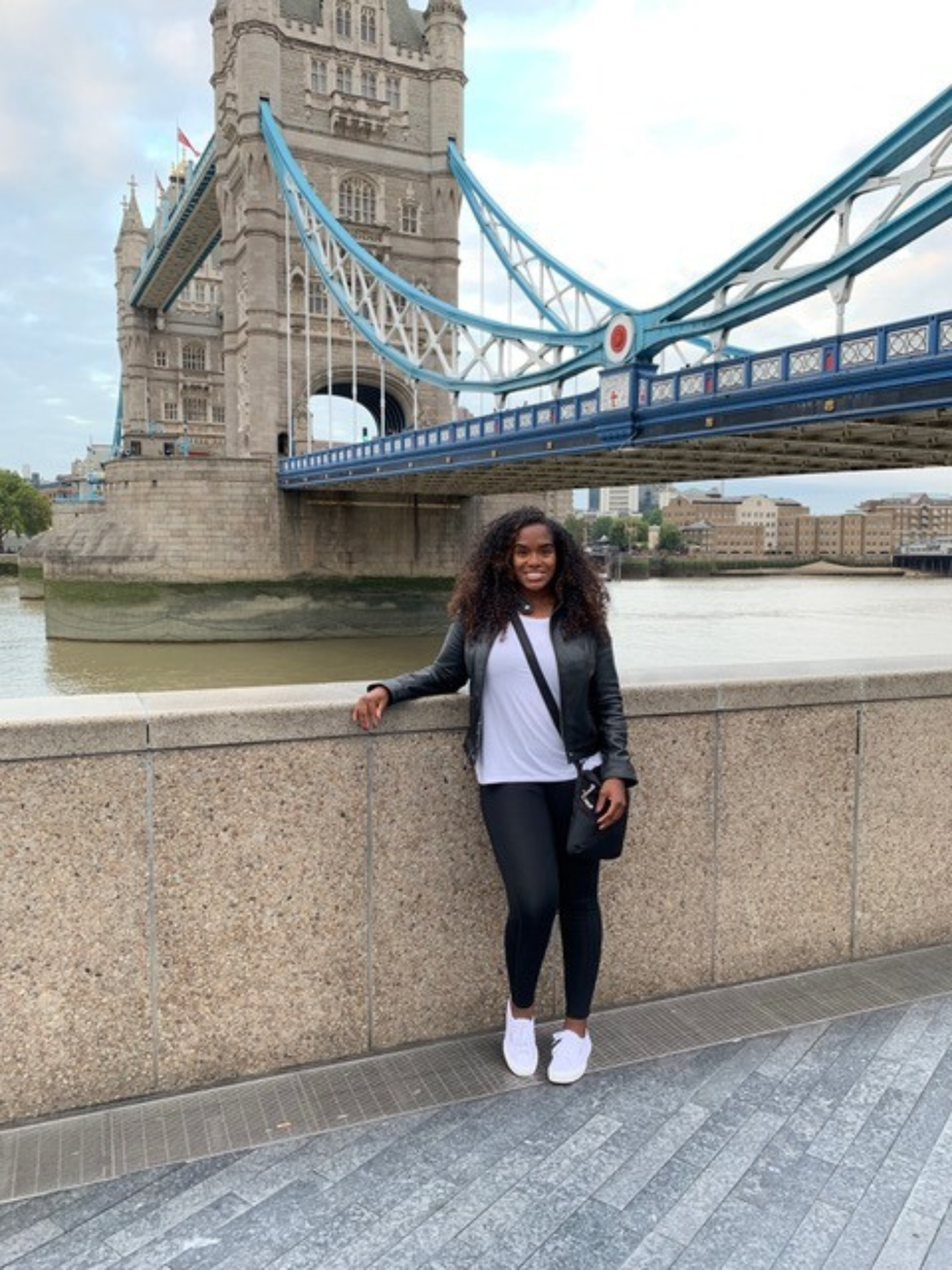
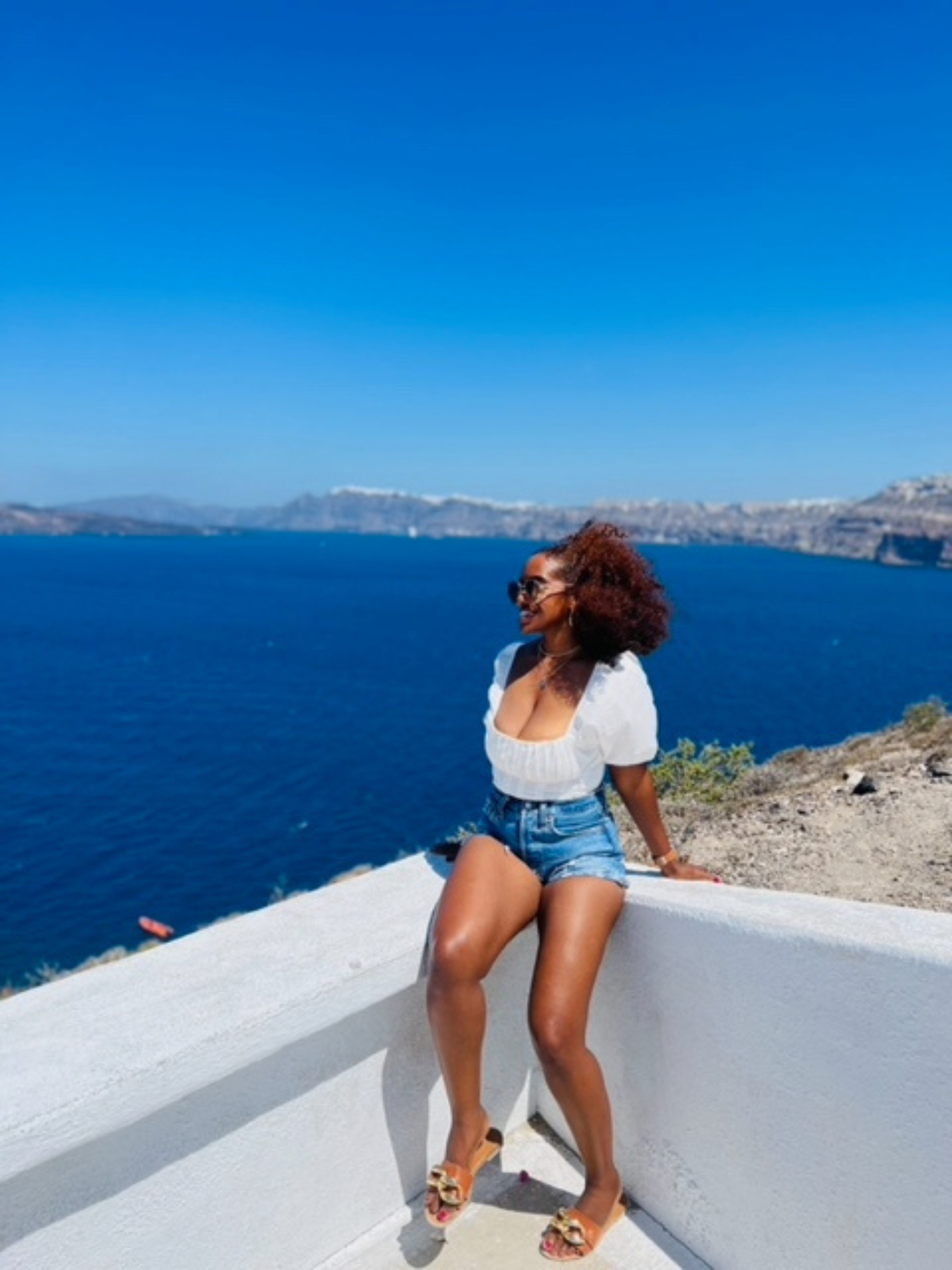
Courtesy of Zaniah B
Be prepared to give grace.
No matter how great the personalities are, there are some moments when everyone won't mesh too well with each other. It's not personal, and it doesn't have to ruin a person’s trip. We are all imperfect human beings, and traveling can bring an additional level of stress you wouldn't have encountered in a more casual setting like brunch. This makes it easier for miscommunications and misunderstandings to happen. Practice as much empathy as possible, listen more than you speak, and work on responding and not reacting.
There are so many factors at play, like alcohol consumption and being forced out of one's comfort zone in many ways that can amplify situations that you would otherwise be able to smooth over. Most importantly, give yourself grace, too! I personally use group travel to improve my ability to connect and co-exist with people whom I may have never considered having much in common. It helps me brush the chip that I have on my shoulder of being “ different” by exposing how random women have more in common than not.
Group travel recharges me through the mutual compliments, shared experiences, and bonding that occur with women on these trips. The seriousness of adulting can be isolating, and planning an independent getaway can be a daunting task; a girls' trip may just be just what you need.
Let’s make things inbox official! Sign up for the xoNecole newsletter for love, wellness, career, and exclusive content delivered straight to your inbox.
Featured image by Jakob Owens on Unsplash
Originally published on June 6, 2023