Eunique Jones Gibson On Celebrating Black Culture While Creating Space For Black Joy

Growing up, Eunique Jones Gibson didn't have to look far for positive imagery that reflected who she was and where she came from. At a young age, Eunique's parents wasted no time instilling the importance of self-love and embracing the richness of Black culture. From her father's afrocentric, Cross Colours-based style to seeing herself through the lens of Lena James, Jada Pinkett's confident persona on A Different World, Eunique's surroundings began to paint a colorful portrait of the worlds that true representation could form. She points out, "That was my entryway into really embracing the culture and understanding the power of who we are and being critical of false narratives." It's no wonder that her work in representation through entertainment and media no less found her.
Early out in her career, the power to influence through advertisement served as a compass to direct her career pursuits, "When people used to ask me what I wanted to do that, I always said I wanted to influence decisions in 30 seconds or less. Because that's what commercials do." But for Eunique, the power to influence doesn't stop after the commercial ends, true impact transcends fleeting attention spans and viral moments that evaporate within the vapor of a swipe or click.
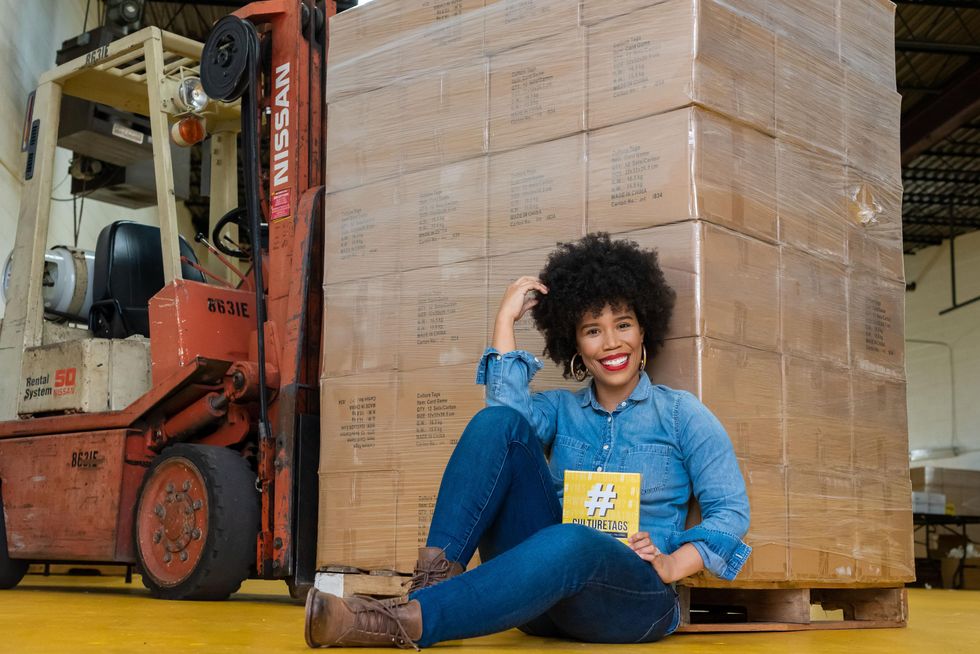
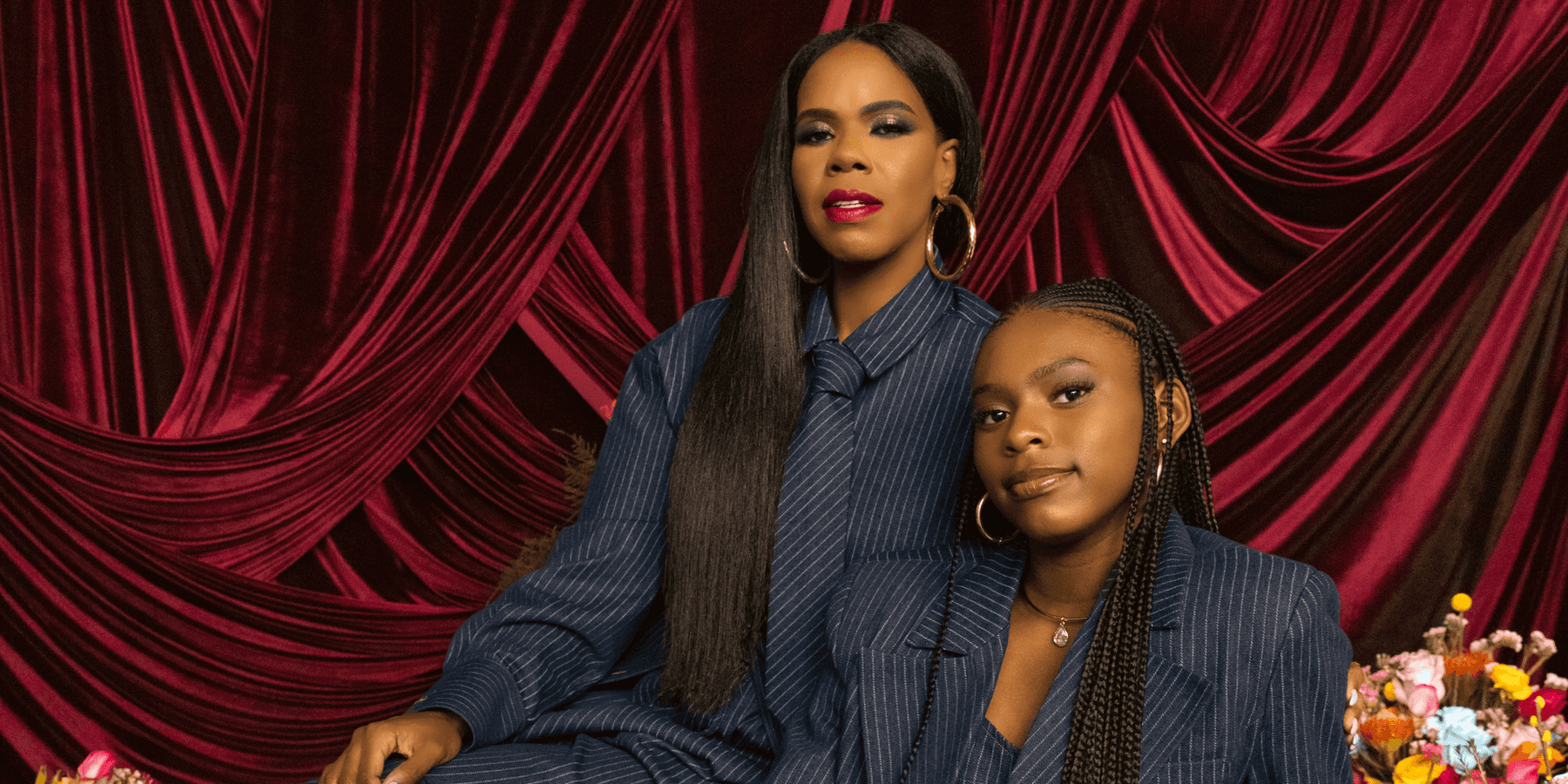
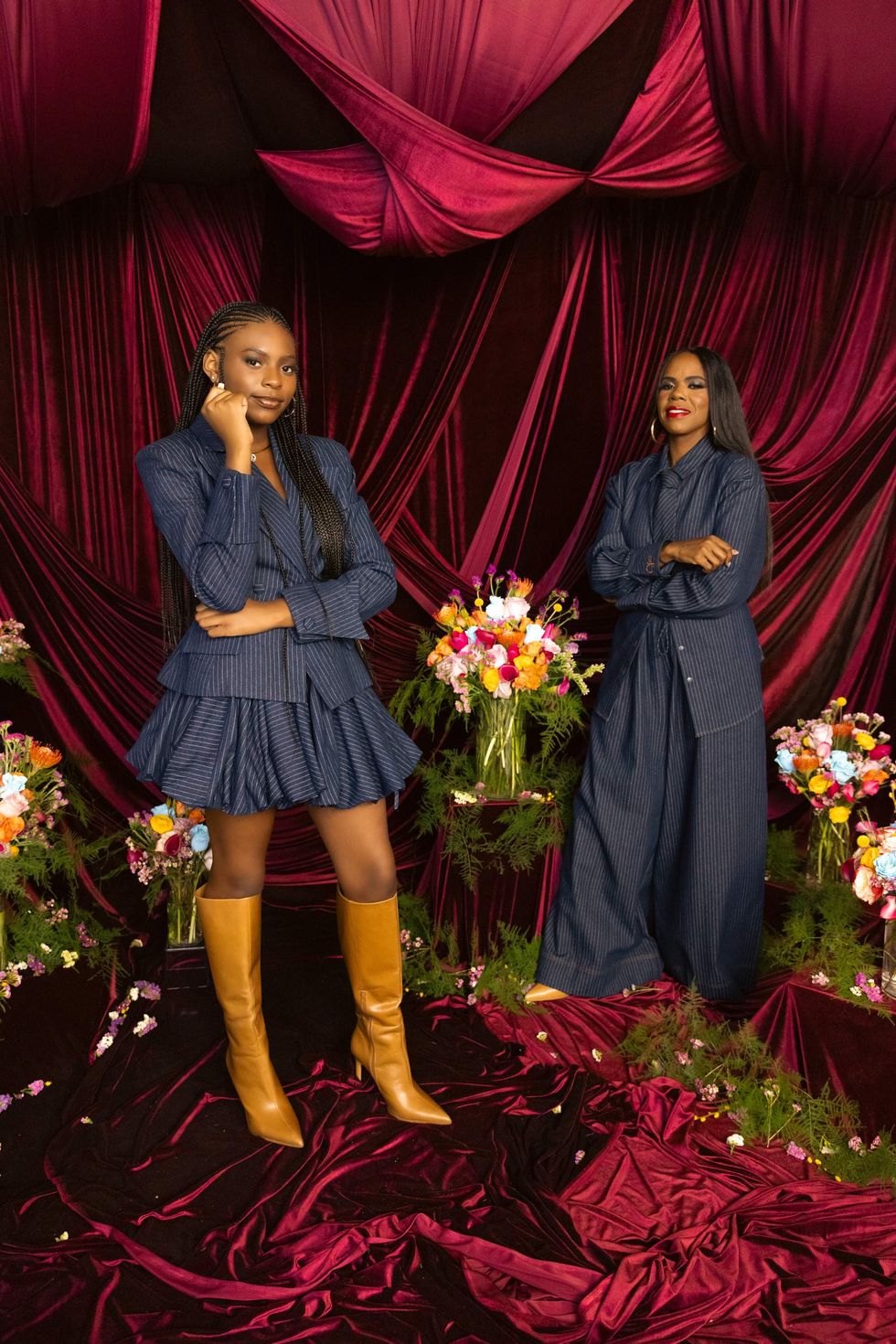
Photo by: Eunique Jones Gibson and Ashleigh Bing
The creative-entrepreneur proved this to be true, most noticeably through her Because of Them We Can campaign and instant-classic game, Culture Tags. In creating her Because of Them We Can campaign in 2013, Eunique recognized that Black History Month was in need of revitalization, "I wanted to refresh it, make it youthful, engaging, and inspiring. I saw the opportunity to do that through photographs and eventually to evolve it from that point." As the campaign grew in online popularity and potency, it garnered the attention of prominent figures like Oprah Winfrey to Kerry Washington, "I thought it was going to be a 28-day campaign, but I also realized that in order to be true to what I was trying to prove — which was that we need to reimage Black History, I had to lead by example."
The example that Eunique continues to set is one that's rooted in her mission to celebrate culture and community through the highest form of resistance: Black Joy. Her new game, Culture Tags, has served as an instrument for joy as many have looked for a delightful escape in the midst of quarantine. Restoring play and festivity back into our households, Culture Tags continues to find new life as outside reopens, guaranteeing to be the life of any cookout or rooftop party where the game makes an appearance. "As Black people, we've gone through and continue to go through so much as a community that oftentimes joy is all we have to look forward to. It's up to us to preserve it, protect it, and create the space for it."
xoNecole: Your project “Because Of Them We Can,” garnered viral success with the images that you shared of young Black children portraying notable Black figures. You mentioned once that you “wanted to refresh Black History,” could you tell us about that mission to refresh/reimagine Black History and how that’s evolved today?
Eunique Jones Gibson: When I started the campaign in 2013, I didn't see a captivating push that made Black History interesting and exciting and something that wasn't just Black and white photos. Black History was relegated to the narrative that in order to make history or be a figure or a person who could be acknowledged in Black History, it was a typical lineup of individuals that we learned about in school but it didn't expand beyond those individuals. It also typically ended up revolving around individuals who, when we talk about Black History Month, were older or people who were deceased and we know that Black History is constantly being made. It's always taking place, it's taking place right now as I'm talking to you.
I wanted to do something that would make it interesting to learn about figures throughout history that paved that way by refreshing those images and allowing folks to see them through the eyes of a child. Because then, you become a little more interested in the story and the individual beyond your bias or what you may think based on what you've heard or haven't heard.
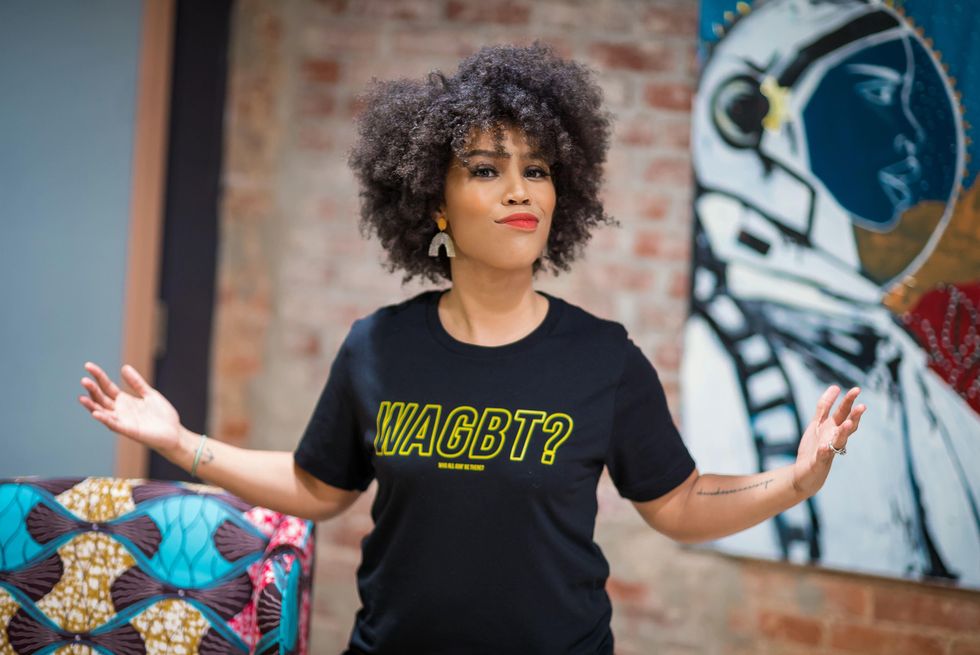
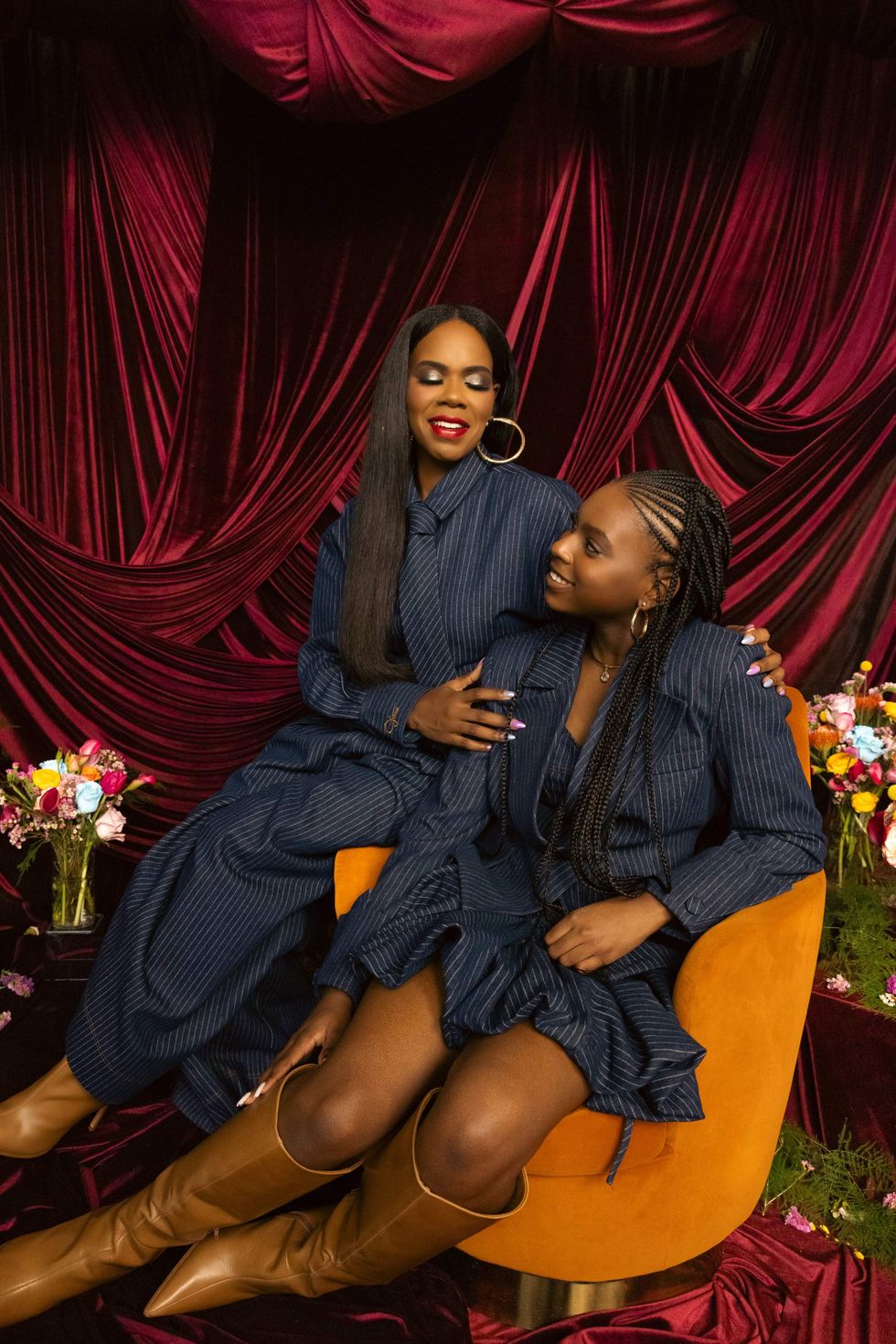
Photo by: Eunique Jones Gibson and Ashleigh Bing
Because of all the success that you did receive from that campaign, was there anything that surprised you about the feedback you received or the response in general from your community?
I think at the time what really surprised me was the fact that people wanted it to continue beyond Black History Month. It was almost as if it became my responsibility to keep it going. I had started something bigger than what I had initially thought it was. I thought it was going to be a 28-day campaign, but I also realized that in order to be true to what I was trying to prove, which was that we need to reimagine Black History, I had to lead by example. I don't think I expected it when I launched it and I certainly didn't expect to be eight years later to still be building upon that foundation.
Your game, Culture Tags, is one of the hottest new games for us. What inspired the creation of Culture Tags?
We are a big entertainment family; we love game nights and it really just dawned on me at some point that we needed more games! We needed more options that were rooted in our culture. Not games that we can play because we understand the rules and because they're fun, but games we can play because they bring back the nostalgia and excitement because we know that it was made with us in mind.
The inspiration behind Culture Tags is that same inspiration behind all of my work: it's to celebrate culture and community and to make sure we are represented. I started to think about it back in 2019. One day, I was online and saw a really long abbreviation or acronym and all these people were commenting, "Why do I know what this means?" I was definitely in that same group where I was like, "Yo, this is wild, I know what this says!" I've tried to train my mind to see the opportunities beyond what's on the surface, I immediately said, this is a game!
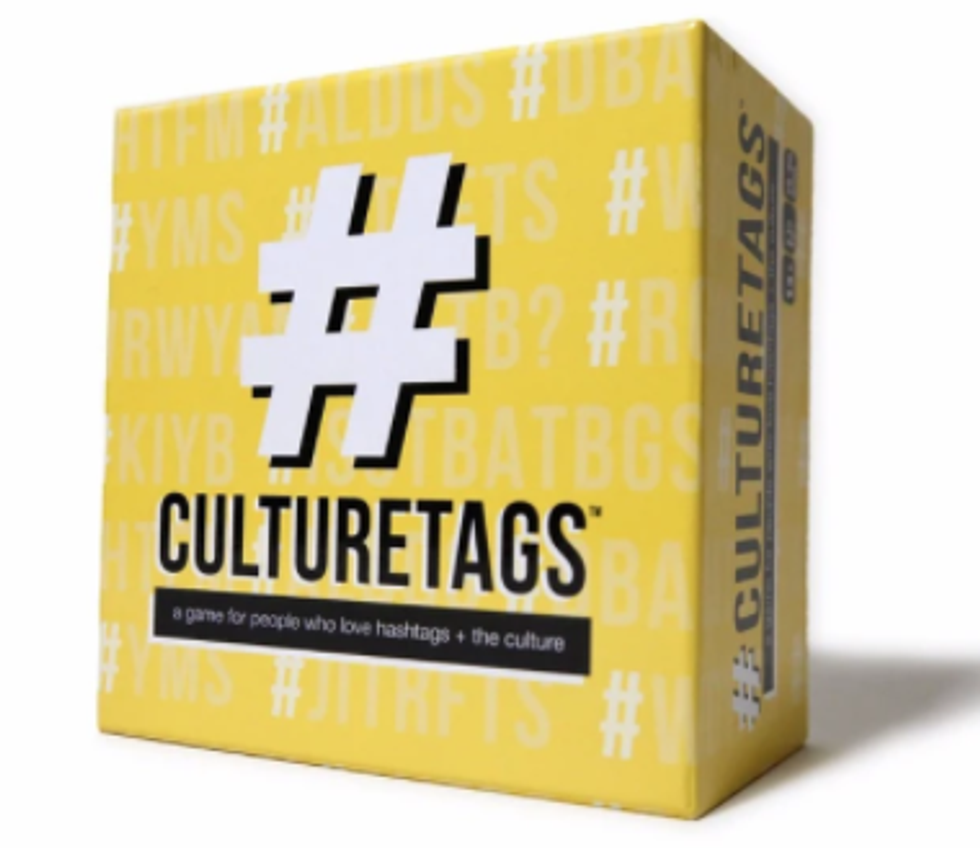
Courtesy of: Eunique Jones Gibson
Your agency, Culture Brands, has recently been tapped to become Hyundai’s African American agency of record. Why do you think it’s important for big brands to tap firms and agencies that are actually of the culture, especially when it comes to portraying our images in advertisements?
Because we exist. We live it, we eat it, we breathe it. It isn't something that we have to study, it's something that we innately know. In order for brands to portray an authentic representation of their customer base when they are targeting Black folks, they should have experts at the table who can present an authentic story and picture. You can't do that when you are not of the culture.
There are certain things that you will miss, certain things that you will overlook, and that will never enter the conversation because you don't have that first-hand knowledge. You have to bring in people who eat, sleep, and breathe it — and people who can respect it. It's one thing to create culturally relevant content but the content also has to be responsible; it can't be exploitative.
Someone who is of the culture should know how to ensure that we are represented without allowing a brand to co-op the culture or present themselves as a culture vulture. There has to be people at the table with a voice to guide in that direction. A lot of times you have people who are in the room but are not at the table or people who are at the table but don't have a voice, or if they have a voice, no one is listening. We have to make sure that when brands invite multicultural or African-American companies to the table, that they are ready to listen and learn and to implicate the learnings and expertise that these agencies are offering.
"It's one thing to create culturally relevant content but the content also has to be responsible; it can't be exploitative. Someone who is of the culture should know how to ensure that we are represented without allowing a brand to co-op the culture or present themselves as a culture vulture."
I was listening to your interview on Luuvie’s IG Live and one of the things that really resonated was when you shared, “You’ve got to trust your vision. People steal ideas all day, but you can not steal a vision.” In your eyes, what is the difference between an idea and a vision?
Ideas come and go, and oftentimes they are inspired by a need. They are inspired by the environment and things that are happening around us but I think that the difference between an idea and a vision is that a vision makes the idea scaleable. A vision makes the idea sustainable; and gives [the vision] value and validates it beyond that moment. And it gives you direction. It helps to guide the direction that you move in. Oftentimes your ideas may change, but they should back into your vision.
Beyond that, I also don't think it's a good idea to fall in love with your ideas. I think you can execute them and like them, but you should not fall in love with them. You should commit yourself to whatever your anticipated goal is: fall in love with the goal, not with the idea that might get you there because that idea can shift, but if you commit to the goal, you might see that there are multiple ways to get there. Which is why you have to anchor yourself in the vision.
"A lot of times you have people who are in the room but are not at the table or people who are at the table but don't have a voice, or if they have a voice, no one is listening."
Something that many creatives may experience along their journey is analysis paralysis in not really knowing where to start with their ideas. What advice would you give to someone who may be sitting on an idea or hesitant to take a leap into their dreams?
I always say, "Date your dreams." A lot of times you can look at an idea as a dream or something that you want to execute or explore and I think you have to date it and spend time with it. You have to obsess over it, analyze it from different angles, poke holes in it. What's good about this, what's bad about it? What makes sense, what makes this crazy? You date it.
I also think you have to be willing to bet on yourself. After you've gone through that process, if you've come out on the other side, you've got to be willing to fail. If you're not willing to fail, then you will never try. If you're willing to fail, then you can take the risk to move forward with the idea understanding that if you failed, you really just learned.
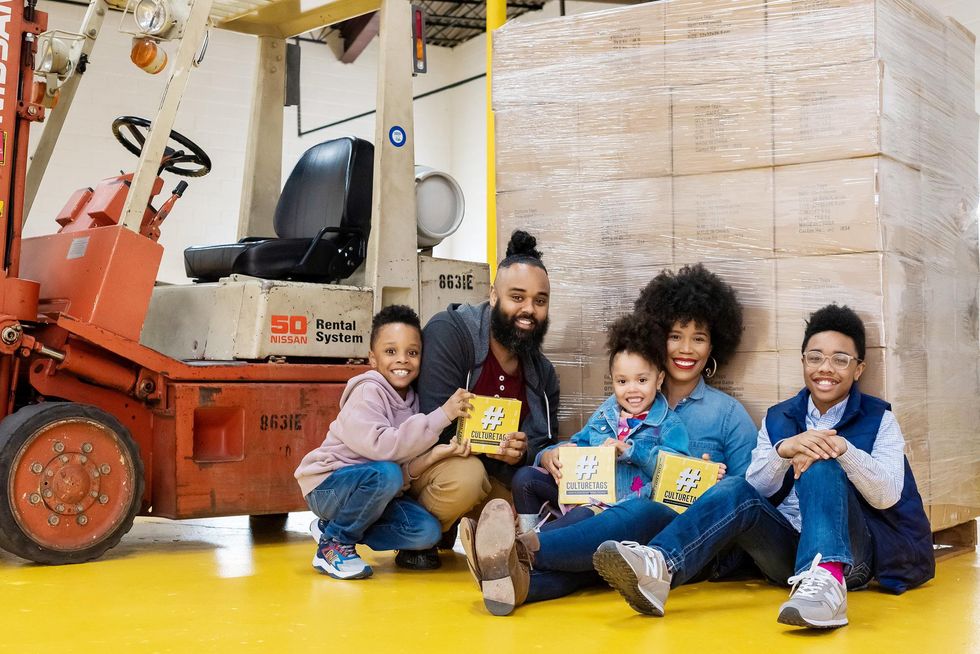
Photo by: Eunique Jones Gibson and Ashleigh Bing
"Mistakes happen for us to patch the holes, to ensure that our baskets stay full once the blessings start coming in."
What’s something that felt like a mistake in the moment, but turned out to be a pivotal lesson for you along your journey?
I've had multiple moments like that. My mentor tells me, sometimes the thing that feels horrible that we lament over because they happened to us, really happened for us. He likened it to medicine that tastes horrible but at the end of the day, it does us some good. I think it can only do us good if we maintain the perspective that it's all an opportunity to learn and improve and not make the same mistakes that we made before because we are more informed this time.
Failure has been a consistent part of my process and they have been big and small, and costly - whether it's cost me money or peace of mind, they are not inexpensive! But I have learned from each one of them to ensure that I do not make the same mistake again. Mistakes happen for us to patch the holes, to endure that our baskets stay full once the blessings start coming in.
For more of Eunique, follow her on Instagram.
Featured image courtesy of Eunique Jones Gibson
- Career Transition During a Pandemic - xoNecole: Women's Interest ... ›
- The Restorative Power Of Black Joy And Community - xoNecole: Lifestyle, Culture, Love, Wellness ›
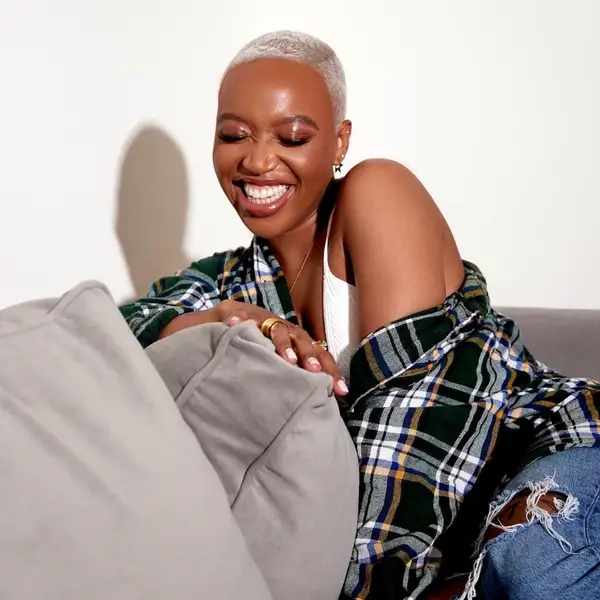
Because We Are Still IT, Girl: It Girl 100 Returns
Last year, when our xoNecole team dropped our inaugural It Girl 100 honoree list, the world felt, ahem, a bit brighter.
It was March 2024, and we still had a Black woman as the Vice President of the United States. DEI rollbacks weren’t being tossed around like confetti. And more than 300,000 Black women were still gainfully employed in the workforce.
Though that was just nineteen months ago, things were different. Perhaps the world then felt more receptive to our light as Black women.
At the time, we launched It Girl 100 to spotlight the huge motion we were making as dope, GenZennial Black women leaving our mark on culture. The girls were on the rise, flourishing, drinking their water, minding their business, leading companies, and learning to do it all softly, in rest. We wanted to celebrate that momentum—because we love that for us.
So, we handpicked one hundred It Girls who embody that palpable It Factor moving through us as young Black women, the kind of motion lighting up the world both IRL and across the internet.
It Girl 100 became xoNecole’s most successful program, with the hashtag organically reaching more than forty million impressions on Instagram in just twenty-four hours. Yes, it caught on like wildfire because we celebrated some of the most brilliant and influential GenZennial women of color setting trends and shaping culture. But more than that, it resonated because the women we celebrated felt seen.
Many were already known in their industries for keeping this generation fly and lit, but rarely received recognition or flowers. It Girl 100 became a safe space to be uplifted, and for us as Black women to bask in what felt like an era of our brilliance, beauty, and boundless influence on full display.
And then, almost overnight, it was as if the rug was pulled from under us as Black women, as the It Girls of the world.
Our much-needed, much-deserved season of ease and soft living quickly metamorphosed into a time of self-preservation and survival. Our motion and economic progression seemed strategically slowed, our light under siege.
The air feels heavier now. The headlines colder. Our Black girl magic is being picked apart and politicized for simply existing.
With that climate shift, as we prepare to launch our second annual It Girl 100 honoree list, our team has had to dig deep on the purpose and intention behind this year’s list. Knowing the spirit of It Girl 100 is about motion, sauce, strides, and progression, how do we celebrate amid uncertainty and collective grief when the juice feels like it is being squeezed out of us?
As we wrestled with that question, we were reminded that this tension isn’t new. Black women have always had to find joy in the midst of struggle, to create light even in the darkest corners. We have carried the weight of scrutiny for generations, expected to be strong, to serve, to smile through the sting. But this moment feels different. It feels deeply personal.
We are living at the intersection of liberation and backlash. We are learning to take off our capes, to say no when we are tired, to embrace softness without apology.
And somehow, the world has found new ways to punish us for it.

In lifestyle, women like Kayla Nicole and Ayesha Curry have been ridiculed for daring to choose themselves. Tracee Ellis Ross was labeled bitter for speaking her truth about love. Meghan Markle, still, cannot breathe without critique.
In politics, Kamala Harris, Letitia James, and Jasmine Crockett are dragged through the mud for standing tall in rooms not built for them.
In sports, Angel Reese, Coco Gauff, and Taylor Townsend have been reminded that even excellence will not shield you from racism or judgment.

In business, visionaries like Diarrha N’Diaye-Mbaye and Melissa Butler are fighting to keep their dreams alive in an economy that too often forgets us first.
Even our icons, Beyoncé, Serena, and SZA, have faced criticism simply for evolving beyond the boxes society tried to keep them in.
From everyday women to cultural phenoms, the pattern is the same. Our light is being tested.

And yet, somehow, through it all, we are still showing up as that girl, and that deserves to be celebrated.
Because while the world debates our worth, we keep raising our value. And that proof is all around us.
This year alone, Naomi Osaka returned from motherhood and mental health challenges to reach the semifinals of the US Open. A’ja Wilson claimed another MVP, reminding us that beauty and dominance can coexist. Brandy and Monica are snatching our edges on tour. Kahlana Barfield Brown sold out her new line in the face of a retailer that had been canceled. And Melissa Butler’s company, The Lip Bar, is projecting a forty percent surge in sales.

We are no longer defining strength by how much pain we can endure. We are defining it by the unbreakable light we continue to radiate.
We are the women walking our daily steps and also continuing to run solid businesses. We are growing in love, taking solo trips, laughing until it hurts, raising babies and ideas, drinking our green juice, and praying our peace back into existence.
We are rediscovering the joy of rest and realizing that softness is not weakness, it is strategy.
And through it all, we continue to lift one another. Emma Grede is creating seats at the table. Valeisha Butterfield has started a fund for jobless Black women. Arian Simone is leading in media with fearless conviction. We are pouring into each other in ways the world rarely sees but always feels.

So yes, we are in the midst of societal warfare. Yes, we are being tested. Yes, we are facing economic strain, political targeting, and public scrutiny. But even war cannot dim a light that is divinely ours.
And we are still shining.
And we are still softening.
And we are still creating.
And we are still It.

That is the quiet magic of Black womanhood, our ability to hold both truth and triumph in the same breath, to say yes, and to life’s contradictions.
It is no coincidence that this year, as SheaMoisture embraces the message “Yes, And,” they stand beside us as partners in celebrating this class of It Girls. Because that phrase, those two simple words, capture the very essence of this moment.
Yes, we are tired. And we are still rising.
Yes, we are questioned. And we are the answer.
Yes, we are bruised. And we are still beautiful.

This year’s It Girl 100 is more than a list. It is a love letter to every Black woman who dares to live out loud in a world that would rather she whisper. This year’s class is living proof of “Yes, And,” women who are finding ways to thrive and to heal, to build and to rest, to lead and to love, all at once.
It is proof that our joy is not naive, our success not accidental. It is the reminder that our light has never needed permission.
So without further ado, we celebrate the It Girl 100 Class of 2025–2026.
We celebrate the millions of us who keep doing it with grace, grit, and glory.
Because despite it all, we still shine.
Because we are still her.
Because we are still IT, girl.
Meet all 100 women shaping culture in the It Girl 100 Class of 2025. View the complete list of honorees here.
Featured image by xoStaff
Because We Are Still IT, Girl: It Girl 100 Returns
Last year, when our xoNecole team dropped our inaugural It Girl 100 honoree list, the world felt, ahem, a bit brighter.
It was March 2024, and we still had a Black woman as the Vice President of the United States. DEI rollbacks weren’t being tossed around like confetti. And more than 300,000 Black women were still gainfully employed in the workforce.
Though that was just nineteen months ago, things were different. Perhaps the world then felt more receptive to our light as Black women.
At the time, we launched It Girl 100 to spotlight the huge motion we were making as dope, GenZennial Black women leaving our mark on culture. The girls were on the rise, flourishing, drinking their water, minding their business, leading companies, and learning to do it all softly, in rest. We wanted to celebrate that momentum—because we love that for us.
So, we handpicked one hundred It Girls who embody that palpable It Factor moving through us as young Black women, the kind of motion lighting up the world both IRL and across the internet.
It Girl 100 became xoNecole’s most successful program, with the hashtag organically reaching more than forty million impressions on Instagram in just twenty-four hours. Yes, it caught on like wildfire because we celebrated some of the most brilliant and influential GenZennial women of color setting trends and shaping culture. But more than that, it resonated because the women we celebrated felt seen.
Many were already known in their industries for keeping this generation fly and lit, but rarely received recognition or flowers. It Girl 100 became a safe space to be uplifted, and for us as Black women to bask in what felt like an era of our brilliance, beauty, and boundless influence on full display.
And then, almost overnight, it was as if the rug was pulled from under us as Black women, as the It Girls of the world.
Our much-needed, much-deserved season of ease and soft living quickly metamorphosed into a time of self-preservation and survival. Our motion and economic progression seemed strategically slowed, our light under siege.
The air feels heavier now. The headlines colder. Our Black girl magic is being picked apart and politicized for simply existing.
With that climate shift, as we prepare to launch our second annual It Girl 100 honoree list, our team has had to dig deep on the purpose and intention behind this year’s list. Knowing the spirit of It Girl 100 is about motion, sauce, strides, and progression, how do we celebrate amid uncertainty and collective grief when the juice feels like it is being squeezed out of us?
As we wrestled with that question, we were reminded that this tension isn’t new. Black women have always had to find joy in the midst of struggle, to create light even in the darkest corners. We have carried the weight of scrutiny for generations, expected to be strong, to serve, to smile through the sting. But this moment feels different. It feels deeply personal.
We are living at the intersection of liberation and backlash. We are learning to take off our capes, to say no when we are tired, to embrace softness without apology.
And somehow, the world has found new ways to punish us for it.

In lifestyle, women like Kayla Nicole and Ayesha Curry have been ridiculed for daring to choose themselves. Tracee Ellis Ross was labeled bitter for speaking her truth about love. Meghan Markle, still, cannot breathe without critique.
In politics, Kamala Harris, Letitia James, and Jasmine Crockett are dragged through the mud for standing tall in rooms not built for them.
In sports, Angel Reese, Coco Gauff, and Taylor Townsend have been reminded that even excellence will not shield you from racism or judgment.

In business, visionaries like Diarrha N’Diaye-Mbaye and Melissa Butler are fighting to keep their dreams alive in an economy that too often forgets us first.
Even our icons, Beyoncé, Serena, and SZA, have faced criticism simply for evolving beyond the boxes society tried to keep them in.
From everyday women to cultural phenoms, the pattern is the same. Our light is being tested.

And yet, somehow, through it all, we are still showing up as that girl, and that deserves to be celebrated.
Because while the world debates our worth, we keep raising our value. And that proof is all around us.
This year alone, Naomi Osaka returned from motherhood and mental health challenges to reach the semifinals of the US Open. A’ja Wilson claimed another MVP, reminding us that beauty and dominance can coexist. Brandy and Monica are snatching our edges on tour. Kahlana Barfield Brown sold out her new line in the face of a retailer that had been canceled. And Melissa Butler’s company, The Lip Bar, is projecting a forty percent surge in sales.

We are no longer defining strength by how much pain we can endure. We are defining it by the unbreakable light we continue to radiate.
We are the women walking our daily steps and also continuing to run solid businesses. We are growing in love, taking solo trips, laughing until it hurts, raising babies and ideas, drinking our green juice, and praying our peace back into existence.
We are rediscovering the joy of rest and realizing that softness is not weakness, it is strategy.
And through it all, we continue to lift one another. Emma Grede is creating seats at the table. Valeisha Butterfield has started a fund for jobless Black women. Arian Simone is leading in media with fearless conviction. We are pouring into each other in ways the world rarely sees but always feels.

So yes, we are in the midst of societal warfare. Yes, we are being tested. Yes, we are facing economic strain, political targeting, and public scrutiny. But even war cannot dim a light that is divinely ours.
And we are still shining.
And we are still softening.
And we are still creating.
And we are still It.

That is the quiet magic of Black womanhood, our ability to hold both truth and triumph in the same breath, to say yes, and to life’s contradictions.
It is no coincidence that this year, as SheaMoisture embraces the message “Yes, And,” they stand beside us as partners in celebrating this class of It Girls. Because that phrase, those two simple words, capture the very essence of this moment.
Yes, we are tired. And we are still rising.
Yes, we are questioned. And we are the answer.
Yes, we are bruised. And we are still beautiful.

This year’s It Girl 100 is more than a list. It is a love letter to every Black woman who dares to live out loud in a world that would rather she whisper. This year’s class is living proof of “Yes, And,” women who are finding ways to thrive and to heal, to build and to rest, to lead and to love, all at once.
It is proof that our joy is not naive, our success not accidental. It is the reminder that our light has never needed permission.
So without further ado, we celebrate the It Girl 100 Class of 2025–2026.
We celebrate the millions of us who keep doing it with grace, grit, and glory.
Because despite it all, we still shine.
Because we are still her.
Because we are still IT, girl.
Meet all 100 women shaping culture in the It Girl 100 Class of 2025. View the complete list of honorees here.
Featured image by xoStaff