


Relationship dynamics with a boss can be rewarding for some and a nightmare for others. When you first start a job, there’s an attempt to impress, and it’s often like dating someone you really like for the first time. Each of you has to get to know one another in order to learn how best to interact and get along while also getting your job done. The power aspect can be a bit of a threat since your manager or supervisor basically holds the reins of your career’s future.
These sorts of pressures can be a lot for both parties, but more so for the employee. In fact, research shows that most people find their managers to be a pain to deal with. According to McKinsey and Co., in a recent study, 75 percent of survey participants said that the “most stressful” aspect of their job was their immediate boss.
One of the most significant “drivers” of workplace satisfaction in interpersonal relationships is “relationship with management,” which means if you don’t have a decent relationship with your boss, it can drastically affect your productivity and quality of work output.
When you’re having difficulties that center on a boss who seems to never be satisfied with you, leads with toxic behaviors, or you two simply don’t mesh, here are a few things you can do:
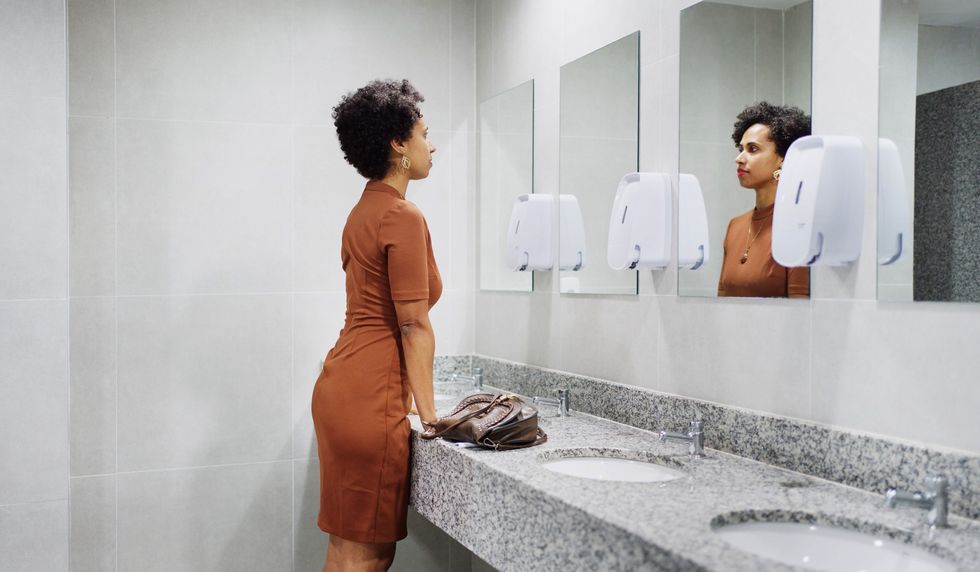
1. Think hard about whether they really do "hate" you or whether you're projecting an insecurity.
AJ_Watt/Getty Images
Projection, in this case, is a psychological concept where a person displaces their own feelings of insecurity onto someone else. Sometimes, this can happen at work. You might project because there’s something within that you haven’t really dealt with—a hard truth about your abilities, a feeling of not being good enough, or other self-esteem issues.
I once felt this way at a job, early in my career, and thought the problem was my boss. I’d often get defensive when they offered constructive criticism or called me out on something I’d clearly done incorrectly. In reality, my boss wanted the best for me all along.
They were never disrespectful and always tried to endear themselves to me, but I had a huge chip on my shoulder due to a perfectionist complex. I just couldn’t fathom that I needed mentorship or to improve because I’d always been the honor student or the “mama’s girl” growing up. I was quite a brat at the time, to be totally honest.
Sometimes, it’s not our boss who has the problem. It’s within us. A few talks with a mentor, fueled mostly by complaints about my “horrible boss,” led to a realization that I had to humble myself and really be open to feedback. I had to refocus on professionalism and remember the bottom line of what I was hired to do.
Now, if this isn’t the case, and your boss truly is being abusive, toxic, or indifferent toward you in some way, proceed to step 2.
2. Have a heart-to-heart with your manager. Give them the benefit of the doubt.
Keep it professional, sis. While you want to find out what might be behind the negative vibes you're getting from your boss, you don't want to put someone on the defense or give them the opportunity to gaslight you. If you don't already have scheduled one-on-ones with your supervisor, get on their calendar or invite them to have coffee on-site with you during a break. (I'm not a huge fan of meeting a manager or supervisor you think doesn't like you outside of the office. It's just a risky thing to do and could go left very quickly in terms of optics, potential for further drama, or even avoidable scandal.)
Let them know that it's important that you gain a bit of insight on your work and any areas of improvement. Again, shift the tone of the situation. Accept the possibility that you might be totally reading your boss wrong, or there might be a very valid reason you're getting less-than-favorable energy from them.
As a manager, I can attest to how we can sometimes be misunderstood. Someone might think I'm being "hard" on them when I'm really just trying to do my job. I might have even saved this particular person from the chopping block and, in those efforts, sought to help them improve. As a servant leader, I want the best for those I lead, whether I "like" them or not. Being a manager or supervisor isn't easy, and oftentimes people forget that. We're human, too.
Sometimes, managers are under an extreme amount of stress, so their interactions can be led by that. Maybe they're not so personable or "nice" because they really don't have the time or energy to be. That's not your fault, and it's no excuse for bad behavior, however, understanding this will inform how you approach solving a perceived problem.

JohnnyGreig/Getty Images
Some issues are tied to personality as well, so keep that in mind. I've always been an ambitious leader and a straight-shooter---whether a manager or otherwise---which can be off-putting to some. Sometimes I have to be more self-aware in my interactions with certain people and adjust, even if I don't agree with their perception of me. I don't always have to be "right" or always speak out assertively about something.
I can boldly lead without alienating other bold, leading personalities in the office or intimidating other more timid, introverted (but powerful) personalities as well. I wouldn't have known this had I not given a manager the opportunity to express this or at least had conversations with others to find out how I'm perceived.
During a one-on-one, I once told a manager that I don't like being micromanaged and that I'd spoken out of turn during a meeting because I had a passion for the subject matter. We came to a middle ground, and I was able to advance at that company. (I was even eventually added as a co-lead on an initiative.) Working with this person got so much easier after a simple, respectful conversation.
If you don't feel confident enough to have the conversation, that's okay, too. Do a mock run with a mentor, loved one, coach, or friend you trust and admire so you can prep for the real conversation.
3. Take the personal out and deal with the facts. Report to HR or other authorities if the situation calls for that.
If No. 2 hasn't led to a resolution, document tangible facts and actions that led to the conclusion that your boss doesn't like you. Have they been disrespectful, combative, or unprofessional when interacting with you? Have you been threatened? Are they taking credit for your work? Are they forcing you to work overtime without pay or guilting you into working after hours? Have you been overlooked to work on projects that you've clearly been hired to work on based on your job title and duties?
Of course, if you feel physically unsafe, disengage and take the appropriate legal or law enforcement-related action. But if it's an issue of a manager who is simply doing unnecessarily outrageous things at work that make your job harder and might stunt your career advancement, talk with a mentor or coach first to figure out the right plan of action.
Depending on your company's protocols, take your grievances to your human resources department, or your bosses' boss. Document instances of unprofessional behavior and how it actually impacts your work. Advocate for yourself. It might seem scary, but there needs to be a paper trail if things have gone too far.
I once was facing an issue with a boss I thought disliked me. She'd often be dismissive in her tone, avoided answering emails in a timely fashion, and even tried to get me fired behind my back. (I found out from another manager who I had a good relationship with.)
Once again, a mentor came in a clutch. This one was a banking executive who knew office politics all too well. "When you go to HR, don't lead with the problems. Ask them how you can best navigate and learn from the situation. Shift the tone. Then present what you've documented and tell them exactly how it impacts your actual work quality."
Well, it worked. Not only did the HR professional soften up a bit listening to my side of things, but she gave me some very useful tips on how to interact with my boss, who was new at the time. (Turns out, managing up was the solution, which I enjoyed because it actually gave me more leadership experience, which led to my own promotion years later.)
She also had a chat with my boss, and it clearly was a good one that didn't backfire on me. I ended up working under that manager for several years, and today, the professional is actually someone I admire. I learned a lot from working with her.
When The Problem's Simply Your Boss, Not You
Sometimes, it's not a specific issue, per se. Some workplace pairings are simply not a good fit, and no matter how great you are at what you do or how many times you've had one-on-ones with your manager, it's simply a lost cause. And that's okay. It's not a failure when you have to either transfer to a different department or leave a company altogether. It's a simple reality, and it happens to the best of us.
If this is the case, and you've exhausted all reasonable efforts to get clarity and resolve actual issues, it's time to put that exit plan together or simply quit. Trust that your steps are ordered and take that leap toward another dream company, career, or lifestyle that truly aligns with the greatness and fullness of life.
Nobody has time to waste trying to resolve conflicts that are pointless and counterproductive. Sometimes, you just have to let God have it and move on. I've witnessed several instances where walking away was the best option, and eventually, that particular manager was removed or forced to leave. Sometimes, people learn the hard way that they need mental health help, a lot more leadership training, or a pivot into a more fitting occupation, company, or role. It's not always about "fault" but about fit.
Thinking (or knowing) your boss dislikes you can be daunting, but you don't have to live with that dread every day. Confidently seek resolutions that not only affirm how great of a professional you are but also your own values connected to self-care, self-discovery, and self-realization in order to offer your best to the world.
Let’s make things inbox official! Sign up for the xoNecole newsletter for love, wellness, career, and exclusive content delivered straight to your inbox.
Featured image by Charday Penn/Getty Images

This Is How To Keep 'Holiday Season Stress' From Infecting Your Relationship
Hmph. Maybe it’s just me, but it seems like there is something really weird happening in the fall season air (because winter doesn’t officially begin until December 21) that cuddle season is in full swing while break-up season is as well. In fact, did you know that break-ups are so popular during the holiday season that December 11 is deemed Break-Up Day?
The reasons why relationships shift around this time vary; however, I did both roll my eyes and chuckle when I read that a very popular one is because it’s an easy way to get out of getting one’s significant other a Christmas present. SMDH.
Anyway, I personally think that the less shallow folks out here may contemplate calling things “quits” or they at least distance themselves a bit from their partner (and what I’m referring to is serious relationships) due to all of the stress and strain that oftentimes comes with the holidays whether it be financial, familial, due to their tight schedules or something else.
Listen, I would hate for you and your man to miss the fun and happiness of experiencing this time of year, all because you are so overwhelmed or irritated that you can’t really enjoy it. That’s why I have a few practical tips for how to avoid allowing the typical holiday season stress from INFECTING your relationship.
Manage Your Expectations
GiphyUnmanaged expectations. If there is a main reason why the holiday season tends to be so stress-filled for so many people, I’d bet good money that this is the cause. And when you’re in a long-term relationship, expectations can manifest themselves in all sorts of cryptic and/or unexpected ways. You might have relatives who assume that you are going to be with them for Thanksgiving or Christmas when you have other plans in mind. You might be thinking that you are going to spend one amount for presents while your man is thinking something totally different. When it comes to scheduling, your signals may be crossed.
And you know what? To all of these scenarios, this is where clear and consistent communication come in. Don’t assume anything. Don’t dictate anything either. From now until New Year’s, mutually decide to check in once a week, just to make sure that you are both on the same page as it relates to the holidays and what you both are thinking will come along with it. The less blindsided you both feel, the less stressed out you will be. Trust me on this.
Set (and Keep) a Budget
GiphyOkay, so I read that last year, 36 percent of Americans incurred some type of holiday-related debt. Hmph. Last year, there was still some sense of normalcy in this country, chile, so I can only imagine what finances are gonna look like over the next several weeks. That said, since I don’t know a lot of people who don’t find being broke stressful, make sure that you and your bae set a budget and then stick to it this year — no ifs, ands or buts.
Because really, y’all — it doesn’t make sense to deplete savings and/or max out credit cards for a few days of giggles only to be damn near losing your mind because you don’t know how to make ends meet come Dr. Martin Luther King, Jr. Day.
And by the way, this tip doesn’t just speak to things like food and gifts; I also mean travel. If it doesn’t make a ton of sense (or cents) to be all over the place this year — DON’T BE.
Keep Matthew 5:37 at the Forefront
GiphyIf off the top of your head, you don’t know what Matthew 5:37 says, no worries, here ya go: “But let your ‘Yes’ be ‘Yes,’ and your ‘No,’ ‘No.’ For whatever is more than these is from the evil one.” That verse right there? Oh, it’s a boundaries lifesaver! I say that because do you see “maybe” or “I’ll think about it” in there? Nope. LOL. It says that you should tell people “yes” or “no” and leave it at that — and that complements Anne Lamott’s quote, “’No’ is a complete sentence” impeccably well. Yeah, you’ve got to remember that anything beyond a yes or no to a request is privileged information; you don’t owe anyone details or an explanation.
Besides, if you are really honest with yourself, when someone asks you something and you give a “Umm, let me think about it” kind of reply, more times than not, you already know what your answer is going to be — so why not let you both off of the hook? Give your response. Commit to that. And let everyone (including yourself) get on with their lives and schedules.
I promise you that when it comes to those holiday parties, you are pissing more folks off by not RSVP’ing or doing so and not showing up than just saying, “Thank you but not this year” off the rip.
Remember That Your Personal Space Is Privilege Not a Right
GiphyA friend of mine recently bought a new house and invited me over to come see it. He’s a single man with no children, so as I was taking in all of the space that he had, especially as I walked through his finished basement, I joked about relatives coming to live with him. “Hell no” and “absolutely not” were pretty much his immediate responses as he went on to say that some folks even had the nerve to be offended when he told them that he had no intentions on taking DNA in.
Ain’t it wild how people think that your stuff is their right? And yes, that brings me to my next point. Your home is your sanctuary space. If you want to host folks this year — cool. If not, ALSO COOL. Please don’t let folks (family included) guilt you into how they want you to act or even into what they would do if the shoe was on the other foot. You are not them — and as one of my favorite quotes states, “If two people were exactly alike, one of them would be unnecessary.” (A man by the name Larry Dixon said that.)
Hell, my friends? They know that I am good for sending them random things that they need or even want all throughout the year. Coming over to hang out at my pace, though. Uh-uh. Chalk it up to being a card-carrying member of the ambivert club yet I like keeping my living space personal — and I sleep like a baby, each and every night, for feeling that way.
Always remember that your space, your time, your resources, your energy and shoot, yourself period (including your relationship), are all things that are your own. You get to choose how, when and why you want to share them. The holiday season is certainly no exception.
Cultivate Some “You Two Only” Traditions
GiphyIt’s not uncommon for some couples to hit me up after the holiday season to “detox.” Sometimes it’s due to the financial drama (and sometimes trauma) that they experienced. Sometimes it’s because they allowed their relatives (especially in-laws) to get more into their personal business than they should’ve. More than anything, though, it tends to be because they didn’t get enough quality time together and so ended up feeling “disconnected.”
Please don’t let that happen. Listen, I’m not even a holidays kind of woman and yet, I will absolutely sit myself down with some hot chocolate and chocolate chip cookies to enjoy a Hallmark holiday film or two. Aside from the fact that most of them are lighthearted and sweet, I also like that they usually focus on couples loving on each other amidst all of the holiday beauty and ambiance — which is something that all couples should set aside some time to do.
Maybe it’s a vacation. Maybe it’s a staycation. Or maybe it’s my personal favorite, A SEXCATION. Whether it’s for a few days, the weekend or even overnight — don’t you let the holidays go by without setting aside time for you and your man to celebrate one another. Don’t you dare (check out “Are You Ready To Have Some Very Merry 'Christmas Sex'?”).
GET. SOME. REST.
GiphyI once read that 8 out of 10 people get stressed out over the holidays and 3 out of 10 lose sleep during to it — and when you’re stress-filled and sleep-deprived, that can absolutely lead to hypersensitivity, making mountains out of molehills and even not being in the mood for sex.
Your relationship can’t afford to go through any of this, so definitely make sure to prioritize rest. I don’t care how unrealistic it might seem during this time, sleep should never be seen as a luxury; it will always and forever be a great necessity.
That said, try to get no less than six hours of shut-eye in (check out “6 Fascinating Ways Sex And Sleep Definitely Go Hand In Hand”) and even ask your bae to take a nap with you sometimes (check out “Wanna Have Some Next-Level Sex? Take A Nap, Sis.”). Not only will sleep help to restore your mind, body and spirit but, when it’s with your partner, it’s an act of intimacy that can make you both feel super connected, even in the midst of what might feel like chaos.
___
Holiday season stress is real. Still, never give it the permission or power to throw your relationship off. Put you and your man first and let the holidays be what they are gonna be, chile.
Let’s make things inbox official! Sign up for the xoNecole newsletter for love, wellness, career, and exclusive content delivered straight to your inbox.
Featured image by Shutterstock
While doing a podcast interview a couple of weeks ago, when I said my age, the interviewer complimented me by saying that what I said is not what they would’ve guessed. When they asked what the secret was, the first thing that came out of my mouth was, “Oh, I’m gonna take me a nap.”
I adore sleep. I’ve said before that it’s like what Six Flags is to some people. And really, it’s just a plus that there are so many health benefits from getting plenty of rest. Beauty-wise, science does reveal that getting no less than seven hours a night can slow down signs of aging. Know what else? There are some direct things that sleep — and the lack thereof — can do to your immunity as well.
And so, since this is the time of year when catching a cold (and/or the flu) is common, let’s talk about the impact that sleep (and again, a lack thereof) has on your immune system. That way, you can remain as healthy as possible during the fall and winter seasons.
1. Less Sleep Means More Colds
GiphyLike I stated in the intro, I’m pretty sure you’ve heard somewhere that the fall and winter are the seasons when people are most susceptible to catching a cold or coming down with the flu. And that’s exactly why I thought I would start this all off by sharing the fact that some studies reveal that if you get less than six hours of sleep, on a consistent basis, you end up making yourself more vulnerable to coming down with both. In fact, some research says that only 18 percent of people who get six-plus hours of rest caught a cold while almost 40 percent who got less than that did.
The logic behind it all is sleep gives your body time to build up the proteins and cells (like cytokines and T-cells) that you need to fight off certain viruses. So, if nothing bothers you more than having a stuffy nose or stubborn cough when it’s cold outside, getting more sleep is one way to prevent that from happening to you.
2. Less Sleep Means More Allergy Symptoms
GiphyAt the end of the day, an allergy is basically what transpires whenever your immune system “overreacts” to something that other people’s systems do not. And since sleep is what helps to keep your immune system nice and strong — well, I’m sure you get how less allergy-related symptoms and more sleep go hand in hand. Also, since sleep helps to decrease bodily inflammation (more on that in a bit) and inflammation can also intensify allergy symptoms, that’s just one more reason to get as much shut-eye as possible.
3. Less Sleep Means Potential Diabetes and Heart Disease
GiphyDid you know that in 2024, Black women were diagnosed with diabetes 24 percent more than any other adult demographic. Also, it continues to be a reality that heart disease is the leading cause of death for Black women. These two sobering statistics alone should be enough of an incentive to do whatever you can to keep the risk of diabetes and heart disease way down.
One way to do that is by getting more sleep. Aside from the fact that sleep strengthens your immune system to where it is easier for you to fight off illness and diseases, sleep can keep your blood sugar levels in a healthy space; plus, when it comes to your heart, it gives it, along with your arteries and blood vessels a break.
4. Less Sleep Means Less Time for Your Body to Push “Reset”
GiphyIf you really stopped to consider all that your body goes through during the day (you can read some about that here), you definitely would respect it enough to do your best to thank it by giving it no less than six hours of sleep, each and every night. Sleep is what helps to slow your brain and body down so they are able to “refuel” for the next day. After all, how can your body prevent you from getting sick if your immune system is too worn out to fight ailments off? Exactly.
5. More Sleep Helps You to Fight Off Infections
GiphySpeaking of, in order for your body to fight off infections, there are certain cells and antibodies within you that need to be healthy and strong — one way that they get and stay that way is by you getting a good amount of sleep. For instance, remember when I touched on cytokines earlier? Well, the same way that they help to prevent colds, they also help to prevent infections too. And since sleep lowers your cortisol (stress) levels, rest gives your body the time and space to build up an army that can fight off free radicals and other health-related challenges while you are awake.
6. More Sleep Lowers Bodily Inflammation
GiphyWhenever a health-related issue is mentioned on this platform, inflammation is something that is mentioned quite a bit. Probably the easiest way to explain inflammation is it’s how your body responds/reacts whenever something is happening to your body that shouldn’t be, whether it’s an illness, an injury, a germ or something that you may be allergic to.
If you happen to have chronic inflammation, some symptoms that are associated with that include fatigue, stiff joints, skin rashes, weight gain and moodiness.
The interesting thing about all of this is if you aren’t getting enough rest, you could be triggering inflammation in your body. That’s because studies reveal that a lack of sleep can elevate molecules that are associated with inflammation. So, if you don’t want inflammation to increase within your system, you should definitely catch more zzz’s.
7. More Sleep Regulates Hormones
GiphyWhen it comes to hormones like serotonin, estrogen and cortisol, believe it or not, they play a role in how your immune system acts and overreacts. That’s because, if your hormones are out of balance, that can cause your immune system to work harder than it actually should and that can make you more vulnerable to sickness. One way to keep your hormones leveled out? SLEEP.
That’s because sleep gives your body the opportunity to rest, repair and restore your hormone levels. On the other hand, when you are sleep deprived, that can put/keep your hormones on the ultimate roller coaster ride. #notgood
8. More Sleep Strengthens Vaccines
flu shot GIF - Find & Share on GIPHYGiphyIf you’re someone who is good for getting some sort of vaccine around this time of the year, make sure that you rest up before and after getting your shots. Not only does adequate rest before a vaccination help your immune system to be better receptive to your shots but sleep also helps your body to build up enough antibodies to make your vaccinations effective after getting them. Because if you’re gonna get pricked, shouldn’t it be worth it? My thoughts exactly.
Get some freakin’ sleep! Your immune system depends on it.
Let’s make things inbox official! Sign up for the xoNecole newsletter for love, wellness, career, and exclusive content delivered straight to your inbox.
Featured image by Shutterstock