Returning Home: Why ‘Black Is King’ Was An Affirmation Of My Search For Identity

Who am I?
For such a profound question, it's an answer that steadily changes. I am always metamorphosing into new versions of me. It's the reason why I've gone years without a bio on my personal blog. When I hit a moment of satisfaction or shame within myself, I can't sit with or savor it long enough before I am reaching and aiming for something else. Something new.
This is the process of someone piecing together parts to make a whole.
I am constantly refining and redefining who I am. I've wrestled with understanding my existence and wrote about my racial-ethnic identity as a Black Latina for xoNecole years ago. Publicly, I've documented a deteriorating relationship with my mother and the search for my other half through an unidentifiable father. By the other half, I do not mean in respect of another human soul intertwined in harmony with my own being, although not knowing the origins of my birth story did play a vital role in how I sought and see love. There are so many moving and missing parts to me. This evolutionary story of who am I and the road to self-actualization is why I find comfort in Beyoncé's visual albums, more often, than in the music itself. She is always giving me what I need when it comes to identity.
Beyonce Lemonade GIFGiphyBey's film version of Lemonade came at the right time in 2016. Perhaps even divine timing for most of us, myself included. We dissected pieces of the 65-minute film in academia, through blog posts, and over social media.
Her personal story—this beautiful fusion of intuition, denial, anger, apathy, emptiness, accountability, reformation, forgiveness, resurrection, hope, and redemption—mirrored our own Black lives.
Our womanism and the fruits of our wombs. Our homes and our healing. Lemonade's release happened around the time of my own birth, a Saturn return, the elements of water, and womanhood centering itself in my own world. It was life-changing for me.
Black Is King is no different.
Sunday was spent with my now three-year-old who thought an afternoon in bed would bring another edition of Frozen II. I wanted to push Black imagery to the forefront. To accompany the darkness of Black Is King's opening, we heard:
"I feel like I'm not a king yet. But, like, I got potential for it, you feel me? But I'm not there yet, you feel me? Like, I know I got the capabilities to. But sometimes I don't know how to navigate."
The opening felt like home, a familiar territory. I know that even with gaps in between the early chapters of my life, I still have lands I need to explore within myself. Who am I as the (great)granddaughter of Alabamian women and military men? Who am I beyond them? Black Is King's purpose is to transcend brick walls and to "come home to" who we inherently are. This has been the mission of my thirties thus far.
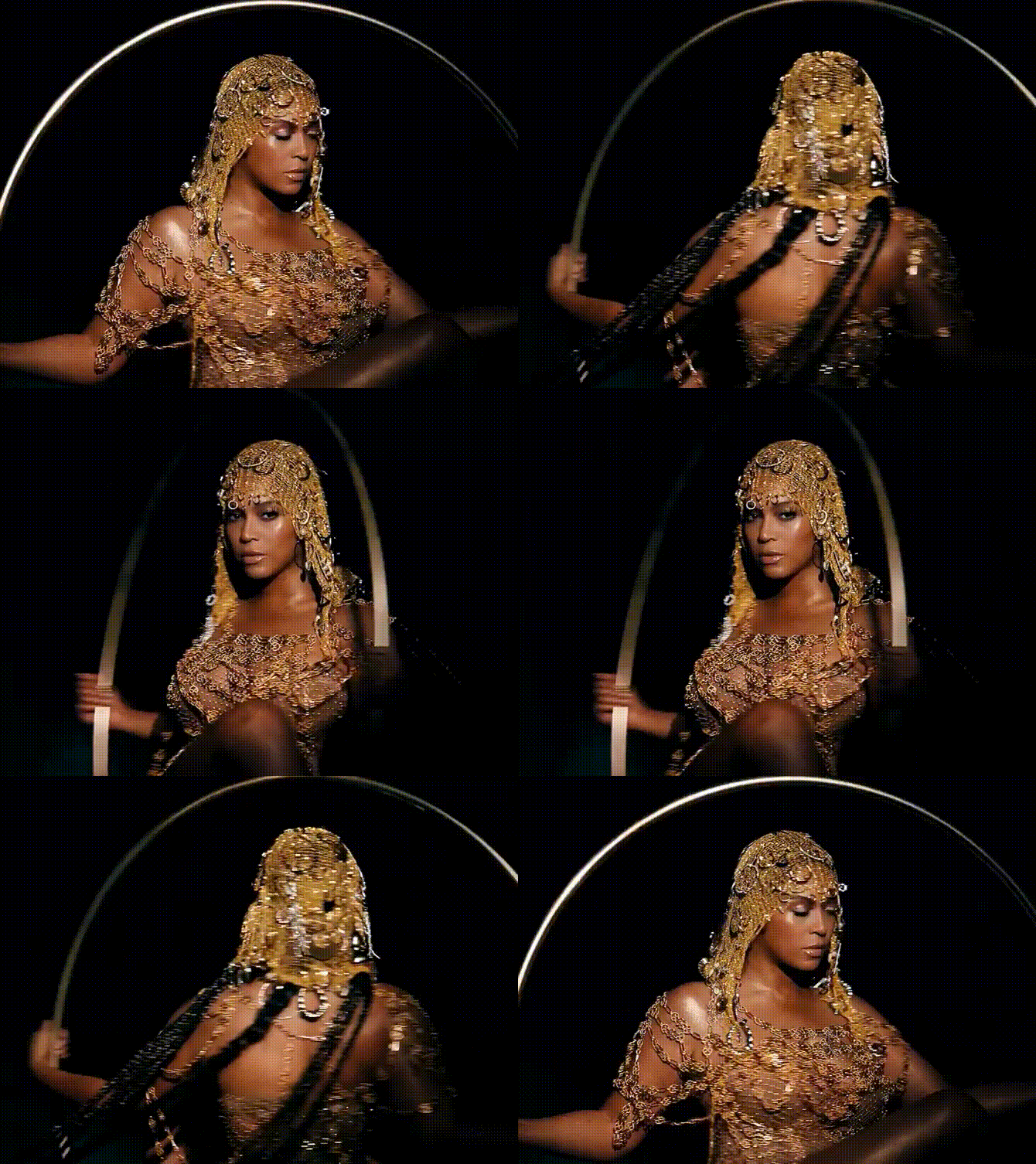
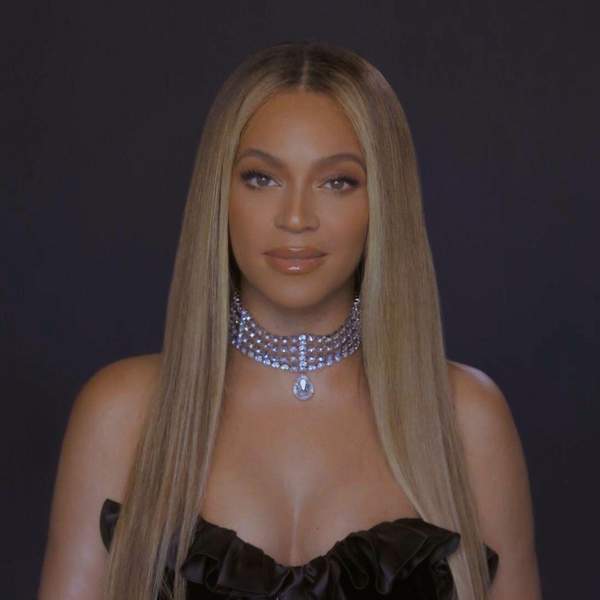
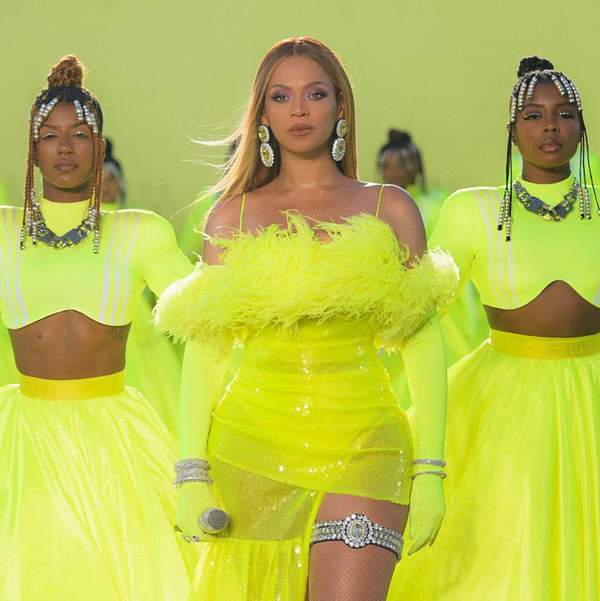
"Meant to celebrate the breadth and beauty of Black ancestry," Beyoncé said of the film's intent:
"We are all in search of safety and light. Many of us want change. I believe that when Black people tell our own stories, we can shift the axis of the world and tell our REAL history of generational wealth and richness of soul that are not told in our history books. With this visual album, I wanted to present elements of Black history and African tradition, with a modern twist and a universal message, and what it truly means to find your self-identity and build a legacy…This is a story of how the people left MOST BROKEN have EXTRAORDINARY gifts."
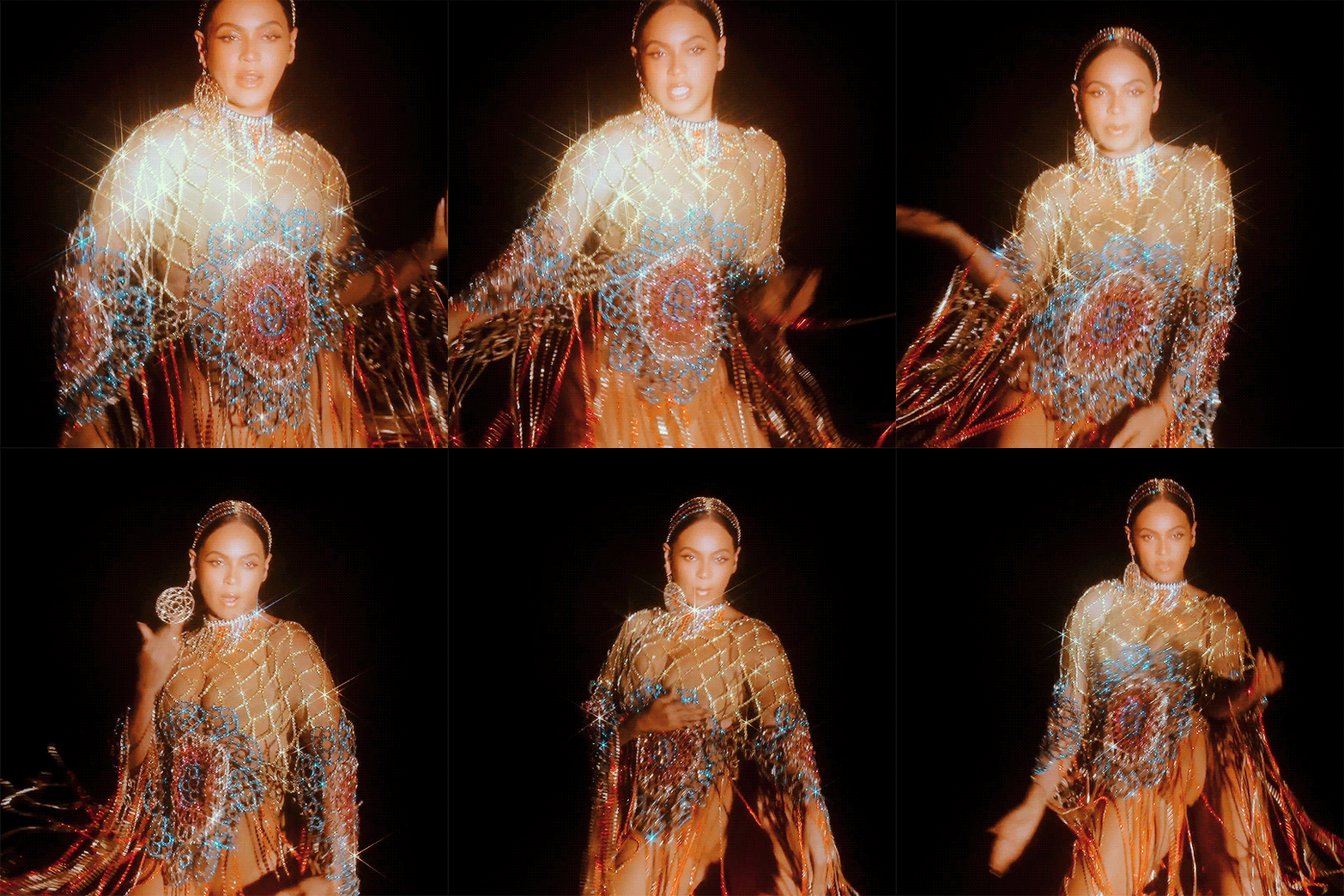
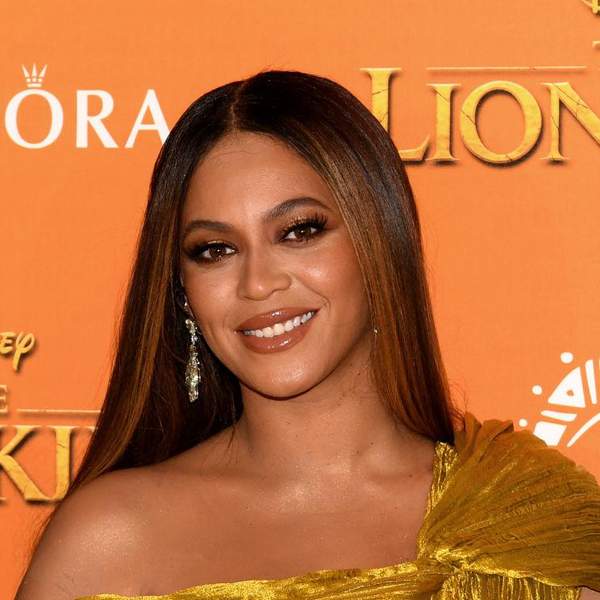
The Lion King was always that one childhood film that had endless knowledge to draw from, but I was always pulled to the lesson that it's important to (1) know who you are and (2) know where you come from. Bey's incorporation of Africa's lands, its native people, its color, and culture, alongside her family, reiterated just that.
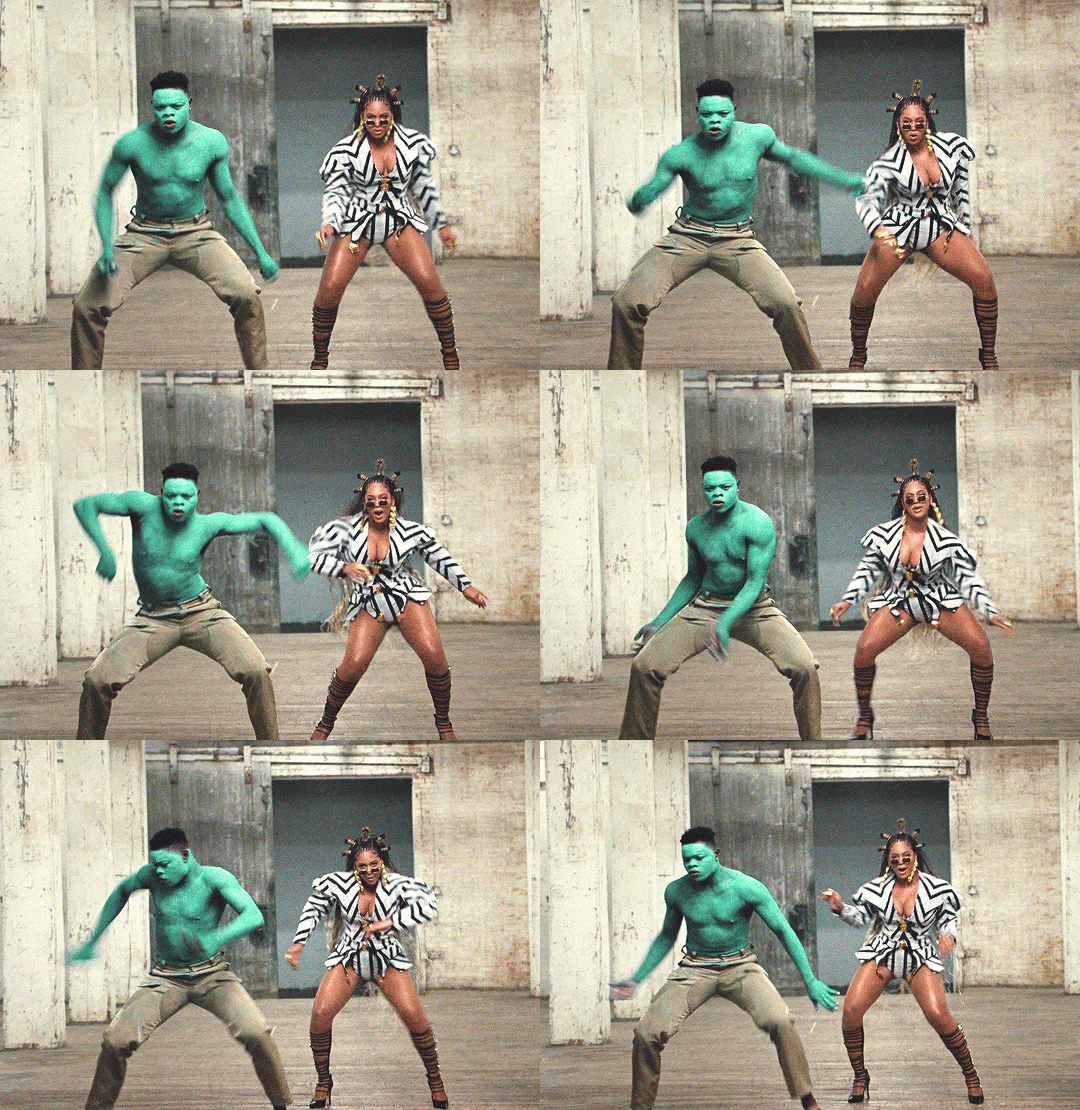
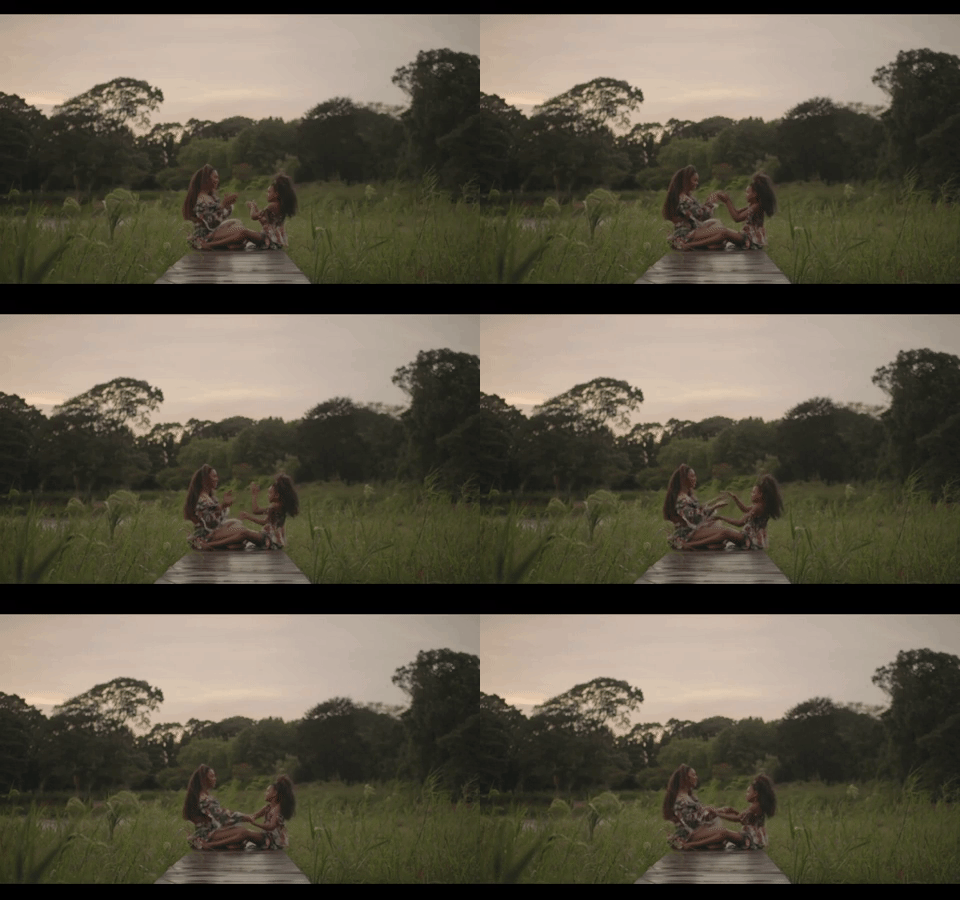
It was in Blue Ivy's showcase of sass and stardom at the tender age of 8 that warmed me throughout, knowing there was a Brown skin girl who would grow up with the awareness of who she was and who came before her.
So many of us were once Black girls who transformed into Black women with no recollection of the past that made us.
With tears, I celebrated the rising star that fell from the sky in the form of a meteor within the film, knowing Blue and Rumi were the exception to this visual dedication to Sir, and hoping the same for my own children. This was a moment of hope.
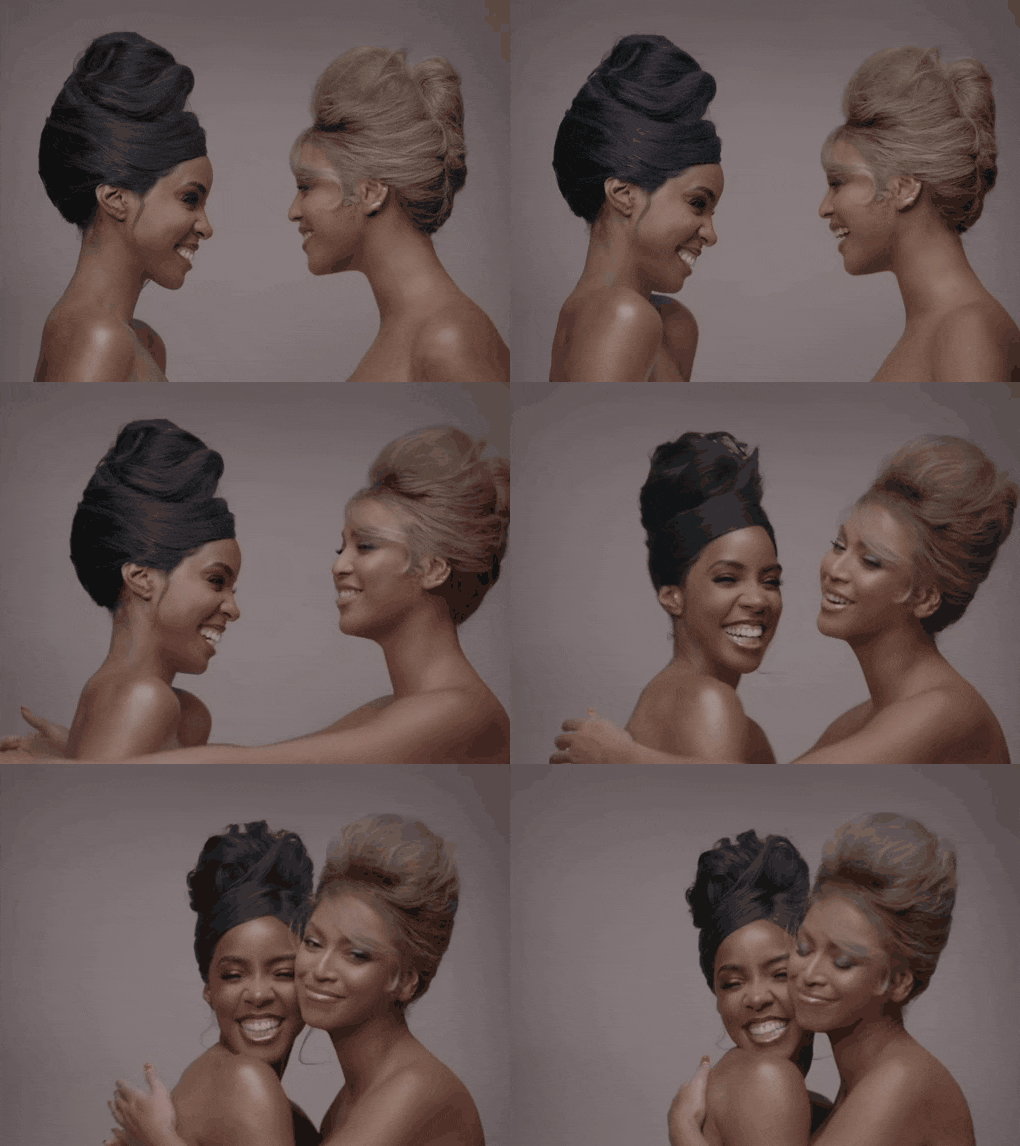
It was in the mesh of flesh in Kelly Rowland and Beyoncé's intimate face-to-face embrace; Bey's insight on women as saviors and protectors with our own set of plights; the encouraging poetry of Warsan Shire in lines like "Life is a set of choices. Lead, or be led astray. Follow your light. Or lose it"; and the joyous inclusion of Afrofuturism at a time where tomorrows aren't promised for Black folks, that allowed me to see how Black Is King is more than just a retelling of a classic Disney movie.
Black Is King/GIF
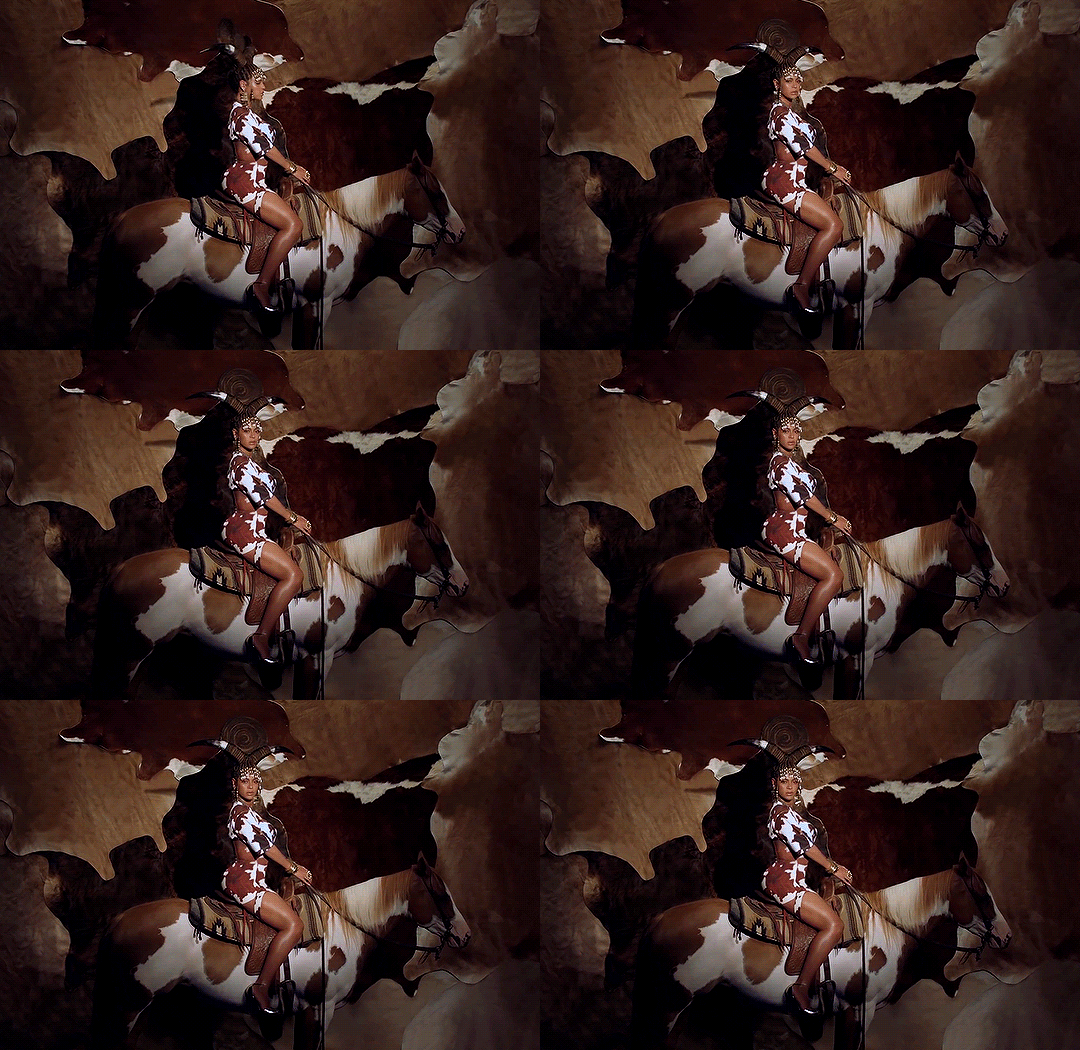
It was in these visual connections and pleas to return to our ancestry that confirmed for me to drop my reservations about wandering into DNA-testing territory, in order to glue the holes of my story together for the sake of myself and the children rooted in me. Introspection is dark and heavy. I have yet to weave together the puzzles by way of genetic testing, out of skepticism. What will I find? What is in me? Who's "blood keeps the score of [my] blessings and [my] trials?"
Learning of your lineage and coming into yourself comes with criticism—internally and from outside forces.
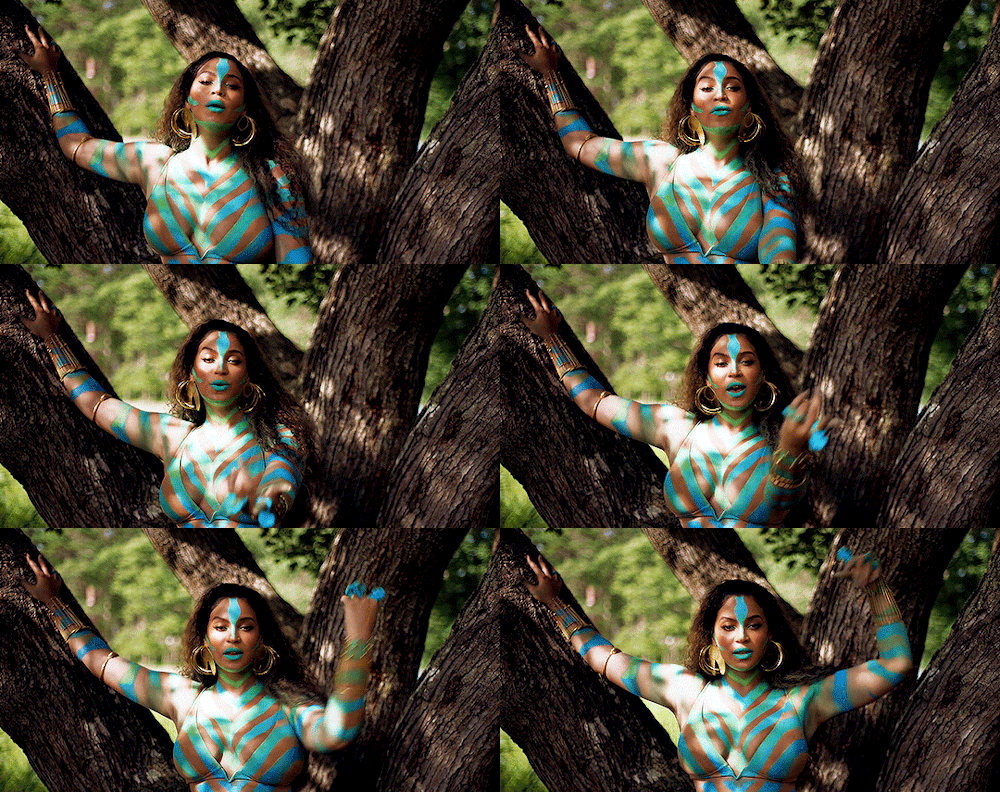
Black Is King/GIF
As evident in the film's growing opposition. Appropriation, a lack of understanding to an unfamiliar culture that many are attempting to reclaim, and BIK being seen as "an African aesthetic draped in capitalism" are all understandable critiques worthy of a deeper exploration into where African-Americans fit in, and what table we get to sit at.
Beyoncé is no stranger to criticism, nor is she exempt because of her status in pop culture on an international scale, or how she's elevated Blackness in modern times.
But to knock the messenger before weeding out the message is something I can't get behind (and no, I have never been a devout member of the Hive). Jay said it excellently in Black Is King: "Understand that good and evil often appear together. Nothing is complete on its own...It's not always a battle; it's a conversation."
Maybe the art, the film's symbolism, and its relation to my own life blinds me to "the bigger issues", truth be told. But my identity and understanding my existence is just as important. To this I sing, "They'll never take my power, my power, my power..."
Beyoncé associating Blackness with wealth/regality is corrective promotion and y’all need to be happy about it. too often blackness is associated with struggle/poverty. and the messaging I get from her often is that wealth and regality lives inside us, it’s not always material.
— coffee bae (@iamsashakae) July 31, 2020
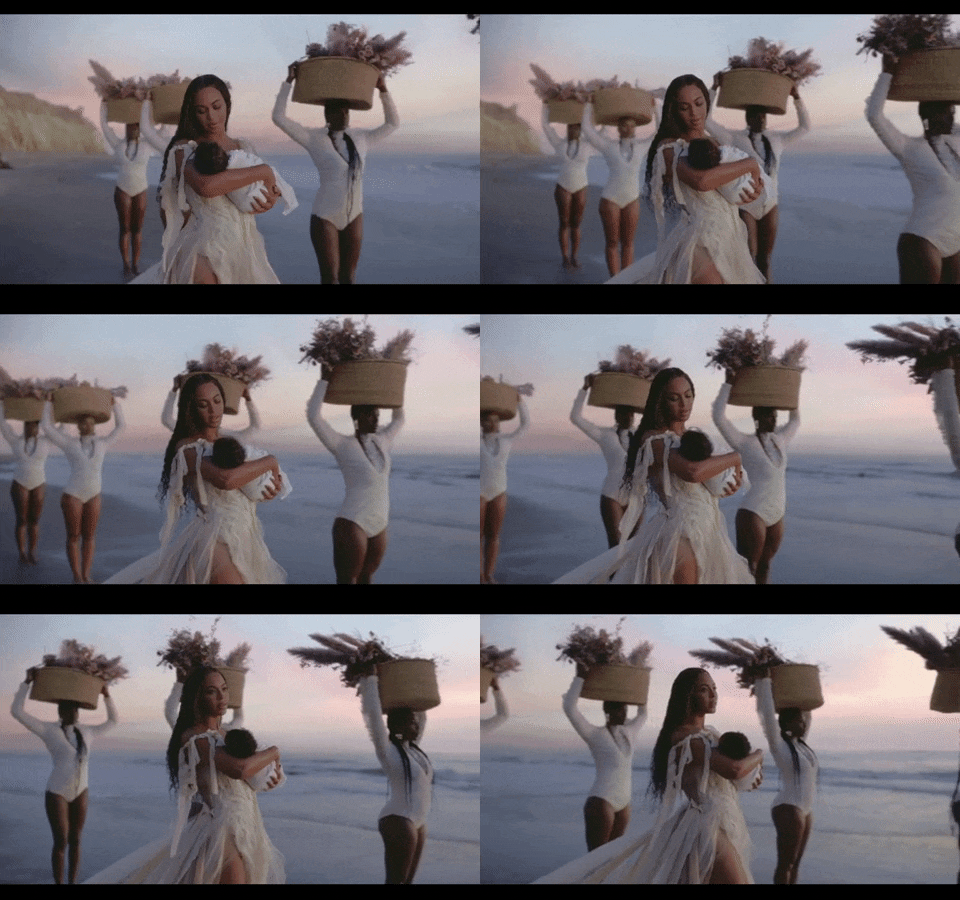
"To live without reflection for so long might make you wonder if you even truly exist."
Who are you?
For years, I was bound to the narrative that I was solely a descendant of enslaved people with ties to Latin cultures and African countries. After mass consumption of films centered on that history as a child, I was turned off by "urban novels" that pushed hood love chronicles, life in projects and poverty, and the countless ways incarceration plays a guest role in our upbringing, as classic as they are.
My Black card would be revoked for sure if I told you how many street lit books I didn't read. Not because of access, but because I wanted a new account of how my life could possibly be. Because the school wouldn't teach it. Because American history tried to erase it—word to Nick Cannon. It's why I've stopped watching movies on slavery made by white men that win awards and yearn for new stories by way of my own telling or others.

Black Is King/Disney Plus
Perhaps I am not an offspring of African royalty, a reoccurring point made by critics from the African diaspora on Black Is King. Everyone isn't cut from the finer cloths and Africa shouldn't be romanticized by fantastical accounts of its history and inaccurate reflections of its modern times. I know this. But what I also know is:
I know that my resilience as a Black woman stems from some deeply rooted part of me. I know that my ability to make do with little and transform it into the most as a Black mother is ingrained in the women buried inside. I know "the Orishas hold [my] hand through this journey that began before [I was] born."
As a storyteller, I know the most used line in The Lion King to be true: that "we are all connected in the great circle of life." I am trying to piece together my own constellations and find my way home in a human game of chess.
I am both the pawn and a Queen.
Featured image by Black Is King/GIF
- Black Movies: Black History Month List - xoNecole: Women's Interest ... ›
- The Queen Of 'Black Is King': 6 Times Beyoncé Reminded Melanin ... ›
- Beyonce Motivation Meme You Have The Same Hours - xoNecole: Women's Interest, Love, Wellness, Beauty ›
- My Black Is Beautiful, Lisa Nichols Queen Latifah - xoNecole ›
Exclusive: Viral It Girl Kayla Nicole Is Reclaiming The Mic—And The Narrative
It’s nice to have a podcast when you’re constantly trending online. One week after setting timelines ablaze on Halloween, Kayla Nicole released an episode of her Dear Media pop culture podcast, The Pre-Game, where she took listeners behind the scenes of her viral costume.
The 34-year-old had been torn between dressing up as Beyoncé or Toni Braxton, she says in the episode. She couldn’t decide which version of Bey she’d be, though. Two days before the holiday, she locked in her choice, filming a short recreation of Braxton’s “He Wasn’t Man Enough for Me” music video that has since garnered nearly 6.5M views on TikTok.
Kayla Nicole says she wore a dress that was once worn by Braxton herself for the Halloween costume. “It’s not a secret Toni is more on the petite side. I’m obsessed with all 5’2” of her,” she tells xoNecole via email. “But I’m 5’10'' and not missing any meals, honey, so to my surprise, when I got the dress and it actually fit, I knew it was destiny.”
The episode was the perfect way for the multihyphenate to take control of her own narrative. By addressing the viral moment on her own platform, she was able to stir the conversation and keep the focus on her adoration for Braxton, an artist she says she grew up listening to and who still makes her most-played playlist every year. Elsewhere, she likely would’ve received questions about whether or not the costume was a subliminal aimed at her ex-boyfriend and his pop star fiancée. “I think that people will try to project their own narratives, right?” she said, hinting at this in the episode. “But, for me personally – I think it’s very important to say this in this moment – I’m not in the business of tearing other women down. I’m in the business of celebrating them.”
Kayla Nicole is among xoNecole’s It Girl 100 Class of 2025, powered by SheaMoisture, recognized in the Viral Voices category for her work in media and the trends she sets on our timelines, all while prioritizing her own mental and physical health. As she puts it: “Yes, I’m curating conversations on my podcast The Pre-Game, and cultivating community with my wellness brand Tribe Therepē.”
Despite being the frequent topic of conversation online, Kayla Nicole says she’s learning to take advantage of her growing social media platform without becoming consumed by it. “I refuse to let the internet consume me. It’s supposed to be a resource and tool for connection, so if it becomes anything beyond that I will log out,” she says.
On The Pre-Game, which launched earlier this year, she has positioned herself as listeners “homegirl.” “There’s definitely a delicate dance between being genuine and oversharing, and I’ve had to learn that the hard way. Now I share from a place of reflection, not reaction,” she says. “If it can help someone feel seen or less alone, I’ll talk about it within reason. But I’ve certainly learned to protect parts of my life that I cherish most. I share what serves connection but doesn’t cost me peace.
"I refuse to let the internet consume me. It’s supposed to be a resource and tool for connection, so if it becomes anything beyond that I will log out."

Credit: Malcolm Roberson
Throughout each episode, she sips a cocktail and addresses trending topics (even when they involve herself). It’s a platform the Pepperdine University alumnus has been preparing to have since she graduated with a degree in broadcast journalism, with a concentration in political science.
“I just knew I was going to end up on a local news network at the head anchor table, breaking high speed chases, and tossing it to the weather girl,” she says. Instead, she ended up working as an assistant at TMZ before covering sports as a freelance reporter. (She’s said she didn’t work for ESPN, despite previous reports saying otherwise.) The Pre-Game combines her love for pop culture and sports in a way that once felt inaccessible to her in traditional media.
She’s not just a podcaster, though. When she’s not behind the mic, taking acting classes or making her New York Fashion Week debut, Kayla Nicole is also busy elevating her wellness brand Tribe Therepē, where she shares her workouts and the workout equipment that helps her look chic while staying fit. She says the brand will add apparel to its line up in early 2026.
“Tribe Therepē has evolved into exactly what I have always envisioned. A community of women who care about being fit not just for the aesthetic, but for their mental and emotional well-being too. It’s grounded. It’s feminine. It’s strong,” she says. “And honestly, it's a reflection of where I am in my life right now. I feel so damn good - mentally, emotionally, and physically. And I am grateful to be in a space where I can pour that love and light back into the community that continues to pour into me.”
Tap into the full It Girl 100 Class of 2025 and meet all the women changing game this year and beyond. See the full list here.
Featured image by Malcolm Roberson
There is a very specific reason why I decided to write this article before the holiday season officially gets underway. It’s because I once read a study that said it’s quite common for most Americans to double the amount of alcohol that they consume between Thanksgiving and New Year’s Day.
It makes sense when you stop to think about all of the holiday parties, time off, and moments spent with loved ones that transpire around this time of year. And while there is certainly nothing wrong with enjoying some mulled wine, real-deal eggnog, or peppermint martinis, because your health is something that never “takes a vacation,” I thought it was important to share with you some of the benefits (pros) and challenges (cons) that can arise from alcohol consumption.
My main motive? Mostly, I hope that it will serve as a solid reminder to embrace all of the things that you adore about this time of year, so long as you do it in moderation and you weigh the costs.
Especially as far as drinking alcohol is concerned.
PRO: Manages Blood Sugar Levels
GiphyHere’s something that you may have never seen coming. Were you aware of the fact that alcohol can actually help to stabilize your blood sugar? Yep, according to the American Diabetes Association, so long as you leave it to no more than 1-2 cocktails a day, alcohol may be able to lower your A1C levels. Pretty cool, right?
CON: It’s a Carcinogen
GiphyAlcohol is a carcinogen. The reason why this should somewhat alarm you is because carcinogens are things (like tobacco, UV rays, processed meats, etc.) that can increase your chances of being diagnosed with cancer (especially mouth, throat, esophagus, stomach and breast cancer). There are various ways this happens including the fact that alcohol, specifically, can hinder your body from breaking down certain nutrients, it can cause your estrogen levels to spike and alcohol can also cause certain toxins to damage your DNA and certain bodily proteins over time.
PRO: Cultivates Euphoric Feelings
GiphyIf you find yourself feeling more euphoric while you’re enjoying a drink, it’s not all up in your head. Although, for the more part, alcohol is considered to be a depressant, when consumed in small amounts, it can provide a stimulant effect. This happens due to the fact that when you first start to consume alcohol, it causes the production of the feel-good hormone known as dopamine to increase — and since dopamine makes us all feel more relaxed and confident while heightening our senses of pleasure too…well, there you have it.
CON: May Increase Anxiety/Depression
GiphyAs they say, “what goes up, most come down” at some point — and that is what you have to be careful of when it comes to alcohol consumption. For instance, when you drink alcohol, although it tends to initially cause your dopamine levels to uptick, because it is a temporary bodily response, sometimes the dips are lower than the rises…and that is when anxiety starts to kick in. A similar point is made with depression because oftentimes, people with depression-related symptoms, will use alcohol as a way to deflect from what’s really going on with them — and that can make them feel even worse than ever once the buzz of alcohol starts to wear off.
PRO: Has Some Heart-Related Benefits
GiphyWhen it comes to your heart, there are interesting findings surrounding its relationship to alcohol. For instance, some research states that, so long as the consumption is moderate, alcohol can actually help to increase the good cholesterol in your system while also breaking down proteins that can potentially lead to blood clots; both of these factors alone can reduce your chances of dying from heart disease.
CON: Packs on Pounds
GiphyIt’s no secret that alcohol tends to contain quite a few calories. That’s why, it’s not uncommon for people who’ve lost weight to mention “I’ve stopped drinking” as one of the causes for the shed pounds. That’s not to say that there aren’t some alcoholic beverages that have less calories than others including vodka (133 calories per serving), white wine (148 calories per serving) and tequila (99 calories per shot). Just keep in mind that the more you drink, the more calories get into your system and the more weight you stand to gain.
PRO: Lowers Inhibitions
GiphyAlthough you really should only be uninhibited around people who you absolutely trust, if that person is your partner and you’re looking to have a pretty — eh hem — active evening, alcohol can certainly help to make that happen. The science of it all is the prefrontal cortex of your brain is what regulates your inhibitions and levels of self-control. Meanwhile, alcohol suppresses your inhibitions which can cause you to be more spontaneous and open to trying things that you might not immediately do if you were sober. And with the right individual, that can be sexually beneficial (emphasis on “right person”).
CON: Makes It Harder to Orgasm
GiphyOn the other hand, as odd as it may seem (in light of what I just said), if you have too much alcohol in your system, it could make climaxing difficult. That’s because orgasms happen, in part, due to your nervous system being stimulated — and since alcohol is technically a depressant…well, it could reduce nerve sensitivity (especially as far as your clitoris goes) for you while making it challenging for your partner to remain erect or have consistent stamina. And yeah, that sucks.
____
‘Tis the season. And with that, if some wassails or hot buttered rums are in your immediate future — hey, don’t let me stop you — not even a lil’ bit.
All I’m saying is now that you know what alcoholic drinks have to offer (both ways), you can know exactly how to incorporate them into your holiday plans. Enjoy!
Let’s make things inbox official! Sign up for the xoNecole newsletter for love, wellness, career, and exclusive content delivered straight to your inbox.
Featured image by Unsplash