


It's one thing to be totally financially responsible for self, but it's a totally different ball game when you have little ones to care for. And the cost of parenting is far from cheap. Research shows that the average cost of raising a child through age 17 is more than $230,000. And while many parents happily do what they have to do to ensure their children are not only surviving but thriving, the cost reinforces the importance of grasping healthy concepts about wealth and money management and putting them into action.
Oftentimes, our mentality about money dictates how we use it, and the fact that Black people have endured decades of systemic racism, discriminatory employment and banking practices, and other historical societal horrors that affect how we get to the bag, many of us are actively dealing with the good, bad and ugly impact generations later. On one hand, the challenges have built habits of resilience, tenacity, initiative, and innovation, while on the other hand mentalities and habits centered on scarcity, overworking, overspending, and mismanaging of personal finances. Lessons have been learned from one spectrum to the other, one generation to the next.
There are communities of Black parents who are making changes that will not only empower themselves but their children and grandchildren, building off the foundation of their ancestors and strengthening financial fitness and power through action. They're taking deliberate steps to ensure their children's mindsets are balanced and prepared for financial prosperity.
Check out more on three such power women—mothers who have learned vital lessons about money management and financial freedom in their parenthood journeys—from becoming new moms to transitioning into empty nesters. They speak further about how they're changing narratives and raising children unafraid to think big and limitless about wealth:
Shifting Money Management Strategy Along the Way
Vioree Brandon-Nettlesford, the founder of Divine Enterprise L.L.C., was a divorced single mom and college student with her first son, navigating not only taking care of him but taking action to secure their future. Back then, she says, she wanted to focus on building up her savings because she wanted to "establish a firm foundation" for her son. "I didn’t want to live what I was taught which was, 'Buy, buy, buy, and don’t worry about tomorrow.'"
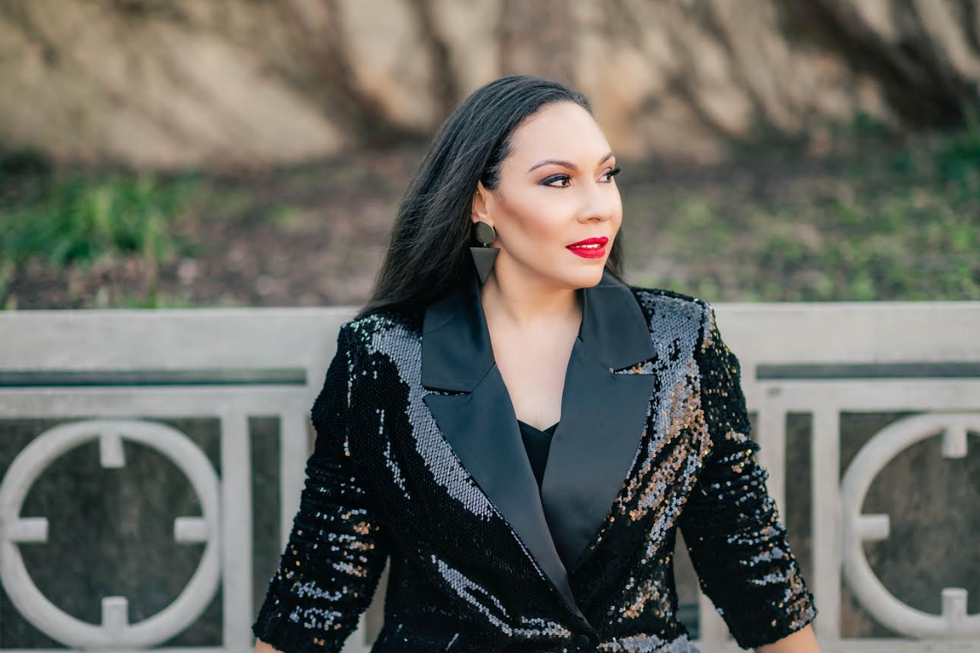
"I didn’t want to live what I was taught which was, 'Buy, buy, buy, and don’t worry about tomorrow.'"

Courtesy of Vioree Brandon-Nettlesford
Years later, she met her second husband and had more children, ushering in a dramatic change in her finances and how she'd handle money. "My story is a bit unique because I got married for the second time and then, my husband passed away. I found myself becoming a single mom again, and I actually became homeless," she recalls. "During our marriage, I had that old-school mindset that the husband works and [the wife] stays home. You don’t have to work. Re-establishing myself changed my perspective and my relationship with money because I realized I can’t teach my kids certain things I learned because it didn’t reap good fruit."
She also began working on establishing herself as an author and transitional life coach, creating streams of income for herself that would mean independence, empowerment, financial freedom, and a legacy for her family in the future.
She shifted back to a focus on saving and squirreling away funds to ensure she can meet the financial demand of taking care of her now-larger family and covering emergencies. She began planning more for the long-term versus the right now. "We’re looking at three different stages: My son is 20 years old now, and he's in his third year of college. He goes to a private institution. I did not save well with him like, for instance, with a 529 plan," she says. "I find myself now paying tuition of about $18,000 a year."
With her younger daughter, who will soon be a college student, Brandon-Nettersford changed up and created more of a strategic plan for financing her education. "I have a fund and now tap into scholarships for her because she’s a straight-A student and she goes to a military school. There are resources out there for you in whatever stage of [parenting] you’re in. It’s up to you to educate yourself and seek them out, and that’s what I began to do."
She also decided to be more collaborative with her children in setting a plan for their future. "I established a relationship and open communication with my children to help them understand what they want their future to look like. As parents, we have a plan for our children, but they also have a plan for themselves. It’s up to us to take accountability and responsibility and not to deflect our plans on them."
Honing In on Generational Wealth
Layo George, the founder of Wolomi, an online community and an app for expecting mothers, began planning for the birth of her son three years before he was born. "I knew I wanted to be able to breastfeed and stay home, and in order to do that, you have to be financially stable. I thought, 'What kind of pregnancy, post-partum, and first year did I want to have?' I began making choices with my husband in terms of finances. We wanted to make sure we were in a good space to carry out that idea. We didn’t want stress to impact our pregnancy or that first year of parenting."
Today her son is four, and while, she says, she does teach him about the concept of money, her focus is to give him a sense of what sustainable wealth-building is. "After he was born and we got past that first year, it was, ‘Well, what kind of life do I want for [my husband and I]? If you don’t think about yourself, in terms of taking care of things in your own financial journey, it’s hard to financially be there for a child."

"If you don’t think about yourself, in terms of taking care of things in your own financial journey, it’s hard to financially be there for a child."

Layo George, Founder, Wolomi
Courtesy of Wolomi
She and her husband began a process to tackle debt and tie up loose ends when it came to their own financial profile. Then, for her son's first birthday, they'd asked friends to put money into a 529 plan instead of giving the usual gifts. “I started learning a bit more about 529, and found that that wasn’t what I really wanted, so we opened an index fund account for my son. It’s not a lot of money because, as I said, [we were] focusing on [ourselves] as well," she adds.
George is also pursuing her own financial and career goals in helping other women through their pregnancy and post-partum journeys with the online community and tech resource she built. That, in turn, not only enriches her and her family's lives financially but provides an example of entrepreneurship that her son can learn from. "It's also [about] pouring into Wolomi in the hope that not only will we have this brand that will support women but it also is going to be something that can give us generational wealth so that my son can have the freedom we didn’t have."
"It's also [about] pouring into Wolomi in the hope that not only will we have this brand that will support women but it also is going to be something that can give us generational wealth so that my son can have the freedom we didn’t have."
Her parents are immigrants, and culturally, she says, there's a traditional sense of respectful obligation to take care of them financially in their golden years of retirement. While she understands the expectation and she and her husband are well prepared and happy to take on the responsibility, she says, "I don’t want that for my kid. I want him to not have to think about me, but about the bigger picture. It isn't just about one generation. There’s a limit to what I can do for him. It’s about putting him in a state where he’s able to multiply what I have. Then we can really start to build for our people.“
Making Financial Literacy Relatable and Empowering
Karen Stevens, the founder of Frugal Feminista, is also a huge proponent of redefining our relationships with money, and with a background in education, she relies on communication and teaching by example to instill certain values in her daughter. She takes her 6-year-old to the bank with her and allows her to see how the banking world works, even down to signing her own checks given to her by her grandmother. She also started a brokerage account for her daughter as soon as she received her social security card and contributes to a 529 account for her education.
She believes that today's parents can inspire their children to elevate their understanding of how money works and become more mindful of the conversations that are had about everyday financial scenarios. "For Black women, in particular, I think because we’re in a race-based society, some of us are quick to adultify our kids and bring them into conversations that they have no mental, emotional, financial ability to reconcile, and I think that [is detrimental] to their relationship with money," Stevens adds.
"For Black women, in particular, I think because we’re in a race-based society, some of us are quick to adultify our kids and bring them into conversations that they have no mental, emotional, financial ability to reconcile, and I think that [is detrimental] to their relationship with money."

Courtesy of Kara Stevens
Reframing dialogue and interactions in a way that allows children to understand from their own perspective, considering their age and development, is key, she says. "I don’t think it’s appropriate for a mom to say, 'We ain’t got no money,' or 'Your daddy’s gone. You're the man of the house.' Let's say maybe you lost your job. Instead of saying, 'We don’t have any money,' you can say, 'We’re going to really take care of the things we have because we have more than enough. What role can you play in taking the lead in putting your things away?' It lands differently."
She also believes that, as parents, it's important to guide children toward balanced and education-based conclusions about money and to highlight positive aspects of Black buying power, Black excellence in business, and Black wealth.
"As Black people, because we have been marginalized, we want to make sure that we don’t color our children’s lenses in the same race-based, wealth-based narrative. All Black people aren’t poor. All white people aren’t rich. It's about making sure that we give them–whether it be through books, online resources, or family members—the sense that Black people got it. We been had it. And if we don’t have it, we can get it. We need to give them a positive narrative about all things Black and a more nuanced understanding when it comes to money. Then, you’re able to raise a child that will be critically thoughtful about money, take more risks with money, and understand what their values are around money."
Let’s make things inbox official! Sign up for the xoNecole newsletter for daily love, wellness, career, and exclusive content delivered straight to your inbox.
Featured image by Ridofranz/Getty Images

This Is How To Keep 'Holiday Season Stress' From Infecting Your Relationship
Hmph. Maybe it’s just me, but it seems like there is something really weird happening in the fall season air (because winter doesn’t officially begin until December 21) that cuddle season is in full swing while break-up season is as well. In fact, did you know that break-ups are so popular during the holiday season that December 11 is deemed Break-Up Day?
The reasons why relationships shift around this time vary; however, I did both roll my eyes and chuckle when I read that a very popular one is because it’s an easy way to get out of getting one’s significant other a Christmas present. SMDH.
Anyway, I personally think that the less shallow folks out here may contemplate calling things “quits” or they at least distance themselves a bit from their partner (and what I’m referring to is serious relationships) due to all of the stress and strain that oftentimes comes with the holidays whether it be financial, familial, due to their tight schedules or something else.
Listen, I would hate for you and your man to miss the fun and happiness of experiencing this time of year, all because you are so overwhelmed or irritated that you can’t really enjoy it. That’s why I have a few practical tips for how to avoid allowing the typical holiday season stress from INFECTING your relationship.
Manage Your Expectations
GiphyUnmanaged expectations. If there is a main reason why the holiday season tends to be so stress-filled for so many people, I’d bet good money that this is the cause. And when you’re in a long-term relationship, expectations can manifest themselves in all sorts of cryptic and/or unexpected ways. You might have relatives who assume that you are going to be with them for Thanksgiving or Christmas when you have other plans in mind. You might be thinking that you are going to spend one amount for presents while your man is thinking something totally different. When it comes to scheduling, your signals may be crossed.
And you know what? To all of these scenarios, this is where clear and consistent communication come in. Don’t assume anything. Don’t dictate anything either. From now until New Year’s, mutually decide to check in once a week, just to make sure that you are both on the same page as it relates to the holidays and what you both are thinking will come along with it. The less blindsided you both feel, the less stressed out you will be. Trust me on this.
Set (and Keep) a Budget
GiphyOkay, so I read that last year, 36 percent of Americans incurred some type of holiday-related debt. Hmph. Last year, there was still some sense of normalcy in this country, chile, so I can only imagine what finances are gonna look like over the next several weeks. That said, since I don’t know a lot of people who don’t find being broke stressful, make sure that you and your bae set a budget and then stick to it this year — no ifs, ands or buts.
Because really, y’all — it doesn’t make sense to deplete savings and/or max out credit cards for a few days of giggles only to be damn near losing your mind because you don’t know how to make ends meet come Dr. Martin Luther King, Jr. Day.
And by the way, this tip doesn’t just speak to things like food and gifts; I also mean travel. If it doesn’t make a ton of sense (or cents) to be all over the place this year — DON’T BE.
Keep Matthew 5:37 at the Forefront
GiphyIf off the top of your head, you don’t know what Matthew 5:37 says, no worries, here ya go: “But let your ‘Yes’ be ‘Yes,’ and your ‘No,’ ‘No.’ For whatever is more than these is from the evil one.” That verse right there? Oh, it’s a boundaries lifesaver! I say that because do you see “maybe” or “I’ll think about it” in there? Nope. LOL. It says that you should tell people “yes” or “no” and leave it at that — and that complements Anne Lamott’s quote, “’No’ is a complete sentence” impeccably well. Yeah, you’ve got to remember that anything beyond a yes or no to a request is privileged information; you don’t owe anyone details or an explanation.
Besides, if you are really honest with yourself, when someone asks you something and you give a “Umm, let me think about it” kind of reply, more times than not, you already know what your answer is going to be — so why not let you both off of the hook? Give your response. Commit to that. And let everyone (including yourself) get on with their lives and schedules.
I promise you that when it comes to those holiday parties, you are pissing more folks off by not RSVP’ing or doing so and not showing up than just saying, “Thank you but not this year” off the rip.
Remember That Your Personal Space Is Privilege Not a Right
GiphyA friend of mine recently bought a new house and invited me over to come see it. He’s a single man with no children, so as I was taking in all of the space that he had, especially as I walked through his finished basement, I joked about relatives coming to live with him. “Hell no” and “absolutely not” were pretty much his immediate responses as he went on to say that some folks even had the nerve to be offended when he told them that he had no intentions on taking DNA in.
Ain’t it wild how people think that your stuff is their right? And yes, that brings me to my next point. Your home is your sanctuary space. If you want to host folks this year — cool. If not, ALSO COOL. Please don’t let folks (family included) guilt you into how they want you to act or even into what they would do if the shoe was on the other foot. You are not them — and as one of my favorite quotes states, “If two people were exactly alike, one of them would be unnecessary.” (A man by the name Larry Dixon said that.)
Hell, my friends? They know that I am good for sending them random things that they need or even want all throughout the year. Coming over to hang out at my pace, though. Uh-uh. Chalk it up to being a card-carrying member of the ambivert club yet I like keeping my living space personal — and I sleep like a baby, each and every night, for feeling that way.
Always remember that your space, your time, your resources, your energy and shoot, yourself period (including your relationship), are all things that are your own. You get to choose how, when and why you want to share them. The holiday season is certainly no exception.
Cultivate Some “You Two Only” Traditions
GiphyIt’s not uncommon for some couples to hit me up after the holiday season to “detox.” Sometimes it’s due to the financial drama (and sometimes trauma) that they experienced. Sometimes it’s because they allowed their relatives (especially in-laws) to get more into their personal business than they should’ve. More than anything, though, it tends to be because they didn’t get enough quality time together and so ended up feeling “disconnected.”
Please don’t let that happen. Listen, I’m not even a holidays kind of woman and yet, I will absolutely sit myself down with some hot chocolate and chocolate chip cookies to enjoy a Hallmark holiday film or two. Aside from the fact that most of them are lighthearted and sweet, I also like that they usually focus on couples loving on each other amidst all of the holiday beauty and ambiance — which is something that all couples should set aside some time to do.
Maybe it’s a vacation. Maybe it’s a staycation. Or maybe it’s my personal favorite, A SEXCATION. Whether it’s for a few days, the weekend or even overnight — don’t you let the holidays go by without setting aside time for you and your man to celebrate one another. Don’t you dare (check out “Are You Ready To Have Some Very Merry 'Christmas Sex'?”).
GET. SOME. REST.
GiphyI once read that 8 out of 10 people get stressed out over the holidays and 3 out of 10 lose sleep during to it — and when you’re stress-filled and sleep-deprived, that can absolutely lead to hypersensitivity, making mountains out of molehills and even not being in the mood for sex.
Your relationship can’t afford to go through any of this, so definitely make sure to prioritize rest. I don’t care how unrealistic it might seem during this time, sleep should never be seen as a luxury; it will always and forever be a great necessity.
That said, try to get no less than six hours of shut-eye in (check out “6 Fascinating Ways Sex And Sleep Definitely Go Hand In Hand”) and even ask your bae to take a nap with you sometimes (check out “Wanna Have Some Next-Level Sex? Take A Nap, Sis.”). Not only will sleep help to restore your mind, body and spirit but, when it’s with your partner, it’s an act of intimacy that can make you both feel super connected, even in the midst of what might feel like chaos.
___
Holiday season stress is real. Still, never give it the permission or power to throw your relationship off. Put you and your man first and let the holidays be what they are gonna be, chile.
Let’s make things inbox official! Sign up for the xoNecole newsletter for love, wellness, career, and exclusive content delivered straight to your inbox.
Featured image by Shutterstock
It’s probably been over the past 2-3 years that I’ve become hyper-focused when it comes to applying certain chemical exfoliants known as acids to my skin. Personally, I’ve come to really appreciate ones like mandelic acid and hyaluronic acid because they have a way of softening my skin, brightening it up and really evening out my complexion overall.
In fact, on my skin, they have been so effective that they have caused me to wonder what would happen if I applied some of them to my hair too — and boy, was it an experiment that paid off big time!
If, while on your continual journey to get the best out of your own tresses, you’d like to learn how to get them healthier than it’s ever been, I’ve got seven acids that are typically known for skin use that can be just as beneficial to your hair as well.
1. Salicylic Acid
When it comes to your skin, salicylic acid is beta-hydroxy acid that is great for your skin if you’re looking for something that will exfoliate it, clear out your pores and dissolve dead skin cells. In fact, this is why it’s an acid that is quite popular when it comes to treating acne.
Your hair will enjoy salicylic acid because, if you’re looking to remove product build-up, you want to soothe an itchy or irritated scalp or you’ve got some dandruff flakes that are totally driving you up the wall, salicylic acid has the ability to treat all of this. Either purchasing a shampoo that contains this ingredient or adding it to your favorite scalp scrub is probably the most effective way to get the most out of it.
Just make sure that if your scalp is sensitive or dry that you approach with caution. In these instances, it could end up irritating your scalp more than helping it out, so use a very little bit in the beginning to make sure that it vibes with you.
2. Lactic Acid
Lactic acid is an alpha hydroxy acid that can help to even out your skin tone as well as slow down the signs of aging. The properties in it help to do this by reducing hyperpigmentation and boosting collagen production in your skin as well as keeping it hydrated.
Why is it great for your locks? For one thing, lactic acid is considered to be a humectant. This means that it pulls water from the air so that your hair is able to remain moisturized.
Another thing that makes it a winner is the fact that lactic acid breaks down dead skin cells on your scalp (so that your hair follicles are able to flourish), it can help to soften and detangle your hair (making it a helpful addition on your wash days) and it also helps to protect your tresses from heat styling tools and UV damage. Applying a hair rinse that’s made up of part lactic acid and part water can work wonderfully (so long as you apply it once a month, tops; more than that might be too “intense” for your hair strands).
3. Glycolic Acid
Glycolic acid is a water-soluble alpha hydroxy acid that is actually made from sugar. Your skin will adore it because it smooths the appearance of fine lines and wrinkles, improves the texture of your skin, gently exfoliates, clears your pores and brightens up your complexion overall.
The reasons why you should consider this acid for your hair is because it helps to keep your scalp youthful (and yes, there is such a thing; check out “Your Scalp Ages Six Times Faster Than Your Face. Why It Matters.”), removes excess sebum (that could be clogging up your hair follicles) and it helps to keep your hair moisturized. Your best bet here is to make it a part of your pre-shampooing ritual.
4. Succinic Acid
Succinic acid is an acid that is made from sugar cane and contains antimicrobial and anti-inflammatory properties. Although it doesn’t exactly exfoliate (like many of these other acids do), it can still be beneficial to your skin when it comes to reducing the kind of irritation that is associated with eczema, decreasing the bacteria that leads to breakouts and keeping your skin pretty hydrated.
As far as your hair goes, this is an acid that is worth trying out because it helps to balance the sebum that is on your scalp, remove dead skin and product build-up that can irritate your scalp and clog your hair follicles and, succinic acid is also beneficial when it comes to reducing dandruff and helping to prevent hair loss. Most people tend to apply this as a serum.
5. Hyaluronic Acid
I’ve officially sung the praises of hyaluronic acid on this platform before. One example is via the article, “Why Your Skin, Hair, And Nails Need Hyaluronic Acid Like...Yesterday.” On the skin tip, hyaluronic acid is great because it deeply hydrates your skin, contains anti-aging properties and can even bring relief to vaginal (including vulvar) dryness.
Your hair will adore this particular acid because it aids moisture to it (including your hair follicles), will help to improve your hair’s texture and it also soothes scalp dryness, nurtures the cuticles of your tresses and decreases frizz. Using a serum rich in this acid as a pre-poo or as a leave-in conditioner is recommended.
6. Azelaic Acid
If you’ve never heard of azelaic acid before, this is your lucky day. It’s a dicarboxylic acid that, when it comes to skincare (and hair care) products, is usually synthetic. Anyway, if you are looking for a way to reduce inflammation, even skin tone after a breakout or if you want to use an exfoliant that will improve the texture of your skin overtime, you might want to give this acid a shot.
This one makes the list as far as your hair is concerned because, if achieving more inches is your current focus, azelaic acid might come in handy. That’s because it is able to strengthen your hair, thicken your strands and also stimulate hair growth from within your hair follicles.
7. Glutamic Acid
Glutamic acid is actually a type of amino acid. Skin-wise, it’s great for deeply hydrating your skin as well as protecting it from pollutants and damaging UV rays. Also, if you’re looking for an acid that treats skin dryness or “tightness,” this could be the answer to your prayers.
Since glutamic acid is also considered to be a humectant, it’s another acid that can moisturize your hair. As a result, it can decrease breakage while helping your hair to feel smooth and look shiny.
BONUS: Amino Acids
Speaking of amino acids and hair, please try to keep some amino acids in your diet at all times. The reason why is because, since your hair is made up of mostly protein (keratin, to be exact), amino acids are pretty darn effective when it comes to helping you to maintain the overall health and well-being of your hair.
Ones to prioritize include proline (it boosts collagen so that your hair strands can maintain flexibility); arginine (it increases blood flow to your hair follicles so that they can receive the nutrients that they need); cysteine (it helps to keep your hair follicles healthy); alanine (it helps your system to produce more collagen), and isoleucine (it strengthens the tissues that help to make up your hair strands). All of these are available in supplement form or you can use Google to see which foods contain them.
___
Although it might initially seem odd to apply acid to your hair, as you can see, certain ones will work miracles for it. So, test them out to see which one tickles your fancy.
Hell, since they work for your skin as well — it’s a two-for-one deal that is worth every penny!
Let’s make things inbox official! Sign up for the xoNecole newsletter for love, wellness, career, and exclusive content delivered straight to your inbox.
Featured image by Shutterstock