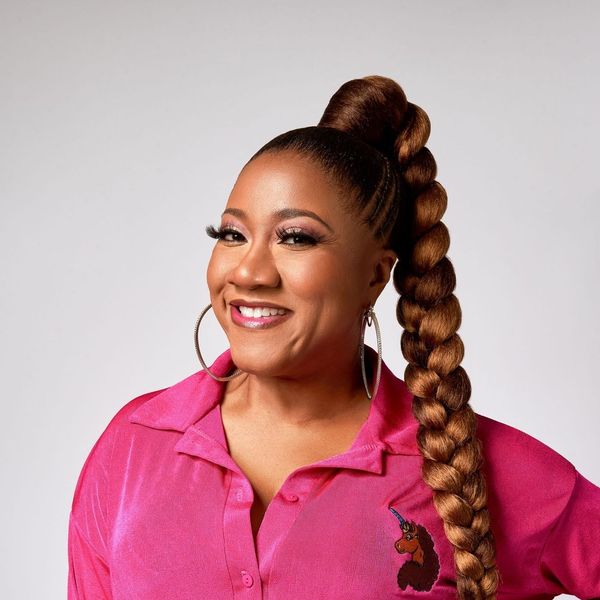




This is what financial freedom looks like. It looks like being completely debt-free, student loans and all. It's doing work that you love and not just settling for a steady paycheck at a job you hate, or maybe packing up the kids and taking them on trips to St.Thomas, Ocho Rios, or to the Discovery Children's Museum in Las Vegas. And in the case of Jamisa McIvor-Bennett, it also looks like a $3.2 million real estate portfolio with 21 properties— all paid for in cash with the exception of one home.
It all started with an unexpected question that would lead to a life-changing opportunity when a 19-year-old McIvor-Bennett, then a cashier at ShopRite Supermarket in Philadelphia, was approached by her grandmother. "She said, 'I just wanted to know what would happen to the house if something was to happen to me?' I said, 'Grandma I'm not really sure, I can find out.' She was like, 'No, I was just asking because, if something was to happen, I want you to take full responsibility for it. You're the most responsible one.'"
At the insistence of her grandmother, the pair did a quitclaim deed transfer, allowing her grandmother to transfer the property to McIvor-Bennett for $400 total once the dust settled. Over a year later, her grandmother passed away unexpectedly, and all hell broke loose as the family clamored to make claim to the home, unaware of the agreement between McIvor-Bennett and her grandmother. "We made a video because this is during the era of record everything, so I had what I needed in terms of a paper trail."
 Courtesy of Jamisa McIvor-Bennett
With no knowledge about financial literacy or real estate, McIvor-Bennett got to work on researching her best options for turning a lemon into lemonade. She didn't have the funds to make the necessary repairs to the home, so she decided to sell the paid-off abode for $152,000 at the encouragement of a real estate agent. And thanks to advice from a real estate investor turned mentor, she used the profit to purchase her first home in cash for $400— a house that she still owns today and that's worth $330,000.
Gaining more knowledge and experience through mentorship and mistakes, McIvor-Bennett has since bought 21 properties worth $3.2 million in the Philadelphia area, affording her a lifestyle that at one point never seemed imaginable for the now-married mother of two. Seems impossible? Well, don't just take our word for it. The real estate mogul is spreading knowledge on the power of investing through her company Rosebud's Investments to those looking to get in the game. "I have so many people who are interested in real estate investment just by seeing my lifestyle change gradually," McIvor-Bennett says.
xoNecole chatted with the self-made millionaire for tips on tapping into lucrative deals and how to build generational wealth through real estate investing.
1.Learn From Others’ Mistakes

Courtesy of Jamisa McIvor-Bennett
"I learned so much from my mentor just through his mistakes. He gave me a lot of information, but he showed me a lot of stuff just because I was paying attention. He was a really big dreamer. He would get really good deals and run out of money. That's why he ended up selling me the properties he did out of desperation because he was locked into a deal and ran out of money to finish it and needed to close. So he was selling off what he had just to get their money to get through that next deal.
"The second time he did it, it ended up helping me because I was down to my last $50,000. And he was like, 'I need money.' So I'm like, 'All right, I'm going to give you the money to finish your deal, and you give me back the money in interest.' And he did. He gave me 25% interest on my return. But I learned a few things— don't get into these high ticket deals without a contingency fund. I was taking notes, which is why it took me so long. I didn't get any mortgages until literally the 13th of December [2019]. So all of these houses later, I was kind of scared because of what I watched him go through."
2.Don’t Overlook Ugly Houses
"The second house sold to me was for $6,500. It looks like a scary movie. I call it the Treehouse, literally, there was a tree growing inside. But I bought it because it was $6,500, and my mentor had purchased it for $2,500. Even though it was ugly, it was structurally sound. So it wasn't one of those things where I had to do anything to it. We put a new roof on it, boarded it up to winterize it, and made sure it was safe. We had to buy a vacant property permit for it. I didn't know what equity was, I was just buying time until I conjured up enough to figure out what I wanted to do at home, but it was worth a lot. Year two [of investing], I started to really get into markets and stuff like that. By year three, the house directly up the street had sold for almost $200,000, and it was smaller than mine. I didn't know it was going to end up being a good deal, but now I knew that buying a house for $6,500 was OK."
3.Check The Comps
"When you're in real estate, you do what's called comps, or comparable property. So if you ever want to know what your house is worth, you have to find something that's comparable to it. Then we look at the work that was done to it. Obviously, if I put a waterfall and elevator in my house, and you got a little patio and vinyl sliding, mine is going to be worth a little more. But this is how you compare the numbers and you look at what [the] dollar consistency [is] in that area. You look at the last three things that sold and you get the average."
4.Buy Cheap Properties At Auctions
"When you buy a house in an auction, you get the equity, but you don't get the debt. There are actually nice houses sometimes, especially foreclosures. Somebody went through the whole mortgage process and out of the 30 years they might've had a good 125 months and they can no longer pay the mortgage. You are getting all of that equity per penny on a dollar because somebody else fell on hard times, which is bad for them, it's very sad. But if they're losing it anyway, you just happen to be the one to purchase it.
"I had purchased my own property for $1,700, and what was really interesting about it was that when I purchased it, I didn't even have to buy it. I had the money. But when you are at an auction, you can't pay for it there. You have to actually finalize your paperwork elsewhere on another day. I had to put down a deposit. The deposit is either 10% or $600, whichever is the highest. After that you have 30 days to do one or two things, the first thing you can do is obviously pay the remaining balance. But the second thing that you can do is sell the property, which I thought was really cool. I ended up returning like two or three days later and then I decided to go back every single month because they had them every month. I still have the $1,700 property. Right now the comp in the area is like $175,000. It's a bad area, but it's coming up. So I will just wait."
5.Buy Properties With Positive Cash Flow
"For myself, I'm looking for positive cash flow. I'm an urban investor so I like to stay true to my roots. I think people spend a lot of time focusing on gentrification, and they are pushing us out. I got a home that's in the city right now that's worth $600,000, you can't tell me that I'm being pushed anywhere. I typically stick to urban properties and the overhead is way less. We usually have about 1,200 to 1,600 square feet, depending on if it's a corner house or not. So with that being said, it's only but so much work that needs to be done to a house of that size."
6.Decide If You Want To Flip Or Rent
"As an investor, I never went in with the intention to flip. I sold one or two during the course of time just because I needed some fast cash and because I'm living off of the rental income, so I was like, 'All right, let me free up something.' Then I would sell one and replace it with two more, but I wasn't really interested in the flipping aspect. Some people need a quick flip. I have children and I like freedom. To me, flipping is too much of a job. You do all this to make money to then do what? You have to do it again because once you get the money, you've got to spend it on something. I like the idea of buying a house and renting it out. Right now my portfolio total is $3.2 million, cash flow is a little under $50,000 a month."
7.Look For Hard Money Lenders

Courtesy of Jamisa McIvor-Bennett
"Hard money lending is a go-to for investors because it doesn't require tax returns and you don't need anything except a good deal because they're funding you based on how much the property is worth. You do need 10% of the money because they'll give you money to purchase and rehab it, but they don't give you the money to fix it up outright. So you have to actually put money into it and then they reimburse you. And when they reimburse you, you use the reimbursement money to keep going. When you are getting a regular loan from a bank, they need at least two years of consistent tax returns. With hard money lending, you decide how much the house is worth. So it's easier to get funding, but you have to pay more upfront and altogether because it's interest-only payments too.
"The benefit of it is [money] is accessible fairly quickly. But you got to do it right because the first couple of payments are interest-only payments, and then you still owe whatever you borrowed. So let's say you did $100,000— $50,000 to purchase and $50,000 to rehab, times it by 10% interest. You owe $10,000 additional on a loan, where a normal loan is usually around 3.5% percent or so. So now you divide that $10,000 by 12 months because usually the loan is between 12 to 13 months. You have to pay them $830 every single month. Then at the end of the loan, you still give them back their whole $100,000."
8.Cash Is Still King
"You definitely get more of a return when you leverage, but the moment that you get a mortgage you owe somebody else. The market goes up and down, and what can end up happening is if the market crashes like it did last time, the value of your property decreases, which is why it's good to be an owner. Let's say for instance you bought a property worth $100,000. A bank will give you up to 80% of what the property is worth. So at $100,000, they will give you the $80,000 to play with. Then the market crashes, now the $100,000 property is only worth $60,000.
"You borrowed $80,000, so now you owe $20,000 more than what it's even worth. Not to mention most people who are investing don't even live in their investment property, so they still maybe have a mortgage. Now, you're struggling to even pay what you owe. If you are a more financially stable person, you can move money around, and then investors do things called diversification, so they have different streams of income other than [real estate] investments. But it depends on what your risk tolerance is."
9.If You Don’t Have The Cash, Consider Wholesaling
"Wholesaling isn't hard at all. You find a seller and you find a buyer. The most involved part is having time. That's what people underestimate. If you don't have credit or money, you have to have time, because the hardest part of wholesaling is finding a seller. But it's definitely not difficult depending on the numbers. Let's say a friend came to you like, 'Listen, I've got this house, I'm over it. I want to sell it for $80,000.' You sign a contract. You don't actually have to have the money when you sign a contract because the contract says that if the original buyer can't secure funding or can't close, they have the right to assign it to somebody who can. You sign a contract agreeing to purchase it for $80,000. You know I buy houses. You call me like, 'Hey, I have a house for sale for $100,000,' and if the numbers make sense and it's worth what you're asking for, I buy it and you give her $80,000 and take the other $20,000."
10. Protect Your Primary Residence
"Every person's situation is different, but I'm not going to ever tell a person to outright start with debt unless they absolutely have to. Once you lock into a 30-year mortgage, you owe them, no matter what. If things go right, good. If things go bad— you lose your job or you break your foot — you owe [the bank], and this is your primary residence. You want to always make sure your home is safe. You should be in a situation where your assets protect your liabilities. Even if you live in a house and you're like, 'I love it, it's beautiful,' it's a liability. It doesn't do anything for you other than makes you happy when you see it. You live there so you're not getting any gains from it."
11. Consider Investing In Multi-Family Units
"The idea is you get a mortgage and you get a multi-unit as opposed to a single-family. A multi-unit can be a duplex or a triplex, or it can even be a quad, which is four units. You live in one unit, you rent out the other units, and what they pay covers what you owe. Now it's not so much of a hassle on you, and then at the end of the day, you are still building equity. So if you ever decide you want out, you can still pull the equity out of your house and then reinvest it into a single-family, or you can go on to a nicer house and a nicer place."
12. Change Your Mindset Towards Money
"Believe it or not, people in urban communities have a whole lot of money. You still got people like, 'I'm not ready to buy,' and I think they're just afraid. When it comes to these properties, these tenants, they spend money consistently. I've met people who've rented for years straight, never missing a day. How do you have the discipline to know that you have to pay a landlord, but you don't have equal discipline to pay yourself? How do you invest in somebody else's equity and tell yourself you're not good enough to do the same thing for yourself? And they do it time and time again."
13. Ignore The Naysayers
"I tell people, it's not what you do is how you do it. I see people posting like, 'It's not like she got it from the muscle.' I did. [My grandmother] didn't give me 20 houses at random, she gave me an opportunity and I made the best of it. I've read, 'Oh she sold her family's legacy for money.' No, I've created a legacy. There was none."
Jamisa McIvor-Bennett is the proud owner of Rosebud's Investments, which offers individualized services in investor processes, for both new and seasoned investors who are looking to enhance their knowledge and expertise, and helps provide a blueprint for purchasing property without using credit.
Featured image courtesy of Jamisa McIvor-Bennett
Originally published on March 2, 2020.
- How To Buy Your First Home: A Guide - xoNecole: Women's Interest, Love, Wellness, Beauty ›
- How To Buy A Home, A Starter Guide To Homeownership - xoNecole ›
- How to Make a Million Dollars from Real Estate: A Step By Step Path ›
- How to Build a Multi-Million Dollar Real Estate Portfolio with Ayesha ... ›
- How To Build A Real Estate Empire Before You're 30 | How-To Guide ›
- How An Immigrant Built A $20 Million Real Estate Portfolio - How to ... ›
- The Multi-Million Real Estate Empire of Grant Cardone ›
- A Step-by-Step Guide to Making Your First Million in Real Estate in ... ›
- How to Build a Million Dollar Real Estate Portfolio in 10 Easy Steps ›