




RELATED


A Black girl ushering in her era of straight hair was an unspoken but understood tradition, a legacy shaped by women who learned that relaxers were the key to manageability and beauty, as society had defined it.
Though relaxers were a product of their time, the memories many of us share from that era of creamy-white, no-lye formulas also carry a collective trauma. It was one endured in the name of beauty standards we didn’t question until we did. It’s an experience that Courtney Adeleye, founder and CEO of Watch & Sea Beauty, knows all too well. And one that ultimately shaped her path into the hair care space.
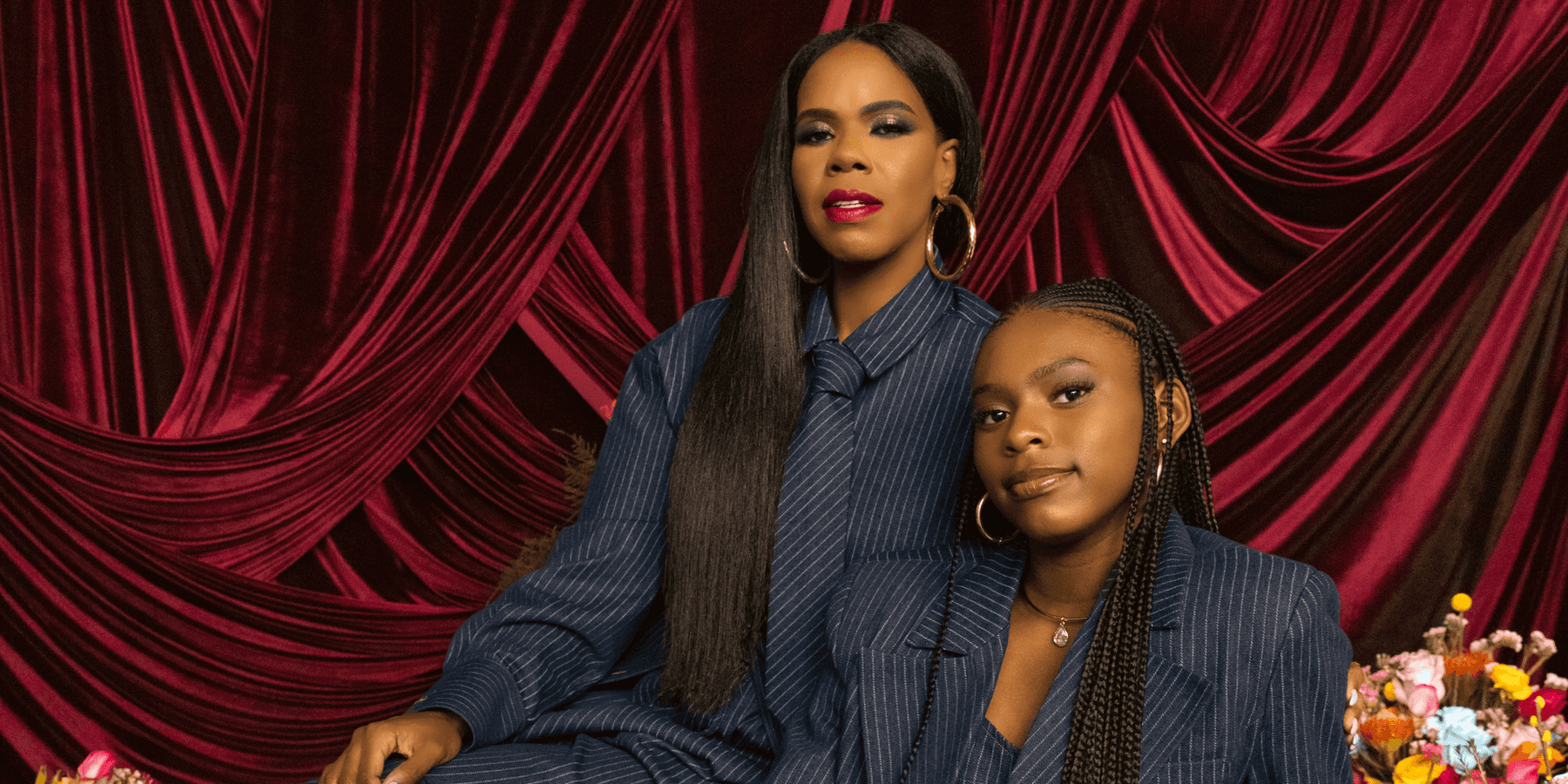
In xoNecole’s Generation to Generation, created in partnership with Target, Courtney reflects on her hair journey alongside her daughter during a BTS video from their mother-daughter photoshoot. As she is seen applying product to her daughter’s braids, she begins talking about her experience with perms before going natural. Her daughter pauses and asks a simple yet revealing question: “What’s a relaxer?”

Credit: Darnell Brown
Courtney explains that it’s a chemical process that makes Black hair “pretty much permanently straight.” She then recalls getting her first relaxer at 13, a moment that remains vivid in her memory decades later. “My head was on fire,” she says in the video. “It’s nothing I remember in a good way. It’s something I’m like, ‘This can’t be.’” Their exchange is as striking as it is revelatory.
Unlike generations before her, Courtney’s daughter will never have to know relaxers as the rite of passage that once felt inevitable for so many Black girls. Thanks to entrepreneurs like Courtney, natural hair is no longer treated as the exception but upheld as the standard. As something to be celebrated, nurtured, and protected.
Generation to generation, her work helps ensure that Black girls can grow up with hair journeys rooted in appreciation, care, and choice, instead of one etched in pain, trauma, or assimilation.
In that way, Courtney isn’t just changing how we care for our hair; she’s paying it forward, crafting a legacy her daughters and future generations of Black women after them get to inherit.
That legacy didn’t begin with hair. Courtney credits her own mother, a nurse like she once was, for being the blueprint for what entrepreneurship could look like. “I got a chance to see my mother take a sheet of paper, cut it up in little rectangles, take that to a printing shop, and turn it into a card game,” she tells her daughter in a different scene. Those early lessons planted the seeds for what would later become The Mane Choice, a hair care brand born from her desire to create safer, healthier alternatives for Black hair that didn't compromise on performance.
After starting The Mane Choice in 2013 with just $500, Courtney worked tirelessly to build a hair empire that would go on to surpass $100 million in sales in only six years. She later sold the brand in 2019 for an undisclosed amount, cementing her place among the Black women entrepreneurs who have turned purpose and vision into industry-defining impact.
“Everything that we do is a stepping stone,” Courtney says in the video. “So how do I take what I’ve done as a nurse and turn it into what I’m doing?”

Credit: Darnell Brown
Today, that full circle is the gift that gives, and Black history is still being written, not just by women like Courtney, but by the little Black girls watching, learning, and asking questions that open new doors. Watch & Sea Beauty marks a return for the entrepreneur that reflects purpose, growth, resilience, and trust built over time.
From generation to generation, the way we love and care for our hair tells a bigger story: one of healing, innovation, and what we now have the freedom to choose for ourselves. Courtney’s contributions to Black hair and beauty are truly unmatched, not simply because of what she’s built, but because of what she’s shifted our hair stories: the narrative, the standard, and the future.
Her work is the legacy that lives in what we make possible for the women who come next.
Featured image by Darnell Brown

Take her sex life, for example. Although some women have a pretty thriving sex life throughout their pregnancy and, after their six-month check-up, they resume having sex relatively smoothly then as well, for other women, their experience is quite different. And because sex, post-delivery, still (amazingly) remains a taboo topic on a lot of levels, other (new) moms suffer in silence because they feel like they are alone.
What Moms Wish They Knew About Sex After Childbirth
That, right there, is why I decided to sit down with some mothers to have them share what they wish someone had given them the heads up on when it comes to sex after having a child. If you are a mom who’s having some challenges in the bedroom, hopefully, this will assure you that others get exactly where you are coming from. If you’re not a mom (yet), my goal is that you can get an idea of some things that could possibly happen — so that you can surround yourself with the support that you need (i.e., a girlfriend, some other new moms, even a counselor, if necessary).
That way, you can do what needs to be done to get your sex life back (or right) to where you want it to be…in time.
*Middle names are used in this type of content so that people can speak freely*
1. Bevelynn. 28. Mom of a Six-Month-Old Daughter. First Child.
 Giphy
Giphy“The weirdest thing for me is there are certain positions that can always make me cum that were super uncomfortable throughout most of my pregnancy. So, it felt like I was having sex for my partner instead of with him. Then, after having the baby, my man was so used to hurrying through sex because that’s how I was while pregnant that he felt self-conscious that I was trying to ‘coach him’ through foreplay like he wasn’t a good lover.
"You know how they say that sex, after abstinence, is like riding a bicycle? The hell you say! There was a lot to relearn that it was almost like having sex for the first time again. Pretty much a year of sex being one way and then adjusting to something else will do that to you. We’re still figuring it out.”
2. Embree. 34. Mom to a 11-Month-Old Son. Third Child.
“I never had postpartum depression, thank God. I did go through a long sex lull. I love my babies, Lord knows that I do, but you don’t really get just how much sex creates them until you have them, if that makes sense. Being a mom is fulfilling and draining — any woman who says otherwise isn’t taking her role as seriously as she should. And when you sit and realize that kids can’t exist without sex, you have moments when you’ll avoid having it at all costs because you don’t want to risk what comes from it — another baby. And that’s just the truth.”
3. Gail. 37. Mom to a Four-Month-Old. Third Child.
 Giphy
Giphy“Please don’t give your husband a hard time about getting used to your new body and hormonal changes during sex. It might be popular to act like men shouldn’t have a say in giving birth or what comes with it, but science says otherwise, and while they’re supporting you through your changes, they might end up going months without intimacy — no man wants that. The more talks [that] you have about sexual needs and expectations before getting pregnant, the better. Remember that he is a part of all of this, too.”
4. Quincee. 32. Mom to a One-Year-Old Daughter. First Child.
“I was told that I should get a doula before having my daughter, and I should’ve listened because it makes no sense to push out a baby on your back. My friends who had doula assistance learned positions that were way more helpful. Since I didn’t and my daughter, although I love her dearly, has a really big head, I tore pretty badly. The healing process was borderline hell but, more than anything, I had some PTSD about allowing any — and I do mean anything — from going into my vagina.
"I don’t care if it was a penis, a sex toy, or even a tampon, I was traumatized. Get those perineal massages before giving birth, squat during labor, and get a man who loves oral sex, both ways, so that you both can get through the adjusting. That’s the best advice that I can give on it.”
5. Francis. 30. Mom to a Seven-Month-Old. Second Child.
 Giphy
Giphy“You might need to see a sex therapist after having children. It might sound crazy, but no one talks about how having a baby changes everything about you — every single thing. My husband has always been able to please me, and he’s not small in the least, but after having our first child, my vagina never felt the same. That kept me from feeling the same pleasure, which made me want to have sex less and even resent him for not being able to please me like he used to.
"We tried to figure it out on our own, but that started to affect his self-esteem, and then we weren’t having much sex. My girlfriends had some of the worst advice, so I spoke with a marriage counselor who referred me to a sex therapist who helped me to understand the transitions of motherhood, sexually. It’s one of the best things that happened to our relationship. My best advice is nothing is fully ever the same after a baby — sex, for me, was on top of that list.”
6. Erda. 25. Mom to a Three-Month-Old Son. First Child.
“Being a mom is hard as sh-t — do you hear me? I am terrified of getting pregnant. I don’t mean any time soon; I’m contemplating being done forever because my pregnancy was difficult, and my son thinks that we all should be up all day and all night long. People keep telling me that this will pass, but until it does, whenever I see my husband’s penis, it’s like ‘enemy #1’ in my eyes. We can do some oral action; I’ve always been about that. But if he wants to put that thing in me, I always want him to put on three condoms — I’m NOT playing.”
Shellie here: As a doula, I’ll be checking back on her in six more months or so. Something tells me that this will have a bit more balance in the narrative. Those first few months can be a mutha, indeed.
7. Laurelle. 39. Mom to a One-Year-Old. Fourth Child.
 Giphy
Giphy“Even after having four kids, I never got used to my breasts being available to everyone. Mine, then my husband and mine, and then, for a season, my kids — and then sometimes everyone’s. Our two first children were less than two years apart, so I swear that my husband didn’t get to touch my breasts for like three years straight…and he’s a breast man! I don’t think anyone can fully prepare you for how to be a mom and a sexual being at the same time. It’s one of the hardest things about motherhood to date.”
8. Iris. 30. Mom to a One-Year-Old. Second Child.
“Your erogenous zones might change. Mine did. I used to not be a breast person, but I started having orgasms while breastfeeding, which kind of creeped me out but then it made me want my breast played with more than ever during sex with my man. The other thing is my thighs got pulled on a lot during labor, and so, I’m kind of jumpy when my fiancé reaches out for them now — and he’s a thigh man. Having a child isn’t just a miracle because of the baby. Being able to figure out a new normal in the bedroom is a miracle, too, sis.”
Shellie here: If you can relate to what Iris just said about climaxing while breastfeeding, there is no reason to feel embarrassed or guilty. Breastfeeding tends to produce some of the same hormones that come from sexual stimulation — for instance, remember that oxytocin is a bonding chemical. It’s for this same reason that you might produce extra milk when you orgasm after having sex with your partner. It’s natural. It also tends not to last forever. It will usually pass.
9. Hope. 32. Mom to a Four-Month-Old. Second Child.
 Giphy
Giphy“The talk about the whole ‘Madonna-Whore’ thing that men may go through — you know, how once you become their wife or mother of their child, they have a hard time seeing you as a sexual being. Some of us go through that, too. I don’t have hang-ups about sex. I’m just not as nasty as I used to be. My body is used for so many different things now, and the fluids get all mixed in together — I dunno. Sometimes, when I’m about to show my porn side, I’m like, ‘Hold up — is this appropriate? I’m a mother now. It’s so complex, honey.”
10. Tateyana. 27. Mom to a Nine-Month-Old. First Child.
“I was told to get a co-sleeper and keep our baby out of our bed. I didn’t listen. I wish I had because now our bedroom is more like a nursery/daycare and it’s harder than ever to keep our son out of our bed — emotionally. My husband is patient; sometimes, he’s the one who wants our son to stay in the bed but we know that sex is an important part of marriage and we certainly didn’t sign up to be co-parents who are roommates. When they say that the bedroom is for sex and sleep only, the sleep part really shouldn’t be your children. They’ve got a room. They’ll be fine in there. We’re trying to wean him off now, so I’m preaching to the choir here. Sex after babies…it’s just so much.”
____
Sex after babies…it’s just so much. As you can see, sex, post-delivery can be layered, complex, and sometimes challenging. Still, if you have a partner who is understanding, if you’re patient with yourself throughout your transitions, and if you get that healthy intimacy has a mental, emotional, and spiritual component that can get you through all of the physical “growing pains” that you may be experiencing — sex after having a child can become richer, closer and even better with time.
After all, a new normal? Sometimes, it exceeds what you’ve been accustomed to.
And isn’t that something to look forward to when it comes to post-delivery intimacy? Definitely.
Let’s make things inbox official! Sign up for the xoNecole newsletter for love, wellness, career, and exclusive content delivered straight to your inbox.
Featured image by Goodboy Picture Company/Getty Images

What Is A Doula?
While thoughts of an ethereal, peace-baring godmother may come to mind when imagining a doula, these trained professionals provide continuous physical, emotional, and informational support to a mother before, during, and after childbirth.
“We tend to fill in that spaces that the [medical] system don’t support,” Sabia Wade, a Full Spectrum Doula, Author, and CEO of Birthing Advocacy Doula Trainings & For The Village Inc. tells xoNecole.
“A doula says, ‘Let's sit down and talk about your ideal birth plan, what to do if things go in a different direction like needing to have a C-section or other medical interventions, and how to advocate for yourself and the medical terms you’re going to hear throughout the process,” she explains
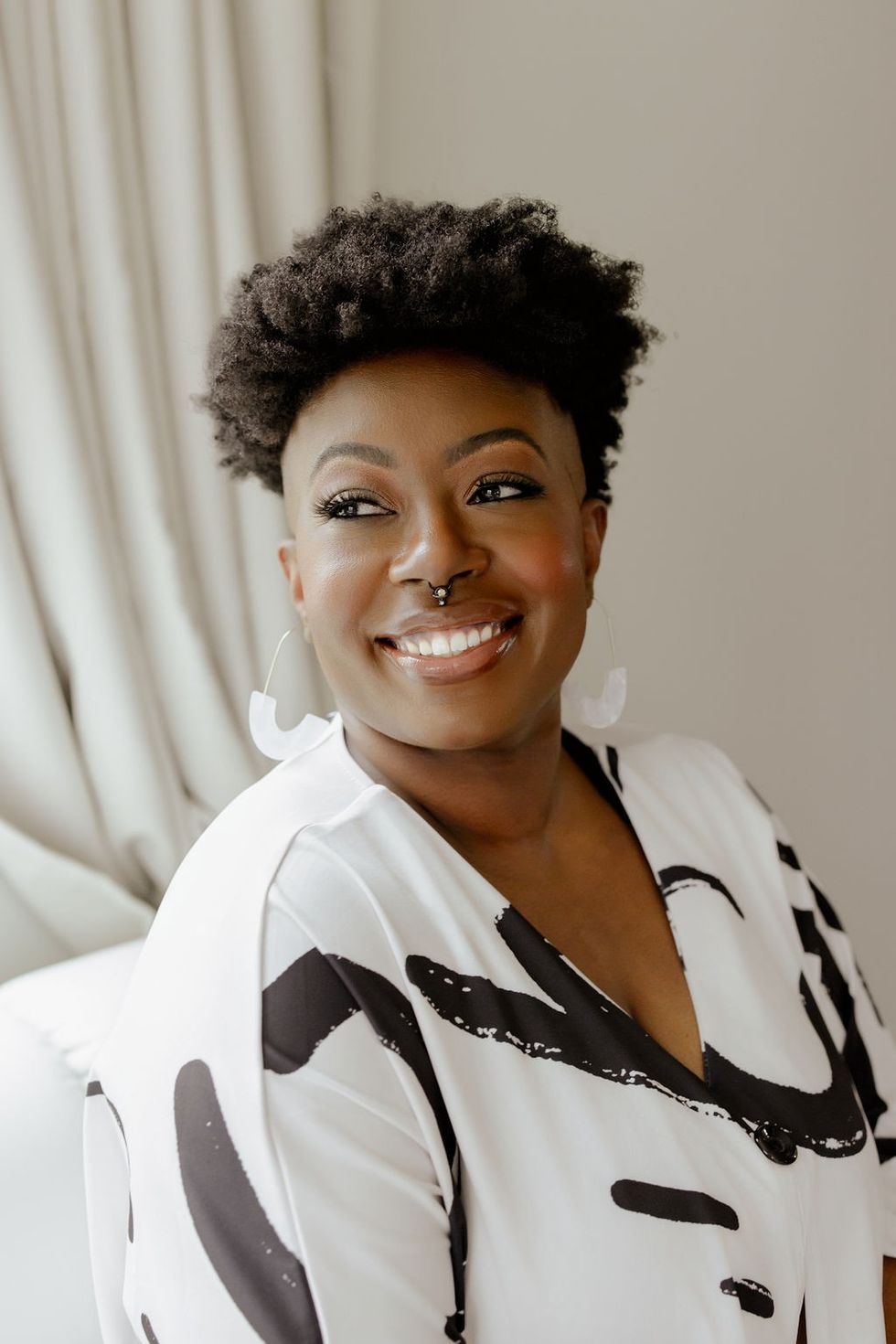 Sabia Wade, a Full Spectrum DoulaCourtesy of Sabia Wade
New parents often experience a mix of excitement and worry, particularly concerning generational trauma, and parenting approaches, or feel grief over lifestyle changes. Doulas are there to support expecting mothers by offering guidance and being a reliable, knowledgeable presence. “At the end of the day, I need to know how you're doing,” she says. “We want the parents to have their own voice, so we stand in the space of being the translator.”
The Birthing Experience With Doulas
Doulas often meet clients at home between the 30-37-week mark and assess how the client is feeling, whether they need rest, movement, or emotional support at that time.
“We're doing a lot of education before so that when we get into the birth space, you come in with a base knowledge that helps you be a little bit more grounded,” Wade says. “We work on normalizing the birth experience because most people don't see birth until it’s time to give birth.”
From setting the atmosphere with the right music, from jazz, ambient sounds, and even Trap, to lighting incense, palo santo, or lavender, this time is all about setting the right mood to ensure the mother’s comfort.
“Every doula has their own flair, but I come into the space and check on my client to see how they’re doing, what they’re feeling, and getting oriented to the space,” she explains. “Then I start making the room the way my client wants it to be.”
Doula and Medical Professionals
With the mortality rate for Black women being significantly higher than rates for White and Hispanic women, doulas coach mothers to navigate conversations with doctors and nurses to ensure they understand all options, make informed decisions, and advocate for themselves effectively.
“It's important for a doula not to talk directly to a doctor since we’re not the ones that are receiving care,” Wade says. “Instead, I’ll coach the mother or their partner and say, ‘Let's figure out if this C-section or vaginal exam is urgent or not,’ — let me tell you what they said and you tell what you heard. Then let me help you ask the questions to make sure that we're navigating this in a good way.”

Benefits of Having a Doula
Studies show that doula-assisted mothers were “two times less likely to experience a birth complication involving themselves or their baby, and significantly more likely to initiate breastfeeding.”
From fewer C-sections, shorter time in labor, fewer negative childbirth experiences, a decrease in postpartum mood disorders, and improved communication between pregnant people and their healthcare providers, the continuous care of doulas is proven to produce better birth and postpartum outcomes.
Finding The Right Doula For You
When determining how to obtain doula services, it's essential to first clarify your financial situation. Explore community resources or organizations that offer free doula care, and check your health insurance coverage, as some plans may include doula services, particularly through Medicaid in certain states.
From prenatal care to postpartum support, the relationship with a doula can span one to two years, underscoring the importance of feeling safe and comfortable with them. When finding the right fit in your doula, one might take into consideration the shared background, age, communication styles, educational approach, gender and sexuality competence, and overall care and demeanor.
Ultimately, trusting your intuition and honoring your journey into motherhood, without feeling the need to justify or rationalize your feelings or concerns, is key. “You were this person before becoming a mother, so we’re going to hold that person and then hold your motherhood too,” Wade says.
Let’s make things inbox official! Sign up for the xoNecole newsletter for love, wellness, career, and exclusive content delivered straight to your inbox.
Featured image courtesy of Sabia Wade