
Beauty & The Black Dollar: Why Our Collective Power Is Key To The Survival Of Black-Owned Businesses

For months we've been adjusting to a new way of working, living, and connecting as COVID-19 and its effects actualize themselves in our lives. And while I've personally forgone my hopes of a traditional #HotGirlSummer, some states have announced plans to re-open despite warnings from officials that the pandemic is "far from over." This, paired with weeks of global unrest in response to yet another wrongful murder of a Black person, has left the most vulnerable communities in a season of constant change.
Black and woman-owned small businesses are among them.
From Madam C.J. Walker to Honeypot's Beatrice Dixon, Black women entrepreneurs have played a vital role in our country's business landscape, spreading their magic across industries and color lines. And although these have proven to be trying times, a renewed focus on these contributions has resulted in a swell of support and heightened interest in seeing Black women-owned entities succeed.
Founders like Yelitsa Jean-Charles of Healthy Roots Dolls can attest to this after a now-viral Tweet translated into sales typically seen over the course of months, in just two days.
The Founder: The Product: pic.twitter.com/o5SNHB368q
— Yelitsa Jean-Charles (@TheYelitsa) June 6, 2020
People are looking for ways to support and reinvest in Black communities to honor their contributions and combat racial inequities that have been hindering their economic and social progression for generations.
I spoke with Black women beauty entrepreneurs who shared more about how they've faced these challenges head-on, and how this surge of support can impact the future of the beauty industry and Black businesses at-large.
-----------------
In late March, millions of Americans began awaiting their $1,200 cut from the CARES Act as a means to withstand rising unemployment and the residual economic onslaught. Similar programs were also put in place to protect small businesses, but not without their own set of hurdles.
The Paycheck Protection Program (PPP), one of the more popular aid programs, provides low-interest loans to small businesses. But with a lack of concrete guidelines and the exhaustion of initial funds after just 13 days, countless small and minority-owned businesses were left helpless while larger companies received million-dollar bailouts.
"If you target your aid toward a certain type of business, we will come out of this pandemic and we will only have that type of business,'' said Amaya Smith, co-founder of the Brown Beauty Co-op. Smith and fellow beauty entrepreneur Kimberly Smith (no relation) co-founded the Sephora-esque beauty hub in 2018. The boutique celebrates women of color by fostering an inclusive community through its featured products, events, and beauty services.
Even in normal circumstances, Black women disproportionately lack investment capital and other resources needed to maintain their businesses and are often sole proprietorships. Despite being the fastest-growing segment of entrepreneurs in the country, they receive less than 1% in venture funding, leaving many without the emergency cash reserves sufficient for said survival.
Early numbers also show a record plummet in the number of active business owners from February to April 2020 as a result of the pandemic.
Of those, Black and female-owned small businesses have been impacted the most, experiencing a 41% and 25% decrease in activity, respectively.
"So, how do we help and support businesses who already had challenges with funding and didn't have as much access before?" Amaya continued. "I actually hope that this period of time highlights the disparity in funding and capital between businesses."
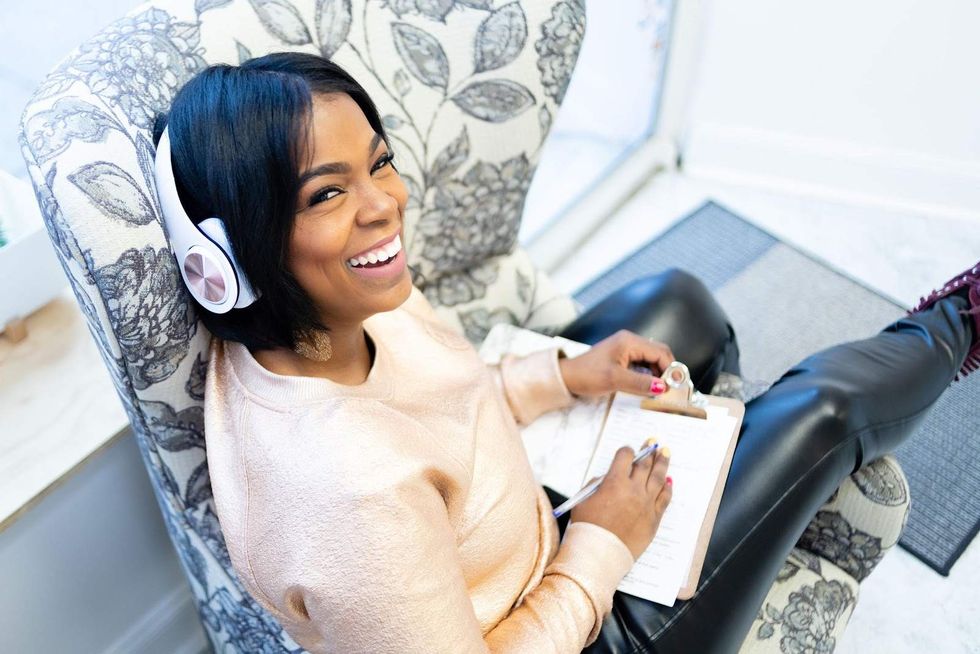
Image: Jhavon Kashif, Founder, Nailbed & Bar
For nail salon-owner Jhavon Kashif, the pandemic has presented the second largest threat to the Nailbed & Bar in its young two-year history.
"The first was the federal government shutdown [of 2019] and here we are with COVID-19, so we've been able to weather those storms but it has been a challenge," Jhavon shared.
-----------------
Beauty and the Black Dollar
We're seeing a global outcry against racism and the structural injustices experienced by Black Americans now more than ever. In addition to the impact of coronavirus, Black entrepreneurs find themselves managing their businesses in the crossfire of backlash many brands are receiving in their not-so-genuine support of Black Lives Matter.
Once taboo, corporate leaders across industries have also announced their support for anti-racist efforts and Black Lives.
Campaigns and calls for action like #PullUpOrShutUp, created by Uoma Beauty founder Sharon Chuter, are highlighting the beauty industry's lack of Black representation and pushing for organizational change to address it.
The Brown Beauty Co-op penned an open letter to Sephora in support of the campaign, expressing their disappointment in the brand's lack of accountability for minimal diversity among executives and mistreatment of customers of color.
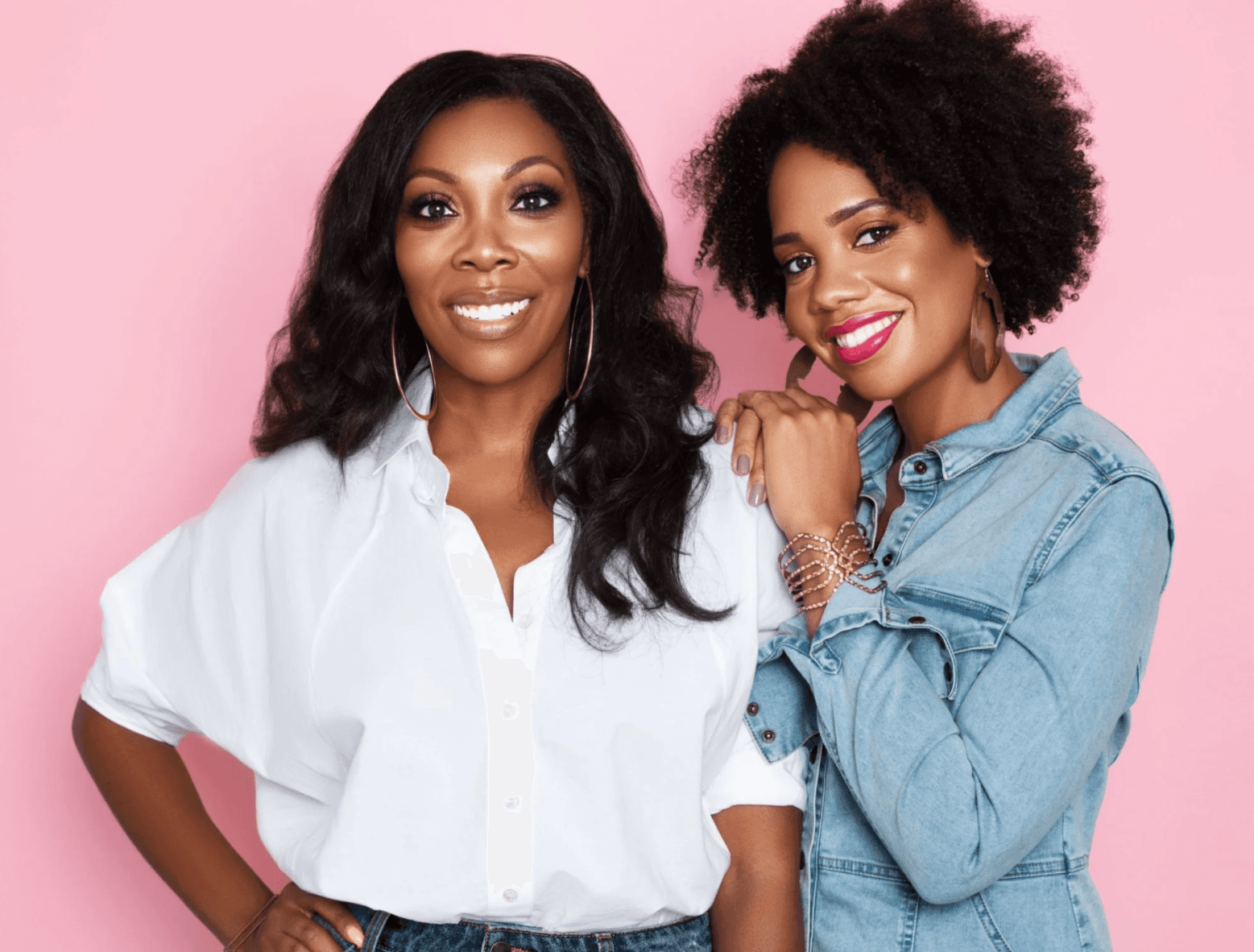
Image: Kimberly Smith and Amaya Smith, Co-founders, The Brown Beauty Co-op
Up until this pivotal point, many industries have neglected Black consumers, their spending power, and the importance of inclusive marketing and business practices, all while profiting from their influence.
According to a 2018 Nielson report, Black shoppers aren't only spending on products created to appeal to them, but spend considerably more money in the general beauty marketplace in comparison to their counterparts. "Our research shows that Black consumer choices have a 'cool factor' that has created a halo effect, influencing not just consumers of color but the mainstream as well," said Cheryl Grace, Senior Vice President of U.S. Strategic Community Alliances and Consumer Engagement at Nielsen on the report's findings.
The current state of affairs also reveals the economic and racial inequities that have accumulated and hindered the Black community over time. In fact, studies show us that the Black-white wealth gap remains as wide as it was in 1968.
Our dollar matters, and choosing to spend it at Black businesses is an act of economic activism, one that will have implications for generations to come.
The renewed attention of the protests has amplified the harsh duality of Black experiences to the masses, resulting in an outpour of support and celebration of Black art, beauty, history, and of course, Black business.
"My hope that the support of Black business will continue beyond the protest," said Jhavon on the recent wave of support.
-----------------
Black Women Keep it Pushing in Times of Trouble
The beauty industry relies heavily on personal interactions and physical experiences. Shoppers love to try and test before purchasing and entrepreneurs have had to get crafty about everything from marketing to providing its normal services.
"[During the shutdown] foot traffic was impacted, appointments and walk-ins, but it wasn't anything like this," said Jhavon of the pandemic. "Our doors are closed. We cannot accept anyone in our space to render any kind of service, so we really had to focus on marketing in a different way. One thing that we do that has been helpful is that we produce a lot of our products in-house."
In addition to adapting its luxury salon offerings into a Happy Healthy Nails at-Home kit, the salon expanded the promotion of other original nail care products to drive sales through its e-commerce platform.
As with most devastating events, opportunities remain for Black beauty entrepreneurs to be nimble and personally connect with communities in a way that other large retailers, like those called out in the #PullUpOrShutUp campaign, often cannot.
"Although this is a tough period, it's through these tough periods that a lot of businesses are able to come out better on the other side," said Amaya of the Brown Beauty Co-op. The boutique has kept their community of beauty enthusiasts and founders engaged with a series of virtual shopping parties, entrepreneurship social hours, and Shop Brown Saturdays in addition to its fundraising efforts.
"We're really taking advantage of social media [and] different types of virtual meetings so that we can keep our current customer base engaged but also so we can gain new customers through this," she continued. "I think being transparent is the most important."
-----------------
The harnessing of our collective power will play a key role in the survival of Black and women-owned small businesses. While we collectively work toward a more inclusive society, buying Black ensures our voices are heard and communities are supported.
Learn more about the Black beauty brands and Black businesses, you can support here.
Featured image courtesy of The Brown Beauty Co-op
This article is in partnership with Lexus.
Luxury is often defined by someone else’s standards. But what if the finer things in life looked different through the lens of those crafting and shaping Black culture?
In Redefining Excellence, a two-episode short-form video series presented by Will Packer Media in collaboration with Lexus, we dare to broaden how we think about luxury. Here, it’s not just about the price tag. Luxury is a practice.
At its core, Redefining Excellence is a celebration of intention woven into every detail of how we live: our joy, our spaces, our craft, but also our rituals of care. These are the Black creators who not only give the best to themselves in what they build, but also pay it forward to the communities around them.
Through their vision, they embody the same precision and artistry that Lexus embraces when in pursuit of a higher standard, the Standard of Amazing.
In Episode 1, “Ingredients of Success,” the series follows chef, restaurateur, and Lexus Culinary Master Kwame Onwuachi, whose artistry is imbued with rich cultural storytelling. We see him wander purposefully through a garden, gently testing the ripeness of fresh fruits and vegetables. “Luxury isn’t about exclusivity. It’s about being intentional with your choices and craft,” he says.
The article continues after the video.
“Now, because of my work and the ingredients I use, luxury means something different. I am boldly setting a new standard of amazing and innovation.”
As he chops vegetables, plates vibrant dishes, and loads the finished product into the sleek Lexus LC Convertible, he continues, “For me, luxury means ingredients that carry memory… dining experiences and locations that honor the stories that raised me and feel like us.”
In Episode 2, “The Texture of Luxury,” the lens turns to founder and CEO of CurlyCon LA Ava Pearl, whose ingredients take a different form. As the trunk of her Lexus LX 700h lifts, she says, “When I think of luxury, it isn’t expensive, it’s expansive.” The scene shifts, and we watch Ava lay down a bouquet of fresh flowers upon entering her home before using aloe vera leaves to prepare gel by hand.
The article continues after the video.
“When I was younger, I thought luxury was something you bought. Now I know it’s about living up to a higher standard… Black women have always defined what’s next, setting the standard for beauty, luxury, and excellence.”
Like Kwame, she builds with intention, pouring care into the details, believing, like Lexus, that “luxury isn’t just a finish, it’s a standard. One that’s built to amaze.”
Through these stories, Redefining Excellence serves as a reminder that the journey is not just about the destination, but also the ingredients you choose along the way.
Watch both episodes now and learn more about how Kwame and Ava set their own standard of amazing.
Featured image by xoNecole/Will Packer Media
As Cuffing Season Steadily Approaches, What The Heck Is 'Winter Coating'?
Y’all, I ain’t got not one lie to tell you. With the way that this summer has gone in my world (check out “I've Been Estranged From My Mom For Years. She Died Last Week.” and “I Was Hired To Be An Online Life Coach. Then Got Scammed For $4K. Here's How To Avoid This.”), I am not surprised in the least that it caught me off guard that, once again, we are officially in the drafting portion of yet another cuffing season.
What I will say threw me a bit is that there are actual dating trends in cuffing (did y’all know that?), and one of them happens to be something called “winter coating.”
What do I personally think about cuffing season? I think it’s more than a notion and you should proceed with caution. As far as the subset of it that is known as winter coating, though — well, as you’re about to see, if you’re going to try to take it on, you absolutely need to know what you are getting yourself into because if you lie to yourself, it may not exactly give you the results that you were looking for.
Read on to see what I mean by that…
What Is the Science Behind Cuffing Season?
GiphyOkay, so first let’s get into if cuffing season is a “real thing” or not. Well, from what I’ve read and researched, apparently, someone should send an artist by the name of Musa Murchison a Cash App because, although she isn’t the originator of the phrase, she does seem to be the one who made it popular by shouting it out back in 2008 on her campus radio show. And yes, beyond the term being something that comes up on social media, like clockwork, right around this time every year, there does seem to be some real science behind it all — even if you want to chalk what I’m about to say up to being nothing more than mere coincidence.
What do I mean specifically? Well, being that cuffing season is (generally) all about finding someone to boo/bae up with before the weather drops below freezing, only to potentially break up with said-person once the temperatures start to rise again — did you know that dating apps tend to pick up on traffic between October and December (although the most popular dating app day is Dating Sunday which is in January)?
Did you also know that dating, in general, tends to happen the most between November and February? And, if you do decide to take what I just said seriously, it also shouldn’t surprise you that most children (in the US) are conceived during the fall and winter seasons as well. So yeah, at the very least, it does seem like people want to get “closer than close” the colder it gets outdoors.
And exactly why is that? Chile, you can read an article that I wrote for the platform last year entitled, “Did You Know Fall & Winter Are The Best Times To Have Sex?” to put two and two together on that tip.
Cooler (and even rainier) weather. Pumpkins (which are a bona fide aphrodisiac; especially for men) being in abundance. Being indoors more often. The romance of the holiday season. Shifts in our DNA making us hornier (not to mention the fact that men find women more attractive during the colder months — no joke). All of these things literally help to create the perfect storm as far as cuffing season is concerned.
8 Interesting Straight-Up Facts About Cuffing Season
GiphyI’m pretty sure I’ve mentioned in one of these articles on here before that a web series I enjoyed watching last year is called Cuddle Season. You can currently watch it on — yep, you guessed it — Tubi; it’s all about some not-so-slim fellas adoring what the cooler weather brings them as far as female company is concerned. LOL. As I thought about it and all of the other intel that I just provided, I decided to further solidify the impact that cuffing season provides by bullet pointing a few other semi-fascinating facts.
1. 1 in 3 individuals find cuffing season to be a real phenomenon, although more millennials are caught up in the hype than those who are older than they are (by the way, 54 percent of Gen Zers find the holiday season to be the perfect time for finding a potential partner too).
2. Although around 30 percent of individuals think that cuffing season is mostly about staying warm, about 45 percent think it’s more about avoiding loneliness.
3. 60 percent of people who tend to feel lonely during the fall and winter will rely on dating apps to bring about some sort of mental and emotional relief.
4. Getting “cuffed up” has actually been proven to reduce anxiety and stress.
5. Not everyone thinks that cuffing season is (potentially) selfish or shallow. In fact, the most engagements transpire between November and January.
6. Know all of those holiday movies where single people fake being in a relationship during the holiday season in order to avoid any pressure from family members and friends? Apparently, it’s art imitating real life because one popular study revealed that a whopping 40 percent of singles have asked a friend to pretend to be their date during the holiday season.
7. Testosterone levels are higher in men during cooler months while being lower in hotter seasons. Women’s eggs are apparently in optimal condition during the fall and wintertime too.
8. Some researchers actually finding “cuffing” to be a means of literal survival due to the fact that (affectionate) touch lowers stress and, since stress is attached to health-related issues like digestive issues, a lower libido, irregular cycles, heart disease, headaches, depression and shortened longevity — well, yes, cuffing season could potentially be a lifesaver.
Okay, So What Is Winter Coating All About?
GiphyAight, so now that you know more about cuffing season than you possibly ever thought that you would, what in the world does the dating term “winter coating” come from? Well, the long-short of it is…what some of y’all call “spinning the block?” How I oftentimes see it is “hitting a cul-de-sac.” LOL. Yes chile, if you decide to participate in winter coating activities during cuffing season, what you’re essentially doing is making the intentional decision to either reach out to an ex or — respond to one who decides to call, text, DM or email you, seemingly out of the blue.
Now the interesting thing about winter coating is it’s not really something that dating experts are thrilled about. One reason is because if someone is in your past, you’ve got to remember that it got to that point for a purpose. Another issue is because, well, why did you/they wait until cuffing season to try and reach out/rekindle something?
Usually, the motive for that is because, oftentimes, the combination of nostalgia mixed with the feeling that love bombing is easier to do on an ex than anyone else. And while that indeed may be true, does that sound healthy and long-term beneficial to you? Yeah, me neither.
Yeah honestly, when you really stop to think about it, winter coating seems a lot like what we do with our actually winter gear — we cram it somewhere where we don’t have to deal with it until it gets cold outside and then we pull it out from a closet, hope chest or under our bed to use it all (and up) for a couple of months — until we don’t need it anymore…and then we discard it all over again. SMDH.
So, if you’re someone who is an avid fan or big-time participant of cuffing season, before you decide to bring winter coating into the mix, really ponder if it’s a good idea or wise decision — because doing something that keeps you warm for a few weeks only for it to turn you cold afterwards…that typically turns out to be more counterproductive than anything else.
5 Tips for Guarding Your Heart (and Perhaps Genitalia) During Cuffing Season
GiphyMatter of fact, while we’re on the topic of cuffing season overall, let me share a few tips to keep you as unscathed as possible, period:
1. To thine own self be true. It’s a French philosopher by the name of Jean de La Bruyère who once said, “It's motive alone which gives character to the actions of men.” You know, the reason why a lot of people trip their own selves up in life is because they aren’t being honest with themselves about WHY they do the things that they do. That said, if you’re going into cuffing season just to have someone to cuddle up and watch Hallmark movies with until spring — have at it.
However, if you’re using cuffing season in hopes of getting something more out of it, SAY THAT. The more honest you are with yourself about your intentions, the less disappointed, disillusioned or hurt you will be…regardless of how things may play out in the end. You were genuine. Karma has taken note.
2. Think about your short and long-term (relational) goals. Let’s be real — for most people, cuffing season is a short-term goal. So, if you want something that is fleeting, do you. On the other hand, if you’re looking for something more meaningful, playing all of the games that come with cuffing season is not going to be your best bet — especially when it comes to the whole winter coating thing.
Yeah, please keep that in mind as you and your ex are taking a walk down memory lane because, more times than not? It’s probably going to lead to (another) dead end. If not immediately…eventually. Bottom line with this one: cuffing season only thinks about the present. Make sure that you also factor in your future.
3. If he’s your ex, don’t sugarcoat why. I’m not the person who thinks that an ex can’t be upcycled — just make sure that you aren’t merely recycling him. The difference? Recycling is using something old (or used) all over again. Upcycling is taking something old (or used) and making it better. That said, sometimes time gives people the opportunity to grow and that can make the “take two” of a relationship better.
Just make sure that if you are entertaining getting back with an ex that you are real with yourself about why the relationship ended to begin with. If you see signs of that mess/drama/ridiculousness still hovering around — cuffing season or not, you should probably take a pass. Why let him infiltrate your holiday season with some bullshishery that you will carry with you for years to come? Girl, uh-uh.
4. DO NOT follow your heart. If you’ve read enough of my relational content, you know that I can’t stand the motto, “Follow your heart”. The fact that it’s not biblical should be reason enough — and it’s not because Jeremiah 17:9-10 says that the heart is deceitful and that’s because emotions can indeed cause you to think/believe that something is one way when it may indeed be something else. And so, as you go into cuffing season this year, follow facts and reality.
That is biblical too: “It’s best to stay in touch with both sides of an issue. A person who fears God deals responsibly with all of reality, not just a piece of it.” (Ecclesiastes 7:18 — Message) In other words, if how you feel is conflicting with what you see — pause, ponder and reflect.
5. Avoid peer (and social media) pressure as best you can. I don’t even know if people would give a damn (at least so much) about cuffing season if social media didn’t talk about it so much. And don’t even get me started on just like peer pressure can get kids and teens to go against their core values and/or participate in risky behavior, it can impact adults in a similar fashion.
Bottom line with this point: Don’t engage in cuffing season or winter coating just because you see other people doing it. If your mind, body and spirit are telling you that it’s not what’s best for you — TAP OUT. You’ll be just fine.
____
Winter coating. Hmph.
Your best bet: Buy one to wear and avoid this dating trend.
The former is an investment. Chances are the latter is a complete waste (of time).
Just sayin’.
Let’s make things inbox official! Sign up for the xoNecole newsletter for love, wellness, career, and exclusive content delivered straight to your inbox.
Featured image by PeopleImages/Shutterstock