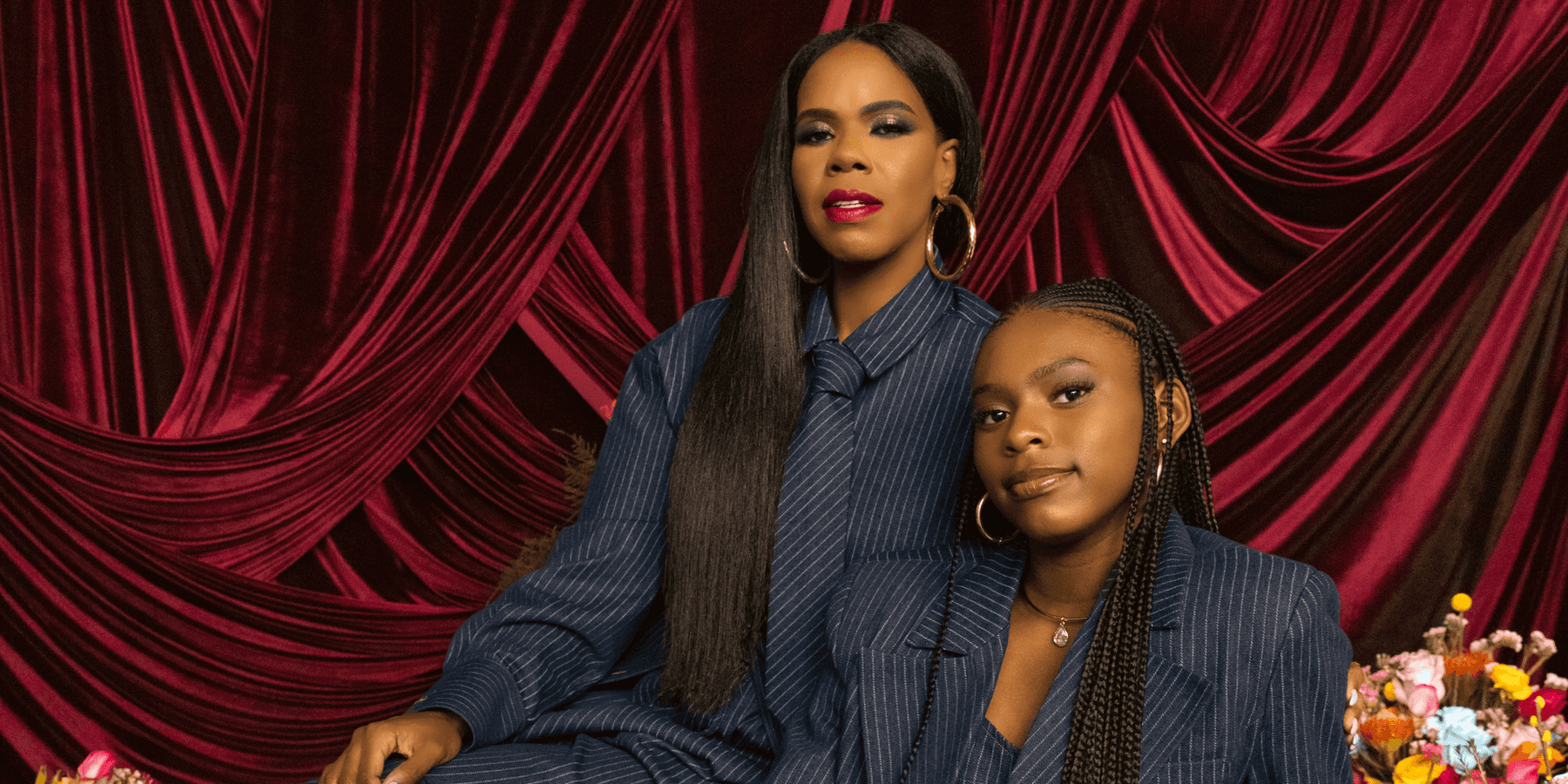


Nana Twumasi, a Ghanaian-American, Brooklyn, N.Y.-based writer and editor, has etched a niche in the wellness and self-help publishing space, an intriguing move to mesh her love of information with her creative acumen as a writer’s editor.
The Oberlin College and California College of the Arts graduate has written prose and nonfiction work that has been published in various literary journals, and she’s an early disruptor in the wellness and psychology publishing space, with roles at Callisto Media, which allowed her the opportunity to be instrumental in expanding knowledge bases.
Today, as vice president and publisher of the Balance imprint at Grand Central Publishing, she’s able to amplify diverse scholarly voices on vital topics like addressing grief and pain in Black men, down-to-earth financial freedom insights for Latinas, and the struggles of high-performing Black women executives to find life harmony while still seeking career excellence.
The keyword here is scholarly—books that back up insights with actual research and decades of experienced exploration from credible sources. In a time where the number of social media followers can offer carte blanche expert labels, this is important and it’s profound when a Black woman is at the helm of executing pitch approvals, campaign launches, and budgets.
We talked with Nana about what led her into wellness and self-help publishing, working with authoritative voices like Dr. Kameelah Phillips how women can break the mold and thrive as creatives with business acumen within it, and her own word as a
xoNecole: Talk a bit about your career journey. Were you always interested in being in publishing, particularly in the wellness and self-help space?
Nana Twumasi: I ended up getting a job at a children's book publisher in Minneapolis. And at that time, I was also really interested in photography, so that particular job was as a photo researcher. If you're familiar with children's books—especially nonfiction ones that incorporate historical photos and illustrations and things like that— it was my job, among a team of people, to either research and find that imagery or manage photo shoots and things like that. So I did that for a few years, and it was a really good learning experience, just about how books come together in general.
And then I decided I wanted to go to grad school and really try to pursue being a writer, you know. So I ended up in California getting my masters in writing. And then, you know, as happens, I graduated, and I was like, oh, boy, I need a job.
And at that time, one of my school colleagues, my grad school colleagues, had started working at Jossey Bass, which was an independent publisher based in San Francisco. They had just been purchased by John Wiley and Sons, which is a larger publisher that's now based in Hoboken, N.J.
I was hired as an editorial assistant, which is generally where people start in the industry. [One of my bosses] was a very storied editor in both New York and San Francisco. He had worked at Rolling Stone. He had worked with Tom Robbins, the novelist. He had a long career, and he was doing the more kind of like wellness, self-improvement, marriage relationships, some spirituality, that basically most of the categories that I work in now. I just kind of gravitated more towards those categories and the things that he was working on.
I love knowledge. I love learning. I think other people do too, and those are the resources that we're producing is educating people, helping people solve problems, and helping people discover new ways of thinking about something.
And so whether that's how to parent your teenager, or if you want to, you know, improve your protein intake, or if you want to, you know, manage your relationship better, the best information you're going to get is by someone who's an expert, who studied or practiced, or, you know, had some like, real-life experience doing a thing.
xoN: You’ve been five years in this role. What does a day in your life look like for you and how has it changed since your first day?
NT: There's a lot of behind the scenes work that goes into a book, and so most of my day is spent talking about talking about it. My role is kind of twofold, maybe, maybe three-fold even. So, I run an imprint which is essentially a small business. I manage a team of people. So, I have two editors that report to me, as well as an assistant who also is starting to manage her own editorial projects. And then I'm also an editor myself. I also work on my own projects—work with my own authors, etc.
So on any given day, depending on the day you would talk to me varies. I’ll meet with a potential author that I've been in communication with about acquiring a book of hers, and we're talking about what that might look like. What does she need to move forward? What do I need to move forward with the project—what the possibilities might be?
We also look at our cover designs for the books that are coming out in Fall 2026, so publishing is always working at least a year ahead.
I do some editorial work. ….It's a lot of meetings, a lot of talking, a lot of collaborating with people across the process. You know, we have regular, I meet regularly with our publicists, which are with our marketers, with the, you know, division leadership,
xoN: How does being an accomplished editor and writer yourself play into your role as an executive?
NT: There is a fair amount of creativity and creative thinking that goes into running this imprint, because it's not just looking at a set of numbers and trying to make it the most strategic decision. There are so many factors to consider and the way that we think about them.
We solve problems here, it always has to lend itself, because we're not just making widgets, you know, we're making a thing that is created by somebody, that will go on to be used by a person. So we can't just treat it like a thing that doesn't have feeling.
So I don't find that I'm having to, like, use one part of my brain or use another part of my brain to do one thing or the other. The whole business involves a fair amount of creativity.
xoN: With a great focus on diverse voices, what are some milestones, or maybe some projects that you have worked on recently?
NT: Sometimes, if you look at a niche, it's a few million people, you know. So that, to me, is like, ‘Well, that seems like an opportunity.’ We've done Permission To Come Home, which is a mental health resource for Asian Americans. The Invisible Ache, which is a mental health book that's focused on Black men and is co-written by actor, Courtney B Vance.
We've done a book called Playing a New Game, which is a research-based resource for Black women in the workplace. There are many titles from diverse voices on topics that are important.
I worked on The Empowered Hysterectomy by Kameelah Phillips, who is actually a real-world Boston alum and is now an OB-GYN based in New York. I was inspired to do that book because my best friend had a hysterectomy a few years ago. …I was motivated to find someone who could speak to that with some authority.
A lot of what we know about gynecology was gleaned from experimenting on Brown women’s bodies. I have a soft spot for that book. The author is Black, the publisher and editor and the agent are also Black women. That was very important to me.
xoN: As a publisher, what are the books that you read just for fun?
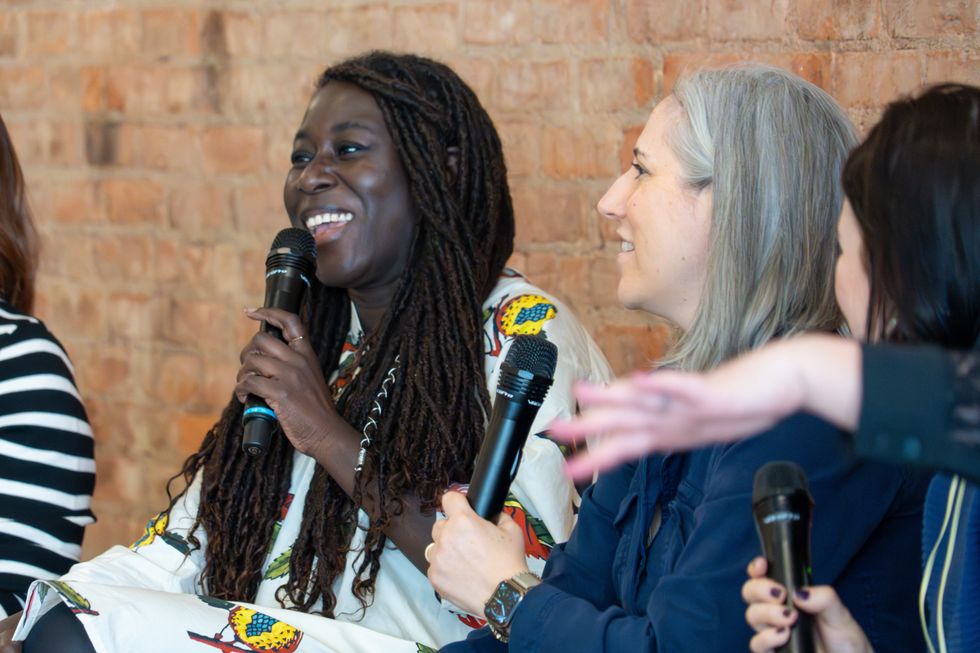
Courtesy
NT: I'm, you know, I'm a long-time book nerd, so that's challenging to choose one. I read all day, every day. Most of my personal time is spent reading literary fiction. That's what I love to read. I’ll occasionally read nonfiction if it's a topic that I'm interested in.
I'm currently reading Toni at Random, which is a biography of Toni Morrison specifically about her work as an editor at Random House. Yes, yes, yeah. So I'm, I'm calling that my, you know, beginning of the school year homework—as we're starting the fall and everyone's back to work after the summer. I'm finding that to be really wonderful and inspirational for myself as an editor in general, as it is, an editor of color, and as a publisher.
xoN: What’s the key to breaking into and sustaining a career in publishing on the business side, especially for Black women?
NT: Intrapreneurship and determination are definitely part of it. I think people come into this—and I certainly did—thinking, ‘I'm creative. I love to read. I love books. I love knowledge.’ All the things that I said at the beginning. ‘I love learning.’ And then you kind of get, kind of like, hit in the face by the fact that, like, ‘Oh, this is a business.’
There are profit margins and all kinds of things that we have to be confronted with. And so you do really have to be savvy about that stuff. You really have to think about like, if I buy this at this price and I sell it at this price, am I going to make a profit? And it feels uncomfortable to talk about creative work like that. It really does. But that's what's happening.
This interview was edited for brevity.
Let’s make things inbox official! Sign up for the xoNecole newsletter for love, wellness, career, and exclusive content delivered straight to your inbox.
Featured image by DP Jolly