I was completely broken, and every part of me hurt. I was no longer the lighthearted Camille that everyone loved and knew me to be. I remember a family friend saying, “You’re not the same.” And I wasn’t. I no longer recognized the girl looking back at me in the mirror. I needed major healing.
It was 2018 when I found the courage to seek mental health therapy. At that point, I knew there was nothing more that my friends could do for me. I was all cried out, and the silence was killing me. At the time, I was diagnosed with clinical anxiety, depression, and PTSD. How?
How did I let trauma take complete control of my life? But I had to forgive myself for all the things I did not know.
At the time, my therapist introduced me to journaling as a coping mechanism. Words ultimately became my best friend. In many ways, I would like to think that writing saved me. I am in love with words, and I always have been. My writing was and still is my safe space. It unlocked opportunities I never imagined – like writing for xoNecole.
And with this gift, I can now tell you a story about my own trauma, healing, self-discovery, and the journey to learning how to celebrate myself.
Starting a Healing Journey
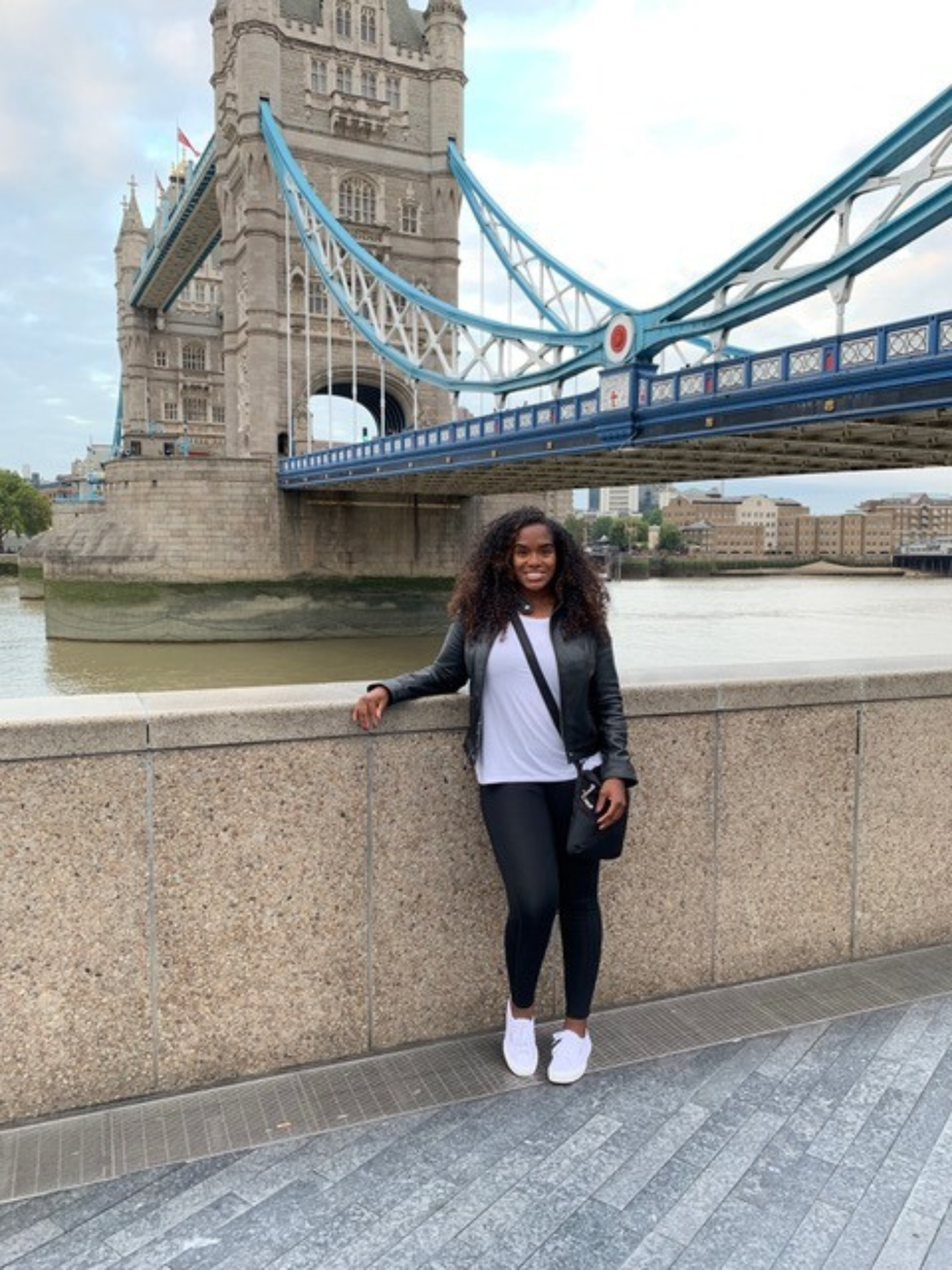
In early Spring 2019, I was told by a Reiki healer that I was going to embark on a journey. She told me it was going to be lonely, but I was never alone. The thing is I never once mentioned to this woman my travel plans. It was August 2019 when I planned my solo trip to Europe. It was going to be 38 days alone on a continent I knew absolutely nothing about. By the end of summer and a nine-hour flight later, I touched down in London.
I fell in love with every single thing. I fell in love with everything I could see – colors, cobblestone streets, spiral staircases, adorned windows, architecture, garden terraces, nature, and people. I fell in love with everything I could hear – accents, language, history, and music. I fell in love with everything I could taste – wines, foods, and desserts. I fell in love with everything I could feel – ocean breezes, white sands, and well-designed buildings. I fell in love with everything that fed my soul. People, stories, and connections. I fell in love with myself.
I traveled to England, Portugal, Spain, France, and Italy. And with every conversation and every connection I made – I found healing.
I always say women have the ability to heal others naturally. It was here in my travels that I started to pay attention to the concepts of purpose, connection, energy, alignment, and universal signs. I began to truly realize not only my strengths and universal gifts but also how to use them too. I started to step into my authentic self. I began to realize who Camille really was. A free spirit with a heart of gold.

Courtesy of Camille Ali
A New Season
By the time I had returned from Europe, it was late Fall 2019, and I was a completely different person.
I spent most of my time pouring into myself. Self-development and self-love became key. Everything that I previously settled for in family, friends, and relationships – I went and gave to myself. Read that again. I became completely in love with who I was becoming, and I still am. I had let go of tradition, conditional beliefs, people pleasing, and living my life to make my parents proud.
I had let go of being a “straight arrow,” and the idea of having it all figured out. I outgrew tradition and cultural norms. Sometimes, those things can be so blinding.
I began to shift. I adopted and altered the things that aligned with my purpose and values.
I became risk-tolerant instead of risk-averse.
I canceled my fears.
I welcomed uncertainty, knowing I would always land on my feet.
This newfound level of confidence came out of nowhere. It was no longer a question of if I can do this. The question became, how can I do this? I stayed open to possibilities and opportunities in whichever form they came to me. I became selective and intentional with my time and energy, too. I went from being a 9 to 5 government employee, then a corporate consultant, to a small business owner not once but twice by 2021.
If you ask me who I am now, I would say I am authentically a creative. I write from my heart, and I speak from my core. My voice is my power, and my words hold weight. By trade, I am a paralegal and a business consultant.
How Trauma Shows Up in the Body
Even though I was able to heal my heart, my mind, and my spirit, I wasn’t quite done healing. And I didn’t even know it. In the last seven years, I gained weight. This was a direct result of a broken heart, emotional trauma, mental health issues, stress, and poor lifestyle choices. I was a good 50 pounds overweight, too. I knew something was wrong with my body when it stopped responding to my dietary and lifestyle efforts.
I started to advocate for my health in the winter of 2022 to get clarity and answers. I sought the care of medical specialists, asked the right questions, requested second opinions, and tested and retested my blood. Not one doctor could properly diagnose me, either.
When Western medicine failed me, I chose holistic medicine. What I learned and what I understood was that my physical health issues were a straight-up trauma response. I cried. I was always conscious about my health, and now I’m sick with Hashimoto’s thyroiditis. Yes, PTSD triggers and is linked to autoimmune diseases.
I remember thinking, “I did this to myself, and I have to fix it.”
I spent the majority of 2023 detoxing with Chinese herbs, making every lifestyle change possible. My body was holding on to dead weight – it had to go for me to continue to become.
Courtesy of Camille Ali
Celebrating Myself
Summer 2023 couldn’t come any faster. I completed my holistic detox with sacrifice and ease. While everyone saw just a “body transformation,” for me, it was an emotional release.
I was no longer reminded of what transpired. I cried again.
There were so many days, months, and years that I thought I would never get me back. And I believed it. I mean, who wouldn’t? Medical experts adamantly told me that there was nothing wrong with me. All I wanted was to feel like myself again. I missed me so badly.
I looked for me everywhere. I couldn’t find her until I paused and did the inner work.
I wouldn’t change one thing about my healing journey. It all had to happen so I could be in this current moment. And this girl right here – I know exactly who she is. I know what she stands for through and through. And I’ll never stray from that.
I’ve grown so much, yet in some ways, I’m rediscovering who this girl is again. It’s so intoxicating.
Courtesy of Camille Ali
Returning to Europe
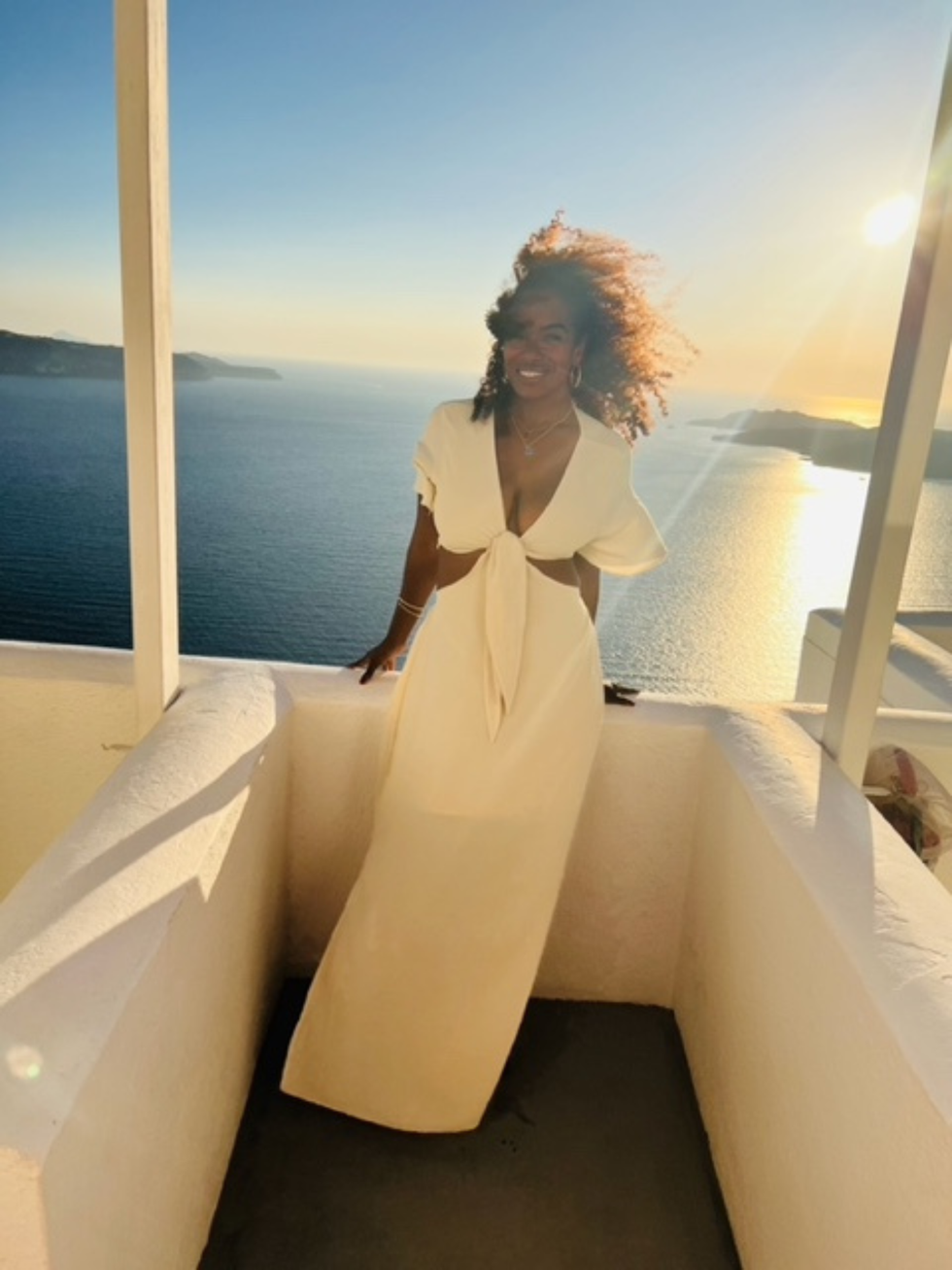
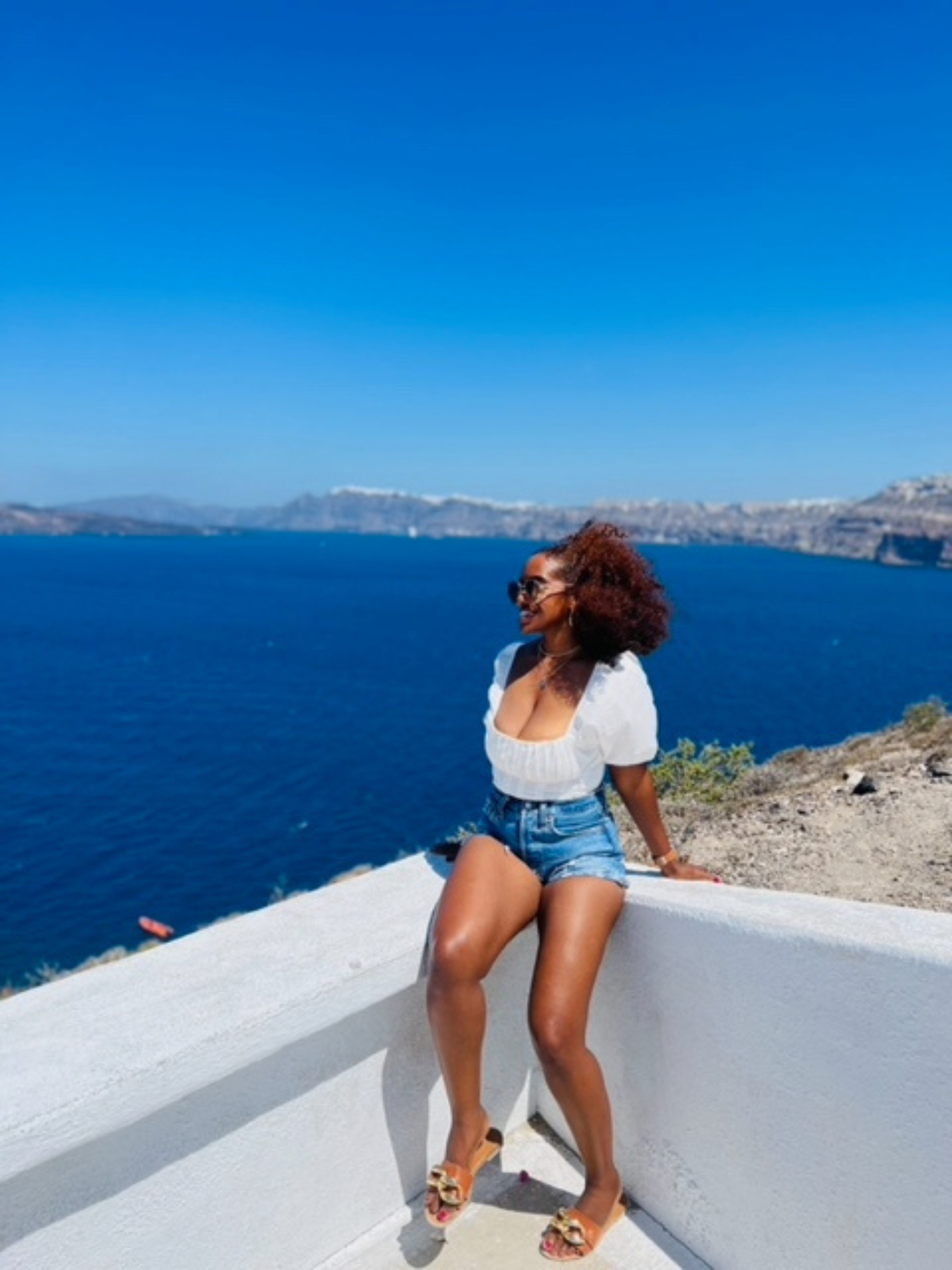
I have always wanted to go back to Europe. Europe is a magical place to be. It's the energy, the people, and the lifestyle for me. But the timing wasn’t right. It took the wedding of a close friend of mine to make my return happen. I returned to Europe in August 2023. This time to Greece.
At first, I didn’t realize the significance of the timing. But make no mistake, this was alignment, a full circle moment, and a testimony to myself. I started a healing journey in August 2019, and I returned as a completely different person this year.
Happy, whole, and healed. Resilient and confident.
I knew I was meant to share a pivotal moment in my friend’s life and celebrate myself. My word for 2023 was joy, and I wanted all of it. More importantly, I deserved it.
I fell in love with everything all over again. Everything that I can see, hear, smell, touch, and taste, that is. I created moments and memories. And I felt each moment and memory deeply in new places and with new faces. Greece owed me absolutely nothing. Europe will always and forever have a special place in my heart.
My five-year healing journey taught me to always choose myself. I am grateful because my entire journey brought me home to myself. And one thing about me is that when I am in the right environment — I thrive. Always.
The journey to self-discovery is worth the uncomfortable moments and ugly crying. It’s worth the undoing, redoing, and reprocessing to finally come to a place of happiness, peace, and being comfortable in your own skin.
Featured image by Shutterstock
Originally published on October 4, 2023