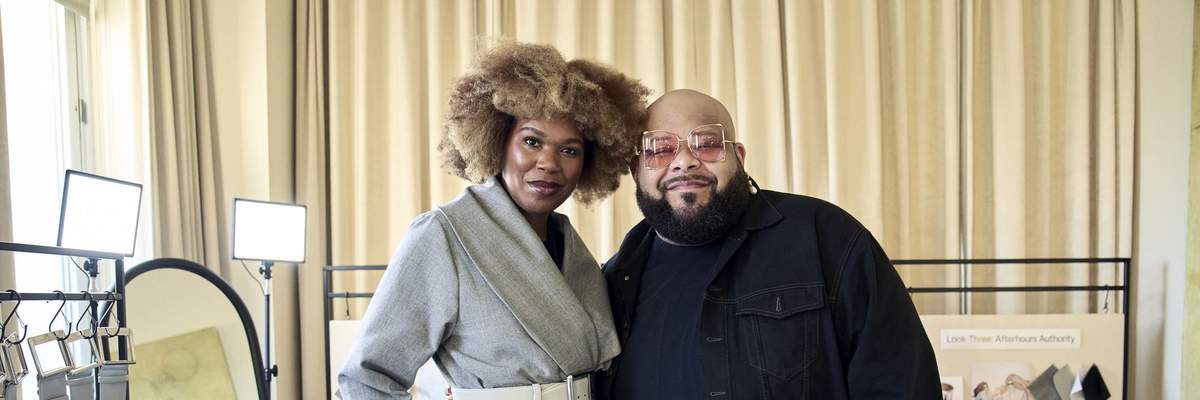

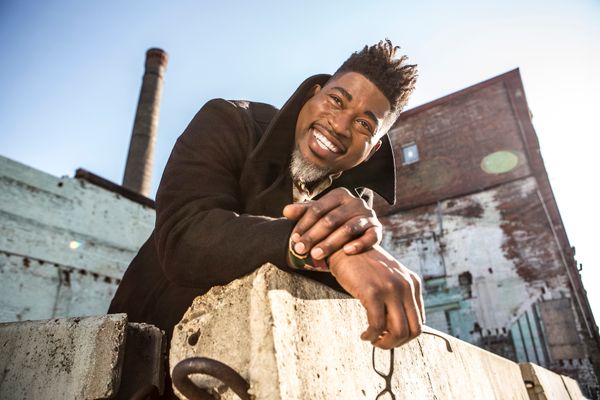
David Banner is not worried about being politically correct, and when he speaks, he does so with conviction.
He's something like a preacher who knows that you'll leave his sermon sanctified and filled with the Holy Ghost—except Banner isn't focused on saving souls, he's interested in saving your mind from the constraints that society has placed upon us as Black women, Black men, and the Black race as a whole.
The David Banner that I spoke with on a Friday afternoon isn't much different than the Banner that I was introduced to years ago when his first hit single “Like A Pimp" hit the airwaves, and later the more thought-provoking “Cadillac on 22s." He's still unapologetically blunt, still speaking his mind, and still delivering messages that reflect all aspects of life—from sex and relationships to spirituality and racial disparity.
But he's definitely an evolved man. After all, if you're not growing, you're dying—and Banner is letting us know through glimpses into the next chapter of his life that his mission isn't fulfilled until his last exhale.
His latest single, “Marry Me," has been greeted with open arms by those tired of the same old “f-ck love" narrative of broken relationships, promiscuity, and empty intimacy that a seemingly loveless generation has brought to the forefront. It dispels the myth that Black men and marriage are mutually exclusive, and shifts the conversation from one of hopelessness and despair to one of progression and possibilities.
“This song is for [all] Black women, but it's especially for the dark-skinned black women," says Banner. “If you look at our culture, our women don't feel protected. They don't feel wanted. You look at most of who so-called people of success cater to—nine times out of 10 it may not be a Black woman at all. And if it is, it's definitely not ones that look like our cousins or our great-grandmothers. And I said man, if nobody in the world says that they love them and that they respect them and that they want them, it'll be me."
While the song may be geared towards women, there's a lesson in it for everybody in that in order to change our families and our communities we have to change the stories that we're telling, and change how we treat and speak to one another.
To get more insight into how David Banner is using his platform to shift the culture, we sat down with the Mississippi artist to discuss the idea of marriage and relationships in the Black community, rebranding himself as not just another artist contributing to the problem, and how he plans to be a part of the solution.
I listened to your “Marry Me" track when it first dropped and I really loved it. I was just talking to somebody about how we don't really have that kind of music that celebrates love and relationships like back in the day when we had The Isley Brothers, and when men and women were actually celebrating love and marriage. So how did the track come about, what made you want to do a song about marriage?
There were a couple things. One of the things that happened was 9th Wonder was actually producing, and the reason why I made the song because he asked me a question. He said that most of the rappers that really pushed the culture forward--and who are making a whole lot of money--are over the age of 35. But have you ever noticed they never talk about men's subjects?
One of the reasons why I let my beard grow out is because I wanted young men to see a successful Black man grow one. I wanted them to see the wisdom. Another thing is that this song is for Black women, but it's especially for dark-skinned black women.
"If you look at our culture, our women don't feel protected. They don't feel wanted."
You look at most of who so-called people of success cater to—nine times out of 10 it may not be a Black woman at all. And if it is, it's definitely not ones that look like our great grandmothers. And I said man, if nobody in the world says that they love them and that they respect them and that they want them, it'll be me.
And lastly, and the most important thing about this song, one of my friends told me, “David Banner, I know you want to save the world, I know you want to help Black people and the revolution and all of that, but in order for you to do any of those things, you have to mend the relationships with our families—with our women." He told me until I build the family back together, none of this will work. He said in slavery, our families were ripped apart and we never healed them. We always blame it on Black on Black, but before we were ever so-called “set free," we never mended our relationships with our family and with our women.
[Related Post: David Banner's New Track "Marry Me" Is Giving Us All the Feels]
That's actually a good point. I see a lot of people who are hurt and responding from places of pain, and we're not really getting to the root of the problem. We're so busy pointing fingers at the opposite sex. It's not only about healing the family, but healing ourselves personally.
There's no way that a man can raise a female child by himself and expect for her to be mentally functional. Just because a woman can raise a man that is successful in the United States doesn't mean that you properly raised a man. This is my personal opinion. We cannot make a proper child--a proper relationship--without a union of God, woman, and man. And what's sad about it is, they have degraded the role of a woman so much. We need balance, and that doesn't mean that the man is more important than woman or the woman more important than man, but we need both roles to properly raise anything.
It is very important for me to say that I've done enough degrading of our women myself. So, in no way is this downgrading any other rappers or saying what any other black man should do, this is for me. I have some making up to do. I have forgotten myself. With “Play," even though I really enjoyed it and I don't think there is anything wrong with that [song] in its proper place, there is no balance.
For "Marry Me" to even be looked at as the type of song that it is shows the problem—the fact that it's so special. "Marry Me" shouldn't be special. There should be a million songs like that. And the fact that it is so special and that women are crying all over the world because of this record, shows that it's a problem, and shows that there is no balance.
And honestly love, that is the reason why I made "Marry Me." And it's so funny, all of these people sit back and criticize men and rap music and all of this different stuff, now you have it, now you have the "Marry Me" song, now you have the strong black man who don't take no shit singing the type of songs that you were talking about, but let's see if we're going to get that story. Let's see if you're going talk about that as bad as you talk about black men.
"As bad as you criticize black men, are you now going to hold the ones up who are doing what you say we don't do?"
Are we going to go as hard for "Marry Me" the song as we do when we criticize black men and women in general? People always talk about what black men are not doing, but when we do it, it's just like, we even had somebody to say is it even going to even matter? These are the types of things that we're going to have to analyze.
You've talked on a variety of topics in your songs over the years, including love and relationships, but everyone likes to touch back to your song "Play." Can you speak to the process of your rebranding and what initiated that?
First of all, and people laugh when I tell them this, “Play" was actually a very powerful song, I just didn't articulate what I meant by it well enough. If you listen to “Play" it was a song where the man was telling the woman I want you to be happy. I want you to get yours, this is about you. What do you want me to do? Do you want me to touch you? This is strictly for you.
When [Mr.] Collipark gave me the concept of it, he was like Banner don't scream because you're so aggressive. He told me to say the stuff that women really want to hear. I have a song on my new album that's called “Cleopatra Jones," and it talks about a very conscious, smart woman who still loves to get her freak on, and there's nothing wrong with that. I had so many women that said they love “Play" but they don't listen to it [out]loud; it's sort of like a guilty pleasure.
I think part of it is in the Black community anything very sexual gets a lot of backlash from people.
And these are the same folks that'll be going to the bathroom at their jobs getting it on.
Right, and I think, when I heard “Play," I wasn't offended. I was younger so maybe that was part of it, but I'm looking at the lyrics now and you really don't degrade a woman in terms of calling them out their name or anything; it's really just more of a sexual song. Maybe if it was in the context of marriage it would've came off different, but even then…
That's not what I wanted to say. That's not the reality of where we live and what we're doing right now. We have to research. One of the other things that happened to American society in the late 1800's, they became enthralled with romance novels and we got into romanticism, and romanticism is not real. You're not going to meet Fabio. He's not going to be on top of the mountain and you're not going to be on the mountain climbing and bump into Fabio. That shit is not realistic. As a matter of fact, it's one of the reasons why we have so many divorces and have so many problems in relationships, it's because we're not real. We try to be romantic, and that's not real life.
I'm not saying that your man shouldn't be kind to you, that's not saying that your woman should not do things for you, but most of the stuff that we want from people, you never got that in real life anyway. And if you did get it, you got from some motherfucker who barely had money, don't work everyday or he a gigolo or that's what he do for a living is to run women, most men or women don't have time for that shit. And it doesn't exist.
One of your tweets a few months ago was that "if you want a man that respects the way you think then show more mind than ass," and a lot of people kind of went off about that. I find that, especially in this day and age, it's just really hard to get certain messages across. Do you think that's part of what's prohibiting positive and loving relationships amongst Black men and women?
That situation that you are talking about was one of the most confusing things that has ever happened to me in my life. The thing is, when a woman tells me about how a woman looks at a black man, I listen whether I agree or not. I'm telling you how a man thinks, and you're going to tell me something? That's like me commenting on pregnancy. I'm never going to comment, for the most part, on what a woman should do with her private parts or pregnancy, because I don't know anything about that! So, when I made that comment, I made that comment to heal and to help. If you don't agree with it then keep it moving.
[Related Post: David Banner: "Show A Man Your Mind More Than Your Ass If You Want Him To Respect You"]
The thing is, if we don't have real conversations with each other we're never going to heal. What's funny about it is, I actually learned about that from a scientific standpoint. If a man sees flesh and ass, he can't see anyway because his dick's hard. And when his dick gets hard, the blood rushes from his feet and from his head. So we can't walk and we can't see. Even from a scientific standpoint, when we see ass and titties we can't see!
"If we don't have real conversations with each other we're never going to heal."
We want stuff to make us feel good. And what happened that was good—guess who came to my rescue? Black women. When I went and read those threads, one Black woman shut the whole Internet down. She said, “oh what, now we're defending guyism?" And couldn't nobody say shit, and I was like 'go girl!' And, it hurt my feelings a little bit because I was like damn, I said it is amazing when I called you bitches and hoes, and I called you niggers and bitches, my career went perfect, but when I told you that you're gods and goddesses, I got more criticism than I've ever got in my life.
It's definitely good to hear a man speak on that because a lot of times that message gets lost and misconstrued. I can't personally speak on what a man is thinking, so it's good to either confirm or understand where that mentality is at.
And that's one thing that I would like to say to women as it pertains to that comment that there was such a big uproar about. I see this on Twitter all the time, I'll say something and three seconds after I say it people are commenting on it. You haven't even taken a minute to digest the thought. Have you ever noticed that when stuff happens to Black people in the community, it usually takes me about a week, for the most part, to speak on it. And people get mad at me, why hasn't David Banner spoken on this? Well, I haven't gotten all the facts first. I haven't meditated on it. Even if I don't agree with it, I haven't even tried to assess why this person thinks that way. Even if it's wrong, sometimes we have to figure out, ok, well there has to be something that, unless they're trying to socialize you or lie to you, there's a reason why this person thinks this way. Let me assess that.
What I learned as a man, and I think this is one of the things that helped me with my relationship with women in general, it that a lot of times as men we want to just be right. What I found out is when we love a person, and they are hurting, even if they are wrong, we being right doesn't matter. My dad and my mom—before my dad died—they started getting along really well. My mom had like a two-year patch in their marriage where it was really bad, then all of a sudden they started getting along. I went to my dad and I was like “what's going on, are y'all alright?! What's wrong, there's peace in this house!" and my dad said, “Look, if the decisions that your mom makes, if it doesn't hurt our underlying finance or it doesn't put the family in danger, she's right." He said at the end of the day, it doesn't really matter. If it doesn't affect the family, it's emotion; it doesn't matter.
Are you married?
No, I'm not married. I just want to be the man that most Black women want to marry. I want to be a Black man that stands strong. I'm not perfect, but [I want to be the man] women want to marry and that kids want to be their father. I want to be that man. [When I die] I want people to say that that's a strong African man, I am proud that he's a part of my culture.
So is it that you don't want to be married or it just hasn't happened for you yet?
Well this is what I believe, people pray so much for an angel, but then we're demons. I'm glad I didn't get married before. I couldn't have been the man that I'm going to be to whomever my wife will be, wherever she is.
"People always point their fingers at everybody, but we attract exactly who we are."
And no matter how good a woman could've been on the outside, I wasn't right on the inside. I barely am now, but I am moving into a situation where I can be a great father and a great husband. I understood the concept of [marriage], I knew what I wanted, but I wasn't that.
Another reason is that I've always been so driven. I am now getting to a point where my businesses can sustain themselves on their own. People don't know this, but I own a multimedia company called A Banner Vision. A friend of mine was talking yesterday about how there's so many positive things going on with black people but nobody wants to do stories about them. You know, about Chris Brown owning 30 Burger Kings, about what Nipsey Hustle is doing with his business, about me running a multimedia company. I did Gaterade for the World Cup. I did music for Pepsi two years ago for the NFL, except the Superbowl. I've scored video games and movies—Marvel vs. Capcom. I run successful businesses, and there is no way that I could've been a great father or a great husband with all of these things. I had to be selfish. Something had to be sacrificed. But, as much as I want to have kids, I just didn't have the time to do that properly.
 You talk about silence a lot on your Instagram page. Can you speak to the importance of silence and how it helped you when you were building out the project for the God Box?
Silence has saved my whole entire life. It is in my belief that evil is just a bunch of noise and distractions, and silence is Godly. It's hard for us to even hear God because our spirit is bombarded with telephones and destructive information. We've got a million channels, the Internet, all this information, and if you look at any religion, if people wanted to get, for the most part, close to God, what are the three things they need? First of all they got somewhere silent. Then when they fasted, they got by themselves, they fasted, they prayed, and they shut the hell up. And they got still. And what's crazy is, one of my friends told me something. He said everybody always talk about Jesus, but you never do the stuff Jesus did. If you fasted for 40 days and 40 nights you would probably have clarity about your life, too. You might be able to walk on water!
What would you say to your 25-year-old self?
Nothing. Because if I said something to the 25-year-old self, I wouldn't be who I am now. People get pain and mistakes wrong. Pain and mistakes are what help you grow. When you do stuff right the first time, you don't know how you did it. It is the mistakes that make us better people.
I also think it is very important for us to love ourselves. And that's one of the reasons why, I can't say that I don't get down and the things that people say about me don't upset me at all, but I love me. And people say that's arrogant, but it's not; I like me. I'm cleaning me up on the inside. I love meditating. Most people hate meditating because they don't love themselves—they're not comfortable with their own self. So they're thinking about the wrong shit. Meditation allows me to face my fears, face who I am on the inside. God is just waiting on you. God is waiting on you in you.
- An Intimate Conversation With David Banner On The State Of Black ... ›
- 6 Signs Your Partner Doesn't Love Himself - xoNecole: Women's Interest, Love, Wellness, Beauty ›
- Signs A Man Doesn't Love Himself - xoNecole: Women's Interest, Love, Wellness, Beauty ›
- 10 Myths About Men Debunked By Men - xoNecole: Women's Interest, Love, Wellness, Beauty ›
- How The Preacher's Wife Should've Ended - xoNecole: Women's Interest, Love, Wellness, Beauty ›