






What You Should Know About Biden's VP Pick, Sen. Kamala Harris

We are in the home stretch and less than 90 days out from Election Day. Between 2020 giving us pandemics, racism, and a questionable economy, the girl has outdone herself with the surprises this year. Needless to say, the very fabric of our livelihood depends on the outcome of this election. No matter where your politics may lie, being an informed voter is paramount.
After the recent Democratic National Convention, Joe Biden selected Sen. Kamala Harris as his Vice President running mate on this year's ticket. With this historic nomination, Sen. Kamala Harris will be the first woman, the first Asian-American and the first Black Vice President of the United States if elected. It has been said that Harris' mother once said, "You may be the first to do many things. Make sure you are not the last." Whether or not you choose to vote Biden/Harris, this is truly a historical moment that will create a wave for change going forward into the future.
Here is what you should know about Sen. Kamala Harris:
- Kamala Devi Harris was born October 20, 1964, in Oakland, CA to Donald Harris and Shamayla Gopalan Harris. Sen. Harris' parents are both immigrants, her father from Jamaica, and her mother from India.
- Sen. Harris has one younger sister, Maya Lakshmi Harris. Maya is a powerhouse in her own right as an American lawyer, public policy advocate, and television commentator.
- Donald Harris was an economics professor and Shamayla Harris was a physician. Her parents met during their time at UC Berkely.
- After she graduated from high school, Harris attended Howard University. Which, if you did not know before, is one of the most prestigious historically Black colleges in Washington, DC. It was here that Harris graduated with a BA in political science and economics. She also joined Alpha Kappa Alpha sorority Inc. while attending Howard University. Following up on her undergrad career, Harris earned her law degree at the University of California, Hastings College of the Law, J.D., in 1989.
- To keep her children close to their Indian heritage, Shamayla gave them names that were a nod to their roots. Kamala means "lotus" and is also another name for the Hindu goddess Lakshmi.
- Sen. Harris has spoken about the fact that she was bused to her elementary school. In fact, in the first grade she was bused to Thousand Oaks Elementary School. This school was early on in the integration process and she spent the next three years being bussed from her predominantly black, lower-middle-class neighborhood to a white school district.
- As a child, Harris was able to embrace both her South Asian and Black identities. Her mother made sure her daughters attended both a Black Baptist church and a Hindu temple.
- Currently, Sen. Harris is married to her husband Douglas Emhoff who is an entertainment lawyer. They were married in 2014 making Harris a stepmom to Emhoff two children, Cole and Ella.
What you should know about Sen. Kamala Harris’ political career:
1990-1998:
During most of the 90s, Kamala Harris served as Deputy District Attorney for Alameda County, California. It was during this time that Harris earned her reputation for being "tough" in cases such as gang violence, drug trafficking, and sexual abuse. In 1998, Harris was named managing attorney of the Career Criminal Unit of San Francisco District Attorney's Office.
2004-2016:
From 2004 to 2011, Harris served as District Attorney of San Francisco. She became the first Black woman elected as San Francisco's District Attorney. During her time as District Attorney, Harris created a program to provide first-time drug offenders second chances. They also were able to have an opportunity to earn a high school degree and find a job. In 2010, Kamala became the first Black woman to be elected California Attorney General, overseeing the country's second-largest Justice Department, only behind the U.S. Department of Justice.
In this position, Harris managed a $735 million budget while overseeing more than 4,800 attorneys. Also while being California Attorney General, she fought for families and won a $20 billion settlement for California homeowners against big banks that were unfairly foreclosing on homes. During this time, Harris published her book, Smart on Crime: A Creer Prosecutor's Plan to Make Us Safer. Harris later went on to serve as Attorney General of California from 2011 to 2016.
2017-Present:
Sen. Kamala Harris was elected to the U.S. Senate as a Democrat in 2016 and began her first term representing California on January 3, 2017. She was the first Indian-American to serve as a U.S. senator as well as the second African-American woman. Since being elected to the U.S. Senate in 2016, Harris has introduced and co-sponsored legislation to help the middle class, increase the minimum wage to $15, reform cash bail, and defend the legal rights of refugees and immigrants. Harris is on the Senate Select Committee on Intelligence and also on the Senate Homeland Security and Governmental Affairs Committee.
In 2019, Sen. Harris released her a second book, a memoir, The Truths We Hold: An American Journey, as well as a picture book, Superheroes Are Everywhere. January of that same year, Sen. Harris announced her bid to run for President in the 2020 elections. This was followed up in December 2019 with the Senator dropping out of the race and putting her support behind Joe Biden. On August 11, 2020, Joe Biden selected Sen. Kamala Harris as his running mate for the 2020 Presidental elections.
Where does Sen. Kamala Harris stand on the issues?
Healthcare:
Harris has expressed mixed messages on the issue of healthcare. There have been many questions surrounding where Sen. Harris stands as far as "Medicare for All". What we are clear on is that Sen. Harris has spoken about underserved communities during the pandemic and she has also spoken to maternal mortality. In July 2019, Harris unveiled a different kind of healthcare platform, "KamalaCare", that would expand Medicare without ending private insurance. This platform was thought to be splitting the difference between Sanders and Biden.
Immigration:
During her presidential candidacy, Harris advocated for several things: using executive powers to reinstate and expand the Obama-era Deferred Action for Childhood Arrivals program. Also, creating a clear path to citizenship for Dreamers brought into the U.S. as children.
Consumer Protection:
While being California Attorney General, Harris' role in securing a $25 billion settlement for California homeowners from big mortgage firms confirmed hef stance as a consumer advocate. Harris' record included prosecution of predatory lenders, protections for those drowning in student debt, and being tough on online consumer privacy issues.
Policing/Criminal Justice:
Harris has called for reforms to address racism in the criminal justice system during her presidential candidacy. This platform included an end to private prisons and mandatory minimums, legalizing marijuana, and abolishing the death penalty and solitary confinement.
Education:
Harris introduced a plan that proposed canceling up to $20,000 in student loans for borrowers who started a business in a poor community and maintained it for three years. This was very different than most of her opponents who wanted to cancel student loan debt altogether.
Climate Change:
Over that last few years, Harris has taken a stance on addressing climate change and environmental justice. She endorsed the Green New Deal and in September, Harris released a climate plan that allocated a $10 trillion investment in a clean-energy transition over the next ten years. Harris and Rep. Ocasio-Cortez introduced a plan for legislation that would ensure that new environmental bills be evaluated based on how they impact frontline communities.
If you want to find out more about where Sen. Harris stands since accepting the nomination, tune in to the Vice Presidential debate on October 7.
Join our xoTribe, an exclusive community dedicated to YOU and your stories and all things xoNecole. Be a part of a growing community of women from all over the world who come together to uplift, inspire, and inform each other on all things related to the glow up.
Featured image by Nuno21 / Shutterstock.com
- What You Need To Know About The Candidates Before The ... ›
- Kamala Harris Vice President Elect, Makes History - xoNecole: Women's Interest, Love, Wellness, Beauty ›
- What to Know About Kamala Harris, Joe Biden's V.P. Choice - The ... ›
- Kamala Harris: Everything you need to know about the 2020 ... ›
- What you need to know about Kamala Harris ›
- What You Need to Know About Kamala Harris | 2020 Elections ... ›
- 55 Things You Need to Know About Kamala Harris - POLITICO ›
- What you need to know about Kamala Harris, Biden's potential VP ... ›
- What you need to know about Kamala Harris – POLITICO ›
This article is in partnership with Lexus.
Luxury is often defined by someone else’s standards. But what if the finer things in life looked different through the lens of those crafting and shaping Black culture?
In Redefining Excellence, a two-episode short-form video series presented by Will Packer Media in collaboration with Lexus, we dare to broaden how we think about luxury. Here, it’s not just about the price tag. Luxury is a practice.
At its core, Redefining Excellence is a celebration of intention woven into every detail of how we live: our joy, our spaces, our craft, but also our rituals of care. These are the Black creators who not only give the best to themselves in what they build, but also pay it forward to the communities around them.
Through their vision, they embody the same precision and artistry that Lexus embraces when in pursuit of a higher standard, the Standard of Amazing.
In Episode 1, “Ingredients of Success,” the series follows chef, restaurateur, and Lexus Culinary Master Kwame Onwuachi, whose artistry is imbued with rich cultural storytelling. We see him wander purposefully through a garden, gently testing the ripeness of fresh fruits and vegetables. “Luxury isn’t about exclusivity. It’s about being intentional with your choices and craft,” he says.
The article continues after the video.
“Now, because of my work and the ingredients I use, luxury means something different. I am boldly setting a new standard of amazing and innovation.”
As he chops vegetables, plates vibrant dishes, and loads the finished product into the sleek Lexus LC Convertible, he continues, “For me, luxury means ingredients that carry memory… dining experiences and locations that honor the stories that raised me and feel like us.”
In Episode 2, “The Texture of Luxury,” the lens turns to founder and CEO of CurlyCon LA Ava Pearl, whose ingredients take a different form. As the trunk of her Lexus LX 700h lifts, she says, “When I think of luxury, it isn’t expensive, it’s expansive.” The scene shifts, and we watch Ava lay down a bouquet of fresh flowers upon entering her home before using aloe vera leaves to prepare gel by hand.
The article continues after the video.
“When I was younger, I thought luxury was something you bought. Now I know it’s about living up to a higher standard… Black women have always defined what’s next, setting the standard for beauty, luxury, and excellence.”
Like Kwame, she builds with intention, pouring care into the details, believing, like Lexus, that “luxury isn’t just a finish, it’s a standard. One that’s built to amaze.”
Through these stories, Redefining Excellence serves as a reminder that the journey is not just about the destination, but also the ingredients you choose along the way.
Watch both episodes now and learn more about how Kwame and Ava set their own standard of amazing.
Featured image by xoNecole/Will Packer Media
I Tried Tracee Ellis Ross’ Pattern Body Collection & This Is What I’d Actually Restock
Tracee Ellis Ross is a masterclass in self-preservation. Even through her Girlfriends era, we saw it: spa days, workouts, time with her girls—care as a lifestyle. On Black-ish, we saw it again: a woman centering her family while still claiming space for herself. And more recently, with her Roku series Solo Traveling With Tracee Ellis Ross, she’s still modeling rest and exploration on her own terms for women all over the world.
In her everyday life, when she isn't spreading the gifts of her ethos on-screen, Tracee takes to her 11 million Instagram followers, giving us the 411 on all things dry brushing, gua sha, derma-rolling, facial rollers, massage tools, oils—and I never miss a workout video where she’s sharing her Tracy Anderson class recaps.
Pair that with the curl-defining legacy she’s built as the CEO and Founder of Pattern Beauty, and it’s clear: she’s always been intentional about care—and invites us to be, too.
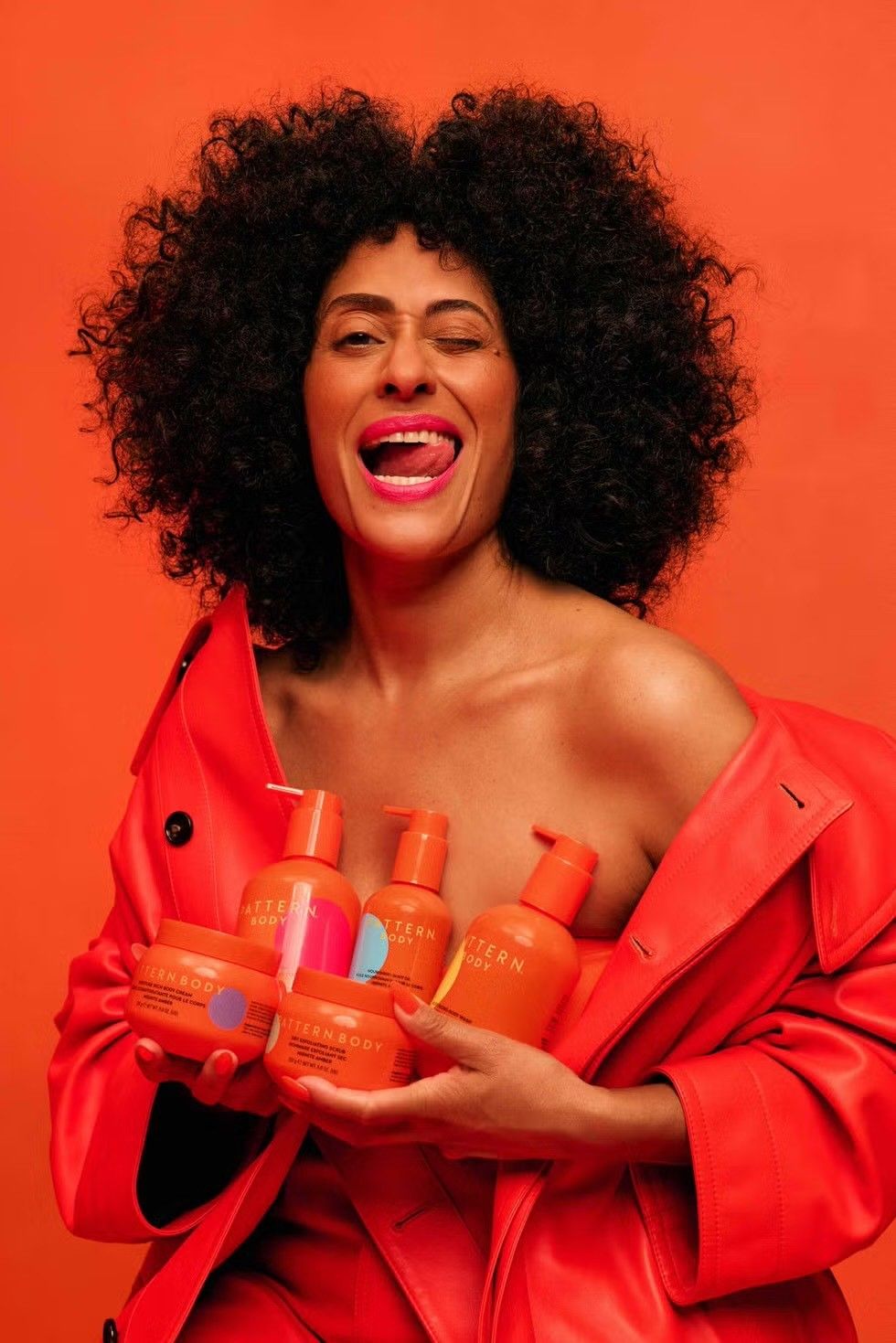
Her latest launch, Pattern Body, feels like a natural extension of that—a full line designed to make body care a ritual, not an afterthought. The collection includes the Moisture Rich Body Cream ($36), Nourishing Body Oil ($36), Hydrating Body Lotion ($32), Moisturizing Body Wash ($32), and Dry Exfoliating Scrub ($36), plus bundled sets.
Why I Wanted To Try Pattern Body
I’ve been using Pattern Beauty for years. Long before I could afford it I’d use my mom’s Ulta card to swipe and get what I needed, I’ve legitimately loved Pattern since day one. It’s what works best on my hair no matter the style, wash & go, slick back ponytail, braids, and blowouts. The Palo Santo ensemble is my new favorite after using their signature collection for years. That shampoo and conditioner, paired with the scalp serum and Pattern’s shower brush, whip my curls into shape like nothing I’ve ever used. I can go from a 'fro to defined coils in minutes with water, conditioner, and that brush.
Pattern is my daily go-to, so when Tracee expanded into body, I wanted to see if the same love affair I have with Pattern Beauty would carry over to Pattern Body.
The last body care launch that truly spoke to me was Taraji P. Henson’s Body by TPH, with its distinct daytime and nighttime routines—it pulled me into body care in a way I hadn’t felt in a while. Another product I’ve loved is OUI the People’s Clean Slate Lactic Acid Body Wash, a formula that exfoliates gently while leaving my skin soft.
Pattern Body feels similarly intentional but distinctly Tracee—rooted in the rituals we’ve seen her share for years. This launch feels like her way of ensuring that our bodies can finally get the same level of care she’s modeled all along.
Courtesy of Pattern Body
My Relationship With Body Care Rituals
Body care is where I’m not as consistent as I’d like to be when it comes to self-care. I dry brush daily, I’m particular about the body washes I use, and I’m intentional about organic feminine products. But when it comes to moisturizing, I’ll be honest: I usually just slap on whatever lotion is nearby or a body butter when I remember. What I want is to be more intentional—not just moisturize, but actually lean into rituals.
I want to use my bath salts more, soak with scrubs, and treat body care as something to luxuriate in, not rush through. Pattern Body felt like a call inward to take that next step.
Even the bold orange packaging felt joyful and unapologetic—a reminder that prioritizing yourself can be fun.
The Ingredients That Set Pattern Body Apart
Pattern Body isn’t just about the ritual—it’s about what’s inside the bottles. When I connected with someone from Pattern’s team, I asked how they envisioned the body line fitting into Tracee’s larger ritual. For them, it wasn’t just about moisture; it was about creating a layering experience that mirrors the way Tracee cares for herself daily—step by step, from exfoliation to oil to cream.
The line is built with nourishing ingredients that make sense for long-term care, like:
- Dead Sea Salt — natural exfoliation and mineral-rich polish
- Aloe Vera — hydration and soothing
- Baobab and Sunflower Oils — deep moisture and skin barrier support
- Cedarwood, Musk, and Midnight Amber — warm, grounding fragrance notes
- Shea Butter & Hyaluronic Acid — for softness, bounce, and lasting hydration
And according to a third-party study shared by Pattern, 100% of users experienced an immediate boost in hydration, luminosity, and the silkiness of their skin texture. As someone who always asks questions before folding new products into my routine, seeing both the story and the science behind the line mattered to me.
Courtesy of Pattern Body
My Honest Thoughts After Testing Pattern Body
How I Used Pattern Body
I followed Tracee’s recommended Pattern Body ritual:
- Prepare Dry Exfoliating Body Scrub (pre-shower to buff away dullness, unclog pores, and smooth skin)
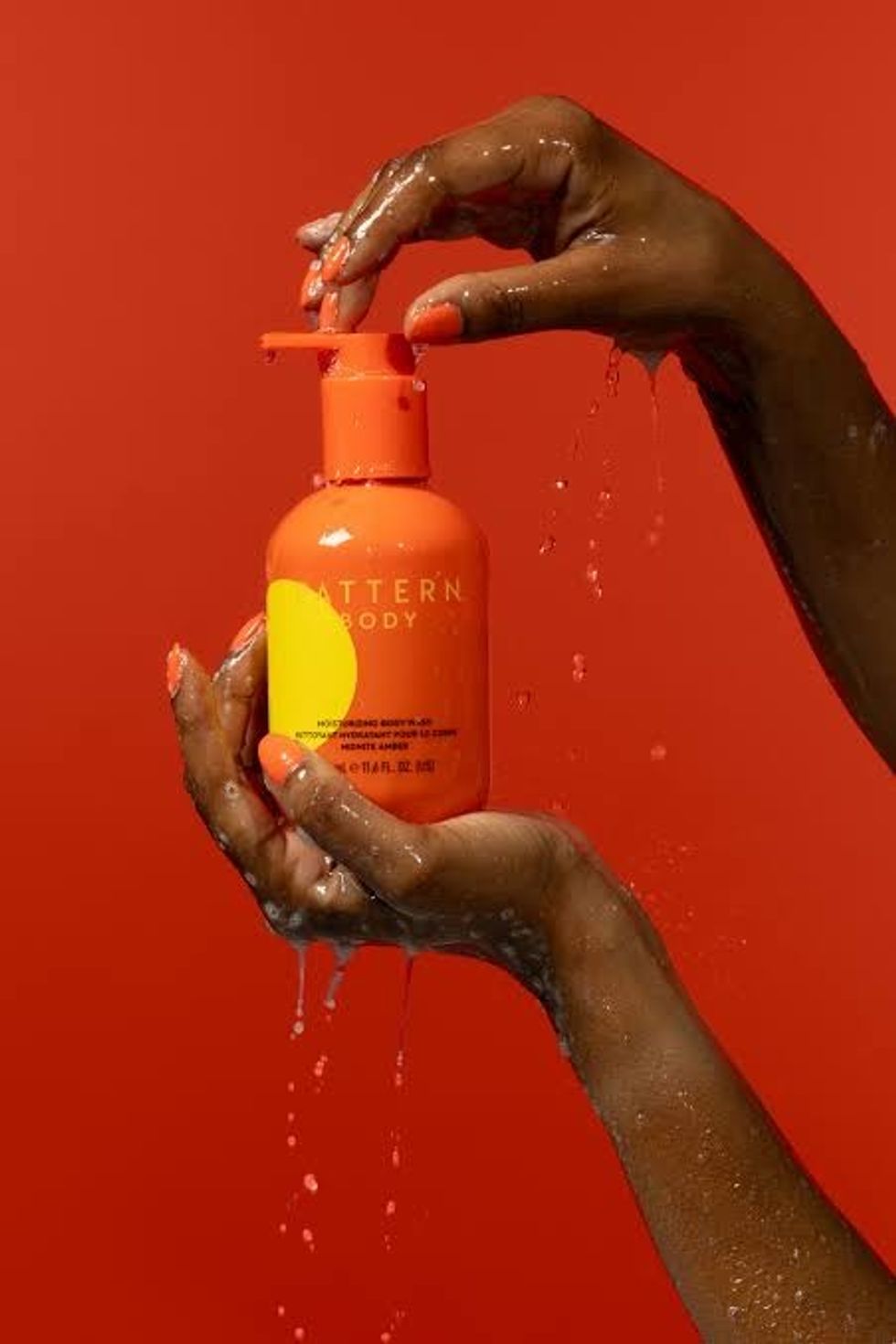
- Cleanse Moisturizing Body Wash (a gentle lather that cleans without stripping, leaving skin refreshed)
- Protect Nourishing Body Oil (applied on damp skin to lock in moisture and add a silky finish)
- Hydrate Hydrating Body Lotion (lightweight hydration layered on top of oil for all-over softness)
- Nourish Moisture Rich Body Cream (thick, buttery cream for elbows, knees, and areas needing extra TLC)
The Products I’d Actually Repurchase
I tried the full line, but these are the three I’d keep stocked and repurchase:
- Dry Exfoliating Scrub — I’ve been looking for an exfoliant that’s effective without being harsh; I could see the scrub being a regular for me.
- Nourishing Body Oil — I love how it sealed the moisture in post-shower. It’s lightweight, smells heavenly, and I’ll keep this one in the rotation for sure.
- Moisture Rich Body Cream — I prefer a thicker moisturizer over lotion; this one delivers deep, buttery hydration that actually sinks in.
Pattern Body is consistent with Tracee’s legacy of care: bold, joyful, intentional. And while I won’t reach for every product daily, the ones I do remind me that tending to my body isn’t optional—it’s essential.
Because if Tracee Ellis Ross looks this good at 50 and says something is good for your body? I’m taking notes.
Let’s make things inbox official! Sign up for the xoNecole newsletter for love, wellness, career, and exclusive content delivered straight to your inbox.
Featured image courtesy of Pattern Body


