

There is a quote by Santosh Kalwar that states, "Love has no culture, boundaries, race, and religion. It is pure and beautiful like early-morning sunrise falling in lake." While this might be true, the year 2020 has made us more aware of the different experiences we face in this country based on the color of our skin. With this year's cultural climate shift, I was curious to learn more about the experience of being in an interracial relationship during this time. While I believe every relationship is different and has its own nuances, what does it look like when race has played a part in the relationship, if at any point at all? I was able to speak to two couples who offered some perspective on how they navigate everything together.
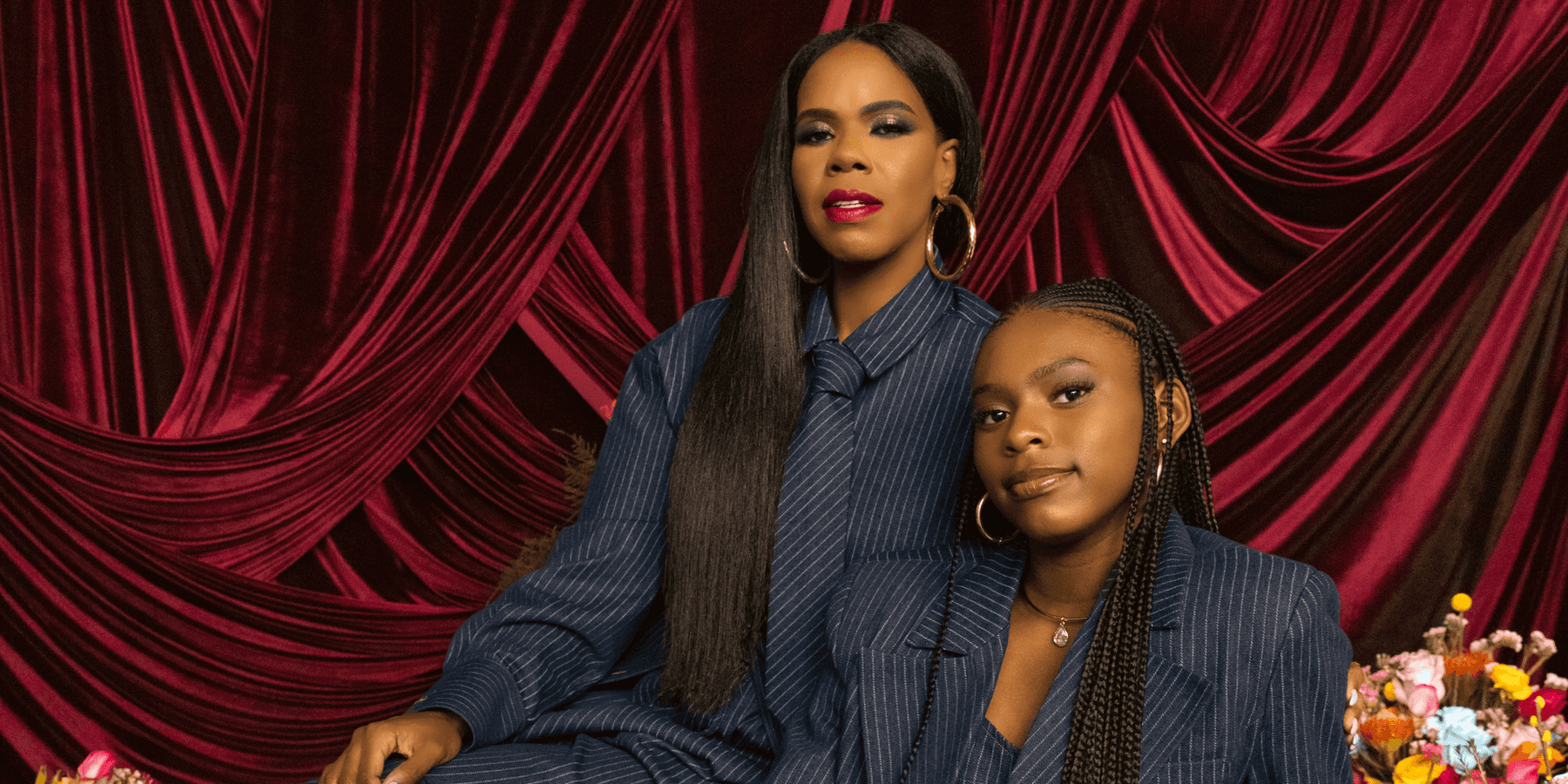
Courtney & Jackson

Courtesy of Courtney & Jackson
Courtney: We had been friends for 10 years and have been a couple for five. We basically met through mutual friends. Before I met Jackson, I've mostly dated within my race or been with men of color. With Jackson, for the more serious relationships, he has dated women of color before he met me. As far as race being an important part in our relationship, it is not something we center our relationship around. We talk about race a lot, and learning about Jackson's childhood was different than what I had expected. Hearing that he grew up in the inner city and he was around people that looked like me kind of checked me a little to not be as narrow-minded.
Jackson: I do feel that I have a different perspective than the average person from the South. I spent a lot of time in neighborhoods where I was the only white person. So I was exposed early on to the mistreatment that happens in communities and by law enforcement. Even in those moments, I knew I was treated differently than the people I was hanging out with.
Have you ever felt that you are treated differently by family and friends because you are in an interracial relationship?
Jackson: My parents were gracious when they didn't understand why I would bring black women home. So they have been working on things before they met Courtney. But with the recent Black Lives Matter movement, there have been great conversations.
Courtney: With Jack's parents, they grew up traditionally Republican. They also have a son (Jack) who dates black women and is a criminal defense attorney, so they get tidbits on how unfair the justice system is. With George Floyd, they were made aware of so many things at once. They have had some really in-depth and hard conversations with us as a couple, saying, "'We weren't fully where we are now and we want to talk about. We are a little upset we weren't there before, but we are here now and we want to ask and learn more.'" I think that's been one of the beauties of us being together in these times.
What is a misconception that you often face as an interracial couple?
Jackson: One misconception is that people don't understand that you are still handling things as a unit. People think that because we are in an interracial relationship, we [either] have things figured out, or the opposite, [with] people thinking that everything is screwed up in the relationship because of the crazy times. Neither one is true.
Courtney: For me being a black woman, I get put in this stereotype of white-washing my culture and intentionally trying to be with a white person instead of me being with the person I love. It's a little bit harder because if you speak to him and talk to him, you can understand why I'm with him. But on the surface it might not look that way, especially during the pandemic.

"As far as race being an important part in our relationship, it is not something we center our relationship around. We talk about race a lot, and learning about Jackson's childhood was different than what I had expected. Hearing that he grew up in the inner city and he was around people that looked like me kind of checked me a little to not be as narrow-minded."
Are there any things you had to unlearn about race in order to gain an understanding of each other?
Jackson: One thing that I will say in general—something that she repeats—'All skin folk aren't kinfolk.' Everybody that you expect to be on your side, whether they are related to you or because they look like you, is not always going to be on your side.
Courtney: That is something I am actively practicing, too, not just for people who look like me, but for people I have known my whole life. I am just trying to learn more about people because not everyone wants to learn more, and even though they look like you, you can't make them do anything they don't want to.
Ashley & Chea

Chea: We met for the first time at the Jay-Z and R. Kelly 'Best of Both Worlds' concert. I had recently gotten out of a relationship, and she was in a relationship at the time. She actually grew up with one of our mutual friends, Jero, who I ended up working with, and we would intentionally continue to cross paths and got introduced to each other.
Ashley: We were friends for four years before we started any commitment. We had a really deep friendship, so we both trusted each other. To be candid, at the time, we were just having fun. I wasn't thinking about being with him forever. So I didn't take his race into consideration. When I became pregnant, that is when race started to become a topic to discuss more.
Chea dated any woman he was attracted to regardless of race before we got together, where I specifically dated black men. I grew up in a pro-black community. So for me, when I visualized my life, I thought I was going to have dark brown babies like myself, marry a dark-skinned man, listen to Talib Kweli, and burn incense. It was intentional, but it wasn't exclusionary.
How do you educate one another (and yourselves) on your racial or cultural differences?
Chea: When we started our relationship, we really educated each other around the black culture and practicing [Islam]. She learned about my father's side and Buddhism. If we knew there was something that was important to us, we would share that with each other. I think what I have been mainly focusing on the last five years years is bridging the gap between what I've learned versus what I know from how I grew up.
I grew up in a majority-white neighborhood. So, 2020 has been an eye-opener where I'm not doing something correctly or no matter what I say, it's not making a substantial change. Whereas with Ashley, she's not at the point to sit down and educate people on how it is to be a black woman in America. She has been doing this her whole life, so she stands for educating yourself.
Have you ever felt you were being treated differently by family and friends because you were in an interracial relationship?
Chea: My mother is Caucasian and my father is Cambodian. It's layered, but on the surface, my mother's side was more accepting. We would go to family gatherings and there wouldn't be any issues really. On my father's side, the Asian side, the biggest pushback came from my stepmother. Both of my parents remarried, but with my father's side, there was confusion on how our relationship was coming together. You know, when people don't have an actual issue with something until it actually affects them? I think that's something you can apply to a lot of different things. Everything is great until it impacts you. Now five years into our marriage and 10 years into our relationship, I feel we are at a place where things are copacetic, but there are still those things that need to be worked through.

"I grew up in a pro-black community. So for me, when I visualized my life, I thought I was going to have dark brown babies like myself, marry a dark-skinned man, listen to Talib Kweli, and burn incense. It was intentional, but it wasn't exclusionary."
Were there things you had to teach your partner about being black in America that they may not have understood before?
Ashley: That's the thing about being in an interracial relationship. Chea doesn't experience the world the way I do. Even when I am getting profiled in a store, he is still existing in his own bubble. I sometimes would have to point it out to him and make him walk into a store and see who speaks to him. Now, watch when I walk in. I think these are things that white people miss everyday. When you are not existing in these spaces, you have the ability to look at things from an objective point of view, whereas we don't.
Chea: It's a very true experience and it's dependent on where we are, whether it's online or in-person.
"When you are not existing in these spaces, you have the ability to look at things from an objective point of view, whereas we don't."
Are there any things you had to unlearn about race in order to gain an understanding of each other?
Ashley: The growth for me came from within our marriage. I stopped looking at his Asian family as racist and started diving deeper into understanding where they are coming from having immigrated to this country. I don't think his family was being intentionally racist to me, they were just ignorant. But as soon as they got to know me, most of them changed immediately.
Chea: The thing that I had to unlearn is that every scenario doesn't always have the same outcome. For example, the police brutality, I think the common discourse for people who are not black is that, 'What did so and so do to get to this point?' That was my common way of thinking. Whether it was good or bad, something must have happened. I learned to let go of that and empathize more, regardless of what happened before.
Race aside, what is one thing that you truly enjoy about your partner?
Courtney: Jack is widely empathetic. He is able to relate to a lot of people on different journeys because he listens and can be present with them.
Jackson: There's a ton, but if I have to pick just one, it would be her creative spirit. I admire that about her and hope that her creative spirit sparks some creativity in me.
Ashley: Chea always felt like home to me, even before we were serious—when we were just friends. He is honestly one of my favorite people in the world. He is very loving and is a good person to everybody, not only to me which is important to me. If I had to choose one thing it would be his heart. Because that's where all of his good qualities stem from.
Chea: I feel like throughout various stages of our relationship I have loved her, and I just keep finding my love for her growing bigger. I can't really explain it. As I am trying to become a better person, she has been forcing me and helping me because she can see things I don't see. So I love her for that reason as well.
The two important things to know about relationships, whether you and your bae are of the same race or different races, are to be understanding of one another and to make your own rules. When you are intentional about knowing your partner's likes and dislikes, how you complement one another, and being empathetic to each other's experiences, race does not have to be a huge factor.
There will always be different obstacles that can make things challenging, but once you know who your partner is as a human being, you are able to create your own blueprint in order to make it through together. You should not go by other people's opinions or what others expect your relationship to be and with whom. At the end of the day, it is about what makes both of the people happy. Everyone is different and in the words of Chea, "Your results may vary."
Featured Image by Shutterstock

This Is How To Keep 'Holiday Season Stress' From Infecting Your Relationship
Hmph. Maybe it’s just me, but it seems like there is something really weird happening in the fall season air (because winter doesn’t officially begin until December 21) that cuddle season is in full swing while break-up season is as well. In fact, did you know that break-ups are so popular during the holiday season that December 11 is deemed Break-Up Day?
The reasons why relationships shift around this time vary; however, I did both roll my eyes and chuckle when I read that a very popular one is because it’s an easy way to get out of getting one’s significant other a Christmas present. SMDH.
Anyway, I personally think that the less shallow folks out here may contemplate calling things “quits” or they at least distance themselves a bit from their partner (and what I’m referring to is serious relationships) due to all of the stress and strain that oftentimes comes with the holidays whether it be financial, familial, due to their tight schedules or something else.
Listen, I would hate for you and your man to miss the fun and happiness of experiencing this time of year, all because you are so overwhelmed or irritated that you can’t really enjoy it. That’s why I have a few practical tips for how to avoid allowing the typical holiday season stress from INFECTING your relationship.
Manage Your Expectations
GiphyUnmanaged expectations. If there is a main reason why the holiday season tends to be so stress-filled for so many people, I’d bet good money that this is the cause. And when you’re in a long-term relationship, expectations can manifest themselves in all sorts of cryptic and/or unexpected ways. You might have relatives who assume that you are going to be with them for Thanksgiving or Christmas when you have other plans in mind. You might be thinking that you are going to spend one amount for presents while your man is thinking something totally different. When it comes to scheduling, your signals may be crossed.
And you know what? To all of these scenarios, this is where clear and consistent communication come in. Don’t assume anything. Don’t dictate anything either. From now until New Year’s, mutually decide to check in once a week, just to make sure that you are both on the same page as it relates to the holidays and what you both are thinking will come along with it. The less blindsided you both feel, the less stressed out you will be. Trust me on this.
Set (and Keep) a Budget
GiphyOkay, so I read that last year, 36 percent of Americans incurred some type of holiday-related debt. Hmph. Last year, there was still some sense of normalcy in this country, chile, so I can only imagine what finances are gonna look like over the next several weeks. That said, since I don’t know a lot of people who don’t find being broke stressful, make sure that you and your bae set a budget and then stick to it this year — no ifs, ands or buts.
Because really, y’all — it doesn’t make sense to deplete savings and/or max out credit cards for a few days of giggles only to be damn near losing your mind because you don’t know how to make ends meet come Dr. Martin Luther King, Jr. Day.
And by the way, this tip doesn’t just speak to things like food and gifts; I also mean travel. If it doesn’t make a ton of sense (or cents) to be all over the place this year — DON’T BE.
Keep Matthew 5:37 at the Forefront
GiphyIf off the top of your head, you don’t know what Matthew 5:37 says, no worries, here ya go: “But let your ‘Yes’ be ‘Yes,’ and your ‘No,’ ‘No.’ For whatever is more than these is from the evil one.” That verse right there? Oh, it’s a boundaries lifesaver! I say that because do you see “maybe” or “I’ll think about it” in there? Nope. LOL. It says that you should tell people “yes” or “no” and leave it at that — and that complements Anne Lamott’s quote, “’No’ is a complete sentence” impeccably well. Yeah, you’ve got to remember that anything beyond a yes or no to a request is privileged information; you don’t owe anyone details or an explanation.
Besides, if you are really honest with yourself, when someone asks you something and you give a “Umm, let me think about it” kind of reply, more times than not, you already know what your answer is going to be — so why not let you both off of the hook? Give your response. Commit to that. And let everyone (including yourself) get on with their lives and schedules.
I promise you that when it comes to those holiday parties, you are pissing more folks off by not RSVP’ing or doing so and not showing up than just saying, “Thank you but not this year” off the rip.
Remember That Your Personal Space Is Privilege Not a Right
GiphyA friend of mine recently bought a new house and invited me over to come see it. He’s a single man with no children, so as I was taking in all of the space that he had, especially as I walked through his finished basement, I joked about relatives coming to live with him. “Hell no” and “absolutely not” were pretty much his immediate responses as he went on to say that some folks even had the nerve to be offended when he told them that he had no intentions on taking DNA in.
Ain’t it wild how people think that your stuff is their right? And yes, that brings me to my next point. Your home is your sanctuary space. If you want to host folks this year — cool. If not, ALSO COOL. Please don’t let folks (family included) guilt you into how they want you to act or even into what they would do if the shoe was on the other foot. You are not them — and as one of my favorite quotes states, “If two people were exactly alike, one of them would be unnecessary.” (A man by the name Larry Dixon said that.)
Hell, my friends? They know that I am good for sending them random things that they need or even want all throughout the year. Coming over to hang out at my pace, though. Uh-uh. Chalk it up to being a card-carrying member of the ambivert club yet I like keeping my living space personal — and I sleep like a baby, each and every night, for feeling that way.
Always remember that your space, your time, your resources, your energy and shoot, yourself period (including your relationship), are all things that are your own. You get to choose how, when and why you want to share them. The holiday season is certainly no exception.
Cultivate Some “You Two Only” Traditions
GiphyIt’s not uncommon for some couples to hit me up after the holiday season to “detox.” Sometimes it’s due to the financial drama (and sometimes trauma) that they experienced. Sometimes it’s because they allowed their relatives (especially in-laws) to get more into their personal business than they should’ve. More than anything, though, it tends to be because they didn’t get enough quality time together and so ended up feeling “disconnected.”
Please don’t let that happen. Listen, I’m not even a holidays kind of woman and yet, I will absolutely sit myself down with some hot chocolate and chocolate chip cookies to enjoy a Hallmark holiday film or two. Aside from the fact that most of them are lighthearted and sweet, I also like that they usually focus on couples loving on each other amidst all of the holiday beauty and ambiance — which is something that all couples should set aside some time to do.
Maybe it’s a vacation. Maybe it’s a staycation. Or maybe it’s my personal favorite, A SEXCATION. Whether it’s for a few days, the weekend or even overnight — don’t you let the holidays go by without setting aside time for you and your man to celebrate one another. Don’t you dare (check out “Are You Ready To Have Some Very Merry 'Christmas Sex'?”).
GET. SOME. REST.
GiphyI once read that 8 out of 10 people get stressed out over the holidays and 3 out of 10 lose sleep during to it — and when you’re stress-filled and sleep-deprived, that can absolutely lead to hypersensitivity, making mountains out of molehills and even not being in the mood for sex.
Your relationship can’t afford to go through any of this, so definitely make sure to prioritize rest. I don’t care how unrealistic it might seem during this time, sleep should never be seen as a luxury; it will always and forever be a great necessity.
That said, try to get no less than six hours of shut-eye in (check out “6 Fascinating Ways Sex And Sleep Definitely Go Hand In Hand”) and even ask your bae to take a nap with you sometimes (check out “Wanna Have Some Next-Level Sex? Take A Nap, Sis.”). Not only will sleep help to restore your mind, body and spirit but, when it’s with your partner, it’s an act of intimacy that can make you both feel super connected, even in the midst of what might feel like chaos.
___
Holiday season stress is real. Still, never give it the permission or power to throw your relationship off. Put you and your man first and let the holidays be what they are gonna be, chile.
Let’s make things inbox official! Sign up for the xoNecole newsletter for love, wellness, career, and exclusive content delivered straight to your inbox.
Featured image by Shutterstock
'Constant Reassurance' Is The Relational Orange Flag No One Wants To Address
Read more than scroll. Boy, if there is a motto that I would encourage people to implement, now more than ever in their life, it would be how important it is to read (actual books, researched data and fact-based information) over merely scrolling via social media. Because boy — every time I look out on apps to see what folks are talking about, I don’t know if I’m impressed with or appalled by how many nothing-more-than-emotionalized opinions are so boldly stated when, after five minutes on Google, it’s clear that there are virtually zero facts to back them up.
Not to mention the fact that so many folks literally don’t read (you know, past skimming) anymore — and yes, I have stats to prove it. I recently read that back in 2022, reportedly, a little over 48 percent of people read one book over the course of that entire year (that is not a good thing and proves that book reading is on a steady decline). Meanwhile, the amount of time that is spent on social media: 2.5 hours on a daily basis. That’s 150 minutes of listening to folks just say…whatever. And if you listen to it long enough, you could actually start believing it as gospel.
This includes what I am going to touch on today: the belief that if someone really cares about you, they should constantly reassure you. Y’all damn near are gonna have me join the world of social media again, just to address this one fallacy. For now, though, I’ll settle for making some points via this article — because as you can see from the title, I don’t agree with that conclusion at all.
In fact, I personally believe that thinking this way is a pretty big relational orange — if not red — flag.
Reassurance. And What It Does for a Child.
GiphyIf you’ve read enough of my content, you know that I am big on word definitions — and when it comes to the word “reassurance,” the meaning alone explains why this article has the title that it does:
Reassurance: something, such as information, praise, or an action or gesture, that soothes, comforts, or restores to confidence
Reassurance restores confidence. Bookmark that, please. I will certainly circle back to that point before I am done.
Okay, so when it comes to, say a child, there is absolutely a place for reassurance. That’s because they are still in the process of significant self-development and so they need reassurance in order to feel safe, secure and loved. It’s also a way for them to establish trust in others.
However, did you know that many mental health experts say that if a child deals with, say anxiety, constant reassurance can actually be counterproductive because they can start to rely on external validation to emotionally stabilize them instead of learning how to remain calm and relaxed on their own (yeah, bookmark that too)? Some other ways that constant reassurance can become potentially problematic is it can cause kids to create problems that don’t exist, to overthink and to jump to the wrong conclusions (hmm…very interesting).
And so, already, we’re seeing something pretty interesting, right? Although reassurance has its place, too much of it, even for kids, typically ends up doing more harm than good.
Let’s keep building.
How 'Lack' As a Child Can Manifest As an Adult
GiphyOkay, so we just touched on how constant reassurance can be counterproductive for an anxious child. Now what about when that child grows up? If they never learned how to properly and effectively deal with their anxiety, what then? Well, this is where attachment styles can very easily come into play — especially since one of them is literally called “anxious attachment style.”
Anxious attachment style is rooted in insecurity. It typically stems from experiencing the type of dysfunctional upbringing that resulted in one or both parents being unpredictable or inconsistent in their caregiving approach and techniques. As a result, the child deals with things like fear of abandonment or rejection and, without healing from that, they become an adult who is pretty much the exact same way.
In relationships, it can manifest in them being extra clingy, codependent, super jealous, controlling or — catch it — someone who is always looking for validation and reassurance.
Hmph. Did you catch that? Did you really catch that? Needing constant reassurance in a relationship IS NOT something that should automatically come with a relationship. In fact, if you’re someone who has this type of need or even expectation, there’s a really good chance that what you actually need is therapy — not for your partner to work harder to make you feel better about yourself or the relationship.
Which brings me to my next point.
Relationships Can Be Therapeutic. They Aren’t Therapy, Though.
GiphySomething that some of my clients will tell you that they’ve heard me say, more than once I might add is, “PARENT and PARTNER are not palindromes.” A palindrome is a word (line, sentence, etc.) that is the same whether it is spelled backwards or forwards — and while, of course, parent and partner couldn’t qualify as being that, what I mean is there are far too many people who think that partners should pick up where parents left off and/or dropped the ball — and that is a super unhealthy approach to relationships. Come to think of it, not only is it unhealthy but really unfair as well.
This is exactly why I’m not big on phrases like “the princess treatment” in adult relationships. A princess is the daughter of a king while a queen is the wife of one. For a grown woman to expect a man to do what a father did for her as a child without accepting that as an adult, there are far more responsibilities as a wife that comes into play? Yep, that is toxic thinking.
And you know what? So is expecting your partner to overcompensate for where your father and/or mother didn’t show up in the way that they should have. That is not your partner’s fault, their role or their assignment while dating you. If you feel otherwise, it really is time to speak with a professional who can help you to do a bit of “reprogramming” in your thinking because, for you to feel and/or assume that since your parents didn’t make you feel confident and secure or teach you how to value yourself, your partner should work overtime to make up for it? There is not one thing that is healthy, mature or emotionally solid about having that type of mindset.
And that is why I am also good for saying that, although relationships can be therapeutic (healing), they should never EVER be seen as therapy. Therapists are trained to deal with the mental and emotional challenges that people have. On the other hand, no one should expect their partner to have the knowledge and expertise that professionals do — and while we’re here, partners also shouldn’t trust that someone who needs the assistance of a therapist to become whole (again) would know exactly what steps are required for that to happen.
So yeah, if you’re someone who thinks that being loved means that someone needs to constantly make you feel good about yourself or secure in the relationship — you probably do have an anxious attachment style. See a professional to get that confirmed, though. Because no one should have to make you feel valued or worthy. That is an inside job.
And this brings me to my final point.
It’s Not Fair to Want Someone to Love You More than You Do
GiphyFor this last point, something that Christ once said immediately comes to mind:
“No one puts a piece of unshrunk cloth on an old garment; for the patch pulls away from the garment, and the tear is made worse. Nor do they put new wine into old wineskins, or else the wineskins break, the wine is spilled, and the wineskins are ruined. But they put new wine into new wineskins, and both are preserved.” (Matthew 9:16-18 — NKJV)
A lot of times, Christ spoke in parables because it was easier for people to get where he was coming from (Matthew 13:13). Anyway, along these lines, what would be the point in pouring a liquid into a bottle that has a hole in it? It’s not built to contain and maintain the fluid and so, no matter how delicious the drink may be, no matter how many times it’s poured into the bottle, the bottle is never going to remain full — because it has cracks in it.
BOOKMARK THAT.
My fourth baby’s daddy (check out “Why I Named The Children I Aborted”), while we were in the process of our “exit interview” (which is what I choose to call it) of our dynamic, he said something that has always stayed with me: “Shellie, your biggest problem is you receive compliments are revelations when they should be seen as confirmations.” Hmph. The irony of HIM saying that is kind of a trip and yet, at the time when we were experiencing each other, he was exactly right. I should’ve never had such a low sense of self-worth that whatever a man said to me had me so in awe that I either felt extremely grateful or became super addicted to his validation.
And y’all, that is exactly what needing constant reassurance looks like — because why does someone need to keep telling you that you are beautiful, keep saying that you are wonderful, keep letting you know that they want to be with you — keep restoring your confidence in yourself and in your relationship with them?
In other words, why should they work harder at making you feel good about yourself and solid in your relationship than you are willing to? Isn’t that just like pouring liquid into a broken bottle?
There is someone in my family tree who I had to distance myself from because he kept venting to me about his marriage and the fact that his wife was just like this. Sadly, it was never (and I do mean NEVER) enough that he chose her — whenever she felt some type of way about herself, here she came looking for him to fill her voids. After a couple of years of the nonstop needs for reassurance, he was worn out from doing it and I was exhausted from hearing about it. He was too scared to call her out and she was too unaccountable to get the real help that she needed. Whew. Toxic on top of toxic.
So Shellie, what are you saying — that we shouldn’t expect compliments, affirmations, support and encouragement in our relationships? Chile, if that is what you got out of this, you are choosing to think that way because that couldn’t be further from where I am coming from.
Again, you’ve got to remember what reassurance means: it’s about restoring confidence. A compliment is “an expression of praise, commendation, or admiration” yet if you already know that you are pretty, smart, funny, whatever, someone telling you that isn’t “building your confidence;” it’s cosigning on something that you are already aware of. Encouragement is about inspiring or stimulating someone and so yes, of course, the right partner is going to want to see you win in life and so they are going to offer up influence and motivation to help you — but what if they aren’t there?
Shouldn’t you be able to encourage yourself? ABSOLUTELY. However, expecting them to restore your confidence due to things that have nothing to do with them or because you simply lack self-confidence? That is not how relationships are to go. If you aren’t sure of yourself (which is a foundational definition of confident), get to the root of why and then figure what you need to do to become sure — that way, your partner doesn’t have to constantly “fill you up;” actually, what they do will be surplus instead of void-filling because your “bottle” will be unbroken.
____
I’m telling you, if you pay attention to the relationship side of socials, at least twice a day, someone will talk about how they think that a relationship should entail receiving constant reassurance. Lies on top of lies. No one should think that love means trying to make someone else feel sure about themselves because they don’t know how to do so on their own.
And this is why I say that expecting constant reassurance is an orange, if not red, flag.
Because when you already feel good about yourself, there is no need.
And if you don’t, figuring out how to is an inside job — FIRST.
Let’s make things inbox official! Sign up for the xoNecole newsletter for love, wellness, career, and exclusive content delivered straight to your inbox.
Featured image by Shutterstock