Girls' Trips & Group Pics: Are We Losing The Essence Of Friendship In The Age Of Social Media?

A few months ago, I found myself on social media, scrolling, and came across a video of a bunch of friend groups taking girls' trips and felt an uncomfortable amount of jealousy and, if I'm honest, also sadness.
My friends and I are all in different places in our lives and haven’t traveled together in almost a decade. In undergrad, I went on spring break with friends, and in my very early twenties, I experienced a few trips with individual friends, but these friend groups that travel together can’t relate lol, and I’m not going to lie, it bothers me because I’ve always wanted that.
At first, that reality made me a little emotional, and I was brought to tears until I saw the comment section with responses like “Step one, find friends first” or “Does anyone else not have friends who like to travel?” While I found solace in that and have since understood the importance of travel groups, making friends with women who love to travel and have the schedule for it, and appreciating my friendship groups for what they are, I now wonder, overall, if social media making us compare our friendships in the same ways that we compare our romantic relationships?
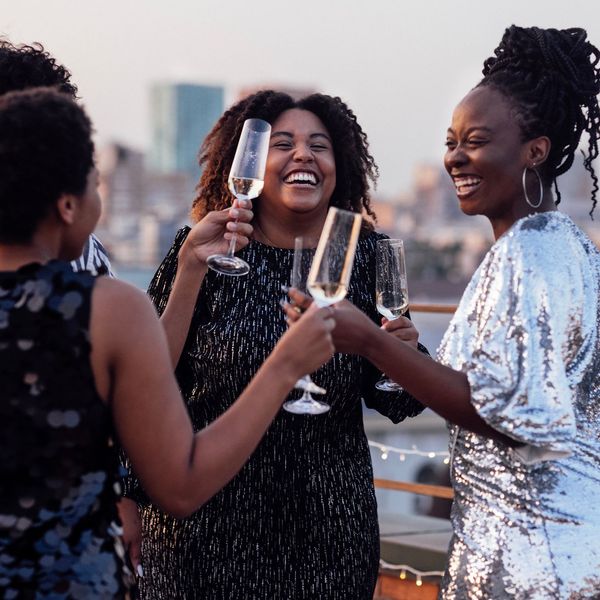
Somewhere along the way, have we lost the plot? Is there friendship and connection outside of meeting up at the hottest new restaurant, girls' trip where we all wear the same outfits, or dinner parties with color schemes (not judging any of these choices, because I love them all), what about the friends that come over to give you a hug when you’ve had a bad day? Where are the friends who will run errands with you? Where are the friends who will give you their Finsta password to find out if your man has a side chick? Where are the friends who show up to your kids' sporting events?
Growing up with shows like Living Single and Girlfriends, we had the blueprint and somehow have missed the mark. We love to discuss the impact of these shows and how they made us feel seen - but do we hang out at each other's houses? Do we embrace friends who don't dress like us? Or are we only interested in friends who fit a certain aesthetic or are exactly like us?
In search of the truth and various perspectives, we’ve talked with 16 Black women for their points of view on whether they believe social media impacts friendships and if it’s made some friendships superficial.
Lisa, NJ:
Many of my closest friends are not on social media, however, the friends that are don’t respond to things unless (to me) they are concerned about something when they read into a post. Then I get a call like, “Hey girl, are you okay, I saw your post." Or they will be ringing my doorbell…even if they are still living in the Bronx. There are a core group of friends that we check in on a few times per month and meet up but for the ones that are on social media, it seems like I’m the only one that sends cards and reaches out more.
To me, they let social media be their only form of contact unless something serious is going on, sadly. They send greetings on social media, yet I still do both if you are a friend, that’s just me, and they know it… Sometimes, social media can be an easy way to avoid that old-school outreach. But let them need prayer even if I haven’t spoken to them in months. I'll just pray and love every moment.
Courtney, RI:
I do believe socials have an impact on friendships that make them “appear” superficial— however, I don’t want to believe that beautifully documented moments equal superficial friendships. I think some of the best moments with girlfriends aren’t always pretty and well-documented. BUT. There are times when I do capture things with my friends for social media specifically, and those are some rock-solid relationships - we are just cute. And outside. And y’all need to see us, lol.
JT, NC:
Social media has helped me connect with friends since relocating, however, while battling a chronic condition and sharing the deeply personal things I share about panic attacks and my pain, it triggers a lot of people, usually those closest to me. Meanwhile, I have strangers in my DMs daily praising the work I do and telling me I need a bigger platform. It breaks my heart when those I once loved rip me apart solely for being honest. I also think people put way too much thought into what people post instead of just having a real convo about what is really triggering [them] deep down.
Jennifer, NY:
In my opinion, a lot of friendships have become superficial - quite frankly, a lot of women are starting to look alike! There's nothing wrong with sharing posts, keeping your page a certain way, documenting while you are out, etc., but I have noticed many friendships have become "let's go here so we can get good pics" and less about building a bond.
Petulia, NJ:
I feel like social media makes friendships seem like they’re not adequate enough by the display that certain people have. It makes people feel like if they’re not giving out lavish gifts, they’re not good enough friends. If they’re not doing expensive dinners, things like that but friendships are more than that.
Courtney, NJ:
I think, in general, social media has played a role in how friendships are viewed! I think people see the glitz and the glam of friendships that people post however, they don’t see the times when you’re not talking… where there might be friction (women being women)… when you lose touch (life be life-ing), etc. I think that is what people don’t see and don’t really show the honesty in friendships on social media.
Quadira, NJ:
So I’ve always battled with valuing friendships since I was a kid. One, I would blame the fact that I moved a lot, so whenever I actually developed a friendship with someone, and we got close within a year or two, I had to move, and after a while, that just made me no longer wanna get close with people. And I was always satisfied with having a bunch of siblings and cousins as my friends. So I would have maybe one friend each school year, and I was okay with that.
I never really got to experience like a core group of girlfriends until I was in the 11th grade, and even then, I saw them as disposable and replaceable, but not in a mean girl way. I was just detached from the idea of long-lasting friendships. And I think that it took a toll on me throughout my college years because I would watch everyone have a group of friends that they stuck with for all four years and saw how they built their lives together after college, and I just feel like I missed out on that.
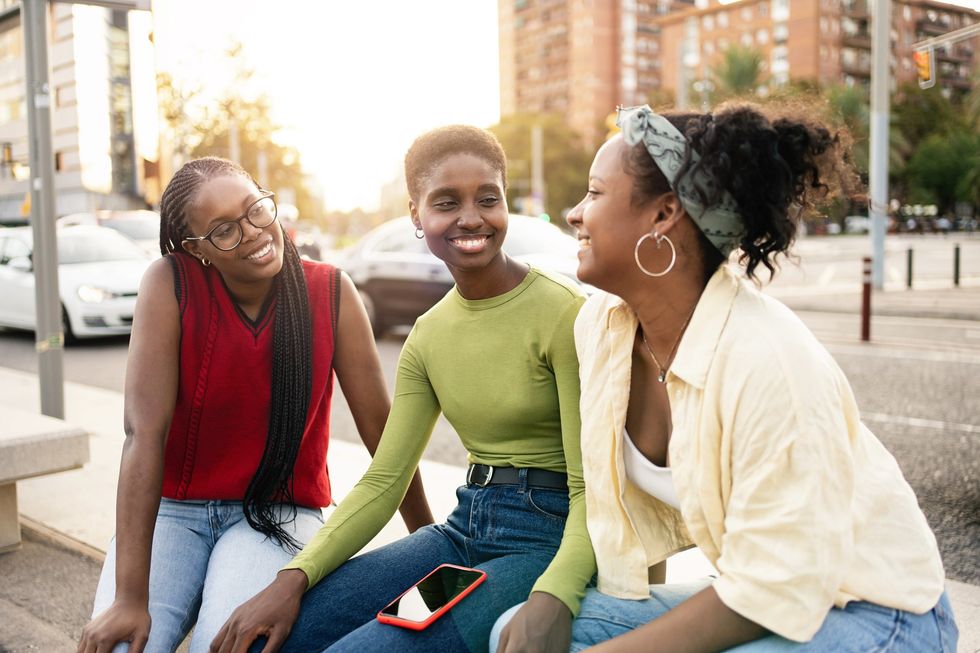
EF Volart/Getty Images
Social media has definitely made me feel a lot of FOMO, like I denied myself something so special by not putting value in building friendships. The cute pictures with friends were something that drove my FOMO, but I feel like it was misguided because I didn’t really understand what it took for people to have these moments with each other for so long OR that some of these photos really didn’t represent a healthy friendship.
But now I have that understanding, and my on-and-off social media moments with my friends don’t always look so aesthetically pleasing because it is authentic to the kind of friendship that we built with each other and does not mirror what other folks got going on.
Like me and my best friend have more crazy-looking FaceTime screenshots of each other than posed pictures. Because that’s just who we are and that’s what puts a smile on our faces looking back at those FaceTime screenshots rather than pictures intended for social media.
Beata, NJ:
I think social media could be a good thing for friendships in that it gives you gathering ideas, recs for places to go, and overall sometimes content that makes you appreciate the tribe you do have when you see it sort of reflected in front of you and can relate. I think some people have even found valued friendships through social media that they may otherwise wouldn’t have found in the “real world.” However, we know that with all things social media - there’s also that downside.
Sometimes, things can feel performative, one could wonder if people are reaching out to hang out because they see you posting a certain lifestyle and want parts or if they’re genuinely looking to connect. There’s also that notion of comparison, which we know can be the thief of joy. Maybe you don’t have that many friends or that core group, and because of what’s being portrayed on social media, you feel bad about what you do have because it doesn’t look the same.
Sade Danielle:
My personal experience is quite the opposite. I think social media has allowed my friendships to strengthen. As we get older, move away, and have limited time because of other responsibilities, social media has kept us together and even motivates us to plan trips, go to events, or just give kind reminders that we can stay connected through content we find and share.
Denise, NY:
I think social media hasn’t made it superficial, but I do think it has made it lack depth and a sense of responsibility.
Daneyah, LA:
I am a huge girls' girl and love all of my friends for who they are as individuals. One thing that has stood out to me is not depending on one friend for everything, as different friendships have different values and bring different things to the table! Yes, I feel like friends engage with each other socially based on time and proximity.
Because I live so far from most of my friend groups, we lean on socials to stay connected, share memes/relatable content, as well as support each other from afar! It’s definitely helped me stay connected. But I can also see the counter of that, where people see friend groups on social media and get attached to the facade but not the work that goes into nourishing those friendships behind the scenes.
Destiny, NJ:
Yes, I believe friendships have become so superficial based on social media and aesthetics. For instance, I’ve observed in my own personal friendships some friends will gravitate to people who have more of a social media following and what is trending on social media. Wanting to go to certain places and do certain things to adhere to a trend rather than just pulling up on your girls to talk. It becomes hurtful, too, when you have your core group of friends, and the group chat goes cold because you can't ever align schedules, but you see them with people who may fit more of an aesthetic.
Nashima, OH:
Social media has significantly shaped my friendships, making it easier to connect with friends no matter the distance. I enjoy sharing updates and experiences through posts and messages, which helps me feel closer to them. However, I've also noticed that it can lead to misunderstandings, as tone can be easily misinterpreted in text. Additionally, seeing friends highlights can sometimes evoke feelings of jealousy or exclusion. Jealousy in the sense I am missing out because I am states away.
While I appreciate the convenience of staying in touch, I often find that online interactions lack the depth of face-to-face conversations. Balancing social media with real-life connections is important for me to truly strengthen those friendships. Overall, social media plays a crucial role in my relationships, but it's essential to prioritize meaningful communication alongside it.
Justine, NJ:
I think social media affects friendships negatively because it offers a false sense of connection. It is nice to see photos or relatable memes that friends post, but it doesn’t give us an inside view of how they are really doing. It can be used as a tool to stay in the loop, but true connection involves vulnerability and impersonal encounters; both are missing from social media.
Jaylon, PA:
Social media has certainly impacted friendships in a number of ways. On one hand, I believe it’s made it harder to have true, deep, and long-standing connections as we compare ourselves and lives to the lifestyle content we see online. But it also has allowed us to connect with people who have similar interests all around the world.
Ebony, NJ:
I don't feel like social media plays a part in my friendship but I can see the benefits and negative impacts. Social media has been a way to celebrate with friends that I haven’t seen and see if they're going on an amazing vacation, getting married, or if they're opening up their own business, so I do find that it gives me opportunities to still be present even if I can't physically show up.
Sometimes, there are negative impacts of social media, especially as Black women. When we’re looking at content comparing our lives, there's so many curated situations on social media, so it may feel like, "Oh my friendship doesn't look like this," so then comparison sets in.
No matter where you fall whether you’ve found yourself comparing your friendships, felt alone, have a strong group of friends, or none at all, remember this - you are worthy of friendship.
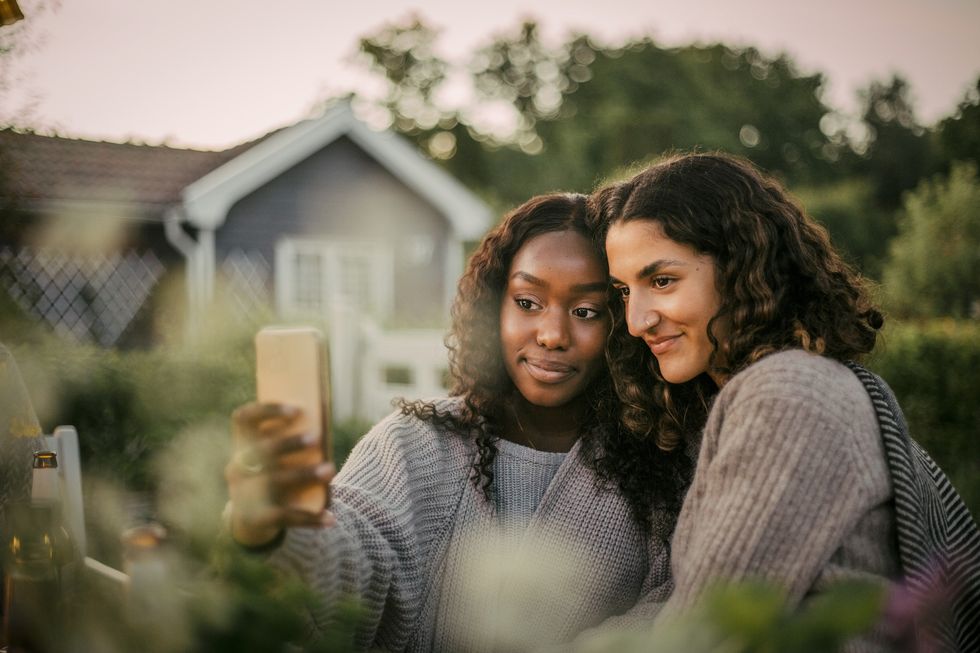
Maskot/Getty Images
Every connection and friendship I have, from my best friends from high school and college to my friends I’ve met as a creator and entrepreneur, brings something unique to my life, and I truly believe that we can celebrate our old friends while embracing the opportunity to make new ones.
It’s important to realize that growth doesn’t mean leaving people behind; instead, it can enrich our lives in ways we never imagined. It’s absolutely possible to cultivate new friendships while holding onto the ones that have been with you through thick and thin. Each relationship adds a different flavor to our lives, and there’s power in allowing ourselves the space to expand our circles without losing the love for those who have always been there.
So, let’s embrace change, appreciate the different paths we take, and honor the friendships that shape our journeys, old and new.
Let’s make things inbox official! Sign up for the xoNecole newsletter for love, wellness, career, and exclusive content delivered straight to your inbox.
Featured image by EF Volart/Getty Images
Because We Are Still IT, Girl: It Girl 100 Returns
Last year, when our xoNecole team dropped our inaugural It Girl 100 honoree list, the world felt, ahem, a bit brighter.
It was March 2024, and we still had a Black woman as the Vice President of the United States. DEI rollbacks weren’t being tossed around like confetti. And more than 300,000 Black women were still gainfully employed in the workforce.
Though that was just nineteen months ago, things were different. Perhaps the world then felt more receptive to our light as Black women.
At the time, we launched It Girl 100 to spotlight the huge motion we were making as dope, GenZennial Black women leaving our mark on culture. The girls were on the rise, flourishing, drinking their water, minding their business, leading companies, and learning to do it all softly, in rest. We wanted to celebrate that momentum—because we love that for us.
So, we handpicked one hundred It Girls who embody that palpable It Factor moving through us as young Black women, the kind of motion lighting up the world both IRL and across the internet.
It Girl 100 became xoNecole’s most successful program, with the hashtag organically reaching more than forty million impressions on Instagram in just twenty-four hours. Yes, it caught on like wildfire because we celebrated some of the most brilliant and influential GenZennial women of color setting trends and shaping culture. But more than that, it resonated because the women we celebrated felt seen.
Many were already known in their industries for keeping this generation fly and lit, but rarely received recognition or flowers. It Girl 100 became a safe space to be uplifted, and for us as Black women to bask in what felt like an era of our brilliance, beauty, and boundless influence on full display.
And then, almost overnight, it was as if the rug was pulled from under us as Black women, as the It Girls of the world.
Our much-needed, much-deserved season of ease and soft living quickly metamorphosed into a time of self-preservation and survival. Our motion and economic progression seemed strategically slowed, our light under siege.
The air feels heavier now. The headlines colder. Our Black girl magic is being picked apart and politicized for simply existing.
With that climate shift, as we prepare to launch our second annual It Girl 100 honoree list, our team has had to dig deep on the purpose and intention behind this year’s list. Knowing the spirit of It Girl 100 is about motion, sauce, strides, and progression, how do we celebrate amid uncertainty and collective grief when the juice feels like it is being squeezed out of us?
As we wrestled with that question, we were reminded that this tension isn’t new. Black women have always had to find joy in the midst of struggle, to create light even in the darkest corners. We have carried the weight of scrutiny for generations, expected to be strong, to serve, to smile through the sting. But this moment feels different. It feels deeply personal.
We are living at the intersection of liberation and backlash. We are learning to take off our capes, to say no when we are tired, to embrace softness without apology.
And somehow, the world has found new ways to punish us for it.

In lifestyle, women like Kayla Nicole and Ayesha Curry have been ridiculed for daring to choose themselves. Tracee Ellis Ross was labeled bitter for speaking her truth about love. Meghan Markle, still, cannot breathe without critique.
In politics, Kamala Harris, Letitia James, and Jasmine Crockett are dragged through the mud for standing tall in rooms not built for them.
In sports, Angel Reese, Coco Gauff, and Taylor Townsend have been reminded that even excellence will not shield you from racism or judgment.

In business, visionaries like Diarrha N’Diaye-Mbaye and Melissa Butler are fighting to keep their dreams alive in an economy that too often forgets us first.
Even our icons, Beyoncé, Serena, and SZA, have faced criticism simply for evolving beyond the boxes society tried to keep them in.
From everyday women to cultural phenoms, the pattern is the same. Our light is being tested.

And yet, somehow, through it all, we are still showing up as that girl, and that deserves to be celebrated.
Because while the world debates our worth, we keep raising our value. And that proof is all around us.
This year alone, Naomi Osaka returned from motherhood and mental health challenges to reach the semifinals of the US Open. A’ja Wilson claimed another MVP, reminding us that beauty and dominance can coexist. Brandy and Monica are snatching our edges on tour. Kahlana Barfield Brown sold out her new line in the face of a retailer that had been canceled. And Melissa Butler’s company, The Lip Bar, is projecting a forty percent surge in sales.

We are no longer defining strength by how much pain we can endure. We are defining it by the unbreakable light we continue to radiate.
We are the women walking our daily steps and also continuing to run solid businesses. We are growing in love, taking solo trips, laughing until it hurts, raising babies and ideas, drinking our green juice, and praying our peace back into existence.
We are rediscovering the joy of rest and realizing that softness is not weakness, it is strategy.
And through it all, we continue to lift one another. Emma Grede is creating seats at the table. Valeisha Butterfield has started a fund for jobless Black women. Arian Simone is leading in media with fearless conviction. We are pouring into each other in ways the world rarely sees but always feels.

So yes, we are in the midst of societal warfare. Yes, we are being tested. Yes, we are facing economic strain, political targeting, and public scrutiny. But even war cannot dim a light that is divinely ours.
And we are still shining.
And we are still softening.
And we are still creating.
And we are still It.

That is the quiet magic of Black womanhood, our ability to hold both truth and triumph in the same breath, to say yes, and to life’s contradictions.
It is no coincidence that this year, as SheaMoisture embraces the message “Yes, And,” they stand beside us as partners in celebrating this class of It Girls. Because that phrase, those two simple words, capture the very essence of this moment.
Yes, we are tired. And we are still rising.
Yes, we are questioned. And we are the answer.
Yes, we are bruised. And we are still beautiful.

This year’s It Girl 100 is more than a list. It is a love letter to every Black woman who dares to live out loud in a world that would rather she whisper. This year’s class is living proof of “Yes, And,” women who are finding ways to thrive and to heal, to build and to rest, to lead and to love, all at once.
It is proof that our joy is not naive, our success not accidental. It is the reminder that our light has never needed permission.
So without further ado, we celebrate the It Girl 100 Class of 2025–2026.
We celebrate the millions of us who keep doing it with grace, grit, and glory.
Because despite it all, we still shine.
Because we are still her.
Because we are still IT, girl.
Meet all 100 women shaping culture in the It Girl 100 Class of 2025. View the complete list of honorees here.
Featured image by xoStaff
Because We Are Still IT, Girl: It Girl 100 Returns
Last year, when our xoNecole team dropped our inaugural It Girl 100 honoree list, the world felt, ahem, a bit brighter.
It was March 2024, and we still had a Black woman as the Vice President of the United States. DEI rollbacks weren’t being tossed around like confetti. And more than 300,000 Black women were still gainfully employed in the workforce.
Though that was just nineteen months ago, things were different. Perhaps the world then felt more receptive to our light as Black women.
At the time, we launched It Girl 100 to spotlight the huge motion we were making as dope, GenZennial Black women leaving our mark on culture. The girls were on the rise, flourishing, drinking their water, minding their business, leading companies, and learning to do it all softly, in rest. We wanted to celebrate that momentum—because we love that for us.
So, we handpicked one hundred It Girls who embody that palpable It Factor moving through us as young Black women, the kind of motion lighting up the world both IRL and across the internet.
It Girl 100 became xoNecole’s most successful program, with the hashtag organically reaching more than forty million impressions on Instagram in just twenty-four hours. Yes, it caught on like wildfire because we celebrated some of the most brilliant and influential GenZennial women of color setting trends and shaping culture. But more than that, it resonated because the women we celebrated felt seen.
Many were already known in their industries for keeping this generation fly and lit, but rarely received recognition or flowers. It Girl 100 became a safe space to be uplifted, and for us as Black women to bask in what felt like an era of our brilliance, beauty, and boundless influence on full display.
And then, almost overnight, it was as if the rug was pulled from under us as Black women, as the It Girls of the world.
Our much-needed, much-deserved season of ease and soft living quickly metamorphosed into a time of self-preservation and survival. Our motion and economic progression seemed strategically slowed, our light under siege.
The air feels heavier now. The headlines colder. Our Black girl magic is being picked apart and politicized for simply existing.
With that climate shift, as we prepare to launch our second annual It Girl 100 honoree list, our team has had to dig deep on the purpose and intention behind this year’s list. Knowing the spirit of It Girl 100 is about motion, sauce, strides, and progression, how do we celebrate amid uncertainty and collective grief when the juice feels like it is being squeezed out of us?
As we wrestled with that question, we were reminded that this tension isn’t new. Black women have always had to find joy in the midst of struggle, to create light even in the darkest corners. We have carried the weight of scrutiny for generations, expected to be strong, to serve, to smile through the sting. But this moment feels different. It feels deeply personal.
We are living at the intersection of liberation and backlash. We are learning to take off our capes, to say no when we are tired, to embrace softness without apology.
And somehow, the world has found new ways to punish us for it.

In lifestyle, women like Kayla Nicole and Ayesha Curry have been ridiculed for daring to choose themselves. Tracee Ellis Ross was labeled bitter for speaking her truth about love. Meghan Markle, still, cannot breathe without critique.
In politics, Kamala Harris, Letitia James, and Jasmine Crockett are dragged through the mud for standing tall in rooms not built for them.
In sports, Angel Reese, Coco Gauff, and Taylor Townsend have been reminded that even excellence will not shield you from racism or judgment.

In business, visionaries like Diarrha N’Diaye-Mbaye and Melissa Butler are fighting to keep their dreams alive in an economy that too often forgets us first.
Even our icons, Beyoncé, Serena, and SZA, have faced criticism simply for evolving beyond the boxes society tried to keep them in.
From everyday women to cultural phenoms, the pattern is the same. Our light is being tested.

And yet, somehow, through it all, we are still showing up as that girl, and that deserves to be celebrated.
Because while the world debates our worth, we keep raising our value. And that proof is all around us.
This year alone, Naomi Osaka returned from motherhood and mental health challenges to reach the semifinals of the US Open. A’ja Wilson claimed another MVP, reminding us that beauty and dominance can coexist. Brandy and Monica are snatching our edges on tour. Kahlana Barfield Brown sold out her new line in the face of a retailer that had been canceled. And Melissa Butler’s company, The Lip Bar, is projecting a forty percent surge in sales.

We are no longer defining strength by how much pain we can endure. We are defining it by the unbreakable light we continue to radiate.
We are the women walking our daily steps and also continuing to run solid businesses. We are growing in love, taking solo trips, laughing until it hurts, raising babies and ideas, drinking our green juice, and praying our peace back into existence.
We are rediscovering the joy of rest and realizing that softness is not weakness, it is strategy.
And through it all, we continue to lift one another. Emma Grede is creating seats at the table. Valeisha Butterfield has started a fund for jobless Black women. Arian Simone is leading in media with fearless conviction. We are pouring into each other in ways the world rarely sees but always feels.

So yes, we are in the midst of societal warfare. Yes, we are being tested. Yes, we are facing economic strain, political targeting, and public scrutiny. But even war cannot dim a light that is divinely ours.
And we are still shining.
And we are still softening.
And we are still creating.
And we are still It.

That is the quiet magic of Black womanhood, our ability to hold both truth and triumph in the same breath, to say yes, and to life’s contradictions.
It is no coincidence that this year, as SheaMoisture embraces the message “Yes, And,” they stand beside us as partners in celebrating this class of It Girls. Because that phrase, those two simple words, capture the very essence of this moment.
Yes, we are tired. And we are still rising.
Yes, we are questioned. And we are the answer.
Yes, we are bruised. And we are still beautiful.

This year’s It Girl 100 is more than a list. It is a love letter to every Black woman who dares to live out loud in a world that would rather she whisper. This year’s class is living proof of “Yes, And,” women who are finding ways to thrive and to heal, to build and to rest, to lead and to love, all at once.
It is proof that our joy is not naive, our success not accidental. It is the reminder that our light has never needed permission.
So without further ado, we celebrate the It Girl 100 Class of 2025–2026.
We celebrate the millions of us who keep doing it with grace, grit, and glory.
Because despite it all, we still shine.
Because we are still her.
Because we are still IT, girl.
Meet all 100 women shaping culture in the It Girl 100 Class of 2025. View the complete list of honorees here.
Featured image by xoStaff