


It’s not always easy being an “It Girl,” but Les Alfred, host of She’s So Lucky podcast, and Kayla Greaves, beauty expert, reporter and consultant, never promised it would be. Instead, the two creators are forging their own paths based on resilience. Les originally launched her podcast, formerly Balanced Black Girl, from her bedroom in Seattle after creating fitness content elsewhere online.
Last year, she left her corporate job to scale the Dear Media-hosted series, which she rebranded earlier this year. Meanwhile, Kayla has worked as a journalist and editor, including for InStyle as Executive Beauty Editor. In 2023, she left the company to focus on consulting, hosting and speaking engagements.
Despite launching media careers from different pathways, the two New York-based women have forged a friendship where they can discuss their ambitions and challenges.
Both women are part of xoNecole’s It Girl 100 Class of 2025, recognized in the Viral Voices category for the impact they’ve made through storytelling, creativity, and authenticity. Together, they represent what it means to build an "It Girl" brand with integrity and depth. In the spirit of SheaMoisture’s "Yes, And" ethos, Les and Kayla embody the freedom to be multi-layered as women evolving boldly into every version of themselves.
This conversation has been condensed and lightly edited for clarity
On Forging Their Own Paths
Les Alfred: Being a Jane of all trades is incredibly challenging. And one of the challenges I've faced is that the scope of what podcasters now need to do has increased so much. When I first interviewed you in 2019, I was still very new at it, but I remember being on a Skype call with you from my bedroom in Seattle. That was how I ran the show. And that was good enough. That is absolutely not good enough these days. The scope and the quality keeps increasing, but the resources that you have don't necessarily increase in order to remain competitive.
I get asked so many questions from people who want to get into podcasts and they want to get started. Most of the time, I'm just like, 'I don't have tips for you.' Because, one, I don't know what it's like to start in this current environment. Two, I know what it takes to contend and be consistent in this environment. The barrier of entry is a lot higher in terms of having something of quality than it was before.
On Balancing Ambition and Rest
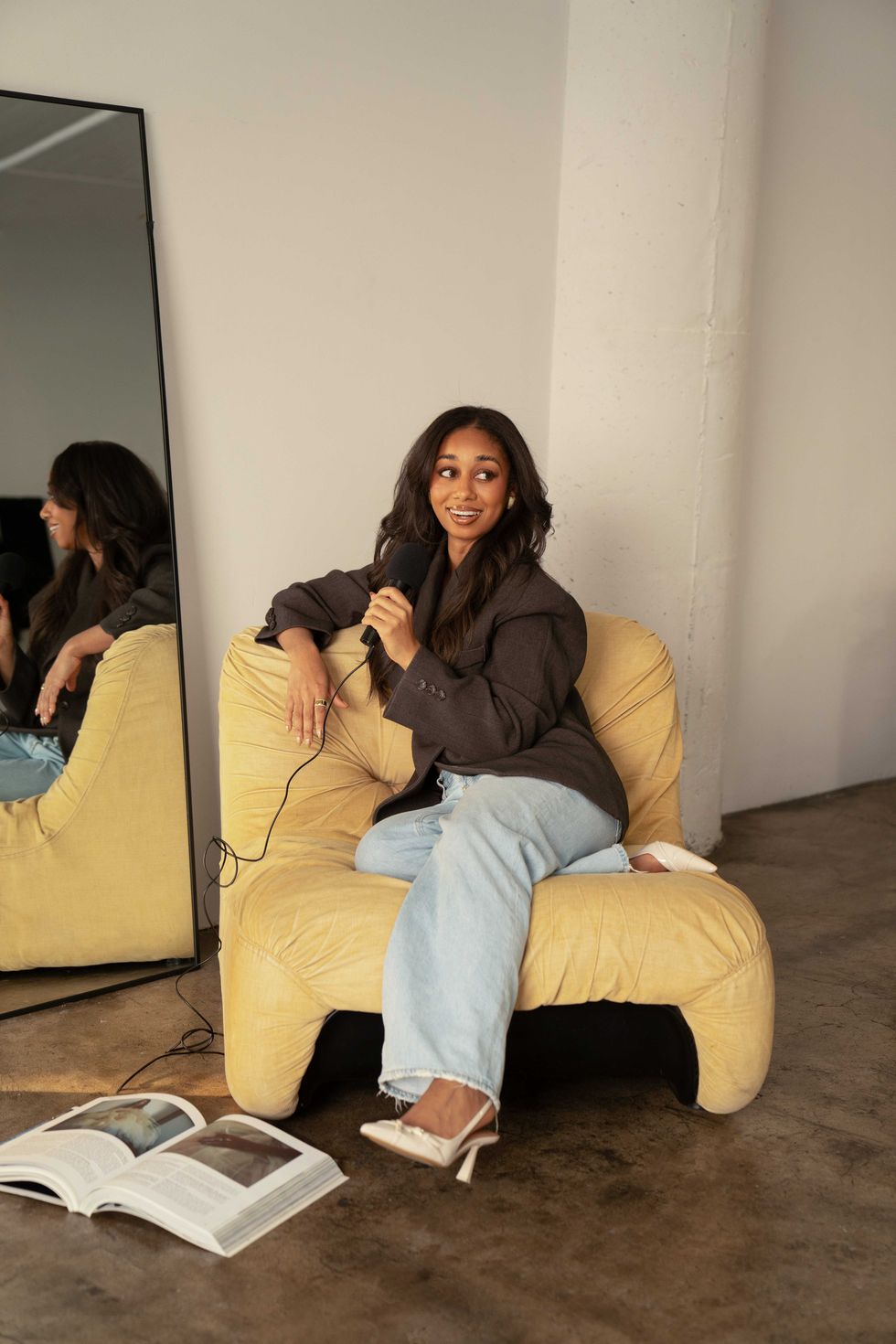
Kayla Greaves: I've had to make a very clear effort to slow down and just not take on as much. Yes, you're running a business, but you're also living your life. I had one of those days yesterday. I just laid down and listened to white noise for hours because I just needed my brain to just be clear. I called a friend. I cried.
I'm starting over again today. The sun is out. It's a new day. And that's just sometimes what you have to do. You can't show up for your audience or for other people, if you can't show for yourself. I think that creativity comes from a place of living your life and having genuine experiences, and then sharing those experiences through your art.
"I had to give myself permission to let myself grow publicly in ways that I'd already done personally."
Courtesy
On Evolving Through Growth and Rebranding
Les: I didn't create Balanced Black Girl until 2018, but I started blogging and creating content and doing things under the Balanced brand in 2014. I was 24 years old at the time. Now, I'm 36. The things that were important to me, the perspective that I had and the stories I wanted to tell were entirely different. I think I had to give myself permission to let myself grow publicly in ways that I'd already done personally. The show isn't really about wellness anymore. And that shift started happening a couple of years ago.
When we started expanding into more lifestyle topics, more self-help topics [and] talking about entrepreneurship, the audience responded really well. That was when the show really started to grow and take off. And that was what got so much more engagement than the episodes back in 2020 when I was doing hour-long deep dives on gut health.
Rebranding the show was something I've been thinking about for a long time. When I was finally like, 'Oh, I need to do this,' honestly, was the 2024 presidential election. I was like, these people are about to be in here acting crazy. I do not feel safe with my business name being what it is. I don't want to be targeted for any BS. We saw what they did to the Fearless Fund.
"You have to balance your integrity with your income."

Courtesy
On Integrity Over Income
Kayla: I have many other interests aside from beauty. I'm growing and I'm changing as a person. I'm not the same person I was when I started at InStyle in 2019 before the pandemic rocked everybody's world. I don't think reviewing every single lipstick that comes out is exciting or interesting, because everybody does it now, and everybody feels like they're qualified to speak on things that they're not qualified to speak on. I'm currently in that pain point of growth.
I don't think I have always been in environments where I've been encouraged to branch out on my own ideas. I finished Ina Garten’s memoir maybe a month ago. She kept repeating this quote in her book. She said, ‘What goes in early, goes in deep.’ Now that I'm on my own and I don't have the resources of a traditional media company, which is what I have become accustomed to, sometimes it's difficult for me to be like, 'Okay, just go ahead with the thing.'
I think, Les, just the other day, you reposted somebody saying that they let go of a five-figure deal and then got double the next day because it just didn't feel aligned for them. Those are the things that happen. I have to find a balance of, 'Okay, how do I keep myself afloat?' And that may mean I may not be balling out of control just yet, but I'm okay for now. I can buy myself nice things every once in a while, but you have to balance your integrity with your income.
Les: There are just certain lines that I'm not willing to cross. Especially when I created more wellness content, one of those lines was I will not promote any sort of weight loss product. All of these GLP-1s all want to advertise on my podcast. I actually have nothing against those types of products, but I don't ever want someone to look at what I'm putting into the world and think that I'm saying that they need to feel a certain way about their bodies.
Even if the money is great, that's not for me to say, and that's not the type of message that I want to put out here. Or, I had another kind of brand deal come through that would have required me to divulge things about my personal life that I just don't really want my audience knowing about me, and bringing them along on journeys that I just find personal and I want to keep offline. I don’t want to be known for dragging my mess all over the internet for a buck.
I don't want to be known for being an influencer. I would love to be 1,000% in on my podcast, scale it, have it grow to be a media empire where I'm producing and putting out other bodies of work. For now, until that other side of the business really picks up and gets to the point where I want it to be, I kind of need to play the influencer game a little bit to live in this expensive city. But I'm gonna do it on my terms. It's a constant compromise that I'm coming to with myself.
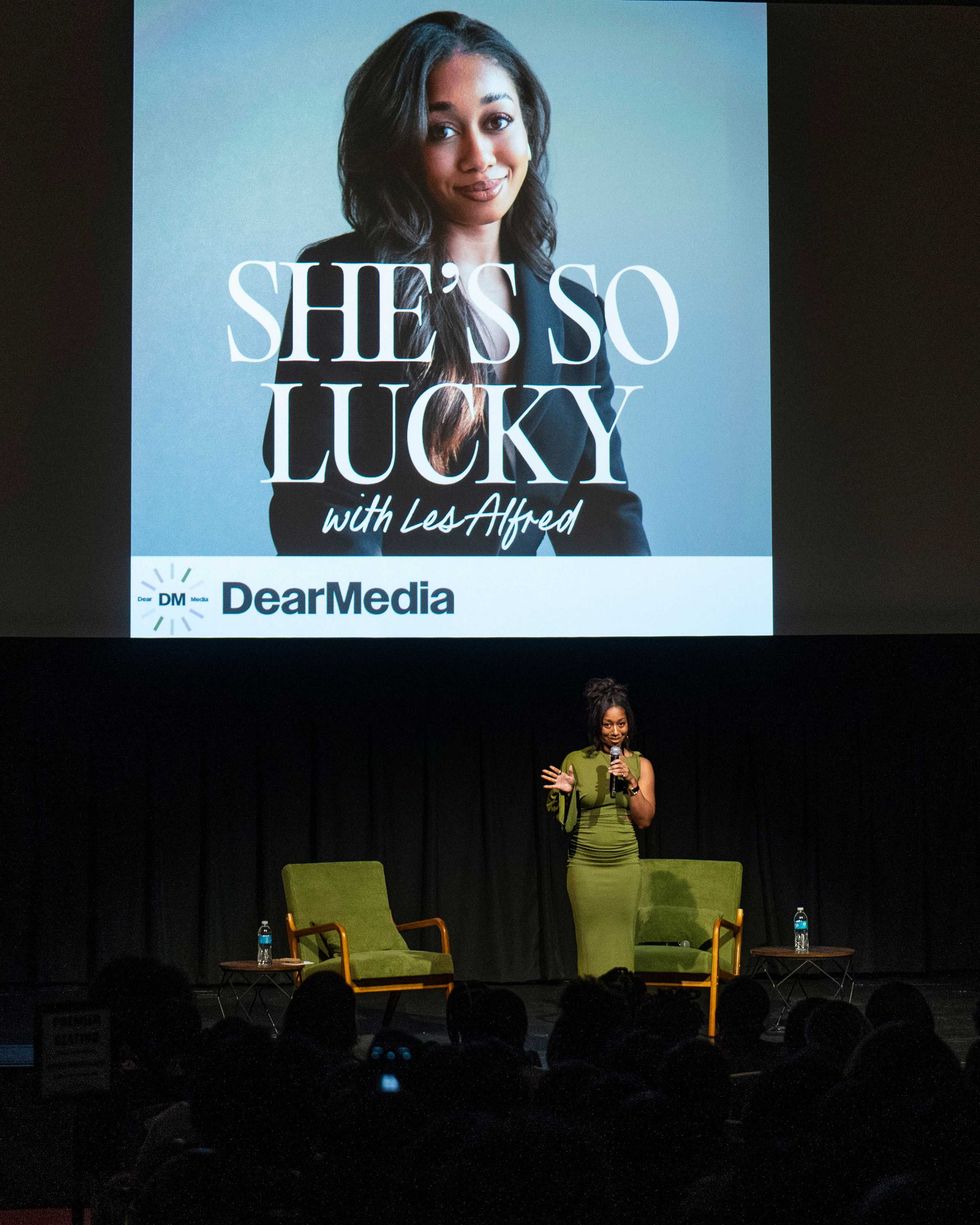
"You can never make a big vision come to fruition if you're sitting and you're waiting for somebody else to tell you exactly what to do."
Courtesy
On Mutual Admiration and Friendship
Les: Something that I really admire about you in having known you for the past couple of years is you don't wait for a roadmap. You jump in, you roll up your sleeves, and you do it. You can never make a big vision come to fruition if you're sitting and you're waiting for somebody else to tell you exactly what to do.
Kayla: Well, first of all, I want to say thank you for saying that, because that means so much to me, and it's very affirming. That's exactly how I feel about you. I remember, even at your first live show, you're like, ‘Oh my god, I'm so stressed. I don't know what I'm doing.’ And, the shit sold out. And, you know, and now, like, you see the growth of the podcast. And you have nearly 61,000 subscribers on YouTube. I just checked recently.
I talk a lot about people that really just need to not say anything on the internet, because it's so frustrating as somebody who grew up as a traditional journalist. You want people to fact check and ask thoughtful questions and have good conversations. I've never said that about you. I've always loved your podcast. And I've sent a lot of your episodes to friends when they're going through specific things that you're talking about.
This season has been a little bit slower to me, so you've been a constant source of inspiration, and it's just been such a pleasure to see your podcast grow despite the challenges you've had. I know it's not easy, but you continue to grow and continue to push through, and I really admire that as somebody who sat and cried yesterday and listened to white noise.
And this is why I tell you all the time, you really do inspire me. I love you a lot.
Les: Oh my gosh, I love you a lot. I'm so glad that the podcast brought us together.
Tap into the full It Girl 100 Class of 2025 and meet all the women changing game this year and beyond. See the full list here.
Featured image courtesy
RELATED

A Black girl ushering in her era of straight hair was an unspoken but understood tradition, a legacy shaped by women who learned that relaxers were the key to manageability and beauty, as society had defined it.
Though relaxers were a product of their time, the memories many of us share from that era of creamy-white, no-lye formulas also carry a collective trauma. It was one endured in the name of beauty standards we didn’t question until we did. It’s an experience that Courtney Adeleye, founder and CEO of Watch & Sea Beauty, knows all too well. And one that ultimately shaped her path into the hair care space.
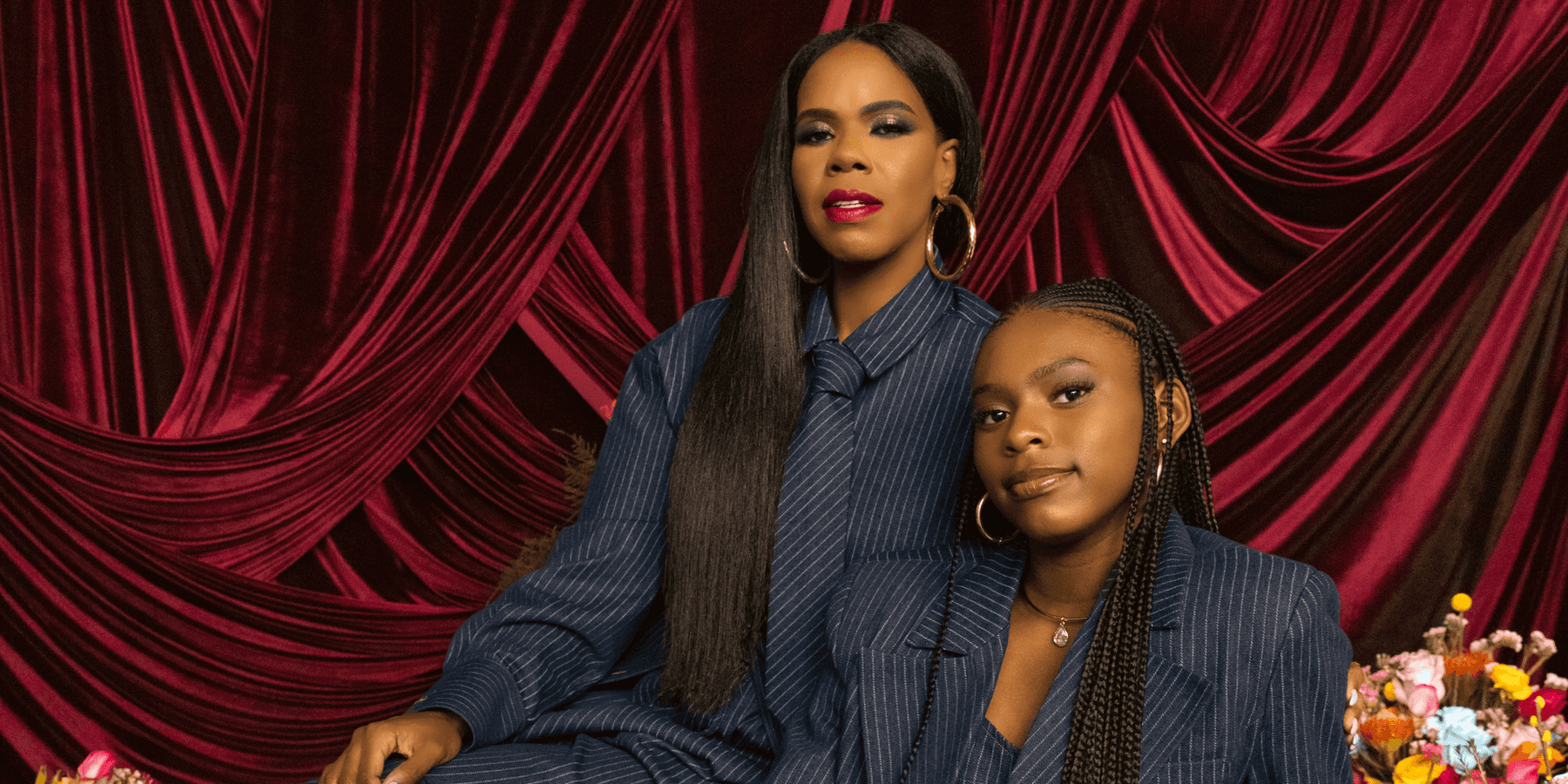
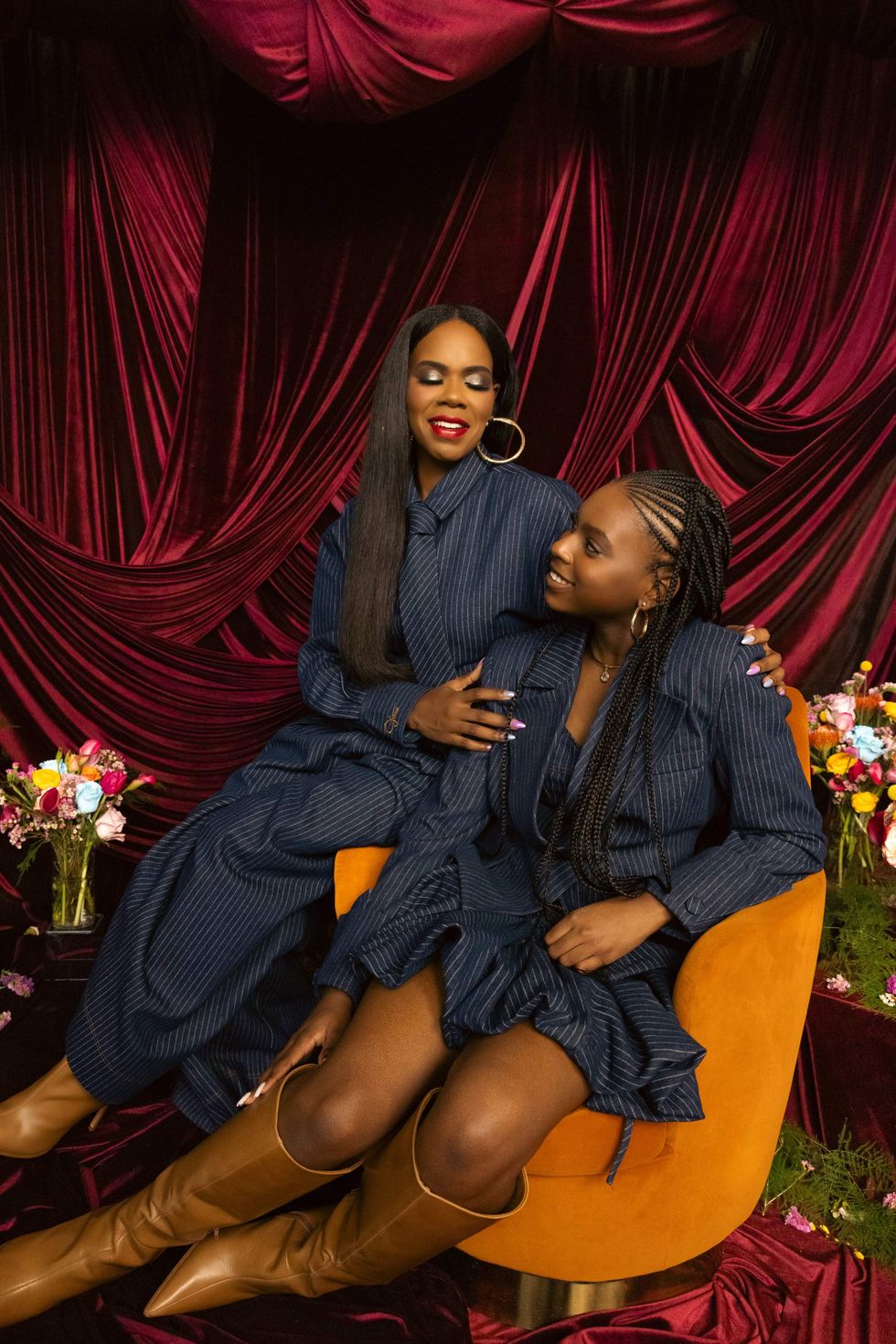
In xoNecole’s Generation to Generation, created in partnership with Target, Courtney reflects on her hair journey alongside her daughter during a BTS video from their mother-daughter photoshoot. As she is seen applying product to her daughter’s braids, she begins talking about her experience with perms before going natural. Her daughter pauses and asks a simple yet revealing question: “What’s a relaxer?”
Credit: Darnell Brown
Courtney explains that it’s a chemical process that makes Black hair “pretty much permanently straight.” She then recalls getting her first relaxer at 13, a moment that remains vivid in her memory decades later. “My head was on fire,” she says in the video. “It’s nothing I remember in a good way. It’s something I’m like, ‘This can’t be.’” Their exchange is as striking as it is revelatory.
Unlike generations before her, Courtney’s daughter will never have to know relaxers as the rite of passage that once felt inevitable for so many Black girls. Thanks to entrepreneurs like Courtney, natural hair is no longer treated as the exception but upheld as the standard. As something to be celebrated, nurtured, and protected.
Generation to generation, her work helps ensure that Black girls can grow up with hair journeys rooted in appreciation, care, and choice, instead of one etched in pain, trauma, or assimilation.
In that way, Courtney isn’t just changing how we care for our hair; she’s paying it forward, crafting a legacy her daughters and future generations of Black women after them get to inherit.
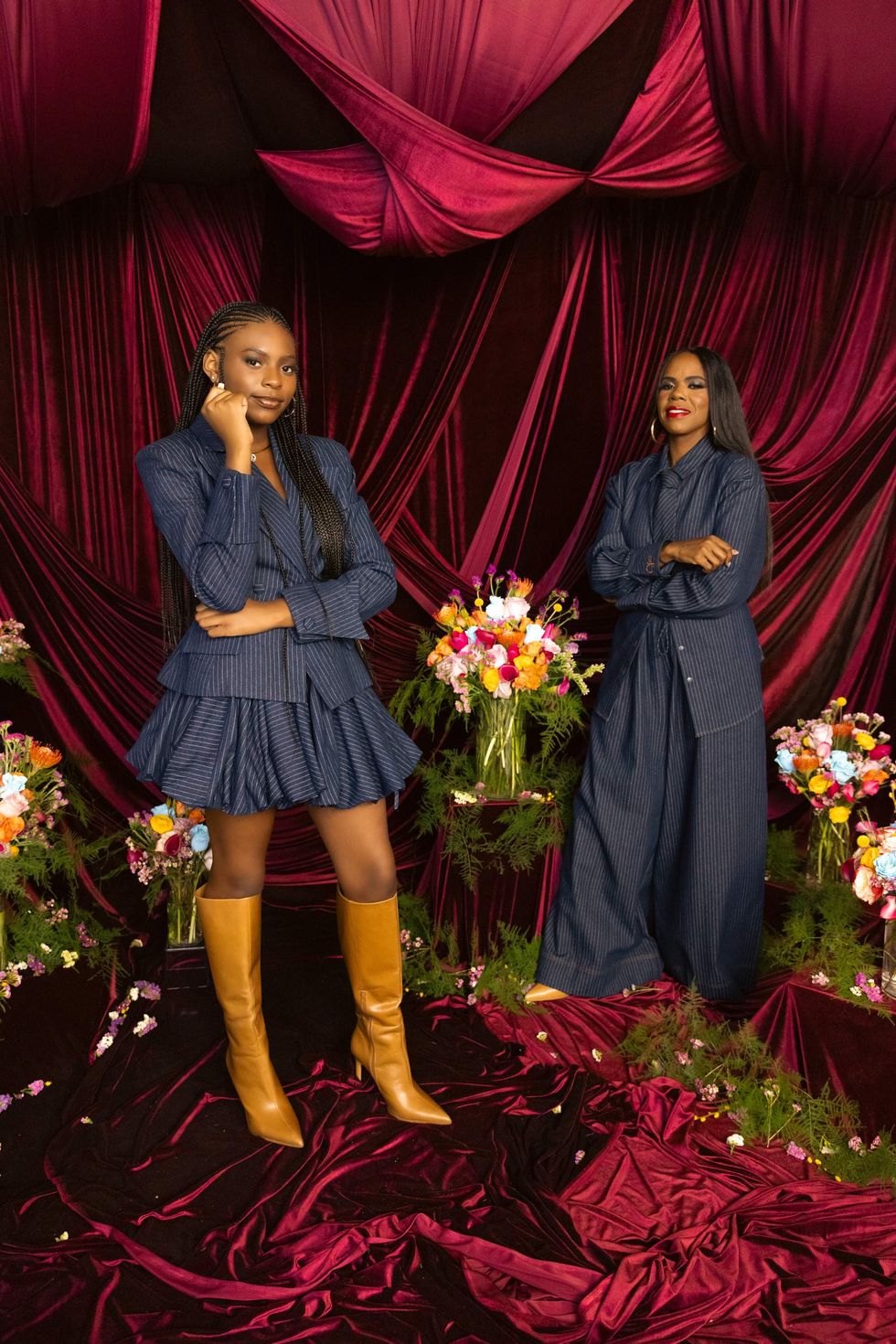
That legacy didn’t begin with hair. Courtney credits her own mother, a nurse like she once was, for being the blueprint for what entrepreneurship could look like. “I got a chance to see my mother take a sheet of paper, cut it up in little rectangles, take that to a printing shop, and turn it into a card game,” she tells her daughter in a different scene. Those early lessons planted the seeds for what would later become The Mane Choice, a hair care brand born from her desire to create safer, healthier alternatives for Black hair that didn't compromise on performance.
After starting The Mane Choice in 2013 with just $500, Courtney worked tirelessly to build a hair empire that would go on to surpass $100 million in sales in only six years. She later sold the brand in 2019 for an undisclosed amount, cementing her place among the Black women entrepreneurs who have turned purpose and vision into industry-defining impact.
“Everything that we do is a stepping stone,” Courtney says in the video. “So how do I take what I’ve done as a nurse and turn it into what I’m doing?”
Credit: Darnell Brown
Today, that full circle is the gift that gives, and Black history is still being written, not just by women like Courtney, but by the little Black girls watching, learning, and asking questions that open new doors. Watch & Sea Beauty marks a return for the entrepreneur that reflects purpose, growth, resilience, and trust built over time.
From generation to generation, the way we love and care for our hair tells a bigger story: one of healing, innovation, and what we now have the freedom to choose for ourselves. Courtney’s contributions to Black hair and beauty are truly unmatched, not simply because of what she’s built, but because of what she’s shifted our hair stories: the narrative, the standard, and the future.
Her work is the legacy that lives in what we make possible for the women who come next.
Featured image by Darnell Brown

By the time December arrived, especially as a Jersey girl going to see the tree at Rockefeller Center in the city, enjoying the holiday bars, time with my family, all the holiday rituals that once brought me joy, decorating my tree, and planning holiday outings, felt distant.
I wasn’t burned out from doing too much. I was exhausted from holding everything. I realized I didn’t need to host or attend a holiday party. I needed to halt. I needed a pause.
So I packed my bags and took a solo trip to Aruba.

Courtesy
Ironically, Embassy Suites was my happy place growing up.
My birthdays were marked by pool parties and sleepovers, and swimming became my earliest form of regulation. Years later, that instinct returned. When life feels unsteady, I go back to the water. Whether it’s swimming indoors at the gym, at local pools, or in the ocean, water calms me. There felt like no better way to let my body finally exhale than spending four days alone, surrounded by the sea.
I love a baecation, a girls’ trip, and a family vacation just as much as the next person — cousins’ trips are still my favorite, sorry to the rest of my family — but this time, I needed rest and silence. Total quiet outside of my Spotify playlist and the sound of waves. A break from my titles — from being the reliable one, the founder, the social media manager, the journalist, the one who’s always available, the oldest daughter.
As Black women, we’re often taught to hold everything together long before anyone asks us to. I didn’t grow up seeing the women who raised me vacation much. They did occasionally travel, but I saw them work more than anything. They held all the titles they taught me to hold (and then some), and they still do. Before the plane even took off, both of my phones were ringing nonstop.
The need for rest wasn’t theoretical, dramatic, or a TikTok cliché of how a vacation would heal me - it was urgent.

Courtesy
Where I Stayed
Staying at the Embassy Suites by Hilton Aruba Resort, which opened in 2023, made slowing down feel possible. While Embassy Suites is often associated with business or family travel, the Aruba property is one of eight Embassy Suites resorts worldwide — designed as a true resort experience rather than a traditional hotel stay.

Courtesy
One of the most grounding features of the property is its direct underground walkway to the beach, allowing guests to move from the hotel to the shoreline safely and seamlessly. Upon arrival, I was met with private palapas reserved for hotel guests, calm, clear waters, and a family-friendly experience where infants, adults, and even pets were welcome (yes, I felt guilty for leaving my dog, but again - I needed the rest lol.)
While it isn’t marketed as a wellness hotel, there were thoughtful nods to well-being throughout the stay.
Daily movement offerings like yoga, Pilates, and water aerobics were available throughout the week, adding to the resort’s offerings as well as a kids club, a gym, and many rooms to hold meetings and celebrations.

Courtesy
Each morning began slowly with a complimentary breakfast at Brickstone Kitchen, featuring local tropical fruits and a made-to-order omelette bar. Brickstone Café offered an easy stop for coffee throughout the day, reinforcing the unhurried pace of the resort, and daily, I sat outside overlooking the ocean, taking in the view and the waves.
Snorkeling and Enjoying Cultural Cuisine
Beyond the hotel, I explored Aruba through moments that felt equally restorative. I snorkeled with Red Sail Aruba, swimming in some of the clearest water I’ve ever seen. I enjoyed beef croquette, pastechi, and the country’s official cocktail, the Aruba Ariba — a drink invented by a Hilton bartender more than sixty years ago. Those moments made me feel present, not like a visitor rushing through.

Courtesy
Dining & the Nervous System Moment
Dinner at Brickstones Restaurant, led by Barbadian-born Executive Sous Chef Andre Nurse, became one of the most defining moments of the trip. I expected to enjoy rotating fish-of-the-day selections — from mahi-mahi to sea bass, alongside fresh ceviche and surf-and-turf plates featuring sirloin with coconut curry shrimp. And I did. But during my first dinner, overlooking the property and the beach as the sun began to set, something unexpected happened.
As I waited for my meal, I could feel the stress leaving my body. A full-body tingle moved through me. My shoulders softened. My breath slowed. My body shifted out of fight-or-flight and finally stood down. I experienced a parasympathetic release.

Courtesy
According to Harvard Health, the parasympathetic nervous systemacts like a brake after stress, calming the body once danger has passed. I didn’t realize how long my body had been bracing until it stopped. I closed my eyes, let the chills move through me, and surrendered to the calm I had been needing. For the first time in weeks, my nervous system stopped bracing. It was like my body was telling me to slow down and finally listen.
Seeing the Island, Fully

Courtesy
On my final evening, I experienced Aruba beyond the resort when the hotel’s marketing director offered to drive me around the island — a gesture that became one of the highlights of my trip. We revisited Eagle Beach, continued north to the California Lighthouse — a historic beacon built in the early 20th century and perched at the island’s northern tip — and took in panoramic views that made Aruba’s stillness feel even more profound.
We ended the night with a stop at Starbucks Aruba and a conversation about the island’s long-standing connection to aloe. Long before it became a global skincare staple, aloe was one of Aruba’s primary exports, thriving in the island’s dry climate and shaping a local industry that still exists today. Learning that history — how the land itself has long been used for healing — added another layer to the experience.
Aruba brought me face-to-face with what I’d been avoiding: radical self-care and sustainable practices that root me even when life feels unsteady. I returned home lighter — not because my circumstances had changed, but because my body remembered what safety feels like.
I came back to my family, the remainder of the holiday season, and my work with a clearer sense of what I need to protect moving forward, and dedicated to the next adventure
Featured image by Shutterstock