
Base Butter Founders Share The Secret Sauce To Running A Business With Your Bestie

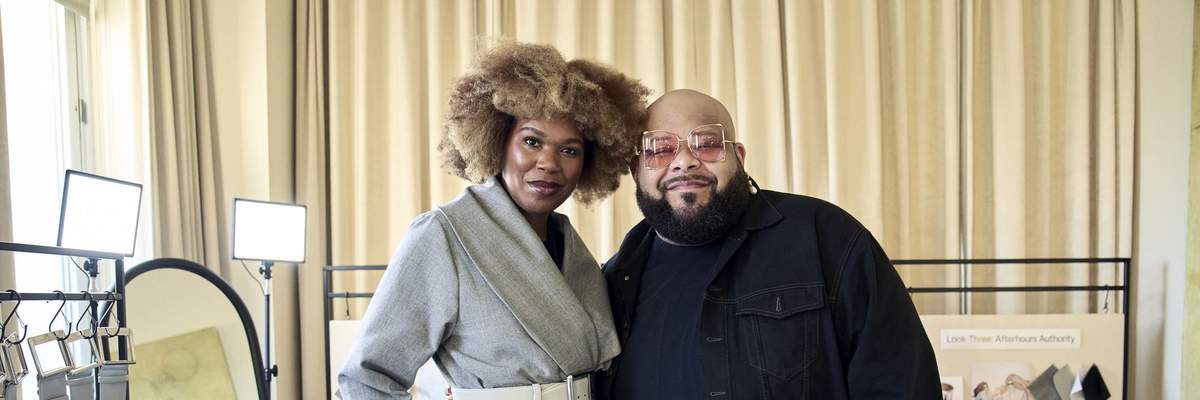
If there's one thing Historically Black Universities are known, it's fostering a sense of interconnectedness for collaborative genius to thrive. Of all campuses, it was on the soil of The Mecca, Howard University, where She'Neil Johnson-Spencer and Nicolette Graves rooted their friendship and aligned their passion for beauty and natural brains. Today, the two have founded a skincare brand of their own, Base Butter, that has not only carved out their niche space in the market but rallied a community of women to glow from the inside out.
It all started with a Facebook message. In the midst of the buzzing anticipation of her inaugurate college year, She'Neil was on the hunt for a roommate with a particular aptness to live with, "Someone who was clean and possibly a Leo because I'm a Leo. And [Nicolette] answered my call."
When the two graduated, there were few Black-owned indie brands on the market, which compelled She'Neil to develop one of her own, "I was really inspired to create something for us, by us with clean, safe, and effective ingredients and celebrated our beauty," she shares. As an escape from her mundane work life, She'Neil followed her curiosity and began to explore her true passion: beauty. What she landed on was a quaint makeup line called, Color Cosmetics, which, although short-lived, led her to the real winner, "I had all these raw ingredients in my apartment and I was like, what am I gonna whip up with this?" What prevailed from the leftovers, was a homemade, natural butter that serviced the body from head to toe.
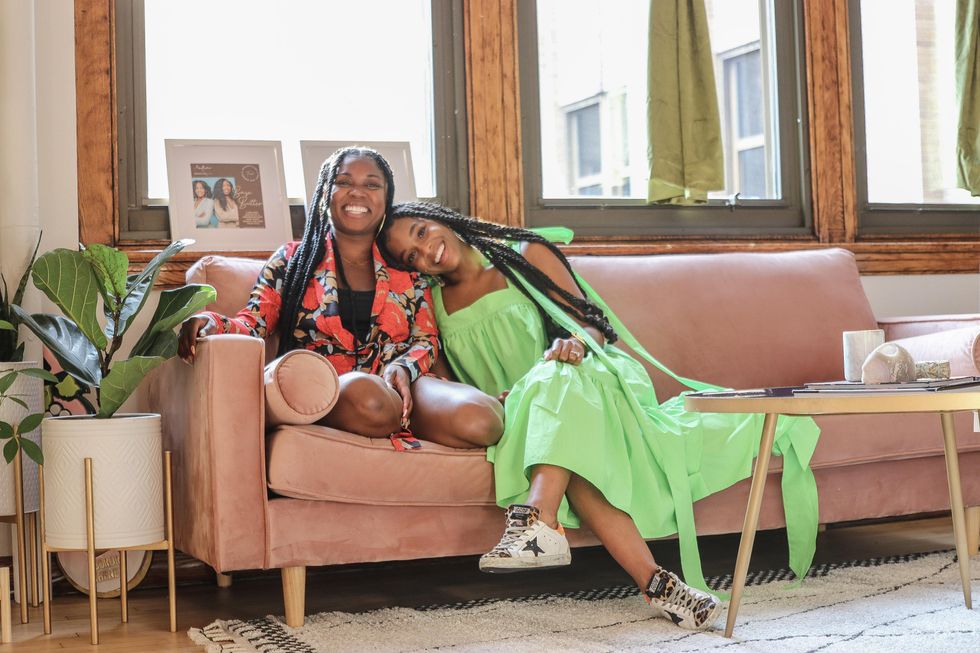
Photo Credit: Taylor Nickens
The roomies turned business partners when She'Neil sensed that her multi-use skin butter line, Base Butter (the product), was in need of some serious scaling. Meaning: it was time to call in reinforcement. Recalling Nicolette's background in product development, She'Neil knew there was no better person suited for the job than her bestie. As Nicolette recalls, "There was an interesting interaction between wellness and beauty at the time. I was consistently sending [She'Neil] trends and data that I was seeing at work then coming home and being her guinea pig."
The two knew that it was time to develop a product that would keep customers coming back for more, and looked no further than their growing community for the answer.
She'Neil and Nicolette conducted a survey called, Skin Struggles, which accumulated the insights of over 3,000 women to learn not only what ailed their skin, but how they could create a solution. "The women ended up sharing what their skin struggles were, what products they're using, what they hate about the industry, what they loved, and that was the beginning vision of the Base Butter 2.0." What they landed on was their "Hero Product," the Radiant Face Jelly, a staple for their oily, combination, and acne-prone skin to rejuvenate and restore.
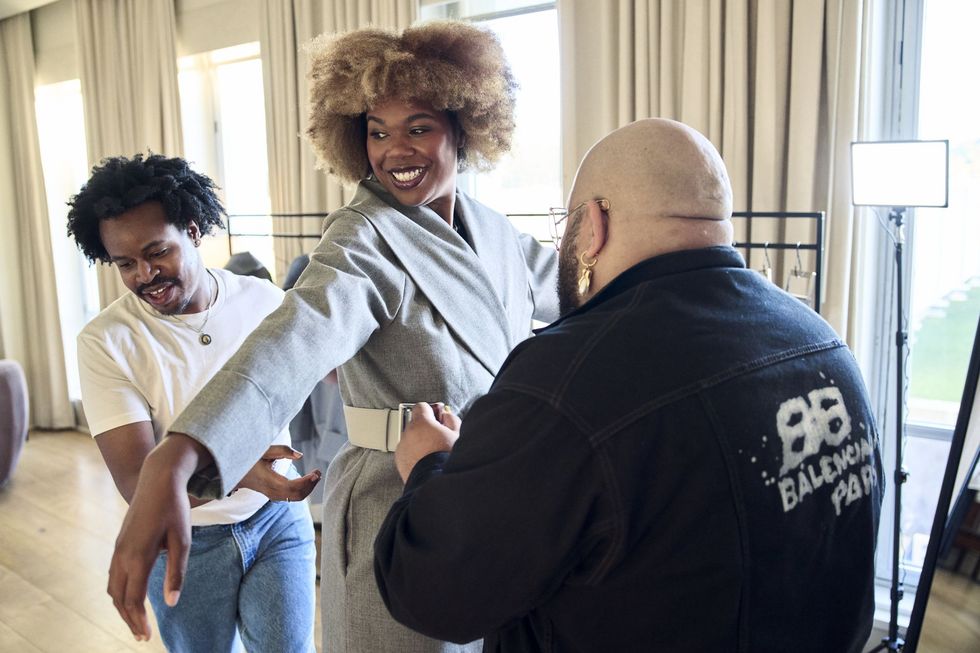
xoNecole chatted with co-founders, She'Neil Johnson, CEO, and Nicolette Graves, VP of Product, to learn the secret sauce of running a successful business with your bestie.
xoNecole: For those creatives who are looking to find their business partner, what are some traits that you would recommend them looking for in that person?
Nicolette Graves: You need the Yin to your Yang. A lot of people will say, don't get into business with your friends, but I think when you're very clear on what your strengths and weaknesses are, and the other person's as well, it creates space to have a level of trust. Early on, when She'Neil brought me on, I would always joke like, "Oh my god, [Base Butter] is like your first baby." And I felt really protective of her first baby. Therefore, I was very clear on being intentional about how I came into it helping. You have to trust that the person you're working with has the appropriate decision-making skills in general. There's also the spiritual component.
It's the trust piece and having faith and knowing that person is going to pull up and show up when you can't and that you can be honest. There were some points in time where She'Neil wasn't feeling it and certain times when I wasn't feeling it, so you have to be able to communicate that and know that there's no hard feelings. It's being able to flex between those things and I think we've been successful because of the love that exists in our friendship and the level of respect.
She'Neil Johnson-Spencer: And you have to know that people's track record. I was able to officially live with Nicolette over the past 10 years because we were roommates in college together. So I knew at the end of the day, Nicolette would get it done - she graduated with a 4.0. She knew when it was time to work and when it was time to play. I think that's really important because there are signs when you meet someone and you want to work with them, and sometimes people ignore those times. So since I've been, I guess, "interviewing" Nicolette for 10 years, I know who she is, in and out.
"You need the Yin to your Yang. A lot of people will say, don't get into business with your friends, but I think when you're very clear on what your strengths and weaknesses are, and the other person's as well, it creates space to have a level of trust. There's also the spiritual component. It's the trust piece and having faith and knowing that person is going to pull up and show up when you can't and that you can be honest."
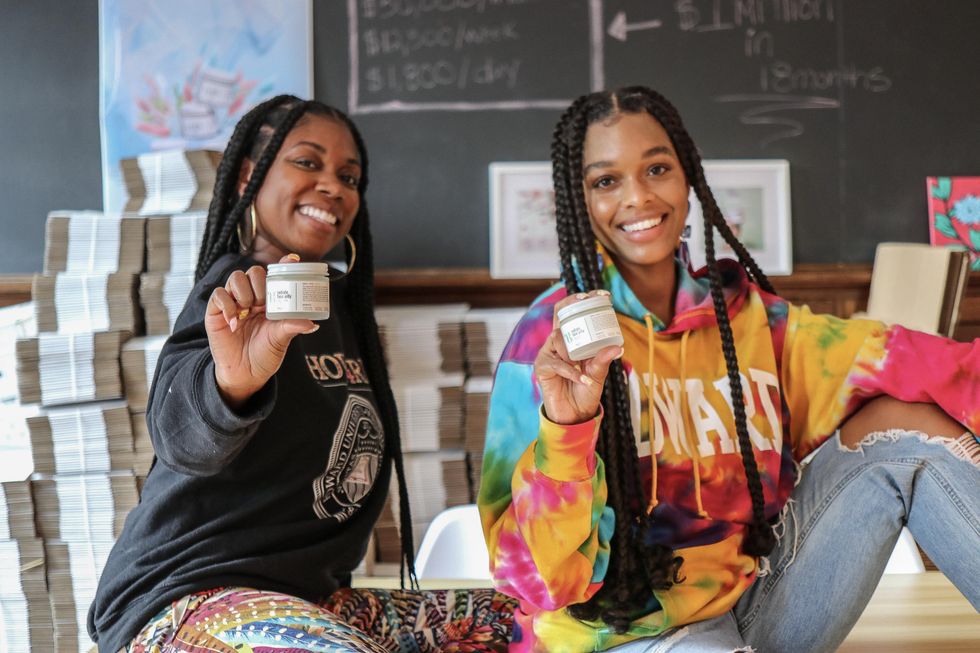
Photo Credit: Taylor Nickens
I’ve heard the term “hero product” come from entrepreneurs who describe the product that changed the game for their business. For you two, it’s the Radiate Face Jelly. How did you all know that you had something special with the Radiate Face Jelly?
She'Neil: When Nicolette came on, we were really like, "OK, what problem are we solving?" So from the Skin Struggles survey, we knew that 50 percent of our customers had oily, combination, acne-prone skin. We knew that we needed a solution for at least those skin types. It was also great because it was the type we also identified with and so it was kind of like a personal decision as well. For those with acne-, oily-prone or combination skin, a lot of times we're really scared to moisturize and hydrate our skin because either it's going to leave us oily or greasy or clog our pores. It was that revelation that led us to create Radiate Face Jelly.
She’Neil, you’ve once mentioned that at one point of your journey, you challenged yourself to just put things out there and not be such a perfectionist. What were some steps that you took to overcome perfectionism and how has that paid off in the long run?
She'Neil: I came into the business with a very strong design background, so for me, everything is about design, aesthetics, and being perfectly curated. It would be terrible to the point where I would spend so much time on maybe one graphic just to post on social media. But it got to a point where our brand became a business and I had to really look at the numbers and the bottom line, and make decisions based on what was making us money. That's really when the shift came. Even to this day, I don't want to do anything design- or aesthetics-related with the business because I just don't want to go back there; to being a perfectionist.
At the end of the day, it's really just about the bottom line: what's going to make us a conversion or a transaction? What's going to win us a customer? What do our customers want? The industry has changed to where customers really want that more real and authentic experience. That gave me some room to chill out some. I also became the CEO of my business and learned that everything is trial and error. Nicolette and I really take on this mindset that everything is an experiment; we're either going to hit the goal, or we're going to have a lesson learned.
"At the end of the day, it's really just about the bottom line: what's going to make us a conversion or a transaction? What's going to win us a customer? What do our customers want? The industry has changed to where customers really want that more real and authentic experience. Nicolette and I really take on this mindset that everything is an experiment; we're either going to hit the goal, or we're going to have a lesson learned."
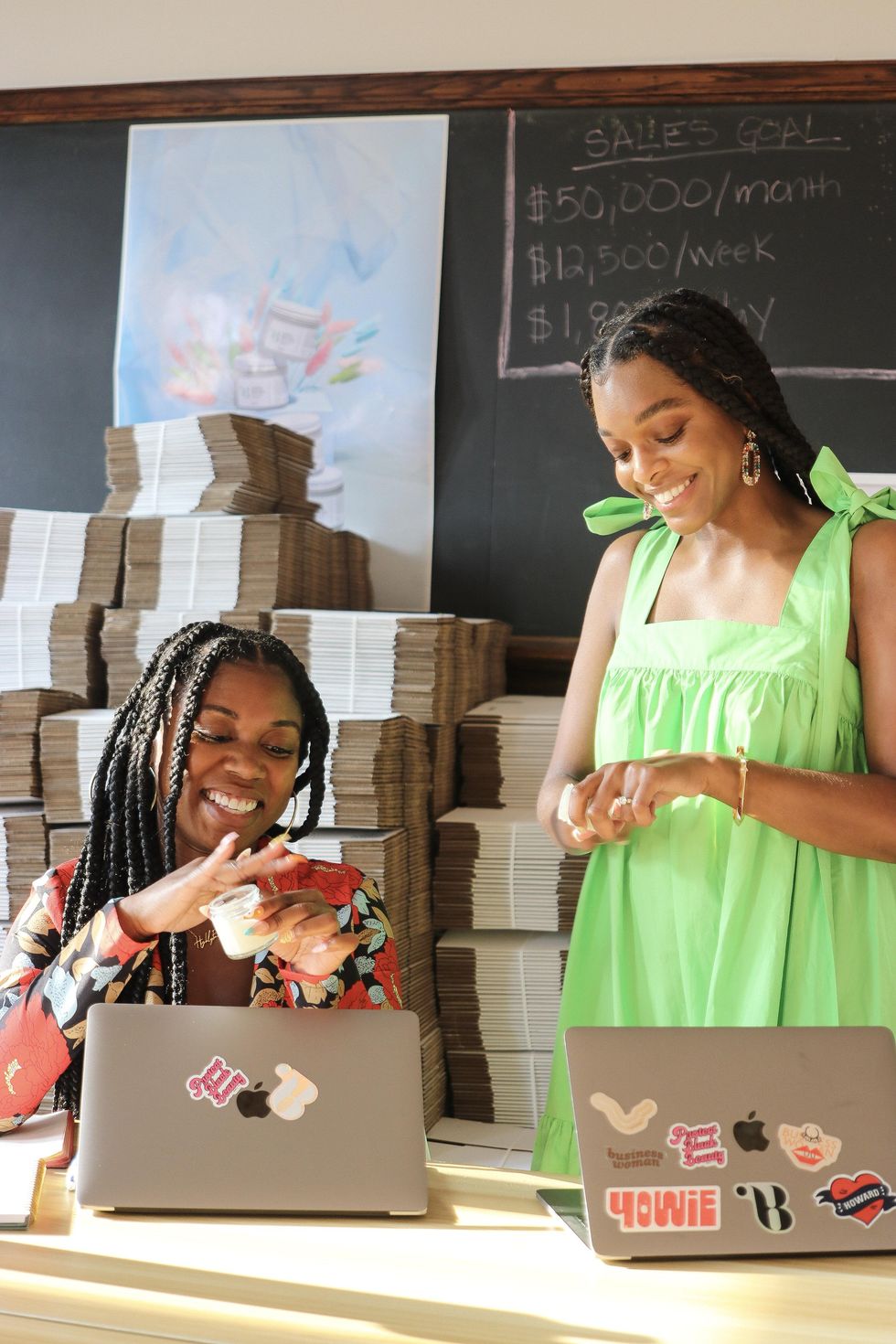
Photo Credit: Taylor Nickens
One common misconception about starting a business and working for yourself is that you have to quit your job and let your business catch you. But for you two, how did having a full-time job help you all build your business?
Nicolette: I'm a single Black woman living in New York and therefore, I need money. We've gone through all the phases of broke entrepreneurship, making money, and all the ups and downs. One of the things I realized is despite having the goal of building this business to be as big as it can be, there are other things I want to do and that takes money and savings and being able to use those resources strategically. In addition to that, I think people have the 9-5 game messed up a little bit. I don't think they realize that when you have a 9-5, you're getting paid to learn. If you're strategic, you'll make sure you're in a role that is consistently teaching you new things.
In my [current] 9-5, I do Product Marketing for a B2B company. Through that, I've learned a lot of interesting things that I get to bring back to our company. Because I've always worked in the startup world, it's allowed me the ability to think of solutions ahead of a problem that might present itself so we're not being reactive, and we can be proactive. It's been like a really interesting space to continue to learn and find inspiration in the weirdest places, while also making sure that I'm financially setting myself up for success as it relates to the wealth gap.
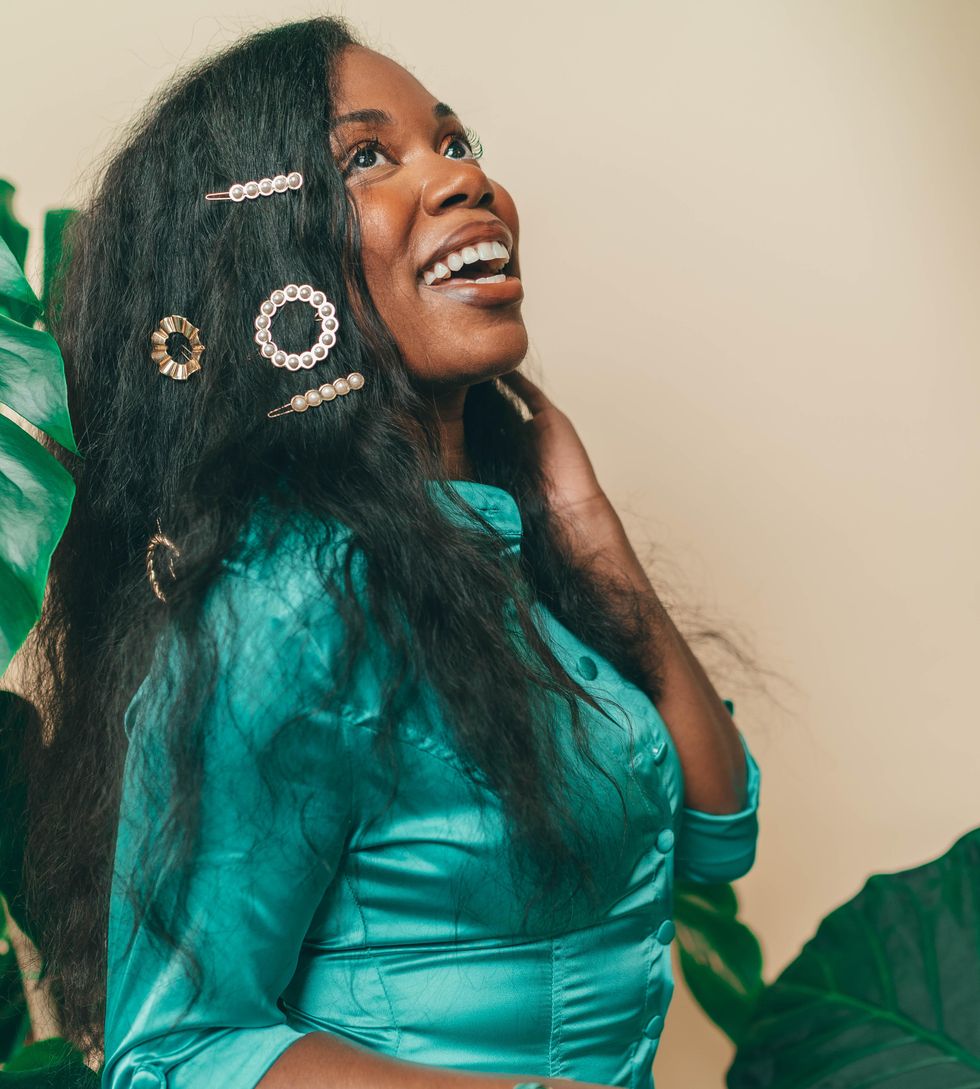
"I think people have the 9-5 game messed up a little bit. I don't think they realize that when you have a 9-5, you're getting paid to learn. If you're strategic, you'll make sure you're in a role that is consistently teaching you new things."
Nicolette Graves
Photo Credit: Pierre Eliezer
She'Neil: I started Base Butter with a 9-5 and ultimately, that funded the start of the business. But when Nicolette and I were laid off, we lived there until our lease ended. I had to make a decision: do I go and find a new job or do I still take this risk and make decisions to still work on Base Butter. Ultimately, I ended up staying in Philadelphia because my expenses were cut a lot and I had the support from my now-husband to build my business. I had to give myself a better financial situation so I could be a better CEO, owner, and founder - if you're not good as a founder, your company's not going to be good.
I thought early on in my business, that I'd just never pay myself until that "one day" we make it big. I thought it would be OK to be broke, broke, broke until we hit a million, but it honestly doesn't work like that. I had student loans, some credit card bills. So I went back to work with the goal of paying down debt, and I had to get very real about the type of life I wanted to live. Nicolette gave me a book called Profit First and from that book, we learned how to pay ourselves, no matter how much we were making. Through implementing that model, we were able to start paying ourselves and things got a lot easier from there.
"I had to give myself a better financial situation so I could be a better CEO, owner, and founder - if you're not good as a founder, your company's not going to be good."

She'Neil Johnson-Spencer
Photo Credit: Pierre Eliezer
Most creatives and entrepreneurs are used to only having themselves to look to for support in difficult times along their journey, but you all are fortunate enough to have each other. How do you all affirm each other when in moments of doubt or when you’re questioning yourselves?
Nicolette: We have the advantages of being best friends. We've always said, "If this is not fun anymore, then we'll stop doing it." In addition to that, although we're not perfectionists, I will say we are committed to doing a good job. There's a level of loyalty and commitment to the idea and the vision. Just consistently being aligned or finding room to realign. And understanding that there's no one right way to do anything, so we have to be flexible.
She'Neil: And I also would say we have each other, but because the of the industry being a mix of beauty, entrepreneurship, creatives, [we] do have a community of people who provide insight and advice based off their own experiences.
What’s one thing that you didn’t know prior to becoming business owners that you would impart to aspiring entrepreneurs?
She'Neil: Pay yourself from day one. I feel like a lot of the stress that comes with launching a business and starting a business is really the finances. Like, how am I going to take care of myself? How am I going to feed myself or how to pay my bills? But if your bills are paid, you're eating every day, and have a roof over your head, you can really focus on your business without having to figure out, how am I going to survive?
You want to build your business around what's going to make you happy and keep you satisfied. It's just making sure that you're in a comfortable position so that you can really focus on your business because your business is going to need you to be present. It needs you to be healthy and for you to be wealthy. Build out your financial plan around your business as early as you can to make sure your needs are met.
Nicolette: And to piggyback off of that, I would say there is no one right way to do anything and you have to trust yourself. Going back to the idea of a saturated market, things will always be saturated because none of these ideas are new. It's understanding that whatever you're building is unique because you're unique and different.
But also, I've seen a lot of people taking any and everybody's advice as goals, but you're supposed to sift through that information and discern what makes the most sense for you and your life. In the grand scheme of things, 5, 10, 20 years from now, what do you want your life to look like? Understanding that as long as you feel OK with that, any and everybody else's opinions of the way that they've done it is irrelevant. You can learn things, but it's your journey.
For more of She'Neil and Nicolette, follow them on Instagram @sheneilmonique and @nicolette.camille. Also, check out their brand Base Butter by clicking here.
Featured image courtesy of Base Butter

Because We Are Still IT, Girl: It Girl 100 Returns
Last year, when our xoNecole team dropped our inaugural It Girl 100 honoree list, the world felt, ahem, a bit brighter.
It was March 2024, and we still had a Black woman as the Vice President of the United States. DEI rollbacks weren’t being tossed around like confetti. And more than 300,000 Black women were still gainfully employed in the workforce.
Though that was just nineteen months ago, things were different. Perhaps the world then felt more receptive to our light as Black women.
At the time, we launched It Girl 100 to spotlight the huge motion we were making as dope, GenZennial Black women leaving our mark on culture. The girls were on the rise, flourishing, drinking their water, minding their business, leading companies, and learning to do it all softly, in rest. We wanted to celebrate that momentum—because we love that for us.
So, we handpicked one hundred It Girls who embody that palpable It Factor moving through us as young Black women, the kind of motion lighting up the world both IRL and across the internet.
It Girl 100 became xoNecole’s most successful program, with the hashtag organically reaching more than forty million impressions on Instagram in just twenty-four hours. Yes, it caught on like wildfire because we celebrated some of the most brilliant and influential GenZennial women of color setting trends and shaping culture. But more than that, it resonated because the women we celebrated felt seen.
Many were already known in their industries for keeping this generation fly and lit, but rarely received recognition or flowers. It Girl 100 became a safe space to be uplifted, and for us as Black women to bask in what felt like an era of our brilliance, beauty, and boundless influence on full display.
And then, almost overnight, it was as if the rug was pulled from under us as Black women, as the It Girls of the world.
Our much-needed, much-deserved season of ease and soft living quickly metamorphosed into a time of self-preservation and survival. Our motion and economic progression seemed strategically slowed, our light under siege.
The air feels heavier now. The headlines colder. Our Black girl magic is being picked apart and politicized for simply existing.
With that climate shift, as we prepare to launch our second annual It Girl 100 honoree list, our team has had to dig deep on the purpose and intention behind this year’s list. Knowing the spirit of It Girl 100 is about motion, sauce, strides, and progression, how do we celebrate amid uncertainty and collective grief when the juice feels like it is being squeezed out of us?
As we wrestled with that question, we were reminded that this tension isn’t new. Black women have always had to find joy in the midst of struggle, to create light even in the darkest corners. We have carried the weight of scrutiny for generations, expected to be strong, to serve, to smile through the sting. But this moment feels different. It feels deeply personal.
We are living at the intersection of liberation and backlash. We are learning to take off our capes, to say no when we are tired, to embrace softness without apology.
And somehow, the world has found new ways to punish us for it.

In lifestyle, women like Kayla Nicole and Ayesha Curry have been ridiculed for daring to choose themselves. Tracee Ellis Ross was labeled bitter for speaking her truth about love. Meghan Markle, still, cannot breathe without critique.
In politics, Kamala Harris, Letitia James, and Jasmine Crockett are dragged through the mud for standing tall in rooms not built for them.
In sports, Angel Reese, Coco Gauff, and Taylor Townsend have been reminded that even excellence will not shield you from racism or judgment.

In business, visionaries like Diarrha N’Diaye-Mbaye and Melissa Butler are fighting to keep their dreams alive in an economy that too often forgets us first.
Even our icons, Beyoncé, Serena, and SZA, have faced criticism simply for evolving beyond the boxes society tried to keep them in.
From everyday women to cultural phenoms, the pattern is the same. Our light is being tested.

And yet, somehow, through it all, we are still showing up as that girl, and that deserves to be celebrated.
Because while the world debates our worth, we keep raising our value. And that proof is all around us.
This year alone, Naomi Osaka returned from motherhood and mental health challenges to reach the semifinals of the US Open. A’ja Wilson claimed another MVP, reminding us that beauty and dominance can coexist. Brandy and Monica are snatching our edges on tour. Kahlana Barfield Brown sold out her new line in the face of a retailer that had been canceled. And Melissa Butler’s company, The Lip Bar, is projecting a forty percent surge in sales.

We are no longer defining strength by how much pain we can endure. We are defining it by the unbreakable light we continue to radiate.
We are the women walking our daily steps and also continuing to run solid businesses. We are growing in love, taking solo trips, laughing until it hurts, raising babies and ideas, drinking our green juice, and praying our peace back into existence.
We are rediscovering the joy of rest and realizing that softness is not weakness, it is strategy.
And through it all, we continue to lift one another. Emma Grede is creating seats at the table. Valeisha Butterfield has started a fund for jobless Black women. Arian Simone is leading in media with fearless conviction. We are pouring into each other in ways the world rarely sees but always feels.

So yes, we are in the midst of societal warfare. Yes, we are being tested. Yes, we are facing economic strain, political targeting, and public scrutiny. But even war cannot dim a light that is divinely ours.
And we are still shining.
And we are still softening.
And we are still creating.
And we are still It.

That is the quiet magic of Black womanhood, our ability to hold both truth and triumph in the same breath, to say yes, and to life’s contradictions.
It is no coincidence that this year, as SheaMoisture embraces the message “Yes, And,” they stand beside us as partners in celebrating this class of It Girls. Because that phrase, those two simple words, capture the very essence of this moment.
Yes, we are tired. And we are still rising.
Yes, we are questioned. And we are the answer.
Yes, we are bruised. And we are still beautiful.

This year’s It Girl 100 is more than a list. It is a love letter to every Black woman who dares to live out loud in a world that would rather she whisper. This year’s class is living proof of “Yes, And,” women who are finding ways to thrive and to heal, to build and to rest, to lead and to love, all at once.
It is proof that our joy is not naive, our success not accidental. It is the reminder that our light has never needed permission.
So without further ado, we celebrate the It Girl 100 Class of 2025–2026.
We celebrate the millions of us who keep doing it with grace, grit, and glory.
Because despite it all, we still shine.
Because we are still her.
Because we are still IT, girl.
Meet all 100 women shaping culture in the It Girl 100 Class of 2025. View the complete list of honorees here.
Featured image by xoStaff
These Black Women Left Their Jobs To Turn Their Wildest Dreams Into Reality
“I’m too big for a f***ing cubicle!” Those thoughts motivated Randi O to kiss her 9 to 5 goodbye and step into her dreams of becoming a full-time social media entrepreneur. She now owns Randi O P&R. Gabrielle, the founder of Raw Honey, was moving from state to state for her corporate job, and every time she packed her suitcases for a new zip code, she regretted the loss of community and the distance in her friendships. So she created a safe haven and village for queer Black people in New York.
Then there were those who gave up their zip code altogether and found a permanent home in the skies. After years spent recruiting students for a university, Lisa-Gaye Shakespeare became a full-time travel influencer and founded her travel company, Shakespeare Agency. And she's not alone.
These stories mirror the experiences of women across the world. For millions, the pandemic induced a seismic shift in priorities and desires. Corporate careers that were once hailed as the ultimate “I made it” moment in one's career were pushed to the back burner as women quit their jobs in search of a more self-fulfilling purpose.
xoNecole spoke to these three Black women who used the pandemic as a springboard to make their wildest dreams a reality, the lessons they learned, and posed the question of whether they’ll ever return to cubicle life.
Answers have been edited for context and length.
xoNecole: How did the pandemic lead to you leaving the cubicle?
Randi: I was becoming stagnant. I was working in mortgage and banking but I felt like my personality was too big for that job! From there, I transitioned to radio but was laid off during the pandemic. That’s what made me go full throttle with entrepreneurship.
Gabrielle: I moved around a lot for work. Five times over a span of seven years. I knew I needed a break because I had experienced so much. So, I just quit one day. Effective immediately. I didn’t know what I was going to do, I just knew I needed a break and to just regroup.
Lisa-Gaye: I was working in recruiting at a university and my dream job just kind of fell into my lap! But, I never got to fully enjoy it before the world shut down in March [2020] and I was laid off. On top of that, I was stuck in Miami because Jamaica had closed its borders due to the pandemic before I was able to return.

Randi O
xoN: Tell us about your journey after leaving Corporate America.
Randi: I do it all now! I have a podcast, I’m an on-air talent, I act, and I own a public relations company that focuses on social media engagement. It’s all from my network. When you go out and start a business, you can’t just say, “Okay I’m done with Corporate America,” and “Let me do my own thing.” If you don’t build community, if you don’t build a network it's going to be very hard to sustain.
Gabrielle: I realized in New York, there was not a lot to do for Black lesbians and queer folks. We don’t really have dedicated bars and spaces so I started doing events and it took off. I started focusing on my brand, Raw Honey. I opened a co-working space, and I was able to host an NYC Pride event in front of 100,000 people. I hit the ground running with Raw Honey. My events were all women coming to find community and come together with other lesbians and queer folks. I found my purpose in that.
Lisa-Gaye: After being laid off, I wrote out all of my passions and that’s how I came up with [my company] Shakespeare Agency. It was all of the things that I loved to do under one umbrella. The pandemic pulled that out of me. I had a very large social media following, so I pitched to hotels that I would feature them on my blog and social media. This reignited my passion for travel. I took the rest of the year to refocus my brand to focus solely on being a content creator within the travel space.

Gabrielle
xoN: What have you learned about yourself during your time as an entrepreneur?
Randi: [I learned] the importance of my network and community that I created. When I was laid off I was still keeping those relationships with people that I used to work with. So it was easy for me to transition into social media management and I didn’t have to start from scratch.
Gabrielle: The biggest thing I learned about myself was my own personal identity as a Black lesbian and how much I had assimilated into straight and corporate culture and not being myself. Now, I feel comfortable and confident being my authentic self. Now, I'm not sacrificing anything else for my career. I have a full life. I have friends. I have a social life. And when you are happy and have a full quality of life, I feel like [I] can have more longevity in my career.
Lisa-Gaye: [I'm doing] the best that I've ever done. The discipline that I’m building within myself. Nobody is saying, ‘Oh you have to be at work at this time.’ There’s no boss saying, ‘Why are you late?’ But, if I’m laying in bed at 10 a.m. then it's me saying [to myself], 'Okay, Lisa, get up, it's time for you to start working!’ That’s all on me.
xoNecole: What mistakes do you want to help people avoid when leaving Corporate America?
Randi: You have to learn about the highs and lows of entrepreneurship. You have a fast season and a slow season and I started to learn that when you're self-employed the latter season hits hard. Don't get caught up on the lows, just keep going and don't stop. I’m glad I did.
Gabrielle: I think everyone should quit their job and just figure it out for a second. You will discover so much about yourself when you take a second to just focus on you. Your skill set will always be there. You can’t be afraid of what will happen when you bet on yourself.
Lisa-Gaye: When it comes to being an influencer the field is saturated and a lot of people suffer from imposter syndrome. There is nothing wrong with being an imposter but find out how to make it yours, how to make it better. If you go to the store, you see 10 million different brands of bread! But you are choosing the brand that you like because you like that particular flavor.
So be an imposter, but be the best imposter of yourself and add your own flair, your own flavor. Make the better bread. The bread that you want.

Lisa-Gaye Shakespeare
xoNecole: Will you ever return to your 9 to 5?
Randi: I wouldn’t go back to Corporate America. But I don’t mind working under someone. A lot of people try to get into this business saying, “I can't work under anyone.” That’s not necessarily the reason to start a business because you're always going to answer to somebody. Clients, brands, there’s always someone else involved.
Gabrielle: I went back! I really needed a break and I gave myself that. But, I realized I’m a corporate girl, [and] I enjoy the work that I do. I’m good at it and I really missed that side of myself. I have different sides of me and my whole identity is not Raw Honey or my queerness. A big side of me is business and that’s why I love having my career. Now I feel like my best self.
Lisa-Gaye: I really don’t. For right now, I love working for myself. It's gratifying, it's challenging, it's exciting. It’s a big deal for me to say I own my own business. That I am my own boss, and I'm a Black woman doing it.
Let’s make things inbox official! Sign up for the xoNecole newsletter for love, wellness, career, and exclusive content delivered straight to your inbox.
Featured image courtesy of Lisa-Gaye Shakespeare
Originally published on February 6, 2023