




Voting has been a part of my life for as long as I can remember. As a child, my parents would pack my sister and me up in the car and allow us to take in the excitement of the polls during local and national elections.
Years later, in 2008, I voted in my first election for Barack Obama and emotionally celebrated his win surrounded by fellow classmates from Clark Atlanta, Spelman, and Morehouse.
I remember calling my grandmother, who has since transitioned, and hearing the passion in her voice when she explained how she’d never thought she’d see something like this happen and how much it meant to her. As I reflect, I realize it’s a combination of memories like this that undoubtedly encouraged my will to vote.
However, as an adult, my reasoning behind the practice has developed. It’s no longer just about “the right thing to do.” I feel a responsibility to myself and my future to know the issues, how they impact me, and make a difference for others.
In the times we’re in, there's so much “news” everywhere. It’s hard to distinguish fact from opinion and bias from beliefs. This is why it was such a pleasure speaking with Jara Butler, Chief Impact Officer of Supermajority. Supermajority is an organization focused on making women the most powerful voting bloc in the country. During this authentic and informal conversation, we talked about so much.
I learned about her time working with the Obama campaign and how she masterfully worked in multiple industries, and we shared some of our favorite female rap moments. However, in the snapshot you’ll read, we focused on the issues. Jara walked xoNecole through what’s most affecting women of color in this election and what we can do to be more aware. Whether you’re a politics girlie or like me, just trying to gain more insight, hopefully this convo connects with you.
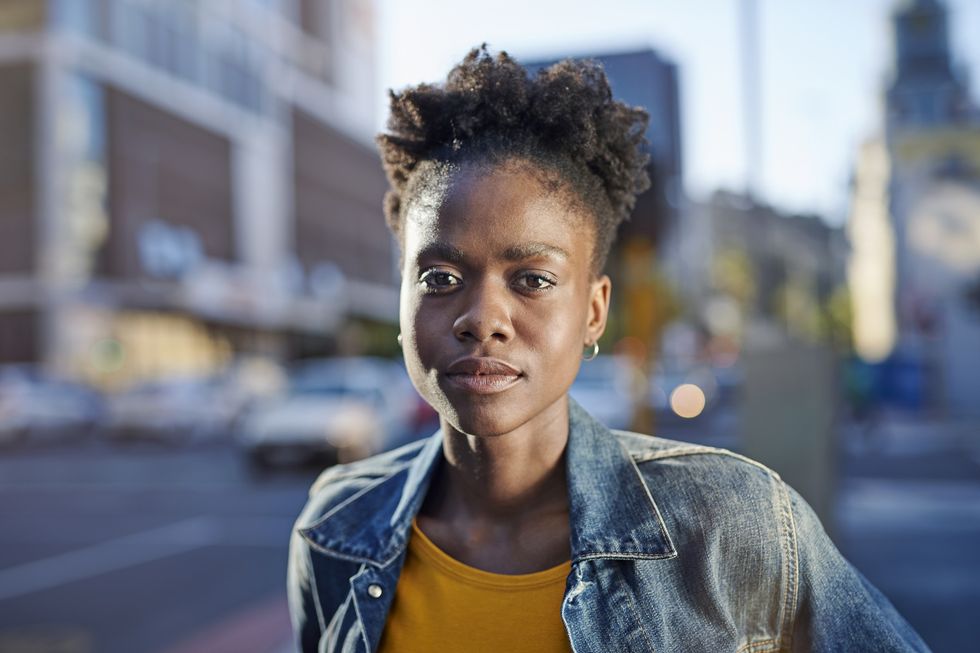
Uwe Krejci/ Getty Images
xoNecole: Let’s just jump right in. What are some of the most popular issues that you hear Black women discussing related to this election?
Jara Butler: Our sister organization, the Supermajority Education Fund, recently did some research specifically looking at young women in the age group 18 to 35, and young Black women identified their economic well-being as a priority. Right now, we're in a place where a lot of us, especially young Black women, are finding that meeting those basic needs are harder and harder.
Secondly, is Project 2025. I think Black women see it as not just something that could happen, but actively happening. For example, we’ve all been watching the case with the Fearless fund, and how it's been targeted. We know Black women are very entrepreneurial. We can go back to Madam C.J. Walker and others who have opened the door for all of us to achieve. But if those barriers are in place, we're just not going to be able to meet that.
Lastly, Repro is a very big issue. But I think looking at it holistically and not just about abortion is important. Black women are more likely to talk about this from a perspective of our reproductive health care and the lack of access due to medical racism. As a Black woman myself, who's over 40, a lot of the changes that I am making in my life are because I have to do everything I can to put myself in a position, because I know no matter what my economic status is, if I walk into a medical office, there's a good chance I'm gonna face medical discrimination. Breast cancer screenings, colon cancer screening, ovarian cancer screening, cervical cancer screenings - all of those are part of that network of reproductive health.
xoN: Another issue I’d love your insight into is our missing girls. I think it's so unbelievable how much this is swept under the rug. There are so many stories about Black women that are continuing to go missing; I don’t understand how that’s not a bigger conversation. Is this something that can be pursued on the government level and what can we do to bring more attention to this issue?
Jara: We have this list of majority rules on our website, and my favorite one is: that our government represents us. I think that we have to continue to apply pressure to our government to meet our needs. And again, women are the majority of voters. Black women, especially, are the most reliable voting bloc across all groups, and our interests right now are not being met. So yes, there is something that we can do, but I also am a big proponent of us having these conversations.
My great-grandmother was enslaved, my grandmother was born into Jim Crow, and I watched my mother face economic insecurity. I say that because, as a Black community, we have to have an internal conversation to talk about these issues, and we have to do it upfront. I think we have to get into a position of realizing that we do have power, and how we activate that power.
Our power comes from being Black folks because Black people organizing has been enough to shake up and scare people. There were laws that prevented us from congregating together, even at church, because they knew what would happen when we got together. We have to get back into that. It's not that we are not doing it, but the urgency needs to be greater. And finally, we have to get away from depending on one individual to take us there. It's gonna take all of us.
"Our power comes from being Black folks because Black people organizing has been enough to shake up and scare people. There were laws that prevented us from congregating together, even at church, because they knew what would happen when we got together. We have to get back into that. It's not that we are not doing it, but the urgency needs to be greater."
xoN: I agree completely. Now, when we started, you mentioned money. So let’s talk about it. So many of us are starting businesses and getting degrees, and I love to see it. But everyone seems to still be having a lot of the same issues around finances. What are some of the underlying reasons behind this debt that we're dealing with, and how can voting influence these challenges without getting into the individual candidates?
Jara: Hello! Let’s talk about the money! Black women have been told that if we want to move ahead, we have to have that master's degree. We have to be twice as good. So we met that measure, right? But in order to do that, we have to pay for it. Up until about the 1970s college was absolutely affordable. You could work one job and pay for college with some money left over. That has changed.
Realistically, student loans are a barrier. They are a barrier to access housing. They impact our credit, and really and truthfully, depending on how much your loans are, they could affect you paying rent. It basically creates a cycle of debt. And I have real problems with people who say, get a degree in something that's going to make money. It’s about your skills, and if you have the skills, you should be able to earn a living. That covers that.
But the fact is that student loan debt continues to increase, and there have been attempts, more than once, to try to relieve some of that pressure. The reality is that this is a squeeze. It is a conundrum, and we see efforts by the current White House administration to try to alleviate those things, even when they are stopped.
But truly, Congress needs to step in and support this, but I would take it a step further. We should be considering and looking at what it would look like if we had free community colleges. Because what we have now is two generations of borrowers, because older millennials’ children are beginning to age. Black women have the highest degree of second-degree secondary education, but we carry like 1.7 trillion in debt or something like that. I can't remember the exact number, but basically, the majority of the student loan debt is ours.
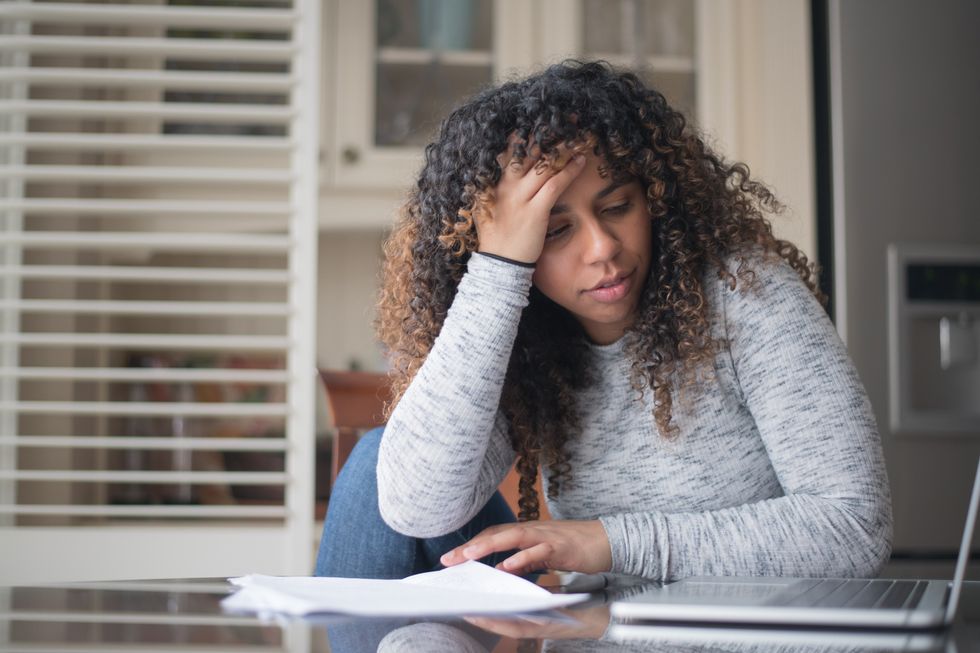
FatCamera/ Getty Images
xoN: Speaking of college, obviously there’s a lot of discussion around affirmative action in the schools and the undergoing changes. How important is it to consider this topic, and are there any new laws or policies being proposed around this that we should be aware of?
Jara: Oh my goodness, affirmative action is one of the things that we saw that our sister site, the Supermajority Education Fund, found last year as a number two issue for young women. I actually hypothesized that it was a real thing, and it was. And the reason for that is that affirmative action as a whole has been something that benefited white women more than any other group.
However, what is happening is that we’re using the word DEI in a way that is derogatory. I’ve heard people refer to it as: “didn't even earn it.” And as a Black woman who attended an amazing school, I remember being in class and having someone make that comment, knowing my grades were higher than theirs.
The fact of the matter is that we would not need these policies if we lived in an equal and equitable society. It doesn't do us any harm for us to face the facts that this country was built off the backs of enslaved people and the blood of indigenous people, and off the sweat and the tears of immigrants. But because we are unwilling to face that, we now are demonizing programs that are actually meant to create some symbol of balance.
xoN: Finally, I’ll close with this, what can we do to provide information to young people, and how do we combat all of the less than researched info?
Jara: One thing I encourage is to look at the source. At Supermajority, our social channels are information-based. We strive to provide up-to-date accurate information that is digestible to all. Media literacy is something I believe in, and unfortunately, it is something that we have a responsibility to continue to share with the community at large. So much of our world is centered on immediate info, a lie spreads faster than the truth.
We just saw that with the Olympic women's boxers, and we have to ask ourselves often: is this information accurate? Who is telling the story? Most importantly, how am I an original contributor? Not everything said needs to be shared, and not every thought needs to be public.
Let’s make things inbox official! Sign up for the xoNecole newsletter for love, wellness, career, and exclusive content delivered straight to your inbox.
Feature image by Delmaine Donson/ Getty Images
RELATED



Kayla Nicole says she wore a dress that was once worn by Braxton herself for the Halloween costume. “It’s not a secret Toni is more on the petite side. I’m obsessed with all 5’2” of her,” she tells xoNecole via email. “But I’m 5’10'' and not missing any meals, honey, so to my surprise, when I got the dress and it actually fit, I knew it was destiny.”
The episode was the perfect way for the multihyphenate to take control of her own narrative. By addressing the viral moment on her own platform, she was able to stir the conversation and keep the focus on her adoration for Braxton, an artist she says she grew up listening to and who still makes her most-played playlist every year. Elsewhere, she likely would’ve received questions about whether or not the costume was a subliminal aimed at her ex-boyfriend and his pop star fiancée. “I think that people will try to project their own narratives, right?” she said, hinting at this in the episode. “But, for me personally – I think it’s very important to say this in this moment – I’m not in the business of tearing other women down. I’m in the business of celebrating them.”
Kayla Nicole is among xoNecole’s It Girl 100 Class of 2025, powered by SheaMoisture, recognized in the Viral Voices category for her work in media and the trends she sets on our timelines, all while prioritizing her own mental and physical health. As she puts it: “Yes, I’m curating conversations on my podcast The Pre-Game, and cultivating community with my wellness brand Tribe Therepē.”
Despite being the frequent topic of conversation online, Kayla Nicole says she’s learning to take advantage of her growing social media platform without becoming consumed by it. “I refuse to let the internet consume me. It’s supposed to be a resource and tool for connection, so if it becomes anything beyond that I will log out,” she says.
On The Pre-Game, which launched earlier this year, she has positioned herself as listeners “homegirl.” “There’s definitely a delicate dance between being genuine and oversharing, and I’ve had to learn that the hard way. Now I share from a place of reflection, not reaction,” she says. “If it can help someone feel seen or less alone, I’ll talk about it within reason. But I’ve certainly learned to protect parts of my life that I cherish most. I share what serves connection but doesn’t cost me peace.
"I refuse to let the internet consume me. It’s supposed to be a resource and tool for connection, so if it becomes anything beyond that I will log out."
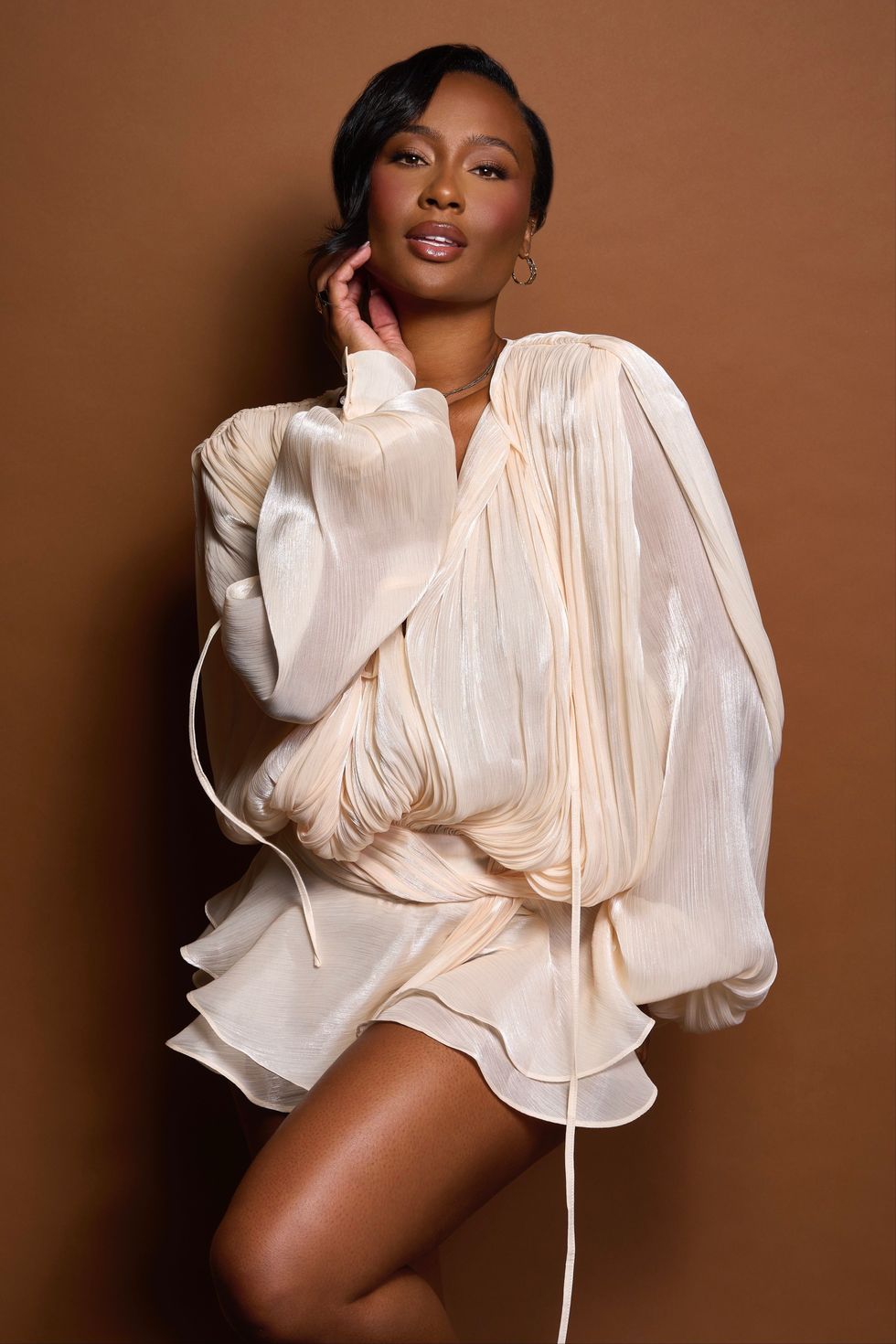
Credit: Malcolm Roberson
Throughout each episode, she sips a cocktail and addresses trending topics (even when they involve herself). It’s a platform the Pepperdine University alumnus has been preparing to have since she graduated with a degree in broadcast journalism, with a concentration in political science.
“I just knew I was going to end up on a local news network at the head anchor table, breaking high speed chases, and tossing it to the weather girl,” she says. Instead, she ended up working as an assistant at TMZ before covering sports as a freelance reporter. (She’s said she didn’t work for ESPN, despite previous reports saying otherwise.) The Pre-Game combines her love for pop culture and sports in a way that once felt inaccessible to her in traditional media.
She’s not just a podcaster, though. When she’s not behind the mic, taking acting classes or making her New York Fashion Week debut, Kayla Nicole is also busy elevating her wellness brand Tribe Therepē, where she shares her workouts and the workout equipment that helps her look chic while staying fit. She says the brand will add apparel to its line up in early 2026.
“Tribe Therepē has evolved into exactly what I have always envisioned. A community of women who care about being fit not just for the aesthetic, but for their mental and emotional well-being too. It’s grounded. It’s feminine. It’s strong,” she says. “And honestly, it's a reflection of where I am in my life right now. I feel so damn good - mentally, emotionally, and physically. And I am grateful to be in a space where I can pour that love and light back into the community that continues to pour into me.”
Tap into the full It Girl 100 Class of 2025 and meet all the women changing game this year and beyond. See the full list here.
Featured image by Malcolm Roberson

I was inspired to write this because, recently, while reading about eight types of narcissists and what their traits consist of, I revisited what a vulnerable narcissist is all about. Then, as I connected some dots via another piece that I read about how it shows up in female friendships — well, because this is a platform for Black women, I definitely wanted to put y’all on notice. Because when it comes to toxic friendships (which really is a bit of an oxymoron, isn’t it?), there is probably nothing worse than having a narcissist friend — someone who displays traits like being highly self-centered, pretty apathetic, and constantly gaslighting those around them.
Okay, so what’s the difference between a “regular” narcissist and a vulnerable one? Yeah, let’s get into that now because I’ve got a feeling that some light bulbs are going to go on for a few of you…as it relates to at least one of your current…“friendships.”
So Basically, a Vulnerable Narcissist Is the Same Thing As a Covert One
 Giphy
GiphyIf you check out the article, “Science Says That Happy Couples Do The Following 7 Things” on this platform, one thing that you will notice that I said is, since I’ve been a marriage life coach, I’ve not really been big on using the word “vulnerable” when it comes to serious relationships. Charge it to being a writer who takes words pretty literally (dictionary-defined ones, not what social media makes up from year to year) yet I’ve never understood why we should encourage people to be vulnerable with someone who they deeply trust.
I say that because I know that vulnerable means things like “capable of or susceptible to being attacked, damaged, or hurt” and “open to moral attack, criticism, temptation, etc.” And although I get that no one is perfect, if you feel like dealing with those closest to you requires taking this level of an emotional risk, on a fairly consistent basis? In my opinion, that is a dark orange flag, if not a flat-out red one.
I’ve said before that my preferred word is “dependent” because it means “relying on someone or something else for aid, support, etc.” — and healthy relationships? They absolutely should be INTERDEPENDENT. Yeah, whether it’s romantic, familial or a friendship — why are you out here feeling like sharing yourself makes you open to attack and harm when you should be involved with individuals who can be relied on for support? See the difference? And that is why a vulnerable narcissist makes sense to me — since a narcissist is unsafe, by the very definitions of vulnerable, a vulnerable one would be too. Even more so, in fact.
Here's the clincher, though. Even if you’ve never heard of a vulnerable narcissist before, I’m willing to bet that some of you have heard of a covert narcissist, which is basically the same thing. The fascinating thing about a covert narcissist is they are more subtle than some of the other types — which is exactly how they are able to trip folks up. Because although they need lots of attention and they tend to act really self-important (like all narcissists do), a covert narcissist moves in some pretty sneaky ways.
For instance, they might go really heavy on what seems like compliments (more on that in a sec) in order to make you think that they admire you when, really, they just want to get your guard down in order to get whatever they want out of you. Another example of a covert narcissist is they might act like they are proud of something you accomplished; however, they are actually sticking close by to get some of your contacts or to work themselves into the successful world that you created, so that they can actually compete with you. One more example of a covert narcissist is if they don’t get their way, they may ghost you for days, weeks or months at a time and then be all passive aggressive about it whenever they resurface.
And why are they like this? Because vulnerable/covert narcissists get off on gaslighting — they want you to feel like you are crazy for thinking what is, 8.5/10, spot-on about them. That way, you can be the villain and they can play the victim — even though it’s probably the exact opposite that is actually going on. They do this because, ultimately, to boost their ego. For a narcissist, pretty much of any kind, game-playing is what fuels them and makes them bigger in their minds than they actually are (or even deserve to be).
10 Dead-Ringer Signs of a Vulnerable Narcissist
 Giphy
GiphyOkay, so even with all of what I just said, what if you’re like, “Shellie, I think I get it, but I need a few more examples of what you’re saying”? I hear you and I’ve got you. Some other ways that vulnerable narcissists like to show up and out?
- They are hypercritical and condescending
- They act like they are allergic to accountability
- Their expectations are unreasonable (and hypocritical)
- They are walking contradictions
- They want to be the center of attention (and while monopolize things
- They are masters at giving others the silent treatment
- Their expectations are unrealistic and their demands are ridiculous
- They deflect instead of apologize
- They flatter (use fluffy and insincere words) yet don’t affirm or compliment (yes, there is a difference)
- They lack empathy or humility
And why — or even how — would you be a friend with someone like this? Well, the other thing that you have to keep in mind about narcissism is they are excellent at using charm to their advantage. Charming people tend to come off as being charismatic and witty. Charming people seem to be really interested in you (at least initially). Charming people have a way of making you feel very comfortable around them. At first, charming people seem genuine, attentive and respectful. And they definitely make a good impression — sometimes one that is so solid that you keep going back to that memory during the “bad times” with them.
Hmph. The thing that you have to always keep in mind when it comes to charm, though, is what Scripture says about it: “Charm is deceitful…” (Pr. 31:30) — and that is just what a narcissist is: deceptive.
And when it comes to a vulnerable narcissist and her friendships with other women? The deceptive runs deep.
How a Vulnerable Narcissist Shows Up Especially in Female Friendships
 Giphy
GiphyAlways remember that a vulnerable narcissist moves in subtle and sneaky ways. Hmph, that alone should make you want to ponder if you have some female friends who would fit the bill of being a vulnerable narcissist because we do have a way of being clever and ingenious…which are two of the things that come with being a subtle type of individual. And the way that subtle narcissists use their clever and ingenious ways to their advantage? I’ll give you an example.
A former friend of mine who was — and from what I hear, still is — an absolute vulnerable narcissist really wanted me to be her fan rather than her friend. One time, she even invited me to a bachelorette party and said, “You’re the only one here who isn’t a bridesmaid. You should feel honored.” Nah, what you really said is that you don’t truly value what I bring into your life enough to be a bridesmaid but you know I am good for bringing one hell of a gift and cheering you on regardless.
And that’s how a lot of our friendship was — doing way more giving than I was receiving, doing way more listening than leaning and when I would call her out on some of these things, she would either freeze me out or play the victim and act like somehow it was my fault that she wasn’t being a better friend.
Yeah, that’s what you’ve gotta watch about vulnerable narcissists — it is going to be oh so very rare that they will take full accountability for where they have dropped the ball. To them, somehow, it — whatever “it” is — is either going to be your fault or someone else’s. And that’s why, in their eyes, if you were a “real friend” to them, you would coddle them through not meeting your needs instead of expecting them to actually change their ways so that you both could benefit from the relationship.
And why don’t your needs matter? Because, to a vulnerable narcissist, they believe that they are worthy of extra special treatment at all times — think of them like being a bridezilla 24 hours a day. LOL.
And although some of what I said can be nuanced, for the most part, that really is how a vulnerable narcissist tends to make themselves seen and heard in female friendships: treat them like queens and expect to be mere subjects in their court or…why are you around at all, chile?
5 Hacks for Handling a Vulnerable Narcissist
 Giphy
GiphyFeeling triggered? Or better yet, are you feeling like you finally can “scratch the itch” of what you’ve been looking for to describe a certain person (or certain people) in your life goes? If that is the case and although you see some flags, there tends to be at least a little bit of good enough in your dynamic with “your” vulnerable narcissist to not totally break things off (yet), how do you keep a vulnerable narcissist from causing (anymore) harm?
1. Set firm boundaries. The former friend who I just spoke of? It took years to fully and finally unravel out of all of that (pretty much because she took her elitism to “no turning back” levels a few years ago). A part of the reason why is because she’s not the devil; she really isn’t — she’s just a narcissist. So, what I did to make things more bearable for myself for a while was set some emotional boundaries.
Sometimes I had to tell her “no” and provide no explanation behind it (narcissists think that they are owed every damn thing, chile). I refused to be at her beck and call all of the time. When I felt like she was stressing me out, I would take a bit of time off from phone calls or hanging out. Listen, you will never survive a narcissist, of any kind, unless you have some firm and consistent ARTICULATED boundaries set. If you don’t heed any other point, please heed this one.
2. Have consequences in place for when they are broken. There is no point in setting a boundary if there aren’t going to be consequences for when they are broken. So, for instance, if you tell a vulnerable narcissist that you don’t appreciate them not taking accountability for telling your business to a mutual friend (because they are also extremely entitled individuals), you should probably keep your mouth shut around them for a while. Narcissists care more about their present interests than your holistic comfort which is why they tend to do stuff like that (sometimes).
3. Look at patterns over promises. Narcissists are a lot like energy vampires — and something that both of those need is a source of supply to leech off of whether it’s attention, emotional investing, resources…whatever will benefit them and what they are wanting at the time. And that is why they have no problem telling you that they will do something for you…even if they don’t end up following through. They do this because they want you to put enough confidence in them to be willing to go out of your way on their behalf — at least until they get what they need in the moment. Be careful of that. In genuine friendships, you should be able to rely on others just as much as they should be able to rely on you.
4. Choose to not see them as your “safe place.” Remember, narcissists are charming. They can also be witty, fun and totally entertaining to be around. A word that I wouldn’t use for them, though, is “safe.” The former friend who I mentioned? Although she was good at keeping information confidential (which is a safe trait), she couldn’t be relied on when I was hurting because, somehow, she was going to find a way to turn the focus on her (that is unsafe). I mean, rarely could I tell her something and she wasn’t going to turn it into a story about herself. Yeah, narcissists are always on some sort of makeshift stage, chile. And that can be exhausting.
5. Make sure you know what your “breaking point” is. I tell clients often: Be okay with being someone’s consequence sometimes because there may be a chance that they won’t learn any other way. Do I miss that former friend of mine? Eh, by the time that I was done, I was DONE done. However, we had a lot of years between us and so there are memories that get to me on random occasions. And although I don’t hate her and can see her and genuinely care about how she’s doing, we have nowhere to go in the future. She’s always going to want me to do most of the work — and I am no longer interested in doing so. Breaking points are good. They let us know when a chapter in a relationship has…completed itself.
____
An author by the name of Nassim Nicholas Taleb once said, “Love without sacrifice is theft” (that kind of makes me think of the late author Eric Jerome Dickey’s quote, “Sex without love is violence”). At the end of the day, that saying is a good way to “gut check” your relationship with a vulnerable narcissist. Ask yourself if you are basically the only one doing any sacrificing. And if that is indeed the case, is it worth it?
Remember, a vulnerable narcissist thinks that they deserve to be treated better than everyone else — including you. If you want to keep that type of person as a friend, just know what you are getting yourself into. Because since they are probably never going to change, you will be the one who has to.
One way or another, sis. One way or a freakin’ other.
Let’s make things inbox official! Sign up for the xoNecole newsletter for love, wellness, career, and exclusive content delivered straight to your inbox.
Featured image by Dragon Images/Getty Images