Author Elizabeth Acevedo Is Doing It For The (Latinx) Culture By Empowering Through Literature

A good book can change the course of one's life, spark a whole movement, or transcend limitations of time, money, class, and location, and every power woman (even our favorite former First Lady, Michelle Obama) counts on a great read to keep them empowered and inspired.
Elizabeth Acevedo, a New York Times best-selling author, is one power woman who is on fire about using creative writing to empower communities, especially minority youths. Her debut novel, The Poet X, about a teenager named Xiomara who combats family issues through poetry, won the 2018 National Book Award for Young People's Literature.
"I write the stories I wish I had when I was younger. Growing up, there were so few books where I felt like I could see myself. I needed more images and stories that showed me different examples of the kind of girl that I could be."
Drawing from her experience as a Dominican-American woman, she's provided just that, and sis has some pretty dope receipts.The former 8th-grade teacher and University of Maryland professor has been honored with the Printz Award for Excellence in Young Adult Fiction, the CILIP Carnegie Medal, and the 2019 Pure Belpré Author Award for her work in celebrating Latinx culture and experience. Another fly it factor: She is a National Poetry Slam Champion, having spit rhymes that could make the best rapper's or wordsmith's head spin. One of her books, With the Fire on High, about a teen mom who has dreams of being a chef, was even recently a DC Public Library's virtual book club pick. Her books offer a window for Latinx youth to see themselves, evaluate their realities and build inclusive futures.
We caught up with her, in this xoNecole interview, to talk inspiration, why she rides hard for Latinx culture and voice, and how other aspiring writers can make a living using the art of language:
When did you know full-time writing was for you?
I was a touring poet years before my first book came out. I would go to colleges and high schools and do shows. My parents had no idea what I was doing. (Laughs) They were like, 'Oh, you don't have health benefits? You don't have a secure income? What are you doing? You went to all these amazing schools to be a poet?' And I'm like, yeah, that's exactly what I did. It was really hard for people to see the vision I had.
I wanted to make a life of language---a life where my stories and the stories that connect us was how I made a living. That was more important to me than a check, how big it would be, or whether I had a 401k.
Once the book came out, that changed things. Then you have a novel that's on The New York Times list and wins awards, and I think it really shook people up in terms of what the possibilities were. I think I always knew that there's a lot I can do with this if I just figure it out, but I don't know that everyone had that same belief at the time.
How has your work in education and community advocacy played a role in the stories you choose to write?
I've been in the space of youths or as a classroom-based teacher in some capacity for the past decade. It makes me mindful of how young people talk and the experience that they have.
The respect that I have for young readers comes out because of the fact that I meet so many amazing teenagers.
It just makes me aware [of the] readership and what that readership is able to handle. [New ideas can come] just talking with them. It could be something simple and it'll just spark something--what they had for lunch that day or their interaction with a teacher or another student. Little moments come up for me. I'll also talk with my mom and [a conversation might] make me think, 'Hey, this isn't a character trait I've seen before' or 'That would be interesting material in a novel.' I think I'm just open to what's happening around me and it means that I always have a list of ideas that I want to work on.
'Clap When You Land' is striking, especially if you're someone who travels often. What's behind the title?
There are certain countries in Latin America and even the continent of Africa, where, when you land, people applaud. It's usually people coming back home---you're from that place. There's so much joy in returning and in having survived the trip. Particularly for Dominicans, growing up, it was so beautiful to be on that flight returning to where your people are from. It's like we're all in that moment together---we're all just grateful together. It's really moving for me.
In 2001, there was a plane that crashed when traveling from New York City to the Dominican Republic. I was 12 years old and it completely shook me up. Hundreds of people trying to go back home was a moment that should've been full of joy, yet it was riddled with tragedy. I've always wanted to write about that experience.
So the phrase "clap when you land" and this horrible event that happened kind of started meshing together. What is the joy and bittersweetness in going back and forth, and in what way does that affect our lives? It's reflecting on that event but it's a very different kind of story of two sisters--one in the Dominican Republic and one in New York City--who don't know about each other until their father dies in a plane crash. It's about the secrets people keep and forgiving a parent after they're no longer here to be forgiven. How do you develop a relationship with a stranger you may have resentment toward and is there room for applause in any of that?
You still have a passion for poetry. How can others tap into a love for poetry or develop as poets?
I think it's a really exciting time for poetry. We're seeing more people from marginalized communities receiving a lot of attention for their work. It's incredible to see how many poets---of color, transgender, within the LGBT community---are able to have their work in the world. Because of social media, YouTube---there all these different ways you can consume poetry. I do so many school visits and I don't remember a poet ever coming to my school---ever.
Now, schools all over the country are using poetry videos in class, getting poet visits, or reading poetry collections---it's so exciting for me to see that. It feels like poetry is part of the narrative in people's lives, whether in the classroom or elsewhere.
Every year an article comes out that says poetry is dead, but I'm like, I don't know what poetry you consume. The poetry I live with is breathing! I feel good that The Nuyorican Poets Cafe is an incredible, historic place. The Bowery Poetry Club in New York is fantastic. Depending on where you're from, I would encourage you to look for whatever poetry community exists [where you are.] Throughout the country there are different programs---whether it's even a theater program that has a poetry component or maybe a creative writing program where you can work on verse.
What advice do you have for others who want to become full-time writers?
Keep working on honing your voice. Everything else can fall into place, but if you don't have the clear sense of what you're trying to say and how you're trying to say it so that it's uniquely you, you're going to get lost in the sauce. There are a lot of writers out there, and I think that what creates distinction between people's work is that very unique language and point of view.
Second, find a writer's group. I feel like folks want to look at [the] Internet and say, 'How do I do that,' and not consider that the community is a big part of it. I've always had a community around me since I was a kid---cyphers on my block, hanging out with the dudes on [the] corner, rapping---that was my first writer's group. When I went to high school, I joined a poetry club, and when I went to college, there were workshops. You want two or three people you can share your work with, who can give you feedback---who you trust.
Last, look for a mentor whose doing the same thing you want to do but they're one or two steps above where you are. Reach out to them. There's a lot to be said to someone who has carved a way and who can help school you on how to do things.
You can find out more about Elizabeth Acevedo, her books, and her work via her Website or her Instagram.
Featured Image courtesy of Instagram/acevedowrites
Because We Are Still IT, Girl: It Girl 100 Returns
Last year, when our xoNecole team dropped our inaugural It Girl 100 honoree list, the world felt, ahem, a bit brighter.
It was March 2024, and we still had a Black woman as the Vice President of the United States. DEI rollbacks weren’t being tossed around like confetti. And more than 300,000 Black women were still gainfully employed in the workforce.
Though that was just nineteen months ago, things were different. Perhaps the world then felt more receptive to our light as Black women.
At the time, we launched It Girl 100 to spotlight the huge motion we were making as dope, GenZennial Black women leaving our mark on culture. The girls were on the rise, flourishing, drinking their water, minding their business, leading companies, and learning to do it all softly, in rest. We wanted to celebrate that momentum—because we love that for us.
So, we handpicked one hundred It Girls who embody that palpable It Factor moving through us as young Black women, the kind of motion lighting up the world both IRL and across the internet.
It Girl 100 became xoNecole’s most successful program, with the hashtag organically reaching more than forty million impressions on Instagram in just twenty-four hours. Yes, it caught on like wildfire because we celebrated some of the most brilliant and influential GenZennial women of color setting trends and shaping culture. But more than that, it resonated because the women we celebrated felt seen.
Many were already known in their industries for keeping this generation fly and lit, but rarely received recognition or flowers. It Girl 100 became a safe space to be uplifted, and for us as Black women to bask in what felt like an era of our brilliance, beauty, and boundless influence on full display.
And then, almost overnight, it was as if the rug was pulled from under us as Black women, as the It Girls of the world.
Our much-needed, much-deserved season of ease and soft living quickly metamorphosed into a time of self-preservation and survival. Our motion and economic progression seemed strategically slowed, our light under siege.
The air feels heavier now. The headlines colder. Our Black girl magic is being picked apart and politicized for simply existing.
With that climate shift, as we prepare to launch our second annual It Girl 100 honoree list, our team has had to dig deep on the purpose and intention behind this year’s list. Knowing the spirit of It Girl 100 is about motion, sauce, strides, and progression, how do we celebrate amid uncertainty and collective grief when the juice feels like it is being squeezed out of us?
As we wrestled with that question, we were reminded that this tension isn’t new. Black women have always had to find joy in the midst of struggle, to create light even in the darkest corners. We have carried the weight of scrutiny for generations, expected to be strong, to serve, to smile through the sting. But this moment feels different. It feels deeply personal.
We are living at the intersection of liberation and backlash. We are learning to take off our capes, to say no when we are tired, to embrace softness without apology.
And somehow, the world has found new ways to punish us for it.

In lifestyle, women like Kayla Nicole and Ayesha Curry have been ridiculed for daring to choose themselves. Tracee Ellis Ross was labeled bitter for speaking her truth about love. Meghan Markle, still, cannot breathe without critique.
In politics, Kamala Harris, Letitia James, and Jasmine Crockett are dragged through the mud for standing tall in rooms not built for them.
In sports, Angel Reese, Coco Gauff, and Taylor Townsend have been reminded that even excellence will not shield you from racism or judgment.

In business, visionaries like Diarrha N’Diaye-Mbaye and Melissa Butler are fighting to keep their dreams alive in an economy that too often forgets us first.
Even our icons, Beyoncé, Serena, and SZA, have faced criticism simply for evolving beyond the boxes society tried to keep them in.
From everyday women to cultural phenoms, the pattern is the same. Our light is being tested.

And yet, somehow, through it all, we are still showing up as that girl, and that deserves to be celebrated.
Because while the world debates our worth, we keep raising our value. And that proof is all around us.
This year alone, Naomi Osaka returned from motherhood and mental health challenges to reach the semifinals of the US Open. A’ja Wilson claimed another MVP, reminding us that beauty and dominance can coexist. Brandy and Monica are snatching our edges on tour. Kahlana Barfield Brown sold out her new line in the face of a retailer that had been canceled. And Melissa Butler’s company, The Lip Bar, is projecting a forty percent surge in sales.

We are no longer defining strength by how much pain we can endure. We are defining it by the unbreakable light we continue to radiate.
We are the women walking our daily steps and also continuing to run solid businesses. We are growing in love, taking solo trips, laughing until it hurts, raising babies and ideas, drinking our green juice, and praying our peace back into existence.
We are rediscovering the joy of rest and realizing that softness is not weakness, it is strategy.
And through it all, we continue to lift one another. Emma Grede is creating seats at the table. Valeisha Butterfield has started a fund for jobless Black women. Arian Simone is leading in media with fearless conviction. We are pouring into each other in ways the world rarely sees but always feels.

So yes, we are in the midst of societal warfare. Yes, we are being tested. Yes, we are facing economic strain, political targeting, and public scrutiny. But even war cannot dim a light that is divinely ours.
And we are still shining.
And we are still softening.
And we are still creating.
And we are still It.

That is the quiet magic of Black womanhood, our ability to hold both truth and triumph in the same breath, to say yes, and to life’s contradictions.
It is no coincidence that this year, as SheaMoisture embraces the message “Yes, And,” they stand beside us as partners in celebrating this class of It Girls. Because that phrase, those two simple words, capture the very essence of this moment.
Yes, we are tired. And we are still rising.
Yes, we are questioned. And we are the answer.
Yes, we are bruised. And we are still beautiful.

This year’s It Girl 100 is more than a list. It is a love letter to every Black woman who dares to live out loud in a world that would rather she whisper. This year’s class is living proof of “Yes, And,” women who are finding ways to thrive and to heal, to build and to rest, to lead and to love, all at once.
It is proof that our joy is not naive, our success not accidental. It is the reminder that our light has never needed permission.
So without further ado, we celebrate the It Girl 100 Class of 2025–2026.
We celebrate the millions of us who keep doing it with grace, grit, and glory.
Because despite it all, we still shine.
Because we are still her.
Because we are still IT, girl.
Meet all 100 women shaping culture in the It Girl 100 Class of 2025. View the complete list of honorees here.
Featured image by xoStaff
How Les Alfred & Kayla Greaves Built Their "It Girl" Brands With Intention
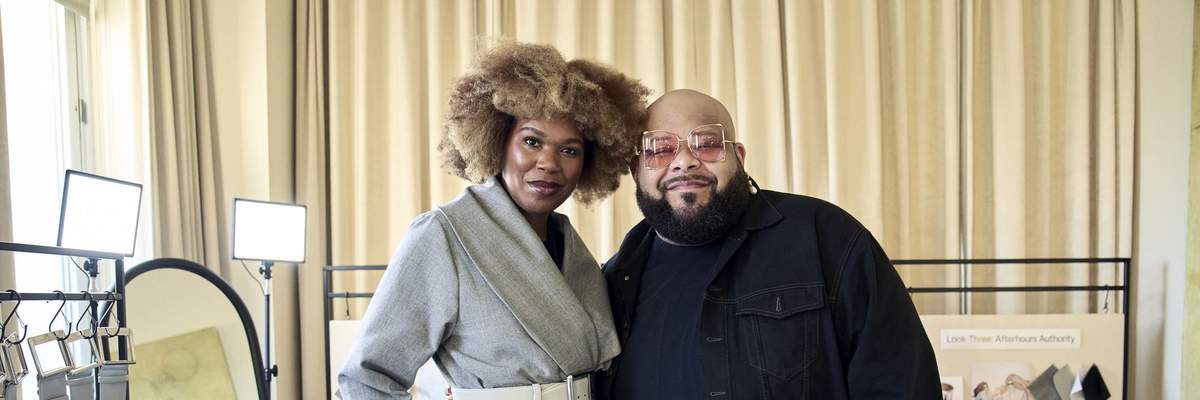
It’s not always easy being an “It Girl,” but Les Alfred, host of She’s So Lucky podcast, and Kayla Greaves, beauty expert, reporter and consultant, never promised it would be. Instead, the two creators are forging their own paths based on resilience. Les originally launched her podcast, formerly Balanced Black Girl, from her bedroom in Seattle after creating fitness content elsewhere online.
Last year, she left her corporate job to scale the Dear Media-hosted series, which she rebranded earlier this year. Meanwhile, Kayla has worked as a journalist and editor, including for InStyle as Executive Beauty Editor. In 2023, she left the company to focus on consulting, hosting and speaking engagements.
Despite launching media careers from different pathways, the two New York-based women have forged a friendship where they can discuss their ambitions and challenges.
Both women are part of xoNecole’s It Girl 100 Class of 2025, recognized in the Viral Voices category for the impact they’ve made through storytelling, creativity, and authenticity. Together, they represent what it means to build an "It Girl" brand with integrity and depth. In the spirit of SheaMoisture’s "Yes, And" ethos, Les and Kayla embody the freedom to be multi-layered as women evolving boldly into every version of themselves.
This conversation has been condensed and lightly edited for clarity
On Forging Their Own Paths
Les Alfred: Being a Jane of all trades is incredibly challenging. And one of the challenges I've faced is that the scope of what podcasters now need to do has increased so much. When I first interviewed you in 2019, I was still very new at it, but I remember being on a Skype call with you from my bedroom in Seattle. That was how I ran the show. And that was good enough. That is absolutely not good enough these days. The scope and the quality keeps increasing, but the resources that you have don't necessarily increase in order to remain competitive.
I get asked so many questions from people who want to get into podcasts and they want to get started. Most of the time, I'm just like, 'I don't have tips for you.' Because, one, I don't know what it's like to start in this current environment. Two, I know what it takes to contend and be consistent in this environment. The barrier of entry is a lot higher in terms of having something of quality than it was before.
On Balancing Ambition and Rest
Kayla Greaves: I've had to make a very clear effort to slow down and just not take on as much. Yes, you're running a business, but you're also living your life. I had one of those days yesterday. I just laid down and listened to white noise for hours because I just needed my brain to just be clear. I called a friend. I cried.
I'm starting over again today. The sun is out. It's a new day. And that's just sometimes what you have to do. You can't show up for your audience or for other people, if you can't show for yourself. I think that creativity comes from a place of living your life and having genuine experiences, and then sharing those experiences through your art.
"I had to give myself permission to let myself grow publicly in ways that I'd already done personally."

Courtesy
On Evolving Through Growth and Rebranding
Les: I didn't create Balanced Black Girl until 2018, but I started blogging and creating content and doing things under the Balanced brand in 2014. I was 24 years old at the time. Now, I'm 36. The things that were important to me, the perspective that I had and the stories I wanted to tell were entirely different. I think I had to give myself permission to let myself grow publicly in ways that I'd already done personally. The show isn't really about wellness anymore. And that shift started happening a couple of years ago.
When we started expanding into more lifestyle topics, more self-help topics [and] talking about entrepreneurship, the audience responded really well. That was when the show really started to grow and take off. And that was what got so much more engagement than the episodes back in 2020 when I was doing hour-long deep dives on gut health.
Rebranding the show was something I've been thinking about for a long time. When I was finally like, 'Oh, I need to do this,' honestly, was the 2024 presidential election. I was like, these people are about to be in here acting crazy. I do not feel safe with my business name being what it is. I don't want to be targeted for any BS. We saw what they did to the Fearless Fund.
"You have to balance your integrity with your income."

Courtesy
On Integrity Over Income
Kayla: I have many other interests aside from beauty. I'm growing and I'm changing as a person. I'm not the same person I was when I started at InStyle in 2019 before the pandemic rocked everybody's world. I don't think reviewing every single lipstick that comes out is exciting or interesting, because everybody does it now, and everybody feels like they're qualified to speak on things that they're not qualified to speak on. I'm currently in that pain point of growth.
I don't think I have always been in environments where I've been encouraged to branch out on my own ideas. I finished Ina Garten’s memoir maybe a month ago. She kept repeating this quote in her book. She said, ‘What goes in early, goes in deep.’ Now that I'm on my own and I don't have the resources of a traditional media company, which is what I have become accustomed to, sometimes it's difficult for me to be like, 'Okay, just go ahead with the thing.'
I think, Les, just the other day, you reposted somebody saying that they let go of a five-figure deal and then got double the next day because it just didn't feel aligned for them. Those are the things that happen. I have to find a balance of, 'Okay, how do I keep myself afloat?' And that may mean I may not be balling out of control just yet, but I'm okay for now. I can buy myself nice things every once in a while, but you have to balance your integrity with your income.
Les: There are just certain lines that I'm not willing to cross. Especially when I created more wellness content, one of those lines was I will not promote any sort of weight loss product. All of these GLP-1s all want to advertise on my podcast. I actually have nothing against those types of products, but I don't ever want someone to look at what I'm putting into the world and think that I'm saying that they need to feel a certain way about their bodies.
Even if the money is great, that's not for me to say, and that's not the type of message that I want to put out here. Or, I had another kind of brand deal come through that would have required me to divulge things about my personal life that I just don't really want my audience knowing about me, and bringing them along on journeys that I just find personal and I want to keep offline. I don’t want to be known for dragging my mess all over the internet for a buck.
I don't want to be known for being an influencer. I would love to be 1,000% in on my podcast, scale it, have it grow to be a media empire where I'm producing and putting out other bodies of work. For now, until that other side of the business really picks up and gets to the point where I want it to be, I kind of need to play the influencer game a little bit to live in this expensive city. But I'm gonna do it on my terms. It's a constant compromise that I'm coming to with myself.
"You can never make a big vision come to fruition if you're sitting and you're waiting for somebody else to tell you exactly what to do."

Courtesy
On Mutual Admiration and Friendship
Les: Something that I really admire about you in having known you for the past couple of years is you don't wait for a roadmap. You jump in, you roll up your sleeves, and you do it. You can never make a big vision come to fruition if you're sitting and you're waiting for somebody else to tell you exactly what to do.
Kayla: Well, first of all, I want to say thank you for saying that, because that means so much to me, and it's very affirming. That's exactly how I feel about you. I remember, even at your first live show, you're like, ‘Oh my god, I'm so stressed. I don't know what I'm doing.’ And, the shit sold out. And, you know, and now, like, you see the growth of the podcast. And you have nearly 61,000 subscribers on YouTube. I just checked recently.
I talk a lot about people that really just need to not say anything on the internet, because it's so frustrating as somebody who grew up as a traditional journalist. You want people to fact check and ask thoughtful questions and have good conversations. I've never said that about you. I've always loved your podcast. And I've sent a lot of your episodes to friends when they're going through specific things that you're talking about.
This season has been a little bit slower to me, so you've been a constant source of inspiration, and it's just been such a pleasure to see your podcast grow despite the challenges you've had. I know it's not easy, but you continue to grow and continue to push through, and I really admire that as somebody who sat and cried yesterday and listened to white noise.
And this is why I tell you all the time, you really do inspire me. I love you a lot.
Les: Oh my gosh, I love you a lot. I'm so glad that the podcast brought us together.
Tap into the full It Girl 100 Class of 2025 and meet all the women changing game this year and beyond. See the full list here.
Featured image courtesy